
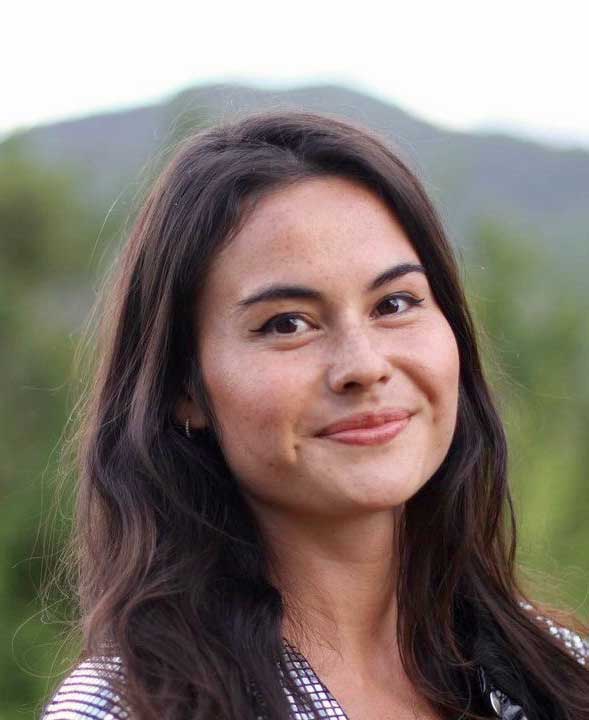
#335 Collective Effervescence – ReDefining a Democracy that Works with Isabella Roberts of ANTIPARTY
Can we separate politics from democracy? Our political system is wholly corrupt and no longer fit for purpose – if it ever was. What if Citizens’ Assemblies could bring agency to the whole of our population, helping people to find empathy with each other, to engage in conversations in good faith and work together to solve the wicked problems of the polycrisis: social inequity, climate chaos, the death cult of predatory capitalism. These are so interlinked, we won’t fix one unless we fix them all.
So how do we do it? This week, I’m talking to someone who spends her life reflecting on, teaching and researching this. Isabella Roberts started off in the Big Four, Private Equity and Investment Banking, then switched from the private markets into politics at the start of 2021 as a candidate for the London Assembly elections. Against the backdrop of the UK’s first year out of the EU and in the depths of the COVID pandemic, she was inspired to take a stand and be the change she wanted to see in the governance of the UK’s capital.
She then took on a Masters in Digital Politics and Sustainable Development. Her thesis in 2023 focused on How Collective Intelligence Can Enhance Democracy, which resulted in the initiation of SAAFE which stands for: Space for Silent Contemplation and Reflection, Active Listening and Feeling Heard, Ability to Change One’s Mind, Feeling Connected as Part of the Whole, Epistemic Growth and Epistemic Humility – and which uses human-centred design principles for empowering participants in tech-enabled deliberation. This is an inquiry into what it means to be human in a digital age, in line with systems change towards a more deliberative democracy, and it has manifested in a multi-stakeholder project supported by the Web Science Institute at the University of Southampton, bringing together democratic practitioners and the developers of deliberative technologies. Meanwhile, Bella is the independent evaluator of two deliberative processes: the Birmingham Museums Trust Citizens’ Jury, and currently the National Gallery’s Citizens’ Assembly (NG Citizens).
She also completed her first Vipassana course of 10-day silent meditation and is studying for a PhD with the title: Revolutionising deliberative democracy with immersive technology – a comparison between East and West.
Bella has explored the depth and breadth of what works, so that together, we can create a democracy that empowers ordinary people to help fix their communities and the wider world. Like previous podcast guests, Matt Golding of Antidote and Dylan McGarry of Empatheatre, Bella understands the sense of meaning and purpose and involvement that is so transformative – which was why this conversation was so rich and so deep.
Episode #335
LINKS
Bella on LinkedIn
Antiparty
Delibtech
Breathe With Bella Substack
Bella on YouTube
Books
Against Elections
Politics without Politicians by Helen Landemore
Bella’s Masters Dissertation – How Can Collective Intelligence Enhance Democracy? An Investigation Towards Human Centred Design Principles For Empowering People Engaging With Deliberative Technologies?
More from Accidental Gods…
We offer three strands all rooted in the same soil, drawing from the same river: Accidental Gods, Dreaming Awake and the Thrutopia Writing Masterclass.
Our next Open Gathering offered as part of our Accidental Gods Programme is Falling in Love with Life which will run on Sunday 17th May 2026 from 16:00 – 20:00 GMT – details are here. You don’t have to be a member of Accidental Gods – but if you are, all Gatherings are half price.
If you’d like to join us at Accidental Gods, this is the membership where we endeavour to help you to connect fully with the living web of life.
If you’d like to train more deeply in the contemporary shamanic work at Dreaming Awake, you’ll find us here.
If you’d like to explore the recordings from our last Thrutopia Writing Masterclass, the details are here
Manda and Louise both offer one-to-one Mentoring Calls. Manda is fully booked just now, but if you’d like to contact Louise, details are here.
In Conversation
Manda: Hey people, welcome to Accidental Gods, to the podcast where we do still believe that another world is possible and that if we all work together, there is still time to lay the foundations for that future that we would all be proud to leave to the generations that come after us. I’m Manda Scott, your host and fellow traveller in this journey into possibility. And if you’ve listened to this podcast at all, actually, if you’re paying the remotest attention to what’s going on in the world, you will know by now that our political system is wholly corrupt. It’s not broken; it’s doing exactly what it was designed to do, which is to shovel value upwards into the hands of a very small minority of people. And the fact that this is being done so openly in the United States just now isn’t new. What’s new is how open it is; the actual level of corruption is not new at all. So the system is not broken, but the system is not fit for purpose, and tweaking it, electing our preferred party, wherever we are in the world, is not going to cut it unless that party commits to a wholesale democratisation of our system. And the problem with that is that we have a media system that pretends that this is the best democracy we can get. Winston Churchill said democracy is the worst system, apart from all of the others. And everybody thinks he was right. And it’s not. Clearly it’s not. It’s not hard to imagine a better system, the question is how do we make it happen? And so I am always on the alert for someone who’s thinking about this.
Manda: And this week we are talking to someone who spends her life thinking, teaching and researching this. Isabella Roberts started off in one of the big four; in private equity and investment banking. But then after a number of life changes that we didn’t get to in the podcast, but they are in her blog, she switched from the private markets into politics. When, at the start of 2021, she stood as a candidate for the London Assembly elections. This was against the backdrop of the UK’s first year out of the EU and in the depths of the Covid pandemic. She didn’t end up on the Assembly, but she did take a Masters in digital politics and Sustainable development. Her thesis, which is in the show notes, focussed on how collective intelligence can enhance democracy and resulted in the initiation of something called SAAFE. It stands for Space, for silent contemplation and reflection. Active listening and feeling heard. Ability to change one’s mind. Feeling connected as part of the whole. And Epistemic growth and Epistemic humility. And this is a space which uses human centred design principles for empowering participants in tech enabled deliberation. And Bella is quite clear that we can use technology in useful ways as we strive to find a form of governance that actually works. SAAFE is an inquiry into what it means to be human in a digital age, in line with systems change towards a more deliberative democracy. And it has manifested in a multi-stakeholder project supported by the Web Science Institute at the University of Southampton, which brings together democratic practitioners and the developers of deliberative technologies. The people who are actually thinking about how we make the system work for us.
Manda: In the meantime, Bella is the independent evaluator of two deliberative processes: the Birmingham Museums Trust Citizens Jury and, at the moment, the National Gallery’s Citizens Assembly. She’s also completed her first Vipassana training of ten day silent meditation and is studying for a PhD with the title Revolutionising Deliberative Democracy with Immersive Technology; a comparison between East and West. Which makes me want to go back to college and do a PhD very similar to this one. I am so excited to hear what this brings up. So even before this one was over, we had decided that we were going to talk again. But in the meantime, you are about to listen to something that feels to me as if it moves onwards from the podcast that we had with Matt Golding of Antidote and Dylan McGarry of Empatheatre. This is about finding how we can create a democracy that empowers ordinary people, that gives them a sense of empathy and meaning and purpose and genuine community. I don’t think we get through the crash that we’re in without that. Building it was never going to be easy, but with people like Bella putting their tremendous intellect and huge heart towards it, I have great hope. So here we go. People of the podcast, please welcome Isabella Roberts of ANTIPARTY.
Bella Roberts, welcome to the Accidental Gods podcast. How are you and where are you? For those on video, Bella is not really in Bali, although it might look like it. Where are you actually this morning?
Bella: Oh spoiler alert, Manda! Yes, unfortunately I am in the UK but somewhat near the sea. I’m in Southampton in my research office of Southampton University. Thank you. And feeling okay, thank you. Yeah.
Manda: You’ve just done a lecture. I’m very impressed and grateful that you ran from your lecture to come and talk to us. Thank you!
Bella: You’re welcome.
Manda: Alrighty. So you’re doing a PhD, you’ve done a master’s, you’re focussed on how we might actually get a democracy that’s democratic. Which anyone who’s listened to this podcast for more than about five minutes knows that as far as I’m concerned, we have a kleptocracy. We have the best democracy money can buy. And if you didn’t know that listening to the podcast, you’d just need to watch the US. The really blatant corruption has now taken the masks off a corruption that was always there. But people are beginning to notice, which is not necessarily a bad thing. So you are my go to person. How do we fix democracy, Bella?
Bella: Well, what time is it today?
Manda: We have an hour.
Bella: Good thing I have my big cup of coffee next to me! So I’ll ask the question openly, the same question I asked this morning to the students: how can we separate politics and democracy? It stumped the class and I’d like to know if any listeners or if you have any initial thoughts on that. Because I think we tend to see them both as synonymous and we would see democracy as synonymous with voting and elections. So my vision, and it’s not just my own, but I would say this is the field of deliberative democracy, and people like Helene Landymore and David Van Reybrouck who wrote Against Elections, they call themselves deliberative Democrats. So I would like to call myself that as well. Our vision of democracy is one that is deliberative and direct, and where we have citizen assembly models making collective decisions on behalf of society. And those citizens are ordinary citizens selected by that process called sortition, which is also called civic lottery. And those ordinary citizens go and make decisions on our behalf. And when they show up, they’re not showing up as a member of a political party, they’re not part of this bipartisan two party system we have in the UK and the US. They’re showing up as themselves, with their own life experiences and shared stories.
And that’s why that whole phrase of separating politics, democracy to me is forgetting about party politics, forgetting about voting, competition, winning elections. You know, there’s a whole book that David wrote Against Elections. That actually, if we take a step back and remove elections from the picture, and we just had this system in place, that civic lottery invite will come through your door. Like it did for the National Gallery citizen Assembly that I’m working on right now. Inviting you to a citizens assembly to serve your country on the topic of whether it’s specific National Gallery strategy, whether it’s health policy for the country, whether it’s education, whether it’s same sex marriage, whether it’s abortion law, as Ireland did. And it would be your civic duty to go up every Saturday for a few weeks or a few months and deliberate with other citizens from across the country, and as a whole group you are representative of the population, and that’s why you’ve been selected as such. And I believe it to be a much more genuine and empathetic way of making decisions that isn’t top down, basically what the party whip is telling you to do. That’s democracy to me.
Manda: Okay. I have a zillion questions. So we’re assuming that politics means politics as it is run just now, which is plainly not fit for purpose. I think definitely let’s just agree on that and set it to one side: the current system is not fit for purpose; we need a new system. Citizens Assemblies. Presumably we default to the lowest possible area, so the Citizens Assembly for say South Shropshire, where I live, would be drawn from people from South Shropshire and we would make decisions about South Shropshire. And at some point we need some way of then making decisions for Shropshire and then making decisions for the West Midlands and then making decisions maybe for England, as a as a federal state within the United Kingdom. And then how do we extend things upwards? Okay, that’s my first question, but actually it’s probably not the most logical, if you are coming to the idea for the first time. Let’s explain to people what a Citizens Assembly is and how it works at a greater and greater scope. And we can use Ireland as an example, because Ireland worked in ways I think other Citizens Assemblies haven’t always worked. But let’s explore, for people who are not familiar, what is a Citizens Assembly and how has it worked in the past?
Bella: Yeah, absolutely. So Citizens Assembly is a model of direct, deliberative collective decision making. And another distinction is the decision making usually is by consensus. It’s very generative. It’s trying to find common ground rather than outright majority, where my side has won over your side by just like a single point and that just gives you the majority winning argument. So a Citizen’s Assembly, let’s use the National Gallery Citizens Assembly as an example. That’s in the UK and there’s actually 50 people in that. So we’ve got 50 people in the National Gallery Citizens Assembly that are supposed to be representative of the entire UK. So you’ve got people from Ireland, you’ve got people from Scotland and Wales and some of the Channel Islands too, coming in and deliberating on what do paintings mean to them? How do we bring paintings and people closer together in meaningful and authentic ways? So that was the big question that they’re deliberating on. It’s facilitated, so this is another thing to keep in mind. That’s different to a legal jury process. So similarly to the jury process, you might get seemingly randomly called, invited to the process. You also get compensated for your time. But unlike jury service, Citizens Assembly is very much facilitated by professional facilitators. And there’s a few organisations in the UK. Actually there should be more, I would say it’s a bit of a monopoly. There’s only 2 or 3 main ones I would say, that people can choose from to hire these facilitators from, and the rest are freelancers.
Bella: And in in small table groups, we would break down the question and through a series of sessions, usually over a few weeks, it could be up to a few months, depending on the breadth and the depth of the topic, slowly and surely arrive at a set of recommendations or a strategy that everyone agrees on. And another thing to keep in mind, another feature, as well as it being facilitated deliberation, there are also experts and people brought in to speak on the topic who have the specific skill set, expertise, technical knowledge. So then that can help to inform the ordinary citizens who might not have any prior knowledge on that topic, to come to better arrived and formed opinions. And then usually those expert speakers and technical witnesses, they will have been selected as well by the organisation to try and represent as broad a perspective as possible. So my role on the National Gallery’s Citizen Assembly, as well as when I was working on the Birmingham Museums Trust citizens jury, I was an independent evaluator. So there are people like me and there is a function as well, independent evaluation function, to make sure that these processes are run fairly. Because obviously from the outside you could be like, hey, all these ordinary citizens are getting together in a room. They’re they’re speaking to experts. Who are these experts? Are they giving them undue influence?
Manda: Yeah, exactly.
Bella: And then who are facilitating them? Are they facilitating them towards a certain way? You know, so it’s really helpful to have this.
Manda: It is fraught, potentially. But it seemed to me that the climate assembly that was convened by the Parliament, but not the government, in the UK, seemed very much within really quite narrow boundary parameters. They didn’t invite Jem Bendell or anybody from that arm of of the world. And I’m not suggesting that I necessarily believe what he’s saying, but I think his view would have usually been brought in there, and we might have got a slightly more constructive set of outputs. So it seems that, from my perspective, we exist in a world of quite narrow boundary thinking. We need to get to the widest possible boundary thinking. And the thing about narrow boundary thinking is that people don’t know that they’re thinking narrow boundaries. They think they’ve got a really broad range of opinion because they don’t know what’s outside that range of opinion. I’m assuming that something about the National Gallery, on which I have no opinions at all, feels really uncontroversial. If we were to move to more geopolitical things, they instantly become controversial. And how do we, in a polarised world, begin to work with topics that are more polarising in an information flood zone, that is being flooded by polarising data, so that people’s capacity to listen to someone in the room is going to be filtered through an existing confirmation bias, I would imagine.
Bella: Yeah. Completely agreed. That’s why the facilitation aspect is so key. Before the start of every assembly process and deliberation process, there is this shared agreement that everyone kind of agrees to by default of continuing in the process. And it’s those typical things of respect each other, listen before you speak, active listening as a whole skill that you can actually do training courses in. And even in the corporate world, they sort of teach it, they say you’ve got two ears and one mouth, so use it in that proportion. But on the controversial topic point, for sure, it’s interesting I think in the broader Democratic vision of this radical change of a more deliberative process and getting rid of elections completely, those geopolitical topics that you mentioned, when that goes into you know, defence and security, international relations; like there is stuff there that obviously the broader, wider public, everyone doesn’t really need to know. Like what MI6 and security forces do. So in this model of institutionalising citizens assemblies to potentially replace the House of Commons, I think they are topics such as that, like some geopolitical, national security and defence issues, that are kept for the foreign secretary or someone in that sort of exec position of power. But then other potentially controversial issues, like same sex marriage or abortion law, which is controversial but on a more moral and personal societal level, and there has been successful citizens assemblies on those topics in Ireland and elsewhere. Yeah, that’s still suitable for for this kind of model.
Bella: And in those processes the Irish Assembly has a really famous example in the same sex marriage assembly, there’s a story about how one of the older Assembly members had very deep set views, anti gay and homophobic views. Also because he was raised in a very strict religious background, he was actually sexually abused as a child, so that’s why he was really against gay people. But then when he came face to face with a gay man in the assembly, he actually opened his mind, changed his mind, and actually ended up being for same sex marriage at the end of the day. So that is how a guy can live his whole life up till later years, holding really strongly held views in one sense, and it’s not until you are face to face in the same room, across the table to someone else, someone other and different than you in society, that you up to that point just read about in the newspaper. Now you’re face to face, human to human, sharing stories. That empathy comes out, that shift in perspective actually starts happening in real time. And then therefore, that’s the real power of these Citizen Assembly models. I actually think it has enormous potential to bridge divides in society.
Manda: Yes. Let’s dig a little bit deeper into this, because I think this feels really interesting. We need to get democratic legitimacy. And the astonishing thing is that a system which has no democratic legitimacy in the way that it works, has managed to claim it for several hundred years. And now we want people to feel agency, people to feel as if they’ve been asked about everything. And what struck me with Ireland; they had abortion, they had gay marriage. These were held at a reasonable length of time apart. They were highly controversial, but they were internationally known. There were people flying in from the States to go and walk around the villages their grandparents had been in and talk to people about, you know, this is my partner and this is my marriage. And they were knocking door to door, and it made a significant difference. If we moved to a model of citizens assemblies for everything, for how do we collect the bins? Do we mow the verges? Which is a hugely controversial topic around here because most of us don’t want to because they increase biodiversity, but there are the people who want everything to look like a monoculture. In Ireland it felt like there was a national debate going on, and the citizens assembly process had kicked it off, and then there was a referendum. And that’s not going to happen if we have citizens assemblies deciding everything, from minutiae to everything except geopolitics. And I think we need to come back to that, because we need to change the entire economic system and that has to be done in a way that has democratic legitimacy. And how do you do that if the Chancellor of the Exchequer is saying, no, no, I want fiat currencies. Let’s park that one for a moment. When we have citizens assemblies all the time, how do we get that level of democratic, genuine collective buy in to the result?
Bella: Yeah, very good question. And I think with that, we can maybe bring in another international example of Switzerland, where they have a very successful referendum model. So things like bin collection, those minutiae questions I think could be very much covered with that. And again, bringing in the digital democracy, e-democracy type of technology apps and stuff that is out there. Those minutiae things can definitely be allocated for those applications.
Manda: How? Tell us a bit about e-democracy and apps and how that helps. Let’s pick mowing the verges because it’s something that happens here. And there’s the “yes, we definitely need to mow” and the “no, we definitely don’t need to Mow” and they are quite significant camps. And I imagine even if you drew a representative sample from around here, the camp that got voted down would feel extremely unhappy. How do we create that sense of it’s not just the 50 people in a room or 99 people in a room; everybody has feed in to this. I can imagine the narrative already of, well, you just captured those people and fed them information. We, the people whose belief system has been threatened are not going to support this. How do we get that sense of total population buy in?
Bella: Yeah. There’s at least two things there. I would say that the type of question as well, right. Whether it’s a binary yes or no question like most referendums are, and it’s a single input. That’s a very different question and therefore decision making process, than an open question like the National Gallery: how do we bring people and paintings together in authentic, meaningful ways? And you have five plus sessions, and there’s a reiterative process there. You go over and you use the feedback from the last session onto the next stage of decision making. So there’s different processes depending on whether it’s single input, whether it’s reiterative. And that just shows how much depth you can go. So the single input ones, that’s when it’s easier to have on a tech application. Whether it’s a specific e-democracy tech app. Even in my local council in East London, I’ve seen them attempt to create their own sort of platform to, to try and bring these questions about, you know, bins, mowing the lawn; that can be covered with that. And I think this is maybe where we can bring in vTaiwan a bit, because vTaiwan, even though it was more than ten years ago now, started with Uber policy in the city, in the country. So that used a platform, a digital tool called Polis, which if you look on online, you can still find the Polis website. You can still use it open source, free to use.
Bella: And that shows how various single inputs can start to converge and bring everyone’s views and thoughts together. But the only difference between these platforms and the citizens Assembly model is you don’t have that face to face element, and you don’t have that listening, sharing, that sort of human interaction which I think is key to really connecting people into society. These platforms are great for consolidating and finding common ground between everyone’s submitted inputs, you know, what your views are on the bin collection and then your neighbours. And this tech platform can then come up with, okay, based on everyone’s inputs, we think this is the consensus. But have you really, do you feel more empathy or understanding with your neighbour who has different views to you, based on that outcome? Not really. Because that that direct deliberation aspect is missing there. So you can still have good outcomes that are potentially democratic and legitimate, but you still don’t have that bridge or that connection with others in society.
Manda: So can we unpick how we would do that again? Because we talked to Dylan McGarry a couple of weeks ago and he was talking about Empatheatre, where they they go out into a community, and in this case it was opening mines in South Africa. But whatever it is. And they talk to all the people involved, from the head of the mining company to the people who are going to have to dig up their ancestors bones and move them, and they create a play. And when they’ve got the script, they take that round and check with everybody that the script says, so that they feel represented. And then they put on the play for everybody. And so everybody comes along and feels as if they have been heard. So they don’t need to hold their positions, because not only have they been heard, they’ve heard everybody else in a way that’s honest. You know, there’s a fourth wall there. It’s on a stage, it’s not them exactly. And then they hold a citizens assembly afterwards. And that’s beginning to get tremendous changes in all kinds of things. Homelessness, policing and the head of the coal mine actually came and had no idea that people were digging up their ancestors bones and genuinely seemed to want to change things.
Manda: And it’s been accepted in the court in South Africa as ancestral knowledge of boundaries and things like that. So it feels to me as if that kind of thing could really help to bring communities together. But it’s extraordinarily labour intensive. It takes years to create one of these plays about one topic, and we have so many topics that we need to address. How do we create food that’s healthy and worth having while increasing biodiversity? How do we get to clean water while still getting rid of our sewage? How do we create an economy that’s actually going to work? How do we function in the world? Do we even need national boundaries or do we want bioregions? And these are all part of the complex hyper system, and we need to address them all now, preferably yesterday, if not tomorrow. And how then how do we get that sense of agency and connection in communities where people are increasingly online? Somebody told me yesterday that child psychologists are looking now at the fact that two year olds are online for so many hours at a time that they’re losing the capacity to hold things because all they’re doing is tapping the screens.
Bella: No way!
Manda: It’s really scary.
Bella: That is very concerning.
Manda: So how are we going to bring people back to engaging with other people instead of engaging with their AI therapist or whatever it is that they’re doing. Their default cringe online that is hitting the dopamine zing and is effortless. How do we do this, Bella? You’re thinking about this all of the time.
Bella: Yeah, absolutely. And talking about bridging as well. I think I saw a post as well about the new term of Zillennials, which is maybe my generation, the last generation to grow up without the internet for the most part of their childhood. So I remember being outside and playing.
Manda: Yes. Making mud pies and climbing trees.
Bella: Before smartphones, which people can’t imagine now. I mean, yeah, in the class this morning, everyone’s born post 2000. It’s mental. But that’s interesting because that brings in the embodiment piece. And then my PhD research is actually all about immersive technology. So we know how digital tools can help to scale and bring more people connecting online, from all parts of the country and all parts of the world. But I think it’s this immersive aspect that can really bring in that embodiment. So when you talked about Empatheatre, and I’d love to read more about that, there is something similar in the UK, but here they call it legislative theatre. There’s a project under the Inspire project. But exactly, it’s very labour intensive. But could we bring the same practice into online virtual worlds with avatars? And now there’s all these wearables and digital technologies. Yeah, wearables and bio sensory equipment too, that can really make you feel like you are actually in there. I know VR headsets have some feedback already about nausea and things like this.
Manda: Oh, do they?
Bella: Yeah, I think at the initial…
Manda: Doesn’t surprise me.
Bella: But at the same time it’s been used for retired people and loneliness or something. There’s a project doing that. Yeah. So this kind of immersive into the digital public sphere in an immersive way, can make you feel like you’re still in it, and then you’re still engaging with other real people. And so you can still get that connection digitally, which you might not have on a 2D software platform interface, like just through a screen and just through text on the screen. So like Polis and these other delib-tech tools where it’s just very text based. You don’t get that embodied face to face.
Manda: Okay. All right. That might cross that boundary. Let’s shift a little bit because we could go down that rabbit hole quite a long way and I think there’s so much else that I want to go to. And look at the layering, because inevitably, geography being what it is, you need to make the local decisions about do you mow the verges here or not? And then the layer up and on up to national, if we’re still going to have national boundaries. A system that I had seen was that the local area gets together and picks five people who all go to the next layer up. But all meetings are fully transparent and if you feel that the people you elected are not representing you, you have absolute right of recall in the moment, basically halfway through the meeting; no, I’m sorry, that’s not what we wanted you to say. Come back and we will elect somebody else to take your place. It probably wouldn’t happen during the meeting, but there’s a really flexible and fast feedback loop of are you saying what we wanted you to say? Yes. Okay. And then that meeting picks five people to go to the next layer. And eventually we get to a layer at the top that is not there making decisions, but is there to perhaps set the topics for citizens assembly at a national level. And is there to find who to ask for how do we renationalise the water system, for instance. Who are the best people to ask about this? What’s the widest range of good, diverse opinion and how do we learn how to listen from them? How do we give power to those with wisdom and wisdom to those with power. Is that a workable system in your view, or is there a better one?
Bella: No, I think that’s definitely workable. And then that bit around selection of wisdom/experts/witnesses, that can actually be democratised too. So rather than that being selected and appointed by the organisers of said assembly, the citizens themselves, after they’ve been selected through sortition, and that assembly pool is supposed to be representative of the broader population, whether it’s a region, whether it’s a country. They themselves can say, okay, I think based on this topic and from the different perspectives and angles that there is on this topic, we want to hear from someone from this, we want to hear from someone from this side of the table. So actually, yeah, there’s a way that it can be bottom up.
Manda: And what happens when we get to the really toxically divisive things like vaccination? I’m watching stuff happening in the US on that. Or I read a really interesting piece in By-line Times yesterday on Conspirituality. And someone’s made a fantastic film where they went to January 6th really as an ethnographer and filmed and noticed that the guys were all in their camera gear and really armed to the teeth and looked like they were wanting to enact an armed revolution. The women were basically sitting there knitting and talking to each other, and were often the same people who’d been on the pink hat marches a couple of years before. And they followed a couple of them and they genuinely exist in a totally different reality than probably you or I. I’m making assumptions about you, but they certainly live in a totally different reality than I do. Where Hillary Clinton is actually a lizard who drinks blood. And Mother Theresa fed her the babies and was the father of Anthony Fauci, who was the head of health in the US. It’s feels to me like a bunch of 12 year olds have sat down and gone ‘what can we make them believe this week? Oh, let’s try this’. And they will bring in the people that they really believe. Someone sent me a couple of YouTubes last week of ‘this is proof about Hillary’. I was like, no, I’m sorry, just because you met it on YouTube does not make it real.
Speaker 3: Wow.
Manda: Yeah, but they believe it. How do we get around that now? How do we solve the misinformation catastrophe?
Bella: Yeah, absolutely. I mean, people’s realities are very different. And when you go down those kind of rabbit holes, for sure. And I think the main mitigation there, if we were to hold a legitimate citizens assembly, the chances are only one person would probably have these kind of extreme conspiratorial and misinformed views, unfortunately. And hopefully they will be outnumbered in that group if they try to bring in any evidence to that. But then this links back to something you mentioned earlier, about bringing in views that initially you think, oh, well, we should bring them in, even if they might be extreme just in the name of inclusivity.
Manda: Right. Like Jem Bendell to the climate.
Bella: Yes, exactly. Exactly. Maybe he was viewed as extreme or someone on the inside or whoever was setting that up, clearly thought that he was too far out.
Manda: Which keeps you in the narrow boundaries.
Bella: Exactly.
Manda: And we need the wide boundaries. And that feels to me like a really interesting paradox. I’m fairly sure that if I were in a citizens assembly on the climate, I would be the one on the far margin.
Bella: Sure. And there’s actually a science that says that when you map arguments and when you want to do collective decision making, the more diverse inputs and the trade offs are that you add into that formulaic calculation of coming to a better decision, actually it’s good ingredients to include them all.
Manda: Even if you have somebody turning up with a lizard theory. Well, I suppose people just don’t necessarily have to listen to it.
Bella: Well, exactly. In the name of inclusivity, if someone genuinely wants to bring that in and mention it, because that is their true belief, who are we to stamp on their beliefs? But in the process of deliberation and maybe in that citizens assembly, this person would actually then realise and change and broaden and change their perspective and change and adjust this so-called reality of theirs, which they might not have had the opportunity to do, if they stayed in their echo chamber on the outside. So actually, this could be a real adjustment opportunity to learn from other people. And then when they go back out into the real world, they’ll maybe go back to their groups or be like, hang on, guys.
Manda: It may not be that.
Bella: Yeah.
Manda: It’s so interesting, isn’t it? Because I find myself on polarised sides of conversations quite a lot. There was a very interesting one with people quite close who genuinely believe that anyone Muslim in this country is intent on Sharia law throughout the entire country. And it’s really hard to argue against that because as far as they’re concerned, we exist in a bubble, that we just don’t see this. And because we don’t live in an inner city and they live in an inner city, and therefore they see it. And I don’t live in an inner city. I haven’t been to an inner city for probably over a decade. I have no idea. And my assumption is that they are bonkers, frankly, but they think the same about us. And I’m just really interested to see how that would play out, because I gather that they’re basically reading the Daily Mail or The Telegraph and absorbing that side of the internet. Because algorithms, and as far as I’m concerned the Guardian is a right wing rag and I don’t read it. So I am already off to the edge of a polarised, fairly broad distribution curve. And I’m really interested to see at what point does the fact that most people read the mail and the Telegraph; how do we get to differential inputs when that is the case?
Bella: Mhm, yeah. I mean we mentioned the Ireland case study, the anti gay views and then changing that view. And that’s a very extreme controversial, direct.
Manda: Yeah. It was.
Bella: So there needs to be more personal stories like that. You know how if it’s 1 or 2 people it’s a story, whereas if it’s 500, it’s just a statistic. We should be bringing out more of these stories from these real life case studies. So that’s just one. But from the examples that you’ve mentioned as well, it only goes to show that these hugely diverse, extreme, polarised views exist in society. And I truly don’t see any other way or any other model apart from the deliberative, collective decision making model of a citizens assembly, that has any chance of actually bringing these other parts of society together and understanding each other’s viewpoint and coming to some agreement. And that’s why there are some deliberative Democrats, and I’ve been to a conference even just last summer; plenary speech, talk about radical inclusion. But then at the same time, they’re like we would not bring far right people to the table. We wouldn’t include them to a citizens assembly. So how do you ever expect to actually come to any mutual understanding or agreement if you are excluding such extreme outside viewpoints? So I think with the power of facilitation and the science of deliberation, the techniques, the design, there is a way. And again, maybe you’ll believe it when you see it when you’re actually in the room yourself. To believe it. And obviously I’m just saying it here, I’ve been in a few rooms myself, I’ve read case studies, I can read the reports. And that’s the most we can do. But because I’ve studied it and been in the room myself, I can speak with a lot of confidence. Whereas I understand that most people are hearing about citizens assemblies for the first time, they’re reading mainstream media or just standard news media that talks about these other groups of society as other separate categories of people.
Manda: Yes. They don’t meet them and talk to them.
Bella: Exactly, exactly. But this is the only way we can ever do that and bring them together.
Manda: So it seems to me that we have two separate things. We have deliberative democracy, which may result in a referendum which engages the whole population and which will have legitimacy. And we have citizens assemblies, which I still struggle to imagine them having legitimacy. I can see that the people in the room can come to a really different space, and they go home to their communities, and they’re outnumbered by thousands to one. How do we mix those so that we get that sense of agency across the whole population? Because if people feel that they’ve been heard, this has seemed to me part of the lesson from Taiwan was that people had been heard. They’d been asked what they thought. And when you’ve been asked what you thought in these online spaces, with something effectively like Polis facilitating. So an AI facilitator, but it was designed to emphasise and lift up the people who were building bridges and just ignore the people who are trying to create havoc at the edges. And it did engage people, and it did have huge democratic legitimacy and popular legitimacy. And the approval of the government went from something like 8% to something like 79% in a very short space of time. And it’s still politics, but it’s politics that was deliberately, Audrey Tang’s thing was you gain trust by giving trust. So if I were to say, let’s play a game which says Zack Polanski gets elected at the next election, which doesn’t look as impossible as it might have done six months ago. And he comes to you and says, okay, we need a whole new method of governance. We need actual democracy. How, Bella, would you design it?
Bella: Yeah, absolutely. I would replace the House of Commons with a permanent House of citizens that has rotating Assembly members that are selected by sortition or civic lottery, per policy area, per question, per decision that needs to be made. And those decisions can be back and forth with a technocratic chamber that is a reformed, replaced House of Lords, and those decisions feed into the pre-existing civil service, which is meant to be non-partisan, which is meant to be apolitical anyway. And I think the number of civil servants outnumber the number of politicians, you know, tenfold. And they’re just basically writing out the policies and actually enacting what comes in from the government or whoever’s the PM, every other week. And whenever the government changes, they’re just like, great, what do you want us to do now? So if that feeding in pipeline funnel was actually a house of citizens that’s already extremely democratic, and actually the civil servants that I’ve met and actually seen in multiple conferences, they want to do a lot more public engagement, but they almost can’t. It’s almost like this glass wall between them and society, where they’re like, we’re here for the people, but we can’t actually directly engage with them. And we’re getting all this top down decisions to be made. And it’s interesting when you talk about legitimacy as well. And I would just say that when we do talk about legitimacy as an ideal, I would just ask, is the current government legitimate in terms of the low turnout rate, the voting system?
Manda: Not fit for purpose.
Bella: Exactly. So we have always got to compare to the actual reality, when we talk about these alternatives. And actually say, well, at the end of the day, even if it’s not perfectly ideal, it is still proportionately or X percent better than what we actually have right now.
Manda: Okay. So instead of a House of Commons, we have a rolling, so presumably it’s a bit like the Mondragon system where they stay for maybe 18 months. And every six months there’s new people come in, but you’ve got some people who’ve been there for a while who actually know how stuff works. And you’ve got new people and then the old people roll over eventually, so you’ve got a continual roll of incomers, middle people, and people who’ve been there for a while. And that’s at the very top level. So presumably you have the same at county council level, town council level, village parish level, Yes? Because you need decisions to be made at every level.
Bella: Mhm. Yeah. Absolutely. But that’s where we start to break down the scope and the type of decisions. And if that becomes narrower and smaller at the lower levels, you might not need a full on meeting every fortnight,all day Saturday, to talk about which days should the bins be collected, right? That should be reserved for the bigger, broader questions. And that’s why I think the more narrow and local level decisions can be made more asynchronously online, through an app.
Manda: Okay, but how do you stop what happened at the Brexit referendum, where a particular political force has a huge amount of money and they flood the zone with disinformation, and people press the button on their app that says, no, we don’t want the rivers to be renationalised, we like them full of shit. How do we how do we prevent that from happening?
Bella: Well, yeah, absolutely. So the Brexit referendum. So Stanford deliberation platform and Fishkin from the Stanford Deliberation lab, they have something called deliberative polling. So that’s deliberation and then resulting in a poll at the end. And they actually did show years before the Brexit referendum, they did actually do a deliberative poll on should the UK hold a referendum on membership of the EU? And initially it was 65% yes we should. And then actually after deliberation that went down to 40%. So the writing was on the wall in terms of actually, if we didn’t just hold a binary referendum, yes or no, and leave the decision making to this misinformed information sphere of fake news. And it was proven, you know, the NHS number, the Boris bus, it was fake information and false information. So if the information environment that we live in, especially now with social media, algorithms, echo chambers, is so tainted and unreliable, that’s why we need to then bring the decision making back into a much more controlled and boundaried citizens assembly model room group of people. And then we know that, okay, these 50 people, these 100 people, they’re going to make the decision and this is the information that they’re getting. They’re talking to these experts, etc., etc.. And that just again mitigates the wider public.
Manda: And yet, let’s go back to bin collections. Suppose some company decides they want to privatise bin collections, and I can’t think of a single sane reason why you would do that, but we do know that Cambridge Analytica and their descendants are really, really good at crafting very focussed, very well tested, aimed at the bottom of your brain stem arguments, that will convince people that private bin collections are a good idea. And then it will be written in so that there is no way back, because you’d have to pay the bin company several billion pounds that you don’t have, because that would bankrupt your council. How do we avoid that? I think this is a really good idea, but I’m really interested in the nuts and bolts of how does this work at every level?
Bella: I think that’s a very good question, because I think you can put that under the category of corruption, as in our belief system or information system is corrupted with false, fake, unbalanced information for want of a better term. So there is actually an argument, you could say, that even in a citizens assembly model, you could have someone that goes in week three and they could find themselves in a rabbit hole online and they find out all this stuff. So they could be technically labelled corrupted, their information environment’s corrupted, and they go into that citizen assembly model and potentially spread that. But then again, the citizen assembly model has a mitigating factor there, because if that potentially corrupted person brings that into this environment, there is still the opportunity for that to be reiterated, diluted again, reformed. Because this person has presented this information and there is an opportunity for others in the room, other assembly members, any expert speakers, to actually go back and forth with that person and challenge those views. Which we just don’t get when we are each in our individual silos, getting information through our screens and then going into the ballot box and just ticking yes or no, or who do we want to select as the next politician or so-called representative? So there’s no opportunity to challenge and be challenged. So it’s really creating the space for that.
Manda: At a local level, at any level frankly, is this kind of decision being made at Citizens Assembly, rather than everybody being part of a local distributed democracy referendum? And how do we decide which ones go to the citizens Assembly and which ones are on an app where, hey guys, somebody suggested that we prioritise the bin collection. What do you think? And we could have quadratic voting. We don’t need to have first past the post yes or no, but we still need to have a clean information environment. This is back to the referendums in Ireland were actually not a clean information environment, but they went the way we (I assume) we both wanted, because people flooded the zone with personal experience and they were able to reach people on a personal level and gain empathetic results, which I think are brilliant. But I can imagine, again, you know, the newspapers of this country, hey, privatising bins is great. And everybody who reads them thinks privatising bins is great. And they’re part of a deliberative democracy and they press the ‘let’s privatise the bin system’ on their app. I can see that becoming a thing quite quickly, and I can quite quickly see that there is a market in okay, who’s on this citizens assembly and how do we reach them in their little algorithmic bubble in a way that nobody else knows they’ve been reached, so you can’t counter it. Given the I couldn’t code it, but I could see how you could code that quite quickly, because people, unless it is an actual criminal offence to tell anyone that you’re on the citizens Assembly, which is first of all hard to police and second, anti-democratic. How do we stop that?
Bella: Yeah, that’s actually a very common concern and criticism. How can we also prevent other people corrupting? Like we’ve got lobbying in the current system, right? So how can we prevent…
Manda: Yeah, it’s a big industry.
Bella: Yeah. How do we prevent the equivalent of that? So interestingly, even though it’s theoretically possible, there hasn’t actually been too many examples of this happening. People’s identities are usually protected until the end of the process. But obviously, if that individual themselves wants to post on their social media that they’re part of it, that’s up to them. And the organisers can do their best to give advice and protect the individual as much as they can. This whole thing of trying to protect against corruption is an ongoing valid point. And I think on the point around bringing it back to the local community level, there are community assemblies as well. So there’s some different terminologies to bring into the conversation. There’s something called Community Assembly that’s probably more of what you’re speaking to on the local level. Citizens Assembly is probably more regional and national, international, and then People’s Assembly just means a more informal, bottom up, grassroots.
Manda: And people volunteered to be there as opposed to being picked by sortition. So you’ve got a self-selecting group to start off with.
Bella: Exactly.
Manda: People who are keen to take part, which is not a bad thing, but it’s a different thing.
Bella: Yeah. I think that’s a point to be clear on as well, when we talk about legitimacy. Sometimes we assume that more people equals better, right? There’s actually a national strategy project in the UK trying to happen right now. They say digital tools can enable mass deliberation or mass participation. But having 100% of the population involved doesn’t give any more democratic legitimacy than the sortition selection process, because that’s what the sortition selection process is all about.
Manda: Does it not give legitimacy in the eyes of the people who took part, who if there’s 50 people for the whole country and there’s 76 million of us, most people are not going to know those 50 people? If I have a chance to vote on the app, the two referendums that we’ve had in the UK are the only time my vote has ever counted for anything, because I live in a safe right wing seat. And so I could vote for Donald Duck and it would make no difference, because the guy I’m not voting for is going to get in. But the referendums, I got to vote. And neither of them went the way I wanted, but at least it felt like my vote counted for something.
Bella: More one for one, right? Exactly. So that’s the thing about these voting and referendum systems that we actually have in place anyway, it’s totally disproportional. The boundaries and the first past the post system. So that’s why I just say do away with it altogether. And that’s why I’m not even for proportional representation.
Manda: But how do we get to doing away with it altogether, given that the people in charge are not going to, you know, the turkeys are not going to vote for Christmas. That’s not how it happens. How do we bridge that?
Bella: Sure. I mean, we talk about legitimacy, we talk about mass participation. I mean, we’ve already got like less than 50% turnout rate in the last general election. So what if there was just like a mass boycott of voting in the next election? Then how can the government even claim to stand on any sort of result?
Manda: Basically, because they own the Army. I can’t see them deciding that. I think if the Greens got in on 12% because nobody else had voted, they might. But otherwise I can’t see it actually happening. Also, I had a very interesting email from someone whose name I’ve forgotten. Person, I’m really sorry, but they’re a green councillor or standing to be a green councillor in a ward. And they were asking the very interesting question of how do we bridge the things that we talk about on this podcast to the people on the ward who are basically interested in they can choose between feeding the kids and heating the house. They’re probably going to lose their job if they haven’t lost it already. They have no interest at all in basically all of the things we talk about in this podcast.
Bella: Yeah.
Manda: How do we get them? And the reason they’re not voting is that they don’t think it makes a difference, but they also don’t care. They’re sadly not going to be listening to you and I are having this conversation. How do we reach the overwhelming majority of people who either take their politics from the newspaper that they read, or just have no political interests at all? How do we reach them to gain the level of legitimacy you’re talking about?
Bella: Yeah. There’s a funky far out answer to that which brings in AI, which we can explore.
Manda: Um, go for it.
Bella: Sure. So just to make the clarification point first about legitimacy and representation, because you know how you mentioned if there’s 50 people in assembly, but 70 million population, most people aren’t involved. And I think just in that case, again, we compare to what we’ve got right now. And when we look at the House of Commons, do any of them look like us? Do we relate to any of them?
Manda: Very few. Some. I have a friend who’s an MP. So some. Yes.
Bella: Oh, amazing. That’s great to hear. In a citizens assembly model, there’s more likelihood that we can be like, oh, there’s someone there like me, there’s people like us. And there’s no party whip political career motive. It’s literally like you’ve been selected because we’ve looked at the census data and you, along with all these other people, will represent the demographic of this population. So that’s why we’ve sent you an invite. Yeah. And there’s this sense of, okay, cool. I’m actually representing my society. And they’re not there because they’ve chosen to, because they’ve got expensive funders, funding their election campaign. They’re not doing it because of their ego and because they just want to win. They’ve been invited to this process and it’s a much more genuine, grounded, form of participation.
Manda: I have a quick question though. We’re keeping them secret so that they can’t be lobbied and or bullied and or threatened and or bought. So actually nobody knows who they are.
Bella: Exactly.
Manda: So we don’t know that it’s not old straight white men uniformly.
Bella: We find out at the end.
Manda: I mean, I’m assuming that it’s not. Oh you find out at the end. Okay.
Bella: There’s almost like a grand reveal.
Manda: And do they get witness protection programs for the rest of their lives if it’s a controversial decision that they’ve made?
Bella: Yeah. Good question. But then if the groups collectively come up with something that’s potentially controversial, it still can’t be assigned individually to who said what, right? So you won’t know who to pick in that sense. Like the Birmingham one, there’s usually photos of the assembly or the jury, a citizen’s jury who took part in the resulting report. But then on the accessibility point, because for sure there are members of society who either are just unwilling because they’re not interested and apathetic, or there’s huge swathes of society, with caring responsibilities and other responsibilities, that simply, even if you paid them, just cannot make the time Wednesday evening and Saturday all day. But their life experience and their opinions and views are still valid. So the funky potential and very possible solution there, but it’s maybe not appetising right now, is an AI digital twin/clone where we could simulate Manda Scott. So you get the AI to read all your work, maybe listen back to all your podcasts, everything you’ve ever said. If you wanted to give it access to your messages, your private emails, your messages, so it would know how you think and how you say what you think. You know those AI tools that only need a few seconds of your voice.
Manda: Yeah, yeah, I totally do. But my brain’s blowing so many fuses.
Bella: Oh, yeah yeah!
Manda: Because if I’m a single mother with three kids under the age of ten, and I’m looking after my demented father. And the only things I post online are when I’m very, very tired and or very, very triggered. And then the AI is going to pick those up and clone them. Is that a good thing?
Bella: Was this hypothetical or is this actually you, sorry? Ok I was going to say Manda, I’m so sorry to hear that! I was like, wow, how are you managing all that?
Manda: Yeah. It was totally hypothetical. I’m not a single mother with three kids under the age of ten. Totally not. No. I’m a person who has the privilege of sitting here and talking to you and publishing books, and you probably could get quite a reasonable concept of who I am on a reasonably broad scale. But that strikes me as slightly fraught with danger.
Bella: Yeah, I know. Absolutely. That’s very true, that’s a very possible scenario because yeah, what people do post online tends to be only a certain angle of that. So that’s why maybe we give them other forms as well, maybe more private messages, the voice notes that you leave to loved ones, etc.. It could go back to essays you did in a different part of your life, maybe at school or presentations that you did. So at the end of the day, right, we just mentioned about people being born post 2000, people being born with smartphones in their hand.
Manda: Everything will be online, right.
Bella: Yeah. The future generations digital footprint. I mean, parents are taking photos of their babies already without those babies actually giving permission.
Manda: And the two year olds are losing hand function because they’re all busy. You could look at what they looked at and what they tapped on and what they chose to scroll through. Oh God, I’m so not sure this is a good thing.
Bella: It’s like the Sims. I mean, we can just put 2020, let’s just pick a date and start recording that digital footprint from birth, basically.
Manda: Oh. But I can already feel the PhD that runs along the lines of… I mean, this is a way it feels to me of iterating into a very narrow boundary, because what the algorithm gave them that was designed to race to the bottom of their brain stem and trigger more things has led them down a particular path. And now they don’t know how to climb trees. And they think that milk comes in cartons and doesn’t come from cows. And the whole natural world is an aesthetic option, which, as far as I can tell, half of Silicon Valley thinks anyway.
Bella: They don’t know what CDs are.
Manda: That’s very true. They certainly didn’t ever wind an audiotape back with a pencil. You probably didn’t either. So really, are we not then hyper fixating on a very particular branch of what it is to be human? We haven’t gone anywhere near spirituality. They could meditate for ten hours a day, but it’s not online so we don’t know. And if they don’t talk about it because they feel private, because the rest of their family is in some branch of monotheism that would hate them for it. Every part of me is exploding with yes buts, which means I’m very triggered, so it doesn’t mean it’s right.
Bella: Well, I think that’s when we bring in that distinction between what you think and how you feel. And then that quote, was it Maya Angelou? Like, people don’t remember what you say, but they’ll remember how you made them feel. So then we’ve just been talking about the power of deliberation and deliberative democracy, which is all about dialogue and speaking through words and vocabulary. But then that’s one layer and that’s why I think it’s the tip of the iceberg, to then when you’re in the room together, whether it’s in person, whether it’s in a digital sphere, through immersive wearable technology, that embodied feeling of being together and deliberating together. So that’s when you strip back the layer of it’s not about what people say, it’s how they made you feel, when you walk away.
Manda: Yes, you feel connected.
Bella: And that’s why when I’m interviewing participants of the National Gallery Citizens Assembly three weeks later, already the details of how the day ran and who said what is slipping away from them. But they’ll remember how it felt to be in the room, and they’ll remember how it felt at different points and how it felt at the end.
Manda: Right. Wow. This is where Dylan’s Empatheatre, and presumably Legislative Theatre that I know less about, is so powerful because exactly that. People are laughing and crying and feeling compassion and empathy, and it’s how you feel that matters. Okay, we’re running out of time. I have one last thing I want to float past. So it seems to me, I think the idea of just everybody not voting is interesting, but I think they would still claim legitimacy. I think the current government, it was around 23% of the vote, which is exactly what Hitler got in on, oh, 23% of eligible people voting. And that’s exactly what the Nazi Party got in in Germany. And nobody at any point stepped back and went, you know what? This is not legitimate. However, it does seem to me that if we were to get together and create exactly what you’re saying and run it and show people how it works, so you have total transparency. So everybody sees the deliberations. They can watch online as they happen. And that would mean that you get to see the people, maybe you have to blur out their faces. But you can see it and feel it. And we engage at the broadest level of using Polis, however we can, to gather how people feel and give them a sense of agency. We could create a system that renders Westminster obsolete. If the people watch the horror of corruption and idiocy, and Palantir owns the entire place, as far as I can tell now. Versus, hey, we’re actually working in service to you and in service to life. And what they decided on this topic over there is that. And how we decided it and what we decided over here is completely different. If you gave us the power, we would enact this and this is how we’d do it. Within six months, Westminster would be obsolete. How does that land with you as an idea?
Bella: Yeah. That sounds great and very possible. And it just needs the coordination and the buy in. And now is more important than ever, right? It’s great that we’re having this conversation and I really appreciate you even speaking with me and giving the space and opportunity for these ideas to be presented on your podcast. Because if we’re starting from a position where you speak to someone off the street, you get in a cab, taxi driver, do they even know what a citizens assembly is? If we’re starting from that level, then we are equating democracy to voting. And then we’re getting poll results. I think was it YouGov just last year? You know, Gen Z would rather a dictatorship than a democracy. And that’s because we need to redefine democracy. We need to start redefining democracy and raising awareness of these alternative models, because otherwise people are giving up on the current system and they’re giving up on democracy completely. Well no; there are other forms of democracy.
Manda: Yes, yes. It’s not democracy guys, you’re just giving up on a broken system.
Bella: Exactly.
Manda: Right. I think we have to stop, partly because you have elsewhere to be and I have elsewhere to be. I would really like to come back because we never got to the topic of your PhD and the different ways of doing things in the East and the West, because you have a unique bridging point. Can we come back?
Bella: Yeah. Yeah.
Manda: That would be really cool. In about six months, we could come back and do this again and see where we got to. Because, hey, who knows, somebody might have set things up. We might be running towards what we want to happen. In the meantime, is there anything in closing that you’d like to say to everyone?
Bella: Yeah, no thank you. I think that would be a great time to follow up. And also this summer at Boomtown Festival, I’ll be running some research. So there’ll be lots of people there and a very immersive environment, they’ve created a whole world there, right? Boomtown is the whole world.
Manda: Yes, yes. I am the voice of Iona on Boomtown.
Bella: Are you? Oh my God!
Manda: Yeah. I don’t do music and large numbers of people, so I won’t actually be there. But I was last year and they have invited me back to be it again. So yeah.
Bella: Oh Manda that’s amazing. I’m so glad I’m finally meeting Iona. Wow. Because I’ve been part of the storyline the last few years.
Manda: Only this last year.
Bella: Yes, I was part of the storyline. I was a walkabout artist last year and I was literally telling everyone about Iona taking over, like the mushrooms taking over, and that was you. And now I’m speaking with you. That’s amazing. It all makes sense now.
Manda: Well, I don’t think I was it. I just did a lot of recordings of different clips, but there we go. Yes. So I hope I will be again. Boomtown’s amazing, people. I’ll put a link to that.
Bella: And the theme this year is Radical Redesign. And I think they will be bringing citizen assemblies into the storyline. So this fantasy world, let’s hope that the tens of thousands of people can come back into the real world and try to actually put this into practice.
Manda: Exactly. Yes. Brilliant. Okay, that’s a deal. We’re going to come back in six months, people. In the meantime, Bella Roberts, thank you so much for coming on to the Accidental Gods podcast.
Bella: Thank you so much for having me. It’s been really great to speak with you, Manda. And yeah, I’ll look forward to catching up again soon.
Manda: Definitely. And there we go. That’s it for another week. We could easily have talked for another hour and we are booking time to come back sometime probably late October, when we will explore more of the links between East and West, and how we could find a global solution to the democracy crisis. But in the meantime, enormous thanks to Bella for running from a lecture to get to a place where we could actually record the podcast, and then for the extraordinary coherence of her thinking. This is what we need. Someone who really understands the practicalities and the theory, and who is set in the rooms where these things are happening. Who can see what works and, crucially, what doesn’t work and can bring the best of the ideas together in a way that actually works. The fact that we have someone of Bella’s outstanding intellectual capacity and huge heart really working on this genuinely gives me great hope for the future. So we’ve put links in the show notes to everything that she mentioned, the books that she talked about, her master’s thesis, ANTIPARTY, SAAFE, all of those things. Please do go and explore. And then as ever, if there’s anything that you can do in your local area to help bring this about, go do it. We are in the middle of collapse; pretending that the world is going to carry on as it did before is no longer an option. I am assuming this is obvious by now. So we each do what we can. We each bridge the gaps in the best way that we can, and bring hope to the people around us in the best way that we can.
Manda: That said, we will be back next week with another conversation. In the meantime, huge thanks to Caro C for the music at The Head and Foot. To Alan Lowles of Airtight Studios for this week’s production. To Lou Mayor for wrestling with the video once again. To Anne Thomas, welcome back Anne, for the transcript. To Faith Tilleray for the website and the tech and all the conversations that move us forward. For setting up the gatherings and for making all the tech of that work too. I had no idea when we started this that there was going to be so much administration involved in what seems to me to be a straightforward four hour let’s bring people together and think of the things that we really need to change our world. But it’s there, and Faith makes it all happen. I am genuinely grateful. And then I am also genuinely grateful to you for being there, for listening, for subscribing, for leaving reviews. Yay! For all of the small things that let us know that you’re there. And if you’ve written an email to me in the last couple of weeks, you will have gotten out of office that basically says, I’m writing a book. In the old days, I used to at least try and read all the emails, even if I couldn’t answer them. Now I’m sorry, I’m not even reading half of them. I actually can’t. This book feels like it could go good places, and I really want to get it written. Or at least I want to get enough written that we can show it to various publishers and see what they say. And if I spend time answering emails, guys, that just doesn’t happen.
Manda: So if you’ve emailed me recently and not heard back, this is why. And I don’t promise that I will eventually get to it. I am now in a system where I get to the end of the month, and I sweep everything out of my inbox into a folder. So it’s not gone, but I don’t have to look at many, many, many pages of unanswered emails in my inbox. And for a short length of time, it’s clear and I can see free space at the bottom. So I’m really sorry, but there is only one of me and of those emails that come in that actually need answers, very few are the kind that I can pass off to somebody else. So there will probably come a time when I’m not writing another book. Faith reckons that I stop one and start the other, but there was a gap this time, and there may well be a gap next time and then I will get back to answering emails. But just for now, that’s not happening.
Manda: There is another gathering, 17th of May, online, 4:00 till 8:00 UK time. And it’s Falling In Love With Life. I will be there. And I will be teaching centre gate for Dreaming Awake and all of those things. Just not answering emails. All right, there we go. Thank you for being there. If you know of anybody else who wants to understand how we can completely overturn our existing democratic system and replace it with something that actually works, then please, as ever, do send them this link. And that is it for now. See you next week. Thank you and goodbye.
You may also like these recent podcasts

Honouring the Web of Life – Thoughts from the Edge #5 with Manda Scott
How does it feel to honour everything: the things we take for granted, the things we judge as being bad or wrong, the things that disturb us, as well as the things whose loss we grieve so deeply? Manda explores the idea that shifting to a place of honouring can transform our entire worldview and help us to find meaning and purpose in a world on fire.

Building Scaleable Trust – Of Identity, Commons and Governance with Grace Rachmany of Sideways Earth
If we can build communities of place, purpose and passion, how do we find other communities to link with so we can scale from community to region, keep one another accountable, scale behaviour change beyond a closed or Dunbar-number community to multiple communities, scale actions and collaborations to regional levels without a hierarchical coordination structure and coordinate actions and behaviors based on the commons we share, whether or not we share “values”.
The Art of Possibility – A Possitopian approach to the Earth Crisis with Bridget McKenzie of Earth Talk
“The Possitopian approach to future thinking expands the cone of the possible future, draws on geophysical realities and data, and also applies imagination to help you imagine future scenarios which are potentially worse or better than you might allow yourself to think.” So says this week’s guest, Bridget McKenzi, an artist and regenerative thought leader working to engage people with what she calls the Earth Crisis.

Creditism: Building the Ledger of Life with Remzi Bajrami of the Common Planet Foundation
How do we make a peaceful transition to a wholly new system when the old one is sustained by those who profit most from the self-terminating zombie of predatory capitalism? Our guest this week has spent the past decade devising an answer to this most central of our questions. Remzi Bajrami is co-founder of Common Planet Foundation and creator of Creditism, which is his answer to our dilemma.

STAY IN TOUCH
For a regular supply of ideas about humanity's next evolutionary step, insights into the thinking behind some of the podcasts, early updates on the guests we'll be having on the show - AND a free Water visualisation that will guide you through a deep immersion in water connection...sign up here.
(NB: This is a free newsletter - it's not joining up to the Membership! That's a nice, subtle pink button on the 'Join Us' page...)