
#336 Brave Containers: Sharing stories, pushing boundaries & creating trust with the Generative Journalism Alliance
When we talk about building community, we often get stuck trying to bridge tribal divides, particularly in a media landscape designed to monetise division, amplify hatred, and draw us into cycles of righteous anger.
But what if there was a different approach? One that creates a sense of individual and collective agency, that centres the gifts and strengths of everyone in the room in a way that lets everyone feel heard and so sweeps beneath the tribal divisions to the heart of things, where we all care about a future that feels safe, and open, where we all feel confident and heard and seen, where we can bring our soul’s growth to the table and be taken seriously?
So how do we achieve this social sculpting? This week, we’re talking to three members of the Generative Journalism Alliance to find out how they bring these very skills to disparate people in disparate places, to bring about real world changes.
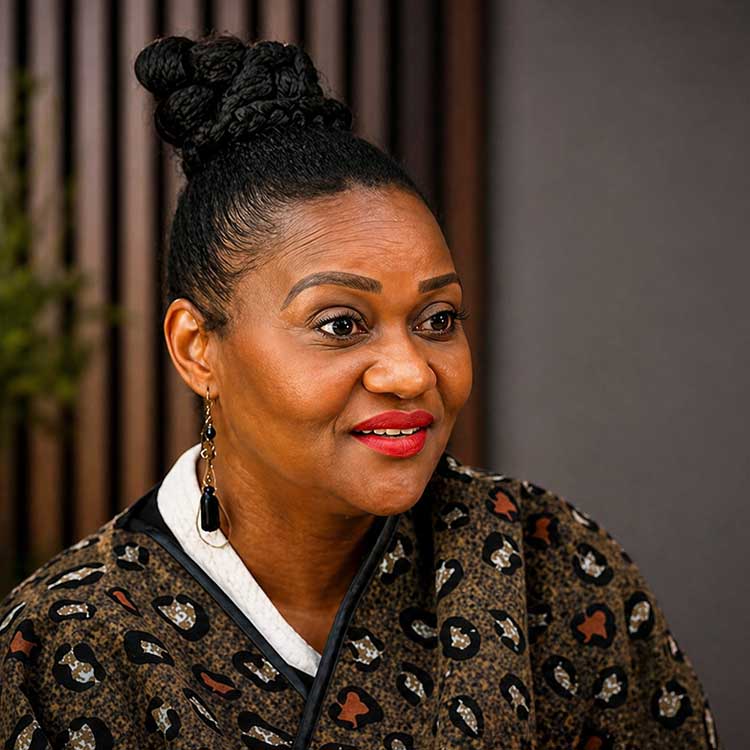
Tchiyiwe Thandiwe Chihana was born in Bradford to Zambian born parents, and her existence is a tapestry of migration through generations. She is a public-interest broadcaster & moderator, building civic storytelling platforms that connect institutions & communities. Managing Director, African Voices Platform (TV & DAB) and Co-Founder, Generative Journalism Alliance
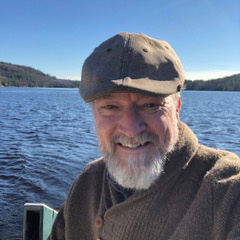
Peter Pula has been exploring the pathways to social evolution since founding the Grassroots Review in Canada in 1992. Since then he has been actively involved in federal politics, led a corporate communications firm and established the practice of Generative Journalism in an international arena.
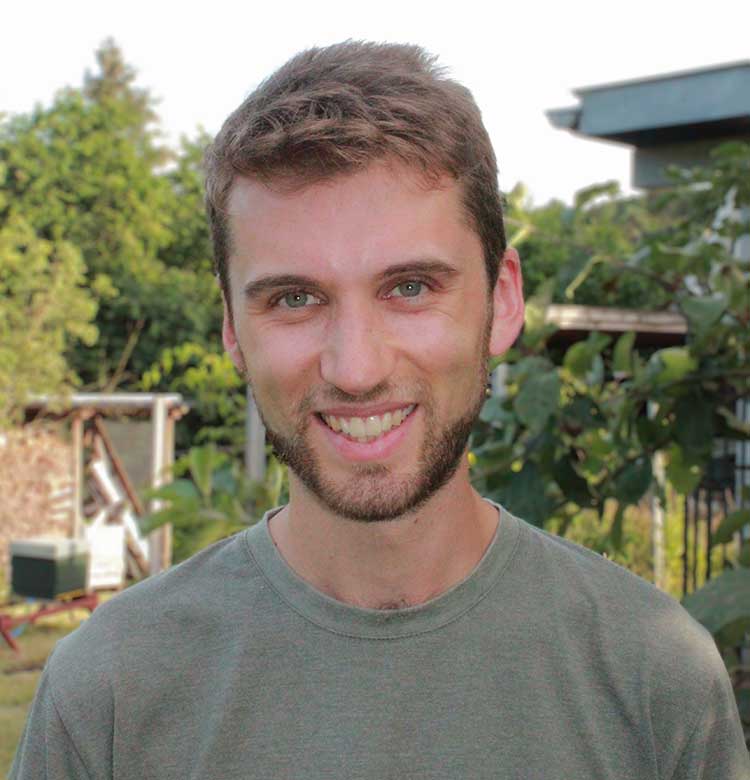
Jack Becher is a systems change facilitator and story weaver with a background shaped by social-ecological movements. They are the Co-Founder and Steward of the Generative Journalism Alliance, Beyond Patriarchy, Sideways, Foundations Earth and the Kinstead.
This conversation opens doorways to a future where we have the wide, deep skills to move through the tribal divisions that our current system stokes so effectively, towards a place where we discover what matters to us most, and find ways to give everyone a sense of agency, of meaning and purpose, of being and belonging. This is how change happens, one conversation at a time and the Generative Journalism Alliance is hosting those conversations with deep integrity.
More from Accidental Gods…
We offer three strands all rooted in the same soil, drawing from the same river: Accidental Gods, Dreaming Awake and the Thrutopia Writing Masterclass.
Our next Open Gathering offered as part of our Accidental Gods Programme is Falling in Love with Life which will run on Sunday 17th May 2026 from 16:00 – 20:00 GMT – details are here. You don’t have to be a member of Accidental Gods – but if you are, all Gatherings are half price.
If you’d like to join us at Accidental Gods, this is the membership where we endeavour to help you to connect fully with the living web of life.
If you’d like to train more deeply in the contemporary shamanic work at Dreaming Awake, you’ll find us here.
If you’d like to explore the recordings from our last Thrutopia Writing Masterclass, the details are here
Manda and Louise both offer one-to-one Mentoring Calls. Manda is fully booked just now, but if you’d like to contact Louise, details are here.
In Conversation
Manda: Hey people, welcome to Accidental Gods, to the podcast where we do still believe that another world is possible and that if we all work together, there is still time to lay the foundations for that future that we would all be proud to leave to the generations that come after us. I’m Manda Scott, your host and fellow traveller in this journey into possibility. And we often talk about building community on this podcast, about the communities of all parts of ourselves, ourselves and each other, ourselves and the web of life, and how we can build them. Particularly the communities between ourselves and other people. All you have to do is suggest that community is the way forward and very often people start backing away, largely because we haven’t learned how to do the inner work that allows us to be with other people. But we also haven’t learned how to step past or through or over the tribal divides that our current media ecosystem has put so much effort into creating. We exist in a world where huge companies make a lot of money out of division and hatred, and the race to the bottom of the brainstem that comes from evoking righteous anger; I’m right, everybody else is wrong. But what if there was a different approach? One that creates a sense of individual and collective agency. That centres the gifts and strengths of everyone in any room, in a way that lets everybody feel heard and thereby sweeps beneath the tribal divisions to the heart of things. Where we all care about a future that feels safe and open. Where we all feel confident and heard and seen. Where we can bring our soul’s growth to the table and be taken seriously.
Manda: If this is a thing and it has to be a thing, how do we get there? This week we’re talking to three members of the Generative Journalism Alliance to find out how they develop the skills needed to help people do this, and then bring them to disparate people in disparate places to bring about real world changes. So I’m going to give you a brief introduction to all three, and then we’ll hear more about them when we get into the podcast.
Manda: Tchiyiwe Chihana was born in Bradford to Zambian born parents, and her existence is a tapestry of migration through generations. She’s a public interest broadcaster and moderator, building civic storytelling platforms that connect institutions and communities. She is managing director of the African Voices Platform and co-founder of the Generative Journalism Alliance.
Manda: Peter Pula has been exploring the pathways to social evolution since founding the Grass Roots Review in Canada in 1992. Since then, he has been actively involved in federal politics, led a corporate communications firm, and he is the one who established the practice of generative journalism in an international arena.
Manda: Jack Becher is a systems change facilitator with a background shaped by social ecological movements. As co-founder and steward of the Generative Journalism Alliance, of Sideways, of Foundations Earth and Beyond Patriarchy, they blend and develop diverse practices, including the art of hosting, deep democracy, popular education, movement ecology, generative journalism, time to think, theory U and appreciative inquiry, amongst other things.
Manda: All three of these people are deeply committed to human change. To systems change. To finding ways to give every single human being a sense of meaning as part of a wider ecosystem. And if we can all learn them, and it seems as if we could, then we are opening doorways to a future where we have the wide, deep skills to move through the tribal divisions we spoke of, the ones that our current systems stokes so effectively. Towards a place where we discover what matters to all of us, and find ways to give everyone that sense of agency, of meaning and purpose, of being and belonging that we all crave. This is how change happens, one conversation at a time. And the Generative Journalism Alliance is hosting these conversations with deep integrity. So yet again, this feels like one of those life changing conversations that could shift the way that we all think and we all work. People of the podcast, please welcome Tchiyiwe Chihana, Peter Pula, and Jack Becher of the Generative Journalism Alliance.
Manda: Everybody from the Generative Journalism Alliance: Tchiyiwe, Peter and Jack, welcome to the Accidental Gods podcast. It is such a pleasure to have three people to talk to. This is a whole new step for the podcast. So we’re going to find out whether I can manage this; it’s like juggling flaming chainsaws, it’ll be fine. So first, Tchiyiwe, how are you and where are you on this beautiful sunny spring day?
Tchiyiwe: Hello, Manda. Thank you so much for having me. I am doing okay. It’s a beautiful sunny day in Rotherham today, but doesn’t compare much to where I’ve just come from, which is Cape Town.
Manda: No it wouldn’t would it? Were you surfing and scuba diving and everything in Cape Town?
Tchiyiwe: I did not scuba dive. I did not windsurf nor surfing on water. But what I did was a tour of the vineyards. I was in Stellenbosch and Powell. So into the winelands, that’s what I primarily did, to my shame.
Manda: Wow. That sounds amazing. Next time you go there, I must introduce you to to Dylan McGarry, who will probably take you surfing. He sent me pictures yesterday, he was swimming in the kelp forests where My Octopus Teacher was filmed. I now have kelp forest envy. So yeah. Grand. Thank you. So let’s move on to Peter. Peter, how are you and where are you? It might not even be a sunny spring day with you.
Peter: It is a sunny spring day, and it has me in a sunny disposition, Manda, so happy to be here with that in my mood and mind. And I am in Chelsea, Quebec, Canada, nestled between the Gatineau hills and river in a beautiful nature corridor.
Manda: Sounds gorgeous.
Peter: All things to be in a sunny disposition about, I think.
Manda: Do you speak Quebecois French as well?
Peter: I am working on some Quebecois franglais, but no, I don’t have the French landed quite yet.
Manda: Where were you from originally? I’m just trying to place your accent too. We were talking to Jack earlier about accent.
Peter: I would say I’m Canadian. I’ve travelled around the world as a child and my father was in mining, so all the spots: Indonesia, northern Ontario. And then, uh, I found myself to this place on my own.
Manda: So, okay, creating generative stories to heal the world.
Peter: As we go. That’s right.
Manda: Thank you. Jack. Moving on to you. How are you and where are you?
Jack: Hi, Manda. Lovely to be here. I am in Berlin, Germany. It’s also very sunny today. Just lovely. And I am feeling pretty good. A little bit tired coming out of five days of hosting workshops, but also very inspired and nourished by spending time with people who are also thinking about the state of the world and what we can do about it. So yeah, really happy to be here.
Manda: Yeah. And we’ll talk about these workshops later, because they sound really generative and full of emergent potential and understanding the nature of complexity and the role of narrative within it. So given that that’s why we’re here, Jack, and we’re with you, let’s stay with you. Can you tell us a bit about the Generative Journalism Alliance, what it is, how it arose and your role within it?
Jack: Yeah, sure. The Generative Journalism Alliance emerged about 4 or 5 years ago. I was working with James Lock, who has also been on this podcast, from Opus, on a project called Foundations Earth, looking at how we can build the sorts of infrastructures we need to respond inclusively and effectively to planetary scale problems. And one of the strands of that work that we were exploring and looking for different ways to tell stories about the world, being disillusioned with our legacy media institutions, and even the ways in which we tell stories within the sorts of spaces where we were active. In community spaces and activist movements, and looking for ways to not only report on the past and diagnose problems and what’s happening, but really try to build that landscape of alternatives and possibilities. And I don’t remember exactly how it happened, but we came across the work of Peter and Axiom News and the concept, principles and practices that make up generative journalism, which maybe Peter can speak a bit more about later. For us, it was this kind of aha light bulb moment. We joined a one of these workshop capacity building trainings that Peter was offering, along with some of the others who were involved in that time, including Tchiyiwe, and just were blown away by, I guess, the simplicity and effectiveness. That of asking particular questions and particular sequences, creating the container through what we call topics of inquiry, surface the stories and lived experiences of people and really centre their agency in what they want to see happen in the world. And yeah, maybe I’ll leave it there for now.
Manda: Brilliant. Yes. And we had planned Tchiyiwe to come to you, but actually, I think the obvious segue for here is to go to Peter to find out a little bit more about Axiom News and the questions and how we create those containers and give people that sense of agency. Can you speak to that a bit and anything else that arises?
Peter: Yeah. Axiom news, I mean, I could say that generative journalism has been practised sort of in an overt and explicit way, in a way we understood for probably 20 years. For me, that started back in 1991 with the Grassroots Review, which was a community newspaper that I started, because I believed that communities had everything they needed to fulfil their aspirations, all they needed was for someone to ask the right questions and share the resulting stories. And so that newspaper eventually became Axiom News, which then we worked in organisational settings. We worked for advocacy groups, companies, lobby groups, membership organisations. So we were always in an organisational setting and that’s where we really honed the practice. So there was the context of an organisation or a direction, but then there was the practice that developed of generative journalism. When we first came into contact with asset based community development, we were like, oh, here’s a theory or a way of organising that lines up with our way of doing journalism. So it explained what we were doing and why it was working. And then the same sort of experience was had when we ran into appreciative inquiry, that further sort of developed our our approaches. So asset based community development and appreciative inquiry became sort of founding frameworks for how that worked.
Manda: Can you unpick both of those? So asset based community development first and then appreciative inquiry after.
Peter: Yep. So both of them, I could say they’re strength based approaches. They’re agency based approaches. They’re deeply democratic because they begin with the gifts and the strengths of the people in the room, the materials at hand, and what it is that the people who are gathered together wish to or can create in the world. So both of those are asset based community development, and John McKnight’s the sort of acknowledged founding father of that. And appreciative inquiry which emanated from Case Western Reserve University in Cleveland. So also a very well developed strength based approach to organisational and cultural development.
Manda: Okay. Fantastic.
Peter: And then yeah, Axiom News. It’s played itself out now, but in over, I would argue, probably now 40 to 50 different community and organisational settings, it became not only a communications methodology but a change mechanism.
Manda: Okay. Could you give us a ‘for instance’ so that we’re not just talking in hypotheticals and generalities, but without necessarily naming a particular company unless you can. How would that actually work? Tchiyiwe we’re definitely coming to you soon, but this feels like we need to understand more; we need to be able to set ourselves within this. So can you give us kind of tangible explanations?
Peter: Yeah. At Axiom News, we were working for a very long time, I think they were a client of ours, partner of ours, for 15 years if not longer; an organisation called Community Living Ontario, which advocated for and alongside people with intellectual disabilities. And at the time, there were still something like six institutions in which people with intellectual disabilities were essentially incarcerated. And the movement that we were working with was to do many things, but among them was to put an end to these places. And one government had actually started to close them, but they closed them in a way that there weren’t any supports for the people who were leaving them. So we were working with Community Living Ontario and the associations in that network to track with people and share their stories. And many of the stories we we were doing were about the lives of people who were leaving these institutions, finding family members they didn’t know they had, returning to community, finding supports in community. We would interview them and the people who were supporting them, about what it is that they would like to experience in community. What it is they would like, want or need from community to bring the lives that they aspired to, to life.
Peter: And we published these stories 3 to 5 times a week in the public domain. And what would happen is that people would read these stories and come to the assistance of the folks who had deemed what they’d like to see happen in the community. And this developed some, for a lot of people, very direct benefits to their lives. Some of the people that we carried stories about over an 18 month and two year period, found partners, got married, found work, found community settings that suited them very well. And then down the road, The government had changed and there was some waffling around whether or not they would close the remaining institutions. And the pile of stories that we’d accumulated over that 18 month to two year period about people actually living, thriving lives in community with the supportive community, became a briefing book for the minister in charge, and actually found its way to the House where it was held up as, hey, here is proof positive that people can live fulfilling lives without these institutions. So that’s a classic and somewhat old example, but true nonetheless.
Manda: Brilliant. Yes. That feels very linked to what Dylan McGarry was doing in South Africa, where they collected the amphitheatre stories, and then they were used within the High Court of South Africa as evidence of tribal realities. So that’s incredibly encouraging. I was going to ask, what behaviour change have we got? But presumably they did close the institutions.
Peter: Yes, I believe they’re all gone now.
Manda: Yeah, yeah. Okay. So let’s move to Tchiyiwe. So you’re in Rotherham, except when you’re in Cape Town and working in Sheffield with Opus. So we have, as you said, spoken to several people from opus here on the podcast. Link us to Sheffield and how the Generative Journalism Alliance is working within Sheffield and what it’s doing and how you came to be involved.
Tchiyiwe: Right. Thank you so much, Manda. So for me, working with Opus, I’ve worked on multiple projects, one of those being Now Then magazine, which is a city based magazine, as well as the Festival of Debate. And for quite a while we had been thinking as an organisation about how media itself can help the city to reimagine itself, rather than just being legacy linked, but really thinking about what’s possible. And I’d already been trying to do some of that whilst Festival of debate was already kind of convening public thought. And so when we encountered generative journalism Alliance, James himself, I think, and Jack, they spoke to Peter about how that could work for us. And so we had these workshops that we sat in. And for me, I personally come to the work as someone who has lived across worlds. So I’m British born, but I’ve lived in Zambia, in South Africa, I’ve lived in the US, then back to Britain. And primarily I’ve worked across diasporic communities, whether it’s in civic media, cultural production. But what I’ve always been interested in is what stories can actually make possible, especially for people like myself or others whose lives are often narrated by institutions rather than them coming from within our own intelligence. And so being part of the team, but also coming and acknowledging my own positionality, this is how I think generative journalism landed for me. And when the work started with the workshops, it just seemed like a natural place for me to be, in that context.
Manda: So tell us about the workshops. Can you very briefly dig into those? What workshops did you run and how did they pan out?
Tchiyiwe: Okay, so the workshops initially were run by Peter and somebody else from Axiom, and we have quite a big network within the UK as well as outside, and including, of course, Jack and some other people that we worked with on the foundations of a project that Jack mentioned earlier. So we had some people from India as well participating. And so we were all exploring that question of how do you not just start by speaking about what’s broken, when you actually start to think about what’s alive?
Manda: Yes!
Tchiyiwe: Yeah. What’s alive and what’s emerging as well. And so they’re quite multiple projects. And so I can’t even remember how long that was. That was quite a few weeks of getting together. Peter might remind me.
Manda: So was it all online? You weren’t getting people from India here in person, I’m guessing.
Tchiyiwe: No, we’re not getting people from India in person. So we had people from different places. So yes, India included. We also had people from Berlin joining us. We had people from Manchester joining us, all online. We also had people joining us from down south of the United Kingdom as well, and from various other places that were part of a wider network that were all looking to think about how do we not just start from thinking about what’s broken. Because we acknowledge that things are broken, but how do we start to think about what’s alive, what’s emerging? And those are the workshops that we were having with Axiom.
Manda: How do you find people who get that? Because, you know, honestly, I want to talk to all of them on the podcast. Because this is the thing, is how do we get past the let’s just have a litany of the things that are currently triggering us, and instead start to look at what could work. You know, the H2 and H3 of a three horizon model. How do you source those people Tchiyiwe?
Tchiyiwe: Oh, that’s a very good question. I think in multiple ways. So there’s some of these networks are networks that you’re building over time, because you’re probably already thinking about what could happen, what could be different, what’s a possible future. And usually it’s not the big institutions that are going to be addressing those. Those people are being found in movements or traditionally in a systems change kind of network. And so slowly you start to find alignment. And I think that’s a lot of what happened. So in our case with things like Now Then magazine emerging on this side and having those conversations. And then also convening of people from something like Festival of Debate; you’re already starting to reach certain networks and certain circles that are already starting to think. Perhaps not coherently, or actually seeking to find a way of coherence. And I think that’s what it is. And it’s always somebody introduces you to the next person, and eventually you find this network. Then we have the people’s newsroom as well, which is also something that sits outside, but they’re looking at commoning. How do we common stories and who are those stories coming from? So you do get to find those. It’s not the easiest answer, but I think it’s more about who is doing what and starting to thread together who’s available.
Manda: Brilliant. So as we did with Peter, is there a specific instance of something that your work with the GJA has created or brought into being that might not otherwise have happened? That gives us a sense of how how this pans out in the real world. Tchiyiwe.
Tchiyiwe: Ah yeah, Absolutely. Thanks, Manda. I think the one I would default to is perhaps the very first project that was in-house from an author’s perspective. So Now Then magazine. We partnered with worker owned agencies, there’s a cooperative that holds that in the UK, and we partnered with them on an inquiry about what future possibilities could look like for worker owned organisations and what that actually means. We were just trying to unpack what that means for people within that. And this was very people focussed, rather than the organisations, which is what you would probably normally get. So it’s people’s experiences and what they envisioned and what the possibilities were for them as having agency. So, for example, we spoke to an organisation that is an architectural firm, which is probably not something you would expect. But we spoke to people there, speaking about what what agency actually is and what that should look like and what it has enabled for them and what it could enable.
Manda: And can you tell us what it is? What does agency look like for an architectural firm? Because I kind of think architects walk in and design something, tell people that they’re going to live in a brick box, go away and make it happen. But that’s probably not actually fair. Real architects, I’m paraphrasing and I don’t really believe that. But tell us, how does an architect firm gain agency?
Tchiyiwe: So yeah, that’s a good question. So I think what excited me about the particular conversation I had with the architect person that I spoke to, is their understanding that whatever they plan for cities and for buildings is infrastructure that is part of the conversations of the city, rather than just buildings. And that they are planning for what’s possible. They also plan for who it’s for. And within the context of worker owned agency, they really did have that spirit of I call on this as a human being rather than as this entrepreneur that’s just focussed on churning out buildings. But I call on these spaces that I’m working on and our direction is working on, ethical buildings, for example, where the community commissions that work and the people who run those buildings are also part of the architectural firm. And they see that as a future possibility as well. Like, what would it look like if we were all just part of this ecosystem that doesn’t sit in isolation of community thinking?
Manda: I want to talk to them too. Unless it was Charlie Fisher, in which case I have already talked to him, but wow. Yes. And then you listen to that.
Tchiyiwe: I’ll be happy to introduce you, Manda.
Manda: Yes! Why is the whole world not like that? Is the immediate question that you just get to, that’s so obvious. And we could just be spreading the word on that. Fantastic. Alrighty. Thank you, Tchiyiwe. Let’s come back to Jack then. Because you sound like you’ve just come off a workshop or a series of workshops that’s, apart from leaving you quite tired, sounded really inspiring and exciting in terms of the world is opening up. So I have a number of questions. First of all, what have you been doing? But also, is it as obvious to the people that you’re networking with, that the old system is in accelerating collapse and we have this moment in time. The cracks are where the light gets in. Other people know this too, and their version of light is not necessarily our version of light. Are you seeing an acceleration of emergent regenerative generative stories in wider populations? I suppose would be my core question. But tell us what you’ve been doing and let’s get to the second question. Does that make sense?
Jack: Yeah, it makes total sense and let’s explore. And I think it’s really important, yeah, to centre this; the context that we’re living in right now in the work we’re doing. And it’s one of the main reasons I do generative journalism and have been part of forming this alliance, is because there’s increasing numbers of people coming to terms with the collapsing of the existing systems that we find ourselves in that we’ve inherited, that are no longer fit for purpose. And there are different responses to that that many of us have experienced. There’s the despair, there’s the collapse prepper route, there’s all sorts. And there’s the rise of fascism and authoritarianism, that’s another response. And what we encounter a lot in generative journalism is this as a life giving force or a life giving practice, is how we talk about the the workshops that we do, because it’s in a way, able to metabolise the strong emotional responses that we have to watching these systems unravel. And so I do a lot of different workshops, but one of the workshops that I’ve just come out of was co-hosting with Peter, a similar one to the one that we first encountered, the work of generative journalism that I talked to earlier. Which was a 3 or 4 part series introducing people to the foundations and the principles and practices that we use as generative journalists.
Manda: And again, is this online?
Jack: This is online. Yeah.
Manda: And can you just just give us really the headlines? I realise we talked about them before, but it never hurts to reiterate. So just give us what the headline foundational principles and practices are.
Jack: Yeah. We start from lived experience. It’s a pretty fundamental one there. And we, as Peter said, treat people as knowing subjects of their of their own contexts and of the problems that they face and see in the world. And in doing so, we also centre people’s agency in that situation. And that doesn’t mean individualising the problems. That doesn’t mean that the people are wholly responsible for the systems that they’ve inherited. But if we don’t somehow centre that agency, then we end up complaining and blaming and not actually building the necessary power to dismantle and build real alternatives. And so in our practice as generative journalists, we invite people into spaces where we explore the edges of people’s thinking. And that’s what we do in these workshops, is introduce the ways in which we do that through generative questioning, through building on the work of appreciative inquiry and asset based community development that Peter spoke to. And we build containers for people to explore the edges of that thinking and their own agency in that. And what does it look like to start to build that through, first of all, conversation? But generative journalism is fundamentally also a practice of relationship building, and it’s a relational approach to storytelling and systems change.
Manda: Gosh, this feels so generative. And there are so many ways in with this. Let me have a think. Peter, I want to come to you in a moment. Actually, no, let’s come to Peter now, because Peter you’ve been doing this a long time. So I want to understand what agency means in this context. The things that are hitting me are this feels really emotionally literate. If you went out and did this in the places I live, this could well be the first time anyone had encountered someone who comes in with this degree of emotional literacy, who has the capacity to hold the space where we take you to the edge of yourself. But we don’t take you so far beyond the edge of yourself that you fall over. That’s a real skill, I think. So I’d be quite interested to know how you teach people that skill, because it seems to me there’s quite a lot of just basic empathic instinct of where someone’s edge is. This feels like kind of group therapy in a way, of what is your edge and how do we take you to it, but not not too far over it so that you go into freefall?
Manda: And how do we hold people after? Because even being part of that practice seems to me it’s going to open a lot of doors. Let’s start off with why the (expletive deleted) is this happening to me? And how do I help sort it? I’m now no longer locked in my box where I am rehearsing a set of grievances, which is what the existing system gives me to do, that’s their only response. And now I realise that there’s a world of a lot of different responses. So the holding of the original space and then the support after, feels to me crucial. And I’m guessing that this is integral to the process. So Peter, let’s come to you. But the first top of that is what does agency mean in this context? Because you’re not changing people’s lived experience. They may not still be able to heat the house and feed the kids at the same time, but you’re still giving them a sense of a world that is more open than it used to be. And if that’s not true, then tell me. Peter, over to you.
Peter: Yeah, I think there’s a pretty deep assumption around giftedness and the innate value of every person, and that we assume that everyone does have agency somewhere. And arising from their giftedness and their innate value and true nature. And so the questions that we ask really get to that. So, to be super practical Manda, one of the things that generative journalism really rests in is single source stories. The reason for that is that when we interview many people on a subject, we have to create an abstraction to fit all their stories into some coherence.
Manda: Right. Yeah.
Peter: So we’re looking for the story, just like you open your podcast with what’s alive for you. That’s one of the classic first questions, like, what about your work is most alive for you right now? Or what is exciting you most right now? And this centres a person directly in where they are right now, their current reality. So that’s where it always starts with that focus on direct and lived experience. And then the questions that unfold from there would be things like, I mean, another great one that we like to share in the workshop series is ‘at what crossroads do you find yourself with regards to your soul’s work in the world?’
Manda: Wow.
Peter: This is deeply personal, sufficiently ambiguous, and anxiety producing. And so that enlivens everything that a person has to bring or would like to bring into the world. So from there, we might ask questions like, what would you like to experience next? And that again causes the person to conjure their own generative image of the future based on where they are and where they’d like to head. You could follow that up with what steps, if any, are you prepared to take in that direction? Then what would you like, want, or need from your community to make those next steps as wonderfully successful as they possibly could be? What’s the best thing that could happen? And in that, you’ve invited people to begin with their own intention, begin with their own reality, begin with their own giftedness and their own proclivities. You’ve invited them to create a generative image of the future, which is perfectly proximate. It’s the next step that they can take right now. It’s not some grand thing. And then you’ve invited them to identify what they’d like from community, which offers the community an invitation to come and support them. And then you go again to another generative image of the future around what’s the best thing that could happen. And out of that, you have all the makings of a next step and community support for that next step.
Manda: Okay, so I’m opening this question to any of you because that feels amazing and inspiring. And there’s lots of rabbit holes we could go down with that. It seems to me, and any of you is welcome to push back on anything that I say. We’re in the middle of collapse now. And I might have answered this six months ago very differently to how I might answer it now. How do I see the future? And so my whole emphasis now is on how do we widen people’s bandwidth? Because our perception of what’s possible tends to be framed by what we have been told is possible. And the reality is likely to be very, very much broader. But I’m centering this in my own experience of when I teach workshops and we ask people to vision forwards, and we often end up with a vision of Milton Keynes in the 1950s. So for Peter, Milton Keynes was a new town that was actually built in, I think the 70s. But people end up envisioning everybody lives in small towns where all of the things are slightly higher tech than would have existed in the 50s. So we got, I don’t know, electric vehicles and solar panels, and there’s lots of grass and people are sourcing their food locally and it’s all beautiful and lovely.
Manda: And I’m not saying there’s anything particularly wrong with that, except I don’t see how we get from here to there, but it’s terrifyingly narrow in its set of possibilities. Because when you’re trying to imagine forward, you have to embrace 11 bits of your brain and you have to feed them with data that already exists in your head. And people have a very limited set of possibilities from which to feed things. And I’m wondering how, in the process of collapse, I can see that a decade ago tomorrow was quite similar to yesterday, and you could imagine a version of tomorrow that was better than yesterday, based on the parameters of existing today. Any of you, how do we widen the bandwidth or the boundary of what’s possible, so that we, instead of getting quite a wide set of narrow boundary thinking, we begin to get much wider boundary thinking of that sense of agency. Is this making sense as a question to any of you, and therefore, would you like to answer?
Jack: I’m happy to jump in and then pass it on, because I think there’s lots of different responses to this and ways in which we approach it as the Generative Journalism Alliance. One thing that came to mind I was nodding away for that reason is part of it we haven’t spoken about yet is what we do with these stories. And going from the individual single source stories to the kind of wider narrative building. And to maybe paint the picture of the full circle there, we start with building a topic of inquiry, as I mentioned, and we do that as much as we can in collaboration with the people who we are going to be speaking with.
Manda: Right. Yeah. What do you want us to ask about? What is most important? So, you know, filling in potholes or something more exciting? I spoke about potholes in the last podcast, that’s why. Okay, so you find a topic of inquiry. Actually, seriously, because potholes is not going to be it; what kinds of things any of you, do people come up with as their topics of inquiry? Tchiyiwe then Peter, just throw me some topics of inquiry that have arisen in workshops that you’ve run that have stuck with you.
Tchiyiwe: I think for me, probably this one was a bit more complex, as it should be really, it shouldn’t be as easy to get to those answers. But when we had a piece of work with Lankelly Chase, that one tested practice. So for a piece like that, you’re not just looking at legacy, it’s more than that. Especially when you’re going to be speaking to over 50 people. So the question, the enquiry, was around ‘can story honour complexity without collapsing into either institutional self-congratulation or institutional indictment?’ If you think of it in that context, but then you’re speaking to individuals and hearing their perspective on what they see as possibilities for the world of philanthropy. Not that we have arrived at an actual proof of what the possibilities are, but I think those answers frame up what the scope could look like for philanthropy in the future, or lack of it.
Manda: Right. And for those listening who don’t know, Lankelly Chase is one of the very big philanthropic organisations worldwide, I think. Okay. Interesting. Peter, is there a topic of inquiry that landed for you in this frame that would be interesting. Just to give people a for instance, just because otherwise it becomes general again.
Peter: Well, I think that’s part of it, is that the topic of inquiry is always shaped around a common question. It can be as as general as you like or as specific as you like. I just crafted one this morning.
Manda: That’s handy. Here’s the one I made earlier.
Peter: It goes like this: what if we were able to seed more spaces where people have a felt sense of a many to many deep code shift?
Manda: Oh wow! Can I be part of that?
Peter: We might be able to rig that eh? What do you think?
Manda: God. Yes.
Peter: So the questions are always very specific, but the idea of a topic of inquiry is to carry a series of interviews with individuals on a theme, and that’s where Jack was going in terms of how the topic of inquiry framing actually creates coherence and cohesion in the inquiry. So there are some boundaries for it. And generally, what we find is once you’re 8 to 12 interviews in, you start to realise that there’s another inquiry showing up. So you reshape and you revisit and you come up with another question. So sometimes they start very generally until you start to get into it, and then something very particular shows up and you really zero in on one that’s very specific. So you’re always making meaning out of it. And always, I like to say, discovering the boundaries of the community.
Manda: Right.
Peter: So even as you’re wading into this, you start to feel now there’s discomfort, now there’s excitement. So where are the boundaries, both in terms of current understanding, but also what’s emerging and how people are feeling about that. So you play a bit with that. You sit in the perturbation of that. And when you feel that sort of anxiety around an inquiry, that excitement, then you’re probably expanding the boundaries of the conversation a little bit.
Manda: Yes. Jack, we’re going to come back to you because I realise we got halfway through a question and didn’t finish it. But I’m still really curious, Peter. And we’re with you, so let’s stay with you for a moment. But I’m really curious about the aftercare. Or is that just not an issue? Am I just being paranoid because I worry about aftercare? But it seems to me that you are opening people’s brains, and that sometimes leaves people feeling a sense of kind of spiritual vertigo. Do you need aftercare or do you have a way of holding the container and bringing everybody back to a new reality? Because that’s what you’re doing, is you’re kind of taking people into a quantum field and shifting them into a different reality. And then at some point you’re going to go, okay, guys, you’re back. The world is never going to be like it was, but hey, you’re on your own. How do you manage that?
Peter: Yeah, there’s quite a bit to it. I mean, Jack spoke earlier about how it’s a very relational approach. And one of the first things we teach is the capacity to be fully present to your source. And this can lead, you know, as you as you walk through this, we’ve even talked about generative journalism as a healing art.
Manda: Yeah. It feels like it.
Peter: So first off, your story is not being co-opted or extracted, abstracted into something else. It’s your story. It’s your authentic story. We are also very firm on the story being the source’s story. So nothing goes to the public domain without our sources complete approval. All right. So unlike conventional journalism, we’ll check to be sure that our source feels like they are authentically and well represented. There are duty of care questions in some situations, where a source may or may not have contemplated the consequences of what they’re sharing being made public. So we sit with that and we’re careful with that. The other part of caring for a storytelling culture is to have a consistent place where the stories are being shared, so that there are many stories. So that your story is not a flash in the pan that isn’t nested inside a wider context and narrative. So there’s quite a bit of care built into the whole story.
Manda: Right. Okay. Thank you. That makes a lot of sense. So, Jack, let’s come back to you before we return to where we were before. I have a secondary question which arose from what Peter said. So you start off with your container and your question, and at some point, eight or 10 or 12 conversations down the line, it becomes apparent that the question might need to morph slightly. Do you then go back to the beginning and re-ask your new question of the people you already talked to? Because I could imagine that just ends up as an iterative loop where you just keep talking to the same dozen people, or do you just hold their stories and then reframe the question and start with new people?
Jack: Yeah, a bit of both. We’ve done inquiries where we return to the same people, but not only, it’s expanding. And one of the last questions we often ask in an interview is, who else should we be speaking to?
Manda: Right? Yes. Okay. That makes sense.
Jack: I think you ask this sometimes at the end of your podcast or even throughout Manda as well. It’s really important to build that relational field and not be only coming in with our own biases and subjectivities, but expanding that. And yeah, I think Peter really spoke to complete that circle of what happens next as the topic of inquiry. And that’s informing it, and we’ll come back to it and that’s, as you said, an iterative process. But the importance of having them nested within other stories; I just want to underline this because it’s so, so important. So the work I do with Beyond Patriarchy is working primarily with men and engaging them in educational work to unlearn patriarchal patterns and look at what real alternatives look like in practice, not just in intellectual theory. And I’ve been bringing generative journalism over the last two and a half years into this work, which has been a fun challenge, let’s say.
Jack: And one of the main challenges we face in that is how do we create the conditions for people to feel safe or brave enough to share stories in public space about what’s happening, about the edges of their thinking. Because this work really is bringing people right to that edge. I interview people at the end of learning journeys, these kind of several month programs, and where there’s been often transformative moments and shifts. So you’re really at this intersection of personal and systemic change. The world in which people are living is changing, and deep inside them there are big shifts happening. And one of the ways in which we do that is by collecting and harvesting the learning from multiple stories, and then sharing those stories as part of a joint inquiry that go out into the public. And there are series and there’s loads more we can talk to, which we probably don’t have time for today, about how we do the post-production side of that and involving people in the process of it, so that they feel like they’re authentically represented as that goes live. And that they maintain some sense of ownership over that story in relationship with us as, let’s say, stewards, facilitators, or weavers of those stories as they go out and contribute to these wider narratives.
Manda: Okay. Yeah, this is very much feeling like there’s going to be several post podcasts on this one in more detail. Because I love that Peter said and you reiterated; this is a healing practice. And it’s healing systems by healing the people within. Somebody said to me recently that regulation happens one nervous system at a time, which is true. Dysregulation seems to happen one Trump truth social tweet at a time across a scale of 8 billion people, which is a bit sad. It’s kind of like it’s easy to light a fire and quite hard to put it out again. But then it’s teaching us how dysregulated we are. And then each time the regulation happens, then the resilience comes back. Alrighty. Thank you Jack. Thank you Peter.
Manda: So Tchiyiwe, let’s come to you, because this is feeling as if we’re creating a story out of stories. What you’re doing is going to a group of people who are already in some way a community, helping them to discover what it is that matters most to them collectively, which one assumes matters most to each of them individually, probably. Then you’re taking them to the edges of themselves. You’re helping them to find agency and autonomy, and that they each have a sense of ownership over their own story. But then, I am also guessing, ownership over the collective, what we might call meta narrative. That’s probably not the best word, but let’s call it that. And you have an inquiry that is emerging that starts off with whatever we thought it was. But as we grow as a community, that inquiry shifts and changes. And in this process of what Peter referred to as this is a healing practice, people are making meaning of their lives, of their situations, of their agency, and of how they want a future to unfold. And this actually feels to me the core of it. If I am right, that human intention is one of the most powerful forces on the planet, you can only intend what you can imagine. And it seems to me that what you’re doing within this generative journalism Alliance practice is helping people to hone their capacity to imagine different futures. First of all, is that true? And second, can you talk us through how this meaning making is held by the practice that you’re doing?
Tchiyiwe: So firstly, yes, it’s true. I think you’ve given a good description of it. I was just thinking as Jack and Peter were speaking actually to this question. And quite recently, Peter and I have been speaking to another organisation that wanted to get into an inquiry, and we thought it would be an inquiry that could be developed from having meetings. We’d met a few people from the entity, and then they brought in more people so that we could actually start to develop what we thought at that time, was to develop the topic of inquiry. So here is where I see generative journalism practice being something that helps to bring meaning for people, and which I consider to be part of the healing process that you were you were probably talking about. When we’re speaking to people, they understand their lives in context, not just in isolation, because we’re bringing together multiple stories. And so they see themselves in the bigger story, but they still see themselves. And what we found out on this particular conversation is that actually we needed to spend more time harvesting, listening and hearing and seeing that actually what they thought was a collective direction of meaning, was actually not the same. It was fragmented in how that was happening. And we just needed to strip it back and start over. And this is how I find that meaning can come out, because now you understand where everybody else is in the story that you perceive. And so you’re producing meaning in a story that is collective. So I think that’s one of the things that can do. And at that point, you can abandon developing the topic of inquiry that you initiated and start to go in the direction that actually feels emergent and meaningful to the space that you are in.
Manda: God, that sounds so exciting, people. You have actual emergent stories and you have then a group of people, a critical mass of people who are feeling the process of emergence happening. And presumably they’re all on board? I’m wondering, do you end up with people wanting to hold on to a concept or a fragment of it and, and it’s emerging around them and there’s resistance? Or are people much more fluid than I would imagine myself to be?
Tchiyiwe: I’m going to probably say that people anticipate that there might be tensions because it’s a process that allows you to think and feel as you are. So not that I’ve ever had to ask that question specifically, but it’s an understanding, I think, of how we position what the topic of inquiry is able to do and what it’s supposed to help with. That’s how I would think of that one.
Manda: So people are able to become fluid enough to engage with the shifting topic and to abandon what might have been, at some point, quite a strongly held belief system. And let it go and go with their colleagues or their community or their work group or their place group or their home group or whatever, and move into a new space. This is amazing and must be a learning in itself of letting go of firmly held positions, I imagine. Anybody can answer this one, because this is why it feels like group therapy to me. Yeah, Jack’s nodding a lot. Peter. Okay. Peter, you look like you’re about to say something.
Peter: Yeah, I think there’s something interesting in that because the questions are so deeply personal and the topics of inquiry are framed. Quite often those, how did you call them, Manda? These deeply held convictions or these belief systems?
Manda: Belief systems or whatever, yes.
Peter: The outer layer, the presentation of these deeply held belief systems doesn’t show up. Like we seem to get underneath a lot of that, because we’re dealing with direct and current reality, rather than the abstracted pressures that cloud our judgement and crowd out who we are. So interestingly, I don’t find, for example, that the politics and ideologies show up. Very often you can hear sort of signposts of a person’s ideology or perspective or tribe, but they don’t feature or factor particularly strongly. So I think we’re getting under that somehow.
Manda: Thank you. This is key to how we move forward then, isn’t it? Because you’re getting under. That’s actually magic working in real time. Jack, you put your hand up. Go for it.
Jack: Yeah. I just want to share one of the very practical ways that we actually do that, which in some ways, yeah, as we mentioned, Manda you do at the start of this podcast, asking where you are, how you are and what’s alive for you as well. And something we do throughout the interviews that we conduct, but especially at the beginning, is we don’t invite people’s, what we call institutional narratives. We invite what and who they want to be in this moment and into the emerging future. And it’s not to dismiss or invalidate the experiences that people have had, but we build and retell these stories about ourselves that are not necessarily the ones that are going to help us shift into something new, unknown at a radical edge.
Manda: So I was listening to a Thomas Hubl podcast a few weeks ago, with someone who works in big businesses, but I’m guessing you guys work in businesses as well. And she said, you get the people whose job is to be armoured. They’re the CEO or they’re in the C-suite or something. And their job is not to turn up as a human being, their job is to turn up as what they think their role is. And 3 or 4 days down the line with her particular process, she’s got them being vulnerable with each other and weeping and actually being human. It sounds like you’re getting people to be human on day one. How do you do that? Or am I wrong that you’re going into situations where you then got a spread of people within, say, a company, and you’ve got the people who feel that their job is to present a version of themselves. How do you, on day one, get the authentic person to turn up? That strikes me as actual magic in real time. I’m being serious about that.
Peter: It’s interesting in an institutional setting, because the people who are higher up in the in the hierarchy are actually less free.
Manda: Yeah, quite often.
Peter: So it’s much more difficult to hear them speak from a personal perspective, because they carry the mantle of having to speak on behalf of the organisation. They have an institutional platform, they’re supposed to speak the voice of the institution. So I found in my work, getting the higher ups, so to speak, to open up is more difficult and tricky, and their comms people are usually all over it. So what was interesting in the early days of working out how generative journalism works in an organisational setting, we actually found that the executive suite and people in upper management had fewer stories in mind than we could work with. So we were pressed into the grassroots in the front line more and more often, and there people were very happy to be heard and listened to and had things that mattered to them and that they wanted to bring to life. And I like to say we’re not telling stories we’re asking stories. And so when you’re in the grassroots of an organisation, you’re with the people of organisation and you’re sharing their stories, there’s a lot more life that comes to live in the organisation than what you hear from the institutional narrative. So I host dialogues too, and I’ve only ever had two people step out of a small group setting, in a triad, and one was an extremely vulnerable person, someone in a very, very vulnerable situation. The idea of just having two people listen to you without interrupting for three and then six minutes was overwhelming to her. The other one was a senior high level executive in an insurance company. And that person was also very much discomforted by the being seen and heard. For what that’s worth.
Manda: Right. Well that was kind of fitting my stereotype, but I mean, that’s two in I don’t know how long, but it’s going to be a while. And that means that a whole bunch of other people were able to wear that. Because even holding eye contact with someone for 60 seconds can be quite hard for people. So. Gosh. And again, this just feels like this is where the healing comes from. And Peter, I want to go to Tchiyiwe because you looked like you had an answer for that too. But just before we get there; in these kind of institutions where you end up at the grass roots, and that’s where the aliveness is, are the high ups able to embrace the aliveness and become more alive? I guess that’s going to be how long is this piece of string and it’s context dependent. But have you had times where the high ups were able to embrace it? And then did you see institutional change? Because it seems to me that’s the bottom line, is does their behaviour change? Does Coke stop making sugared carbon water? Then we may change. If everybody got a little bit fluffier about making coke but continued to make coke, then it’s probably not so cool. Did you see actual change? And I’m not suggesting you ever worked with Coke, that’s my just go to metaphor for I just want Coke to stop making coke, basically.
Peter: I mean, I can speak to that and take it or leave it. The buy in and support from the leadership in an organisation is a pretty critical question here. I’ve had experiences where a CEO would love the idea, buy into it and turn this over to a communications department. And the CEO was looking for emergence, innovation to spark culture. And the communications people found that what we were finding was off script. So that becomes problematic. Whereas if you can find an organisation that’s ready to nest generative principles and a learning culture into the way they go about things, then they actually embrace it. And when they embrace it, they’ll actually pay attention to the stories that you’re publishing. And when something starts to show up, they’ll put resources behind it. They’ll say, okay, what? What can we offer to the community? What can we make happen for them? And then things really start to take off because everyone’s stories who’s published turns into a thing, and attracts the resources and the support. So in other cases, we’ve even seen a culture divide emphasised by the fact that we’re getting stories from the ground, and there’s another group that just doesn’t want to move in that direction. And that can cause a lot of change. So the way change shows up can be in so many different ways, whether it’s the way leadership changes its behaviour, whether it’s a series of grassroots movements that start inside an organisation that just sort of take off like wildfire, and people are doing all kinds of great stuff. The story I shared with you about Community Living Ontario, we hadn’t expected to be lobbying for the closure of institutions. We were trying to aid people in how to manage the fact that some that are already closed hadn’t been done particularly well. So the change shows up in usually unanticipated ways. And if you’re open to it, you’ll see it.
Manda: This is the nature of emergence. Exactly. Brilliant. Excellent. Guys, we’re going to have to wrap up soon because we’re already over time. But Tchiyiwe, you looked like you had various things that you wanted to respond to in those. And while you’re thinking about those, I also want anyone to answer; are we seeing a change in the nature of the change? So my belief system tells me that we’re in the middle of collapse, and therefore, people are either going to cling very much harder to the old way in the hope that they can drag everything back to a place where they felt safer, or they’re going to go (expletive deleted) to this; we’re going to change, so let’s throw ourselves at change. And I’d be really interested to know where you are seeing things on that spectrum. Let’s head to Jack. Jack, this is a kind of closing off, but also anything that’s arisen for you that you felt you wanted to say, now is the time to say it.
Jack: Yeah. What comes to mind just now is the importance of creating these safe or better yet, brave containers for people to not only be brought to the edge of their thinking, so that we can push the boundaries of that, but so that people feel seen and heard, as Peter said. So often where people are competing for air time, for space, to be the loudest voice in the room and where there’s this equalising going on, and actually what we experience when we’re interviewing people is that there is enormous fear about actually being seen. For not just what they represent, but who they are and what they feel and what they think in quieter moments. And I think we don’t get to the large systemic change unless we build these small containers in the first place, because we just keep on representing these institutions that keep us locked into the past. And that needs to happen at all scales. That needs to happen wherever we are right now. And I think there is an enormous number of intersections between journalism.
Jack: And I really want to demystify the journalism part as well, throughout this whole conversation. I didn’t name that I often feel like an imposter journalist. I’m not a journalist by trade, and I want to maybe, for those listening who are thinking, oh, this is interesting, but I’m not a journalist, to also invite that in and welcome that in. I came across this work with a background in movement building, community organising and research, and there’s a lot of overlap there, but not journalism. And the sorts of practices that we deploy and that we try to hone and cultivate are borrowed and built on and synthesised from lots of different spaces. We believe in the power of people coming together and hosting, in ways that are generative as well as asking those kinds of questions that are generative. And so much of that is attunement to the relational field. And they’re ‘soft skills’, often the harder ones to navigate. But I just wanted to welcome all that in as well.
Manda: Thank you. Yes. So we’re making sure that people know that you don’t have to be journalism trained to do this, which is probably just as well. I read an article not that long ago by someone who was probably in our bubble, but who had gone to one of the journalism schools in the States. And Kissinger had come in, so it was a while ago, because when he was alive. And every single one of the journalism students, this was top journalist school in the States, was basically asking what’s your favourite colour and what do you enjoy watching on television? And this guy asked, how do you sleep at night? And Kissinger said, I don’t know what part of the internet you work on, son, but it’s not the right one. But it sounds like not being journalism trained is probably quite an asset in this field. Peter, you were probably journalism trained.
Peter: No I wasn’t Manda and I actually found in the history of Axiom news that we had some trained journalists who were awesome but most of our best had not been trained conventionally.
Manda: It’s relational field, exactly what Jack says. It’s attuning. It’s being able to be authentic in company with other people in order that they are able to be authentic, and then holding the space in which authenticity is allowed to happen. Which feels really radical actually in our current world, but amazing for people just to experience that. Let’s go to Tchiyiwe and then Peter, if there’s anything else you wanted to say, we’ll come back to you. But Tchiyiwe, over to you.
Tchiyiwe: Yeah. I think I’ve been reflecting as we’ve been talking. And the thing that sits most with me when it comes to generative journalism and why I want to circle around to that, is narrative agency. I think the conditions that are created by the practice itself is, is conditions that align with how people would want to be able to tell their stories in order to see themselves in what’s being shaped. Whereas with large institutions or institutional power, people generally can’t see themselves in the narrative that’s being shared in the wider story. So I think for me, that’s the place that I sit at now with this work.
Manda: Brilliant. Okay. All right. So we’re centring the capacity to sense the relational field and to give people narrative agency. Brilliant. Peter, any last words from you?
Peter: You said something earlier about coming to terms with collapse, Manda. And I think generative journalism is a pathway to participation as a way to respond in reclaiming our capacity to create our own well-being and to make that visible. And so it seems to me that generative journalism and practices like it may yet still be coming into their time.
Manda: Yes. And the workshops that you run, they sound so exciting. I want to come on all of them. So you will provide me with lots of links, people, and we will put them in the show notes so that people who want to can follow up. But there we go. We’re an hour and 15 minutes. It’ll let it down a little bit. We could go on for hours, literally, and we definitely need to to come back and explore other areas of this. But in the meantime, Tchiyiwe and Peter and Jack, thank you so much for coming on to the Accidental Gods podcast. This has been really inspiring and enlivening and has given me great hope for the world, which we needed this week. Thank you.
Peter: Thank you Manda, for all you do.
Tchiyiwe: Thank you.
Jack: Thank you.
Manda: And there we go. That’s it for another week. We are definitely going to follow up on many of those conversations. There’s so much richness in this, so much that people are doing that runs under the radar, or at least runs under my radar, and I’m guessing possibly runs under yours too. So I am enormously grateful to Tchiyiwe and Peter and Jack for their time, and for the integrity that they bring to all of the work that they’re doing. To their sense that everybody matters, that everybody has a story to tell, that everybody’s story is theirs, that there are ways of behaving and being and interacting together that are so different from what we see on the world stage. So please do follow up the links in the show notes. If you get a chance to engage with any of this work, then go and do it. And in a loosely similar vein, a friend of the podcast, Donnachadh McCarthy, has sent me a link to the Media Sovereignty Act petition. This is only relevant if you’re in the UK, but almost half of our listeners are. So it’s a parliamentary petition. If you are a UK voting citizen, you can go and sign it. And the key headline is do you want Britain to take back control of our media and democracy from the international billionaires who have hijacked it? Which is more or less what we were talking about at the start. These are the people who have monetised the divisions and the tribalism of our culture, and they are really upset about the fact that anybody chooses to step over the lines that they have defined as those that are acceptable within our parliamentary governance.
Manda: So I’ve put a link in the show notes. If this interests you at all, go and explore. And if you are eligible then please do sign it. That apart, we will be back next week with another conversation. In the meantime, huge thanks to Caro C for the music at the Head and Foot. To Alan Lowles of Airtight Studios for the production. To Lou Mayor for getting us up onto YouTube, to Anne Thomas for the transcript, to Faith Tilleray for the website and all of the conversations that keep us moving forward. And as ever to you, for being there, for caring, for listening and for sharing. Word of mouth remains our best way of connecting with people. So if you know of anybody else who wants to understand the ways that we can move past our tribal divisions, where we can begin to connect, to find everybody’s stories, to build a story of what matters to all of us, then please do send them this link. And just before we end, I want to remind you that we have a gathering on the 17th of May: Falling in love with life. So if you want to come along and explore how we can all fall in love with living, whatever is happening in the outside world, then click on the link in the show notes. It’s from 4pm till 8pm UK time. So do whatever arithmetic gets it into your time zone and we’ll see you there. And that is it for now. See you next week. Thank you and goodbye.
You may also like these recent podcasts
Making Glorious Trouble with Uffe Elbaek, activist, system builder and author of Doubt, Hope, Action
We talk a lot on this podcast about the need for a new system: politically, culturally, in business, media and art…in everything we do. And yet, we don’t often have the opportunity to talk with someone who has set up a new political party – still less one explicitly predicated on the core values of courage, generosity, transparency, humility, humour and empathy. You’d think it would be hard to argue against these, but, as Uffe Elbaek discovered when he entered the Danish Parliament…the system doesn’t always want to be courageous, or transparent, or generous, or to embody humility, humour and empathy.
We All Came By Boat’ – exploring Ireland & Britain’s ancient myths and the world’s future mythologies with Clare Murphy
Cupla Focal! (Irish Gaelic for ‘A Couple of Words’) – so here are a couple of words and then a few more: what happens when the Fires in our Hearts become tsunamis of feeling that take us beyond the narrow imaginal cul de sacs our culture has created, and throw our doors wide open to the wonder of the past and the absolutely unknowable, glorious, constantly surprising possibilities of the future we haven’t built yet?

Love, Anger and Betrayal: Stories from the front line of Climate Action with Jonathan Porritt and Daniel Knorr
“Climate activists are sometimes depicted as dangerous radicals. But the truly dangerous radicals are the countries that are increasing the production of fossil fuels. Investing in new fossil fuel infrastructure is moral and economic madness.” Antonio Guterres, UN General Secretary

Honouring the Web of Life – Thoughts from the Edge #5 with Manda Scott
How does it feel to honour everything: the things we take for granted, the things we judge as being bad or wrong, the things that disturb us, as well as the things whose loss we grieve so deeply? Manda explores the idea that shifting to a place of honouring can transform our entire worldview and help us to find meaning and purpose in a world on fire.

STAY IN TOUCH
For a regular supply of ideas about humanity's next evolutionary step, insights into the thinking behind some of the podcasts, early updates on the guests we'll be having on the show - AND a free Water visualisation that will guide you through a deep immersion in water connection...sign up here.
(NB: This is a free newsletter - it's not joining up to the Membership! That's a nice, subtle pink button on the 'Join Us' page...)