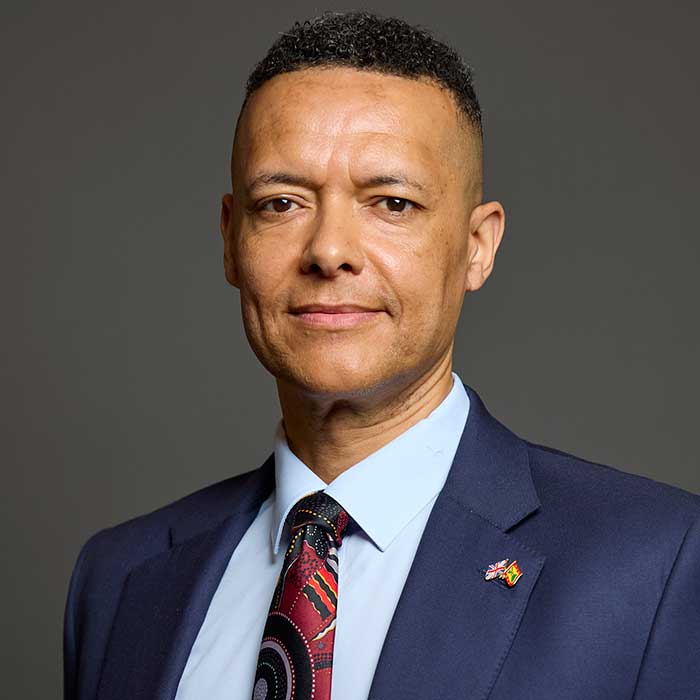
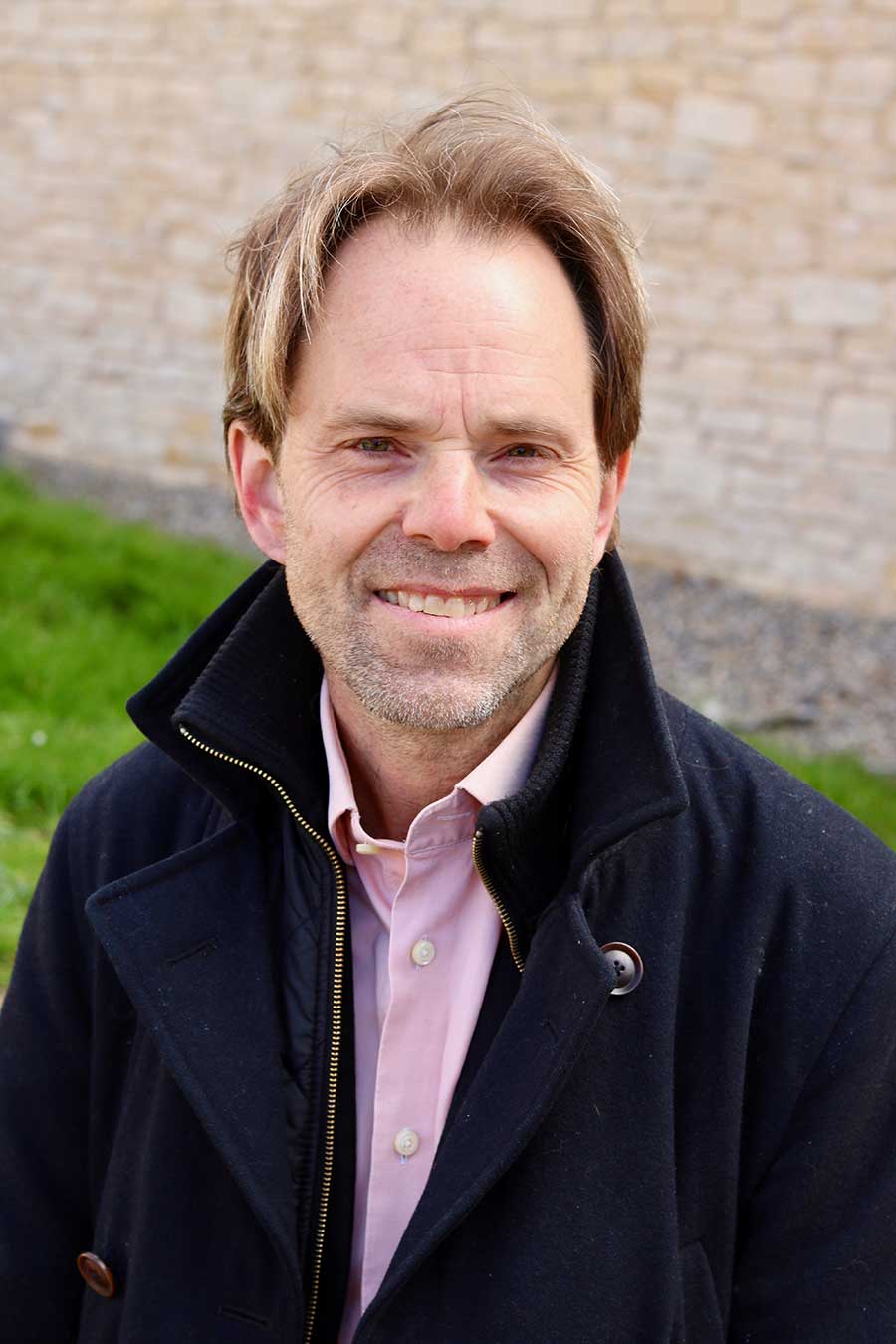
#341 Grown Up Politics: A Chance for Change – Round Table with Neal Lawson of Compass and Rupert Read of the Climate Majority Project
We’re at a pivotal moment in world geopolitics. Increasingly the masks and the gloves are both off – but it’s not a binary choice any more between two sets of suits in slightly different coloured ties: now we have the right showing its true colours – and a chance for the progressive majority in this country to find its feet and lead us towards a genuinely thoughtful, emotionally literate, high-bandwidth politics that ditches the toxic tribalism and instead lays the ground for a future that could actually work.
We’re joined this week by Neal Lawson, co-founder and Executive Director of the progressive pressure group, Compass; and Rupert Read, Co-Director of the Climate Majority Project. Neal is a member of the Labour Party, and Rupert of the Green party and we came together to discuss the forthcoming by-election in Makerfield, where Andy Burnham, Mayor of Greater Manchester is standing as a candidate, with a view to standing for leadership of the Labour Party if he wins. His main challenger is the Reform party led by Nigel Farage. The Greens are newly invigorated after their recent win in the Gorton and Denton by-election in Manchester, so there has been a lot of conversation in progressive circles as to whether the Greens should step away to give Burnham a clear run. This seemed a good moment to have a vigorous conversation – to explore the possibilities and potential and the routes forward should Burnham win.
More from Accidental Gods…
We offer three strands all rooted in the same soil, drawing from the same river: Accidental Gods, Dreaming Awake and the Thrutopia Writing Masterclass.
Our next Open Gathering offered as part of our Accidental Gods Programme is Walking the Path of the Inner Warrior which will run on Sunday 28th June 2026 from 16:00 – 20:00 GMT – details are here. You don’t have to be a member of Accidental Gods – but if you are, all Gatherings are half price.
If you’d like to join us at Accidental Gods, this is the membership where we endeavour to help you to connect fully with the living web of life.
If you’d like to train more deeply in the contemporary shamanic work at Dreaming Awake, you’ll find us here.
If you’d like to explore the recordings from our last Thrutopia Writing Masterclass, the details are here
Manda and Louise both offer one-to-one Mentoring Calls. Manda is fully booked just now, but if you’d like to contact Louise, details are here.
In Conversation
Manda: Hey people, welcome to Accidental Gods, to the podcast where we do still believe that another world is possible, and that if we all work together, there is still time to lay the foundations for a future that we would all be proud to leave to the generations yet unborn. I’m Manda Scott, your host and fellow traveller in this journey into possibility and amidst the ongoing political chaos of this country and the world, I am joined by two of the titans of our political sphere. Rupert Read is the founder and current director of the Climate Majority Project. He is also a Green Party member and has stood for the Green Party in the past. Neal Lawson is the co-founder and chair of the centre left pressure group Compass, which works tirelessly to bring about proportional representation in the UK and allow the progressive majority to create a parliament that is progressive and emotionally literate, and has the bandwidth and the willingness to address the chaos of the poly crisis as it stands. This week’s episode is very UK based. We are in a moment of potential total transition in this country, and I wanted to talk to two of our commentators, partly because they are both deeply involved in what’s going on. I hope and believe that what we discuss here has translation in the wider world, because the more we can create exemplars of what progressive politics looks and feels like, the easier it is for other people to do the same. We’re already seeing this with Zohran Mamdani in New York, and with Zach Polanski’s skill in the UK. So here we go, people of the podcast, please welcome Neal Lawson of Compass and Rupert Read of the Climate Majority Project.
Manda: Welcome to the Accidental Gods podcast, Rupert Read of the Climate Majority Project and Neal Lawson of Compass. Thank you both. So our standard opening: Neal, how are you and where are you on this exciting, politically charged Monday morning?
Neal: I think I’m well, I’m usually well, Manda, thank you for asking. I’m in the New Economics Foundation’s offices in the South Bank of London, which is where Compass is based. It’s nice and bright. We just had a big conference at the weekend of 750 people, so we’re slightly in the tail of that. You know, the enjoyment of that and living freer of the stress of not having to do it for another year. But there’s plenty more things coming up down the track, I think Manda. So yeah, I’m good and I’m excited and I’m energised.
Manda: Yeah. At some point tell us about the conference because that will be really interesting. We will fold that into the conversation somehow. Thank you. Why did I not know you were at the NEF offices? That also is quite exciting. Rupert, how are you and where are you? This is actually the 1st of June today, so let’s honour the beginning of a new month. How are you and where are you?
Rupert: Yeah, and a new season. I’m looking out onto my third of an acre, which I’m incredibly fortunate to co own here in rural Norfolk. It’s incredibly vibrant out there, pre potential super El Nino. And I’m excited and also pretty disturbed at the moment that we’re in. Let’s not forget that this has got very much two sides, right? The stakes are enormous in terms of what’s possible and what will occur if we fail.
Manda: Yes. Thank you. Absolutely. Yes. We’re all frantically saving water in an effort to make sure that we grow something ahead of the Godzilla El Nino. Thank you met office. All right, so let’s go back to Neal. We in the UK are in quite an interesting political moment where there is a lot to gain and a lot to lose. And I feel this is quite an interesting microcosm of the macrocosm of the world. We learned this morning that the super hard right are doing quite well in the Columbia elections, at least in the polls. And at the same time, Spain has a really good red-green coalition. There’s a lot of variability, but it feels to me as if the masks are coming off, the gloves are coming off, and the stakes are more obvious now than they perhaps have been in the past. So for people in and outside the UK, Neal, can you frame for us the nature of what’s happening in the UK at the moment, politically?
Neal: I think Manda what’s happening is the most inevitable thing that I’ve ever kind of had the pleasure of witnessing, is happening before our very eyes. A Labour government that was elected nominally on a huge seat, massive majority. I mean, just off the Richter scale, 170 seat majority, is crashing and burning before our very eyes. But as I said, it was inevitable. It was inevitable because it was a loveless victory won not by the, the classic ‘it’s always governments that lose elections’. The Tories were terrible. I mean, they were off the Richter scale of awful in terms of lack of delivery, but just chaotic leadership of the country. I mean, just unbelievably terrible. And Labour did this small target strategy, gave no one anything to aim for, aim at, did nothing, promised very little. And everyone thought, well, not everyone, but you know, people assume that, okay, the grown ups are back and what we need is stability. This guy looks like he knows what he’s doing; he looks like a competent, stable, grown up. Let’s just give that a go. And and let’s be relieved of the worry of volatile politics. But I had the minor luxury or not, of being able to kind of walk around the vehicle before 2024, kicked the tires, looked under the bonnet and it was really apparent that there was absolutely nothing there.
Neal: I mean, it’s not true there was nothing there. There was nothing positive, hopeful, progressive, visionary, strategic, programmatic, coherent, sustainable there. There was a group of people who I think arrogantly believed that they were both morally and competently better than the Tories, and that’s all that you required in order to govern. And there were another smaller group of people around them that were only ever interested in a kind of hyper factional politics to ensure that the Labour Party was theirs for evermore, and that anyone who didn’t completely agree with them would be completely kicked out. And so you’ve got a kind of pretence at grown up politics, a pretence at competence. But those things are absolutely impossible if you have no vision, no strategy to govern, no coherence about who you’re governing on behalf of how or why. And it was always going to unravel. So I’m not surprised about this at all. And everyone in the Labour Party and around the government knows that Keir Starmer will not be the leader of the Labour Party or the Prime Minister come the next election.
Neal: So therefore, there’s been this kind of conversation, continual drumbeat, you know, heightening kind of race to see who, when and how he can be replaced. And by far and away, the most popular person who could replace him in the Labour Party and in the country is Andy Burnham, the mayor of Greater Manchester. So someone from outside of Parliament, and to be the leader of the Labour Party and Prime Minister, you have to be in Westminster. So Burnham has been on a race to try and find a seat. And a seat can only come up if someone stands down and creates a by election. There was one created earlier in the year in Greater Manchester, his neck of the woods in Gorton and Denton, but the bureaucrats in the Labour Party decided, in their infinite wisdom, to block him from being the candidate. Then, much to the relief of the Greens, who then went ahead and ran a really good positive campaign with Hannah Spencer and thankfully beat reform there.
Manda: They beat them handily, I think it’s worth saying. They beat them at a canter and Hannah Spencer is proving to be a brilliant MP. So it actually worked out very well for the people of Gorton and Denton.
Neal: Yes, yes, obviously I have to watch my words Manda you know this because I’m a member of the Labour Party.
Manda: Oh, okay. Yes. Right. Sorry.
Neal: If I endorse anyone else publicly, then I’m into disciplinary problems. But the polls did show quite categorically that if Burnham had stood, he would have won. Because he’s different. And the reason the reason he’s different, the reason he’s popular, partly because of his personality, partly because he looks like an authentic outsider, because he’s been the mayor of Greater Manchester and not in Westminster. So he’s not associated or linked with the failures of this Labour government. But also because there is the semblance, the basis of a different kind of politics and a different kind of approach. In particular, his link between recognising the need to change our democratic and state systems to build a political consensus for the long term, to take the power out of number ten and the Treasury and Westminster and Whitehall, and give resources and money out to the country. He recognises that you have to do that in order to build up the ability to invest by business and the state in the long term and gain economic success. Manchester, the place that he’s been mayor of for nine years or something, is the fastest growing economy in the country. So he’s got a different approach. And part of that is this acceptance, which is quite rare at the very top of the British Labour Party. A very strong belief in electoral reform and pluralism. While the membership of the Labour Party support electoral reform and therefore pluralism, those at the top, the sort of dark state heart of the Labour Party, are very opposed to it because they’re ultimately tribalists and self centred.
Neal: They want to try and keep on winning a majority on a minority of the vote, despite the fact that all the evidence before them now suggests that’s impossible. Another seat came up in Makerfield, which is again part of the Greater Manchester area, a much tougher one than Gorton and Denton, in the sense that Reform are very strong challengers there. There were recent local elections in the constituency, and all of the local council seats were won by Reform. So therefore Burnham has got a very tough race to win in that seat. It’s very close, all the reports suggest that it is nip and tuck about who’s going to win it. Burnham polls well above the Labour Party. But even given his ratings, it’s still very hard for him to make a breakthrough. The by election is on June the 18th, so we’ll find out then. And we’ve been trying to, Rupert and I and others, have been working to ensure that there is as little competition on the progressive side of the system in Makerfield, because of Burnham’s very strong desire to change the electoral system so that we move to a plural, long term consensus building. And I’ll end just on this point, Manda, because I’ve spoken for far too long already.
Neal: The thing that’s happened in British politics, which has been happening quite for quite a long time, but it’s a bit like going bankrupt; it happens slowly, then very quickly. That Britain has been moving from a two party politics to a multi-party politics, from two parties to two blocs, and the politics of the future is going to be determined by which block can manage and arrange their forces most efficiently and effectively. So all of this is a test of whether the regressive right block (Restore, Reform and the Tories) are going to work together in some way to dominate the future of British politics. Or is Labour, the Greens, Liberal Democrats, and in Wales with Plaid Cymru and in Scotland with the SNP, going to be able to work effectively to mobilise? We’ve always had in Great Britain, a progressive majority. We don’t assume that majority, but if you add up those five parties votes in almost every election, bar one since 1979, you would have had a progressive majority government. But the Tories win because the progressive side splits. So we’ve got to stop that. We’ve got to work out how to work together before the next election and then constructively after that, so we avoid all of the coalition of chaos stuff. And Burnham would be the best leader of the Labour Party and best prime minister to oversee that move to a multi-party, plural kind of politics.
Manda: Thank you. I have so many questions, but before we get to any of those, let’s move to Rupert. So, Rupert, you and a group of other people wrote a letter which then was somewhat traduced and misrepresented in the press. So tell us what you actually wrote and what you would like to see happen.
Rupert: Well thanks, Manda. Let’s start with the letter. And the lovely fact is that basically what the letter asked for is what had happened. What the letter actually asked for is for the Greens not to throw the kitchen sink at Makerfield, not to try everything they possibly could, which is what they did, to win it. On the grounds primarily that they won’t succeed if they tried in Makerfield; it’s a far harder seat for the Greens than Gorton and Denton was. But also, crucially, on the grounds that Neal gave, that this is a completely unique by election. This is a by election where we have someone who is aspiring to be the next prime minister during this parliament, seeking to re-enter Parliament. And he’s just confirmed, as of yesterday, at the time of recording, his keenness on moving to proportional representation, electoral reform, which is so desperately needed. So a bunch of Greens and Green sympathisers wrote this letter, which people can read in the show notes. And yeah, I’m happy to say it’s what has occurred; the Green Party is standing a candidate and will be undertaking a campaign, but they’re not going to be spending every penny they can find to try to win the seat. They’re not going to be busing literally thousands of activists into the seat, which is what happened extraordinarily in Gorton and Denton. Let’s spend a minute on Gorton and Denton, which was a total game changer. A huge gift that Starmer and Burnham inadvertently gave to the Green Party. And which buried forever the idea that it makes any sense to say to the Greens, You have to stand down in favour of Labour, because Labour is stronger.
Rupert: Now there are some places where Labour may be stronger, and it may make sense to do the kind of thing that is seemingly happening right now in Makerfield. But if we’re going to build on what’s happened in Makerfield, or what may happen in Makerfield, to something bigger, then it’s absolutely clear now on the basis not just of the opinion polls, but of the Gorton and Denton result, that the Green Party have to be treated as they’ve never been treated before, as equal partners. And I should say at this point that right now, as I hope is reasonably clear, I’m speaking as myself a long standing member of the Green Party, and not really with any of my other hats on, exactly. And as a Green and as someone who cares intensely about the future of this country and the future of the world, and as someone who for years has been trying to find effective ways of bringing about what maybe we’re seeing a little glimpse of now in what’s happening in Makerfield; I want to pay credit at this point to Neal and to Compass, who have sought to lead the way on this for a long time. And I’ve been involved, too, but it’s been Neal’s central concern really, for many years. It’s been very difficult. And not that long ago, he was almost thrown out of the Labour Party for taking these kinds of risks. And there have been times along the way when I haven’t agreed with Neal, and times when it has sometimes seemed as though there were still people in Labour and in Compass, who thought that actually Labour was and would always be the senior partner.
Rupert: But Neal is a genuine pluralist, and I think that’s why we’re having this conversation. It is, as he says, so necessary to try this really hard thing of getting people from different traditions and different parties with, in some cases, different interests, to think together and to work together, because the consequences if we don’t are absolutely catastrophic. And the consequences if we do could be, well, let’s put it no stronger than not that bad. A lot better than absolutely catastrophic, right? I mean, if we’re talking about a reform led government at the next election, we’re talking about a government that will definitely gut climate action and may gut democracy itself. In that sense, the stakes are doubly existential. And you can’t get much more serious than existential. So what I’d like to say for now is we need to build on this little success at Makerfield. It needs to be done in a spirit of genuine pluralism and with a view to the truly multi-party future, which is now clearly beckoning for British politics. We need to do it with open eyes, as I say, about how incredibly difficult this is. We need to recognise, for example, and this isn’t, I think, voiced as often as it should be, that we can’t sort of take for granted the progressiveness of the Lib Dems, who, of course, were part of the coalition. That’s not too long ago for most of us.
Manda: The coalition with the Tories, we need to say, for people who are not in the UK.
Rupert: The Tories, exactly right. We can’t even, of course, take for granted the progressiveness of Labour itself, as this government has demonstrated.
Manda: I have a question on that, yes.
Rupert: But, you know, let’s try to do this thing. Because in a certain sense, it really is the only game in town. I believe that what we really need to give ourselves a decent chance of a decent future is some kind of popular front at the next general election, as was successfully achieved in France in the last couple of years. Failing that, then we definitely need the kind of non-aggression pacts that occurred to some extent between Labour and the Lib Dems in 2024 and in 1997. If we don’t get these things, we run an absolutely appalling risk.
Manda: So before we move to Neal, I have one question for you. I didn’t know that Burnham had moved more towards PR over the weekend. I’ve been away teaching. Because he’s been really soft on it; not till after the next election, not till after a referendum. Basically it won’t happen because that’s how you kick things into the long grass. John Smith promised it, as we all remember in the 90s, and we are still here. It struck me that Burnham was being very Starmerite in his double speak. Has he moved less into double speak and more into actually PR might happen?
Rupert: Well, let me say something on that and then Neal may want to add to this. It’s complicated. What he hasn’t said at the weekend to the Observer (let’s put this in the show notes) is that he’s going to bring in PR before the next election. PR before the next election would be very difficult.
Manda: Why?
Rupert: The Lords could stop it because it wasn’t in Labour’s manifesto. You could get around that with a referendum. But we had a referendum on electoral reform before and it didn’t go very well, if you remember. You could get round it with Citizens Assembly, but it would be a huge ask to do that before the next election. So I think that those who are saying we have to have electoral reform before the next election, it’s just quite unlikely to happen. We can discuss that.
Manda: I would like to discuss that.
Rupert: But what Burnham has reconfirmed very strongly over the weekend is he wants to stand on the platform at the next election. And if Labour is part of a government after the next election, my strong belief is that there is no chance whatsoever of Labour governing alone after the next election, or indeed ever again. And the same for the conservatives. But what could happen after the next election is an assemblage of some of these progressive parties, and together they would bring this in with a mandate that wouldn’t provoke a constitutional crisis. Neal, do you think that’s roughly right?
Manda: Just before we go to Neal, I would like to interject. We are in the middle of the sixth mass extinction, and we are arguing about a constitutional crisis. We have watched Reform councils in the UK walk over the constitution of their their councils. They just ditch it and make it be what they want it to be. If Reform gets in, we have no constitution. They will just do whatever the (expletive deleted) they want, and they will say that they have a mandate to do that. And it doesn’t matter what they have in their manifesto. Boris Johnson demonstrated that you can have whatever you like in your manifesto, and once you’re in government with anything like a majority, you can do what you want. If Andy Burnham were to get in and we’ll discuss that in a moment, he would have an enormous majority. The question would be whether Labour MPs would go with him. But why are we discussing a constitution that doesn’t exist? You change the Lords by stacking the Lords. That’s exactly what reform would do. Or you abolish the Lords and have a citizens assembly. We have time to do this. Why are we discussing the minutiae of an 18th century non-existent constitution when we are facing people who will just do whatever the heck they like as soon as they get in? Neal, opening the door to you. Because I listen to your podcast religiously and I listened to one recently with a group of Labour insiders, and it was like listening to dinosaurs from the Palaeolithic discussing the nature of the Carboniferous period. And it was like, they don’t exist in the real world. They don’t seem to understand that Reform will just blow our Constitution apart and it doesn’t matter.
Manda: I mean at the very best they were living in the 80s and more likely the 50s, and it’s terrifying. So my question for you is whatever you want to say in response to that. Let’s assume that the Greens are playing it cool and enough people… I live in a constituency where the green vote of like 1500 people voted green, if it had gone to the Lib Dems who did stand a chance in this constituency, we would have a Lib Dem MP instead of a Tory one. And I would really like Burnham not to lose by the amount of votes that go to the Greens. I think that’s a that’s a given. If Burnham were to win in this election, is it likely, Neal, that he will be elected leader of the Labour Party? Because people like Wes Streeting are thinking that they stand a good chance. And Streeting makes Cameron and Osborne look positively Bennite, frankly. I mean, there’s nothing to the left of the current Labour Party. They have 441 MPs in Parliament. There isn’t a single one as far as I can tell, that is fit to lead. They have to get someone in from the outside, which in itself is terrifying, but if Burnham could get in, will he then be leader? And do you think he will enact anything progressive, or is he doing what Starmer did? And we now know from Paul Holden’s book, The Fraud, that he had an actual policy of work out what your opponent is going to say, take yourself one step towards the voters on that and then ditch the whole lot; all ten pledges the second you get in.
Neal: There was a lot in that, Manda.
Manda: There was a lot in that. But, you know, pick what you like.
Neal: Firstly, let’s just talk about our language and our culture and what we say about each other. I understand that people are cynical, are fed up with politics. But if we allow those cynical people like Starmer and the evidence of that book, The Fraud, and the sort of hyper factionalists to poison the well of politics, there is no real generosity, there is no real sense of hope and optimism. That’s a real problem. Progressives have to be hopeful, I think, and have to have a sense of believing the best in other people. Of course, we shouldn’t be naive, and we should question, but I feel a great sense of people having been naive over Corbin and then Starmer, and now feel very badly burnt. And are almost kind of generals fighting the last war. I know Andy Burnham reasonably well now. He’s a complex character. We’re all complex characters. I can’t absolutely promise that he’s going to be the Messiah or anything like that. Of course he’s not. I go back to the fundamental point; the reason why I’m helping him and supporting him is because he has this fundamental analysis that says, you’ve got to change politics, democracy, in the state to change everything else.
Neal: And I agree with that. And he goes back to it all the time. You were saying, Manda he was Starmerite in his support for PR. Honestly, I can give you 25 statements over the last 2 or 3 years where he’s been absolutely clear about his support for proportional representation. Sometimes he talks about the supplementary vote system, because that’s the system that gets him elected as mayor. And he likes that because it means you have to talk to everyone and you count everyone’s second vote. But he’s never said anything other than he wants to go back to introduce proportional representation. And the thing at the weekend was just a clarification of that point. He’s been, as far as I can see, absolutely straight down the line. He’s a convert to this over the last three years or so, he’s been absolutely staunch in it as far as I can see.
Rupert: Can I just interrupt there, Neal, and say, I think your point about the supplementary vote is so important. This has been misrepresented by Greens.
Manda: Before we go any further, can we explain what the supplementary vote is? Because for most people, we’re now talking word salad.
Rupert: The supplementary vote gives you a vote for your first preference and a vote for your second preference. And what some Greens have said is, oh, look, Andy Burnham is in favour of the supplementary vote; that means he’s against proportional representation. It’s completely wrong. It’s a lie. What Andy Burnham has just said, as Neal was saying, is the supplementary vote is the system that I’ve been elected on. It helps because you have to think about who else people are going to vote for. And that’s a piece of evidence he uses to support his argument for PR. So sorry, Neal, I just wanted to back you up on that because it’s been terribly important and it’s been horribly misrepresented, unfortunately, by some people in my own party.
Manda: And I still don’t actually understand how it works. So Neal, can you explain? So if I were voting, does it make people vote more for the candidates, or are we now voting for parties and party list systems? Because that terrifies me, frankly. But why does a supplementary vote work?
Neal: Well, it’s the way our mayors are elected in the UK. Or they were, then the Tories stopped it and Labour’s reintroduced it again. And it just essentially means that you’re chasing every voter because you want to get their second preference if you can’t get their first. So therefore you have conversations with people. And so therefore you learn what their concerns are and hear from people. And don’t miss out every other door down the street, because it might be someone that might not be a first vote, but could be a second. So in some ways it’s an improvement on first past the post, but it’s not proportional. So therefore we don’t accept it for Westminster, and Burnham doesn’t accept it for Westminster. Then you get to the question of what can be done between now and the next election. And, you know, shouldn’t he just come in and impose proportional representation on the country with no questions asked and do it? I think that would be a terrible thing to do. I think it would be one of the most awful things a new Prime Minister could come and do, because we would then not be Democrats anymore. We would be saying that we don’t care about mandates, we don’t care about majorities. We will just impose our will on the British people regardless, on 34% of the vote, and set the precedent that any government can come in and do whatever they want, whenever they want, however they want.
Neal: And I think that would be an awful thing to do, because I think it then sets up Reform to be able to pick and choose and do whatever they want without any kind of mandate. I’m a Democrat, and I believe in democratic processes, and there is no mandate whatsoever for putting in proportional representation between now and the next election. This government did not stand on it, they did not win on it, there is no promise for it. There is no mandate for it, so you cannot do it. There are all sorts of organisational questions about it, even if it was feasible. I don’t care whether it was feasible, I don’t believe doing it that quickly is desirable. I think the way that we can get there properly and democratically, so it’s embedded properly and can’t just be reversed the next minute that the right win, because we’ll have been setting up that precedent. Is to go to the country; you could have a commission or a citizens assembly before the next election to decide on what you think the best system is. And then you go into the next election with the same or similar wordings in the manifestos of Labour, the Liberal Democrats and the Greens, hopefully Plaid and the SNP as well. And you win a supermajority for that.
Neal: And then you know what system and you implement it as quickly as you can so it’s there for the election after next. Of course we would like it sooner. We can’t have it sooner because we don’t have any mandate to do it. And what kind of Burnham are we going to get? You know, I think we’ve made the case fairly that there isn’t a concern about the voting system. But is he going to change the fiscal rules? Does he mean public ownership or public control. You know, what kind of relationship are we going to have with Europe? I think a lot of this stuff is genuinely up for grabs. You know, the lessons that he’s learned from bringing the state in and having this notion of the productive state is one that genuinely he’s very interested in and committed to. But not just with the language, but our approach to leadership. What I want to do, and it’s great to see the resurgence of the Greens under Zach, but what I want to see is the forces and arguments in our country to compel leaders to come in the direction that we want to go in. Now, of course, we should not be naive. We should elect people who we think are going to go with the flow of the direction that we want, but it’s up to us to create the arguments and the forces to drag British politics in a more progressive direction. And not just stand there and go, is Andy Burnham going to be another Keir Starmer and let us all down? We only let ourselves down, I think, by that kind of approach.
Neal: And I’m busting a gut to have a prime minister who’s ear we might have, whose influence we might be able to pull in our direction. I think this is an exciting time for progressive politics and progressive people, where we could have a leader and a prime minister. You ask whether he can win? If he gets back into Parliament Manda he wins by a country mile. He beats Wes Streeting 70% to 5%. There is no doubt that if he gets back in that he wins, right? So what kind of win is that going to be? And have we developed all of the exciting policy stuff which is out there, and can we develop all the progressive forces to compel him to go in? Because I’m watching now the machine move around him, swamp him, dilute him. But let’s create a countervailing force which is bigger, bolder, more radical, and more appropriate to pull him in the direction we want to go in.
Manda: That’s so inspiring, Neal. Thank you. I had no idea it was 70% to 5%. That’s extremely cool. So either of you could answer this? Actually, let’s stay with the process. I hear you, Neal, that we need to create a countervailing force. Even when we had Corbyn in the leadership, we didn’t have that countervailing force. Okay, so I have two questions. One is, Neal, Labour Party structure. It struck me that one of the things that Corbyn did very wrong was not to clear out the Labour bureaucracy of people who were out to destroy him as soon as he got into power. And Starmer did that, he sacked the general secretary as soon as he was in. I hear you that we need to find people who’ve got self-regulation and emotional literacy and a capacity to think with their heart minds and not their head minds, and they’re stepping into a toxic cesspit; how do they detoxify it in time, so that they can do what they need to do? Is that a thing that can be done, given the current tranche of Labour MPs? Where the people that I would have actively supported were actively prevented from standing.
Manda: We’ll come to that second. Rupert, you’re suggesting that the Greens are running, let’s say, a lukewarm campaign. And yet what we need is to be enough of a threat that Burnham will not only listen to Zach basically, but take it seriously and embrace some of the ideas of let’s tax wealth, not work. And and let’s treat the environment as if it were actually an emergency, please. And all of the stuff that the Green Party would say. Have you any sense that there is any green traction? Because the labour argument has always been, you guys don’t count, we don’t need to listen to you. We’re going to tack right, because we want to take our Reform voters. As far as I understand it, for every ten they lose to Reform, they lose 16 to the Greens. But it doesn’t seem to Impinge on their awareness that much? Are you seeing within whatever levels you manage to circulate in, a sense that there is a green coming into the Burnham campaign as a result of the green win in Gordon and Denton?
Rupert: I think that unlike the people who are running Labour right now, it’s pretty clear that Burnham gets some of the green threat. I mean, you couldn’t really be a Manchester person and see what happened in Gorton and Denton and not get it. It was a game changer. What I’m interested in is where this goes next. So I’d like to take this to the bigger picture of the actual situation we’re in. You mentioned Manda, the Straits of Hormuz. I mentioned the super El Nino. We are moving into tragic and very difficult waters, in terms of what could be in common between the parties that I hope will try to form some kind of popular front, and failing that to operate some kind of non-aggression pact, heading into the next election. And that will be committed together to some kind of constitutional reform. In terms of what else they should be building on and committing together to, it seems to me that thinking about our actual situation and the building of adaptation and preparedness and resilience in relation to that, is a huge potential area of cooperation. This is going to become increasingly important and determinative. The questions of where cost of living and resilience and preparedness for disasters, etc., and quality of life and community, where these all come together; these are questions which are going to become really quite pressing, I think, across the world, and including in this country over the next year and increasingly so over the next decade.
Rupert: We have some kind of positive pointers on them. Zach Polanski has had this as one of his responsibilities on the London Assembly. He knows stuff about it. Adrian Ramsay leads on it right now for the Greens in Parliament. He’s doing great stuff on it. In terms of in Labour, the government we have right now have been half decent on climate mitigation, due largely to Ed Miliband and the mission that he has. They’ve been useless on adaptation and resilience, and they’ve been downright counterproductive on nature, which is a crucial dimension of adaptation and resilience. Burnham has a mixed record on these things, but he’s trying to do some stuff on nature, he’s trying to do some stuff on mitigation. And I think that there’s some evidence that there are at least people around him who are aware of the increasing adaptation, resilience, hazard and the way that this all connects together with cost of living. And we’re going to see food price rises, and then we’re probably going to see some food shortages over the next year. You know, this is not something about our grandchildren or even our children. It’s about what’s coming quite soon, probably.
Manda: No no, we’re going to have food shortages this winter. Yeah.
Rupert: So I don’t know, but it seems to me that there is a space here where something remarkable and extremely timely could happen. And it needs to be a big part, it seems to me, of what does happen and what does get talked about by these parties, etc.. Because of course, most ordinary citizens are not super interested in electoral reform. They care about democracy. Ordinary people care about democracy, about having a voice. But when you get too far into the technical details, they start to lose interest. So we can do stuff around democracy. We must also have a powerful offer around what I’ve just been talking about. And as I say, I believe there could be real common ground here, and I’m excited to try to build it. And one more thing, the context for this also includes the two suppressed reports, government reports that have been emerging into the light this year, and that perhaps we can also add into the show notes. And what they say, and this is the government itself and its intelligence services and so forth, talking to itself. What they say is we are in this country at risk of collapse, of critical system collapses from about 2030, 2035 at the latest. You know, again, not talking about our children or grandchildren, we’re talking about within the next parliament or two. What we might be seeing right now in the world is that they may even be being too optimistic in those reports. So this is something which is going to be increasingly pressing. And increasingly, we have the evidence to say, by God, we need to act on it.
Manda: Brilliant. Thank you. Neal, I’m aware that you have to go relatively soon. So questions: given what Rupert has just said, we were talking with a very short time frame. I still don’t quite get the argument that we couldn’t have PR because you have PR, and then you say to everybody that now you can elect the government that you actually want and if we’re right that we have a progressive majority, then we have our supermajority. But anyway, leaving aside that, you know the system better than I do and that you’re right; can Burnham get to a point where the Labour candidates are people that those of us who would have to hold our noses now, (and I speak as a previous corbynite, I only recently joined the Green Party) that I could vote for. Actually here it would be the Lib Dem. But let’s say, will we get a progressive coalition who will stand candidates who could attract genuinely progressive votes, and who would then act in a progressive way when they got to Parliament? Rather than ending up with people who, with the best will in the world have very, very, very non-progressive views, and yet are not Tories, or at least not standing for the Tories. Is that is that a thing that could happen? And if it can, where do you see a Burnham led government going in the best case between now and the election? I saw a thing in the Scottish national newspaper yesterday saying that he would call an early election, which I think would be catastrophically stupid, particularly given what Rupert’s just said. We are going to be hitting food shortages by the winter and the government will be blamed because people just assume that it’s their fault. So if he doesn’t call an early election goodness willing, how do you see the best case of a Burnham Parliament leading into a progressive coalition at the next Parliament?
Neal: Well, if you operate around labour circles, you hear about someone having their ‘clause four moment’. And that refers back to pre 97, when Blair said that he was going to rewrite the clause four element of the Labour Party rule book, which is the bit that commits the party to public ownership, common ownership. And he watered that down. And that was a big symbolic move and was seen to define the fact that he was a kind of moderniser and a kind of new broom leader in the Labour Party. It was a very symbolic piece of rewriting that didn’t mean very much because the Labour Party hadn’t been going around nationalising things for an awful long time. I think if Burnham, which he will do if he becomes the leader, ensures that we have proportional representation, that is a real clause four moment. That is a real moment in which the politics of our country changes dramatically for the good, and rewires the structures and culture of our politics to enable us to do the kind of things that we need to do. So I think that is a huge move. There will be a lot of people at the top of the Labour Party that will be vehemently opposed to it, because they lose their hyper factional control in a PR system. You can send people around from the NDC to Dragoon and coerce people like me, but you can’t do that to the country where everyone’s vote matters and not just a few swing voters in a few swing seats. So I think that that will be a cultural and structural transformation of our politics.
Neal: But I think if we’re pluralists then it’s a difficult place to be. You have to be plural outside of your party, across party, but you also need to be that within as well. And you need to be respectful of other voices and other arguments. Not just because they’re valid, but because you learn from them. And I think that if Burnham does come in and become an MP and then the leader of the Labour Party and the Prime Minister, I would want him to include different voices and different heritages within the Labour Party, because that’s the right thing to do. It’s the way you learn yourself and our challenge properly. And we can’t go on with a kind of live by the sword, die by the sword, we’re going to kill your people until we get back in and that kind of slaughter of the different sides. We’ve got to end that. Now, there are some people who aren’t pluralists at all and aren’t respectful and are just hyper factionalists, and want to kill everyone. Well, we’ll have to marginalise those people.
Neal: I’m on the soft left of the Labour Party, but we can’t be that soft. And we’ve got to deal with some of those people who don’t care about other voices and just want to totally dominate. So I think that is within the cabinet, within the PLP, within the structures of the Labour Party, to have as much unity as possible without naivety and this is the test of leadership is to have that unity. Is to hear all the voices but take the party and the country in the direction that you want it to go in. And I want it to go in the direction of the kind of Manchester ism, type of new democracy and a new economy that Burnham has been championing. So I think it’s a difficult combination to make. It’s the test of Leadership. I think Burnham does have the emotional and political skills and hopefully the experience. I was talking to Hannah White, who’s the chief executive of the Institute for government, and there is no perfect training ground for a prime minister. You know, being a member of the cabinet and running a department is useful and important. But her view was that being a mayor of a combined authority like Greater Manchester is probably the best training ground. Because you’re not dealing with all the issues and it’s not the overload.
Neal: It’s really interesting watching Burnham over the last year. He has no one around him virtually. He’s sort of a lone operator. You get no resources, but he’s been able to manage and build a consensus and build alliances and listen to the voices. Interestingly, in Greater Manchester, it’s ten boroughs, they don’t have votes because they agree things before it ever gets to a vote. Famously, I think when Burnham made a speech about growth in Greater Manchester at the end of last year, he was introduced by the leader of the Liberal Democrats in one of the boroughs. Who else would be introduced by someone from another party to make a speech? Because he acts in this different way. He’s learned how to build alliances, he’s learned how to build consensus, to bring people in, but still have a strong sense of direction. I think that’s exactly the kind of leadership this country is going to need. It’s going to be really tough and really difficult. Hopefully with more people and support around him, he’ll be able to make that transfer from the relative simplicity of running Greater Manchester compared to the complexity of running a country. But I think he’s got the political and emotional skills and experience to do that.
Neal: So I think, you know, my parting shot here, Manda is this is a moment to be positive, to be hopeful, not to be naive. But for all the reasons that Rupert has set out, we need a really different politics really quickly. So let’s kind of go into this positively with our eyes open, but kind of hopeful that something new and different can happen for our country between now and the next election. And I’ve not had the conversation with him about what he intends to hold, if he becomes prime minister. I’m not sure I agree with you, Manda. I want him to come in. I want him to change some stuff and to show that he’s on the people’s side. I want him to develop plans around social care, around proportional representation, investment in the transition, a real proper deep green New Deal. I’d love him to cost all that stuff out, work it through, and then go to the country fairly soon and go, look, give us a mandate to do all of this stuff. I think at the moment that would be my preference as a way to operate. But look, these are difficult questions. We’ve watched people go usually too long to mess things up, like Brown. But my parting word is that here is a great moment for Greens, for Labour, for progressives. No naivete, but let’s have some hope and optimism that something good is now going to happen.
Manda: Brilliant. Thank you. And if you need to go while I’m talking to Rupert, head off. Rupert, you put your hand up anyway. Say whatever you want to say, but just before, I have one question. I read Isabel Harding’s book on how we elect the wrong politicians. And it strikes me that Hannah Spencer, for instance, is an example of absolutely the right politician. I have a friend who was elected as a Lib Dem at the last election, and absolutely could as easily have been a green. So we have some emotionally literate, high bandwidth, broad boundary people in Parliament. How would you go about helping us to find the right candidates who are going to survive the inferno of social media and the right wing press that is going to do everything it can to destroy them? So that we get the kind of high bandwidth heart mind people that we need at the next election of whom Hannah Spencer is a perfect example. But say whatever else you wanted to say.
Rupert: Yeah. Lovely question. Really challenging question. The place I’d start with the question is what I find really encouraging and kind of frankly inspiring about the things that Neal’s been saying in the last few minutes, and which connects with a central theme of our Climate Majority project, which of course is a super cross-partisan and nonpartisan project. Which is that we have to find ways of simultaneously doing stuff which is bold and radical and necessary, and of practising our politics and everything else in a way which brings people together and which is depolarising. There is no way we get to get through what is coming if we are always at each other’s throats. There is no way you can instantiate the kind of massive changes that are needed on climate and nature and so forth, unless you have most people more or less on side. You can’t do it with a minority because the minority can stop it from happening, right?
Manda: This is thrutopian thinking, yes, we need everybody on board. Exactly. Thank you.
Rupert: So if we’re going to get the right people to stand for Parliament, we have to make politics at large, and civil life and civil society at large, into something which is actually more attractive to people. And what Caroline Lucas and I believe, and we’re writing a report on this right now for the Climate Majority project, is that part of what this means is that we have to and we can make this kind of way of seeking to bring people together and of founding stuff in community popular again. And we think that actually the divisive aspects of populism are starting to turn more and more people off. So the hope that we are nurturing in this report that we’re writing, is that there could be a politics that learns from Populism. That learns from the successes of Farage and of Bernie Sanders and Mamdani and of Zack Polanski, and that practices doing so in a way which is not tribal, which is genuinely pluralist. And it’s going to be really difficult. You know, something we haven’t talked about, but that has to be talked about sometime, is that, of course, there are disagreements about economic growth. Right at the heart of it. That’s going to be something which is challenging for Greens and Labour people to agree on. But we have to have those conversations, and we have to also work on the basis of the things that we do agree on, to do with how we operate, but also to do with what we actually do, and the kind of municipalism that Burnham has sought to practice. And the kind of localism and relocalization that Greens speak of. Now, there’s grounds for important common ground. And it’s going to be so important as we move into this difficult period where we’re going to be really tested in terms of what the climate and world geopolitics and AI, which we also haven’t talked about, are going to be throwing at us.
Manda: Thank you. Neal’s going to have to go. Neal, it’s been such a pleasure. Thank you so much for coming on.
Neal: Absolutely my pleasure Manda, and always lovely to share space with you, Rupert. Let’s keep doing it.
Rupert: Yeah. Cheers, Neal.
Neal: Take care. Bye bye.
Manda: Keep the conversation going. Thank you. Goodbye. Rupert, you also have to go quite soon.
Rupert: I do.
Manda: Have you got two more minutes? If you were Andy Burnham, what would you actually do on your first few days, to head in the direction you’ve just said? Because we have a press, we have a system, we have a parliament where people are two sword lengths apart. And Prime Minister’s Questions is an embarrassment. How would you help? I think there’s a lot of people in Parliament who don’t want to be dysregulated, who don’t want to be reactive and if you watch Hanna Spencer’s maiden speech the people around her are clearly, deeply, deeply triggered by what she’s saying. And you can feel the energetics off the screen, it’s really toxic. How would you go about creating a place where we could have actual adult, balanced conversations, in the face of a press that wants to create division because it sells? I don’t know, time or seats.
Rupert: Another lovely question. I’ll say two very different things quickly in response to it. One is I think there are ways of being that could be symbolically employed that would help. So if we’re talking about Prime Minister’s Questions, what if Andy Burnham tried to actually kind of hold himself and conduct himself in his first Prime Minister’s questions as prime minister in a way which is more like the way he talks in these videos he’s been making, which clearly, by the way, have been influenced by Zach’s videos. More like that than the way that, Starmer and Badenoch operate. What if he was actually in Prime Minister’s Questions, talking a bit more to the country and talking in ways that are more accessible and less confrontational. You might say, well, that can’t be done. It’s not compatible with the structure of the thing. I’m not convinced of that. As someone with quite a lot of experience of trying to defy the norms as to how to operate on the media, there’s actually a hell of a lot of things you can do if you are brave enough to be willing to try. Maybe he would be.
Rupert: The second thing I’ll say is he needs to do things quickly that show that he is serious about a different direction. One of those things, I believe, Neal mentioned a deep Green New Deal. That sounds great to me. But again, in our report, what Caroline and I are going to be talking about, and we’ll put something about this in the show notes as a sort of trailer, is a Green New Deal now needs to take seriously readiness and preparedness and resilience and adaptation as the Green New Deal before kind of didn’t. So if we have a Green New Deal that gets quickly announced and explained, and if it really includes substantial measures, a sort of mission like priority for doing stuff to actually prepare for, for example, potential food shortages. I think that would be sending a powerful message, and it’s one that you could bring the country behind and around, it seems to me, in the same kind of way as Churchill famously did in relation to the emergency that we faced a few generations ago.
Manda: So I have a question on that. I listen a lot to Macrodose with James Meadway. We have the problem that essentially a good proper new deal would would be Keynesian, as in it would acknowledge that the government makes the money and the government doesn’t need to take tax. Tax is a thing that you take in order to balance the playing field. So let’s tax wealth, not work, let’s definitely do that. But a genuinely green New Deal would spook the markets probably as much as Liz Truss did. And we do not want Andy Burnham to last less time than the lettuce. How do you get around the fact that we have vigilante bond markets with a bunch of testosterone soaked idiots in suits who don’t even live in the country, who have the capacity to control our fiscal rules?
Rupert: Look, I’m going to finesse that question. I don’t think we’ve got time now to take it seriously.
Manda: Okay. Well, that’s another podcast, eh?
Rupert: Yeah, I think it is another podcast. What I’ll say is I think there are people around Burnham who are thinking about that. I think there are people in the Green Party who are thinking about that. One of them is James Meadway. I have a lot of respect for James.
Manda: And he has a new think tank. Yay!
Rupert: His new think tank is directly oriented to this kind of question, so maybe you should have him on Accidental Gods.
Manda: Oh, James, if you’re listening, please! Okay, I will invite James. That’s a good idea. Thank you so much. Thank you for your time and your ideas, and maybe we’ll come back. Neal’s already said yes. Let’s assume Burnham gets in. When he’s in, maybe we could have a rewrite. And now he’s in, let’s see what we think. That would be a very interesting podcast to have. In the meantime, Rupert, thank you so much for being a friend of the podcast and for all that you’re doing. Off you go and have a good day.
Rupert: Thanks, Manda. And, and thanks to you listeners, I think this is an important and timely one.
Manda: Definitely. And there we go. That’s it for this week. Enormous thanks to Neil and to Rupert for their time, their deep commitment to changing the politics of this country and thereby the world, and their sense of vision of what could be. As both of them have said, this is a transformative moment in the politics of the UK and of the world. Nothing exists in isolation anymore. And what we so badly need is to shift towards a space where we have emotionally literate politics, where we understand the nature of the poly crisis, where we step back from toxic tribalism and into a place where we actually understand what it is to be human in the fullest sense. And here we are with that as a possibility. So there are links in the show notes to all of the things that we discussed, particularly to Rupert’s letter, to a precis of the paper that he’s writing with Caroline Lucas, to the various articles that we referenced. Please do go and look at them if you’re in the UK. And if there’s a way that you can help, even if it’s by changing the narrative in the places where you live, then please do become engaged. There is no such thing as an apolitical life now. There never has been. But it’s more obvious now that what happens in politics is actually going to change the future of humanity. So however you can engage, please do so.
Manda: And that’s it for this week. We’ll be back next week with another conversation. In the meantime, as ever, huge thanks to Caro C for the music at the Head and Foot. To Alan Knowles of Airtight Studios for the production. To Lou Mayor for the video and Anne Thomas for the transcript. To Faith Tilleray for all of the conversations that keep us moving forwards, particularly about politics. And as ever, an enormous thanks to you for listening. And still I’m getting letters from those of you who listened to the solo podcast a few weeks ago, and I read every one, and I was teaching a shamanic dreaming course this weekend, and I’m about to go away on a Roots to Regeneration training on regenerative farming. And I absolutely haven’t been near my email and I’m really sorry if you haven’t had a response, but I do read them and they do make my heart sing, and I am enormously grateful. So please take this as a global thanks. And I do take on board everything that you say. I don’t always act on it, but I do take it on board. So there we go. That’s it for this week. See you next week. Thank you and goodbye.
You may also like these recent podcasts
Breaking open the Story of Bread with Abby Rose of Farmerama
We’re delighted to welcome Abby Rose from the Farmerama podcast to share how story about bread helped listeners to take action, big and small. This is Thrutopia in action and really gets to the heart of the power of story to change the future. Please do listen and enjoy!
Trust like the Web (of Life) trusts – Biomimicry for Social Innovation with Toby Herzlich
How can we bring the insights of Biomimicry to the field of human inter-being? How can we shift our sense of self and other, our communities of place, purpose and passion, our businesses, our governance structures…everything that we are and do onto a different trajectory using the web of life as our template?
Thoughts from the Edge: Manda explores Thrutopian narratives, the building of intent and the paths to a future we’d be proud to leave behind
In this solo episode, Manda walks us through the middle way between the dystopia of now, towards the utopia of a future in which humanity flourishes as an integral part of a thriving plant. What could it and would it be like if each of us woke up every morning feeling safe, feeling confident in our ability to meet the challenges of the day in ways that would leave the world a better place? How would we feel if every moment of life was alive with a sense of meaning and purpose, of connection to all parts of ourselves, each other and the web of life?
Playing the (New) Money Game – how to recreate sustainable money with Stef Kuypers of Happonomy
How do we create a monetary system that encourages people to help each other, to create communities of place, purpose and passion that are genuinely supportive and to invest where trust and hope lead, rather than simply the hoarding of ever-increasing amounts of value?
STAY IN TOUCH
For a regular supply of ideas about humanity's next evolutionary step, insights into the thinking behind some of the podcasts, early updates on the guests we'll be having on the show - AND a free Water visualisation that will guide you through a deep immersion in water connection...sign up here.
(NB: This is a free newsletter - it's not joining up to the Membership! That's a nice, subtle pink button on the 'Join Us' page...)