
#345 Healthy People, Healthy Planet, Healthy Future with Dr Amanda d’Almeida of Medicine Explained
How do we create healthy people, intimately enmeshed in a healthy biosphere so that, together, we can co-create routes to a healthy future?
Health is such an astonishingly polarised and polarising field: everyone has their triggers and there’s not a whole lot of self-regulation when they’ve been activated. But there are some truly astonishing people out there who are fully on board with the concept that late stage capitalism is at the heart of our ills and that regeneration of our connections is the key to building health in all its senses.
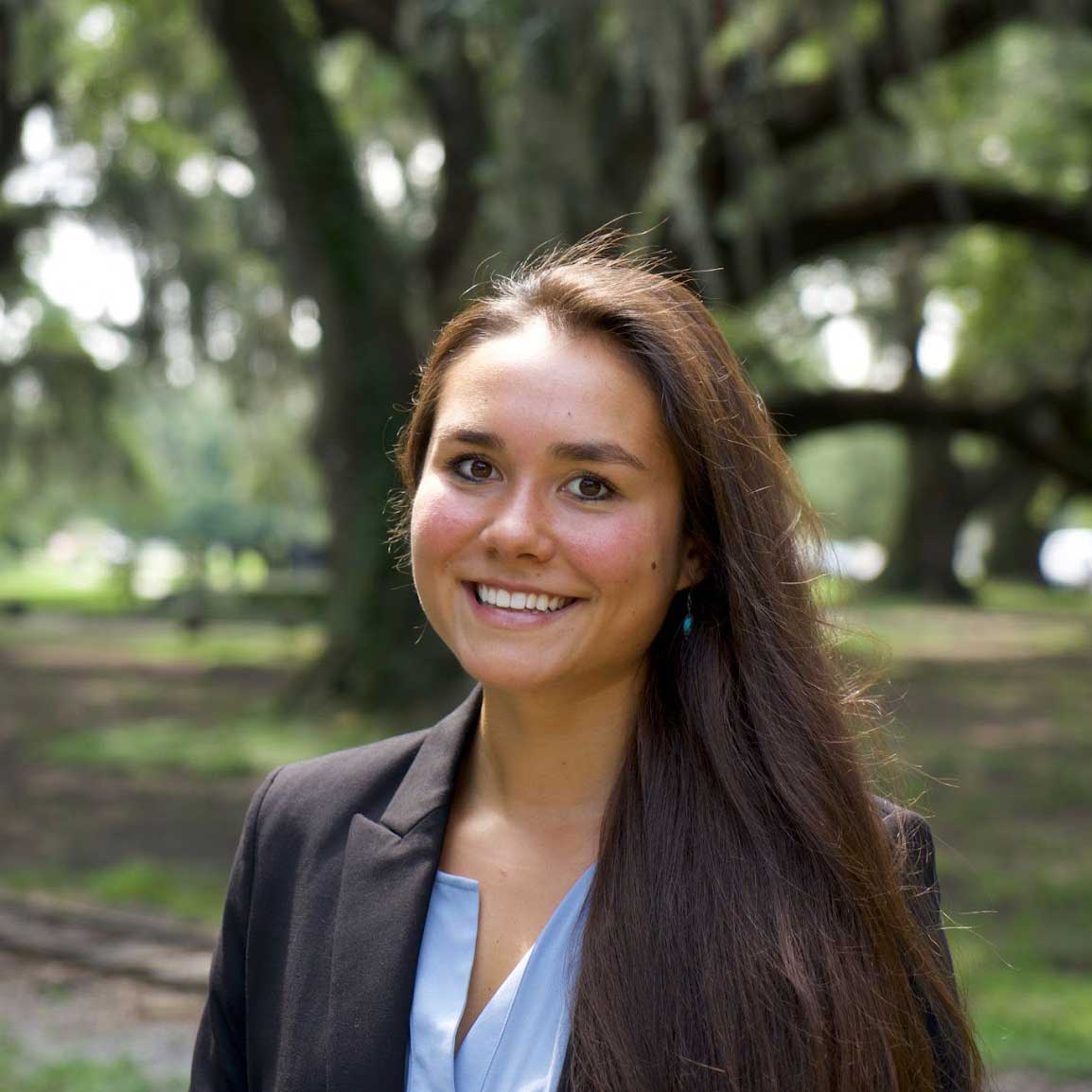
Amanda d’Almeida is one of these – a truly remarkable woman. She’s a family medicine doctor by training, and for most of us, going through a medical degree takes all that we’ve got. For Amanda, not so much. While studying medicine, she also read for a Masters in Public Health – and wrote her thesis on the role of Regenerative Agriculture in community health. At the same time, she and her partner set up Medicine Explained on Instagram and TikTok, with the intent of sharing accessible information as widely as possible – their social media accounts have 1.6 million followers, so by any measure, we could say that’s succeeding. She co-founded and hosts The Nuance: a community health podcast exploring the nuance lost in today’s discourse and centering narratives often not represented in media. The focus is on social and community medicine topics, specifically highlighting the intersection of human and planetary health including environmental and climate justice.
She also co-founded the climate health co-op because she and her partner had been asked during multiple conferences to consult with folks on how to create engaging media, and instead created a community of healthcare professionals, artists, storytellers, professors, organizers, community members, activists, humans on this earth who are dedicated to advance climate justice, environmental justice, and health equity through multimedia content production to shift narratives and create real-world impact from social media and beyond.
All the way through, she has partnered with and followed the leadership of community-based organizations, supporting research and advocacy to work towards a more beautiful, healthy, and just world.
And now, at the age of thirty one, Amanda has completed her Fellowship in Community Medicine. She’s about to take a very well deserved 2 months off, but just ahead of going away, we sat down for this conversation. If you want reasons to hope, Amanda d’Almeida offers them in spades.
Please note that all these views are Amanda’s own and not the view of her employer. This is not medical advice.
Episode #345
LINKS
Medicine Explained on TikTok
Medicine Explained on Instagram
Amanda on LinkedIn
The Climate Health Co-op on Instagram
The Nuance: A Healthy Podcast
Creators to Watch
Book: Celebrate your Period
Lyla June’s Paper ‘Architects of Abundance: Indigenous Regenerative Food and Land Management Systems’
NYC OffTech
The Nap Ministry: Rest is Resistance
Interrupting Criminalization
More from Accidental Gods…
We offer three strands all rooted in the same soil, drawing from the same river: Accidental Gods, Dreaming Awake and the Thrutopia Writing Masterclass.
Our next Open Gathering offered as part of our Accidental Gods Programme is Becoming a Good Ancestor which will run on Sunday 13th September 2026 from 16:00 – 20:00 GMT – details are here. You don’t have to be a member of Accidental Gods – but if you are, all Gatherings are half price.
If you’d like to join us at Accidental Gods, this is the membership where we endeavour to help you to connect fully with the living web of life.
If you’d like to train more deeply in the contemporary shamanic work at Dreaming Awake, you’ll find us here.
If you’d like to explore the recordings from our last Thrutopia Masterclass, the details are here
Manda and Louise both offer one-to-one Mentoring Calls. Manda is writing a book just now, but if you’d like to contact Louise, details are here.
In Conversation
Manda: Hey people, welcome to Accidental Gods. To the podcast where we do still believe that another world is possible, and that if we all work together there is still time to lay the foundations for a future that we would all be proud to leave behind. I’m Manda Scott, your host and fellow traveller in this journey into possibility, and this week we are touching the third rail of health, or at least how we can cut through the misinformation and the disinformation in ways that bring communities together so that we can co-create the ways forward. Because there is so much toxicity around this. All we have to do is ask ‘how do we create healthy people, intimately enmeshed in a healthy biosphere, so that together we can co-create the routes to a healthy future?’ And even just asking this creates astonishing levels of polarisation. Everyone has their triggers, and there is not a whole lot of self-regulation when they’ve been activated. But on the other side, there are some truly astonishing people out there who are fully on board with the concept that late stage capitalism is at the heart of all of our ills, and that regeneration of our connections is the key to building health in all its senses. Our guest this week is one of these people. By any measure, Amanda d’Almeida is a truly remarkable young woman. She’s a doctor by training, and for most of us, going through a medical degree and just surviving takes all that we’ve got.
Manda: For Amanda, not so much. While studying medicine, she also read for a Masters in Public Health and wrote her thesis on the role of regenerative agriculture in community health. Yay! At the same time, she and her partner set up Medicine Explained on Instagram and TikTok, with the intent of sharing accessible information as widely as possible. And their social media accounts have 1.6 million followers. So by anybody’s measure, they are definitely succeeding. Along with that, she co-founded and hosts The Nuance, a community health podcast which explores, as it says on the tin, the nuance lost in today’s discourse. Centering narratives not often represented in the media. Their focus is on social and community medicine topics, specifically highlighting the intersection of human and planetary health, including environmental and climate justice. And full disclosure, I was a guest on that podcast, which is how I met Amanda. Along with all that, she also co-founded the Climate Health Co-op, because she and her partner had been asked at multiple conferences to consult with people on how to create engaging media. And instead, they created a community of health care professionals, artists, storytellers, professors, organisers, community members, activists, and basically humans on this earth who are dedicated to advancing climate justice, environmental justice, and health equity through multimedia content production; to shift the narratives and create real world impact from social media and beyond.
Manda: And if all that wasn’t enough, she wrote a book called Celebrate Your Period for young women aged 10 to 14, or for any young people, really. And if there’s someone in your life who needs to be able to see past the wholly toxic concepts of menstruation that still infest our culture, then please do get this book and give it to them. And of course, you can read it first, all the way through. Amanda has partnered with and followed the leadership of community based organisations. She supports research and advocacy to work towards a more beautiful, healthy and just world; the future that our hearts do know is possible. And now, at the age of 31, Amanda has completed her fellowship in public health and she is about to take a very well-deserved two months off. But just ahead of her going away, we sat down for this conversation. And if you want reasons to hope for the future, Amanda d’Almeida offers them in spades. So people of the podcast, please do welcome Amanda d’Almeida of Medicine Explained, Climate Health Co-op, The Nuance and so much more.
Manda: Amanda de Almeida, welcome to the Accidental Gods podcast. How are you and where are you as we get into the height of summer?
Amanda: Hi Manda, thank you so much for inviting me on. I am so happy to be in conversation with you again. Those are both really difficult questions to answer. Right now I’m based in unceded traditional lands of Gabrieleno and Tongva, now known as Los Angeles, California. And how am I? Um, personally, I’m doing really well. It feels like a big chapter is closing in my life and I’m moving through that. And I know at the beginning of summer, about the end of June, it is really a time to pause and reflect in the summer heat. But I just graduated from a Fellowship in community medicine. And so that was my last step in training in the medical field. And schooling has been essentially my entire life. So here we are. But holding that celebration in contention with the turmoil that is the world right now and trying to balance both hope and realism at the same time.
Manda: Yeah. Right. Which is what the podcast is for, So thank you. And in the midst of all that, there’s a lot of things. So before we go any further, we have to say for the YouTube people that the reason Amanda is not live on YouTube and we did consider a picture of the dog, or possibly a picture of a tree or something. Explain to us a little bit, because we had a chat beforehand, and I’m really taken with the very rational reasons why not having you on YouTube makes a lot of sense. And I’m thinking that my horse has bolted on that one, but you’re clearly catching this early on. So explain to us why not and then we’ll go into all of the other things that we want to talk about.
Amanda: Yeah. Thank you so much for that question. And thank you for being so flexible in that request. So my partner and I, which we will get into, we co-founded a health education non-profit and platform, mostly a platform, our non-profit, we don’t do too much with that, but, it’s called Medicine Explained. And we have over 1.6 million followers, but the original idea came out of us being in medical school and me also doing an MPH or master’s in public health concurrently. And I was in class in 2020 and we were learning about different health topics within Louisiana specifically and that’s where I was doing my medical school. And there were basic health information facts that would help save a life or end suffering. And I was so confused as to why all of this information was in academia only and it felt like it wasn’t being democratised to the people.
Amanda: And so in the middle of my public health classes, I went back to my partner, Daniel, and I said, like, this is fairly frustrating. The health information fluency within the United States and especially Louisiana is very low. And this is leading to a lot of folks suffering from different health diseases. And even though we were only second year med school students, so we didn’t have a ton of information or background on health, we said why don’t we just decentralise this and democratise it to the people and make it accessible? And we wanted to meet people where they are, which is and was social media. My partner is very good at observing social trends. He actually just finished his psychiatric residency. So he’s a psychiatrist. And he said TikTok is going to be big. And my one caveat was, I don’t want it to be about me. I don’t want my face behind it. So all of our information is about the information, about the people who are receiving it. So we do little doodles, we do little health explainers from all different topics because I’m family medicine, so a generalist. So we’ve done things about menstruation, we’ve done things about mental health and then we also focus a lot on the intersection of human and planetary health.
Amanda: And this is a long winded way of saying we’ve been very intentional about keeping our profiles off of the internet. Because in late stage capitalism, all of these giant tech companies and giant companies in general are finding ways to extract things from us, whether that be Land and leading to climate degradation and environmental degradation, human labour, human bodies. And now they’re going beyond that; so human thought, human creation. And so a lot of these companies are using us to create interesting pieces of content for them, for their platforms to continue. So how do we take back some of our power and make sure also that with AI coming out, they can’t replicate how I move and how I speak and how I look in the world? So there are pictures of me out there, but not that many videos, so that AI can’t replicate me.
Manda: Excellent. All right. So for the people listening, this is exactly the same as you always listen to on the podcast. And for the people watching on YouTube, I kind of wish I’d known that when we started putting this up on YouTube. But we are where we are. And in the process of that, everything that you do blows my mind. I went through a veterinary degree and I did not do a second degree while I was doing it. And that was a long time ago, and there was a lot less to learn. So you did a medical degree and a public health degree at the same time. Did you sleep at all?
Amanda: I actually am very good at sleeping.
Manda: Oh, good! Yeah, we were discussing before we came on, we’ve both got young dogs and yours slept all the way through the night and mine didn’t. And maybe that’s because you’re good at sleeping and I have a tendency to wake up multiple times in the night. There we go. Okay, so you did sleep, but you’ve done both of them together. And while doing that, you started Medicine Explained. I don’t even know what TikTok looks like and I’m not going to go there. Is it still on TikTok? Can we find a TikTok link for it?
Amanda: Yes.
Manda: You’ll send me the link. Because it’s also on Instagram, which technically I have a presence on, although not. Alrighty, so I did pull up the Instagram page and it’s lovely. And as you said, you’re democratising and decentralising the ideas around health. I want to get into that in a minute. So you’ve done that and you started a podcast. And, you know, most people struggle to get through their medical degree. And I do a podcast and it takes a lot of time. You’ve got to do all the prep for it, you’ve got to do all the post-production, you’ve got to do all the stuff, all of the things. It takes me a day a week to make the podcast run. How did you do that and do two degrees? Just fill me in on that one. Did you clone yourself? This is where I’m getting to.
Amanda: This is a great question and something I get often, and I will say, I don’t recommend doing a million things to people. I think there’s this beautiful organisation called the Nap Ministry and they say that rest is resistance. And I love that. I am very bad at practising it, but I’m trying to work on that more and more. So no one is in healthcare in my family. And I always knew I wanted to be a doctor because I thought that I was a healer since I was seven years old. That’s really what I wanted to do. And of course, I kept my mind open. I was very interested in climate change and the environment and so had always thought about that growing up as well. But when I entered medical school, it wasn’t exactly what I had envisioned healing to be.
Amanda: And so in order for me not to burn out, because the system that we’ve created here in the medical industrial complex is really hard to work within. And I saw all of the manifestations of the societal issues that we have, manifesting as diseases in the patients in front of me. And there’s only so much you can do in a 1 to 1 visit with someone. Whereas if the socioeconomic status is causing harm, if the environmental toxicants are causing harm, stress from capitalism and overworking, those could not be addressed within the clinic. So in order to not burn out, I wanted to work on more of the social and public factors as well, while being in relationship with the communities that I was serving. So that being the one on one clinic. It’s also not just me. I have so much support from community, from Daniel my partner especially, with Medicine Explained. He does so much of the work with that as well. And something that I have been thinking about a lot is how to shift from the more individual to the collective mindset; that what we do isn’t just a reflection of us as an individual, but what kind of support and community you’ve had throughout your life. And part of the reason why we called it Medicine Explained is because we wanted to explain the medicine that we were learning. But medicine is a broader term. So thinking of medicine of relationship, medicine of belonging, medicine of having your hands in the soil, medicine of looking out at the horizon. So medicine in the context of more than just what is within the health care system.
Manda: Right. It seems to me that the communities that you’re serving, you’re particularly going for the people who are under the radar of late stage predatory capitalism. They don’t have enough money to really feed the beast. And so the beast, as far as it’s concerned, they don’t exist. And you are really endeavouring to connect with people who otherwise don’t have a lot of medical attention from people. Or don’t have a lot of systemic attention from people. How did you get to that? Because a lot of people who become doctors stay above the radar. And you seem to be explicitly going for decentralised, community based work in everything that you do. And it feels like a highly political form of medicine, and it’s political in a way that I love, but most medical students are not politicised. What politicised you?
Amanda: Oof! That is such a good question. So how do I make this a little bit concise and not tell my whole life story? So my family is from Macau, which was a Portuguese colony, and my family came over a little bit before it was returned back to China, because it was always going to be returned back to China. But my grandparents didn’t know how to read or write in Mandarin or Cantonese and so they came over so that they could have a profession. I’m trying to learn more about my lineage and my ancestry and Macau is a really interesting place, because it was a place where they did a lot of trade and it was specifically set up where the Portuguese paid China rent to have that land, because the Portuguese wanted to trade between the west and the east. So not only was there a trade between the east and the west of goods, but also knowledge and ideas. And so I grew up in a family that had both Western and eastern ideologies, and it was very unique to the place I was growing up in.
Amanda: So I had all these worldviews that weren’t necessarily what I was being socialised in within the places I was growing up. And I also lived in Germany and Austria and Brazil. And so I’ve seen that we’re just living in other people’s imaginations. Like other ways of being are possible. And we just have to reimagine it and we can create it, because all of this was made up by us. And so seeing people suffering because of these made up systems that we’ve created hurt me deeply. And so I’ve always wanted to both highlight that and then just show everyone their true humanity, like, you matter. And something that has been really interesting that I’ve noticed over the past year and why I love the clinical practice of medicine as well, is because I work with folks who are experiencing houselessness in Los Angeles. And something that I’ve observed is that a lot of these folks are some of the kindest people that I’ve met, because they cannot take advantage of other people. So instead, they are being taken advantage of and they just don’t have that within them.
Amanda: And I think part of the issue that we have in the United States, and I’m not exactly sure what it looks like in the UK, but I know that the caste system kind of continues, but we’ve been so separated from each other that it allows us to not humanise everyone, which has led to a lot of issues here. Regarding my world views and realising that we’re living in someone else’s imagination, my parents have played a huge part in exposing me to different thoughts and ideas, and really asking me to critically think about what was going on in the world. So my parents made it a priority for us to experience the world. We not only lived abroad growing up, and really my parents did this because both their jobs moved them there, but also for exposing my brother and I to a different experience. And we were also homeschooled for six months when I was young in sixth grade, and we explored the national state parks and the historical sites across the continental, what is now known as the United States. And so I owe so much of how I think to the exposures that my parents gave me when I was really young. So I’m super grateful for that. The views shared in this podcast are my own and not that of my employer. And part of the goal of the Climate Health Co-op too, and a lot of the questions that you’re asking me is, what have I observed working with specific communities? And so we’ve created this co-op so that we can work together on creating multimedia content, but also giving each other tools about how to share our own stories. Because a lot of times, even in spaces with people who are in the health care field, we use patient stories to get our point across. But those aren’t always our stories to tell. So how do we equip folks with the tools to amplify their stories, or talk about their stories in ways that are heard, so that we’re not extracting people’s stories from them?
Manda: Yeah. Yes. Which seems to me and has for a while, this is the natural end point of capitalism, and capitalism has been going a long time. The Romans were perfectly capable of the commodification of land, labour and capital, which is essentially what capitalism is. And they didn’t invent it, they just happened to export it around what was then the known world. And at the point when you supercharge that with fossil fuels, you are going to get to a point where there’s the people who are sucking value out of the economy. A very few people, relatively speaking, and all of the others who are left to do what they want, or possibly not even.
Amanda: Yeah, I wanted to add on to that, because one of the groups that I have specifically been working with are frontline communities in the environmental justice movement.
Manda: Wow, okay.
Amanda: And I think that perfectly exemplifies what capitalism is doing. So I started working with some of the community organisations in New Orleans, or ancestral Bulbancha Land. And along the Mississippi River there is about an 85 mile stretch between New Orleans and Baton Rouge, with over 200 petrochemical plants along it.
Manda: It is amongst the most polluted water on the planet, isn’t it?
Amanda: Mhm. It’s called Cancer Alley, and we’ve called these places sacrifice zones. Because essentially, in order to make these petrochemicals, in order to profit some of the most wealthy folks, they are sacrificing people’s lives along the Mississippi. And there are some amazingly wonderful, beautiful communities there and the leaders are so inspiring, but what they have told me is that it’s from plantations to plants. So a lot of the former plantations have now been sold to petrochemical plants. And so not only is there capitalism, but also racism and all of the isms that we’re experiencing here. But I think that’s one of the communities that I have been working with the most between medical school and now in Los Angeles.
Manda: Goodness. Because everywhere in the US, everywhere around the world, capitalism extracts, consumes, destroys, pollutes. And that’s how it does what it does. If it was going to actually pay for the harm that it does, it would all fall over in a great big steaming heap. And it is falling over in a great big steaming heap anyway.
Amanda: Mmm. So Los Angeles is actually one of the largest oil basins in the United States.
Manda: Oh is it?
Amanda: So there’s neighbourhood oil and gas drilling and Stand LA is one of these beautiful community organisations who’s trying to get oil and gas drilling out of Los Angeles.
Manda: With success?
Amanda: Well, yeah, actually an ordinance is passing through, but they’ve been working for over ten plus years on this. Because there’s literally like oil rigs in playgrounds of schools.
Manda: Wow. Goodness. And yet those in power want further deregulation. That just boggles my mind. Okay, there’s a number of ways we could go from here. Let’s explore a little bit more deeply into what you’re seeing, because I think you and I could quite interestingly, craft to where we could be instead. And that would be really interesting. So you’re working with majorly disadvantaged populations, homeless people. I still can’t believe they’re called sacrifice zones. But why would I not? And also with prisoners, did I understand from the email that you sent? So tell us a little bit about that. Because again, this is a group of people who have often been deliberately incarcerated, not because they’ve actually done anything particularly wrong, but because they’re inconvenient. And you have a prison industrial system also, which needs fodder to keep going. How is it working there? Because that feels to me, potentially soul destroying, but also potentially incredibly uplifting, depending on a very narrow knife edge to walk.
Amanda: Yeah. Thank you for asking that question. This is something that I am reflecting on a lot. So I’ve grown up very privileged. I am a very privileged person. I have academic privilege and then after my training, I will have economic privilege. And so being able to check yourself to make sure that the way that you’re interacting with communities is based in what community needs, instead of assuming what we can do for other people, and really, really trying to not be in like a saviour complex, you know? And so that’s what I want to preface this with as well, because I do work with communities who are marginalised or under-resourced, and I’m really allowing them to lead me and listening to them deeply about what is it that we with privilege can do for you and how do you envision your future being? I would highly recommend The Art of Radical Listening by doctor Kinari Webb and Patricia Plude. So carcerality is not the answer. If the prison industrial complex was the answer for safety, the United States would be so unbelievably safe, because we have so many folks who are incarcerated. So I’m currently working in one of the jails and I ask myself do I essentially support this by working within it? Or am I doing more good for the folks who are incarcerated? So just being able to show people that, hey, I see you as a fellow human; we are the same. That is a lot of what I try to do within the system and of course, providing excellent care to the best of my abilities. While also realising that in order to keep our community safe, which I think is a value that everyone can share and that’s something else we can talk about, is how polarised we’ve become and how we really have the same values. It’s just different languages are used for it. It’s not incarceration, it’s not policing. And I don’t necessarily have the answer for what the next steps are. And a lot of community organisations know what their vision is of what does it look like to keep their community safe. And some folks that I look to are experts like Mariame Kaba and Andrea Ritchie, who are part of Interrupting Criminalisation. And there’s a lot of good work being done in the United States about this topic, because a lot of it is also based out of our history of racism. If you look at the populations within the carceral system, it’s very unequal. There’s a book called The New Jim Crow, which is also a very interesting read for people who are interested about that topic.
Manda: But probably quite hard and heart rending.
Amanda: Yes.
Manda: Alrighty. Thank you. We could spend an entire podcast on that, but there’s places I want to loop back to, one of which is you’ve got medicine explained, you’ve got 1.6 million followers. You started off in Louisiana, which as far as I understand it, is quite deep MAGA territory. And it seems to me it’s also MAHA territory, which does my head in. One of the reasons I have shied away from doing health based podcasts, I get a lot of emails from people going, why don’t you cover health? Is that it feels like not just touching the third rail, but actually dipping your hands in a bucket of water and then sticking your fingers in a plug, because there’s so much that is now limbic belief based around health. And I went through a similar system to you and then I studied homeopathy, acupuncture, and now I do shamanic healing. I’m fairly far on a spectrum of I understand how Western medicine thinks the system works, I understand how Chinese medicine thinks the system works. I understand how some of us believe energetic systems work and homeopathy. And they all have different views on what is it to be a healthy human/animal/plant/being in the world. And within each of those are people who will defend to the death and beyond their own system. Because anyone who suggests that any of the other systems might be valid is going to upset their worldview, and for some people, that upsets their sense of inner solidarity so much, that it becomes worth acts of violence to push it. And it’s magical thinking at every level. And I wonder, how do you, whose every word you’ve said so far has been really sane; how do you get round the fact that medicine has been radicalised in a political way that is not useful to the people who are beginning to believe, I don’t know, let’s say that drinking bleach is going to cure them of Covid. And other things that might be said by people with a lot of reach.
Amanda: So a couple of things. I think that our educational system has done us a huge disservice.
Manda: I’m talking to Zach Stein in a couple of weeks about exactly that. Yes. Our educational system was designed to push out little robots who could function under pressure and do reading, writing, and arithmetic to keep capitalism going in an industrial factory setting. It was not designed to create flourishing humans. Let’s take that as read.
Amanda: Mhm. And I’m working with someone whose name is Doctor Jeff Share, and he teaches critical media literacy at UCLA. And one of the things that is an ongoing theme is our critical thinking skills; being able to decipher if the information that we’re receiving correct or false. But part of the main pillars of democracy is having an educated public. And if you don’t have a public education system, your democracy will falter, which is what we’re seeing here in the United States. Obviously, there’s so many other issues, but that is a basic thing as well that we need to address. So a lot of the things that are coming out of the MAHA movement and health misinformation in general, is people don’t feel well, they know something is wrong. Intuitively, everyone is like, something is going on; I’m stressed, I don’t feel well, I hurt. And the medical system might not always have the answers. And so people are searching for answers. And so I think being able to come into the space with humility and recognise that systems have not always done the population a service. And so people are feeling very lost and are just trying to grab on to something. And this is also what you see with the problem with social media and a lot of the talks that I give at conferences is about mis and disinformation. People with confidence and certainty, which is not science, are trusted the most. And that also goes very viral on social media. So we have a huge information crisis, and we have to continue to address that within the clinic. But something that I’ve been thinking a lot about, especially with our media, is just lecturing people and giving people pieces of information is not going to change anyone’s mind.
Manda: It never does.
Amanda: It never does. And something that I love that you create with this space is a container of safety. And it feels like we can explore a lot of different topics that maybe we haven’t fully thought through or fleshed out on our own, but it seems like we can be in conversation in a safe spot. And I think we really have to go back to the ability to do that with people, even if they don’t agree with us. And come from a place of love. Because again, like I was saying with the values, like we all have very, very similar values. It’s just we have different dialects in the US now where we use words that signal what part of the political spectrum we’re on. Where as if I talk to someone who’s a little more in the centre or right on the environment, which I know that in Europe it’s gotten a little bit farther, where people can agree that climate change is a thing.
Manda: That’s falling appart!
Amanda: Okay. It’s trending. Okay. But if you bring it up to someone who’s like, oh, well, climate change isn’t real; I don’t believe the science in it. If you’re like, well, what about a cleaner environment? People are like, yes, that’s what I want. So there’s just different ways of framing it and safety for one another, love for each other, making sure that we have enough. And that I think the Maslow’s hierarchy of needs is missing ‘belonging’. We have been so separated from ourselves, from each other and from the land, that we’re grasping on to anything that will make us feel like we belong, including these groups that have very, very extreme ways of thinking. And so that’s why I still think that the one on one clinical encounters, even though it feels like I’m having the same conversation with people about health over and over again, is really important. Because you’re listening deeply as to what is the problem that you’re trying to address, and how can I move you towards an answer that is scientifically based and will actually help your health, versus lecturing at them.
Manda: Thank you. I love that because sense making seems to me really top or very near the top of the things that we need to fix, if we’re going to get through the pinch points that are coming. And sense making is all about trusting the sources of information and trusting the sources of connection. Because you’re right, the knowledge deficit model of ‘if only you understood what I understand, you would think what I think and feel what I feel’ has been blown apart a long time ago. And it is, as far as I can tell, still the environmental movement, whatever we want to call it in its widest sense, still believes that if we only explain to people the science, then everybody will change their behaviour. And we’re not giving people behavioural change options, we’re just frightening them with science that they are obviously not going to let in because they have no agency. And what I hear you offering is connection and a sense of agency. And I wonder, something that you said right at the start and I would like to dig into now, suppose somebody lives in the sacrifice zones along the Mississippi, their agency, unless they can pick themselves up and move to somewhere less toxic, is very limited. How do you deal with the fact that so much of individual people’s health is now a collective crisis of environmental chaos, and a total lack of reining in predatory capitalism and all of the things that we were talking about? How do you not go crazy, Amanda?
Amanda: So, um, yes, there’s a couple of ways that I can respond to that. I honestly feel hopeful, and I know that a lot of people don’t love using that term. But my Mom has always asked me the same question. I call her every single day and we talk through things and I’m like, this is what I learned today. And she is just a wonderful mentor and partner in life. But working with the community based organisations and the leaders that are out of the community is unbelievably inspiring. I think that when you look at news and institutions, that can always look very depressing, especially now. But what is being created outside of these systems is so beautiful.
Amanda: So I end all of our podcasts, and you were actually the last guest that we had published, with ‘the future is blank for future visioning’. And everyone has these beautiful visions of the future, based off of what their interest is, like community farms and regenerative agriculture.
Manda: We’re going there in a minute.
Amanda: Yeah. And safety in a way that isn’t only run by policing of our communities. Like all of these gorgeous visions. And at the same time, that is not only the future, that is the here and now. People are creating these systems that work better for our environment, for our community. And I’m just learning so much from these leaders. They cannot stop doing the work and nothing is bringing them down. And another thing I think that is really important in movement spaces that we have to recognise more and more, and what I learned from a lot of the communities within the movement in New Orleans, is both weaving in grief with joy, and that they can exist alongside each other.
Manda: Yes, yes, yes. Because we grieve that which we love. And absolutely, I’m so glad that that is becoming a thing. I think fear and joy are very hard because of the the way our limbic systems work. But grief and joy absolutely can coexist. And I see a lot of people in our movement really working with the grief, which is great, but they are working with the grief to the exclusion of feeling any joy. And I think that kind of denial is as dangerous as the opposite denial of everything in the garden as baskets of roses and unicorns, and we’re all skipping happily into the sunset. There are fewer people like that these days.
Amanda: In New Orleans, there’s so much music and dancing, and I think part of the singing and the body movement is also working through that grief in a visceral way. And also the movement has to be fun. Like people want to enjoy their time, so make it inviting, invite people in. And truly, everything that I’ve been saying on this podcast, none of these are my original thoughts and ideas. I am truly like a vessel of all of these elders and wiser people than me who have taught this, and I’ve kind of just also woven in my lived experience. But I learned so much from communities in New Orleans and here in Los Angeles, about what it looks like to continue a movement and just look out for one another and lead with love.
Manda: Yes. Thank you. And I have to say, every human being brings all the stuff in that they experience, configures it with their own kind of thumbprint, and puts it out into the world. Everybody, that’s what we all do. Excellent. So it seems to me you’re in a fairly unique position. You’re connecting with a lot of communities that are very active, that are bubbling under the radar. The legacy media is owned by the people who would like predatory capitalism to continue forever, and they have a particular narrative. And people’s actual experience of being a community is completely other than that. And it feels to me that this is quite a critical tipping point. There will come a point where people just switch off even Fox and CNN and NBC and over here, the BBC and channel four and all those things, because what they’re seeing on the screen does not match the way they are living. I’m just floating that past you, to ask whether you think that tipping point is coming and if so, have you a sense, I’m trying not to ask a leading question, but I’ll just have to go for a leading: my sense is that there are more people engaging in the things that are community led now than there have ever been. Or at least then there have been in the recent past within predatory capitalism. And that that is the big reason for hope. Does that how does that land with you?
Amanda: Yes, I agree. I don’t know if I mentioned what my fellowship was, but it’s community medicine.
Manda: Brilliant.
Amanda: So community has always been a driving force in my life. I grew up in a town of 1200 people. We didn’t have to outsource a lot of things, right? We relied on each other for food. We would go crabbing in the summers and share crabs with our neighbours, and at the same time, if they had a skill, like if we needed something done with our car or within our yard, we would be able to have them. So it’s how do you become a neighbour. And similarly, that’s something that I saw in Louisiana, because you can’t rely on the state or the government; you have to be neighbours to one another. So what does that look like? And I agree that people are trying to move away from things that feel more like national or international, but this is something that I’ve been thinking about a lot too, is like, how do you stay local? Like glocalization.
Manda: Local and global at the same time.
Amanda: How do you recognise that local means so much while also one community cannot be free or liberated if we’re not all liberated and free. And that is something that is always in my mind. Is like, how do you, while we’re getting all this information from things that are going wrong with the world, how do you then focus your energy on the local and how that will that make an impact on the larger scale? Something I’ve been thinking a lot about media, because our media platform is international and global, is how do you create local, probably, again, analogue forms of information sharing, that is not reliant on the platforms that are either using information like AI for wars, or big tech and making them a bunch of money.
Manda: Or you’re not susceptible to the algorithm that decides it doesn’t like you this week and it’s just going to switch you off.
Amanda: Mhm. And so that’s part of what we’re doing with the climate health co-op that I helped to co-found, is we are creating a community of health care professionals, professors, community members, artists, humans on this earth. Literally, whatever your experience is.
Manda: Everyone has health.
Amanda: Exactly! To create art and media in a way that shifts culture instead of just is only information based.
Manda: Right. This is thrutopian thinking! I love it. Okay, and how are you connecting people in an analogue way when everybody is digital at the moment? How is that managing?
Amanda: Yes. And so that’s something we’re trying to think of with the community alongside creating content in the here and now of where people are already are. And meeting people where they are is like how are we shifting then to our local? And we had a wonderful guest on who spoke about this the other day, Doctor Monica Ponder. She’s out of Howard University and she talks about communication. But how do you also make it localised? And so Doctor Jeff Share and I will be leading a couple of workshops in LA about what does this look like; how can we do this? And there’s already amazing forms of this going on with community orgs. And I know I initially mentioned at the beginning why my face is not on a lot of videos, but I would highly recommend looking up NYC off tech, which is what I mentioned to you, Manda, before we started. And they’re a fantastic younger generation trying to reclaim both their attention, their community. Mostly their attention off of tech, but also not not playing into the big algorithms and platforms. And there’s multiple ways that we can communicate. But I think part of it too, is how are we communicating beyond just information? Which we are taught within medical school and our academic system that that will change minds, is just information. But how do you create art and culture where we’re metabolising what’s going on and helping to shift our worldviews? Because a lot of it too is we do not see ourself connected with Land, but we are not apart from it. Like nature is not a term in some indigenous languages because you’re not separate.
Manda: Yeah, because it’s not ‘out there’. Yes.
Amanda: Exactly. So those are a lot of big ideas we don’t have the answers, all of them.
Manda: I know, and we’ve only got quarter of an hour and I want to go and explore all of the things. Alrighty. So you did your thesis for your MPH in regenerative agriculture and health, and I’d like to spend a little bit of time in that and then I would really like to go and look at the indigenous work that you’ve been doing, the interactions with indigenous elders. Tell us what you found about regen Ag and how it can influence people’s health.
Amanda: So I actually think both of those topics are kind of intersecting, because regenerative agriculture is just the new term for what is indigenous and traditional forms of working with the land. I know that I’ve made a lot of plugs already, but Doctor Lyla June Johnson is fantastic.
Manda: Yes, I am trying to get her onto the podcast and I have referenced her paper many times. Yes.
Amanda: So she is wonderful. And regenerative agriculture. So we all have a microbiome, right? We have a skin microbiome, we have bacteria in our guts and fungi in our guts, but it’s also in the soil. And I feel like just even recognising that we have microbiome, the soil has a microbiome, shows an immediate connection. And there’s so many different things that I touched upon in my thesis, but regenerative agriculture or traditional forms of working with the land, doesn’t only take care of the land and the soil. It also takes care of humans. And having grown up in a farming community and also having a lot of farming communities here in Los Angeles, being able to take care of the workers is really important too. Not exposing them to chemicals and also just taking care of them labour wise and making sure that they’re out of the heat, they’re working regular hours. But regenerative agriculture is regenerating the soil, it’s regenerating life. If you are on a farm and look at the monocropping industrial farming, and you look at the dirt that they’ve created, it just sifts through your hand like sand. Versus soil that you’ve brought life back into is formed, it feels whole. And not only does it help create healthier forms of produce, but it also is resilient in the face of these climate disasters. So this dirt that’s slipping out of your hand won’t hold water. The water will run off immediately. Versus the soil will hold onto water so there isn’t flash flooding. And if there’s times of drought, it’s more resilient in times of drought. And resiliency is something we need to think a lot about as we’re moving forward. And the runoff too. If you’re doing monocropping with the chemical agriculture that we do, that’ll seep into then our waterways and water is life. Water, air, soil, they’re all life. It’s so interconnected, it’s even hard to begin to explain, honestly, how interconnected we all are.
Manda: Yeah. It’s okay. We do quite a lot of regen ag on the podcast. I was just interested in how…
Amanda: I think one of the main reasons why I became interested in this form of agriculture and regenerating the land was because it felt like one of the solutions that we could turn towards in the changing climate. And climate change itself and environmental toxicants are directly impacting our health. I do work both in the environmental justice and climate justice space and, for example, the communities along the Mississippi River and the communities here who are exposed to oil and gas drilling, they are being harmed by the environmental toxicants that are being put into our environment, and that is the acute impact of industry. And then the pollution leads to climate change, and the climate change aspect and extreme weather events is also impacting the health of humans, including extreme heat, which Europe is experiencing right now. And in Los Angeles, we had fires at the beginning of 2025, and those caused a lot of harm in our communities, not just from the loss of structures but the exposure to wildfire smoke, especially for those who are unhoused and people who already have underlying lung conditions. And so seeing all the impacts of climate and environment on our health made me look for some of the solutions.
Amanda: And that’s where I came across farming and recognising the importance of food justice in the town, the rural farming town that I grew up in. And so creating healthy soil doesn’t only prevent runoff, but it also can sequester carbon. And I know that we’re moving away from just measuring carbon only, but creating life in the soil helps to balance the ecosystem as well. And the privilege that I have comes with a lot of responsibility. So part of also what I learned from the discussions with indigenous elders and from American Indigenous democracy booklet is the difference between rights and responsibility. And I had mentioned that I moved through the world with privilege and listened to community about how I can help with liberation, with the privilege that I have, and with the skills that I have as well. And the discussion between rights and responsibility was really interesting, because I also think that growing up in both Eastern and Western thought, the collective and responsibility to family and friends, was something that was taught to me throughout my upbringing.
Manda: I want to read your thesis. Can we read your thesis? Is it online?
Amanda: I can send it to you.
Manda: Okay. Give us a link to that and I’ll put it in the show notes, because that would be really interesting. Because it comes down to you’re in Louisiana. There’s a dead zone the size of Belgium in the Gulf of Mexico, just from agricultural runoff and industrial runoff. But a lot of it is agricultural. And I think the propaganda created by the industrial agriculture complex, never mind all the other industrial complexes, is people still believe that it’s the only way to feed the world. And that was never true. And people are beginning to realise it, but very, very slowly.
Amanda: Yeah. Also a lot of these ties all go back to capitalism and where the money is made too. Because if you have seeds that only respond to a certain type of chemical, you have to buy the same seeds in order to respond to the chemical pesticide that you’re using. And the genetic code of the seed changes every year. So you have to every year purchase something new. It’s really just control. I mean, it’s all this power control, which you see not only of the land, but of human bodies too. Which is why a lot of the reproductive rights are being rolled back in the United States. So not only is our health interconnected, but you can also see all the interconnections with power and control too.
Manda: Alrighty. So let’s use that somewhat depressing thought as a springboard into alternatives. And you shared with me a book that looked really interesting. Tell us about that book and the conversations you’ve been having with indigenous elders.
Amanda: Yes. So I’ve been part of this booklet club for American Indigenous Democracy: A Call for interdependence, and it was just published June 15th. And we got to hear from all of the elders who contributed to this book during some of the calls. And for those who are unfamiliar with the history of our democracy and/or the original version of our democracy, the Haudenosaunee Confederacy is part of now the northeast, so like the New York area. And they had created a form of democracy that centred feminism or the masculine and the feminine. And the grandmothers would watch young people grow up and see who would be the best leader and would choose the leaders, the ones who weren’t trying to show off, but really took care of their community. And so the women of the Confederacy chose the leader and were able to also take away that leadership if they were not acting correctly.
Manda: Unchoose the leader. Yeah.
Amanda: The American democracy, the US democracy, actually took a lot of the pillars of the Haudenosaunee democracy into our own creation of what we have today. But they left the feminine out. And now the imbalance of the United States democracy is coming through. And what the indigenous elders are looking towards doing is how do we bring back the balance? How do we rematriate The United States or Turtle Island. And I am no expert, I am just learning from them. But I do recommend this booklet. It’s short, but it’s very powerful.
Manda: So two things arise. First is I must introduce you to Zineb Mouhi, who used to be in San Francisco, but is now up in Vancouver, partly because her husband is Palestinian. And she says patriarchy centres men, matriarchy centres, children. And that we need to bring back the centring of the next generation. Every generation’s job is to create a space where the next generation can flourish at least as much as the previous generation, if not more. And we’ve lost that. So based on, with what you know, with what you’ve read in the booklet, if you were to imagine, how would we create or how would you envision a culture being, that is based on the common values that you said we all espouse. So let’s list what those common values are in your view and then with the Haudenosaunee, with the ideas that they had, with a lot of the ideas of distributed democracy. And we could be using tech for useful things. I have a friend who designed an app for quadratic voting on the blockchain; it completely changes people’s view of what voting is. Audrey Tang has done a lot of work of you give trust to gain trust. There’s a lot of really exciting work being done, if we were to create an actual democracy instead of the sham democracy that we have had for a very long time. It’s obviously breaking down now, but it was never actually taking people’s views into account. How do you think it would feel? And do you have a sense of how it would look?
Amanda: I love this future visioning and I know that you talk a lot about this in your podcasting, but having visions of a future is so important that isn’t dystopic, because we’ll put our energy and attention towards that. And so even though I was part of this booklet club, I wouldn’t say I have the details of what that looks like, but I know what it would look or feel like to me if I were living in that future.
Manda: That’s what we want. Go for it.
Amanda: Okay, so being able to walk to work, especially living in Los Angeles. Or bike to work. The air is clean. We’ve been having a lot of fires, random warehouse fires and things kind of exploding and the air is not clean. There’s space and time to do what you love. We only have jobs or professions that motivate us and feel essential. A lot of the care work that we have in the United States is not recognised or compensated, and a lot of those positions are held by people who identify as women. So we saw in the Covid 19 pandemic what essential work was, right? It isn’t finance.
Manda: No, it’s not bankers.
Amanda: Exactly. It’s who’s taking care of the community. And so being able to do those things, to have space to care for one another. And we sit in porches and gardens at the end of the day and talk. That’s something beautiful that happens in New Orleans, is porch sits. There’s third spaces, so you’re interacting with people who have different life experiences than you. And you can talk through some of these bigger worldviews and actually be able to listen to one another and have space to have humility and love for one another. There’s respect for all genders, all races and we are able to source a lot of what we need from our local communities. A lot of the food, a lot of just being neighbours is something that I envision. And I think that looking a lot towards honestly, indigenous leadership, especially being settlers on the land that we are. So there’s a lot to land back, but I think that the private ownership of land is really harmful and there’s very, very little public space within Los Angeles or parks. And shifting our farming system to being more regenerative.
Amanda: And something that I always say is that we live in diseases of disconnect from ourselves, from each other and from the land. So how do we reconnect to each part of ourselves? Going in to help each other, and then having more connection with each other, and then recognising we are not separate from the land. And beyond a local, what does it look like on the day to day, but making sure everyone has access to education. And I’m really excited to hear that podcast with what do education systems that serve us look like? And free health care. Everyone should have access to health care and creating structures and policies that allow for us to live lives where we flourish and not make it extremely difficult to attain that on a day to day basis. For example, when I’m working with patients who work two jobs, who don’t live in a part of the city where there’s sidewalks or green space. If they have high cholesterol or high blood pressure, and you’re asking them to exercise or eat healthy, and they live also in the systems of food apartheid, how are they supposed to do that as an individual? And so making sure that we create environments and structures where the default is health and flourishing.
Manda: Wow. Okay. It sounds good to me. Yes. The one thing that I wrote a note is indigenous cultures don’t have jobs, at all. Jobs are a product of capitalism that says you’ve got to earn money in order to spend the money in order to make other people’s jobs. And if we don’t, if we have a different method of accounting and sharing value, I wonder, do we need jobs? We need to express ourselves, and we need to do whatever it is that we’re here to do in the world. And I think you covered that when you said we only do things that are meaningful to us. But for an awful lot of people, the meaningful things are in the connections. And some it would be in the growing. We’re not going back to being forager hunters. I think we can’t. But there’s an awful lot to creating with people and for most of us, I think that would not be considered a job. But one of the gaps in my understanding is how do we progress from here to there? How do you get from a job based capitalist economy to a, we don’t need jobs, guys. And I think possibly just shifting the financial system would be a way to do it. But that’s a big leap.
Amanda: Yeah. And I know you talk a lot about economics on the podcast, which I think is really interesting and a huge topic to think about because it is right, what are the next steps? Like, is it fully everything just falls apart and then we just restart? Or what does it actually look like? Because I also think that you are completely right with saying the jobs part. I think I frame it in that way because that’s what people understand. But it’s really just having a purpose. Like what brings not only you joy, but the people around you joy and meaning. I think this is also why I created the Nuance podcast, because some of these conversations are so complex. And what I’ve recognised too, about going through the whole medical schooling system is that it takes a long time to be an expert at something. And I’m 31 years old now. Even graduating medical school, fellowship, residency, there is so much to still learn. And I won’t even pretend to have the answers but I think something that we can all do is continue to reflect on intuitively, like what feels right and what feels very off and misaligned?
Manda: Right.Yes.
Amanda: And what do we take from the past? Because we’ve been talking a lot about the wisdom of indigenous cultures. And I will say I do not identify as indigenous, so this is all just based off what I’ve learned from other people. But how do we take what has worked in the past while also letting go of things that didn’t work. And this is the talking point in the United States is Make America Great Again. When was that time? And great for who?
Manda: Well quite. Yes.
Amanda: And so as we talk about traditions that we want to carry on, or ancestry we want to carry on, we also have to recognise at the same time there are thoughts and processes that we do need to let go of. And that we have we have advanced in some ways; we have come up with some solutions that should also not be completely let go. And that is the Nuance that I’ve been trying to reflect on a lot.
Manda: Brilliant. Thank you. Yes, yes. And I love the name of your podcast. That we tend our tribal divides and the algorithms of particularly things that you’ve got 280 characters to express yourself. So it inevitably starts black and white, things that are so many shades of grey. We’re nearly done. I want to pick up on one last thing that you said about intuition, because it does feel to me that if we could become a culture, a species, that lives from heart mind instead of head mind, which is essentially what you said, then everything shifts. Then what matters is the heart connections that I make with all parts of myself, with other people, and with the more than human world. And that this is the foundation of what you’re talking about in Louisiana. It’s gorgeous. Everybody dances together, and then they sit on their porches and talk, and it sounds really lovely. And how do we take the beautiful bits of that and create little fractal ripples so that that’s the way the world works and we’re not hurling nuclear threats at each other and closing the Straits of Hormuz. The future cannot be that. And in the worlds that you work in, are people beginning to talk about intuition as a factor, or am I out on a limb on that one? Does that make sense as a question even?
Amanda: It does make sense, And I navigate so many… It’s like what you were saying how do you do all of these things? I also am in parts of a lot of different spaces. So I see different ways of being even just within the local community I’m in. I think that there is a lot more receptiveness to intuition, to realising we don’t know everything. To spirituality, even within the institutions of academia. And that’s something that I’ve been thinking about a lot. Because Lyla June Johnson is an academic, technically.
Manda: Yes. She’s got a PhD about indigenous co-creation with the land. Yes. Yeah.
Amanda: It isn’t super present or obvious, but I think that there’s slow cracks. I mean, I just don’t think we’ve collectively healed from the Covid 19 pandemic. And kind of everyone just moved on. But this was a huge event and there weren’t a lot of spaces to metabolise what had happened. But part of that too, is like, we didn’t know. And just grappling and understanding that sometimes there are things that we don’t know and we can’t identify yet. And just having that humility of being like, this is what I do know, but it can’t all be measured. And so I see small changes in that institution. But in general, in the movement space, I think there’s a a big acceptance of intuition, of spirituality, and blending that with the expertise of the knowledge that we’ve all gathered.
Manda: Right, yes. Because we don’t want to throw out everything. We just want to expand our capacity to use it. All right, people. So we thought we’d finished and then we were having our usual post podcast conversation. And this came up and this is extra. So you’re getting an extra bonus, courtesy of Amanda, who’s been very kind because she is going away tomorrow. So over to you.
Amanda: Yes. So I had asked if you’d heard of Monochronism or Polychronism, which is different.
Manda: I don’t even know how to spell it there.
Amanda: So I’m just learning about this. And I thought this was so interesting because from living in different places and spending time in different countries as well, this is something that I observed but didn’t know the word for it. And I think I’ve observed this in Louisiana as well. But so a monochronic approach means essentially doing one thing at a time. So to the individual, time is tangible and valuable, schedules are extremely important and time itself is a commodity. And so it’s even more important than satisfaction, good work or relationships, which can cause a lot of stress. So that’s what you see in North America, Northern European cultures. So it’s very linear. Polychronic time, by contrast, is characterised by several events happening simultaneously. So interpersonal relationships are highly valued in polychronic cultures, time is less tangible and emphasis is placed on the involvement of people and the completion of transactions rather than schedules. So multitasking is valued and that can be seen in Latin American, African, Native American cultures. And so they also follow more of natural rhythms. So responding to the seasons or what the earth is telling you. And I thought that was just fascinating and a way to put words to things that I’ve observed.
Manda: Yeah, that really is. Thank you. That was well worth switching the recording back on for. All right. I will go away and think about Polychronic and Monochronic. Because if our task is to move forward into a 21st century initiation culture, then it will have to be polychronic. And how do we create the value shift that goes away from time is money, and money is the only important thing, to relationships matter and not just human relationships, but relationships with the more than human world as well. And if relationships are the thing that matter, then everything we do changes. Oh that’s exciting. Amanda I could talk to you all day, but you’ve just finished your fellowship and you’re about to have two months away. Congratulations! And have a wonderful time. Thank you for your time. I would love to have another conversation with you, there’s so much that we didn’t cover, but we have nonetheless covered an awful lot. And I am so grateful for all that you bring to the world and your capacity, as you said, to shift among so many different spaces and then synthesise things and put them back out into the world in a way that people can assimilate, even in the midst of really busy, traumatic lives. So thank you very much and have a wonderful time.
Amanda: Thank you so much, Manda. Thank you for what you’re doing. I love listening to your conversations. And I know I mentioned in the chat, but you do create a container of safety. So some of these things that I’ve articulated with you I haven’t fully thought through. So listeners, take that with a grain of salt. And thank you so much for what you do.
Manda: There we go. This is definitely the end this time. Enormous thanks to Amanda for everything that she is and does. For her astonishing energy and compassion and commitment and capacity to listen and that wide, deep understanding of all of the intersections of the things that assail us now. And the ways we can bring real health to our world. Physical health, emotional, mental, spiritual, and the health of our communities, of the human and the more than human world, the health of the biosphere, the health of our governance, the health of our social media. All of these intersect. And Amanda feels to me, as someone who sits at the centre of so many hubs and has so many ideas of how we can make things work. I loved that last bit of polychronic and monochronic thinking, and I definitely want to go and explore that more. But so much of what she does is absolutely at the leading edge of how we can be and who we can be individually and together, as we forge the better world that our hearts know is possible. I am so grateful that we were able to fit in this conversation before two months away, after so many years of studying and all of the other things that Amanda manages to fit in. I genuinely don’t know how you have the time and the energy, but I am really grateful that you do. Please do follow up the links in the show notes. If you’re on Instagram and TikTok, go and find Medicine Explained. Find the Climate Health Co-op on Instagram. Find The Nuance; there’s a link there too. However you fill your time, please spend some of it engaging with all that she’s putting out.
Manda: And that’s it for this week. Huge thanks to Caro C for also fitting in the production ahead of going away. To Lou Mayor for managing the video, which is a bit interesting this week because as you will have heard, we have a tree on our YouTube. Thanks to Anne Thomas for the transcripts. Faith Tilleray for the website, all of the tech, for doing all of the extra work that I manage to create when we hold a gathering. But thank you. At the time of recording, we’re a couple of days beyond Walking The Path of the Inner Warrior, so thank you to all of you who came. I am still very deeply processing all of the stuff that came up, and I hope that that’s working for you too. The next one is Becoming a Good Ancestor on Sunday 13th of September, four till eight UK time, on Zoom. There is a link in the show notes. And as ever at this point in our outro, thank you to everybody who listens. And if you know anybody else who wants to understand the intersections of all of the ways that our health matters, please do send them this link. And that’s it for now. See you next week. Thank you and goodbye.
You may also like these recent podcasts
Hostage Nation Part 2 – Anything we can do, we can afford – with Jamie Driscoll of Majority
” The first and most fundamental duty of a civilised state is the safety of its people.
Not just safety from overseas adversaries, or crime in the street. Economic security. A bill you can pay without going overdrawn. A house you can afford before your children have children of their own. A job that lasts long enough to plan around.
Britain guarantees none of these…” (from the Hostage Nation paper)
How not to be a hostage to the vigilante Bond Markets: with Jamie Driscoll of Majority
What are the actual, practical shifts in our political economy that we could do tomorrow, that would not require extra legislation and could transform our society? While there are many economists looking forward to an idealised system some way down the line, very few people – politicians or economists – are exploring what we could do now, today, within the guiderails of the existing system, with the politicians we have and the economy we have and the constraints of a world undergoing rapid geopolitical as well as geophysical change.
Autumn Equinox 2026
Here is an Autumn Equinox Meditation to help set you up for the shift from the long days to the long nights.
The Stewardship Freehold Village – an idea whose time has come – with Michael Taite
“When we build, we first remove the soil and replace it with rubble, concrete and tarmac. When we grow, we exclude all life from the land bar the one crop we want. Where we belatedly recognise our ultimate dependence on nature, we confine it to intensive ‘nature only’ areas such as rewilding zones, field margins and beetle banks.” Michael Taite 2026

STAY IN TOUCH
For a regular supply of ideas about humanity's next evolutionary step, insights into the thinking behind some of the podcasts, early updates on the guests we'll be having on the show - AND a free Water visualisation that will guide you through a deep immersion in water connection...sign up here.
(NB: This is a free newsletter - it's not joining up to the Membership! That's a nice, subtle pink button on the 'Join Us' page...)