
#339 Trust like the Web (of Life) trusts – Biomimicry for Social Innovation with Toby Herzlich
Life has been evolving on our planet for the past 3.8 billion years. The ecosystems that thrive now have had a lot of practice at getting things right – particularly the complex web of inter-relations that allows us all to flourish. And yet, we’re on the edge of the sixth mass extinction largely because we humans have forgotten how to inter-relate and inter-be with the rest of the web of life. At an intellectual level, we know we’re integral nodes in the web, but we still behave as if it were other, and out there and not – yet – as if it were a source of wisdom and wonder and wholehearted support: an ancient mentor that has tried and tested enough options to know what works.
So how can we bring the astonishing, creative insights of Biomimicry to the field of human inter-being? How can we shift our sense of self and other, our communities of place, purpose and passion, our businesses, our governance structures…everything that we are and do onto a different trajectory using the web of life as our template? Biomimicry for Social Innovation asks exactly these questions and in this episode, we’re talking to its founder, Toby Herzlich.
Toby is a facilitator, trainer, executive coach, and organizational consultant. She is a Certified Biomimicry Specialist and Founder of Biomimicry for Social Innovation, which exists to translate ecosystem intelligence and Life’s Principles into leadership and social change strategies. As you’ll hear, she’s part of the team that developed The Nature of Trust, and its 8-principle framework for building and maintaining trust, which is so essential in any network of sovereign individuals whether they’re bees, or penguins, elks or geese – or people.
Living in northern New Mexico, Toby dedicated 20 years as a Senior Trainer with the Rockwood Leadership Institute and continues to support leaders and organizations through coaching and consulting inspired by nature. Her clients include Executives at National Geographic Society, The Sierra Club, and The Cultural Conservancy. She is passionate about creating innovative approaches to collaboration, building, and guiding diverse networks including the Biomimicry Professional Certification two-year training cohorts, the Volgeneau Climate Initiative, North Carolina’s statewide progressive voter network, and the Indigenous Mycelium Gathering of 2025 – there’s a link in the show notes and you will definitely want to explore that.
Toby is the founding co-facilitator of the Living Systems Leadership Retreats for Women and has supported the capacity-building of women leaders in war-torn countries of the Balkans and the Middle East.
There are so many richly inspiring pathways that Toby has opened as a result of bringing a social change and leadership development branch into Biomimicry – collaborating deeply with that larger movement and, at heart and core, with the Web of Life. This was one of those conversations that could have gone on forever. It didn’t, we stopped at a reasonable time and are definitely planning to cycle back with each other. And the cats visited—Toby’s and mine—which always makes a podcast flow with extra energy.
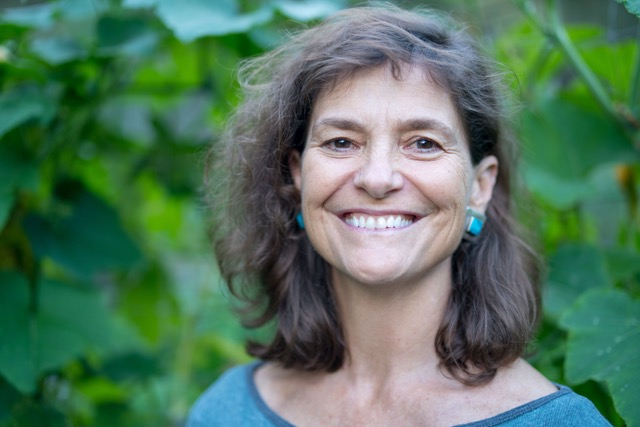
Episode #339
LINKS
BSI Website
The Nature of Trust toolkit (free and online)
Living Systems Leadership Retreat for Women- in NM Aug 31-Sept 5 – open for registration!
Intro to Biomimicry for Social Innovation – virtual 4-week workshop, starts in October
Nature of Trust Co-Lab – virtual 10-week deep dive training, starts in September
Toby on LinkedIn
What would Nature Do? Toby’s Talk at Festival of Faiths (27 min video)
Indigenous Mycelium Gathering 2025 (8 min video)
Life’s Principles Leadership Cards – a deck of 52 cards for learning and Nature Tarot!
Nature Positive Practices – delivering Nature’s genius to your inbox twice a week
More from Accidental Gods…
We offer three strands all rooted in the same soil, drawing from the same river: Accidental Gods, Dreaming Awake and the Thrutopia Writing Masterclass.
Our next Open Gathering offered as part of our Accidental Gods Programme is Walking the Path of the Inner Warrior which will run on Sunday 28th June 2026 from 16:00 – 20:00 GMT – details are here. You don’t have to be a member of Accidental Gods – but if you are, all Gatherings are half price.
If you’d like to join us at Accidental Gods, this is the membership where we endeavour to help you to connect fully with the living web of life.
If you’d like to train more deeply in the contemporary shamanic work at Dreaming Awake, you’ll find us here.
If you’d like to explore the recordings from our last Thrutopia Writing Masterclass, the details are here
Manda and Louise both offer one-to-one Mentoring Calls. Manda is fully booked just now, but if you’d like to contact Louise, details are here.
In Conversation
Manda: Hey people, welcome to Accidental Gods to the podcast, where we do still believe that another world is possible and that if we all work together, there is still time to lay the foundations for a future that we would be proud to leave to the generations that come after us. And it’s this, the working together, that is becoming so crucial as our world fractures and our cultures fracture with it. What can we build in the wake of collapse, and how can we build something that actually works, where humanity flourishes as an integral part of the web of life? This is the core question of this podcast. And today we’re talking with someone who also spends their time and their life and their energy; their quite considerable energy, focussed on exactly this question. Toby Herzlich is a facilitator, trainer, executive coach and organisational consultant. Crucially, she is a certified biomimicry specialist and she is the founder of biomimicry for Social Innovation, which exists to translate ecosystem dynamics and life’s principles into leadership and social change strategies that actually work. She is looking at the question of how we can bring the astonishing creative insight to biomimicry into the field of human interbeing. How can we shift our sense of self and other, our communities of place and purpose and passion, our businesses, our governance structures, everything that we are and do, onto a different trajectory using the web of life as our template. These are the questions that Toby delves into every day and that we are asking of her today. She lives in northern New Mexico and is a senior trainer with the Rockwood Leadership Institute and on the faculty of the Centre for Whole Communities.
Manda: She’s the founding co-facilitator of the Cultivating Women’s Leadership Retreats and has supported capacity building of women leaders in war torn countries of the Balkans and the Middle East. She was part of the Indigenous Mycelium gathering of 2025. There’s a link in the show notes to a video about that, and you will definitely want to explore it. There are so many richly inspiring pathways that Toby has opened as a result of deep collaboration with the biomimicry movement, and at heart and core with the Web of Life. This was one of those conversations that could have gone on forever. Absolutely we could have talked for hours, if not days. We didn’t. We stopped at a reasonable time and are definitely planning a rematch. And the cats visited; Toby’s and mine. So if you’re on YouTube, you will get to see that. And even if you’re not, it always makes a podcast flow with extra energy. So here we go with one of those podcasts that genuinely looks to how we can build a better world. People of the podcast, please do welcome Toby Herzlich of Biomimicry for Social Innovation.
Manda: Toby Herzlich, welcome to the Accidental Gods podcast. By the end of this podcast, I will be able to pronounce your surname right. But in the meantime, thank you for coming to talk to us. How are you and where are you on this here quite rainy May afternoon.
Toby: Thank you so much, Manda. I am thrilled to be here with you and quite honoured. And I am doing quite well. Here it is morning and it’s May and it’s sunny and it’s beautiful and it’s a spring day. And I am in Santa Fe, New Mexico, which is the traditional and ongoing lands of the Tewa Pueblo peoples who are my neighbours and the stewards of this land over thousands of years. And it’s in the southwestern part of the U.S.
Manda: Wow. A long, long time ago, I had an acupuncturist who told me that my soul would settle in New Mexico and that I really needed to go there. And I never really dared, because I thought she probably was right. And at the time I had jobs and things. I didn’t have a veterinary degree that was valid in the US, and I could not face the idea of going through all the exams again. And actually, of course, I wouldn’t have needed to. I am not using those exams anymore. But anyway, it’s lovely to speak to you.
Toby: Now you’re doing other things that you could do anywhere, and we would be very happy to have you here as one of our people. Please come.
Manda: I’m not sure I would get past your border control at the moment. So, you know, maybe as the breakdown continues to break down and things change, then we could look at that. But in the meantime, in beautiful New Mexico, of all the chaos and collapse and wonder and beauty and joy in the world, what is most alive for you at the moment?
Toby: Mm. Thank you for naming all of those things. Those are all quite alive. As you know and your listeners know, my country is going through a lot of change and a lot of chaos. And I pay attention to that every day. And I think what keeps my aliveness alive is all of the other wonder and beauty that’s around us in the natural world, in my community, in the community of people that you and others like you are keeping alive in conversation, connecting the web of life, connecting us to each other. There’s so much aliveness in that. For me, it’s right outside my door; I planted my tomatoes yesterday and my poppies are blooming and there’s Iris going crazy and the bees are everywhere. Spring is such a an abundant time that reminds us that life continues and life is rich and always on our side.
Manda: Yeah. And always there as a mentor. I was listening to you at a talk on the Festival of Faith, I think. It was quite a while ago.
Toby: 2019 I think, it was just before the pandemic. Yeah.
Manda: Right. And also just before January 6th and towards the end of, we could have imagined Trump’s first term that we’d kind of managed to get through, not well, but not catastrophically. And your opening remarks were: imagine if we had an ancient and very wise mentor that was there to offer us advice, to be our mentor all of the time. And that clearly it is there in the natural world. And you have taken the concepts of biomimicry, which take that idea; we came to you through Michael Pawlyn and his biomimicry in architecture, which was just one of the most inspiring books I had come across for a long time. And then you’ve taken it into social innovation. And when Michael told me about that I was just beyond excited, because it seems to me that we can build all the buildings, and that would be great if we were building all the buildings, but if the people in the buildings have not fundamentally shifted their value set and their ways of connecting to themselves and each other and the web of life, some crazy old man is going to press a button and it’s all going to go badly wrong. So how did you come to that? Because that feels to me the core of what you’re doing in the world now, is taking all of the wonder that’s just outside the door and showing people how they can flow with the web of life and with the flow of the natural world, instead of feeling constantly adversarial. Is that fair?
Toby: Thank you. That’s a great reflection back. I appreciate that, and thank you, Michael, for the reference. Yeah. Biomimicry. It’s amazing to me that biomimicry is a strong, solution oriented, nature informed pathway to the future, and people are still just hearing about it for the first time. And as people hear about it for the first time, I can feel their hearts open and their eyes widen and the curiosity awaken. My path into biomimicry came actually through… My teachers are Janine Benyus, who wrote a book about 26 years ago now called Biomimicry Innovation Inspired by Nature, and her partner Dayna Baumeister, with whom they founded the Biomimicry Institute and Biomimicry Guild. What’s now biomimicry 3.8. And I always thought it was fascinating.
Manda: How did we get to 3.8? Just before we go down that. I’ve been looking at biomimicry 3.8 quite a lot recently, and I haven’t figured out where the 3.8 comes from.
Toby: Life has been adapting and evolving for 3.8 billion years.
Manda: You said that at the beginning of your talk and it didn’t land.
Toby: And we have 3.8 billion years of intelligence to draw from as our mentor.
Manda: On this planet.
Toby: Exactly. On this planet.
Manda: Right. Yes. Okay. That makes sense. Thank you. I’m sorry I interrupted. You were heading down the route of Janine Benyus, who is who is a god, basically, being a mentor.
Toby: We call her the godmother of biomimicry.
Manda: Oh, there we go. Yes. Because people have been looking at the natural world and imitating it for a very, very long time. But there’s a quality of where we are in the 21st century, I suppose the 20th century when she started, but 21st century now, where we can look at the the nature of the ripples on the fin of the humpback whale and then decide to build wind turbine blades based on it. Where we’re not simply looking at, I don’t know, hexagonal cells in a beehive, and then deciding that hexagons are a useful way to put things together. We have a depth of technological capacity that we didn’t have.
Toby: That’s true.
Manda: But what you’re doing is taking that depth of thought, it seems to me, and really applying it in a social context, in ways I don’t know anybody else that’s doing this. So are you were busy telling us how you got there, and I interrupted again. I’m sorry.
Toby: It’s all good. We’re in conversation, that’s how it works. Like you, I felt that the technological advances, the engineering, the architecture, the product development that happens through biomimicry is exciting and fascinating. But I never thought there was a place for me in it, because my purpose has to do with people. Even though I am a gardener. I come from a long line of Latvian gardeners. My mother, my grandmother, deep into that tradition, and I spend my summers in the garden or way up in the mountains, hiking in the high country and my winters I spend on skis in the high country. I love the natural world. But for me, my day job has always been connecting people to each other and facilitating change within organisations and developing leaders, and bringing out the collective intelligence of groups that are wanting to heal our world and fight racism and advance progressive values. I’ve had a long career doing that. So for me, biomimicry was fascinating, but it was not a place where I felt like I belonged. Until I started thinking, well, why not? Can’t we create healthy, thriving human systems that are modelled after healthy, thriving ecosystems? And if we’re wanting to learn how to live here on this planet in ways that are regenerative and that are interconnected and that are networked, why can’t we look to the planet herself for guidance in how to do that? Because life has been, for 3.8 billion years, testing things out. And when I started being interested in biomimicry, what I discovered was over all of that time and all the species that have ever lived on earth, only 1% of all of those species are still here, are here with us now. So they are the survivors and they are the planetary mentors for how to live well on earth in these conditions. Because if they’re not around, it’s because they went extinct. Their experiment in life on earth wasn’t working out or they adapted as conditions changed.
Manda: And they no longer look like they used to.
Toby: Exactly. They don’t look like they used to. They’ve changed. They’ve found different niches and relationships to each other. Life just keeps generating all kinds of different tries at this great experiment and creating more and more specificity. And then we all work it out together in this, as you say so eloquently, the web of life. So there’s a lot to learn. And one of the things that Janine said long ago, when I first started taking walks with her and learning from her, was you know, we’re looking for a vision of a world that works and a practical pathway to get there. And it’s all around us. There’s mentors everywhere.
Manda: Yeah. Yes. If we can listen and learn. So what did you do? Because any of us could look out the window and look at how the crows gather as they go to bed at night. But the rest of us are not looking at the rest of the world and looking at the way the ants are working, or how penguins create colonies and bringing that into the human world. How did you make that leap? What was it? If you can remember it, because it was a while ago, what was the spark and how did you think your way into that?
Toby: Well, thank you for asking that. I’m not sure I thought my way into it. I think there was a lot of magic involved and a lot of help from the universe and life itself. I had a 30 year career, still do, facilitating groups, developing leaders, doing all kinds of things. And I think that the door opened for me to do this work when actually biomimicry 3.8 was considering joining with the Biomimicry Institute, which was a for profit and a non-profit. And they asked me to come and help facilitate that conversation about how they could join as one group. And so I, as I said, I’d been fascinated with biomimicry and now I had a chance to get in close. So I did my homework and I learned some of the things that nature has to teach us about that. And I brought it into that facilitated experience together. And we all kind of looked around and thought, there’s really something here. Let’s keep exploring this. Let’s follow these pathways. Let’s follow these seeds as they fly. And we wanted to continue to work together. They didn’t have a lot of resources to spend on outside consultants. So they said, can we do a trade? Would you like to deepen your learning? Would you come to, it was South Africa, and do a week long immersion in exchange for continuing to do this work? So I said, yes, of course.
Toby: So I had this extraordinary opportunity to be with Janine Benyus and with other biomimicry teachers in South Africa, amidst the giraffes and the rhinos and the savanna and all of those creatures and the elephants, it was amazing. And be asking these questions about how does the natural world inform our challenges around community, around leadership, around networks, around evolving as a culture, around how we move through change? And that was kind of the beginning of a pathway together that’s been going on now for about 15 years. I am not a biologist, and I don’t claim to be a biologist. I actually have a slight, I don’t know, I think of it as a little bit of a disability where I have a hard time remembering biological stories, which is hard in my field.
Manda: Well, yes.
Toby: But the stories that are really great stick. And so I team up with biologists. Dayna Baumeister, who started the Biomimicry enterprises with Janine. She and I work very closely together. She’s the world’s best biomimicry biologist teacher I know. So we work together on offering workshops. We trained together a two year biomimicry professionals cohort, and I’m always translating it into the social innovation aspect. And she brings the deep rooted applications of biomimicry as it’s been in architecture and design and engineering. And she also has very strong roots in the social aspects of it as well.
Manda: Okay, brilliant. I would like to talk to Dayna at some point. Even in that there’s so much to unpick. So you brought biomimicry in to the biomimicry people and said, here, let’s use this, to help you do what? To help you talk to each other differently? To help you navigate things that presumably were sticky at some level? Because otherwise you don’t call in an external consultant. To flow? What were you able to pick up from what you’d understood of biomimicry and combined with what you already understood of systems thinking and connection. How did you weld them together?
Toby: Well, in that case, these were two organisations with different cultures. One that was a for profit consulting company, one that was a non-profit educational company, even though they had very similar roots and even founders, but different cultures. And I was coming from a 20 year career as a senior trainer with the Rockwood Leadership Institute, where we trained progressive social change leaders to make change in the world in strong and bold ways that also deeply integrate a spiritual practice and a connection to one’s purpose and one’s calling. So a big emphasis on social change, big emphasis on dismantling white supremacy and patriarchy. That was my background. And I kind of feel like my work and what has become biomimicry for social innovation is at this intersection, this Venn diagram, if you will, between: how do we change our culture? Which looks like social justice work, it looks like environmental change work, it looks like business strategy work, it looks like organisational development. That whole realm of shifting human culture toward things that are positive and life affirming. And the other circle on the Venn diagram is learning from the natural world and biomimicry and applying nature’s intelligence. So I feel like my work for the last 15 years has been about talking to biomimicry people about, hey, there’s this whole other application of nature’s immense wisdom and genius into human social spaces.
Toby: Biomimicry has been about architectural innovation and engineering innovation. How about social innovation? So there’s that conversation. And then I turn my head and I’m over here talking to the social change folks about, hey, we need new models. We need new mentors. Life has been evolving itself as a complex, adaptive evolutionary system for 3.8 billion years. There’s a lot to learn there. And in fact, one of my former students in the social change world, a woman named Stosh Cotler, who I knew decades ago. She was the executive director of a group called Bend the Arc Toward Justice and did a lot of Jewish organising and great work, but I hadn’t heard from her in decades. A few years ago, she called me up and she said, I get your emails, I see that you have a workshop coming up that’s called Discover Nature’s Genius for Social Innovation. I’ve been at the front lines of progressive organising for so long, I’m burned out. I don’t think we’re winning. I need to come to your workshop. Can you get me in? So she came, and Dayna and I were teaching this workshop together, and Stosh just got lit up. And she said, I think this was during Trump’s first term, she was way out in front, she was already doing work around countering authoritarianism. And she said, I think there’s something here. And I want to apply biomimicry to how do we do governance differently? How do we stop authoritarianism? How do we do democracy? So we’re working closely together now on that application. And in fact, she’s bringing ten front line social change organisers to a workshop that we’re doing this summer in Montana to bring this ethic, these practices, and this way of looking more broadly than we usually do, quieting our human cleverness and turning to the natural world to learn. Life creates conditions conducive to life.
Manda: Yes, that’s one of Janine’s iconic statements. Life leans into life.
Toby: That’s one of Janine’s quotes. Exactly. And we are at an evolutionary moment in our culture, I believe, where it’s a natural transition from an industrial age to an ecological age. From a time when our metaphors had to do with machines and warfare and breaking things down into little parts and being one of the gears, all that kind of stuff. Concretising ideas, all of those things. Our language, our metaphors, the way we think, therefore, and how we live, into a time when the challenges that we’re facing now are so much more complex. They demand solutions that are highly interdependent, highly dynamic, draw from many different ways of thinking, collaborate in new ways, able to turn quickly, able to be adaptive and constantly listening and learning. That’s what life does. Life doesn’t break things down into little gears and cogs, life is a constantly shifting, learning, communicating, evolving, adapting system. So we need to shift where we are drawing our intelligence from. And then when you overlay the current shocking one thing after another after another, of just huge disruptions…
Manda: Flood the zone with shit. Quote. Steve Bannon. Yes.
Toby: Yeah. Can life teach us about that? You betcha. Life has been surviving floods and forest fires and meteors for 3.8 billion years. Life knows how to do disruption and use it as a way to bounce forward. So there’s lots we can learn from the natural world about this moment that we’re in.
Manda: Oh, yes. Okay. I’m drawing myself diagrams on my pad, so I don’t forget all the things I want to pick up from that. One of the things that I hadn’t considered in exploring your work before, but I’d really like to drill into, if we can; the web of life is not profit based and we swim in the seas of the death cult of predatory capitalism. When you are working with people, you had a profit based section and you had the not for profit. Both of which still have to survive in a profit oriented world where people will be hiking the rents and the price of oil is going up because it always does. And shell is now making $3,000 per second extra over what they were doing before the old guy decided it was fun to play games with the Straits of Hormuz. All of this, the belief systems, the metaphors that we work with, the ways that business culture particularly is oriented, seems to me I don’t see how capitalism is compatible with the nature based, Whatever we like to call it; an evolutionary future. When you’re talking to people, if they go back to their work and go, okay, we need to stop making a profit people, because it’s not compatible with the web of life, they’re going to lose their job. Or they’re going to have to leave. How do the people that you work with square that circle?
Toby: Yeah. Thank you.
Manda: Or circle that square actually.
Toby: Circle that square, yeah. That’s the moment we’re in, right? I think of it as late stage capitalism. It’s part of that shift from an industrial age where from that point of view, those things seem to make sense.
Manda: To some of the people.
Toby: You could argue it, but from within that bubble into an ecological age where we already know that you can’t keep extracting the raw materials from a finite system, a finite planet with planetary boundaries, and have a constant growth mentality that doesn’t ever stop growing and have that be a life sustaining system. We know that won’t work. It is maladaptive in the long term. Capitalism as a system cannot be the driver over time of what keeps our planetary foundation thriving. 99% of those other organisms have either gone extinct or evolved. That could very well happen to us.
Manda: Okay. Yes, we’re in the middle of the sixth mass extinction. There is nothing to say that we don’t complete it.
Toby: That’s right.
Manda: Yes. Okay. But the people that you work with, I mean, nobody that I know wants the sixth mass extinction to happen. I think the accelerationists have something of a self-destruct button in there, but most normal people would like us to evolve beyond this. So what strategies can people use in the current very rapidly changing world environment? You don’t have to change the needle very far from its existing north to create a whole new trajectory. But you do have to shift it a bit. What are people doing?
Toby: So, you know, ecosystems thrive when they’re more connected to themselves, when they’re bumped up against others, when organisms find ways to all be part of something. And they’re emergent. Ecosystems are not something that you can plan and design, they’re emergent, they grow out of relationships and dynamics and the conditions in that environment. You know, 15 years ago we started a conversation with the Biomimicry Institute and Biomimicry 3.8. Could they become one thing? They tried becoming one thing. It didn’t quite work in that time with the dynamics and the people that were there. Then they became two things. Like a lot has gone on. Now the situation there is, we call it the biomimicry ecosystem. We have individual organisations: biomimicry 3.8, the Biomimicry Institute, biomimicry for Social Innovation, which is the organisation that I focus on. And the Biomimicry Centre at Arizona State University. We are all part of a strong network node around biomimicry. And of course, there are many other groups and organisations that are fostering biomimicry in different ways. And we’re all connected. In this particular network node, we think of ourselves as an ecosystem, so we look at where in what we’re trying to do does it make sense to have philanthropic support? So it goes in through either Biomimicry Institute, a much larger 501(c)(3). That’s what we call in the U.S. the non-profit status organisations. We have a very small one, but with a very focussed niche about social innovation.
Toby: So if it’s something related to that, money comes in through us, or partnerships, or how we think about structuring it. Biomimicry 3.8 is really the the biological route. They have the strong biological research capacity, the consulting capacity. Arizona State University has this university behind them and all of that opportunity. So we’re becoming more of an ecosystem. And I think we’re seeing that in our culture as well. Because what gives me hope in this time is that what the current U.S., I’m not even going to say administration; what the current U.S. regime is trying to do, and what the big tech and the big corporate folks; it’s a lot about dividing us from each other. It’s a lot about extraction. It’s a lot about using up resources and people and energy. And none of those things can survive long term. They are not what life does.
Manda: No, they’re not compatible with the survival of 99% of species.
Toby: Exactly. And what I see when I just step outside of that a little bit and look at what’s happening with artists and poets and writers, people coming together, having a voice, reminding us how interconnected everything is. I was just at the Skoll World Forum in the UK a couple of weeks ago.
Manda: Yes. You mentioned that.
Toby: People all over the world, extraordinary leaders, mostly from the Global South, partnering with philanthropy to do amazing things that are feeding people and providing health care and education, and the next generation young leaders getting access to the technology tools they need. Everywhere I turn, I see the future being created and ready, right? We’re investing in the understory right now because those big ones are going to topple and fall.
Manda: Yes.
Toby: And we know that a lot of the systems and the structures that we’re living in right now, they have to collapse. They are not sustainable. They’re nowhere near regenerative. But I see regenerative things, meaning adding life back into the system. Creating the conditions that we have a thriving future. And so I love it that you encourage your listeners to every day ask, how can I be in service to the web of life? And I see so many people doing that, maybe with those words, maybe not with those words.
Manda: But in principle.
Toby: The great thing about now is that everything needs to change. So whatever you love to do, you can do that in service to life, interconnectedness. How do we connect our hyphal tips with other hyphal tips that are reaching out in the dark underground, wanting to foster life?
Manda: Yes. So many questions. Go on.
Toby: One of the stories that I’ve also learned from Janine, because she follows the research very, very closely. That’s part of her niche in this ecosystem. She’s writing a new book that will be very exciting when that comes out. But she’s really watching the biological research and she’s tracking people in forestry who are studying what does it take to reforest a landscape after big forest fires or clear cuts? And, you know, the industrial approach to that is planting rows of trees, right? Monocrops.
Manda: Please tell me people have stopped doing that.
Toby: Well, people are still doing it, but it doesn’t work. And Suzanne Simard’s work, brilliant work. She’s got a new book out too that I’m very excited about, has taught us that that doesn’t even work for trying to plant rows of trees.
Manda: Which you think would be obvious.
Toby: Ecosystems are interdependent webs. They have their own holographic slice of the web of life, right? So what the people restoring and regenerating forests are finding, is that what you want to do is plant a small, localised, wildly diverse little mini Ecosystem of that tree and its partners and some mycorrhizal fungi in there. And a node of the web of life. And even in between them, put a few sticks in the ground and then birds come. They’re attracted by that life. Then maybe they’re going to perch on that stick, and maybe they’re going to eat a berry or a grub or something, and then they’re going to poop. And it takes 16% of that land to be replanted, only 16% for the life to start that healing process. And then the mycorrhizal fungi underground is reaching out and finds itself, finds each other and fills in that whole connective tissue between the aspects of the ecosystem. And that’s what I see happening in our culture now.
Manda: Oh, that is so beautiful, Toby. That gives me huge hope. Thank you. Yes, because you can see that. Honestly, we’re watching, because we’re not farming this land in any way industrially anymore. We’re just watching the hedgerows creeping in. We’ve got a little cherry forest that started up and the wind blows this way and that’s the way it all went. And there’s maybe 30 little cherry trees just grown in the last eight years. And it’s so exciting watching biodiversity returning when you just leave it alone. And if you actually go in and do active stuff that’s intelligently led, then life leans into life. Life promotes the conditions for life. So one of the many things that you’re doing is within biomimicry for social innovation, we have the nature of trust. And you’ve got a beautiful short video for that we’ll definitely put in the show notes along with the links to everything else. So whenever I talk to groups of people, not necessarily guests on the podcast, because most people have come on the podcast or are in a particular place. But go out and talk to a self-selected group who bothered to turn up to be talked to, and talk about the need to build communities within ourselves, with each other and with the web of life. Which to me seems so old that people are going to fall asleep when I say it.
Manda: And I talk to people and they look at me like this as a completely new idea, and then they start backing away because, no, no, we don’t want to be in community. Community is hard. And I’m sure community didn’t used to be hard. There’s not a single indigenous group that thinks community is hard that I have heard of. And it’s something in our Western isolationism is also not sustainable and not regenerative. And when we do build community in ways that work, people’s hearts melt in a good way and soften and connect, and they find life and they find the things that we were yearning for that the boxes from Amazon were never going to fill. One of the many things that really excites me about your work, is your eight principles of building trust that are based on biomimicry. They’re based on looking at the surviving 1% of the 99% of species that have evolved in the last 3.8 billion years. I’m going to be using that a lot. That they have worked out how to be safe in each other’s company in a way that they’re actually safe and not performatively safe. And talking to the people who have lived in communities that have broken down, in human communities, it’s because we were not safe. We didn’t get to a point where I could be me and you could be you and that was an okay thing.
Toby: Yeah.
Manda: And whatever the reasons, there’s a lot, you know, people say alcohol and drugs, but the alcohol and drugs are there because you don’t feel safe. And because at some level you haven’t done the inner work and the outer work to be able to trust yourself and thereby trust other people. And reading your nature of trust it struck me that I work with IFS therapy and Dick Schwartz’ concept that almost all of us, almost all the time, are walking around in a state of internal civil war. And that’s because our parts don’t trust each other.
Toby: Yeah.
Manda: And we could internalise your eight principles of trust within ourselves as much as with other people. And at that point, then we begin to be a person that other people can trust, because you’re not going to have parts hijacking at any point when we’re triggered. And so I would really like to just talk to you about trust and how you came to this, how you set up all that you have done. It’s beautiful. Your website’s amazing. Your website designer is very cool.
Toby: Thank you. Yay, team! We have some beautiful people doing great work on our website. Thank you.
Manda: Yeah. And your principles. I mean, that should be every school in the country and every business and goodness help us, our governance systems. Wouldn’t it be amazing if we could trust our politicians? I mean, wouldn’t that be a completely generative and novel and completely off the field at the moment concept! But if we don’t get people making decisions that we can trust, then they need not to be making the decisions. And one way or another, we need to get to that. And I think we might begin to head in that direction. But talk to me about the nature of trust.
Toby: Thank you. Thank you for asking that. And I’m excited about the nature of trust work because it’s it’s a new body of work that we’re just now sharing with the world. We’re just introducing it and testing it out. And so having your feedback that this resonates with you and you’re seeing ways to take it even further than we did, about looking at it as an internal practice and with parts of ourselves, which I’m excited to continue that conversation with you. If I can just back up just a little bit, I want to give you a little bit of a map of how that sits, because so many things in life are nested. And when applying biomimicry to social innovation, one of the things that we need to keep in mind is that we are, while we are absolutely a part of nature, we are humans. We’re not bees, right? Bees have a queen bee, and then all the workers and everybody’s trying to, you know, the queen is the only one that… Like, that’s just not how we are, right? Or lions where the the males lay around all day and the females go out and do all the work. We’re not lions. We’re not geese in formation. We’re not bees. We are a distinct species. So we have to be very careful when we’re looking at nature and saying we can take that on as human practices. I think we can take on nature’s intelligence as human practices, but the way we do it is we look across all of the different taxa; across the animal kingdom, across the plant kingdom, across the whole web of life. And say, what are the deep patterns that exists throughout the natural world that we are part of, too? Because we are part of the natural world. And how can we translate those in ways that then they make sense for us, because we can apply them. They’re actually part of life’s DNA. Like cultural DNA, even you could say.
Toby: So we work a lot at biomimicry for social innovation with a body of work called life’s principles. And maybe we’ll have time to circle back to that as well. That was a body of work developed by Dayna Baumeister and her team at biomimicry 3.8. The deep patterns that all of life lives by.
Manda: Right. Brilliant.
Toby: And our work is to go in deeper into those patterns and say, how does that work? One of life’s principles is to cultivate cooperative relationships. And we did a project a number of years ago looking at Yeah, you can say great, it’s good to cooperate, but how does life do that? And we did a big project with a with a rainforest protection group up in the Pacific Northwest, up in Canada, named Canopy. And we can circle back to that too, if you like. But their work is based on collaborative partnerships. And we looked deeply into the natural world about how does all life do mutualistic interspecies? That’s what they call them in biology, mutualisms. And we came up with four key principles, the four key criteria for enduring partnerships. But then you can even go deeper than that, if you keep going down into the root system of cooperation. How does it work when they’re in cooperation? But how do they even get into cooperation? And so the trust work evolved because we were actually building relationship with a large foundation in the US, the Robert Wood Johnson Foundation. We’re very grateful to them. They support health equity work in the US mostly, and I think in other places in the world, but mostly in the US.
Toby: And one of the people there, Jody Stroeve, who ran their pioneering ideas team, had been interested in biomimicry. She was a biology major in college. She was fascinated with it. She’d met Dayna. We were trying to find a way to bring biomimicry into the foundation. And through a series of conversations with her and her team and others, we came to the realisation that you just expressed so beautifully, that any kind of equity efforts, any kind of change efforts, any kind of organisational efforts, if you go upstream, what we often find where it breaks down is the essence has to do with trust. How are we going to change our culture if we don’t trust one another, if we don’t trust our institutions? So we thought, well, hmm, that’s a curious thing. Maybe that’s only a human thing. We don’t know. But let’s investigate and find out.
Manda: I love this. This is actual science done for a reasonably sane reason. Yes, go for it.
Toby: It is. Exactly. And again, I am not a biologist. This is one where Dayna and I partnered together. Biomimicry 3.8 and biomimicry for social Innovation went into a deep partnership on this. Dana put together a team of biologists. Well, first, we actually went into the field and we gathered a number of people who are working in communities, working out there, doing health equity work, and said, where are your pain points around trust? What should we be looking for in the natural world? What are we trying to solve for? And we heard lots of things about trust breaking down and about where trust doesn’t happen, and about how organisational systems don’t work and how movements don’t work. And can we figure out some solution to this and that? And so that guided our biological research team who studied all across the animal kingdom, the plant kingdom, bacteria, things that are so small you can’t see them with the human eye and others that are big, iconic species like elk and bears. And we just looked across everything.
Manda: Wow.
Toby: And we kept asking, what are the deep patterns around trust building in the natural world? And we found a number of things. And the challenge then is to walk back across to the human side. So we’re trying to translate both ways. We call it walking across the function bridge.
Manda: Oh, I love that.
Toby: We know we’re trying to solve something, this function of trust. So we walk over and we say, how would nature do that? This is biomimicry in action. How would nature do that thing I’m trying to figure out how to do? And then we learn what other organisms do. And then we walk back across the bridge and say, how do I translate that into what I’m trying to do?
Manda: Mhm. Right. Yes.
Toby: And so we landed on these eight principles that kind of loosely group into three phases of trust building. One is establishing trust because you got to start somewhere. How does it even begin, right?
Manda: Yeah, exactly. As you said, you’ve got to be in relationship. How does that even begin? Because, you know, ants probably don’t spend a lot of time with penguins, I’m guessing.
Toby: That’s right. You’ve got to pop your head out of the burrow and be like, okay, I’ll risk it. You’ve got to approach another and ask, is this too risky? Or might there be benefit? And the very first principle, we call it willingness, because it is that each party is being a little bit vulnerable and having some willingness to engage. And what we learned by looking closely into all these different organisms that are stepping into this trust attempt, is that the perceived benefits have to outweigh the perceived risks just by a little bit. We call it 50% plus one. And that’s true in our human situations too, right? Like, I don’t know if getting on this call with you is going to be a good thing, but I thought about it, I listened to your other work, I was like, I think this is worth my risk.
Manda: Okay. Yes.
Toby: Right. And you did the same thing with me. And we can unpack that too. There was Michael Pawlyn encouraged you. And so all of these things, we’re doing an inner calculation all the time. Is it worth stepping in? So that’s part of the establishing trust. And I can share all eight principles if you’re interested in walking through that.
Manda: If we have time. I have clipped it from a talk and I will put it up as a graphic on the website if we can. But yes, I mean, we could do an entire, we could do eight podcasts because I think each one, even the willingness to be vulnerable. In human terms, out there in the world, in the web of life, part of that is am I likely to be eaten or not?
Toby: Exactly.
Manda: But here our fears are so different. And our red flags around vulnerability are so deeply embedded that getting to the point where we are prepared to risk anything is huge. But let’s assume we’ve got the willingness. Let’s go on to the next thing.
Toby: The amygdala, that fight or flight response or freeze is not too far distant now, evolutionarily in humans, from where it was, where the real dangers were am I going to get eaten or not?
Manda: Yeah. Is there a landslide that’s going to kill me?
Toby: And in fact they light up and they activate us in a very similar way, as if I’m going to be eaten. Only it’s, am I going to be chastised by my boss? Or am I going to be taken advantage of in this relationship? Similar things get going. So understanding how these work are very important. And it isn’t wise to just step into trust, there is a process, right? So after willingness, after you’re like, okay, yes, we’re going to go in, the next principle is called discovery. We named it that because we see this in the natural world, you see it in humans, where there’s a test and learn, there’s an experimentation, there’s low risk opportunities to engage with each other. You learn each other’s boundaries. You learn what it’s like to work together. You try things out where if it fails, nobody’s going to die. You’re not going to lose the whole everything. It’s a discovery process. We naturally do this. You see it in organisms as well.
Toby: Then that starts to feed into familiarity, we call it. Which it turns out that in the natural world and when you look at human neuroscience, there’s a great organisation I work with a lot called the Neuroleadership Institute, and they taught me this. And then we see it in the more than human world as well. It’s like, okay, there’s something here. Our brains are wired to always be checking: friend or foe, friend or foe? Good or bad? Incoming. Is it reward or threat? It’s instant. That’s how we are. And so familiarity shows us that even in the natural world and in the human world, we are more likely to trust others that we perceive as being in our kin. In our in-group. It’s part of what makes diversity, equity and inclusion work so important.
Manda: Because it expands our sense of a kin group.
Toby: That’s right, it expands our sense of a kin group. But it’s not instant. If I look and I see somebody from a different culture or with a different accent or a different religion, I don’t automatically trust them. There’s a process of building that familiarity.
Manda: And we’re still at a limbic level, aren’t we? This is not a thing that our cerebral cortex can override, because our limbic system works 14 times faster than our cerebral cortex. And it’s made the decision, packed it’s bags and gone home before our cerebral cortex even catches up with the fact that there was a question.
Toby: That’s right.
Manda: So let’s pause on that for a bit, because this is the opposite of what the fascists are trying to do. They want to create an in-group that is protected but not constrained, and an outgroup that is constrained but not protected. And it matters that you be able to identify the in-group as being the people who look and speak and think like you, and the in-group will shrink until it’s basically the eight blokes with all the money.
Toby: That’s right.
Manda: How do we help people? Because one can want to be inclusive, and our amygdalas are still primed to run frantically. And how do we change that? How do you change that?
Toby: Well, thank you for bringing that up because that’s exactly what’s happening, right. The fascists, if you will, it looks like a bold and seemingly maybe it’s working, we wonder, kind of strategy. Because it’s very loud and it’s amassing a lot of a particular type of power. But as we were talking about earlier, it’s not staying power. And they’re trying to do this at a time when, I mean, this is not 1940, this is now. And now we’re in a very different context. You always have to start with context when you’re learning from nature. The context now is there’s a lot of women who are leading and growing in positions of leadership, right? Women’s leadership is a really big part of our context right now. We are connected with each other across cultures and across race. And we know now that there is a richness and a vitality and a value. And the ones doing this narrow we’re going to amass and divide and other, for one thing they’re angering so many people. Everybody’s pissed off. Nobody can stand this. So their little boys club. But it’s not in service to life. We know that life can’t sustain. They’re doing a lot of damage.
Manda: Yes, they’re hurting a lot of people in real terms, but they’re also destroying a system that needed to go.
Toby: And they’re hurting the environment in ways that are unspeakable. Yes, we have a lot of work to do on the other side of what I think will be a short lived experiment in American authoritarianism.
Manda: I so hope you’re right.
Toby: I do believe so, and it’s because of what I see all the time, because it is maladaptive. And so what we need to do is not get too wrapped up in that. Yes, we need to fight. Yes, we need to protest. Yes, we need to write our senators. Yes, we need to work internationally and we need to be even more what we know the future has in store for us in all of its goodness. Early in my life, I studied Tibetan Buddhism, and one of the key principles that stayed with me was take the goal as the path. So in all those deep meditation practices, you’re imagining yourself as that enlightened being.
Manda: Okay. Right.
Toby: You’re envisioning yourself as that enlightened being. Vaclav Havel and his partners were practising democracy in the theatre basements before the Purple Revolution happened in Czechoslovakia. And they had a non-violent revolution because when the time was right, they just stepped forward. We’re tending the understory. We’re growing the future in the interconnected, life affirming web. So when those big maladapted, out there alone trees that are not healthy fall and all the light gaps open, we’re ready. We’re like, okay, here we go. Let’s rebuild this world.
Manda: Yes, the cracks are where the light gets in. I so want to explore that and the energetics of this. But let’s continue through our eight principles of trust. So we have willingness, discovery, and familiarity. Familiarity is friendships really, isn’t it?
Toby: Willingness, discovery, familiarity. This is all the beginning stages. Familiarity is we need to cultivate and build familiarity, particularly across difference, right? Don’t just assume that it’s going to be there. Repetition. You know, show up again and again. This is how you move at the speed of trust. Now we’re moving into familiarity kind of begins us into the growing trust part of the cycle. A lot of what’s happening in growing trust is, okay, so you’re in relationship, you’re in some kind of thing, even if you’re still checking it out. It’s a lot about clear, consistent, honest signals where your message, we call it in the bio 360 report, which is the core report. It’s the translation. So walk across the bridge, here’s the biology translated for humans. The bio 360 report. Then we also have an online toolkit which is much more accessible with videos and a little bit easier language. So the more technical terms are you need to match signals and cues. So we’re all signalling all the time. And the natural world knits itself together through matching signal to antenna. There’s constantly signalling and antenna. And signal can be something auditory. We often think of signals as auditory, but it’s also a berry turning red when it’s ripe is a signal that says I’m sweet now, you can eat me and distribute my seeds for me please, in your poop as you move away.
Manda: Or a sparrow developing the big black bib means I’m bigger than you are. Yeah, yeah, okay.
Toby: That’s right. An elk that has its its big set of antlers. The biggest ones are a way of demonstrating I have really strong genes and am really healthy. Breed with me and we’re helping our whole herd.
Manda: Right.
Toby: But it’s got to match reality. Cues are in communication, it’s body language.
Manda: That we don’t think about.
Toby: It’s all the other ways we communicate. So those signals and those cues have to match up and the signals have to be honest to what’s really going on. So if that elk has this giant set of antlers, but doesn’t actually have the health and the well-being to perpetuate the health and well-being of the herd, that herd will diminish and die. And in that case of mate selection, being able to trust that the signal and what it’s actually representing are in alignment, is really important. And bees, when they’re looking for flowers to pollinate, they get to know the quality of the pollen and whether that Colour and shape of the flower is advertising what it really has to offer.
Speaker 3: Wow. Yeah. Okay.
Toby: So signals and cues. In human systems, part of what’s making us all crazy right now is what we’re hearing from our government and what we’re seeing in action.
Manda: Cognitive dissonance of just having that mismatch. And that’s deliberate.
Toby: Cognitive dissonance breaks down trust like that. And we know it in our personal relationships.
Manda: Yes. And Hannah Arendt told us that, that they do it not because they want us to believe them, but because they want us to trust nothing, because the information environment has become untrustworthy. Can we just unpick this? That’s kind of gross, as in a big example, but what we’re looking at is authenticity.
Toby: Yeah, exactly.
Manda: And as humans, being authentic can be really hard because we don’t know what authentic is. And most of the signals that we give off are again created and perceived at a limbic level, and our conscious awareness doesn’t even know they’re there. So we look at somebody and decide they’re trustworthy or untrustworthy, and it’s really hard to change that assumption because of deep limbic activation. When you’re helping people to evolve this, how do you help people to become authentic?
Toby: It’s a practice, right? Yeah, it’s a practice. And as you share and teach us all the time, and in my own background too, is it starts on the inside. Am I being authentic with myself? Right. Do I know what I feel and think? Am I connected with my core purpose? My core DNA we’d say in biological terms, right? Am I living from who I really am.
Manda: Right.
Toby: I think if we get stuck anywhere on this trust framework, if we back up a little bit, if we’re not sending honest signals, maybe I’m not sending an honest signal because I’m not really familiar enough, or I haven’t done my own self-discovery or discovery of the context. Or I’m not quite sure about my 50 plus 1%. So there’s a lot of go back up.
Manda: Okay. So go back up the tree to the last place that was stable. Okay. That makes sense. Yeah.
Toby: One of the principles is feedback loops. And it can really live anywhere along that cycle. We might have feedback loops. You know, we’re here, trying to work something out. We’re communicating with each other, but there’s something in the system that’s giving me a signal back that says, um, not so much. That’s a feedback loop. Okay.
Manda: I sincerely hope that’s not happening just now, Toby, because I think this is great.
Toby: No, not with us. Not with us for sure.
Manda: Yeah. Okay, I hear you. Because it seemed boundaries and feedback loops are at the bottom of your rate. But actually they apply iteratively.
Toby: All the way through.
Manda: To each of the eight stations.
Toby: Yeah. And, you know, I think we have to be a little easy on ourselves because we’ve all grown up in a world that’s conditioned, you know, in the most benign way of thinking about it, it’s conditioned by the industrial age. That was working with the mistake, the fundamental mistake that we’re all separate. That we can break things into parts and think we can understand them better that way. We can build through extracting. And I mean, we are a very young species.
Manda: Yes. Janine says that too, doesn’t she?
Toby: She does.
Manda: We’re still adolescent. Her and Kate Rayworth together say that.
Toby: Yeah. So we’re still growing and learning. And I think we’re now at this, you know how when two rivers join together and it’s very muddy and turbulent? One of the rivers is the conditioning we’re coming from and all the ways that we’re taught to, you know, you said people in indigenous communities don’t feel like community is hard, right? Because they didn’t grow up being told not to trust the other, that you have to perform and act like something that you’re not. That love looks a particular way, that the game is to not go with your heart, go with your head, and amass a lot of wealth at the expense of others. Those are all things that we’re carrying, whether we actively practice them or we are actively shedding them. We still carry them. And then we’re meeting this ecological age that is much more connected and life affirming and holistic. And the waters are a little muddy, You know, as they meet each other. So for us to notice, where am I not authentic? That’s a good clue.
Manda: Right. Yes. Even to pause enough to ask that question is huge.
Toby: Yeah. So a lot of the growing trust, the principles in that area have to do with honesty. Authenticity is another way of saying it. That might even be a better word. Cooperation. Cooperation isn’t just like working together, it’s trust grows when there’s genuine reciprocity. And when I can count on that.
Manda: Right, right. I need you, and you need me. And we each know this exactly. Or at least I value you, and you value me. And we know that there is reciprocal value, right? Yes.
Toby: Reciprocal value. Right. That builds trust. If there’s not reciprocity, trust breaks down. Yes. At every one of these, it’s an opportunity to grow trust or to lose trust.
Manda: And our culture is so transactional. And people’s assumption is that everything has to be transactional. I think shedding the transactional belief system to the point where it’s, okay, we can be in flow and we can help each other. It doesn’t really doesn’t have to be transactional. I do a lot of work with horses, and even getting across in the horse world that we can have reciprocal relationships with our horses and it doesn’t have to be all transactional. Or our dogs and cats. It can really mess with people’s heads for a while. But then when it happens, it’s beautiful and really healing and affirming and all of the good things. So okay, we’ve got cooperation and then?
Toby: The next principle on the arc of trust building is called Reliability. And really what that is, is the being able to count on all the previous things over time. Do you keep showing up in a way that is reciprocal? Do you keep showing up in a way that’s authentic? Where your signals match what you can really come through with. Do you keep building a sense of belonging and familiarity? Reliability is really important and trust can break down immediately if there’s not that sense of I can count on you. Because in biological terms, many of these things have to do with energy expenditure. If I don’t have to be looking over my shoulder all the time, wondering if I’m not safe, then it’s energetically advantageous for me to be partnered with you. I can trust you because it saves a lot of my energy that then I can use for other things like migration or reproduction or finding food.
Manda: Okay. Yes.
Toby: And then in the maintaining trust is reliability. They’re not hard and fast buckets because they kind of blur. But there’s sort of phases: establishing, growing and maintaining.
Manda: Yeah. You’ve got a beautiful graphic.
Toby: And I encourage people to get on online and take a look at it and explore more.
Manda: Yes, definitely.
Toby: Then towards the maintaining and it’s feedback loops. In all of our relationships, there are constantly signals that say ‘yes, keep doing this’ or ‘no, don’t do that’. This behaviour is not pro partner. This behaviour is pro partner. This behaviour is keeping moving us toward a regenerative way of being together. No, this behaviour is not. I think in human systems we’re not very good at feedback.
Manda: Authentic feedback, yeah.
Toby: First of all, we couple feedback with criticism, which it’s not. And then in our organisations, we tend to do annual performance reviews. Yeah, we have great feedback. We sit down once a year and go over.
Manda: Right. Whereas feedback is a continual thing that’s happening all of the time. Yeah.
Toby: And in the natural world, feedback and feedback loops is how everything is adjusting and adapting to one another and continuing to grow the whole. The final principle is about boundaries, and we call it final because if you cross a boundary threshold, that is what can erode trust very quickly. And we see that in organisms and we see it in human relationships. That you might think you’re on a good track, but if you cross over that line… And that’s why in the discovery phase, getting clear about what those boundaries are is really important, because sometimes you can lose trust. And a lot of what people are interested in is what about in a racist society where I have no reason to trust, there’s such a history of harm? What about places where we’ve been wronged in the past, where trust is broken? How does the natural world tell us how to repair trust? And what we’ve learned is it’s hard to find rigorous science to show a history of organisms or species that were in trust and are no longer, because they’re just not together. We do see some examples of organisms that cross a boundary threshold and then make immediate attempts for amends. And that’s one of the principles. If you cross the boundary threshold, one of the practices is make amends quickly. You see dolphins do that, and porpoises, you see it in some others.
Manda: Interspecies or with other species?
Toby: With the others in their same clan. And then you really have to kind of start at the beginning again. And I want to say I’m doing this at a very high level. If your listeners go into the work, each of these, I call them practices, principles-practices, right? They are principles that we can practice. Each of them has 3 or 4 key insights and that’s really where the depth of getting into the nuance of it is. You can look at this framework and say, oh yeah, honesty, cooperation, we know that, we do that, there’s nothing new here. But two things: when you go deep into it, you see that there’s a lot of nuance here. That when we look at the more than human world and start thinking about our world in relation to that, there’s a lot to learn.
Toby: And it’s a set. So they actually all work together. And one of the big lessons from this is that we are a lot like the rest of the natural world. And this helps us become aware of the nuance in it. I’ll just give you one example from nature. We have kind of a mascot in this body of work that exemplifies every one of these principles. And it is the story, the deep undersea story of a little tiny, shimmery blue fish called a cleaner wrasse and big predator fishes like sharks or moray eels. Big fierce fish underneath the sea with big teeth.
Manda: Right. Yes.
Toby: And what has evolved over millions of years is these big fish go to a certain place in the reef that is a cleaning station, that they have learned over time. It’s like going to the dentist. And then the little blue cleaner wrasse shows up, the big fish opens its mouth, and the little cleaner fish goes in there and eats the bacteria and the parasites off of their teeth.
Manda: Wow!
Toby: Here is this giant fish that could easily look at this little fish and go, oh, there’s a snack and just eat it. But they don’t. And here’s this little tiny fish that the truth is, little tiny fish would prefer to eat the delicious tissue on the inside of the shark’s mouth. It’s tastier, it’s fleshier. They would like to take a bite out of that, and every once in a while they kind of take a nibble. And if they do, they get a really quick feedback loop, right? Pulling away or closing of the mouth. Like there’s a quick feedback loop because that’s not okay. That breaks trust. But they only do it a little bit. And the big fish only clamp down rarely, because over time they’ve worked out this really trusting relationship. Where imagine, this tiny little prey goes into the mouth of a predator and it’s a mutualism. The little fish gets to eat those bacteria, eat those parasites, occasionally get a little bit of candy on the side. The big fish gets its teeth cleaned, and then off they go.
Manda: I want to know how they first worked this out, because the first little fish that went up and went, hey, mate, you want to open your mouth and I’ll just clean your teeth was going to be lunch.
Toby: Yeah. You know, they also eat from their gills. So maybe they started at the gills.
Manda: Oh, so it started on the outside.
Toby: Yeah.
Manda: Wow. Okay, that makes more sense because otherwise it feels to me a very binary thing. You’re either starving because you haven’t got to the teeth yet, or you got to the teeth and the big thing went. Mhm. Snack. And getting to the point of if you do that, your teeth are going to all fall out years from now, because, you know, in any of the animal training we do, if you don’t follow your behaviour with a reinforcement very quickly, then the increase in the behaviour doesn’t happen. And this is a really long term thing.
Toby: It’s a long term thing.
Manda: The shark of the moray is not going to notice if it hasn’t had its teeth cleaned tomorrow.
Toby: Exactly.
Manda: But it will notice, you know, six months from now. It’s amazing.
Toby: It is amazing. And and sometimes people say to me, oh yeah, nature’s great, but we don’t have time. We don’t have evolutionary time to get out of this knothole that we’re in. And these things have evolved over millions of years, and we’re just destroying ourselves so quickly.
Manda: What do you say to this, Toby? Because I think, you know, time is of the essence.
Toby: It’s true. And the way I think about it is the unique thing that human beings have been gifted with, that we have evolved, is this big forebrain that can iterate very quickly. We are a problem solving species and we are a storytelling species.
Manda: We are.
Toby: Yes. And as we shift our stories, as we solve problems, as we learn, we need to develop this practice more, because what we tend to get stuck in our ways. We are also a very habitual species. But I think that what’s helpful for us, an evolutionary approach to leadership and to change making would be to try lots of things, fail fast, put more energy into the things that have promise and less energy into the things that don’t. And we can do that with our ideas as well.
Toby: And I actually think, not to be America centric, but I do think one of the qualities of American culture is that we are very independent and we are very innovative, and we try lots of things. Which is why I think authoritarianism isn’t going to stick here for very long.
Manda: Okay. We’re testing it out and it’s going to fail, and then we’ll test something else.
Toby: Yeah, I think so. I think so. I hope so. Fingers crossed. I’m an optimist. Which doesn’t mean that what’s happening now is not horrific because it is. But we’re learning from our indigenous communities, we’re learning from the natural world. Women are leading. People are connecting. You know, there’s a lot of good things that are happening that are countering it. So I really encourage your listeners to dive deep into this trust work. And actually, Biomimicry for Social Innovation will be doing a ten week online, virtual, we’re calling it a co-lab. So you come with a trust challenge or curiosity or inquiry that you get to work through all of these principles. It’ll be five sessions over ten weeks with a cohort that you’ll have opportunities to connect with in between. It’s a high level, kind of expert led class that will go deep into this material because it is really deep. You know, I can talk about it for 20 minutes, but we’re looking at different ways to have different levels of depth, and we’re really excited about that. That’ll start in September.
Manda: Yes. Wow. And you’re also doing a women’s retreat in New Mexico, I think in the summer.
Toby: Yes. We’re doing two other things right now that I’d love your listeners to know about. One is in the online space, so it’s available for a global audience as I know you serve. We’re also doing a four week virtual introduction to applying biomimicry to social innovation. And this will be our second time that we’ve offered this course. And actually maybe the fourth time because we co partnered with some other people once in Europe. So we know the European audience likes it. And, and it’s starting to really get seasoned in a nice way. So it’s four weeks, two hours every Thursday, to get a broad view of how do we apply biomimicry to things like building resilience over time, decision making, navigating change, partnership. We go into each of those aspects of how life can help us do our change making work. So those are two online opportunities. We’re also doing a women’s retreat, a week long women’s immersion that we’ve done for many, many years now called living Systems leadership in northern New Mexico.
Manda: Sounds great.
Toby: It starts on August 31st. So it’s the first week of September. It’s when the elk are bugling and beginning their mating dance. It’s when the grasses are, if we get water this summer, they’re waist high or chest high or shoulder high, depending on how much rain the monsoon brings. Its when the apples are coming into harvest. It’s a beautiful time to be on a landscape that I’ve known for 45 years.
Manda: And how many people. How many women.
Toby: There will be 18.
Manda: Okay.
Toby: Yeah. Wow. And we have a commitment to at least a third women of colour. It’s usually about half. And we do have some partial scholarship support available.
Manda: Brilliant. Brilliant. Okay, so we’ll have links to all of these in the show notes. Along with, there’s so many things you do that we haven’t spoken about. We haven’t spoken about the indigenous mycelial connections. Yeah, maybe that’ll be podcast number two, Toby, because we’ve run out of time, but I really wanted to explore your Buddhist insights. It seems to me, I just want to pose this as a question. Let’s do a very tight look at it. The heart energy that we bring to anything; we are human beings, our birthright I think, is to be self-conscious nodes in the web of life. I say that often enough that it’s becoming stale, but I still believe it to be true.
Toby: I wholeheartedly agree with you.
Manda: Thank you. And so one of the things that we can bring is a deeply conscious shift in the stories we tell and the belief systems that we hold in the heart energy that we flow into the world. Which feels to me like what you were talking about when you said that your Buddhist teachers were saying to imagine yourself as an enlightened human being, and then to be that enlightened human being. So my core question, and this could take us on a whole other podcast, but let’s really do it briefly. To what extent are you and they consciously working with the spiritual shifts that seem to me to under underpin all of this? Or is that just a third rail that is is hard to go near, but is there implicitly. Or any other option.
Toby: To make this answer brief.
Manda: I will come back to it in podcast two. For sure.
Toby: I am always working.
Manda: That’s what I thought.
Toby: With the deepest level. And more and more it’s explicit.
Manda: Well done that woman.
Toby: Whether we use those words or not. In my early days of facilitating groups, people would say, now we don’t want any of that touchy feely stuff. And I’d say, absolutely not. None of that touchy feely stuff. But let’s warm up by pairing up and really sharing deeply what’s most important to you and why you do this work.
Manda: Well done.
Toby: So my work has always been about the meeting place of the inner world and the outer worlds. And I could tell you stories about that. That could be a whole other podcast. And when I discovered biomimicry, it allowed me to expand my sense of inclusiveness. Which to me is what personal evolution actually is. Expand what I consider as me. What is the I? So it’s always for me been the inner work and the outer work. Because if you just focus on the inner work, you get to a point where you’re like, my own liberation from suffering only can happen if everybody is, because we’re all interconnected.
Toby: And if you just focus on the outer work, you get to a point where you’re like, this can only be sourced by me getting quieter and clearer and listening to what’s truly important. And I need to open and hear from a different place than just my ego. So those two. But then when you bring in the wisdom of the natural world and you approach with humility, then the far outer reflects the deepest inner because everything’s connected. Everything’s interdependent. Any little bit of it affects every other bit of it. And life is benevolent and alive and full of vitality and nourishing. And we can project things like compassion, that’s a human emotion. But when you see how nature works, I can’t deny that life is generous. Ecosystems are producing far more than they need. And clean air and clean water. To me, the the outer work is a reflection of the deepest inner work. And that makes it extra juicy.
Manda: Right. Perfect. Yes. Thank you. That’s a good place to end. Because I would love to talk to you for hours, but I want to be honouring of your time. But also we need to stop at some point. So thank you. Toby, thank you so much for coming on to the Accidental Gods podcast. I have been so looking forward to this conversation and it absolutely rang all the way through with such authenticity, actually. And such deep commitment to a shifting world. So thank you.
Toby: Thank you Manda. The feeling is mutual and I’m very grateful. And let’s just keep connecting this world as you do so beautifully.
Manda: Thank you.
Manda: There we go. That’s it for another week. Huge thanks to Toby for all that she is and does. I genuinely feel that this is one of the keys to moving forwards. How do we build trust? How do we build communities that actually work? And of course, the answer is in 3.8 billion years of evolution. We know that we need to connect to the web of life, That part of our job of being here is to offer thanks and to ask for help. But that’s hard. It takes a lot of inner work. And in the meantime, alongside the inner work, we can be evolving the actual practical, logistical, conceptual pathways that let us build whole movements that are not predicated on the old death cult. That are not predicated on scarcity, separation, and powerlessness, but actually bring us together so that we feel safe and confident and connected. So we understand that the world offers sufficiency, that we have agency, and that together we can build a whole new way of being. Networking is where we’re at, but it has to be networks that actually give people what they need. And in the beginning, yes, that’s food, water, shelter, power as in energy power as well as agency power. These things are a given. But along with all of that, as I am sure was really clear from our conversation, we need to be building the communities of place and purpose and passion, whichever works best for us.
Manda: And it may be that your connections online are actually stronger than some of your local connections, particularly if you live in a tribalized area and most of the people around you are simply not going to speak the same language. Yes, we need to open doors. Yes, we need to be connecting heart to heart and mind to mind. But you need also to be able to create the spaces where you feel safe, to be vulnerable first, so that you can establish what it feels like. So you can find that sense of authenticity or honesty, so that you can begin to make the first steps over the line. The 51% reward to 49% risk ratio in a way that feels good and authentic and honest in yourself. And nobody is suggesting this is either easy or comfortable. We know that it’s not, but we can make it easier, more comfortable, by following the principles that Toby has outlined. There’s a whole bunch of links in the show notes. Please do follow them up. And if you have the time and energy at all, then please go on one of Toby’s online courses or the in-person courses if you happen to live close enough.
Manda: There’s so much that we can learn from the people who are already blazing the trails, and Toby is definitely one of those. So go for it. And in the meantime, we will be back next week with another conversation. Huge thanks to Caro C for the music at the Head and Foot. To Alan Lowles of Airtight Studios for the audio production. To Lou Mayor for the video production. To Anne Thomas for the transcripts. To Faith Tilleray for wrestling with all the tech at the recent gathering. Thank you so much. I always forget how much extra work there is behind the scenes. All I have to do is turn up and talk to people for four hours, and the work that makes it happen is huge. So I really want to recognise that. And as ever, enormous thanks to you for giving us your attention and your time and your care. And if you know of anybody else who wants to understand the ways that we can interconnect, that we can inter-be that we can step inter-becoming, using the web of life as our mentor and our template, then please do send them this link. And that’s it for now. See you next week. Thank you and goodbye.
You may also like these recent podcasts
Honouring the Web of Life – Thoughts from the Edge #5 with Manda Scott
How does it feel to honour everything: the things we take for granted, the things we judge as being bad or wrong, the things that disturb us, as well as the things whose loss we grieve so deeply? Manda explores the idea that shifting to a place of honouring can transform our entire worldview and help us to find meaning and purpose in a world on fire.

Building Scaleable Trust – Of Identity, Commons and Governance with Grace Rachmany of Sideways Earth
If we can build communities of place, purpose and passion, how do we find other communities to link with so we can scale from community to region, keep one another accountable, scale behaviour change beyond a closed or Dunbar-number community to multiple communities, scale actions and collaborations to regional levels without a hierarchical coordination structure and coordinate actions and behaviors based on the commons we share, whether or not we share “values”.
The Art of Possibility – A Possitopian approach to the Earth Crisis with Bridget McKenzie of Earth Talk
“The Possitopian approach to future thinking expands the cone of the possible future, draws on geophysical realities and data, and also applies imagination to help you imagine future scenarios which are potentially worse or better than you might allow yourself to think.” So says this week’s guest, Bridget McKenzi, an artist and regenerative thought leader working to engage people with what she calls the Earth Crisis.
Creditism: Building the Ledger of Life with Remzi Bajrami of the Common Planet Foundation
How do we make a peaceful transition to a wholly new system when the old one is sustained by those who profit most from the self-terminating zombie of predatory capitalism? Our guest this week has spent the past decade devising an answer to this most central of our questions. Remzi Bajrami is co-founder of Common Planet Foundation and creator of Creditism, which is his answer to our dilemma.

STAY IN TOUCH
For a regular supply of ideas about humanity's next evolutionary step, insights into the thinking behind some of the podcasts, early updates on the guests we'll be having on the show - AND a free Water visualisation that will guide you through a deep immersion in water connection...sign up here.
(NB: This is a free newsletter - it's not joining up to the Membership! That's a nice, subtle pink button on the 'Join Us' page...)