
#327 Call to Adventure! Crafting an Integral Altruism with Jonas Søvik
What is Integral Altruism and how could it crowd-source the answers to our meta crisis?
It’s a while since I learned about ‘reverse mentoring’: a young person mentoring someone of an older generation. The idea really took hold, so when a mutual friend connected Jonas Søvik and me, I knew I’d found someone from whom I could learn a huge amount about life, ideas, thoughts and how the world feels in circles I would otherwise never reach.
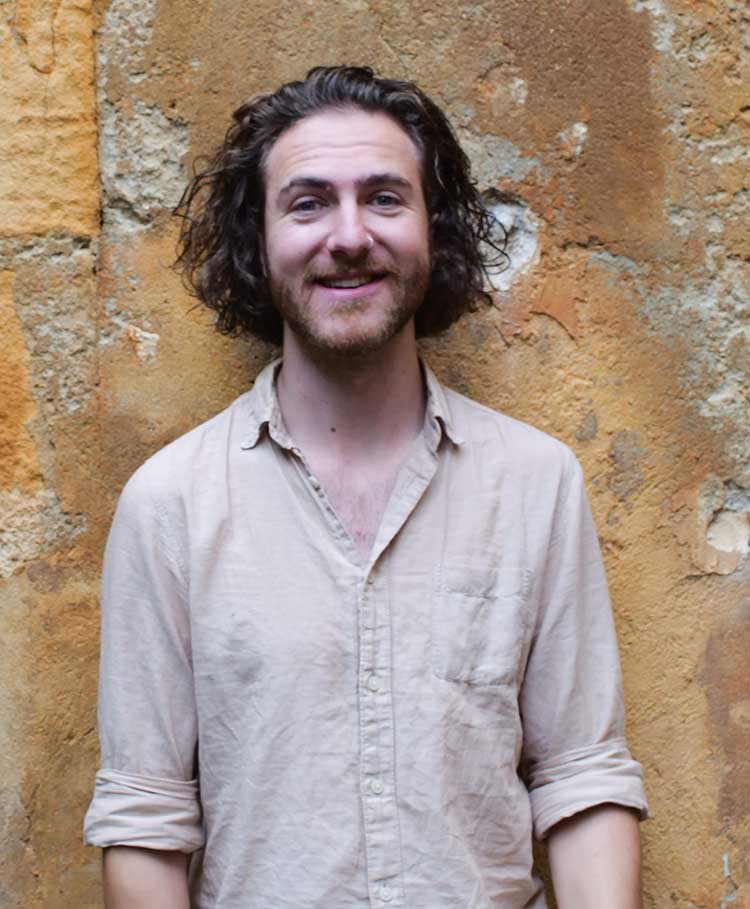
Jonas and I have been exploring all this together for the past 18 months and every conversation leaves me buzzing with the potential of new doors opening and new senses unfolding, and how could we not share something so rich? And so here we are, a day after his 27th birthday, with Jonas now in Blackpool, working at the Effective Altruism Hotel, which is, in itself, a significant step outside the predatory capital model.
Jonas Søvik is a coach, self-exploration and wisdom enthusiast, currently serving on the board of EA Denmark, and at the EA Hotel, helping to restructure and expand the organization/community to serve the EA community and the wider world. He is also building courses to help us all gain more control of our screen time.
He swims in similar waters to this podcast – interested in the metacrisis, particularly as framed by Daniel Schmachtenberger and Nate Hagens, integral altruism, Life Itself, Learning Planet, John Vervaeke’s work on modern wisdom, regenerative thinking, Game B, Liminal Web – & most things related in that field.
This was one of those conversations where we were both freewheeling, thinking in real time, asking questions as they arose. It’s alive, and electric and takes us both to new places. I hope it leaves you feeling as optimistic as it did me. Enjoy!
Episode #327
About Accidental Gods – What we offer.
We offer three strands all rooted in the same soil, drawing from the same river: Accidental Gods, Dreaming Awake and the Thrutopia Writing Masterclass
If you’d like to join our next Open Gathering offered as part of our Accidental Gods Programme, it’s Finding Your Soul’s Purpose on Sunday 22nd March 2026 from 16:00 – 20:00 GMT – details are here. You don’t have to be a member – but if you are, all Gatherings are half price.
If you’d like to join us at Accidental Gods, this is the membership where we endeavour to help you to connect fully with the living web of life.
If you’d like to train more deeply in the contemporary shamanic work, you can find us at Dreaming Awake.
You can explore the recordings from our last Thrutopia Writing Masterclass here.
In Conversation
Manda: Hey people, welcome to Accidental Gods, to the podcast where we do still believe that another world is possible and that if we all work together, there is still time to lay the foundations for a future that each of us would be proud to leave to the generations that come after us. I’m Manda Scott, your host and fellow traveller in this journey into possibility. And it’s been quite a while since I learned that Audrey Tang was originally invited into the Taiwanese government as a reverse mentor, a young person invited to mentor someone of an older generation. And I am an older generation and that idea really took hold with me and I began to explore possibilities. So when a mutual connection suggested that I might like to talk to a young Danish student, I thought it sounded worth at least an hour of my time. And then when I talked with Jonas Søvik, I knew I had found someone from whom I could learn a huge amount about life, about the ideas and thoughts and feelings happening in circles that I would never otherwise reach. Jonas and I have been exploring ideas together on and off, for the past 18 months and every conversation leaves me buzzing with the potential of new doors opening and new senses unfolding. I’ve thought for a while that it would be a good idea to record one of our conversations for the podcast, and so here we are, a day after his 27th birthday, with Jonas, now in Blackpool in the UK, working at the Effective Altruism Hotel, which is in itself a significant step outside the predatory capital model. So for a bit of background, Jonas Søvik is now a coach, self-exploration and wisdom enthusiast currently serving on the board of EA, that’s Effective Altruism in Denmark, and working at the EA Hotel in Blackpool, helping to restructure and expand the organisation and community to serve the wider EA community and the wider world.
Manda: He is also in the process of building courses on how we might all gain more control of our screen time. And given that I’m sitting at a screen talking to you about this, that feels like a really, really good idea. So Jonas swims in the waters that this podcast inhabits. He focuses on the meta crisis, particularly as framed by Daniel Schmachtenberger and Nate Hagens. He’s interested in: life itself, Learning Planet, John Vervaeke’s work on modern wisdom, game B, Liminal web; anything that brings us into a thinking and feeling field from which we might be able to craft total systemic change. So this was one of those conversations where we were both freewheeling, thinking in real time, asking questions as they arose, and exploring the answers. We know each other well enough to push back, to push with, to step out of the known and into the unknown. And this is the kind of conversation I love most. It took us both to places we’d never been before, and that’s what we’re here for. So I hope it leaves you feeling as alive and electric and as optimistic as it did me. People of the podcast please welcome Jonas Søvik of Integral Altruism.
Manda: Jonas Søvik, I might even have said your surname right; welcome to the Accidental Gods podcast. How are you and where are you on this spring ish, lovely Monday morning?
Jonas: Yeah, well, I’m quite excited. There’s almost sunshine here in Blackpool, UK.
Manda: Yay!
Jonas: Which is very nice. There was yesterday, which was my birthday.
Manda: So it was your Birthday; Happy birthday yesterday.
Jonas: Thank you. Yeah. I’m staying at something called the EA hotel, which is a place that helps people who want to do things that are good for the world, that doesn’t necessarily have money in it, have a place to stay and have a place to be supported. It’s very exciting. I enjoy being here very much.
Manda: Yeah, this is how we build a new economy. Somebody who has some money and chooses to do good things with it, creates a space where the people who don’t have money can come and do good things. So for people who are not familiar, tell us what EA is and how you became involved in it.
Jonas: Yeah, it’s a global movement all of bleeding hearts that really want the world to be better. And having understood that there are a lot of things that go wrong, but we think we know what’s right, but we haven’t actually thought critically of it, and then end up doing things that either don’t help, or we’re working on something that isn’t as big of a problem that we might think it is. Because the stories and the narratives that we’re given globally does not necessarily match with the amount of deaths or the amount of risks we have. There’s a lot of criticisms about EA being very intellectual and very rational, and that is true of some people, for sure. And there is also a very broad range and nuanced kind of people. There’s also a lot of the people you’d call post rationalists that much more fit your kind of people. That understand that, yes, you need to think, but you also need to be in touch with something bigger than yourself.
Manda: Interesting.
Jonas: And that different ways of knowing are important.
Manda: Yes. You know, I’d never even heard of post rationalism as a thing. Postmodernism and post-postmodernism and post post post post-postmodernism. And then we get to meta modernism. But Postrationalism feels really lovely. Thank you. Good. Okay, because periodically I come up against people for whom EA equates to Bitcoin blockchain at its worst, and people who want to take Greenland and turn it into a network state. And I’m guessing like everything else, it’s a pretty broad spectrum. But you and I have been talking for probably about 18 months now. Definitely. I remember your last birthday, so definitely more than a year, and you have never struck me as being anything other than totally dedicated to finding ways through the poly crisis, the meta crisis, whatever we call it. And totally aware that our heads are not necessarily going to bring us the answers, if we keep using our heads in the way that we have previously. So tell us how you came to EA and what it means for you and where you can see it going, in less than an hour. Yeah.
Jonas: So two things happened for me about the same time. I had a girlfriend, and we had both started university, and within about a month, she said, hey, Jonas, there’s this guy called John Vervaeke who does cognitive science and wisdom and deep philosophy and meaning making. You might be interested in him. And she also says, hey, there’s some people in my university doing this Effective Altruism thing. You should look into that. It sounds like something that you’re interested in. And both of those things just exploded my world open. And it was so interesting to have them go like side by side, because one is very rational, one is very much looking at the data, and the other is using rationality to dig yourself out of rationality and understand that there are different ways of knowing things.
Manda: Which is which, Jonas? Because actually I could put either of them in that box.
Jonas: Yeah. So John Vervaeke is very much understanding what wisdom is and understanding it as something deeper and bigger, like following the whole traditions of the Stoics and the eastern philosophy, like the whole thing together, but then put it into a modern context.
Manda: Okay.
Jonas: Effective Altruism is much more looking at, okay, what’s actually the science? What’s actually the data? For me, it’s a kind of steel man of what the science has to offer in the best possible scenario.
Manda: Unpicked steel man for people who are not familiar with that phrase.
Jonas: So Steel Man is a way to say, okay, what’s the strongest case for this position or the strongest case for this?
Manda: The opposite of a straw man.
Jonas: Yes, exactly.
Manda: Let’s unpack this a little bit, because John Vervaeke has always seemed to me hyper rational. I know obviously he’s very interested in the stoic tradition, but whenever I listen to him, a lot of my parts get activated into ‘yes but, John, there’s a world out there with a web of life, and you’re only interested in trauma culture thinking’. Am I doing him a disservice or am I just not listening deeply enough?
Jonas: So he is very rational. It’s a fantastic, beautiful irony that he’s the most rational guy I’ve ever followed. Really intellectual and really I feel my gears grinding to follow him, and at the same time, everything he’s doing is trying to point people out. And so it’s a specific kind of crowd that will understand it, where they need to be in their head and use the head to deconstruct that the head can’t do everything. And that opens them up to that possibility and then they’re able to step out.
Manda: Okay. So it’s like a koan, that I just hadn’t understood the koan then. Because you’re right. He’s super smart, clearly, but I just thought he was just going down an ever diminishing circles of hyper rationality. But what I’m hearing from you is that actually, he’s doing that to bring in the hyper rational people and get them to the point where rationality is no longer going to serve them. And they then listen to the sound of one hand clapping or whatever it is and break out of that. Is that what you’re saying?
Jonas: Yes, and. It’s for him much more about pointing to it can only do so much because it’s one way of knowing. It’s not about rejecting it, but knowing how to step out of it and not be trapped in it. And then also understand listening to your intuition, listening to your emotions, understanding what it is to be in your body and process from there. And his whole thing is that what wisdom is, that we are pervasively susceptible to all kinds of biases and mistakes, and our emotions have one kind of bias that has one kind of strength, but also one kind of blindness and weakness. And the same thing with your head, the same thing with your body. So there is no final resting place. He’s fun take on the Buddha’s ‘life is suffering’, is you can never find something to hold on to. That’s the thing. Everything is always relational and contextual. So you need to find a new standing stone every single moment. And wisdom is knowing how to navigate between these. Knowing how to break frame, see things in a different way, step into something new, knowing when to do that and how to do that.
Manda: Right. Which feels a lot like Bill Plotkin’s seeking for elderhood in the modern age. That if people were able to do what Vervaeke is suggesting, then we would be heading towards developing 21st century elders. Does that fit?
Jonas: Yes, I would say so. And what he has created is much more the background knowledge and stepping stones that now other people need to be translating and putting into practice and figuring out how do we integrate this? So he’s given the justification for it and then it’s up to people like us to say, okay, how do we then build on this?
Manda: How do we build this in. Yeah. And the obvious answer for me is you can’t build it in, unless you’re also connecting to the web of life and asking for that degree of help. Because the whole point is that our heads are not the only answer. But if he is opening gateways to heady people, to be able to be more open to listening to other things, then that feels like an incredibly useful thing in the world. Okay. I am reframing my concept of Vervaeke as we speak!
Jonas: Yeah. I want to add on another recommendation for him, because there’s another guy that has been massively influential to me now, called Joe Hudson. And he has taken a lot of Vervaeke’s stuff and put it into very simple, approachable practice. He uses Adyashanti’s idea of the head, heart, and God, and he has a way of guiding people into it. You can see in some of his coaching sessions, they’re answering from the head and he’s just, okay, just drop down into your heart for a moment. And you see the whole body change and the kind of answer they get is completely different.
Manda: Yeah, it would be. Okay.
Jonas: And a lot of what Vervaeke’s stuff is, oh, you need a big ecology of practice with reflection and breathwork and embodiment and dialogue and mindfulness all together. And you do it for a long, long, long time to get the kind of cognitive change. But what Joe does is it’s right here, it’s right now and very simple. So it’s a very practical integration of it.
Manda: Right.
Jonas: And for anyone listening, I really want to recommend his stuff because it’s been transformative for me. And he does things in a paradigm that I have not seen. It’s not the productivity, Bro, I have to grind hard. It’s a whole different approach of, oh, you can enjoy your life, you can enjoy doing things, and if you let yourself listen to that and just follow it, you’re going to end up with a life you enjoy and it’s going to be a lot more effortless, and you’re going to achieve much more than you think you’re able to.
Manda: Okay. And is he also linking to ‘and you can be in service to life’ or is he in the world of hedonism, basically.
Jonas: That’s the limitation with him.
Manda: Okay.
Jonas: He has a beautiful thing where he says, well, how would what I want, like genuinely in my wholeness, in the beautiful place; how would that also be bad for the world? How would it not be that what’s good for me, be good for the world as well? Which I agree with, but it takes a lot of depth for that to be really true. It’s like the whole love God and then do whatever you will. But you can’t just say you love God. It has to be really, really, really deep for that to be the case.
Manda: Yes, yes.
Jonas: So he offers tools, but yes then again, we need to expand out and find something deeper for how do we fundamentally orient ourselves.
Manda: Yeah. Yes. Because if we say love God and I translate that into connect to the web of life, because defining a deity is quite a difficult thing. However, let’s not go down that rabbit hole at the moment unless it proves useful. But does he engage with total systemic change and the need for that? Or is he trying to help the people he’s working with to exist within a broken system? Is he even acknowledging that the system is not fit for purpose?
Jonas: He does. It’s not something he speaks about a lot. So his background path is he used to run a non-profit focusing on trauma work and emotional processing for children. Because he said, well, okay, where do we stop this perpetuation of all the issues? Let’s start with the children, if we just cut off the generation?
Manda: Wow, yeah.
Jonas: And then eventually he has just stepped into I’m just going to work with people and help them find wholeness. Because when I do that, then a lot less crap is going to happen in the world.
Manda: Right. Then less impact on the kids if you’ve got the adults behaving like decent human beings.
Jonas: Exactly. He does still just focus mostly on helping people find better ways of being. The way he approaches it, he works a lot with companies, and what he often points to is how the emotional issues in the leadership will percolate out throughout the entire system. And actually everyone will conform to specific patterns in very few people. And maybe that’s a problem of how we run hierarchy. It’s definitely a pattern that you will see. And so he has a systemic understanding of oh, if we just flip a few things here, then it’s going to percolate throughout the entire company culture. And that’s a way for things to also change, because then everyone is much more on board with doing the right thing and doing it from an actually integrated place in themselves.
Manda: Sounds like I would really like to talk to him, because I can feel we could just go down this rabbit hole. Because at what point do you get to the people on the board and go, what is the purpose of your company? And how is that aligned with service to life? Because if you’re Monsanto making glyphosate, it’s really hard to have an answer to that, for instance. But let’s leave that and come back to where we started, which was your girlfriend at the time, you were at university, and she was suggesting John Vervaeke and EA. Let’s go to that branching point. What did EA offer that John Vervaeke didn’t?
Jonas: I had for a long time thought about making an impact in the world. And it came all the way back from being in third grade or something, and being on the playground at school and looking out at the kids and the janitor and some teacher interacting with a kid. And I just had this feeling of, I can’t do this. I can’t live a normal life like these people that just sort of fuss about on a normal local level, like, no, I need something more. And it gave me this hunger to participate in the bigger global game. For me, it’s a massive call to adventure.
Manda: Right!Oh.
Jonas: And so when I found Effective Altruism and saw, okay, there’s some people that have seriously thought about the kind of pitfalls we can fall into when we think we’re doing something good, but we might not be helping that much it. It spoke to me a lot.
Manda: Right. Right. Okay. Brilliant. I love that. I don’t know what third grade is. How old is third grade?
Jonas: Eight. Nine.
Manda: Oh, wow. So from that age you had that impulse to not be part of the crowd, I guess. To forge your own path and to find your own meaning?
Jonas: Yes.
Manda: Is that fair? Is that what we’re saying? What is the meaning of your life just now, then?
Jonas: Well, it’s thrutopia, to use your one of your words. It’s finding out okay, what does it take for us to find a way that we can live more beautiful lives, in connection with ourselves and communities and with nature? So that life may continue in a wholesome way. Like, I don’t believe that life has to be suffering. And I think we’re quite close because we have so much power; it’s just a question of, well, what are we channelling it into?
Manda: So if you were to imagine a future for, let’s say, just three generations down the line, we often do seven generations, but three generations is within a lived lifespan. That would be grandchildren and maybe great grandchildren. How are they living if we get it right? What does their world look and feel like? Mainly, what does it feel like? Because the technology is pretty much unknowable. But how does it feel when they wake up in the morning?
Jonas: They are in their hearts and they are in their bodies. They feel themselves clearly, viscerally. They’re sensitive to themselves and to things in the world. And in that attunement, know how to stay in connection. And they know that it’s serious when they’re out of connection and how to get back, or speak to what connection isn’t there. I would say that’s the core base thing, because from there then if you’re in connection then you’re just more relaxed, you’re more open, you’re much more likely to be empathetic, to care, to think more deeply about how your actions will impact things outside you.
Manda: And to take pride in being human.
Jonas: Yes, exactly. This, for me is a massive thing. Because I’ve seen this happen more and more; that we as humanity are getting more and more ashamed of ourselves. We’re like a teenager with bad mental health. And and I just don’t think it helps. If we just had a bit more forgiveness for ourselves. Like, yeah, we’re teenagers, we’re not that mature as a species. We got the house to ourselves, we decided to have a party, things got out of hand and we kind of can’t control it anymore.
Manda: Yeah, and there’s a bunch of people wandering around pouring gasoline around with lit matches in their hands, which is also not that clever.
Jonas: Yeah, but that’s what happens when you say bring anyone to the party.
Manda: Exactly, yes. And a bunch of people who are barely teenagers. I just want to say, for the people who are listening to this and not watching YouTube, that the poster on the wall behind your left shoulder says, love is my religion. And periodically, as you move backwards and forwards, zoom is zooming into that, and people listening won’t see that. Alrighty. So we want to get to a point where we can be proud of being human. I think this is crucial. I get to we’re stuck, we’re like Schrodinger’s human at the moment, because we’re being given narratives that we are simultaneously totally culpable for the mess that we’re in and wholly powerless to do anything about it. And if we are ashamed of being human, what do we do? The only option is to jump off a very high building, as Charlie Young did, we had him on the podcast a while ago and luckily he survived. But it’s not an answer, there are other answers. And it seems to me that what you have and we need to move on to what Integral Altruism is, is an understanding that no problem is solved from the mindset that created it. That if we continue to live in a world of scarcity, separation and powerlessness and try to fix things with our heads, we’re going to set light to the house. And that’s not a great thing. But that we have the capacity to get to exactly what you suggested our grandchildren’s grandchildren would be, which is fully connected. And for me, there’s also in that fully connected and able to come back into balance and able to come back into connection, then is a sense of mutual respect between me and the people and the more than human world. And that mutual respect, that sense of I can take pride in being who I am, and that’s a glorious, wonderful thing, creates a sense of self-confidence that our culture simply doesn’t have. Everybody has a sense of being fake at some level, I think. And healed and whole people don’t have that.
Jonas: Yeah.
Manda: And so how do you navigate within Effective Altruism and within Integral Altruism? And how did Integral Altruism arise? How do you navigate being in the modern world and yet endeavouring to grow into something that isn’t being modelled hugely by the generations around us? Does that make sense?
Jonas: Yeah.
Manda: Okay. We know where we want to get to, how do you see the path arising? That’s probably a clearer way to say it.
Jonas: We have to, at the same time, take seriously and integrate the knowledge we already have, and understand that it’s not the whole worldview. That, yes, there are lots of things that we can actually seriously do something about if we make the choice to, but it’s also not the full story. This is one of the core principles of Metamodernism, right? That we take a new stance and we know that we’re not necessarily the best, and there will become something after us that will know more. And we accept that. We embrace every part. It’s also what I’m hearing when you’re saying this thing of we take responsibility as humanity, and we also have the powerlessness; that we need to be able to hold paradox and know how to step into it, how to step out to it. In terms of where we go and what I see the power being in Integral Altruism is that it’s much more a capacity and systems type approach, where you’re not trying to be an engineer and figure out exactly what is the problem. And then you find the little thing, the little cog in the wheel, and then from there if you just fix that, then everything else will be fine. And yeah, for people who don’t know, Integral Altruism is like this new small subcommunity of people within Effective Altruism that are getting more and more dissatisfied with that engineering type rational approach. Integral is a moniker, like a placeholder name for regenerative, systems thinking, wise, liminal, those kind of things. It a bunch of things pushed together where if you ask in these different spaces around the world, we’re not really sure what we are. We’re not really sure what to call ourselves, because there just happens to be this massive convergence.
Jonas: And I find that very often with people in this space that we can compare notes, and we found a lot of the similar things, even though we’ve never met each other before. And for me, that’s powerful. Whenever convergence starts to happen, there’s a flooding and a pooling together of people finding the same kind of answers from different directions. That means, okay, something here works. And to pull something back from John Vervaeke, that this was one of the most inspiring things I’ve ever heard. He has a Ted talk where he talks about stealing the culture and having a second actual age. And the actual age was like when the bedrock foundation of our civilisation was born. The ancient Stoics, Buddhism, Hinduism, the Abrahamic religions all happened within a very short time of each other. And some people believe that we’re kind of in the second Axial Age now, because we’re pushing up against the firmament. Like there’s a ceiling and we’re feeling the pressure of, oh, we can’t outgrow this, and it’s crushing us. But if we manage to transform that, the amount of pressure we’re under will also mean a massive, massive surge. And what John points to, and lots of other people do this as well, is what happens is it’s the whole two loops model of the dominant system that then slowly is dying out, and that at the same time, there’s an under curve of people having a counterculture and pulling away around up. That some shifts start taking on a life of its own, and then eventually enough people see that, oh, this is a new thing, and it works, and it’s more compelling than whatever we’ve been doing before. Then people will jump on.
Manda: Yeah, critical mass, tipping points. We don’t know what the critical mass is, but when we hit it, we’ll know we’ve hit it because we’ll accelerate towards something different. Okay. So what I’m hearing is that Effective Altruism is is a space that allows for incubation of other ideas, which is fantastic. And that Integral Altruism, I will say it right from here on, is arising as… Roughly how many people do you think who get that the perhaps complicated thinking as in things are linear of effective altruism. The engineering model is possibly what got us to here, and that what we need is more of a systems thinking, complex approach. Roughly how many of you are there?
Jonas: So this is a relatively informal group of people who happen to find each other. Okay, a couple hundred are in a formal chat. I would say if we expand out of the people who get it, there will be thousands for sure.
Manda: Okay. Because it seems to me, I’m only asking because if we consider that Effective Altruism is a community of people who understand there’s a problem, and then within it you’ve got a subcommunity of people, who get that there’s a particular metamodern approach to the problem. We’ve hit a tipping point. We’ve found we found a percentage that needs to shift. And I’ve been having this conversation online with a bunch of people recently, of there’s a lot of social studies work that 3.5% is the number that you need to create societal shifts. So that was roughly the number committed to ending slavery or committed to allowing gay marriage, things like that. And that once you hit that tipping point, it spreads very fast because they are sufficiently committed that they bore their neighbours and their family and their friends and their colleagues, they don’t talk about anything else and eventually the idea takes hold. And I think that’s fine, where what you are doing is only shifting the reach of the existing franchise. So nobody was suggesting total systems change when we got gay marriage. It’s not hard also to imagine two people of the same sex marrying each other. You might not like it, but you can imagine it because it’s not that different to what we’ve already got. It’s just going okay, expand it. Or giving women the vote; you might not like it, but you can imagine it happening. Whereas what we’re doing now is saying we need total systemic change. We need that undercurrent to lift up and create Vervaeke’s lift on the ceiling to a whole new system. And if we could imagine it, it wouldn’t be a new system. So I think therefore the percentage that we need is probably larger, but I don’t know. And so I was quite interested to get a sense of, as a percentage of EA, what is the percentage that has given rise to Integral Altruism. Because that might give us a sense of population dynamics. Does that land?
Jonas: I really can’t tell you.
Manda: I know, we don’t know, but it’s an interesting idea.
Jonas: So this brings up something for me that I’d actually like to hear your point on, because something that we often talk about within the EA and with other similar movements is, well, what kind of change is needed and where is the kind of change needed? So there’s a great article by Jonathan Rowson called The Flip, the Formation and the fun. And the whole point behind it is that you need the flip, which is a fundamental shift in consciousness of seeing the world differently. The formation is the system stuff, the things that Audrey Tang are doing, with actually changing the systems. And the fun is, well, it also has to be compelling. It has to be something that people are drawn to in their hearts. Something like the true, the good and the beautiful. Right? There’s a big question for myself I constantly wrestle with, but also seeing lots of places is where do we focus and how? Because we can’t exactly know what’s coming in the future, right? So what do we prepare? Do we try and make things change? Do we try and change people first? But if we change people, it’s going to take a whole generation for that to percolate through.
Manda: Okay, that’s the bit that I snag on. I hope that’s not the case. Interesting. I need to go back and read Rowson. I find him, again, I just come up against old straight white man syndrome, and I know he’s not that old, but I find him very heady.
Jonas: I’m very aware that all the guys I’m mentioning, are like…
Manda: Fit my model of really heady. But that doesn’t mean to say that what they’re saying is wrong. I love the idea of the flip, formation and fun. Because he’s right, we need the flip. So for me, and people listening to the podcast will have heard this so often they could say it in their sleep, I think, is all the change that matters happens on the inside. So Dick Schwartz, again, this was one of my lightbulb moments, was hearing Bob Faulkner say that Dick Schwartz says that almost all of us, almost all of the time, are walking around in a state of internal civil war. And we need that not to be the case. Because then we project it outwards. The bits we can’t handle get projected out, and we end up with ICE trying to take over the whole of Minneapolis. How do we not just declare an inner truce, but get to the point where all those inner parts, the parts that are saying do the thing and don’t do the thing, they’re often in binaries, because it all comes down to I’m good enough or I’m not good enough. And there’s a part that wants to be good enough and a part that’s saying I’m not.
Manda: And one of the things that I’ve also really integrated this year is the work that Dick Schwartz is doing with Thomas Hubl. And how much of what we carry is ancestral. The mouse experiment with the almond blossom scent, is that familiar in your world?
Jonas: No, I don’t know.
Manda: It was done in 2013. So they took male mice and they gave them the scent of something that’s a bit like almond blossom, and a relatively mild electric shock – because physiologists can do that kind of thing. And they got to the point where the mice were terrified of that scent, which had previously been a completely neutral thing in their environment. And then they took semen off the mice; I don’t want to know how they did that; and artificially inseminated female mice. So the male mice and female mice had never met. And for four generations, male offspring of those mice were afraid of that almond blossom scent. And for three generations the female offspring were were afraid of it. So we got generational trauma.
Jonas: What the hell?
Manda: Yeah. And in my world, our trauma started 10,000 to 12,000 years ago, at the start of our form of extractive agriculture, which ends up being what we have now as industrial agriculture. Because you can’t claim ownership of the land while knowing yourself to be an integral part of the web of life. You can’t be in that space that Jon Young talks about, where he says any indigenous child, even now, has made meaningful relationships with over 400 other species by the age of 12. And if you’re laying claim to the land, you’re denying yourself that. And that rupture is huge. And so I get to the point of anyone alive now, it doesn’t matter what age you are, our job is to heal that trauma. And actually, I taught a gathering recently and I had to do a lot of work leading up to it, and it was honouring fear as our mentor. But fear is a form of trauma. Thomas Hubl says a trauma response is a moment frozen in time. Any of our internal traumas are a bit that is frozen in an attempt to protect itself. Or there’s layers of protection happening, and what it’s protecting may have been damaged 10,000 years ago. It may not be in our lifetime and it doesn’t matter.
Manda: The trigger is not the point, and the story doesn’t matter. Why I think I’m triggered and the stories that I tell myself about the bad people out there that I’m afraid of, are irrelevant. What I need to do is to thaw that bit, to unfreeze, to let the energy flow. Because if we’re going to get to what John Vervaeke has described as that expansiveness, if we’re going to get to the up flow of the curve, we have to be in flow. We have to be in flow with all parts of ourselves, ourselves and each other, ourselves and the web of life, which is what you described; the generations down the line. And we can’t get to that flow if there are the parts frozen inside. So we have to do the work and we have to do it now, and it’s hard. Because those parts are adamant that that we are only here because they have done their job and we have to honour them for that. And while at the same time going, and I know you think your story is really important of why I need to listen to you telling me that the people out there are bad. But actually, could we just put the story down for a bit and listen to the embodied sense of what it feels like to have that bit triggered and breathe into it and let it soften and see where that takes us.
Manda: And my own experience of this is that the first few times it can take literally months, if not longer. Because my whole system is going, no, no, no, you need to listen to this bit. But only it only takes one bit softening for the whole of my system to go, oh, that was interesting; huh! And then it becomes progressively there’s fewer parts going no, you can’t do this, and more parts going well, we could see what happens. And it’s still hard and it’s still painful and there’s still the bits absolutely just determined that they have to hang on to this. For me that’s the work. If we can’t do that, we can’t get into the flow. And what I have now is a recognition that any part of myself that says ‘yes, but’ is a part, and it’s protecting something and it’s at least stuck. And it’s hard because there’s a million parts going ‘yes, but’, and I need to soften them. And I don’t see how we get through.
Manda: And so that’s that’s the flip. But it’s also the fun, because the more we do the inner work, the more enlivened we become and the more it becomes a puzzle. It’s more like Sherlock Holmes going, Ah, I see you, little part. Oh, how can we change? How could we, together? And it becomes more more of an internal cooperation and less of the internal civil war. Because horses are my thing, I have an internal metaphor of there’s a chariot and it’s got a thousand horses in front of it, and it would be a good idea if they’re at least all facing in the same direction. But for that I have to at least get them all in the same field. You know, if my life’s work is just getting them all in the same field, that would be a really good start. And they’re often not. There’s a few on the far distant horizon staring way off into the distance, and there are others who are actively fighting each other. But getting them to calm down enough to all be in the same field is a is a reasonable starting ambition. Does that make sense for the question that you asked?
Jonas: Mm-hmm.
Manda: How does it Land?
Jonas: I get all silent inside, because there’s such a beauty in listening to you and recognition. And at the same time, I know you spoke to the ‘yes, but’, and so I wonder how much is ‘yes, but’, but I will bring this anyways. You can do this that you just described, you can do it in a way where you get too insular and you focus just on your own process, your own growth, and it never really percolates out, like rings of the water. It’s being blind to externalities of how do the things that I find and grow, how does that actually percolate out? Does it even percolate out? Because we do live in systems and they don’t always enhance the same things.
Manda: Okay. I think my experience is not that.
Jonas: Okay.
Manda: So I think there’s a difference between the spiritual bypassing of somebody who sits in meditation for ten hours a day and is actually not doing any inner work, but is reinforcing the parts. I guess you and I have both met people who are very, very good at sitting in meditation for very long periods of time and absolutely certain that everything they do is perfect and right. And I have also sat in circles with people who are very open to being vulnerable and being wrong, and yet are are totally grounded. And one person grounded, genuinely grounded in a circle, will ground the whole circle. So I’m bringing to mind the the peace walk that the monks have recently completed in the US. Have you seen that?
Jonas: I’ve heard a bit of it.
Manda: Okay. So I think 23 of them started and they walked 2000 miles, I can’t remember, but they were absolutely, I get the sense that they were completely grounded. And I saw a particular video of them, I think, in Richmond. And 10,000 people had showed up and somebody in the audience had some kind of health collapse. And you could feel the panic rippling out, and there was going to be chaos. And the lead monk put his hand on his heart and said, could everybody put their hand on their heart and breathe with me? And I could feel, even on zoom, 10,000 panicking people just relax. And the seas parted and the emergency services were able to get in and reach this person and get out, no more panic. Someone who has actually done the work, as opposed to someone who’s very good at telling everybody how much work they’ve done, is a different thing. And I think that. I think there’s a ripple effect. Gurdjieff said a long time ago, 80 fully enlightened people would be enough to transform the planet. He didn’t define what fully enlightened was, and he was speaking at a time when the population was much less, and I’m not taking him for granted. But I think I think there’s a huge ripple effect from someone who is coming with absolute humility and groundedness and genuinely connecting to the web of life. Because then it’s not insular.
Manda: And I’m not pretending that I’m necessarily good at this, but I do spend a lot of time outside really doing my best to connect with the life around here. And I feel different as I do it. And it feels to me as if the web of life, when I can find that point of balance and connectedness, responds. And then it isn’t insular. So I hear you that there are ways of doing this that are insular. And I think what we need to do is to find the ways of doing the healing that are not insular. I don’t see how we get through absent doing the healing. But you’re right, healing our own inner traumas and the inherited, however much of it is inherited, how much has arisen in the span of my lifetime. But it has to be done in a way that is alive to the systems.
Jonas: I love this and I get quite excited because feeling, yes, this is exactly the kind of shift I want to see. And it’s what I also see in this Integral Altruism kind of movement. But there’s also a pitfall. Like the pitfall I’ve mentioned here of like, oh, let go of the idea of being effective and scalable and just be a good person. And then that will eventually or automatically just have good things happen. And it’s not like that’s not true, but what you’re speaking to now is, well, they’re also doing something, right? So you have to have the bottom up and top down work together.
Manda: Yes that’s true.
Jonas: You gather the 10,000 people and then there’s such power that can happen, but only because they have been gathered. So if you just do your own work, and then you walk around in life and expect that will be good enough, it’s like you can do so much more if then you attach on thinking, okay, how can I actually spread this? How can I make situations happen where more people get together, have rituals or powerful moments where people get a sense of that shift.
Manda: Yeah. I don’t know anyone doing this work who doesn’t, at the moment where one offers oneself in service to life, that it becomes a reciprocal relationship. And then one is asked, actually, in my experience, instructed to do stuff. I mean, I suppose there’s going to be a spectrum, and there may be some people whose job is to sit in a cave in a mountain and simply be. I can believe that there are a few. But I think that for most of us, offering ourselves in service to life is going to be moving out into the world and and engaging, because how could it not be? I come back to Joanna Macy’s Three Pillars of the Great Turning. And there’s the holding actions; you know, if ICE is in your neighbourhood, then what your community is doing is 3D printing whistles and getting on the signal. And there’s the systems change and there’s the shifting consciousness. And we need all three. And very few people are locked in one of those three. It depends what the circumstances are, where we are. And we we can flow between them, I would like to think.
Jonas: Yeah I agree, you need to have them work together. And I see that that’s often something that’s missing, that people are very committed to one pillar and they just are kind of closed and don’t really take the other ones into account, or not enough. I see doubt in your face. I’m interested.
Manda: Well, I’m just thinking, how could that be the case? I could see if you really committed to holding actions, because it would be possible, let’s say ICE is coming to your community, to get really locked in, in a place of old paradigm thinking that becomes forceful. But what I’m actually seeing, certainly I’m only on the edges of some of the stuff that’s happening in the US, but there are a whole bunch of people who really get it. In terms of this needs not to be that; we need to be growing as human beings and growing as a community while we are in service to protecting our neighbours. And if we’re in systems change or shifting consciousness, yes, I’m sure I do know of some people who get really locked in what I would call head mind consciousness. They’re just going to be perfect and they’re going to meditate and they’re going to do it. And I think, oh, please, just sink. But there’s not that many and there’s many more who do get that being embodied and really sinking into our heart space and the marrow of our bones and feeling and connecting from there. And then the systems change that arises when we do that. Or they start from the systems change point of view and shift into understanding that there needs to be a spiritual dimension for for want of a better way of putting it. But I’m not moving in the circles you’re moving in. Is it the case that within EA and IA there are people who are defending a position, would you say? Is that what I’m hearing?
Jonas: So it’s more that some people don’t do the inner work, because what is important is the outcome, is the consequences of my actions. And on the other hand, the people who who think, oh, I need to be enlightened before I can go out and do something good in the world.
Manda: I think healing trauma and enlightenment are two separate things.
Jonas: This is not just within these movements, It’s a general pattern I see. Okay. And I think you can say and think whatever you want about Effective Altruism, but some of the core principles, I think are very hard to stand against, because it’s a basic thing of you can do a lot more good right now than you can imagine. And it’s not by volunteering. It’s not by being vegan or sorting your trash. If you figure out the places where just a few percent of your money can do the most good, you can literally save hundreds of lives. And that’s hard for us to understand just how big that is. But it’s real. Like a million people die every year from lead poisoning. Nobody knows about this. It’s not spoken about. It’s a very simple fix of gold to governments. Show them that others have had good success with banning and enforcing, not having lead in paint. 60% are children that die from this. You can donate to this. You can make so that this doesn’t happen and it’s actually not going to cost you. I guess it’s going to cost you money, but how much mental energy do you spend on being a good person and trying to be vegan and live sustainably and lower your CO2 emissions, or all this? Like we in the West, especially, we are the richest that have ever existed in human history.
Manda: Some people are living in cardboard boxes under arches because our system doesn’t like equality. But yes, yes, you’re right.
Jonas: I’m speaking to the Pareto Principle of 80/20. Yeah.
Manda: The kind of people who might be listening to this podcast who are probably not living out of a plastic bag somewhere. Yeah.
Jonas: You can afford this. You can you can afford this. And why not do that while you’re doing this other work? It’s it’s not going to take that much for you mental energy wise. And you’re not going to feel the difference. They did studies on this and up to 10%, most people will not feel a massive difference in their income and what they can do with their lives.
Manda: Tithing. That’s what tithing was based on. And yet. Okay, so doubtless this is a part because it’s coming up with ‘yes, but’. And the ‘yes, but’ is the exactly the same argument is made by various very strident people about veganism. Just stop eating meat and it’s not going to fix everything, but it’ll fix a lot. And I think, no, actually, stop engaging in industrial agriculture would fix a lot more. I could imagine that I could get really involved in lead paint, and I don’t think that going down that particular rabbit hole is going to change the system. How do we ensure that we’re not simply painting the wheels on the bus a different colour, while the bus goes over the edge of the cliff? Because I think it matters. It would be lovely to not have kids dying of lead poisoning, and I had no idea. But it would be better not to have human extinction quite far down the line. So this is bringing to mind an article in the Guardian last week where Maarten van Aalst, a member of the European Scientific Advisory Board on climate change, said ‘we’re going to hit three degrees centigrade, and that’ll be daunting, but fixing it is not impossible. It’s not rocket science’, I quote directly.
Manda: And it’s not rocket science, because rockets are complicated and linear and predictable, and living systems are complex and unpredictable. And this person is a member of the scientific advisory board and still thinks that three degrees C is survivable. And clearly I have very triggered parts in there. What the actual **** are you doing publishing a paper saying it’s okay, don’t worry, three degrees C is going to be survivable? And it feels to me that that’s a similar mindset to it would be quite easy to go, okay, I’m going to give my life to making sure there’s no lead in the paint. And I think that route takes us to quite near-term human extinction. And I’d quite like that not to be the case. So how do we do both? How do we get to a please, let’s not have lead paint or let’s not have lead pipes with our water in, because I’m guessing there’s still, I mean, we’ve got Flint and Michigan is still not fixed. How do we sort out the obvious chaos of our existing system while undertaking total systemic change and advocating for that?
Jonas: We need to hold both things at once, and probably we need to hedge our bets and bet on several different horses. Don’t put the eggs in one basket. So this is one of the ongoing core debates in the Effective Altruism movement. So we talk about cause areas which are okay, what are actually the biggest problems in the world that most need solving, but also that we can solve the most of per unit of energy or work or money that we put into it?
Manda: What’s the most effective, yeah.
Jonas: Exactly. What’s the traction on this and how scalable is it? How much can we actually get to move and solve on this? And there’s lots of debate. Because some people are saying, yes, lead paint. Or we need to end poverty, we need to end tropical diseases like malaria. And some people are saying exactly what you’re saying, like, yes, but the climate issues, there are all kinds of other risks that are happening that might actually either make humans extinct or kill off a serious percentage of us, and those are further off in the future. How do we avoid those? So when I talk about lead paint, it’s just an example of one thing, there are many of these kinds of problems. But there’s a whole approach that they talk about, which is very similar to the seven generations down, which is called long termism. And that’s the whole idea of can we look not even just a few hundred, but several thousand years down the line. What can we do to make that possible, that life still gets to continue? And yes, some of it is from a rational and tech pro perspective. But isn’t it beautiful that even they actually understand this and try and look down the line?
Manda: Yeah, I’d be really interested in how they look down the line. Do they look down the line with a systems change perspective? In last week’s podcast with Andrea Leiter, I thought we were going to talk about the Economic Space Agency and their protocols for Post-capitalist expression, which I think are really interesting. But actually, in the pre podcast conversation, she said, because she’s a transnational lawyer, she was really interested in why the people behind Trump want Greenland. And it’s Balaji’s work on network states. Greenland is their pristine landscape for their no death, no taxes, no democracy. And they’ve looked down the line and that’s their answer, is we’re going to solve for dying. We don’t like paying taxes, so we’re not. And we don’t understand how money works, so we’re going to create a no taxes solution. And democracy is a bad thing because it doesn’t get the answers we want, so we’re going to get rid of democracy. And they presumably don’t see themselves as bad people. I’m guessing they don’t. I don’t think Balaji, when he wrote his network state book, was thinking of himself as particularly the Antichrist. But you get to the point where I think, how much did you integrate with the Web of life before you thought about this? And my bottom line is if we’re not asking the web of life ‘what do you need of me?’, and it’s coming from our heads, then it’s probably coming from what Bill Plotkin says of our culture is locked in early adolescence. And perpetuating what an early adolescent wants out of life is not necessarily getting us to a place where humanity and the rest of the web of life flourishes.
Manda: To what extent are the long termists and the no lead paint people asking the web of life? And to what extent are they simply letting one part? So I get to watching this, and I watch it in other fields, where people are getting very, very, very, very, very busy doing good things. And it doesn’t really matter what the good thing is. A part of them is able to wake up in the morning and go I am devoting my life to really good stuff. And as far as I can tell, we’re painting the wheels on the bus really, really, really intricate and detailed colours and the bus is still going over the edge of the cliff. And I really want to know what you feel with this. If we could do the inner work, if we could connect to the web of life, a lot of that would melt away. Nobody would put lead in the paint in the first place, because the people making the paint would be connected to the web of life, and they wouldn’t be doing it. And how do we create the change so that Monsanto is not making glyphosate so we don’t have to legislate against it? How do we get to a point where the bad stuff isn’t happening because we’ve all grown up a bit?
Jonas: So I want to poke you a little bit here. Right?
Manda: Please do Jonas. It’s your function in life.
Jonas: You are mentioning the web of life a lot, and that’s for me also a really good frame. But there’s got to be limitations with that one as well.
Manda: Okay. Why?
Jonas: Some of the research on cognitive biases and how our intuition often fools us, will show that we don’t understand scale very well. We don’t have a sense of when something gets in the hundreds of thousands or millions.
Manda: A thousand is our limit, yes.
Jonas: Like if I say 100,000 people died and a million people died. You don’t have a ten times stronger reaction. But that doesn’t change the fact that that was like ten times worse. And so I’m thinking, I’m just going to poke you with this, then when we’re talking about the web of life, there is something with being open and intuitive and listening. How much is there space for it to scale? How much is the space for us to have capacity for this? And from the Effective Altruism, the rationalist approach would say, okay, can we also start to get some sense of the scale of what will this achieve? So it’s about having the head run the errand and the will of the heart. Not that the head takes over, but just that when we go back to the whole John Vervaeke thing of they all have weaknesses, they all have strengths, so let’s let them work together. And so how much, when you’re talking about the web of life, is that also sitting down and saying, okay, how much will these things actually percolate out? What are the kinds of leverages that we really need to get to, and what kind of analysis is being done to figure that out? Do you see what I’m pointing to?
Manda: I do, but I think there’s two separate questions there. One is if I offer myself in service to the web of life, and I have done the work such that there is a relatively clear flow between all parts of myself, myself and other people, myself and the web. And that’s a huge amount of work; I think that’s a lifetime’s work. Then my head is in service to my heart, which is in service to the web of life. And then I don’t have answers because it’s not up to me. And that’s not an abrogation of responsibility, it’s a knowing that my head will try to function, Try to furnish you with answers, and what I need to do is go and sit on the hill and ask. And then the question comes. My sense of scale is I want a world where 8 billion people are all capable of taking their place as self-conscious nodes in the web of life. Asking the web, what do you want of me? Responding to the answer in real time, knowing that the answer might change moment to moment, and that I can trust that you are doing the same, and that everybody else around us is doing the same, and we’re all flourishing. Bringing the extraordinary creativity of humanity in service to the web with the sense of confidence and security that you spoke about the generations down the line, knowing that that I am in service to something that isn’t the adolescent parts of my head trying to protect other bits that are wounded.
Manda: And that’s the scalability. Because absent that, my feeling is that we just end up with the adolescent parts. I listen to John Vervaeke, and I think I’d be really interested to know what happens when you reach Elderhood. Because at the moment he strikes me as he’s in early adolescence, struggling to get to late adolescence. And for Bill Plotkin, I mean, this is a mental division, but I think it’s useful. Childhood leads to early adolescence, which is when I begin to individuate and have a sense that I’m a separate person and I have needs and wants, and I can run faster and climb higher. And look, I can prove things. And at some point, I look around and go, actually, there’s more to life than this and I need to find a meaning in the world. And at that point, in a healed and whole society, the elders come along and and go: you want to find that? Okay, we can help you. And I am led on a journey that ends up in whatever is the rite of passage of my culture. And the rite of passage leads me into early adulthood, because I go off and I do the seeking, and I come up against the contained encounter with death, which requires that I ask for help. And in the asking for help, if I can ask for help and embody it and live it, then I begin to have a sense that I’m not alone, that the help is available, that there is a reciprocal agreement that comes with that help.
Manda: I ask and I offer, and I come back to the people knowing who I am as an adult. But I’m in early adulthood and in the process of going through adulthood, I know who I am, I know what my offering is, and I experience what it is to offer this again in reciprocity with the people and the rest of the more than human world. And I begin, as I head towards late adulthood, I begin to share the understanding of meaningness with those who are around me, and then obviously the children. And then I step into elderhood when I got my pattern matching, which hits when I’m about 60. I’ve got the capacity to see a much bigger picture. In adulthood I’m out in the world, I’m creating the children, I’m bringing in the food, I’m making the structures that make living possible. By elderhood, I’m more creating the emotional and spiritual space in which I can then hold the space for the younger adolescents. And if our entire culture is going to move through that, we need the elders, and we need the elders who are in flow. And I know very, very few people like that. Which is, I think, part of the urgency of our time is to help people move into that space of flow, so that they are there to help the people who get to the ‘there has to be more than this’.
Manda: To find a ‘more than this’ that is connected. If I listen hard to something like Tristan Harrison and the others, Aza Raskin; lovely, lovely, lovely people. And Aza Raskin sat in a podcast a couple of weeks ago and told a story that there had been found an uncontacted tribe in the Amazon, and heaven knows there can’t be that many left, and they’d handed them Starlink phones to see what happens. Yeah, yeah, my face did exactly that. For people listening, Jonas has just gone ‘what the actual! And within a month, they’re starving to death because they’re hunched over their phones and nobody’s hunting. And that proves that it’s not just our culture that’s addicted to phones. I think there are so many things wrong with that, that I couldn’t listen to the rest of the podcast because my head had exploded too badly. And doubtless that’s my inner unhealed parts, but my heavens, what are you actually doing? How do we reach people who are really well meaning and bring them to a point where the more than human world is not just an aesthetic option to be discarded at will? That’s probably a separate question. I’ve talked a long time and this is your podcast Jonas. Did any of that land and how did it land? And did it answer the poke?
Jonas: It does to some degree. And I just energetically, I noticed myself to lean back and relax.
Manda: Okay. Yes. Because I was jabbering.
Jonas: No no no. Relax. Because it’s good. Because it feels nice and it’s so beautiful. And I agree with you. And I’m aware of I am representing a bit of like an opposing force of trying to not let go of the head.
Manda: Okay, thank you.
Jonas: And at the same time, I’m also with you and I agree with this. And so I’m seeing that tension.
Manda: Okay. And I don’t want to be here persuading you.
Jonas: No not at all.
Manda: Part of what I love about our relationship is that you come in with Sparky ideas from a different generation and a different way of being and a different viewpoint. And you have different circles that you move in. And I want to learn of your circles. So in Integral Altruism, where does the edge of these ideas; is there an edge of these ideas arising and where does it go?
Jonas: I would hope that it goes to an integration, things that we’re speaking about now, with capacities and with the web of life and the systems thinking. Kind of looking at network effects and leverage points and putting on the rational analysis of, let’s actually try and get some good data on this so we can have a sense of what the landscape is. There’s actually a really nice, beautiful mantra in rationality that some people use, which is sit down and do all the analysis and really, really think it through and then forget it all and go with your gut.
Manda: Because you’ve fed your intuition with some data.
Jonas: Exactly, Exactly. And I think actually, this is the point that I’m trying to keep pointing to here, and that I see too often with people that are more on the open and spiritual side. They’re like, please, please, please don’t forget the head, because we live in a world that our human like ancestral brains are not built for. The kind of scale, the kind of bigness that’s going on, we don’t have, like a system that’s built to grasp that intuitively. So it’s something that we have to operate with and build. I see that in something like Integral Altruism, where there is the well-meaning ness and there is the capacity, and there’s the wisdom and the deeper understanding. And I hope that we are starting to find frameworks and ways of looking at these things that work for us, that we then can share and other people say, ah, yes, that clicks. This actually fits with other things that I’ve been frustrated with, that then both in the Effective Altruism movement, people will catch on to it because they see that it makes sense. But also for the more spiritual people to see, oh, this is something that speaks to how I see and understand the world and being in connection, but without forgetting my head. And I hope that that can start to create new norms and new holding points for us to figure out what in the world do we do?
Manda: Brilliant. That has a feeling of a very good end point. But something arose while you were speaking, so I want to float one last thing past you. Because we’re back to E.O. Wilson: we have Palaeolithic emotions, medieval institutions and the technology of Gods, and this is not a winning solution. However, we are an integral part of the web of life. The thing is, we don’t recognise it with our head minds, but we are. What if the web of life has evolved us to here, because we actually do have the capacity to to do all of this? Our current thinking tells us that we have Palaeolithic emotions, and we can map a lot of our cognitive biases and all the rest of it, and our tendency for our limbic system to take over and for our parts to take over. If my baseline theory is right, and it’s there to be disproven, we have the capacity to step into being self conscious nodes in the web of life, which would require conscious evolution, the evolution of our consciousness, consciously chosen. I choose to believe that that is possible. And I don’t know, I haven’t looked recently, but the last time I looked, we still believed that we use about 5% of our actual neuronal capacity at any given time.
Manda: What’s happening with the other 95%? What happens if we bring it online? How would we bring it online? What would it feel like? And my suspicion is that it wouldn’t be linear, rational thinking, that it would be an evolution much more of our intuitive capacities. I’m now in a professional mediumship course, and I’m doing animal communication training. I finally found people who don’t feel to me totally flaky in both of these, having gone through a lot of people who felt very, very flaky. But I’ve now found people who feel pretty grounded. Because what happens if I try to expand those aspects of my awareness? And it feels, we’re back in shamanic stuff, this is a big shamanic nudge, and I’m overlaying rational excuses for something that basically I was pushed into doing. But it feels like what happens if those parts of me can be brought online in ways that are testable, so that I can find out are they reliable? And how does that land with you? Because it feels to me that this feels the most exciting way forward. But also, I might be just going down a rabbit hole. How does it land with Jonas?
Jonas: It brings up two things that I have thought. One is the power of ritual and how that’s something that we’re kind of making fun of and belittling that tribes used to do this. But it’s such a powerful psychotechnology. It’s a practice that can completely shift things in people, and we ought to start taking that seriously. I think there’s a lot for us to learn in the shamanic traditions.
Manda: Yes.
Jonas: And what if we did more like the monks who did the peace walk? Like that was a ******* ritual.
Manda: It was. Yeah.
Jonas: What if we do more stuff like that? We run more experiments of mass gatherings and not just a protest where we stand and we’re dissatisfied with something.
Manda: Yeah. Or Burning Man. But more consciously ritualled.
Jonas: We bring it to something. What if we take some of the monks and really well-developed people and actually bring them out of the monasteries and have them, like, go out, you’ve done enough, you’re far enough. And actually, you know, the whole thing of ‘in teaching you shall learn, and learning you shall teach’. They can also actually maybe even grow even deeper from doing that.
Manda: That would be lovely. That brought up Nina Simon said that her teacher, Oscar Mira Quesada, said ‘consciousness creates matter. Language creates reality. Ritual creates relationship’. And that feels like it lands exactly where you’re just saying. You said there were two things arose. That’s one; let’s let’s really consciously create ritual.
Jonas: The second was the monks.
Manda: Okay. So I look forward to talking again. And after your next birthday and finding the Integral Altruism has begun to create a whole bunch of really meaningful rituals around the world. Wouldn’t that be amazing?
Jonas: That would be a dream beyond a dream.
Manda: We can do it. I mean, honestly, within the shamanic world, we create rituals all the time. And I do know a lot of people for whom creating ritual is their thing. It’s just maybe we need to bring those two worlds together.
Jonas: I agree.
Manda: Maybe that’s the thing you and I could be doing.
Jonas: Exactly.
Manda: Is there anything else that you wanted to say in this conversation?
Jonas: It’s just the joy.
Manda: It is such a joy.
Jonas: And for me, such a powerful thing when bigger spheres start to reach each other of different ways of approaching the world. But really, we’re all looking for the same thing. We just want life to be good and we want life to continue.
Manda: Yes, yes. And we want it to be amazing and wonderful and as magical as it can possibly be. And just committing to that feels huge. So thank you. I’m so glad that we get to do this. And for a long time, I thought that we should do this in a way that other people can hear. So we finally did. Thank you. So that’s it. Thank you for coming on to the Accidental Gods podcast. I have no doubt we will do another one of these at some point in the not too distant future.
Jonas: Yeah.
Manda: There we go. That’s it for another week. Huge thanks to Jonas for everything that you’re doing, for being the reverse mentor that I didn’t know I needed until we met, and for exploring all the wild places of how things can be done and are being done differently. This feels like walking the edge of the existing reality, looking out into what could be if we let it. This is the counter to all of the ‘yes, but’s that come from everyone who thinks that the existing system is the only possible way of doing things. It totally isn’t. And there are so many inspiring people like Jonas, who are thinking as broadly and deeply and widely as they can, in an effort to make the world move into the new space. There are links in the show notes to everything that we mentioned, and I hope that you have the time and the space to follow them up. And in the meantime, Jonas and I will put something on the calendar for about a year from now, possibly a little longer, so we can follow up and find out where his amazing wide, deep thinking has taken him.
Manda: And before we head to the credits, two more things. First is that we have another online gathering on the 22nd of March, so later this month. It’s called Finding Your Soul’s Purpose. It’s on zoom 4pm till 8pm UK time. And I have put a link in the show notes. It will pretty much do what it says on the tin, and you do not have to have been to any of the previous gatherings, I hope, to make the most of it. Although it is designed, each of these is designed to layer one on top of the other.
Manda: So if you came to Dreaming Your Year Awake, and then Honouring Fear As Your Mentor, and you’ve done the work, then this should open new doors that are available because of what we’ve already done. So that’s one. And the second is I got a message from a friend who is a member of Parliament. And at some point in the conversation with Claire Kirby, on water, I said, please write to your MP, but they won’t really listen to you. And this is an apology, because of course, there are some decent, honest, hardworking MPs who are doing their best to make the world a better place. So please write to your MP about water and fully expect that they will get back to you and that they will listen to you and that they will do what we need them to do.
Manda: And then we will be back next week with another conversation. In the meantime, huge thanks to Caro C for the music at the head and foot and for this week’s production. To Lou Mayor for the video, to Anne Thomas for the transcripts, to Faith Tilleray for all of the work behind the scenes that keeps us moving forward. And as ever, an enormous thanks to you for listening, particularly if you have subscribed and left us a review, because that really makes my heart sing. And if you know of anybody else who wants the call to adventure, who wants to explore the leading edge of oddities that we could become, then please do send them this link. And that’s it for now. See you next week. Thank you and goodbye.
You may also like these recent podcasts

Honouring Fear as Your Mentor: Thoughts from the Edge with Manda Scott
Manda dives deep into the nature of fear, what it is and how we might find our own resources, resilience and capacity to work with the parts that catch our attention. Given this, it is recommended that you listen at a time and place where you can give it full attention.

Co-ordiNations vs the Network State: Greenland and the Schism in Global Vision with Dr Andrea Leiter
What is a Network State and how does the concept matter in relation to the Trump administration’s attempts to take Greenland – and their ‘peace’ proposals in Gaza and Ukraine?

Tracking the Wild Things, Inside and Out – with Jon Young of Living Connection 1st
How can we step into our birthright as fully conscious nodes in the Web of Life, offering the astonishing creativity of humanity in service to life? Our guest this week helps people do just this…

Water, Water Everywhere and none of it fit to drink! With Claire Kirby of Up Sewage Creek – ahead of World Water Day
Today, we’re talking about water, that utterly essential part of our biological and spiritual lives. It should be clean. It should be safe to drink, to swim in, for us and all the species with whom we share our beautiful blue pearl of a watery planet. As we all know… it’s not.

STAY IN TOUCH
For a regular supply of ideas about humanity's next evolutionary step, insights into the thinking behind some of the podcasts, early updates on the guests we'll be having on the show - AND a free Water visualisation that will guide you through a deep immersion in water connection...sign up here.
(NB: This is a free newsletter - it's not joining up to the Membership! That's a nice, subtle pink button on the 'Join Us' page...)