
#363 Feeding the Future: Dr Nikki Yoxall and George Monbiot in Conversation
How do we feed ourselves in a way that is in service to life, so that we’re co-creating with the web of life as our forager-hunter ancestors did, but in a way that’s wholly compatible with the twenty-first century and beyond?
This week I’m joined by two people who spend their lives exploring exactly this question.
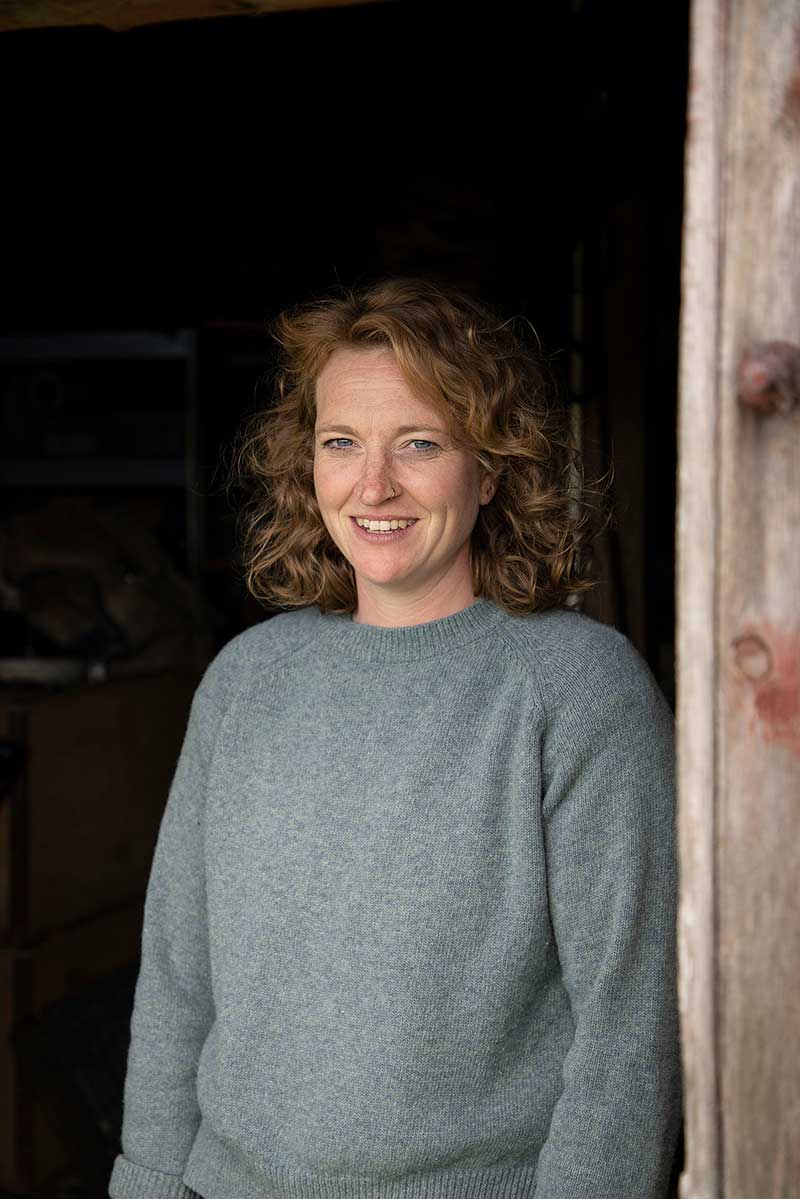
Dr Nikki Yoxall is a first-generation farmer, researcher and educator. After a career in teaching and educational leadership, she now co-manages an upland suckler herd in the Angus Glens, collaborating to create an integrated land use model where productive livestock farming, nature recovery and traditional sporting interests work hand in hand.
As Technical Director at Pasture for Life, she leads research and knowledge exchange programmes that connect farmers, researchers and policymakers across the UK. Her work focuses on turning evidence into practical action, helping farmers build resilient, context-specific systems that care for animals, people and the land. She serves on the board of NatureScot.
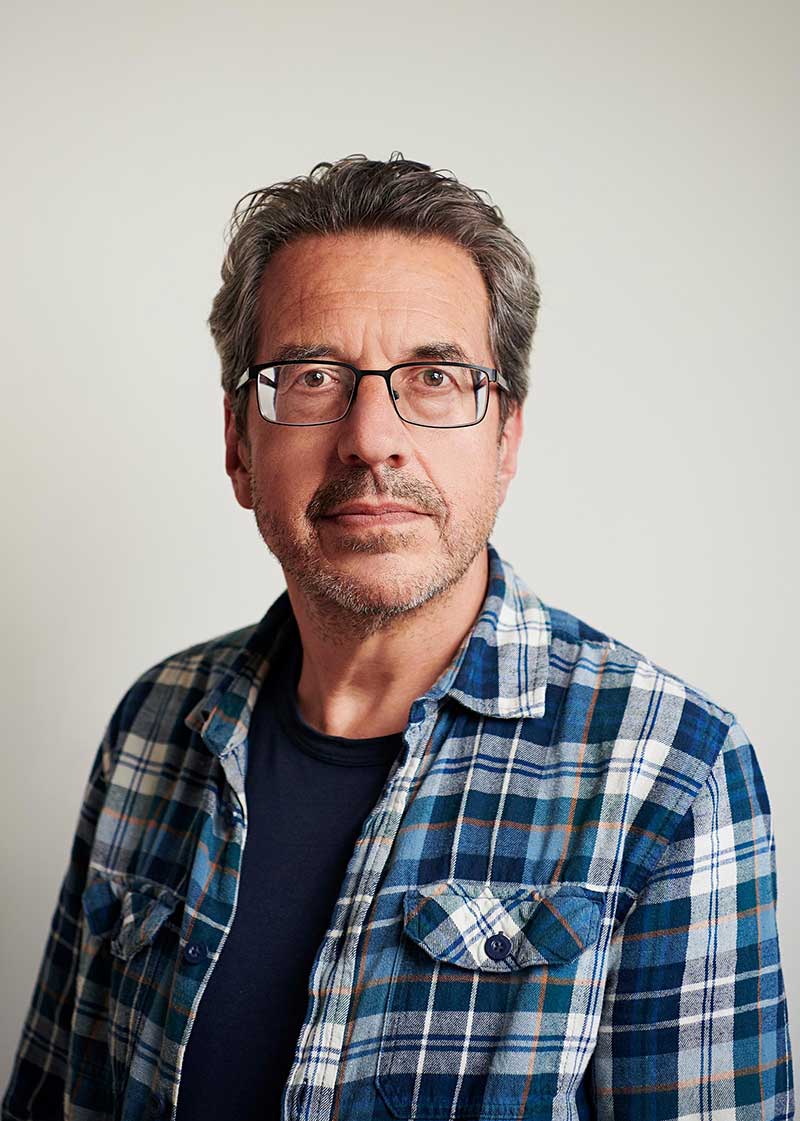
For most of our listeners, our second guest will need no introduction: George Monbiot read zoology at Oxford and then moved to the BBC to pursue his dream of making investigative environmental programmes. Since then, he has written thirteen powerful non-fiction books, the most recent of which is The Invisible Doctrine, a Secret History of Neoliberalism and how it came to control your life. He is founder of The Land is Ours, a campaign for the right of access to the countryside and its resources in the UK. He was awarded the Global 500 in 1995 and the Orwell Prize in 2022.
This podcast definitely believes there’s a way through to a future where humanity flourishes as self-conscious nodes in the web of life: but this is a step into an emergent future…laying the foundations to get us closer to that future is the work of this time – how does it look, feel, taste – how does it actually work? So today, we’re going to explore some of the options with two of the brightest, sharpest minds of our generation.
More from Accidental Gods…
We offer three strands all rooted in the same soil, drawing from the same river: Accidental Gods, Dreaming Awake and the Thrutopia Writing Masterclass.
Our next Open Gathering offered as part of our Accidental Gods Programme is ‘DREAMING YOUR YEAR AWAKE’ – our most popular course of the year. Do join us on Sunday 3rd January 2027 from 16:00 – 20:00 GMT – details are here. You don’t have to be a member of Accidental Gods to come along, but if you are, all Gatherings are half price.
If you’d like to join us at Accidental Gods, this is the membership where we endeavour to help you to connect fully with the living web of life.
If you’d like to train more deeply in the contemporary shamanic work at Dreaming Awake, you’ll find us here.
If you’d like to explore the recordings from our last Thrutopia Masterclass, the details are here
Manda and Louise both offer one-to-one Mentoring Calls. Manda is writing a book just now, but if you’d like to contact Louise, details are here.
In Conversation
Manda: Hey people, welcome to Accidental Gods. To the podcast where we do still believe that another world is possible and that if we all work together, there is still time to lay the foundations for a future that we would all be proud to leave behind. I’m Manda Scott, your host and fellow traveller in this journey into possibility. And this week we’re discussing food and farming and how we can bring those into a system that will actually work for the benefit of people and planet, and not for the benefit of profit explicitly. How do we feed ourselves in a way that is in service to life, so that we’re co-creating the web of life as our forager hunter ancestors did, but in a way that is wholly compatible with living in the 21st century and then beyond. We are laying the foundations now for whatever comes next. And the one thing that we are absolutely certain on is that the current system doesn’t work. And this week I am joined by two people who spend their entire lives exploring explicitly this question. Dr Nikki Yoxall is a first generation farmer, researcher, and educator. After a career in teaching and educational leadership, she now co-manages an upland suckler herd in 3000 hectares of the Angus glens, collaborating to create an integrated land use model where productive livestock farming, nature recovery and traditional sporting interests work hand in hand. As the technical Director at pasture for life, she leads research and knowledge exchange programmes that connect farmers, researchers and policy makers across the UK. Her work focuses on turning evidence into practical action, helping farmers build resilient, context specific systems that care for animals, people and the planet. And she serves on the board of NatureScot. She was also recently awarded her PhD in Agroecological Transitions; how farmers relationships with nature shape farming systems. Which feels very aligned with what we’re doing on this podcast.
Manda: And then we have another guest; it’s a three way conversation this week. And for most of our listeners, our second guest will need no introduction. He’s one of the most celebrated campaigning journalists of our time. He pours his energy into the many ways our culture annihilates our climate, and how we could fix it. For those of you who don’t read The Guardian or didn’t listen to the BBC back in the day when it was worth listening to, George Monbiot read Zoology at Oxford and then moved to the BBC to pursue his dream of making an investigative environmental programs. Since then, he’s written 13 powerful non-fiction books, the most recent of which is The Invisible Doctrine; A Secret History of Neoliberalism and How it Came to Control Your Life. Also very aligned with this podcast. He is founder of The Land Is Ours, which is a campaign for the right of access to the countryside and its resources across the UK. And he was awarded the global 500 in 1995 and the Orwell Prize in 2022. So we are exploring explicitly food and farming. Nonetheless, it’s impossible to explore these properly without accepting that we need changes in our economic system and our governance system. And it’s hard to separate these things.
Manda: We are in a poly crisis, an omni crisis, a meta crisis, whatever kind of crisis we want to call it, it is hyper complex. And we live in a hyper complex system. So inevitably we end up touching on economics. We end up touching on the complexity of the world that we live in. We end up touching on how are we going to actually nourish the 8.5 billion people on this planet instead of just feeding them empty calories? All of this is supremely complex. So the point of this conversation was to move towards where this podcast is going: we believe there is a way through to a future where humanity flourishes as self conscious nodes in the web of life. But this is a step into an emergent future; laying the foundations to get us close to that future is the work of this time. How does it look? How does it feel? How does it taste? How does it actually work? What are the steps we need to take from here; from the utter dysfunction of the existing system to something that will at least be more functional and will lead us towards where we need to be. So today we are going to explore some of those options with two of the brightest, sharpest minds of our generation. So here we go, people of the podcast. Please welcome Doctor Nikki Yoxall and George Monbiot in conversation.
Manda: Nikki Yoxall and George Monbiot, welcome to the Accidental Gods podcast. So Nikki, how are you and where are you on this quite bright winter’s day?
Nikki: Hi, Manda. Well, it might be bright with you, but it’s less bright here up in the Angus Glens. So I live in Glen Clova, which is in Angus in Scotland, just at the south of the Cairngorms National Park. And it finally feels like we’re well into autumn now.
Manda: I heard 15cm of snow in Scotland. You haven’t heard that?
Nikki: No, we’re quite lucky. If it comes from the northeast, then we are in the sheltered part of the South Cairngorms, so it hits our friends and neighbours 50 miles up the road and we kind of get the easier end of it.
Manda: Nice. And George, how are you and where are you?
George: So I’m in South Devon in the lentil belt, just a little bit outside Totnes. It’s a great part of the world to be. In the summer I spend my days kayaking with dolphins and in the autumn with tuna. So it’s lots of beautiful things here.
Manda: Now I have Scotland envy and Devon envy, which doesn’t usually happen both in the same podcast. I spent a whole year down at Schumacher and it was gorgeous. I would have moved down there if I could have persuaded my wife. But there we go. But then I’m also trying to move to Scotland, so I can’t have it both ways. Alrighty. So we recently changed our name to Accidental Gods The Thrutopian Podcast, because I thought it was worth us staking a claim to what we’re actually trying to do, which is to find a way through to a future that we would all be proud to leave behind. And so fundamental principles: current system is not fit for purpose. I think it’s not broken, I think it’s doing exactly what it was always designed to do, which is to shovel value to the top. But it’s not going to see the rest of us keep going for very much longer. I just listened to the president of Iceland talking to Tristan Harris and Asa Ruskin, and I have rarely heard sane people sounding so scared about AI. So I think, and they said it, that now trumps everything else, and they’re probably right. But leaving that aside for now, assuming that we do get through whatever AI apocalypse is coming, we have to have a new system. And that system for me has to be predicated on different foundations than the extractive system that we have now.
Manda: I think our nature of extraction goes back to the foundation of our agriculture, because you can’t have agriculture that tries to dominate the land while you believe yourself to be an integral part of the web of life. Lyla June Johnson has written a really lovely PhD and papers arising, showing that in most of the world, the indigenous cultures co-created with the Web of Life. They were increasing biodiversity such that everything could increase its intake. And because they were sensible, they didn’t take everything. And so the Amazon was a farmed landscape, North America was a farmed landscape, South America, Australia, Africa. But just not farmed in the way that we farm. And so we have, in the last 50 years at least, created a system that is completely not tenable. And in the process of changing from one system to another, total systemic change, while we change our governance and politics and our economics, we’re also going to have to change our food and farming system. So going through that, I would come to George first to ask, where do you see us? If you could think forward to, let’s just say 2036, it’s an easy jump of ten years. And I think if we haven’t sorted ourselves out in ten years, we’re probably not going to do so well. How are we shifting, and we’re probably still in a process – I don’t think this is an end point – how we farm and what we eat?
George: Thank you. Manda. Well, the first thing to say is that, boy, do we have to shift and we have to shift very quickly indeed. Recent report by the World Resources Institute suggests that on the current trajectory of food demand, we’ll be using an extra area almost twice the size of India by 2050. And that’s all taken from rainforests, from savannas, from our remaining wild ecosystems. Farming is by far and away the most land hungry of all the things we do, and it swallows up land at a phenomenal rate. It already occupies more habitable land than anything else, and that is continuing to expand and to expand. And that’s the result of two factors, really. One is, and this is the least potent of those factors, is human population growth. The other, the most potent, is livestock population growth, which is driven by what’s called Bennett’s law; that as people become more prosperous, they demand more energy dense and protein dense food and that primarily takes the form of livestock products. And already we know that what is considered an ordinary Western diet, heavy in animal products, uses much more land and other resources than a plant based diet. If you go plant based, you reduce your land take by roughly 75%. You reduce the greenhouse gases from your diet by roughly 75%. So in terms of where we need to be, that would be my number one step is going plant based. That’s what I’ve done with the exception of eating wild venison, because Britain is overpopulated with deer, as a result of which trees can’t get going in many parts of the country. You can massively reduce your impact on the living planet by going plant based.
George: And what I want to see is as much help given to people to do that as we possibly can. And the difficulty we face is several fold. One, we have 8 billion people on earth, and that needs an awful lot of feeding. And we have become dependent on a model of food production, which is highly successful in terms of producing food and disastrous in terms of producing environmental dysbiosis, leading probably not very long to collapse of many absolutely crucial ecosystems. But we have to look at both at the same time. So when I was born in 1963, there were widespread predictions of disaster. That two things are not connected, well, they might have been connected, but these are different disasters because people said, well, look, the population growth is rising by X. Food supply is rising only by Y. Very soon there’s going to be mass famine. Well, since then the green revolution happened. There was a massive increase in production, and we’ve had fewer and smaller famines than we’ve had at any point in modern history as a result of that. So, you know, we have to log that. We can’t ignore that. We can’t pretend that isn’t a thing. It’s a very, very important thing. It’s crucial that we maintain a lot of food production, otherwise huge amounts of people are going to starve.
George: But the cost of it was masses of pesticides, masses of fertilisers, masses of irrigation water, masses of deep ploughing, practices which damage the soil, a whole load of things which cannot be sustained. And there’s quite a few signs that we’re beginning to hit the buffers. We’re beginning to reach the limits of what that model can provide. And so I’m becoming very interested in a whole set of new approaches when it comes to arable farming, particularly in developing new ways of understanding the soil. So that we can switch away from chemical augmentation to biological augmentation, particularly of the relationship between plants and microbes. And because of my interest in this and a chance meeting, a very lucky one; a couple of us stumbled into what seems to be quite a significant scientific breakthrough, in that we discovered that ultra high frequency seismology can be used to characterise soil and fill a whole load of gaps in soil science. And what we hope is that that can then form a basis of all farmers everywhere, being able to look into their soil, see what’s going on, and to have a much better knowledge of current soil conditions, soil health, what might need to be done to improve it. We set up something called the Earth Rover Program to try to put that into effect.
George: But I’m also very interested in the issue of convenience food. Now, convenience food often gets muddled up with junk food and an awful lot of convenience food is junk food. But I want us to be able to draw a distinction between the two things; to have convenience food which isn’t junk food. And the reason for that is that the great majority of people, when they have the choice, want more convenient food. We are blessed in that we don’t have a situation where women have to spend half of their day in the kitchen in many parts of the world. And that’s another thing we should be very grateful for. I don’t want us to have to go back to that. Trouble is with standard plant based food, it’s a lot of cooking. So I want to find ways in which it can be more convenient, in which we can replace animal products and the enormous planetary load that they cause with products which are both convenient and healthy. And ideally cheaper than those animal products, so that we don’t have to constantly fight to persuade people to move away from that planet destroying industry. And this is why I’ve become very interested in alternative proteins and particularly precision fermentation. So that’s a rambling and incomplete answer to your question.
Manda: No. That’s good.
George: But you can sort of see some of the directions in which I’m going.
Manda: It gives us a starting point. Yes. So, Nikki, just before we come to you and these are probably not yes or no, but tight answers; so ten years down the line, do you think we’re going to have broken up the very big oligopolies that that run the the food industry? Which at the moment isn’t a health industry, it’s an addiction industry. It’s pushing our ill health massively in the name of profit. And for me, we don’t get through if we haven’t disrupted capitalism very significantly. Can you see a route through to those not being as overwhelmingly dominant as they are just now, while maintaining what you’re after?
George: Well, we clearly have to break them up. They are a major threat to human wellbeing and to planetary wellbeing. And there have been two losses besides the other ones we’ve already mentioned, that we’ve suffered over the neoliberal era. And one of those has been effective competition laws. You know, those have more or less disappeared completely; allowing this great wave of mergers and acquisitions and corporate concentration as a result. And the other has been the gain, from the corporate point of view, of massive, sweeping intellectual property rights. And they can just mop up IP. And in fact, a lot of mergers and acquisitions is driven by the desire to concentrate more IP. The two things feed on each other. So what we need is strong competition laws. We need to break up the big corporations. And we need weak intellectual property laws which don’t enable one or a few players to grab everything and shut everyone else out.
Manda: Okay, that’ll do for now. I want to explore how we make that happen, but that’s probably a separate podcast. Nikki, let’s come to you. So 2036: how do you see us beginning to feed ourselves in a way that is compatible with people and planet?
Nikki: Yeah. I mean, 2036 is not far away. And I’m very conscious that at the moment in the UK, we’re struggling to meet our 30 by 30 targets. So in less than four years time, three years time really and so I’m very nervous about what I’d like to see in ten years, because I think we really struggle to make progress quickly enough. However, what I will say is that we have seen some signs as a result of policy change that allow us to see a shift maybe more quickly in certain spaces and places. So maybe we can touch on that. But I think for me, it’s about recognising that complexity isn’t a problem to be eliminated. It really is a sort of characteristic of living systems. And I think what we have done since the Green Revolution, really over the last 100 years, actually, in terms of kind of how we’ve how we’ve approached agriculture, which is a tiny blip really in the history of the world. We’ve had this sort of principle that complexity is something to control. We’ve simplified landscapes, we’ve reduced biological diversity both above and below ground. We’ve standardised our inputs and outputs to the extent that you can look at a chart on the back of a farming magazine or catalogue that basically links fertiliser inputs to how much money you maybe want to or not spend; not actually about the product or what you’re actually growing.
Nikki: And we’ve, we’ve done all of this to make production predictable, and we’ve swapped quality for consistency. And I suppose from my perspective, I see a future that is already in many places, particularly in the UK, where all of my work is focussed. You know, I don’t work kind of globally. But we are seeing a shift within the farming community towards agroecology, towards regenerative agriculture, which work from a fundamentally different starting point, where complexity is not an obstacle to productivity. In fact, those ecological relationships can be a part of the kind of productive capacity of our farming systems. So for me, over the next ten years, it really is about embracing complexity and creating a system whereby we don’t have just yet another blueprint for how everyone should farm. But instead, we fundamentally change the rules of the system. That producing food, restoring nature and natural habitats and ecosystem function and sustaining livelihoods are all kind of mutually reinforcing, rather than competing objectives. Which unfortunately, even with the best will in the world, often policy inadvertently creates that these are either or options without recognising the potential for ‘yes and’.
Nikki: So I think I would like to see public engagement in agreeing the outcomes that we won’t compromise on: healthy rivers, human health improvements, animal welfare, for example. Healthy, high nutrient quality of food. How do we agree those outcomes that are not to be compromised? And then how do we give people the freedom, knowledge and where necessary, incentives to find different ways of achieving them. Recognising that we can do that through a particular framework that I’ve been using a lot in my work, which is deep levers for transformation. So three key parts of that being: rethinking the way that we learn, reconnecting with nature and restructuring our governance systems. Particularly around supply chains and logistics, but also that broader country level governance as well. So for me, it’s about embracing complexity, setting out that framework, but allowing freedom within that framework, to enable land managers, farmers, those who have interests in their community to contribute moving us towards that place.
Manda: Thank you. Yeah. I’m reading ‘Abolish westminster’ by Adam Ramsay at the moment, which is doing very bad things to my head. I’m going to get Adam on in a couple of weeks, I hope, because changing the way our governance system works, feels to me like, for both aspects of this, both you and George, we need a new governance system very, very urgently. I don’t think any of the things that any of us want to happen are going to happen under the current system. And finding a peaceful way to change that system is probably a very high priority. Leaving that aside, because that is a whole other podcast also, I was listening to David Montgomery just before we came on. He’s written a new book called regen. He’s a soil geologist, or at least he’s a geologist who has now got a particular interest in soil. And he said two things that struck me quite deeply. One was that volcanoes produce considerably less damage than ploughing does, given that a volcanic ash falls and then things begin to grow through it. Whereas ploughing, you could probably plough once and it would be similar. But if you’re ploughing and you’re ploughing and you’re ploughing, then as we all know, we are destroying the soil. And he said that since the Second World War, so essentially for the last century, we’ve put too much emphasis on feeding the world’s population and not enough on nourishing the world’s population. And both of those struck me as getting to the heart of where we’re going.
Manda: Which is we need to feed as many people as there are. We need to feed them in a way that increases biodiversity, because we are monumentally destroying it as we speak. I think wherever we are in the spectrum of this room, we’re all agreed that industrial agriculture needs to go, one way or another. And just before we came on, I was saying, I just saw before we came on that Abdul El-Sayed, who is easily one of the most impressive of the new people who got in in the midterms, is going to introduce a bill which requires America to take on the same laws as Europe in terms of banning chemicals. I didn’t realise they didn’t, to be perfectly honest, because Europe’s not great. You can still spread glyphosate everywhere and that needs not to be a thing. There are still people who think that regenerative farming means minimal tillage and glyphosate, and it doesn’t. So coming back to George, we’ll open this up so that anyone can answer in a minute. But coming back to George, how do we get to the system that you want with convenience foods and plant based diets, while maintaining soil health, while nourishing the world, rather than worrying about simply providing them with empty calories, which is what we’ve done up till now; while dismantling the governance system and making sure that the big companies are not owning everything? Over to you.
George: Thank you. All the right questions, of course. And the answer has to start, as all honest answers have to start with; it’s not easy and there are no perfect solutions. So we just have to recognise that. That if someone is too pat, if it’s like, oh yeah, everything is sorted out; here we go. Here’s the whole program. Be suspicious of that. Because everything you do that’s good bumps into/creates a problem of its own or exacerbates some other problem, you know. We are in a very tight space because we have over 8 billion people on earth. And those people, every one of them, is as deserving as you and I of a decent good diet. A very large number of those people can’t afford it. There are billions of people who are below the line at which you can afford a healthy diet. And a healthy diet generally costs five times as much as one that’s merely adequate in terms of calories. There are large numbers of people in countries whose median income is lower than what it takes to afford a healthy diet. So even if they spent all their money from their median income on their diet, they still wouldn’t have a healthy diet.
George: And so instantly you can see it’s a problem of poverty, it’s a problem of economics, of politics, of, of a huge range of factors. It’s not just a technological problem. But it is also a technological problem. And sometimes I think there’s a danger within environmental movements of saying, oh, we don’t want any technological solutions. Well, what we should be looking at is holistic solutions which bring in technology, politics, economics, social change, cultural change, all the rest of it. Because boy, do we need all of those things. And you’re absolutely right, the current governance system could scarcely be better designed to deliver the opposite of these solutions we need. But because we’re in this tight space, we are going to need to continue to produce high volumes of food. And in your introduction to this question, you mentioned the problem being industrial agriculture. My response to that is that the problem is actually the noun, not the adjective. It is farming which has trashed the planet. And sometimes the farming which has trashed the planet is not what you would describe as industrial farming. If you look at the Welsh hills, in some places, you have one sheep per two hectares, one sheep per five hectares, which is enough to eat all the tree seedlings but produces precious little food. It’s got one of the highest ratios of destruction to production.
Manda: The mentality is still industrial, it’s still high stocking densities to the point where it destroys everything.
George: Well, this is very low stocking densities. I’m saying it’s very low. One sheep per five hectares is low by anyone’s standards. But that’s not how I would define industrial. Industrial is like concentrated, repetitive, it’s doing the same thing on a large scale and generally aiming for maximum productivity. But all I’m saying, I’m not having a big argument with you, I’m just saying that we have to be careful where we draw the lines. Because we can say, right, industrial is bad, non-industrial is good. And then of course, as we’ve done straight away, you get into an argument about the definition: what is industrial? What is not industrial? And actually, you look at it in the round, it is farming above any other factor, with the possible exception of the fossil fuel industry.
Manda: And the military.
George: Which has trashed the planet. And this accelerates our… I beg your pardon?
Manda: And the military.
George: Yeah, yeah. And the military of course. But these are the factors. You know, we shouldn’t discount agriculture just because it looks nicer than other forms of industry. It is an industry. Agriculture is an industry, whatever scale you practice it at. Even if it’s artisanal. When you have artisanal coal miners, that’s still an industry. Artisanal farmers, it’s still an industry. Just saying be careful with the language because the language doesn’t necessarily help us to resolve the question. What helps us to resolve the question is looking at practical solutions, practical ways forward. And I believe very strongly that a lot of this lies in the soil. That we have this possibly the most complex ecosystem on earth and the one which we know least about. There was a paper published in 2020 called, I think, ‘Soil is the composite extended phenotype of the microbial metagenome’. I’m sure you’re all familiar with it. And it was an extraordinary paper, quite remarkable, which strongly suggests that there is a collective microbial response. If soil carbon is reduced, the DNA length across all microbe taxa shrinks, whereas the number of RNA operons simultaneously rises, suggesting a collective metabolic response. Almost as if it’s a kind of superorganism. And the authors of the paper were basically saying, what the hell is happening here? And in the publicity they said, we think we might be getting towards what soil is, because we don’t know. Anyway, I happened to catch up with two of the authors a couple of years later, and I said, in the light of further research, do we know more about what soil is? And one of them said, in the light of further research we haven’t a clue.
George: And so this is the ecosystem from which we get 99% of our calories. This is just a little bit important to us and to the rest of the world. And I mean, it’s very hard to study because it is dark, literally dark. If you dig a hole, you’re damaging the structure. The function is very dependent on the structure. It’s just innately difficult. There’s lots of brilliant soil scientists have done amazing work, but we still know astonishingly little about it. It is highly susceptible to damage and indeed to systemic collapse, which is what we call the Dust Bowl. You know, it’s a classic complex system issue. You hit the system again and again, and it can absorb a certain amount of stress because that’s what complex systems do. They reclaim equilibrium. They get back to equilibrium when they’ve had a knock. But you hit it too many times, too hard and then it gets a further knock, like a drought, and poof: it’s gone. There goes Oklahoma. It just blows away. Now, what keeps soil on the land in normal circumstances is that soil is a biological structure. It’s like a coral reef, but massively more complicated. It’s built by the organisms that inhabit it, and it’s fractally scaled. So it’s got the same structure at every level of magnification. And this gives it tremendous structural stability. Otherwise it would just blow off the land with the first windstorm. Or wash off the land with the first rainstorm.
George: And so we’ve been gifted by nature this just astonishing ecosystem. With probably higher diversity in abundance, particularly in temperate latitudes, than any other ecosystem on earth. Under one square metre of your garden, there are likely to be thousands of different arthropod species living in that tiny, tiny amount of land and occupying minute niches. There’s this incredibly complex relationship between plants and microbes in the soil, where when a rootlet, a root hair goes into a new crumb of soil, it sends a chemical signal, a very sophisticated chemical signal, to wake up a particular bacterial species. Having done so, it then floods it with sugar, and up to 40% of all the sugars plants produce is poured into the soil to feed the bacteria to create this incredible dense zone of bacterial activity around the root hair. And those bacteria both provide nutrients for the plants, they defend them from pathogens, they fire up the plant’s immune system. Exactly the same as our gut bacteria do. This zone, the rhizosphere, is the plant’s external gut. Our task above all other things, I believe when it comes to the science of agriculture, is to understand that better. It’s to understand the rhizosphere, what’s going on between plants and microbes in the soil better, and then to look at ways of enhancing that which are a substitute for just slapping on chemicals, ploughing over more, doing more and more damage. We’ve got to find ways of working with soil ecosystems rather than against them.
Manda: Excellent. Okay. I’m pretty sure I read a reference to that paper that you mentioned through there, because the soil microbiome and our gut microbiome mirror each other very intensely. So, Nikki, any responses to that? But also I think we have to first of all, I think for Nikki and for I, Non-regenerative systems we would classify as industrial. So regenerative systems, by definition, we would not be set stocking sheep and destroying the land. But it doesn’t mean that sheep couldn’t be with the land, but we just need to create a system that does exactly what you says, that works with the land instead of destroying it, instead of sheep wrecking it. In terms of economics, this is probably not Nikki’s thing, but I don’t see we get through without universal basic services. Not universal basic income, I don’t think universal basic income is workable, but universal basic services would include food as a service. And we would have to agree how that food was produced. And also, I think for me, there has to be a local element. That we can’t keep our six continent just-in-time supply chain; we have to be eating, preferably food from a distance that you could cycle, which is hard if you’re in the middle of a city, I grant you. But out here in the middle of nowhere, I should be able to eat the food that is within my reasonable cycling distance and not a whole lot else. Except everybody wants coffee and chocolate, I grant that. So somebody’s still going to have to be growing the coffee and the chocolate and presumably for those who drink alcohol, the wine. So Nikki, where would you go in terms of understanding soil and integrating it into the social and spiritual and ecological fabric of a community, so that we can feed communities in ways that help them to move forward?
Nikki: Yeah. Well, I guess I was kind of slightly smiling wryly to myself as George was articulately and enthusiastically talking about soil health, because it’s something that all of us as regenerative practitioners have been, to coin a phrase that a brilliant Cumbrian farmer I know ‘wanging on about’ for quite a long time. And it’s something that we have been obsessing over, that is one of the most requested and asked for webinars and training courses that I deliver through one of the the kind of roles that I have is about soil health. And I remember, George, when you came to groundswell a couple of years ago, it was fascinating hearing you talk about soil health to a bunch of farmers who have been kind of deeply embedded and passionate and knowledgeable about this subject for a long, long time. And I think that I just want to touch on this point that it really nicely depicts this challenge that I see, as somebody who has a foot both in farming and in research; that research frequently in a significant proportion of the time, significantly lags behind what we know on the ground and as practitioners that we’re delivering. Particularly in complex agricultural systems. Because research is very much about breaking things down, compartmentalising, simplifying, in order to reduce variability, to create robust and rigorous scientific approaches. And as you’ve clearly set out there, George, soil isn’t simple.
Nikki: Soil is beautifully complex. It is a fascinating ecosystem. And yes, it is that which we all depend on. And what’s been lovely is seeing recently, you know, that kind of coming really into the public eye through films like Six Inches of Soil, and regardless of how accurate or inaccurate some aspects of them are, it’s really saying, look, guys, this stuff’s important. And so I think it’s really, really important and great that so much of that is happening. And through your work as well, George. But I think what we have to be careful of is we all have to ensure a level of humility around that which science is telling us and that which many of us know is true, or that we know is what we see in front of us. And I think particularly when we think about the complexity of agro ecological systems, for example, or regenerative systems, looking to indigenous knowledge ways and ways of thinking about the land is a real reminder of how it’s not always what the science tells us. We often have been seeing this. And my own research kind of made that link between that which is internal and that which is external, and how our own connectedness with nature and our own understanding of things like soil health directly play out on the landscapes that we as farmers manage.
Nikki: So I would slightly counter Manda, I think the suggestion that you’ve made when we’ve had conversations before, slightly, about inner first then outer. But I think because actually for me, these are not sequential stages, they are interconnected and mutually reinforcing or reinforcing. And that interconnected process of kind of understanding soil, of digging holes, of holding the soil up to your nose and going, mm, this actually smells healthy. I often ask people when I dig holes with them to sniff soil, and I ask them to tell me what you smell. And they kind of stay silent and then they giggle a bit and they kind of go, well, it’s earthy. And I’m like, yeah, exactly. It’s earthy. We as humans recognise this and when we smell soil, we know when it smells good. And we know when something’s a bit off. And we might not have the language to articulate what that offness is, but we know that something’s not right. And we can kind of say, well, it smells healthy or it smells unhealthy. So we know that this very deep connection to what is underneath our feet is there. We just have to find ways of awakening it.
Nikki: And for some people, that’s through a very scientific lens. And it’s about understanding how cations work and connected porosity. And absolutely, that piece about the complexity of DNA responses to that connected porosity. So the kind of capillary nature, if you like, of the soil structure. But it can just be through a sense of seeing above ground responses; more flowering plants, seeing more earthworms, for example, if you dig a hole. So I think what’s really exciting about soil is that we have this vast array of ways to tap into curiosity, engagement, passion, enthusiasm for many, many people. Whether they are doing that in their back garden or whether they are managing 3000 hectares as we are here up in Glen Clover. So I think from my perspective, soil does sit at the heart of that. It’s been sitting at the heart of regenerative agriculture for decades. And many of us are digging holes in our farms on a frequent basis. We are sharing articles, we’re talking about this. Some of the knowledge of my farming colleagues about soil structure, soil health, the microbiota, the responses of soil organisms, microorganisms to various external events or conditions is fascinating and it’s mind blowing. And I’m enthused that more and more soil scientists are working more closely with farmers, like the networks I work with, to understand what’s happening on farm, and that isn’t always the same as what’s happening on the research platform.
Nikki: And a big part of my work is actually translating what scientists think they know about something and their body of knowledge, because we must remember science isn’t truth; it is a collection of knowledge that helps us to better understand what’s going on around us. But it is never really an ultimate truth. And what farmers have been exploring or have been understanding for many, many decades. And I think that that point about the kind of research and science and practice, there’s a complexity there that we have to be better at understanding. And I work with lots of land use modellers, emissions modelling specialists across Europe. And I often say to them, I’ve never met so many people who’ve studied agriculture for so long who know so little about farming. And that difference between what you can study and what you enact, I think, is a is a piece of work that I’m particularly fascinated with. That complexity, that gritty kind of interface between what we think we know and what we know and what we can prove or we can’t prove. And really, does it matter if actually what we’re seeing in front of us is a diverse, healthy landscape? And that’s the kind of place that I find interesting in working.
Manda: Thank you. And given all of that, ten years down the line, I have something of an image of a more enlivened rural landscape where people are more engaged with the land. I think we saw it a little bit during Covid, that people found that there was a lot of value to be had when they didn’t have to go to what David Graeber would call their bullshit jobs, and they were instead volunteering on local community supported agriculture schemes, and they were actually getting their hands in the soil and they were discovering meaning and purpose in growing stuff. So how do you see rural landscapes and perhaps urban landscapes as we’re trying to feed 8 billion people, exactly as George said, we need to feed everybody. Let’s assume that we can sort the economics, because that will be a process but I think that’s a different conversation, is how do we get to the point where money is not the rate limiting step on people actually being able to thrive? Because we need to do that at every level, not just with food. So leaving that to one side, how do you see the process of focusing on nourishing the world; so healthy, health filled and health giving food to enough people?
Nikki: Yeah. Well, I think there definitely has to be diversity in that landscape. For me here in the uplands in Scotland, cattle remain a critical part of that because we can produce really healthy, nutritious beef. And also, not particularly necessarily in these landscapes, unless we went very small scale and very seasonal, milk as well if we needed to. But you know, if collapse is coming, we will be. Because we won’t have many other options just to nip down the road to a supermarket to buy milk. And obviously, historically, all sorts of animal products would have been produced in these sort of landscapes. But there’s a complexity, again, that we need to kind of engage with and a recognition that it’s not all or nothing, you know, it’s the ‘yes and’ piece. So for example, 3000 hectares here, a thousand of those are woodland, mostly native broadleaf. A good 500 hectares, maybe more is open moorland. And then the rest of it is grassland, diverse pasture. And all of that contributes to being part of the lung network, the lungs of the planet if you like. But also is able to produce a product that is culturally relevant to this area, is something that brings joy. I know that not everybody enjoys eating or engaging with meat. But for some of us, I’m a real foodie and I can be as excited about butternut squash as I can a nice side of beef. But it is that kind of cultural element as well, like something that we love and we enjoy.
Nikki: So there has to be diversity there. We actually, on this estate do have a market garden. There was a market gardener who was growing here and he left and we’ve really struggled to get somebody else. And that really is about a willingness for mobility and people to move here. And there are challenges around things like the local infrastructure, like the school nursery recently closed down because the depopulation of of upland areas continues. So it’s challenging to encourage people to come and live somewhere like this if they have young children, if they’re worried about the school closing, the lack of access to shops, for example, healthcare providers, all of those sorts of things are a decent trek away. So I really would hope to see in ten years time a revitalisation of the uplands. I believe absolutely to my very core that cattle play an important role in that. And that’s not because I’m anti sheep, particularly. We sold all the sheep off the estate, I’m not a big fan. But I love cattle and I love cows and I love seeing how they interact with the landscape and the relationship and are just such wonderful, beautiful animals that have complex social hierarchies within the herd and that really do contribute in so many ways to healthy landscapes. Their dung, you know, if you want to make compost, the best compost machine is a rumen.
Manda: Horses are really good too.
Nikki: That are able to move seeds around, that are able to encourage greater insect life if we manage them in a particular way. So for me, in the uplands, livestock, particularly cattle, have an important role to play. But I want to see small scale market garden on every farm. But the challenge that we have is about some of the logistics. And the reason that our supermarkets have done so well is that point of convenience that you’ve mentioned, George. This idea that particularly given our economic, and I almost feel like we can’t disentangle this from the economics, right? Because the reason that we all go out to work is because none of us can bloomin afford anything. You know, the reason that we’re having to have two people full time employed in every family, if you’re a 2.4 kind of children type family, is because if it’s just one person, unless they are on a significant income, you just can’t afford to pay the mortgage. You can’t afford to pay the rent, you can’t afford to pay the electricity bills. So for me, it really is, you know, this this issue of accessibility and affordability.
Nikki: I don’t necessarily think that food is too expensive. I think that housing and financial costs are too expensive and energy is too expensive. If we look to countries that have a similar expenditure on food, like Singapore, high wealth related to financial services and high rental and land costs. So we know that there’s a link between those two. We have to do something about the economic conditions within which just everyday normal people live, in order to change our relationship with land and to change the way that we understand where our food, where our nourishment, where our provisions come from, because people are too busy to worry about it. And because the supermarkets just plonk it right in front of them, they don’t have to worry about it. They can become totally detached from it. So for me, I don’t necessarily feel like the public don’t understand farming. I don’t think that’s an issue. I think the more is that the public don’t have time to be concerned with things when they’ve got so much else to worry about. There’s conflict, we’ve got biodiversity loss at scale, we’ve got climate change. Nobody, even climate change deniers, can’t really deny that 40 degrees in London for ten days on the trot is fun or normal. You know, we’re experiencing this now right on our doorstep.
Manda: No, I think think can.
Nikki: So I hope that through creating opportunity, and this is what I was saying earlier about that framework of agreeing what do we want the outcomes to be? And allowing local responses to meet that, to demonstrate that if I am producing very clear, clean water, if I’ve got healthy soils, if I’ve got high biodiversity or biodiversity that’s increasing from where it is now, then I should be able to get on with that, regardless of whether there are cattle involved or not. But it’s about being clear about what we want those outcomes to be and then helping folks achieve them.
Manda: Brilliant. Thank you. Alrighty. So I want to open – let’s just ping, popcorn wise, keep answers short so that everybody has time to answer. I don’t want to end up in the economics because I think that is a whole other conversation. But let’s assume that if we can’t sort our economics, then food and farming is low down the list of priorities because we’re sunk anyway. In order to sort the economics, we have to sort the governance system. Let’s assume that both of those are as good as we can get them, ten years from now. We’re not going to sort the fact that we’re in the middle of a climate emergency by ten years from now, that’s not going to go away. If we zero’d the carbon tomorrow, we would still end up over two degrees C, because there’s a degree of inertia in the system. A long time ago, like 2017, I listened to David Johnson of University of New Mexico I think, saying that at that point, he had done a calculation where if every farmed hectare on the planet shifted from what I’m going to continue to call industrial farming to regenerative farming; which is genuinely regenerative, not minstrel and glyphosate; and only increased soil organic matter by 1%, we would be at pre-industrial levels of CO2 within ten years. I am 100% certain that that has broken down by now anyway, because we’ve burned more fossil fuels in the last ten years than the previous ever. And so we’ve blown that one out of the water and we will continue to blow it out of the water while we don’t count our military carbon embodiment in anybody’s calculations, which is another very annoying thing.
Manda: However, leaving that aside. We’re in the middle of the COP, as we record COP is continuing and they’re all talking about fancy ways of pulling CO2 out of the air that are never going to happen. They are depending on technology that does not exist and is never going to exist. Anybody, Nicky or George, can you conceive of a way whereby we can offer good, nutritious food to the number of people that we need, and that agriculture can become part of the solution, rather than part of the problem of specifically the climate emergency. George, you’re unmuted, so go for it.
George: Yeah. So from my point of view, the key thing is mass restoration of ecosystems as much as we can. And that does mean reducing our land footprint, which is the problem with livestock, it just takes up so much land. And you can have a beautiful system which incorporates livestock but what you also ought to be looking at is the opportunity cost of that; what ecosystem could you have if you were occupying less land, if you weren’t relying on livestock? And that ecosystem will, in almost all circumstances, be much richer. And I think there’s a real danger that we in the West, prosperous people, we tend to latch on to the thing that we like to see, the thing that we like to look at. But 60% of people are living in cities. Many of them in really huge cities. And that is going to require mass production of food, whichever way we cut it. And we might not like the look of it. I mean, mass production of food looks horrible, we don’t like the look of it one little bit, but you just can’t deny the need for it. And you know, I absolutely like you Manda, I want to see as much local production as we possibly can. I love going to my local producers and meeting them and seeing businesses connected with them.
George: It’s just not going to work for most of the people on earth, simply because the productive land is not there on their doorsteps. And there’s been some really frightening figures published on this. Nature Food discovered that only a quarter of the world’s people can be fed within 100km on staple foods from where they live. And so, you know, I would love it for everyone to be fed within a bike ride of where they live. It’s just not going to work. Huge numbers of the world’s people now rely on a small number of lightly habited regions of the world. So we’re highly reliant and it’s a very dangerous reliance. And it’s going to get worse with climate breakdown as fewer and fewer regions of the world remain productive. But we’re highly reliant on North America, on Russia and Ukraine, on Brazil, on these big, lightly habited areas of the land which are producing an awful lot of our grain, and it’s very hard to break that, unless we move to alternative forms of production altogether. So alternative protein production, for instance. But then a lot of Western environmentalists don’t like that either. So we find ourselves in these really difficult conundra. And I really fear that our answers are too easy. You know, here’s a lovely system, it works well for me, it works well for my local community, so this is what people ought to be doing. But actually, some of the answers are really ugly. They’re not aesthetic, they don’t look beautiful. And they do produce, though, what is needed for the great majority of the world’s people, which is a lot of cheap food. And I’m not here to argue at all, but Nikki, I must push back on this thing about food prices, because for us, maybe we can say food isn’t too expensive. But there are 3 billion people, over a third of the population who can’t afford a decent diet, A healthy diet, one that costs less than 52% of average household expenditure. You know that that puts 3 billion people on the wrong side of that line. Food, unfortunately, has to be cheap because the alternative is mass starvation. So I keep talking about this tight space, these extreme constraints we face. And what we mustn’t do, I feel, is to play off the thing that we would like to see that works for us and that’s great and that’s fine and that’s lovely. But then to extrapolate from there and say, this is a global solution, because part of that global solution, a very large part, is going to have to be mass production of cheap food.
Nikki: I agree, and confirmation bias is real, right? So the things that I like are going to be positive for me and the things that you like are going to be positive to you and vice versa. And I think that we always have to remember that. And the thing about cheap food and I suppose what I was talking about specifically in the UK, is that I don’t think our food is too cheap, but many other things are too expensive. And we know that we have a horrendously extractive global economy that leaves far too many people both at risk of the impact of climate change and without enough to eat. And that has to stop. And that links into, and we don’t have time to talk about it today, but issues around colonialism and capitalism, the serious issues that we have to resolve, which is why my focus in terms of my own academic work is about systems thinking, and it’s about those wicked problems and those messy solutions. Because, as you say, what we cannot do is take a solution and say we have to extrapolate that out and do that everywhere. I would say the same for alternative proteins, that may well work in some places but it’s not going to work everywhere, and it’s not necessarily going to be appropriate everywhere. And you’re right, it isn’t going to look pretty.
Nikki: I’m always fascinated by the paradox that when I go to the city, for example I was in London last week, and I could go into any one of several shops that specifically sell only organic food. And I could take any type of food that I wanted, making sure it was organic or fair trade or whatever label I wanted on it. But up here in the Glens where so much organic meat, for example, would be produced, it’s really difficult for locals around here to access it. So we have this horrible situation where those people in built up areas get the most options. Those of us in the countryside, and I think we all live rurally, so we all probably recognise this, how difficult it is to have good food choices on our doorstep. Actually, no, if you are near Totnes, you’ll have great options because they have a much better local food infrastructure than we do up here in this part of the world, I think. But yeah, I definitely think there is something about this kind of topsy turvy world that we live in, where we are serving cities often with more options than those areas where the food is produced. And it is that kind of extractive mentality, isn’t it? It’s about taking the food to the people.
Nikki: I am interested in the idea of replacing, for example, poultry production with an alternative protein. Because I think asking all those people for whom chicken chops are a central part of their diet to stop eating chicken, is is a really big ask. But replacing it with something that tastes similar, that feels similar, that is recognisable, for those people potentially. I’m thinking about particularly in inner city areas, where there may well be high levels of deprivation or challenges around access to work or access to health services, people need convenience because it’s something they don’t have to worry about, as we both alluded to. So if you can make that swap there, then I think that definitely makes sense. My concern then is it becomes these kind of multi-layered food economies, where basically if you’re poor, you get one sort of food to access and if you’re wealthy, you get another sort of food. I mean, we kind of have that already, so we just have to be very careful that we don’t kind of create this stratified food economy where there are the haves and the have nots, if we are going to make change. Because there’s an opportunity to move away from that if we possibly can, and to create a bit more parity and equity of access to good food for more people.
George: I agree. I’m very much in agreement with that. It’s just a desperate need to have food which is healthy, nutritious, convenient and cheap for everyone. I hope that’s a baseline we can all agree on. And then, of course, the absolute minimum environmental impact, whichever way, whatever we’re looking at. Just try to get that impact down in terms of all the measurements. Greenhouse gases obviously, water use, soil damage, land. You know, land is this massively neglected metric in the environmental movement. It really surprises me we just don’t talk about it more. Because every hectare of land we use for our own purposes is a hectare which cannot be occupied by wild ecosystems, and it should be right up there with our greenhouse gases. You know, people talk about their carbon footprint and we can definitely question the whole idea of footprinting. But if we’re going to have that discussion, we should be talking about our land footprint just as often. It is just as important. And so all of these things. And it takes us back to this thing, which I think all three of us have emphasised, is that it’s blinking complicated. There’s no simple solution. There’s no one solution. There’s no solution which doesn’t create a problem of its own. I hope we can all agree on that. There’s nothing easy now. I don’t think there ever was actually. I don’t think there was a golden age of easy solutions, I think that’s a bit of a myth of our own. But it doesn’t get any easier with the ongoing environmental crisis, all the pressures of capitalism accelerated by neoliberalism, corporate concentration, political dysfunction, economic dysfunction, social dysfunction. It’s a poly crisis. And even looking at one aspect of it, food, you’re still in the poly crisis.
Nikki: I was just wondering if I could just jump in to say that I think the list that you said, about what you hope we would all agree on, I would swap cheap to affordable for food. Which is just maybe semantics.
Manda: Yes. Because the farmers have to be paid.
Nikki: Well, I think it’s more about the reason often people, and I made this point earlier, don’t have enough money for food, is because they’re being asked to pay way more for other things that are leading to other issues around extraction as well. So the proportion at which they’re spending of their income has to reduce on food, because they’re having to spend so much more on other things. So that’s something I’d really like just to switch to. And Manda, if you don’t mind, if I can just very quickly talk about land use. Is that okay?
Manda: Yes. Go for it.
Nikki: So I talked earlier about some of the models that I work with, and I agree with you, George; we need to look at land use. We need to look at those if we are going to use any sort of footprinting or LCA, so life cycle analysis. But so many gaps exist in the data at the moment. And my real fear is that the decisions and the policy directions that we’re going in are being driven by a set of data that are absolutely riddled with holes. Both in terms of data that just hasn’t been collected; so we just don’t have that information, we don’t have those data. Whether it’s emissions factors or land use factors, whatever it may be, it is a sparse data set given the importance of the data set. That terrifies me. And secondly, the reliance on models that are not able to cope with the complexities that we’ve been talking about. So, for example, I’ll give you a really kind of short, succinct example that frustrates the heck out of me. We often look at things around land use and we say, well, livestock take up this much land or arable takes up this much land. And if you have this sort of management, it’s this much land. And I think it’s arguments that you’ve used in your own writing, George, that you’ve taken from particularly Thomas Nemcek and Joseph Paul’s work, but relating to things like organic production takes up more land, for example. And the challenge that we have, as I have been working with modellers across Europe, working on some of these issues in a horizon funded project over the last five years, is that the models just aren’t complex enough.
Nikki: So I was at a dinner with some researchers showing them what mob grazing looks like using pepper pots and napkins. And I was saying, you know, after 30 days if I’ve moved my animals around this field, I can come back to the field and I can go again. So thereby I’m doubling the carrying capacity. And they were just completely like, oh, well, we have no way of building that into the model. That’s way more complex than we’d ever thought happened. It’s either they’re there or they’re not there. It’s a kind of binary: animals are there or they’re not there. There’s no ability to incorporate more adaptive management.
Nikki: And another example being where we integrate ruminant livestock into arable systems. So for example, you could have a field that during the autumn you plant a winter wheat. It starts to grow during the winter. In the spring you graze it using either some youngstock cattle or some sheep. You then take a wheat harvest. You then follow it with a cover crop that then can get grazed that winter. So essentially in that one field you could have three productive outputs. None of our models can cope with that. So none of the land use models that we use are able to kind of account for the fact that one hectare, for example, could potentially have three productive outputs per year. And so for me, that point about land use, yes, the footprint of agriculture. Let’s absolutely look at that in more detail. When we talk about environmental impact, let’s not just take a carbon lens. Let’s think about water quality, nutrient loss. Let’s think about soil health. How do we take a much more holistic approach to our sustainability assessments? But for goodness sake, let’s get the data where it’s missing. Let’s fill those gaps. Rather than getting distracted; and this is for anyone in the research councils out there; rather than getting distracted with gadgets and gizmos that we might be able to sell for a profit at the end of our research, let’s focus on filling those gaps. And secondly, let’s look at how can we develop modelling tools. Because, my goodness, if AI is about to take over the world, surely we have got the computing technology to be able to create shades of grey and more adaptive systems within our models. Let’s get those models caught up with what’s actually happening on the most progressive farms, so that we can start to scenario model what it would look like if more farmers went this way, rather than saying it’s a binary good or bad.
Manda: George, have you got time to come back on this?
George: Could I just gently push back on the cost thing, because I do think this is crucial. And I think in some ways this is the biggest mistake the Western environmental movement has ever made. I mean, I know you’re not actually saying food is too cheap, but a lot of people are. In countries like the UK, yes, obviously our rents are far too high. We’re paying far too much for all sorts of services, not least because they’re all privatised. Absolutely. And that reduces the amount we have to spend on food. But globally it’s simply that people cannot afford to eat. An unaffordable diet is defined as one which costs 52% or less of average household expenditure. So in other words, half of your expenditure. But we’re looking at large numbers of people whose entire household income could not buy an affordable diet. And I just think we’ve got to be super careful about sort of sweeping away this issue and saying, oh, well, there’s a difference between affordability and cheapness and stuff. No, for the majority world, affordability is cheapness. It has to be cheap. Anyway, sorry, it’s a minor point, but it’s a bit of a bugbear of mine because I do find it deeply concerning as someone who’s worked a lot in some of the poorest parts of the world and seeing what hunger looks like.
Manda: Nonetheless, cheap food at the moment is a way of shovelling more money up to the top.
George: So is expensive food.
Manda: Exactly. We’ve got Scott colom in his Senate race because the ‘pick another protein’ ad went viral. And I mean, we’re not here to talk about economics, but we’re all three discussing as if the current economic system was valid and could continue. And I think ten years from now, if the current economic system still pertains then we have lost the whole thing. I don’t see that it’s compatible with the continuation of complex life on earth.
George: It’s not. It’s not.
Manda: So we have to change that. And then the question is not how affordable or cheap is food, the question is how do we thrive? How do we help every human being to thrive as an integral part of the web of life? And the thing that I think we have to get to within the next ten years, and we’re all discussing it as if the existing system was motoring on, and I think the existing system is Wile E coyote way out over the canyon and looking down is happening. And then you have the plummet 3000ft and a coyote shaped dent in the floor. And we are trying to create linear solutions for complex problem. And for me, the only way to integrate into that hyper complexity is to do what Nicky was saying and to do the inner work, and to actually ask the web of life what it needs us to do, rather than telling it what we think it needs us to do. And that that seems to be missing from the conversation at the moment, is that element of we are linear beings, we are really bad at complex thinking. And the second, third, fourth nth order effects are unknowable, but they’re not going to be good. And could we and I think it’s too late now, we have to stop very soon, but could we have and could we potentially in another conversation, get together and work out a way that creates a sense that we’re not trying to continually push against the world out there. That we’re trying to integrate with it and work ways with it. And the question I was going to ask earlier, I don’t see a world where 60% of the human population continues to live in cities as a good thing. Partly because I’m in the process of reading Vaughan Wilkins, PhD, of Zoochosis and the Human Impact of living in a city; we end up with the same psychological patterning as animals in zoos. And this is not a good thing. How could we integrate humanity into the web of life in a way that we’re not shutting ourselves in concrete boxes? Because that doesn’t strike me as sustainable either. Apart from anything else, it leads to people like the Silicon Valley cohort who think that ‘nature is an aesthetic option’ that one could choose not to have. So the more convenient food we have, the more we are locked in our concrete and glass, the less we are hands in the soil, seeing what we’re growing and eating the food that’s grown nearby. The less we are connected to the fact that we need the six inches of soil for humanity to survive.
George: Sure. Thank you Manda. I mean, I think there’s quite a few things tangled up in that.
Manda: So another podcast worth probably.
George: Yeah, exactly. I mean, I think we’re all big fans of complex systems. We’ve all done a lot of work on that. We recognise the complexity. But I also recognise that there has to be some linearity. There has to be food produced, which goes to people who need food. And it’s never going to be perfect. It’s never going to fit our world view as we might wish it to fit. And as for the urban rural thing, you know, even if people are living in the countryside, they’re still going to need that food. And unfortunately, simply because of the size of population versus the size of the hinterland, it’s not always going to be produced locally, even if we’re in the countryside rather than in the city. Do you not think so? You know, there’s so much to unpack here. We could be talking all week and we still wouldn’t get to it, but it’s all crucial stuff.
Nikki: Yeah. I don’t know if I have anything else to add other than the complexity is key. I think we need systems agreed objectives and then we design systems that meet them. Excuse me, I’m such a coffee fan; there is always a bit of me that is reluctant to commit to only eating food that is produced locally, although my husband and I have always managed to do that, and it’s actually only very recently that with lack of access to locally produced vegetables that we have struggled. But eating seasonally, things like that. But there are so many other pressures and pulls on people’s attention in terms of what they should or could be doing. The obsession with protein, it’s now fibre. You know, people are wanting to kind of hit these particular dietary fads rather than thinking about actually, is this good? Is this nutritious? And is it serving me and my community? So I think food is a great way into complexity. It’s a great way into complex systems. As George has said earlier, there are no simple solutions.
Nikki: And beware anyone who gives you a simple solution. But I do think that that means that there needs to be space for humility and recognition that we don’t always know best, and that there are many other people that do, and they may come from surprising places. And actually kind of being open and willing to explore different ways of engaging with Land and engaging with community and creating that kind of peer to peer support that is so critical to supporting sustainability transformations. I mentioned it briefly at the start around my own PhD, but Dave Abson’s work, rethinking, reconnecting, restructuring; that rethinking and reconnecting piece is so, so central to how we support land managers, for example, to shift their practice. It is not a linear process. It’s a conversation. It’s reciprocity with land. And the more that we can legitimise the language around positivity to do with land and embracing complexity and not kind of thinking about farming as control, but instead as being part of that complexity, then I think we’ll be going in a good direction.
Manda: Brilliant. Okay. We’re so far over time. Thank you both for offering us your time. That was fantastic. And thank you both for engaging at the level that we intended to engage. That was brilliant. So, Nikki Yoxall, George Monbiot, thank you both for coming on to the Accidental Gods podcast. I look forward to another conversation at some point.
Nikki: Thanks both.
George: Thanks, Manda. Thanks, Nikki.
Manda: So that’s it for another week. Huge thanks to George and to Nikki. We did definitely run over the time that we said we would finish, but I think it was worth it. Enormous thanks to George and to Nikki for bringing their best games to the podcast. For having the ideas that will stretch us forward and for understanding the complexity. It’s hard, we are linear beings. And George is right, we need to find some linear responses to this. While Nikki is right, we need to understand the complexity of what’s going on insofar as we can. And as she kept saying, we need to bring humility to this. There is so much that we don’t understand. The Rumsfeldian unknown unknowns monumentally outweigh the known unknowns, which also monumentally outweigh the known knowns. George said something to the same effect. So we are in an area where what we don’t know massively outweighs what we do know. And what we do know is that we’re not getting to where we need to be. So how do we make the tweaks? How do we shift the direction of travel enough degrees one way or another, so that we’re heading in the right direction? And we have some of the answers. Clearly, I think regenerative agriculture is one of them. Nikki also is working in a regenerative way. I’m not sure I made that clear in the intro. And if we can use any kind of AI, the large language models turned into large Land models, or ultrasonography and George’s Earth Rover program, which sounds really exciting.
Manda: There are so many ways we could use current technology in service to life rather than in destruction of life. So it’s up to us to work out what our end goals are, which in the case of food and farming is, in service to life; good, nutritious food for everybody on the planet in a way that does not leave them destitute. And that will require that we change the economic system, because currently it is not oriented towards that. That is a whole other conversation. So I look forward to having that conversation at some point. Doubtless we will cover economics endlessly on this podcast, just as we will cover regenerative farming as much as we can on the podcast. Next week’s conversation will be something completely different, however, so we will see you then.
Manda: In the meantime, here’s thanks to Caro C for the music at the Head and Foot. To Alan Lowells of airtight studios for the audio production. To Lou Mayor for the video production, and for managing the YouTube channel. To Anne Thomas for the transcripts. To Faith Tilleray for the website and the tech, and all of the conversations behind the scenes that keep us moving forward. And as ever, an enormous thanks to you for listening. If you know of anybody else who wants to engage in the conundrum of how we get forward with food and farming, or just anybody who eats, which is, I think everybody, then please do send them this link. And that’s it for now. See you next week. Thank you and goodbye.
You may also like these recent podcasts
Food and Farming Revolution with regenerative farmer, author and Thrutopian, Benedikt Bösel
We need a whole new approach to the ways we farm our food – one that treats the natural world as a partner, where we can co-create abundance in service to life. The task now is to create prototypes at scale in many different contexts so that people can experience the difference between real food grown in healthy, life-filled, life-giving soil and the empty calories of the industrially processed semi-edible toxins that our current systems produce.
Power Station: Generating agency with Daniel Edelstyn and Leonie Rousham
How do we empower communities to help them step away from the extractive death cult of capitalism and the fossil fuels that underpin it, while keeping warm, saving money, and expanding their own agency?
Jaguar Dreaming – Walking the Bridge of Perception with John Perkins of the Pachamama Alliance
How can the dream of a jaguar – or any dream – help us to overcome our own fears? This week’s guest, John Perkins has written a book about this. ‘Touching the Jaguar’ is a memoir of an extraordinary life, and it’s an invitation to walk across what he calls the Bridge of Perception to see the world differently – in his words to remember that we are a part of nature, not apart from nature.
Crossing the Uncanny Chasm from where we are to where we need to be – Thoughts from the Edge #6 with Manda Scott
I went away for a weekend with the core planning team of our Thrutopian Convergence. We played a Solar Punk Futures game and I learned something important about getting past what I’m calling the Uncanny Chasm…

STAY IN TOUCH
For a regular supply of ideas about humanity's next evolutionary step, insights into the thinking behind some of the podcasts, early updates on the guests we'll be having on the show - AND a free Water visualisation that will guide you through a deep immersion in water connection...sign up here.
(NB: This is a free newsletter - it's not joining up to the Membership! That's a nice, subtle pink button on the 'Join Us' page...)