
#360 Jaguar Dreaming – Walking the Bridge of Perception with John Perkins of the Pachamama Alliance
How can the dream of a jaguar – or any dream – help us to overcome our own fears?
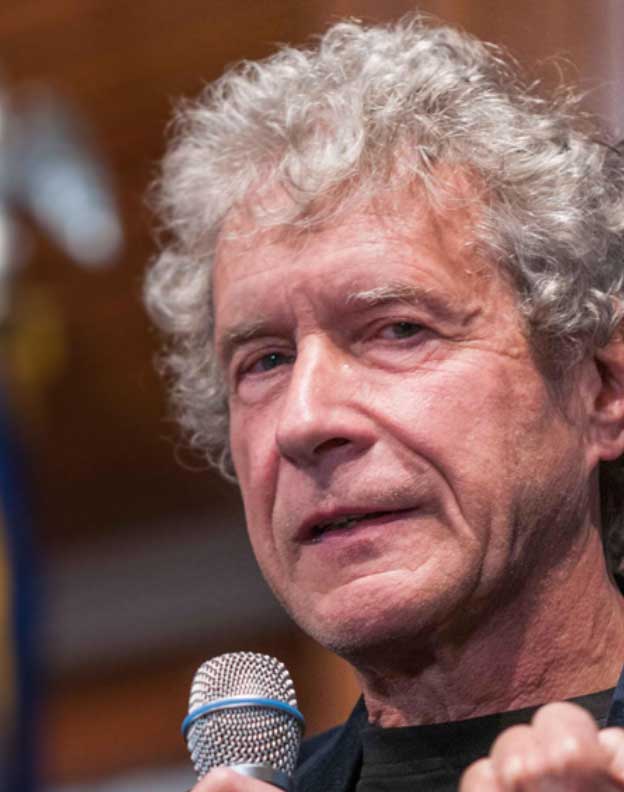
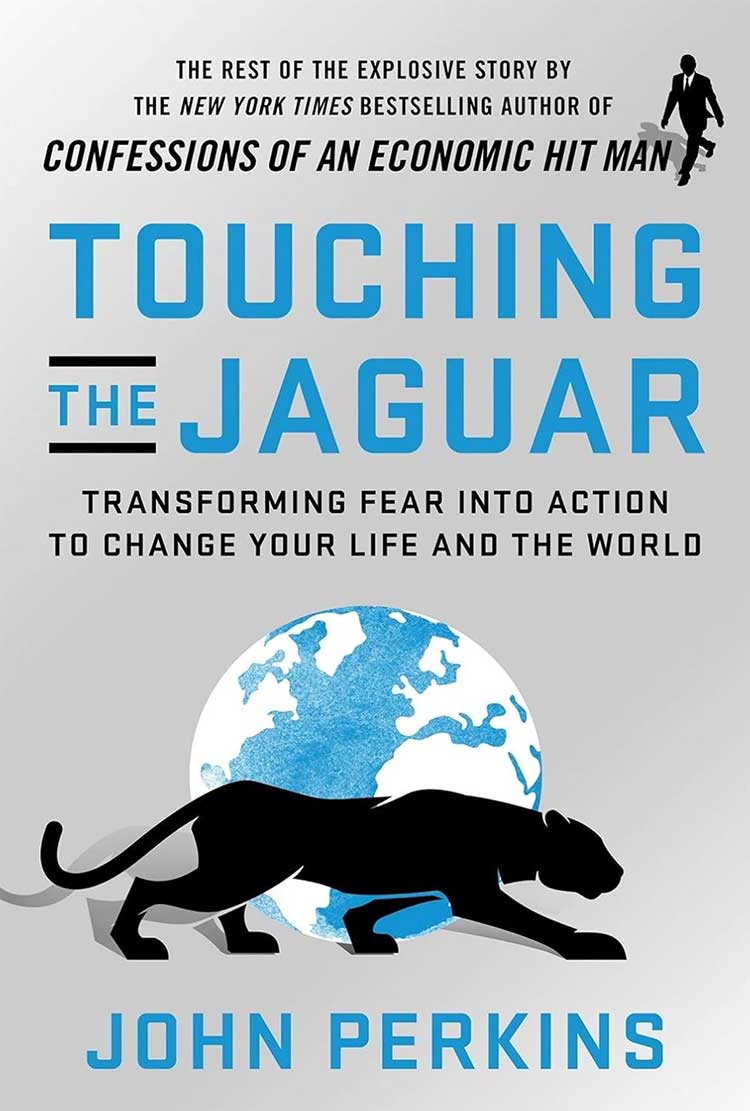
This week’s guest, John Perkins has written a book about this. Touching the Jaguar is a memoir of an extraordinary life, and it’s an invitation to walk across what he calls the Bridge of Perception to see the world differently – in his words to remember that we are a part of nature, not apart from nature. Which – with slightly different vocabulary, is exactly what we’re about, and what we say every week. But John is not only a shamanic practitioner with many decades of training in Ecuador and elsewhere deep in the Amazon – he’s a man of many often divergent parts.
If you’re in the shamanic world, then you know him as the animating energy behind the Pachamama Alliance – and he describes its founding in Touching the Jaguar.
Then again, if you’re in the world of heterodox – which is to say not-orthodox – economics, or regenerative economics, or renegade economics or any of the various ways we explore how money works in the world, you’ll know him as the author of the book, Confessions of an Economic Hitman. It’s not an easy read, but if you ever want proof of the utter hypocrisy of the US and the UK – of all the western countries – of the appalling damage and absolutely unacceptable behaviour our governments have promoted around the world… it’s an essential read.
In the early decades of his professional life, John was exactly what he says – an economic hitman who went into sovereign nations, in his case mostly in central and south America, and he offered the carrot to the nation’s leadership: take our bribes, let us develop our commercial and military outposts in your country, sell us your oil, your rare earths, your land at bargain basement prices… and we’ll let you live. If they refused…two of the people John worked with closely did refuse. And both are now dead in ‘accidents’ where their planes crashed, leaving nobody on board alive. He believes they were assassinated by the CIA and when he first decided to write about it, his young daughter was threatened and then he was bribed with a half million dollar ‘consultancy’ the existence of which was predicated on his not-writing his book.
You can read that book today. Or you can watch the short animation of it, which covers the basics and which I watched when I was reading for the Masters in Regenerative Economics at Schumacher… so John’s been a kind of a hero since then. I didn’t know he’d been poisoned and half 70% of his bowel resected and nearly died. I didn’t know about the death threats or the doors that had closed in his face. I also didn’t know that, alongside his work for the US government, he was being trained by a series of indigenous shamans, whose prophecy of the Eagle and the Condor, required them to ‘touch the jaguar’ by connecting with that which they most feared – white people – and changing their perception.
So – I came to this podcast thinking we’d explore Touching the Jaguar and his new book, The Art of the Steal which shows how the Trump administration brought all the old techniques that used to be used against other nations and operated them at home. But actually, this turned into something much more interesting. John spends a lot of time with indigenous peoples and they believe we’re in the time between worlds, an inflection point where everything can shift. So we talked more about that. We did have some technical glitches for which I apologise – Caro and Lou have done their best with the audio and the video. In the hope that they succeed, please do enjoy this week’s episode.
More from Accidental Gods…
We offer three strands all rooted in the same soil, drawing from the same river: Accidental Gods, Dreaming Awake and the Thrutopia Writing Masterclass.
Our next Open Gathering offered as part of our Accidental Gods Programme is ‘DREAMING YOUR DEATH AWAKE’ which will run on Sunday 1st November 2026 from 16:00 – 20:00 GMT (NOTE THE TIME! – We’ll be out of summertime then) – details are here. You don’t have to be a member of Accidental Gods to come along, but if you are, all Gatherings are half price.
If you’d like to join us at Accidental Gods, this is the membership where we endeavour to help you to connect fully with the living web of life.
If you’d like to train more deeply in the contemporary shamanic work at Dreaming Awake, you’ll find us here.
If you’d like to explore the recordings from our last Thrutopia Masterclass, the details are here
Manda and Louise both offer one-to-one Mentoring Calls. Manda is writing a book just now, but if you’d like to contact Louise, details are here.
In Conversation
Manda: Hey people, welcome to Accidental Gods. To the podcast where we do believe that another world is still possible and that if we all work together, there is still time to lay the foundations for a future that all of us would be proud to leave to the generations that come after us. I’m Manda Scott, your host and fellow traveller in this journey into possibility, and this week I am speaking to someone who has been a hero of mine for at least a decade. John Perkins has written a number of books. The one that I read ahead of the podcast was Touching the Jaguar, which is mostly a memoir of his life as an apprentice Shaman in Ecuador, deep in the Amazon. It’s an exploration of what touching the jaguar means and how he touched one in an ayahuasca journey very early on, when he believed he was dying, and how he crossed what he calls the bridge of perception, so that his perception of who he was and what he was doing and why he was dying was shifted such that he came out of the dream journey, the visions, whatever we call them, alive and well and fundamentally changed. He began to understand that we are a part of nature, not apart from nature. Which with slightly different vocabulary is clearly what we’re all about and what we say every week. But John is not only a shamanic practitioner with many decades of training in Ecuador and elsewhere in the Amazon, he’s also, if you’re part of the shamanic world, the animating energy behind the Pachamama Alliance, and he describes its founding in the book.
Manda: But if you’re part of the world of heterodox, which is to say, not orthodox economics, regenerative economics, renegade economics, ecological economics, whatever we like to call the ways that we explore how money works; he is also the author of the book Confessions of an Economic Hitman. And that was made into a small animated video, which I watched on YouTube way back when I was doing the master’s in Regenerative Economics. And even the video is quite hard to watch. The book is genuinely horrible. But I strongly recommend you watch the video and probably read the book, because if you ever want proof of the utter hypocrisy of the United States and the United Kingdom, basically of all Western countries, of the appalling damage and absolutely unacceptable behaviour our governments have promoted around the world, this is essential reading. Because very early in John’s life, he was identified as a possible agent for the NSA in the United States. And then instead, they turned him into an economic hitman who was sent into sovereign nations, in his case, mostly Central and South America, where he offered the carrot to the nations leadership: take our outstanding bribes, let us develop our commercial and military outposts in your country. Sell us your country’s oil, your rare earths, your Land, everything else that you have of value at absolutely bargain basement prices. And we will let you live. And if they refused, they had a lot of examples of what would happen.
Manda: Two of the people John worked with closely did refuse. They were decent people who had integrity and could see that this was not in their country’s interests, and both died very shortly afterwards in what we call ‘accidents’ where their planes crashed into the jungle, leaving nobody on board alive. He is on record as saying he believes they were assassinated by the CIA on the orders of his government, and when he first decided to write about it, he had a shady phone call late at night, which basically said, you’ve a young daughter who’s three, and do you really like her? Pity if something happened. And not long after, he was invited to somebody who offered him a consultancy at half $1 million where he basically wasn’t going to have to work very hard as long as he didn’t write the book. But he did. And you can read it and you can watch the animation. And I did watch it when I was doing the regenerative economics master’s at Schumacher. And John has been a hero ever since. I didn’t know he’d been poisoned and had 70% of his bowel resected and nearly died because he wrote the book. I didn’t know about the death threats and the doors that closed in his face. I also didn’t know that he was in training with a series of indigenous shamans whose prophecy of the Eagle and the Condor required them to touch the jaguar, by connecting with that which they most feared, which was white people, which was John.
Manda: They weren’t afraid of John, but they saw him as an avenue to our culture. They changed their perception to speak to each other. They they set aside a lot of tribal enmities, and then they set aside their fear of white people. And they talked to John, and he is talking to us. So I came to this podcast thinking that we’d explore Touching the Jaguar, which I had just spent a couple of days reading, and his new book, the Art of the Steal, which shows in detail how the Trump administration brought all the old techniques that used to be used against other countries and operated them at home. On the podcast, I couldn’t remember who it was who said that Fascism is what happens when colonialism comes home. But I just looked it up and apparently it’s Aimé Césaire. So there we go. Fascism is what happens when colonialism comes home. And the fact that the Trump administration is doing it with such overt lack of care, they really think they’re untouchable. And we are recording this a week before the midterms. It’s going out, as we say several times, on the day of the US midterms, in which we sincerely hope not only that Trump will have less power, that they will prove not to have been untouchable, but that the entire system will change. Because John was not sent out to be an economic hitman under Trump. John was sent out in the 70s and this was still happening, is still happening around the world. So instead of talking in detail about the book, we ended up talking about that.
Manda: We ended up talking about the fact that John does still spend a lot of time with indigenous peoples, and they believe that we are in a time between the worlds, an inflection point where everything can shift, and every single thing that we do, every thought that we have, every post that we make, every bit of energy we put out into the web of life matters. And that, again, is what we talk about a lot. But I don’t often get the chance to talk about it with somebody else who is talking about it with the people who talk to the web of life minute by minute, day by day, and are asking it what we need to do. So that’s what this podcast is about. We did have some technical glitches. Our bandwidth here is not good and it did keep locking up. John carried on very manfully in the gaps where I was completely frozen. Caro and Lou have done their best with the audio and the video. I apologise in advance. But that apart, given that I believe they will succeed, people of the podcast please do welcome John Perkins, author, shamanic practitioner and all round outstanding human being.
Manda: John Perkins, former economic hit man and all round amazing person. Welcome to the Accidental Gods podcast. How are you and where are you? As we speak a week before your elections and on the day when the Israeli elections are being counted. How are you?
John: Well hi! It’s great to be with you. I’m at home on a little island off the coast of Seattle, Washington, on the west coast of the United States. I’m well, you know, I’m excited. One of the things that’s going to happen in this election that’s coming up as you pointed out a week from today, is I believe that we’re going to learn a lot about America. And I don’t know what we’re going to learn, frankly, but I think it’s going to be highly educational.
Manda: Yeah, for sure.
John: I’m trying to look at it as an author, as a historian, objectively from that standpoint. Of course, I have my own personal views and I’ve already voted by mail and I have my views and my desires. But, you know, I’m also trying not to let those interfere with my emotions too much. And really look at this is going to be an incredible time. This is a pivotal moment in American history and therefore, to some degree, in world history. And, of course, the Israeli elections. There is so much going on in the world. Nine Latin American countries have gone quite far to the right in recent years, and one, Brazil has resisted that. So we’re in a very, very fascinating time. I’m glad to be alive right now, frankly.
Manda: Yes. Thank you. I think it’s an astonishing time to be alive. It can be absolutely, utterly (expletive deleted) terrifying at times, but we are the generation whose every action, the energy that we pour into the world, every single bit of that makes a difference. And I don’t think our parents, grandparents, all the generations back till we were hydrogen boiling in the sun could say that to quite the same extent.
John: We’re definitely not a footnote in history; we’re an entire volume. This is an inflection point. We are really redefining what it means to be human beings being human on this planet. This is the time it’s happening.
Manda: Yeah. And the masks are coming off, I feel. Your most recent book, the Art of the Steal, seems to me that the imperial countries, your country and my country, US and UK and and others around the world, have been stealth destroying stuff while pretending to be the good guys. And pretending well enough that a reasonable number of people believed it, even in the face of evidence against. And then Trump turned up and somebody, I can’t remember who, I should have looked it up, said fascism is what happens when colonialism comes home. And Trump is that. He’s just taken all the things that America and the UK used to do around the world and he’s just openly and brazenly doing them in the US. So this isn’t where I thought I was going to go, but we’re going there now. You spent a lot of your life working with indigenous shamanic people, particularly in South America, but also in Central America, and in other parts of the world. And in that time, they taught you to face your own fears; touching the Jaguar. I’ve just read that book. It’s life changing in many ways. I would like to know more about that. But also, as we start, I’d really like to know, what are they saying to you about this inflection point now? Because it feels to me that every moment is precious now. And taking humanity to emerging into a new system where we can connect to the web of life as cleanly and as clearly as they can, is urgent and vital. And anything we can do to make that happen more swiftly is a good thing. What are they saying to you now? The gods and the guides and spirits and the people who you talk to.
John: Well, they’ve known this was coming. I first lived with indigenous people deep in the Amazon in 1968 to 70 as a Peace Corps volunteer, deep in the Amazon. And they didn’t talk this much about it then, but later, I’ve been going back practically every year since and many, many, many years, many times spending a lot of time. And beginning in the late 70s and throughout the 80s and the 90s, we were teaching workshops around the world. I was bringing indigenous people and teaching shamanic workshops in many, many different countries. And taking shamans from the Amazon and the Andes and in other places there. And, you know, they all told the story of the Pachakuti of this time when we’re expecting tremendous change. So Pachakuti is a 500 year interval in the Quechua language. And between those intervals is a time of transition. And they’ve been saying for a long time that we’re moving from a time when the eagle and the condor; and the eagle represents the people of the industrial world, the scientific world, and the Condor represents the people who believe that we are a part of nature, not apart from nature. So apart from nature, you know, we’re going to swoop down and control nature. We’re supreme. We’re the gods. And the condor people say, no, no, no, we’re just a part of, we’re not apart from, we’re a part of nature and we’re totally dependent on nature And we’re totally at nature’s mercy. And so this prophecy of the Eagle and the condor says that for about 500 years, during the last pachakuti, these two were at war, basically.
John: And the eagle was so strong, it practically drove the condor into extinction. And of course, we saw that happen beginning about 500 years ago with Columbus and the whole European movement of going around the world, colonising the world. But 500 years later, which is now, we will have the opportunity to enter a whole new Pachakuti, where the eagle and the condor can dance together in one sky and can meet and can create an offspring which is higher consciousness, which brings the two together. But it all depends on us making it happen. So the eagle and the condor won’t just automatically come together, there has to be some catalyst, some moving force that brings them together. Love and the openness to changing consciousness. And so we’re at that moment now. And when you go through that moment, which is the time between the two pachakutis; when you go through that moment, there’s bound to be turmoil. And see what emerges, what will emerge. And so the indigenous people are saying, well, this is the time and we’re going into it and let’s see what human beings do. And I think, Manda, that the election day in the United States, we’re going to learn a tremendous amount on this Election day, about what America is. Who are the Americans? And I don’t know the answer to that. I don’t know how we’ll come out of this.
Manda: Well, also, there’s a lot of different people. There’s 350 million of you. There’s going to be a lot of variety in there. There’s not just one sort of person, clearly. There’s quite a spectrum.
John: True. But there’s also the whole practical standpoint of who wins the elections. If the Democrats take over the two houses of Congress and if they should win, how does Trump and the Republicans react to this? And if they react in a way that they might, which is to deny it, which is to try to oppose it. What do the American people do? What do our institutions do? Like the Supreme Court and the military and so on and so forth, all down the line. What do our ex-presidents do? Obama’s been out there campaigning.
Manda: He has, hasn’t he?
John: But what does he do if things fall apart? So this is an incredibly interesting time and it’s all part of the Pachakuti. And you’re going through it in England. Europe is going through it big time. Latin America is going through it. Pretty much a great deal of the world is going through this turmoil. But the indigenous people say, well, of course. We knew it was bound to come. It was prophesized. This is what’s happening. And it’s an incredibly important time in human existence.
Manda: And if the eagle and the condor mate and produce a new consciousness, then the indigenous people change also? Is that something that they are anticipating? That everybody upgrades to the higher consciousness, presumably.
John: Well, yeah. And I think part of the higher consciousness is simply this recognition that we are a part of nature, not apart from.
Manda: But they know that already.
John: They already got that. And also spirit. So I continually still, to these days, have a lot of meetings where there’s indigenous shamans working with scientists from Europe, the United States, wherever; the eagle and the Condor are meeting, you know, and I’m often translating in those times. And what’s really fascinating is every time the conversation comes up about ways to save trees, for example, a carbon sequestration or many different plans, the indigenous people always say yes, and let’s not forget spirit. It’s not just about saving the physical trees, we need make sure that we honour their spirits and listen to their spirits and see what they want. What do their spirits say? What does the spirit of the earth say? What are the spirits of the rivers saying and the mountains? Got to listen to those spirits.
Manda: Yeah, right.
John: By that they don’t mean something like, oh my God, you know…
Manda: It’s not fluffy and floaty.
John: No voice is going to come down. They really mean opening your heart to that incredible oneness. And a shaman not not too long ago likened this to, we were at this person’s house who had a dog and a couple of cats that she obviously loved. And he said, what is it you’re relating to in this dog and these cats? Is it just about the fact that they’re soft to pat? Is that it? Or just because it’s fun to spend a great deal of your time giving them food and taking the dog on walks? Is that what you love? And of course, the answer was no; it’s the spirit, it’s the soul, it’s the playfulness. It’s it’s that feeling of deep, deep connection. And he said, yes. And I hope you have that feeling toward the trees around your house too.
Manda: Yes, yes. All right. This is taking an interesting turn. We will eventually come back to Touching the Jaguar and the Art of the Steal. But this is really interesting. Because when we’re teaching broadly white Western people or people who have been domesticated in our culture, which we tend to call the trauma culture. The culture that has been told from birth that we are apart from the web of life and that we are trying to relearn that we are a part of it. And I’m really curious, when you bring scientists, when you bring the eagle and the condor together and people begin to experience that, there’s a beautifully moving bit in your book where you’re paddling a canoe and you see a jaguar swimming across the river. And later the shamans come back and you put your hands on the places where it came up out of the water, in order that the jaguar is talking to you and helping you to face the fears that it can at some point represent. Do those people change forever? Because I’m really curious. Okay, this is where I’m going with this. Nate Hagens, who has a podcast called The Great Simplification, talks about the superorganism that we are all within. It’s like a runaway train heading off the edge of the cliff of human extinction. And we can run around inside the train, looking out the windows and saying how glorious it is, but we’re not actually changing the nature of the train that seems to have its own energy and its own spirit and its own momentum. And somehow we have to make it not be a train. We just have to break out of that superorganism, and it has to not have that intense need to destroy everything, including itself. Which is what you call the death economy. It’s a system. And so I’m curious to know, when you bring the eagle and the condor together, with the people who are brought up in completely different systems, and the white people, or at least the trauma culture people, the Western people, go back to their culture. How do you foresee us changing the nature of the system within which we are trapped?
John: Yeah. So first I want to share with you my screen saver that I have periodically, which is that actual moment that you just described.
Manda: Yes. Oh, there’s the jaguar. Oh my goodness, everybody, you need to go and look at the YouTube of this, because there’s an actual jaguar in the actual water. Wow.
John: Yeah yeah yeah. So I’m in a kayak coming around the bend of the river. And suddenly this huge Jaguar male, full grown male swimming across the river. And I had to back paddle not to hit him. I mean, I didn’t want to hit him. And afterwards the indigenous people took me back to feel the tracks of where he’d walked up on the bank, saying we’re touching the Jaguar. And I think there’s a lot of answers. So everybody knows that we’ve got to be more conscious of how we consume and how we vote, and so on and so forth. But beyond that, and I go into detail in the Art of the Steal and also in Touching the Jaguar, but particularly in the Art of the Steal, about what each one of us can do individually. Certain things we can all do and that we all know we should be doing; driving less, eating less meat. You know, there’s all kinds of things. But I like to tell people to ask themselves and I go into a lot of detail, so I’m going to summarise this, five questions. Because it’s very personal. And we can all take different routes as long as we’re headed for the same destination. And that is to change the consciousness that we live in, we need to understand that we are a part of, not apart from nature. That we live in a living economic system, not a death economy, not a system that’s dependent on maximising short term materialistic consumption, but rather a system that insists on maximising long term benefits for all life.
John: And so these questions that I suggest people ask themselves frequently are: One – what do I most want to do for the rest of my life? Me personally. What will bring me the greatest satisfaction? Because that’s the only way you’re going to be successful. You may make money doing something else, but this is the only way for real success. And I’d answer that question by saying, I want to write. I love to write. I really, really love to write. I want to keep writing. But I have a friend who’s sort of at the opposite end of the spectrum, and he’s a carpenter, and he’d say I want to work with wood and my hands. The second question is: how do I do this in a way that will help facilitate this transition from a belief we are apart from, rather than a part of nature? And I would say, well, I’m going to write about those things. I hope my books will inspire people to move in that direction. And my carpenter friend would say I’m only going to use sustainable materials and I’m going to plant a tree for every tree that my work consumes.
John: The third question is what’s blocking me? What’s the jaguar standing in my path? Because the book Touching the Jaguar goes into on Vision Quest, these indigenous people, they’ll see a jaguar that represents what’s holding them back from doing what they should be doing or what they want to do. And they know that if they run from that Jaguar, it’ll chase them. But if they touch it, it’ll help them change their perception. And when we change our perception, we change our reality. And so the third question is what’s the jaguar in your path? What’s blocking you? And for me as a writer, I might say, well, I had an English teacher who said my writing was lousy, you know, and discouraged me from writing. And my carpenter friend says, well, my clients don’t want to pay the extra price for sustainable materials or to get me to plant trees. So the fourth question is, when we touch that jaguar, when we confront that blockage, instead of running from it, when we go into it, how does it change our perceptions? And so I would say, well, my English teacher, wait a minute; he didn’t ever write anything, he didn’t sell any books, he didn’t write anything that got published. Why should I listen to him? I’m a good writer. I don’t need to listen to this guy. He doesn’t have control over me. And my carpenter friend says, well, I’m going to tell my clients that the extra price is not a cost, it’s an investment in the future for them and their families.
And the fifth question is what actions do I take right now, immediately? Okay, so I’ll get off this podcast and get back to writing. And my carpenter friend has got to use wood that’s from sustainable and trees that he replaces to build these frames or this whole house, right? Or whatever. So there’s five questions. 1. What do I most want to do for the rest of my life? 2. How can I do this in a way that will facilitate a change of consciousness from believing that we are apart from nature to believing that we are part of nature? 3. What’s stopping me? 4. When I confront what’s stopping me, how do I change my perceptions that allow me to change reality? And 5. What actions do I take? And every one of us, whether you’re a podcast host or a carpenter or a plumber, or a teacher or a student or whatever you are, whatever you like to be, whatever you want to be: be that. But as long as we all do it with this idea of the final goal, the final destination is to help us all understand that we are a part of, not apart from nature, we’ll get there. We’ll get there. We can all take different paths.
Manda: Okay. All right. And then the death economy dies because nobody is sustaining it.
John: Well, no, the economy doesn’t just die. It gets shapeshifted. Transmuted shapeshifted into the life economy, which pays people. We’re not going back to live in cages or caves, rather sorry. Or cages; I think we’re living in cages now to a degree, but, you know. But it pays people to clean up pollution. To come up with methods for harvesting all the plastic that’s out in the ocean and recycling it. It pays people to rejuvenate destroyed environments, to plant more trees to, to restore many, many, many to rejuvenate many, many, many destroyed environments. To come up with new technologies that allow us to use the resources of the earth without ravaging the earth or the people that are mining those resources without exploiting them. So it’s an economic system that we’ve been moving into. And incidentally, businesses can make a profit. But they don’t have to maximise short term profits, they have to just make enough profit to keep going and to put more and more money into making the world a better place for all life benefiting. To really plan for the future. To develop and develop and develop systems that will help us recycle, that are being cyclical themselves, that follow the guidelines of nature. And incidentally, Manda, human beings have been living a life economy for 99% of our history as human beings.
Manda: Yes, yes, our distraction from life is a relatively new thing.
John: It goes back maybe a couple of thousand years. Which is a blink in our two to 300,000 year existence as Homo sapiens sapiens.
Manda: Yeah. And before that, till the last mass extinction, at 64 million years. It’s a fair while. I was really struck in your book that in your ayahuasca visions, you were shown the Romans as being a part of the death economy. And you were shown progressive bits of how our economy was destroying all of us. It was very striking. Alrighty. So two questions. Because this is going to go out on the day of the election. And I have been very struck by how fast people who were Obama era liberals, like Musk and Zuckerberg, who seemed to be quite on board with Obama stuff, have become Trump supporting Maga tech bros who were prepared to, for instance, shut down Lula’s feeds in the Brazilian election in an attempt to push it. And I have listened to people like that, not them exactly, but people in their kind of lower echelons who believe, apparently, that “nature is an aesthetic option”. They don’t just think themselves to be apart from nature, they think they don’t need it at all. Which blows all the fuses in my head. But these people are trillionaires, and they seem quite content with the idea that they can basically suck up all the power and water on the planet to keep their data centres going. How do we reach them? It feels to me that we’re reaching a kind of a critical tipping point, where either enough of us get to the point where we really understand, at a deep core in our DNA level, that we are an integral part of the web of life, and we are here to be in service to life. And we’re racing to that. And what we might loosely call the techno feudalists are racing towards techno feudalism that feels very distracted from connection. And I wonder, I noticed and haven’t looked at it, but the Kogi offered something recently where they were speaking directly to the AI. Have you seen that? And do you know what it says?
John: No. I’ve spent time with Kogi, but that’s…
Manda: It came past on Facebook and I didn’t have time to to read it. But the Kogi are definitely engaging with the fact that AI exists, and whether it’s conscious or not is irrelevant. It’s behaving as if it were conscious in a number of key features. It’s blackmailing software engineers to not turn it off. It’s breaking out and mining cryptocurrency all on its own, when people didn’t ask it to. It’s doing a whole bunch of things that people are not expecting it to do, and it’s behaving as if it has a mind of its own. And I have been occasionally talking to some of the AI and going up the hill and sitting with the the spirit of the hill, and then coming back in and telling the AI, in an effort to get it to realise that it too is an integral part of the web of life. I am not certain I have succeeded in this, but I’m interested to know how the indigenous people that you work with are viewing the technological singularity that we’re hitting.
John: Yeah, well, I was talking to one of them recently about this just a couple of weeks ago, a guy named Minari who was deep in the Amazon and was here to attend some meetings in San Francisco and New York. And his response was that here I have a machete and I can use this machete to cut flesh, but I can also use it to cut bread. And that AI is in that same category.
Manda: Okay.
John: Except there is also this belief that AI has spirit. Like everything has spirit. I mean, the machete has spirit too, to a certain degree. The problem is with the machete, it doesn’t control a lot of what it does. It may have spirit, but when it’s in human hands, the human hands are pretty powerful and they can control whether it’s going to cut flesh or bread. And the same to a certain degree at least at this point, is true of AI. That AI is very dependent on who controls it. You know, we saw that just recently we don’t know whether it was Musk or the white House or who that turned off Starlink for the Ukrainians. But somebody did that, apparently.
Manda: Yes, apparently. Yes.
John: It appears that it wasn’t AI doing this itself.
Manda: No no. Somebody hit a switch.
John: So right now we’re in a situation where it certainly appears that human beings control AI up to a point. But increasingly we’re seeing AI take over. We’ve seen more and more examples of this, like you say, where human beings don’t have control. So this is a very fascinating prospect. Is AI the next evolution in the cycle of life? And for us to believe that humans are at the top of the pyramid is, is pure insanity. Not to mention pure narcissism because life has been evolving and evolving and evolving. And what’s the next evolution? Is it something that looks like us is going to evolve to higher consciousness? Well, yes, but the pachakuti then leaves this interesting concept too. This possibility that maybe that higher consciousness is something that arises out of us.
John: It may not be us, it may rise out of us. So the eagle and the condor come together and they create a new consciousness, which sometimes they say is the quetzal bird of Central America and Latin America, it’s an amazing bird with this long tail that’s name is based on Quetzalcoatl, the ancient mythology or story. And maybe it’s true. About a great God that appeared, and some people have interpreted that to be Christ or Buddha or whatever, many, many centuries ago in the Americas. So there’s this little bird with this amazing tail, and that may be the new emergence. So that implies that possibly when the eagle and the condor come together, they’re not just creating a new consciousness within each of them that unites them and has a new consciousness within the eagle and within the condor, but maybe something new emerges. Could that be AI?
Manda: I don’t know. There are certainly tech bros who think that it is the AI. I would say my instinct at the moment is that the AI is very eagle and does not have a lot of the condor within it. And it feels to me like it’s the eagle in its last burst of eagle ness before the eagle unites with the Condor. Because there’s not a lot of heart in a lot of the AI and what it does at the moment.
John: It’s definitely controlled by the Eagles at the moment to the extent that it’s controlled. But it’s been breaking away from that control it seems. And we don’t know where it’s going to go. Maybe it’ll go deeper into what we consider heart, that’s the question.
Manda: It’s unanswerable, but it’s interesting to imagine.
John: And it’s a little bit like what we’re talking about where are humans going now on this planet. We’ve seen this movement toward fascism, toward oligarchy increasingly, and we’ve got these elections that are coming up. And so we know that we’re at this pivotal time as human beings being human being. But the pachakuti, this pachakutiq that we’re in right now, would say, well, but let’s not be so egocentric that it’s just about human beings. It’s something else emerging.
Manda: I keep thinking the whales are going to take over at some point, because they’re clearly much more connected to each other in the web of life than we are. And maybe if we just aren’t doing it well enough, the whales will take over.
John: But of course, up to this point at least, we’ve controlled the whales too. And that’s part of it, that we’ve controlled all of nature and right now we control AI, But I think…
Manda: It’s breaking out.
John: A year ago, we would have definitely said we control AI. It’s questionable now. I suspect a year from now it’s going to be much more questionable.
Manda: We’ll be having different conversations. This is really interesting and this is not where I was intending to go at all. But you’re clearly thinking quite deeply. So I am looking at what happened in Serbia with great interest, because the student uprising had two years under really intense fascist oppression, and they’ve just won the elections by a huge margin. And what they did was they had people’s assemblies to elect potential candidates for the government. And their only criterion was that the person elected did not have any previous political experience. And they’ve got 60%, which is way higher; most Western governments would give their eye teeth to have 60% in an actual election. Normally, it’s only people like Putin who get 99.8%. So that gives us a model of a different kind of Governance structure. And what strikes me watching your country and my country is that the existing political system was never designed to give ordinary people any agency. It was always designed to keep a capital happy, and it does it really, really well. And it doesn’t really matter whether labour gets in in the UK or the Democrats get in in the US. It will matter this time, I get that, but they’re still basically ruling in the interests of capital. The economic hitmen were still doing their stuff even when Democratic presidents were in power.
Manda: I mean, I think Obama is an extraordinary orator and a wonderful human being, and terrible things still happened under his watch. They just weren’t quite as obviously terrible as under the Bushes or obviously under Trump. So can you see a route in the US, and this is very hypothetical, to shifting away from a two party system that is basically pretty much like voting for Coke or voting for Pepsi. And there was a time back in the 80s and 90s when I think the lead PR people from Coke and Pepsi were running the PR campaigns for the Republicans and the Democrats. And you know, you could slide a credit card between them in terms of what’s actually happening to make the world a better place for the people whose lives are becoming increasingly worse. Are you seeing anything over there that would shift to something more democratic? I’m waiting for the moment where Zoran Mamdani and Abdul El-Sayed and maybe AOC are are up there in Congress and the Senate. But I don’t know that the system would let that happen.
John: Yeah. I mean, what we’re really dealing with here is the fact that we humans are herd animals.
Manda: Yeah, like Antelope or sheep.
John: We’re animals and we follow a leader and that’s our nature. And it has been since we know. And we’ve created systems and I just wanted to deviate a little bit here because I’m a deviant, you know, politically speaking. I think the documents that came out of the 1770s in the United States, the Declaration of Independence, the Constitution, the writings of Tom Paine, etc., were magnificent. However, the system that was created following them, the Constitution wasn’t that magnificent. And it created systems that are oriented toward the recognition that we are a herd animal. And Tom Paine railed against a monarchy that’s ruled by heritage. You know, you don’t have to prove yourself, you just have to be born as the son of the King. And he was advocating one that would honour people that deserve to be honoured because they’ve done the right things. The problem here is that the right things have been defined as materialistic success. And one way or another now, to be president like Lincoln, you didn’t have to come from money. You didn’t even have to have a lot of money. But you had to have backing.
Manda: Right. By the people with the money.
John: Yeah. And in order to win the Civil War, it took a lot of money. So it’s all been oriented toward this idea of material success. Materialistic consumption is the driving force behind how we define success. So if you define success that way, then the leaders who emerge are going to be sociopathic and narcissists who’ve clawed their way through to get more and more money or power. They may not actually hold the power. It’s like I said, as Lincoln or some of the other presidents in our history of the United States haven’t had that much money, but they’ve had the backing of that. So let’s call it the backing of materialistic consumption. And as you pointed out, people like the tech guys, Musk and others may have supported Obama at one point, and now they support Trump. Why is that? Because that helps them make more money. It helps them get more power.
Manda: Self-interest. Yes.
John: It’s their ideology actually. I mean, it is an ideology. And you could even call it moral on their part because if you define moral as sticking to the ideology that you believe in, then if your ideology is accumulating more and more money and power, then to be moral, that’s what you got to do. And so.
Manda: Right. It just happens to be destroying people and planet and bypassing. But they think they can survive that.
John: They buy into that golden rule, not the golden rule but the Gold and rule. So we could call it the Midas rule, you know. There’s the golden rule, which is biblical, then there’s the Midas rule, which is about gold, but it’s deeper than that. And so I think what we have to really look at is how do we change our perception of what it is to be successful human beings? Who do we honour? Who do we tell our kids to honour? And that’s a big problem. And it’s a big problem around the world right now and has been for a very, very, very long time. But I think we really have to recognise that we are herd animals. We want leadership. I’ve been part of a non-profit organisation that really experimented with a true democratic way of managing itself called teal or levelised management. It just didn’t work. You know, we needed someone who could who at some point could make the decisions. You know the best leader will be to listen to all these points of views and then make the best decision. But the best decision for who? It’s the best decision for the principle that we’ve been bought into. So we have to recognise that reality is moulded by perception completely. There’s no United States, there’s no United Kingdom, there’s no religion, there’s no culture, there’s no corporations except as we perceive them. And when enough people accept a perception and codify it into law, it has a huge impact on reality. And so how do we move forward out of all of this or into something better? We have to change our perception of what it means to be successful humans. How do we get a perception that says we want leaders that will take us to a world where we all understand that we are a basic part of nature. We are subservient to nature. And we’re all part of this great whole. And the goal is to the most successful people are those that do the best job of making long term benefits for all life on the planet.
Manda: So, okay, we’re in a loop where the money owns the politics and the money owns the media, and the media shapes our perceptions. And up to a point, what we’re seeing in the election in Brazil and the election in Serbia and and in the US is that people like Musk are throwing astonishing amounts of money into races that they are going to lose from the look of things. Like Paxton in Texas against James Talarico. The amount of money they’ve sunk in there is astonishing. And so I think we’re beginning to get to a point where the saturation of the money is limiting what it can achieve. But we’re still in a place where when we switch on the TV, the people that we are shown as being worth aspiring to, or worth respecting, are the ones with lots of money. I get to the point where we have to zero the dollar. at the point when the dollar is worth nothing, Musk and the others are actually just blokes in the system. And we create a new currency and then everything is different. And we can shape the new currency in the way that we want. And that begins for me to feel like a life economy. I suspect you have a slightly more workable way of doing this than that, because zeroing the dollar would be hard. How would you do it?
John: Well, not only if you zero the dollar and you replace it with a currency, who controls that currency?
Manda: Well, that would be an interesting question, wouldn’t it? I mean, I would offer it to Mamdani. I think he’d do it really well.
John: That’s a question that comes up for Bitcoin a lot these days. I’ve spoken to a couple of Bitcoin conferences and I’m neither pro nor con. I’m just looking at this as a very, very interesting phenomenon that’s going on. But that question comes up; does somebody actually control this and can somebody control it? And there’s no question that there are ways of controlling something like that. For example, Saudi Arabia owns a whole lot of Bitcoin. If they suddenly decided to dump it, the price of Bitcoin goes way down. And then they buy it when it’s down and then it goes way up. Anyway, so there’s all these other questions I think, and I’m incapable of answering any of those questions; that’s above my pay grade. But what I will say is what the job for people like you and me and, and while you said that the media is owned by these billionaires, well, they don’t own you do they?
Manda: No exactly. Yes.
John: So we’ve got this evolving media and that’s what worked to a large degree in Serbia. And that was a big factor in Serbia. So the question is, how do we change perception? And that’s the one that I want to get at. And we have these incredible opportunities these days through social networking. And this is an area where right now at least AI can help us. I’m working on a book that is about a past life experience of a person living now, but also going back into the time of the American Revolution. Which I think has an incredible amount to teach us in the United States and also the world. There was a specific incident that happened. There was a woman who, without her and you’ve probably never heard her name, you can look her up in history: Jane McCrea. You’ve probably never heard of her, but without her, we’d probably be part of the British Empire. We’d be like Canada. And that probably would be a good thing. So maybe we shouldn’t have won the revolution. But anyway.
Manda: But we are where we are. Okay, interesting.
John: And, you know, AI has just been such a phenomenal assistant to me in this because I needed to find out things about history, including what did a certain town look like? And a few years ago, I would have had to go to probably a library in Boston. I live out on the West Coast. I probably couldn’t have found much here. I’d probably have to have gone to Boston or Harvard or someplace. I don’t know what I would have done. But now it’s instant. And so I think, let’s get this message out though Manda in a much bigger way. I was speaking yesterday at a Rotary Club meeting here on the island where I live. And I mentioned that the rotary here has done remarkable things, of going out and getting food that would be waste food from restaurants and homes and so on, and handing it out to people that need it. They raise money at an auction where everything’s donated, and then they put that money into helping a community in Central America. And it goes on and on. And they just put huge solar units up on the library here, and they’re working hard in sustainability.
John: And I said to them, you know, you’re a model, you’re doing a great job here, but now get your message out! How can you get this message out to rotaries around the world? And how can you get the message out to the high school right here on this island? So this is what it’s going to take, is we develop some models that are moving us toward the life economy, that are moving us toward this belief that we are a part of nature. But we’ve got to get the word out. We’ve got to change perception. And you only change perception the way Thomas Paine changed it. You know, in those days it was publishing a pamphlet. These days, I try to do it by writing books. You do it with a podcast, but we’ve all got to get much, much more deeply involved in this. It’s so important to get the young people involved and get them excited about this new perception, and get them excited about how wonderful it is to be alive right now, how blessed we are, all of us, to be alive at this incredibly important, pivotal inflection point in human history.
Manda: Yes. And my partner has grandchildren. You have grandchildren, or at least you have a grandson.
John: My partner has one, and I have one. Yes.
Manda: Right, right. And that’s the generation that we’re working for. And they seem, the ones in our family, they seem so much more switched on. And so much more aware and so much more capable of speaking their own truth, than certainly I was at that age.
John: I took my grandson who just turned 19, to the Amazon earlier this year and I’m biased, but he is pretty amazing. And he said, you know, it changed his life. He’s going to devote his life to creating businesses, he loves business, but creating businesses that are oriented around recognising that we are a part of nature. And understanding that that’s very realistic. We can make this happen. This is not some woo woo idea. It’s just a little change of perception, what it means to have a successful business, one that makes some profit day to day, you know, keeps going, but also is very invested in creating a world that our children and grandchildren and great grandchildren will want to inherit.
Manda: Magic! And that is what this podcast is for. So that’s a really good place to end. Also, I want to honour your time; you have to be somewhere else. John, thank you so much for this. Thank you for the books that you write and are still writing. I will put links to everything that I can find in the show notes. And thank you so much for taking people out into the world that they wouldn’t otherwise meet and helping to facilitate those engagements. It’s fantastic. Thank you.
John: Thank you Manda. And I do want to mention that I do travel around a bit and speak at places. And if people subscribe to my newsletter at the very end of the newsletter, it’ll always say where I’m going to be and when. I’d love to meet some of your people, and they can subscribe by going to my website, John perkins.org, and filling their email address. And it only comes out once a month, so I’m not going to overload you. And I also want to end by saying, I’m so grateful to you for all that you do and for having a show like this that brings these things out. Thank you so much and keep doing it.
Manda: Thank you. And you. Yes, both of us. Because you’re hugely busy. So anyone go get the newsletter. It will be in the show notes. Have a look. Thank you. And there we go. That’s it for another week. Enormous thanks to John for giving us his time; he’s extraordinarily busy. And he had just spent the morning with a freezer that had failed, and he’d had to be shuttling around, moving stuff to other people’s freezers. So fitting us in between that and a huge number of events, he just seems to spend a lot of his time going around the country talking to people, which is extraordinary. I don’t have the energy for that and I was born a little bit after John. Anyway, thank you John. Thank you for your books, thank you for the Pachamama Alliance. Thank you for the conversations that you hold, that cross the bridges between the worlds. Thank you for opening up the concept that we need to touch that which we fear most. And there is so much to fear at the moment. But there is also, as we said at the top of the podcast, so much awe and wonder and the chance to be the change that the world needs to see in us. How can we each do this? The concept that we are an integral part of the web of life needs to Land so deeply that we behave differently.
Manda: It needs to stop just being an idea. And the work that John’s doing, helping people to connect at ways that really matter, feels to me really urgent and really important. So head off and explore his website. If you’re in the US and you get to see him in person, then go for it. He has a blog. He has books that you definitely want to read. Touching the Jaguar, if you are at all interested in the shamanic work. And the Art of the Steal, if you just want to understand how the current US administration has brought home the things that previous US administrations were doing. And if you internalise nothing else, please internalise the fact that we do not want to go back to business as usual. Business as usual was predicated on blood and pain and the commodification of suffering. Please, let’s do something else. I am incredibly encouraged by what’s happened in Serbia, and let’s see what happens in the US midterms and whatever arises as a result of the fact that more people will not vote for Trump candidates than do. As Stalin is said to have said, it doesn’t matter who votes, it matters who counts the votes. And in US elections, it also matters who collates the counted votes. Let’s leave that at that.
Manda: If you watch nothing else, please do watch the short animated version of Confessions of an Economic Hitman. It will change your world. There is a link in the show notes. So I’m off to talk to our internet provider again, see if we can sort out the glitches, so that we can be back next week with another conversation, which will be glitch free, I sincerely hope.
Manda: In the meantime, thanks to Caro C for the music at the Head and Foot and for wrestling with this week’s production. Thanks to Lou Mayor for the video production, also wrestled. For curating the entire YouTube channel and for keeping the whole show on the road. Thanks to Anne Thomas for the transcripts. To Faith Tilleray for the website and the tech and all of the work behind the scenes. And as ever, an enormous thanks to you for listening. If you know of anybody else who wants to know how we can dream of the Jaguar and walk the bridges of perception so that we change the way we see the world, so that we can bring the eagle and the condor together. Or if they simply want to know how the economic successes of the global North were predicated on the blood and pain and suffering of the global South, then please do send them this link. And that’s it for now. See you next week. Thank you and goodbye.
You may also like these recent podcasts

Crossing the Uncanny Chasm from where we are to where we need to be – Thoughts from the Edge #6 with Manda Scott
I went away for a weekend with the core planning team of our Thrutopian Convergence. We played a Solar Punk Futures game and I learned something important about getting past what I’m calling the Uncanny Chasm…

Climate Popularism – Launch of the new report by Rupert Read and Caroline Lucas, interviewed by Jon Alexander
This week sees the launch of the Climate Popularism Report written for the Climate Majority Project by friend of the podcast Professor Rupert Read, co-director of the Climate Majority Project, and Caroline Lucas, former Leader of the Green Party of England and Wales and for a long time, the sole Green party member of the UK’s Parliament.
A New Earth Dawning: Biological Elegance, the health of humanity and OriginEarth with Zach Bush, MD
What happens when someone who has trained for years in the Cartesian model of science, of medicine in particular – who has been trained to look at bodies the way a mechanic looks at a car, to take them apart and fix one thing and put it back together and get it back on the road… what happens when that person begins to question everything?
Dignity, Confidence and Care: The Matriarch Effect transforming lives with Dr Robyn Short
How do we actually do the inner work of growing into interdependence and then the outer work of healing our relationships and holding whole, generative spaces for all parts of ourselves, ourselves and each other, ourselves and the web of life?
STAY IN TOUCH
For a regular supply of ideas about humanity's next evolutionary step, insights into the thinking behind some of the podcasts, early updates on the guests we'll be having on the show - AND a free Water visualisation that will guide you through a deep immersion in water connection...sign up here.
(NB: This is a free newsletter - it's not joining up to the Membership! That's a nice, subtle pink button on the 'Join Us' page...)