
#246 Governable Spaces: Solve for democracy on the internet and our outer politics becomes a lot more sane – with Nathan Schneider
The Western world is in a crisis of democracy – but we learn a lot of our principles from the ways we interact online and the internet is essentially a feudal space that gives absolute power to a few and robs the many of agency. Nathan Schneider proposes that if we were able to shape a more liquid democracy online, our experience of generative interactions would spill over into the outer world. Has to be worth a try, right? So how do we do it?
As we spend increasing amounts of our time, energy and emotional bandwidth online, so we are increasingly exposed to what passes for democracy online. And then we internalise the inherent autocracy and are at risk of exporting this to the real world. So what can we do to change things? What’s democracy for in the first place and how can we experiment with increasing the scope and scale of agency and accountability so that we can build trust in the processes that define our lives.
Nathan Schneider is a professor of media studies at the University of Colorado Boulder, where he directs the Media Economies Design Lab and the Masters program in Media and Public Engagement. The book that drew me here is ‘Governable Spaces: Democratic Design for online life’, – which you can buy as a paper copy, but you can also download for free. He has also written ‘Everything for Everyone: The Radical Tradition that is Shaping the Next Economy’, ‘Thank you Anarchy: Notes from the Occupy Movement’ and God in Proof, the Story of a Search from the Ancients to the Internet. He’s edited other books about crypto and co-ops, writes numerous articles and his blog posts are essential reading. He serves on the boards of Metagov, Start.coop, and Waging Nonviolence. Follow his work on social media at @ntnsndr or at his website
In essence, discovering Nathan has been like discovering the well of life… He’s deeply enmeshed in that liminal space where the best of human technologies meet the leading edge of digital technologies and he brings to it the sense of deep wonder, humility and humour that I’ve only otherwise met in meditators or contemplative mystics. I feel I only scratched the surface of his thinking in this conversation and would dearly like to go back for a second round, but only after I’ve re-read everything he’s written – and dived into some of the online spaces. In the meantime, as a taste of what’s possible, please do enjoy this podcast.

In Conversation
You may also like these recent podcasts
How not to be a hostage to the vigilante Bond Markets: with Jamie Driscoll of Majority
What are the actual, practical shifts in our political economy that we could do tomorrow, that would not require extra legislation and could transform our society? While there are many economists looking forward to an idealised system some way down the line, very few people – politicians or economists – are exploring what we could do now, today, within the guiderails of the existing system, with the politicians we have and the economy we have and the constraints of a world undergoing rapid geopolitical as well as geophysical change.

Autumn Equinox 2026
Here is an Autumn Equinox Meditation to help set you up for the shift from the long days to the long nights.
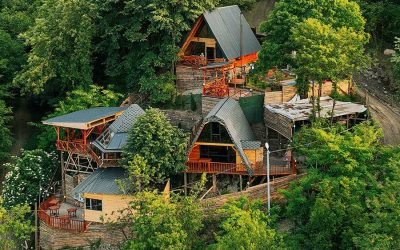
The Stewardship Freehold Village – an idea whose time has come – with Michael Taite
“When we build, we first remove the soil and replace it with rubble, concrete and tarmac. When we grow, we exclude all life from the land bar the one crop we want. Where we belatedly recognise our ultimate dependence on nature, we confine it to intensive ‘nature only’ areas such as rewilding zones, field margins and beetle banks.” Michael Taite 2026
Making Glorious Trouble with Uffe Elbaek, activist, system builder and author of Doubt, Hope, Action
We talk a lot on this podcast about the need for a new system: politically, culturally, in business, media and art…in everything we do. And yet, we don’t often have the opportunity to talk with someone who has set up a new political party – still less one explicitly predicated on the core values of courage, generosity, transparency, humility, humour and empathy. You’d think it would be hard to argue against these, but, as Uffe Elbaek discovered when he entered the Danish Parliament…the system doesn’t always want to be courageous, or transparent, or generous, or to embody humility, humour and empathy.

STAY IN TOUCH
For a regular supply of ideas about humanity's next evolutionary step, insights into the thinking behind some of the podcasts, early updates on the guests we'll be having on the show - AND a free Water visualisation that will guide you through a deep immersion in water connection...sign up here.
(NB: This is a free newsletter - it's not joining up to the Membership! That's a nice, subtle pink button on the 'Join Us' page...)