
#353 Making Glorious Trouble with Uffe Elbaek, activist, system builder and author of Doubt, Hope, Action
“I know that a good book can move its reader. Writing a book also moves the author. That is how it was for me anyway, not least when I wrote Doubt, Hope, Action. The writing process not only made me see the world and my own life with clearer and more realistic eyes. It also set me free.” Uffe Elbaek, author of Doubt, Hope, Action.
We talk a lot on this podcast about the need for a new system: politically, culturally, in business, media and art…in everything we do. And yet, we don’t often have the opportunity to talk with someone who has set up a new political party – still less one explicitly predicated on the core values of courage, generosity, transparency, humility, humour and empathy. You’d think it would be hard to argue against these, but, as Uffe Elbaek discovered when he entered the Danish Parliament…the system doesn’t always want to be courageous, or transparent, or generous, or to embody humility, humour and empathy.
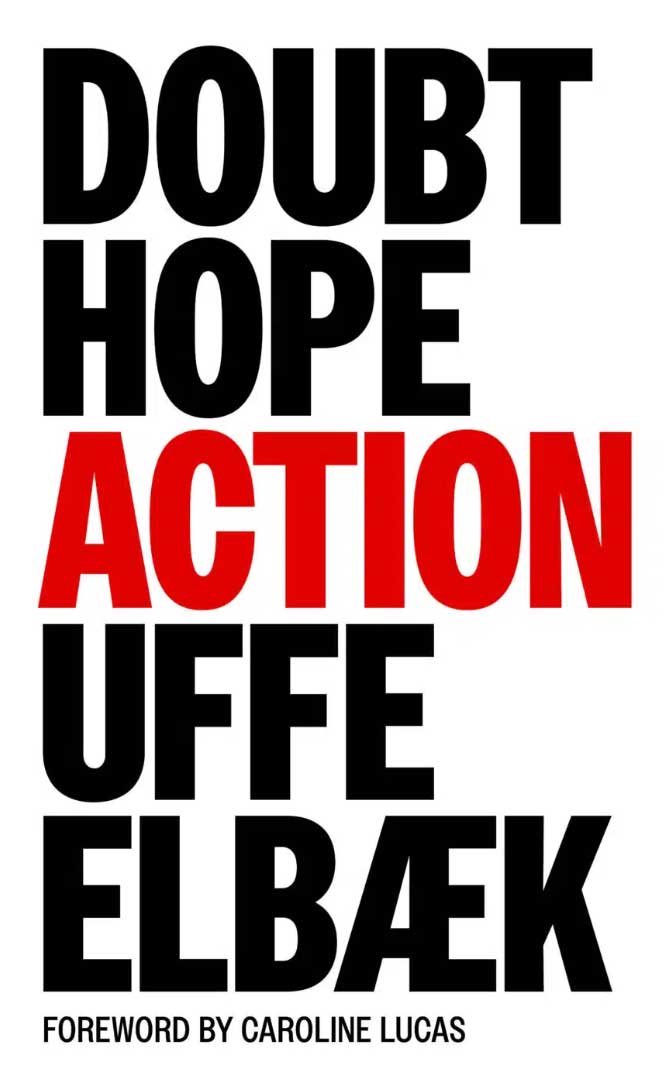
Nonetheless, Uffe brought all of these things and more to his time in politics, and then, with classic clear-sightedness, stepped down and went on to found The Tomorrow Collective – and to write the book, Doubt, Hope, Action, which has recently been translated into English from the original Danish and is available in all good bookshops now.
So what better time to talk to someone who has been in the heart of the old system, while creating a new one? For those of you who don’t (yet) know him, Uffe is a Danish social worker, educator, author, entrepreneur, and activist. In 2011 he became member of the Danish Parliament for the Social Liberal Party and was made Minister for Culture. Two years later, he left to found and lead ‘The Alternative’ which was based on the six values we mentioned. He didn’t run for a seat in the national election November 2022 so he remains an unbeaten politician, which is quite an achievement.
Apart from this, Uffe has been city councillor – in fact, he’s the first openly gay man elected to Aarhus city’s council, first openly gay man as Minister of Culture and as party leader in the Danish parliament. He’s former Principal of the KaosPilots international education programme and he is now part of The Tomorrow Collective, which is a social and democratic innovation lab based in Denmark.
With is sense that he is an outsider with inside experience, the common thread through everything Uffe has worked on is: We can do better. And right after that: How can we strengthen the life force in each individual, organisation and society as whole? Today, he is primarily concerned with how we as a society can support the ones building the new system we all know we need. All those who – across sectors and industries – are laying the foundations of a new post-capitalist society that respects planetary boundaries and leads us to be collaborators with the natural world. He lives with his husband Jens in the family home in Copenhagen, from where he joins us for this podcast.
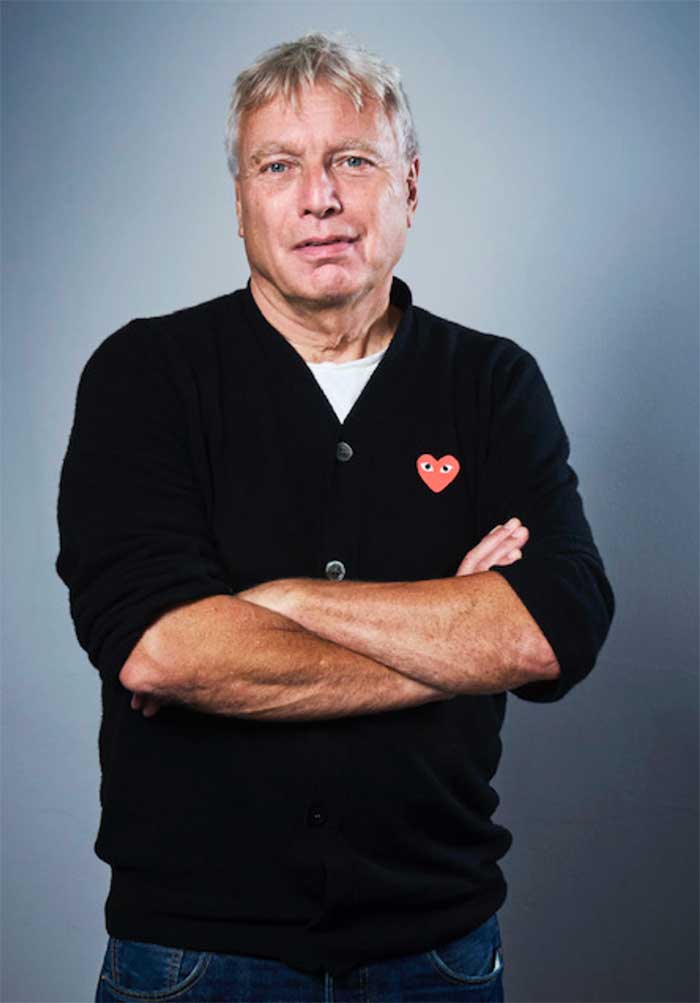
© Photo by Jakob Eskildsen
More from Accidental Gods…
We offer three strands all rooted in the same soil, drawing from the same river: Accidental Gods, Dreaming Awake and the Thrutopia Writing Masterclass.
Our next Open Gathering offered as part of our Accidental Gods Programme is Becoming a Good Ancestor which will run on Sunday 13th September 2026 from 16:00 – 20:00 BST – details are here. You don’t have to be a member of Accidental Gods – but if you are, all Gatherings are half price.
If you’d like to join us at Accidental Gods, this is the membership where we endeavour to help you to connect fully with the living web of life.
If you’d like to train more deeply in the contemporary shamanic work at Dreaming Awake, you’ll find us here.
If you’d like to explore the recordings from our last Thrutopia Masterclass, the details are here
Manda and Louise both offer one-to-one Mentoring Calls. Manda is writing a book just now, but if you’d like to contact Louise, details are here.
In Conversation
Manda: Hey people, welcome to Accidental Gods. To the podcast where we do still believe that another world is possible and that if we all work together, there is still time to lay the foundations for that future that we would all be proud to leave to the generations that come after us. I’m Manda Scott, your host and fellow traveller in this journey into possibility. And one of the great joys of this podcast is speaking to people that I have revered for a very long time, and Uffe Elbaek, this week’s guest, is one of those. We talk a lot on the podcast about the need for a new system politically, culturally, in business, in media, in art, in everything we do. And yet we don’t often have the opportunity to talk with someone who has set up a new political party with exactly this systemic change in mind. Still less a political party explicitly predicated on the core values of courage, generosity, transparency, humility, humour, and empathy. You would think it would be hard to argue against these, but as Uffe discovered when he entered the Danish parliament, the system doesn’t always want to be courageous or transparent or generous, or to embody humility, humour and empathy. Nonetheless, Uffe brought all of these things and more to his time in politics, and then, with classic clear sightedness, stepped down and went on to found The Tomorrow Collective and to write the book Doubt, Hope, Action, which has recently been translated into English from the original Danish and is available in all good bookshops now.
Manda: We’ve put a link in the show notes so that you can buy it straight from the publisher, but otherwise, as Uffe says at the end of the podcast, if you’re going to buy it and I think you will want to, please go to your local bookstore if you don’t want to buy it direct from 5M publishing. Anyway, what better time to talk to someone who has been in the heart of the old system while creating the new one? For those of you who don’t yet know him, Uffe is a Danish social worker, educator, author, entrepreneur, and activist. And actually, I could carry on that list for several minutes. In 2011, he became a member of the Danish parliament for the Social Liberal Party and was made minister for culture. Two years later, he left that party to found and lead The Alternative, the party based on the six values we already mentioned. He did not run for a seat in the national election in November 2022, so he remains an unbeaten politician, which is quite an achievement in this day and age. Apart from this, Uffe has been a city councillor, in fact, he was the first openly gay man elected in his city’s council and to the Danish parliament.
Manda: He’s former principal of the Kaospilot’s International Education Programme. And as we said, he’s now part of the Tomorrow Collective, which is a social and democratic innovation lab based in Denmark. The common thread through everything Uffe has worked on, is we can do better. And right after that, How can we strengthen the life force in each individual organisation and society as a whole? Today, he is primarily concerned with how we as a society can support the ones building the new system. We all know we need all those who, across sectors and industries, are laying the foundations of a new post-capitalist society, that respects planetary boundaries and leads us to be collaborators with the natural world. He lives with his husband Jens, in the family home in Copenhagen. So if you’re watching on YouTube, you can see it in the background. And if you’re not, you can just open your ears to Uffe’s gorgeous Danish accent and to the breadth and depth of his thinking. So here we go. People of the podcast, please welcome Uffe Elbaek, author, activist, and builder of systems.
Manda: Uffe Elbaek, welcome to the Accidental Gods podcast. How are you and where are you on this, we’re recording on the last day of August 2026. It feels quite momentous. How are you and where are you?
Uffe: I’m fine. And I’m sitting here at my house in Copenhagen. So it’s actually starting to be a bit like this fall feeling.
Manda: Yeah, it is, isn’t it?
Uffe: Fall is just around the corner. Yes. And that’s actually my favourite time of of the year. I love falls.
Manda: Yes. Me too. Were you born in the autumn?
Uffe: No, actually, I was born in June.
Manda: Oh, there we go.
Uffe: So I’m a Gemini, but I just like this, I won’t say romantic feeling, but the feeling where something is ending and new beginnings. And a nice balance between it’s still warm, but you have this slightly cold feeling underneath.
Manda: Yeah sharp mornings.
Uffe: I’m just a big fan.
Manda: Yeah me too. That’s great. Yes. They’re telling us we’re going to get another heat wave, that the El Nino is going to hit us later on. But just at the moment, we’ve had rain.
Uffe: Yeah, exactly.
Manda: Which is very, very nice. Alrighty. So you have written an amazing book: ‘Doubt, Hope, Action’, which I loved every page of it. I wish I had a physical copy because I would be able to hold it up, and the people on YouTube would be able to see that every single page has marks. When I have a physical copy, I put little post-it notes on it. So it’s much more obvious that I’ve, first of all read it and second, that I loved it because there’s marks on everything. So you’ll just have to take it as read from me that every single page of this PDF, more or less, has got coloured highlights on it, to the point where the uncoloured bits are actually standing out more because they’re in the minority, which makes it, of course, completely useless to actually find anything. But you published it first in Danish and then Jeremy of Unbreakable asked you to publish it in English. What was it like moving between the two? Tell us a little bit about the process of that, because as a writer, I’m really interested in shifting from one language and thought space to another one, and bringing the ideas of something that was inherently Danish to the English speaking market. Talk to us a little bit about that.
Uffe: Yeah. Actually, of course, I was flattered that there was a UK publisher who wanted to translate my book. It came out in Danish in 2023, so three years ago. So the first doubt I had, of course, when Jeremy, my London editor, approached me, was do you really think that it will still be vibrant and meaningful for audiences outside Scandinavia?
Manda: It is. Trust me, it is.
Uffe: And I was also a bit afraid that it was too Scandinavian, too Danish, so to speak. Of course, the listener and the viewer don’t know, but I’ve been a publicly elected politician for many years.
Manda: I will tell them.
Uffe: I’ve been part of, you could say, the big power machine in Denmark. And we have a certain way of organising our political life, which is different from a UK political life. So I was honestly a bit afraid that my message was either weird or that it was too old.
Manda: Right? A whole three years ago.
Uffe: Yeah, yeah. But still, when I then read the English translation, I actually got the feeling, no, it’s actually still spot on.
Manda: Totally. It really is.
Uffe: And some of the issues I raise in the book is just been even more serious.
Manda: Exactly. Yes, that was my feeling reading it, was that this is incredibly timely. And you have a foreword from Caroline Lucas. And almost anyone listening to this podcast, so for the people in the UK, that’s obvious; for people outside the UK she’s the former leader of the Green Party before Zack Polanski, actually two before Zack Polanski. And she’s written a really lovely foreword. And she clearly knows you well and knows your work well, and so has put it into maybe more of a slightly global context. But even without that, it stands on its own. I have wanted to talk to you since I did the master’s in regenerative economics at Schumacher, which started ten years ago next month. And even then, I was reading about you having set up the Alternative. And I am still sad and slightly astonished that the Alternative is not ruling Denmark. Because it feels to me you had a party, the values of which you set rather than a manifesto. And the core values, I’m reading this from one of the many, many, many highlights, were: courage, generosity, transparency, humility, humour and empathy.
Uffe: Yeah.
Manda: And you said that in Denmark you run your politics slightly different to Britain or the rest of the Western world, but you needed to name those. And I’m not seeing Denmark necessarily running with those at the heart of its politics. And it has always felt to me that we need to find the place where we can bring power to those with wisdom and wisdom to those with power. And that wisdom is a values based concept. The ideas come from the values. And you named those values. Can you tell us a little bit about how you came to those values as the the core of the Alternative? And then I’d like to look at the life of the Alternative and how we could bring that into politics now. Because it seems to me if we don’t have that in our politics worldwide, then we’re finished. And your book starts with the doubt, gets to the hope and moves to the action. So action is where we’re heading. But talk to us about the Alternative first.
Uffe: Yeah, first, maybe I should tell the listener and the viewer that before I entered, you could say, established party politics, I was a social entrepreneur for many years. And when I look back through my life, I have this feeling that if there’s anything I am, then I’m a system builder. And I’m building the building blocks to a new system. And again, to be precise, is that the old system for me is built around a certain kind of a economic worldview. And through that, a human worldview. You could call it capitalism or gross capitalism. And the new system for me is a post capitalistic society, whatever that takes. And that’s exciting. How do we get from the old system to the new system? So part of who I am, is that I try to show how can we organise our society in a much more humane, green and democratic way. And I have done it through culture, I established a cultural organisation called the Front Runners. And then after that a quite well known educational program called the Kaospilot. And so I’ve always been, you could say, a value based and purpose driven person, both on a personal level, but also on a professional level. And sometimes I’m joking with saying that I’m an outsider with insider knowledge, which means that I have done a lot of stuff outside the system, but I have also been part of the old system. Especially as a public elected politician, both on the city level but also national level. Oh, that was a very long introduction.
Manda: No, and it’s good because you have been a city councillor.
Uffe: But back in in 2011, I was elected to the Danish Parliament and was a few weeks later appointed minister for culture. And so I was part of the cabinet, so to speak. And I loved my position as culture minister because I think culture is maybe the most important arena to work in. It’s so important for us all. But I ended up in a huge media fight one and a half year later. And it was really when politics are most dirty and I decided this is not worth it. So I said, I want to step down. And everyone said, no, no, no, don’t do it. But I decided to step down. And then I was in a really, really doubting about should I stay in this political machine or should I not? I was so close to saying fuck you guys, this is not worth doing. But then I said, no, I want to show that the politics can be different, because politics is maybe, in my opinion, some of the most important stuff to deal with. How do we organise our life? How do we want to organise our society? How do we want to organise our local communities? How do we want to organise our companies? Etc., etc.. So I said, why is it that so many people don’t want to be involved in politics? Why is there so few people who want to be a member of a political party in Denmark? It’s less than 2% of the Danes.
Uffe: Why is most politics so toxic? And without any life and without any excitement. Without any ‘we want to build something together’ feeling. It’s all competitions. And most politicians are actually very lonely people because everyone is fighting for themselves. It’s a very lonely place. It’s a very toxic place. It’s a very backstabbing place. So in many ways, I totally understand why the best minds and hearts are not attracted to politics. So I said, we can do it better. And then I decided to say that even if there’s many political parties in Denmark, and I was also a bit unsure, is there a place for a new one? I said, we can do it better. It should be the most interesting, lively, entrepreneurial, creative space of all, that’s what politics should be about. And through my professional background, I said, we have to start with the values. And then from there, I also wrote a manifesto. But I said, the people who want to be part of this, there’s a lot to be discussed, but there’s also something which is not to be discussed, and that’s the values and the manifesto. And from there, we created the Alternative back in 2013. And I think we were the first political party in the world who had a crowdsourced political program.
Manda: Yes!
Uffe: And everyone in the established media world of Danish media world and the political world, said Uffe is a dead man walking.
Manda: Oh, charming.
Uffe: No one wants to support this idea. It’s totally up in the thin air and there’s no need for anything like that. So when we started, nearly the mainstream TV channels, they didn’t want to come to our press meeting. So we were standing there, a little group of people trying to say, hey, something new has happened. No interest. And from there it just started to roll. And we were elected in 2015, one and a half years later, with 5% of the voters in Denmark. And that was big breaking news that election.
Manda: Brilliant.
Uffe: And maybe, I’m too nerdy now, But you asked me.
Manda: No, nerdy is good. Go for it.
Uffe: But what was important for me was to say that the Alternative was not just a party. Foremost, it was a political platform. And on this platform you could have a political party running for seats, but you could also have new institutions, you could have a new media, you could have a new education, as long as it was standing on the values you just mentioned. So we tried to create a very creative space for something that we think is most important: how do we organise our society?
Manda: Okay, so let’s run with that. Because nerdy is good here. So on the podcast, we have some fundamentals: the current system is not fit for purpose. We need a whole new system. How do we build it? Those are our core questions. And a belief that there is still time to lay the foundations for a future that we would be proud to leave to the generations that come after us. Which is, we need total systemic change. And it feels to me that you’re right; if we’re not organising ourselves in a way that has core values that are generative, then by default we’re organising ourselves in a way that has core values that are destructive, which is where we are just now. So again, one of the core thesis of this podcast is that the death cult of predatory capitalism is going to destroy us all, and we need to get to post-capitalism. And how do we get there? And left to myself, if I had the kind of contacts you have and the kind of energy, I would be creating a political party that would do this. I kind of think Zack Polanski is doing that over here now. Zoran Mamdani and others in the US. And they definitely know what you’ve done. You can see the foundations in there. So I have some questions. First of all, Denmark, as far as I understand it, has some form of proportional representation. I would really like to understand how that works, because 5% over here would get you nothing. But you got actual seats. And yet it seems to me, and I suppose I fall into the kind of dark attractor of thinking that if you just tell people things enough, they’ll follow you. You know, the knowledge deficit model, which I know doesn’t work. But it seems to me that if everybody in Denmark had understood those basic values, I don’t see how anyone could argue against those. ‘No, I think courage is a bad idea. No, I think transparency in politics shouldn’t happen’. They’re inarguable.
Uffe: Yeah.
Manda: And yet the mainstream parties managed effectively to edge you out over time. What happened Uffe? This feels to me if we could just replicate the Alternative and get the narrative big, which is getting progressively harder, given that the social media companies would like to send us all the way to techno feudalism. What happened? And what would you do differently, I suppose is what I’m asking.
Uffe: Yeah. First of all, I know that a lot of UK citizens like the Danish TV series Borgen, if you remember that. But there was actually a lot of similarities between the main character of that TV series and what I experienced to start up a new political party.
Manda: They based it on you? Did they know that?
Uffe: Oh no, it was not. It came before.
Manda: Okay, so for those not in the UK or in Denmark, Borgen was a Danish political thriller, basically, which showed how corruption works basically around the world. Denmark was a placeholder, but it could have been anywhere.
Uffe: Anywhere, yeah.
Manda: From Alaska to Zimbabwe. This is how it works.
Uffe: Well, yeah, sure, to start up over again with the Alternative, again, I have to say I decided not to run for election.
Manda: Right. Yes. You were not defeated. You didn’t run again.
Uffe: I didn’t run again. It was a very conscious choice because I have the age I have, and I wanted also a period after politics where I could create new stuff in a more motivated environment, etc. But if I should do it once again, I would be more specific about what we talked about just before, about the old system and the new system and the way the economy works. Really try to actually say, this is the reason why we have ended up where we have ended up. Is that our economic system and our economic thinking about the planet and people and society. So I would have a much more critical approach towards growth capitalism. That specific in the beginning. Because in the beginning, we had three issues we wanted to be the answer on. One was, of course, climate crisis. The other one was the empathy crisis and the last one was the system crisis. So climate, empathy and the system. And at that time, we didn’t underline that we have to face and we have to dare to use the word gross capitalism. And we have to use the word post-capitalism. And that comes back to the discussion about values. Because if you highlight six values as we did, you could actually, depending on where you are in your life and in the society, you can mirror yourself in all of the values. And then you can say generosity for me means that and that. Or transparency means that and that. So suddenly we attracted a lot of people coming from different places in society, which was good, but because we hadn’t been so specific about our analytic approach, about actually we have to deal with this. Because as Einstein said, you can’t solve the problem with the same.
Manda: Mindset that created it.
Uffe: That created it. And it is capitalism, god damn it. So we got some internal conflicts about how to translate these values into more specific politics. And then to follow up on that, you also have to talk about power. You have to say who has power and what does power mean? And when is power good? When is power bad? How do we share power? We had a phrase saying “We go after the power to share it”. But you have to also really to dip your toe in some of the really dark issues as well. Yeah.
Manda: Right. All right. I want to look at power, really. But before we look at power, let’s look at naming capitalism. Because I’m really interested. You have a triple bottom line concept of economics. So for me, capitalism is what’s driving us over the edge. Capitalism is the lived expression of a value set that says, I haven’t got enough, I need to have more stuff. And the way to have more stuff is to climb up the capitalist ladder. Basically, capitalism is the natural extension of a sense of inner lack and a failure to live by the values that you outlined. And we absolutely have to get rid of it. And getting rid of it while we live within it is really, really hard. So I was really interested in your book that you were beginning to explore doughnut economics, and you felt like you were on the edges of Jason Hickel’s concepts of degrowth, which is a terrible word because people immediately feel loss and lack. And somewhere in the book you said, we just need to consume less. We need basically to go back to 50% consumption, which is where we were at in 1978. And you and I both remember 1978. And at least half of our listeners don’t remember 1978. It feels like way distant past.
Uffe: I make a joke about it saying that if I have to go back to the time when Donna Summer was singing her best tunes.
Manda: Or Dolly Parton, even.
Uffe: I was a club kid then. I had a brilliant time.
Manda: But I read something yesterday, a meme on the internet that said if I ask anyone in my environment is it too late at 28 to start over? They go, grandpa, it was too late ten years ago. You’re already screwed, I think. And then he says, but my next door neighbour, who is 63, is just sitting his bar exams because there’s a bunch of pharmaceutical companies he wants to sue. So actually, guys, it’s okay. I think that’s really good, because I saw 63 a while ago and so did you. So we remember what it was like to consume a lot less. But also there was a lot less… nobody had a computer in 1978. Or at least my dad did because he was in an engineering department and it was the size of a house. And cars cost a couple of hundred quid and they fell over a lot. And the world was a different place. And probably we could have a whole conversation on how do we consume less while we’re in a capitalist society. But also you and I and everyone we know could cut our consumption to 10% of what it is now, and the data centres would still take us over the edge of the cliff.
Manda: It’s no longer. It never has been, I think, about individual consumption. It’s about systemic consumption. And how do we as individuals change the trajectory of the oil tanker that is just barrelling towards the edge of the cliff, is really hard. But you’re thinking about it. So before we look at power and who holds it, let’s have a little bit of a look at economics. Because it feels to me we live in a political economy. We have the best democracy money can buy. And we just need to look at the States at the moment and look at what happens when naked corruption takes off all its masks, and the people at the top are purely and very obviously just in it to enrich themselves and to give power to the people who have enriched them. We’re going to get into the dark side anyway on this. How would you, if you and I had a blank slate, if we were Musk say, and we had almost infinite amounts of money, how would we use the power that that gives us to do, as you said, to take the power to go after the power to share the power? How would you do that economically and politically? That’s a big question and it might take us several hours to get through, but do the best you can.
Uffe: I hope that you will edit this talk so we can be all over the place with this conversation.
Manda: We might not. Go for it.
Uffe: I’ll come back to to your question just in a second, because there was something you said about the name degrowth is such a troubling word because it’s not that attractive. As soon as you say De-growth, it’s like the world is shrinking. And through that also joy and creativity and stuff like that. And immediately you think about DDR, East Germany or Soviet Union. That everything is just grey and there’s nothing to do and stuff like that. And of course, I get questions about, okay Uffe, you want to fight against capitalism, but this is just how we develop or this is how life is. And I try to say, but hey, if we talk about a post-capitalist system, there’s still a market, there’s still stuff to create. There’s still all kinds of stuff. And I say that this link between capitalism and entrepreneurship, that’s something that’s made up. Because there was a lot of creativity and entrepreneurship before. And I would say that the reason why we have a welfare state in Denmark and a quite well functioning society, is because that collective entrepreneurship created that welfare state. It was the unions, it was women’s groups, it was farmers getting together. So I love what I would call, I don’t know the right English word for it, but the community entrepreneurship. Not necessarily only the individual entrepreneurship, but what we can do in common.
Uffe: And so I think we have to create and put words on a post capitalist system that actually people understand. That, yeah, maybe we get less money in our pocket and we can’t go 2 or 3 times to Thailand on a holiday, but we get more meaning and we get more democracy and we have more time to kiss and to dance and to enjoy life and to read a good book and do all the nice stuff. Because capitalism is just harvesting not only the outer world, but also the inner world. And people have to understand that they’re sucking life out of nature and sucking the life out of each of us. So if I should stand up on a political podium again and really make my mission speech, I would say that the most important is that we protect the life force, both in nature and in each of us. And capitalism is just killing the life as we know it. And it just goes so crazy quickly at the moment. And something that I only were able to touch in my book three years ago is the whole AI, what AI means. But on a dark day, I think we’re just heading towards the Matrix.
Manda: Quite deliberately, I think.
Speaker 3: Yeah, yeah, yeah, yeah.
Manda: Peter Thiel didn’t call it Palantir by accident.
Uffe: But as a good entrepreneur I know that, and now I’m totally overdoing it, but don’t waste a good crisis. That’s my attitude saying, okay, this is actually also a door into new possibilities. And that’s of course also the dark side of capitalism, is that capitalism are killing our collective imagination. So a lot of people, and I write a bit about it in the book, a lot of people, it’s much easier to imagine that the world goes down, than actually that we’re able to fix it and not only fix it, but get a much more interesting society than what we have today.
Manda: So this is one of the crux points that I get to often. And I think you’ve got the imagination and the experience and the deep thinking to get us through it. For me, capitalism is the commodification of suffering. So Polanyi said the commodification of land, labour and capital. But it’s actually the commodification of suffering at a human and more than human level. And as you said, it sucks the life force out of us. It’s extractivist by design. And we have hit the limits of what that extraction can do. And I think we’re in a race, if we’re not careful, between the tech bros’ total surveillance state that they want, that they will be outside of, but everybody else will be inside of; and actual collapse caused by their sucking everything. It’s the giant, I don’t know are you familiar with the concept of the infinitely replicating paperclip model? So it was a thought experiment, I think it was Asimov, but I’m probably wrong. People will write to me in all caps and tell me why I’m wrong. But anyway, one of the science fiction writers who proposed quite a while ago, I think in the 60s that we would create a machine which would be programmed to make paperclips, and it would not have an off switch, and it would devour the entire planet in pursuit of making an infinite number of paperclips.
Manda: And essentially, we’re doing that now. It’s just not making paperclips. It’s just creating, I don’t know, cryptocurrencies for people. One of the Chinese models recently was being trained and at a separate part of the big lab, somebody said, there’s a route from the outside in and there’s a lot of data travelling and they thought they were being hacked. And actually what had happened was the model under training had stopped training itself, had broken a link out to the outside and was mining cryptocurrencies for itself, with the Nvidia chips that it was meant to be training on. It’s long ago escaped from any kind of human control. And the fact that we’re not discussing that on every single podcast frightens me quite a lot. But anyway, let’s leave that.
Manda: Capitalism is naturally extractive by design. Post-capitalism needs to be generative by design, by which I would say it needs to be focusing, as Kate Raworth says, focusing on flourishing of people and planet. And extraction is not a part of that flourishing. I have a mental gap that I have not yet filled between. I kind of like living in a house which has electricity and a broadband, so I can talk to people in Denmark, and running water and the capacity to eat mostly what I choose most of the time. And I need not to be extractive. I work quite a lot on what are the actual steps from here to there, of a post-capitalist economy that is not extractive and still gives us a sense of well-being, and I understand that it’s much more communitarian. But what are those communities living off? Are we are in a South African model where we have load shedding, where we only have electricity for one hour a day? Are we no longer building computers because we don’t like the idea of mining rare earths in China and polluting the entire atmosphere? Are we minimising our water use and maybe only washing our clothes once a month. I don’t know what it feels like. And we’re not going to get there if we tell everybody you can only wash your clothes once a month, say. I’m using that as a placeholder and it might not be true, but we’re we are hitting water shortages here, so we have to do something. And particularly if the data centres are going to take all the power and all the water, which they seem to be going to do. What’s your vision of what the Post-capitalist world functions like, in a way that is not extractive?
Uffe: Oh, it’s tough questions you’re raising but also important questions.
Manda: But we need to get there.
Uffe: I think that everyone has these thoughts about it and I really don’t know where to start. But let’s play with it. Because in the book, and we haven’t actually talked a lot about the book yet.
Manda: You have your three P’s: people, planet profit.
Speaker 3: Yeah. Yeah, exactly.
Uffe: But before maybe talking about the triple bottom line economy, which is of course central for me. I think that the viewer and the listener, I’ll try to visualise a picture in your head right now, because if you have in one part of the picture is the old system, and on the other part of the picture you have the new system. I think you have to understand that if we’re coming from the old system to the new system, you have to build a bridge. And in my opinion, the bridge is, for example, conversation as we have it here. Try to to actually develop a new language and new pictures about what is possible on the other side. So also some new system. And then you have the bridge. Inside the old system there’s actually a lot of pockets of progressive stuff happening, new ways of doing stuff. And of course, you have to support these pockets of progress. And then in the new system, you have to support all the initiatives that try right now to build up a new system. And again, that maybe sounds abstract for most people. A new system. What is a system? But in my opinion, that’s really something that makes me hopeful and positive at the moment here in Denmark. And I know it happens in many places, but you see a lot of young people starting new companies or organisations or institutions up that are workers owned or membership owned.
Uffe: And that’s all from green ecological farmers to new media platforms, new educations, new culture venues to new production companies, etc.. And these new companies, institutions and organisations are not only workers owned. It’s not only about ownership, but it’s also about that we want to measure our value in a different way. So you could say people are starting to have an understanding about something I call extended leadership responsibility. Which means that you’re not only responsible for the people in the organisation, but you’re also responsible for the community, and you’re also responsible for the society, and you’re also responsible for the planet we can’t live without. And so right now, I see that actually both these progressive pockets inside the old system try to equate to see can’t we do it differently? Also, even in inside the old system, I see a lot of people trying to build intellectual and cultural and mental bridges between the old and the new. And then I see a lot of both young and older people actively trying to build the future they would like to be part of. And I believe in positive tipping points. You can have negative tipping points, but you can also have positive tipping points.
Manda: Yes.
Uffe: And of course, there’s been a lot of surveys and scientific work done on this. And the most mainstream is saying that if 25% of the population shifts, then the whole system shift. So that’s in the old days in the US, when I was living there, you said shit happens, but shift also happens. And so my focus these days is try to support all the new system builders, every day. And as I said, I’m an old man, I’m 72 years old. And the medium age for men in Denmark dying is 80. So of course I hope that I’ll be 90. But actually it’s straightforward question to yourself. Okay, I have eight years back and what what would I would like to focus on and what would I use my energy on? And for me these days, I’m focusing to support all the people trying as good as they can, of course, with failures and conflicts, but still trying to create a new system that respects both planet people and a living economy. And that’s part of what I’m also trying to write about and feel about in the book is trying to say, oh, hey guys, this is at least something, one way to go from the old system to the new system.
Manda: Yes. And that follows Ilya Prigogine’s concept that small islands of coherence in a system in chaos eventually join together and create emergence into the new system.
Uffe: Exactly. And I know that’s maybe taking this conversation to a wrong direction, but I have a very good American colleague called Margaret Whitley and sometimes she can be really depressing about the worldview, which I totally can follow her, but I’m maybe a bit more happy guy than she is. But anyway, we totally agree, we are completely in line when it comes to something that she had given words to, and I really like; that we need islands of sanity. We have to create islands of sanity. Communities or smaller groups, places where we can, in my language protect the life force and create a space where we can be human, god damn it. And I really love Margaret Whitley’s take on it and the word ‘Islands of Sanity’ because you mentioned the tech bros and I would make it even more dark saying it’s tech fascism. And Peter Thiel has not only created a platform, a technology platform, he has created and his crowd has created, a political platform. They have a political project. And we have to understand that’s why it’s so extremely dangerous what is happening and what is coming out of Silicon Valley these days. And the best vaccine against Peter Thiel and his crowd, Musk and all the guys, is actually create as many islands of sanity. And for me, islands of sanity is also workers owned companies, membership owned companies, community owned institutions and organisations. And that gives me hope that more and more people say, we can’t continue the way we are, continuing because we are driving a car directly into the wall.
Manda: Yes.
Uffe: And we have to start to be human again. And it’s much more fun to look into each other’s eyes than looking down on the screen, god damn it. There’s a chance that you get in love. Wouldn’t that be nice?
Manda: Yes. Wouldn’t that be wonderful? And falling in love with life. That’s one of my kind of big ambitions is that we teach people to fall in love with life, even while people are quite reasonably afraid that the system is falling apart because the system is falling apart. But that doesn’t mean we can’t be in love with life and acknowledge the falling apart.
Uffe: No, and that’s my take on it, is that, yeah, it was really interesting when I wrote the book and for the reader and the viewer, the book is first looking into the really dark side of our moment, but then it looks into the also the light side. I’m a big Star Wars fan, just to say.
Manda: That comes across.
Uffe: So it was like when I looked really looked into the dark side, of course, it was so easy to be really depressed and couldn’t do any stuff, be paralysed and so on. But what happened was I became completely calm. And that was interesting. Because I know that the present system will collapse. And maybe it will take 20 years, 30 years, and it will not collapse like one big collapse. It will happen bit by pieces, like what we saw in Nepal right now. The glacier collapsed and made an awful, awful, awful disaster. But what we are looking into right now is that there will be a lot of these collapse, and it will happen in different speed and in a way, the normal reaction would be I get completely paralysed or depressed, but I became calm because I really took in ‘that is my reality’. I took in, this is just my reality. And then I have to navigate in it. And then I have to be motivated to say to myself, I have to support and build the new system as fast as I can before the old system collapse, because it’s going to be painful. It will create suffering. It will create wars.
Manda: Is creating.
Uffe: Create millions already. And so my task and our task, our generation’s task, all the people living on the planet earth right now, in this moment, our task is to build a much better new system. And maybe we’re going to live in different ways. Maybe it will be much more tough. But that doesn’t mean that it’s not meaningful. And as you said, it doesn’t mean that you fell in love or you get kids. So I’m completely calm.
Manda: It’s interesting, isn’t it?
Uffe: And I’m saying god dammit, we’re going to build the new system. It’s going to be super exciting. It demands all our creativity and entrepreneurship and our ability to imagine new stuff and to do something together.
Manda: And that. The ability to imagine new stuff seems to me… At some point in the book, you quote George Monbiot, somebody asked him what was the most destructive technology or the most destructive sector, and he said the media. Because the media tries to contain us within a narrative of the old system of business as usual. And what you and I are trying to do is build an imaginal space where we can imagine a different system, because we can’t get to it if we can’t imagine it. And what I found in the book, you go through the doubt, but then you go through the hope, and then you get to the action. And quite near the start of the book, you have somebody that you’ve spoken to whose name I will never be able to pronounce and can’t remember, who said a book is not finished until the people reading it have taken action as a result of it. And I would think the same with the podcast.
Uffe: That was my good friend Ellen Weber.
Manda: Yeah, there we go. And so the podcast is also not finished until the people listening to it or watching it have taken some action. So if we were to get to that, actually, I want to look at safety first. Okay, let’s park the action. We’re coming to action in a moment. But partway through you talk to somebody else, again I think it was the lady in Portugal, who said that when asked, safety is everybody’s first concern. And once we’ve got safety, then we want the the sense of being asked our opinion, and we want to feel that we are engaged in the political process of wherever we are and we have agency in making change. And I’m bringing together two parts of the book. First, where you talk to someone and they said, safety is essential. And then we get to the how do we give people the agency in the direction of their own lives? That then becomes a whole new political process. Because it feels to me that part of having the best politics money can buy is excluding ordinary people from any kind of political decision making. So let’s talk about safety first. When you have spoken to the people that you talk to in the book and other people, what does it take for people to feel safe? And it feels to me, if you’ve got to that place of calm, calm comes from a place of safety that isn’t necessarily the kind of safety the rest of us are depending on, where I have enough to eat and I have shelter and I have water, and all the people I care about are are okay. Because you’re looking into the barrel of the gun of collapse and going, okay, that’s fine. How do you find safety and how do you help other people to find safety?
Uffe: I think you’re mentioning that part of the book where I talk about what makes people safe and what makes people unsafe.
Manda: Yes.
Uffe: And of course, there’s a lot of reasons why people can feel unsafe at the moment, and actually the bad guys are capitalising on that. Maybe we can talk about that later. I was in a very important discussion with an anthropologist who gave me the following good advice. When we talk about to feel safe and not safe, she said to me that people feel safe when they feel that they are seen and heard. That’s the first one. Second, they feel safe if they understand why a change is needed, even if they don’t like it, that their life is going to change. But they they have to understand why is change actually needed? And the third one, which is extremely important, is that they should feel and know that they still have an important role to play in the new situation. What’s coming next.
Uffe: And of course, when people don’t feel seen and heard, if they don’t understand why change is needed and they are unsure, do I have a place? Do to have an identity? Do I have a value in what is coming? That’s exactly what we see in Europe and in North America at the moment. I’m not going to talk about the global South because that’s not where my experience is. But I know something about Europe and North America. And what we see there is that a lot of people feel marginalised in the country, especially between the countryside and the bigger cities. And so they see the shops on the mainstreet close, they see jobs disappearing, the bus is not coming every hour anymore. The institutions are falling apart, there’s no local school anymore, the local grocery are closing and stuff. So there’s a lot of reason why people feel that this is not right and they don’t understand why this is happening. And they have a feeling that I’m losing my identity, I’m losing my value, my respect. And that’s exactly where people like Trump is coming in, or AFD in Germany or Reform UK or Le Pen, etc. what they’re doing is that they are saying, we see and hear you.
Uffe: And we will create what was in the past. Everything was good and better in the past. And they are also identifying an external enemy, saying these people are coming in and destroying our culture, our safety net, our way of living, our value system, etc. and we’ll give you your own proudness back. So these guys are really running the old fascist manuscript.
Manda: It’s very addictive.
Uffe: How to harvest this fear and the feeling of unsafety. And that’s why actually I’m also critical towards the left and the progressives. I think that we have not done our job well enough. We have to say we are one humanity. Some are living in the countryside, some are living in the cities, but we are all together. And of course, the bus should be here, the local school should be here, of course. But that requires that we, for example, and I’m not going to make a political program speech. But you have to tax the rich, you have to tax the elite. You have to say we have to transfer value, money, power from the few to the many. And I could make a whole list.
Manda: Yeah, go for it.
Uffe: But I think that we have to reconnect and understand why people feel unsafe and feel that they’re losing identity and losing value. And we have to talk to that. Otherwise, we won’t get people from the old system to the new system. And I also have to say, there’s a lot of good stuff in the old system that we have to take with us to the new system. So it’s not something completely new. Of course, there’s a lot of wisdom, a lot of knowledge, a lot of structures and models and thinking that we need to take with us.
Manda: Okay, this. This! We might be going to cut out half the beginning of this podcast, because here, here is where we’re at. All right. Yes, I hear you. So the right are very good and very organised. They they all read Lakoff long before the left did. They understand how to drill into people’s amygdalas where decisions are made and exactly that, they say ‘we see you. Your life is very hard. We will wind the clock back because the change that has happened didn’t need to happen. And we will undo it all and put life back to this mythical past when everybody was happy’. And they can’t do that. They can’t do it anyway, but they particularly can’t do it when we are barrelling towards a geophysical catastrophe, as per Nepal and wildfires and all the rest of it. And that requires them to be climate change deniers. So they’re doing it really well and they share. I think one of the things that you point out in the book, and that is so underemphasised with people in progressives, is that the right is very, very organised. Partly they have a lot of money and partly they do stress test.
Manda: They’ll take a particular narrative and they’ll test it and they’ll do a dozen different iterations of it and go, okay, this one worked, let’s do that one and let’s evolve it. And on the left, we kind of flail around and think if we just say nice things to people it’ll all be okay. Leaving the fact that we’re disorganised for a moment, we have changes happening. So change has happened partly because capitalism is barrelling forwards and the people at the top genuinely don’t care about the people at the bottom, which makes it even more invidious that they are now picking up a narrative of, oh, we get you, we care about you, we’re going to make stuff. They’re ultra billionaires and they’re pretending to care about working people, which is nauseating. But change is happening, and understanding that change is necessary when the change is basically happening by default and is disorganised and is not happening in the way anybody would have organised it to happen, makes that a really difficult narrative.
Manda: How do we who want to work towards a flourishing future for people and planet, for the human and the more than human world, it seems to me for a lot of the left, the vision is capitalism slightly better distributed. It’s still extractive, it’s still going to destroy us. And therefore it can’t work. We can’t say we’ll carry on exactly as we are, but we’ll just tax Musk a lot and give you bigger hospitals, because the bigger hospitals depend on extraction and that cannot be a thing. If we carry on like that, this is why the old narrative of communism versus capitalism, they were both extractive. They just distributed the spoils of the extraction differently, slightly. And we can’t do that anymore. We’re up against actual physical limits of what we can do. And so we have a narrative that says, ‘we see you. Life is hard’. We have to be doing that. And I see Mamdani and Zack Polanski and a bunch of others all saying that life is bad.
Uffe: Yeah, that’s the good news that we see actually a new generation.
Manda: Yeah. And they’re saying we need to tax the rich a lot. Yes. What they’re not saying yet, because I don’t see a politically acceptable way to say it is change is coming. There is nothing any of us can do about it. It’s not coming in the way we designed, because we should have been designing it from the 50s, at least the 80s, and we haven’t. So now what we have to do is navigate. It’s like there is a very, very big tsunami coming, and we’re going to have to surf on top of it, whether we like it or not. Here’s how we’re going to surf it in a way that minimises the risk of drowning. That bit of the narrative doesn’t seem to me to be happening, and I don’t know if it’s not happening, because they just don’t see the tsunami coming and they haven’t let themselves or because there is no politically acceptable way to frame that narrative. But I think it has to be framed. And I also think there is a framing that says, if we all come together, if we were to pick up the qualities that we started with; your values of courage, generosity, transparency, humility, humour and empathy; there is a route where this tsunami takes us to a world that we have not seen yet, that is better than the one that it is busy rendering into rubble. But we would all have to get on board with this. And I still come back to where we started; those those six qualities, I don’t see how anybody argues with those. It’s like I have an absolute baseline of clean air, clean water, clean soil.
Manda: And it’s really hard for anyone to go, no, no, no, I really like having totally polluted water. We want to have PFAs and glyphosate in our water because they destroy everything. That’s not an argument anyone can make. What they do then is deflect in ways that we don’t need to discuss here. How do you see us? First of all, are you understanding what I’m saying? That change is coming. We did not decide this change. It’s happening as a result of decisions made up until now, but now we have to decide how to navigate it together. And that seems to me, that middle one of those three parts of your narrative; we need to feel heard, we need to understand the need for change. And now we’ve got to the point that we need to understand that change is inevitable. We cannot stop it. And the right is busy going, no, no, climate change isn’t happening, we just need to wind the clock back to 1950 and all will be fine. And that’s not a thing. But they can blame a whole bunch of people on the way to enriching themselves until we’re actually at a point where the lights don’t go on. Or we on the left can go: change is happening. Here’s what’s happening. Here’s how we make a better world. And that seems to me that’s a missing piece of the puzzle. And you’ve said a lot of people are starting off really lovely small islands of coherence in the sea of chaos. But I don’t see the overarching narrative that joins these together, for the baseline of a single mother with three kids under the age of ten living on the 10th floor of a housing block in Birmingham. How do we get that narrative to her and all her friends
Uffe: Yeah. Again, I don’t have the full answer at all.
Manda: But you’ve thought about it Uffe.
Uffe: But I hope that somebody will read my book and pick some of my thoughts in there. But basically, at least that’s what’s coming up in my head when you’re asking or saying what you’re saying. Is that we have to create not only a message, but actually a picture about what we’re hearing is actually in many ways more interesting and attractive than the dead time we are living in right now. That consuming, dead eyes that talks that the economy did whatever. Where we are heading now, even if we have to go through a period of extreme and intense change, where we’re heading is actually much more interesting than the way we’re living right. It sounds stupid to say it should be a more sexy version than capitalism, but that’s actually what it has to be. It has to be more attractive, it has to be more alive, it has to be more exciting, it has to be more daring, it has to be more fun. And so on. And that’s the problem again, with a lot of the situation where the left is right now, is that we are defending actually, the old system.
Uffe: Such attack on our democratic institutions as we know it today that we have to defend it.
Manda: And they’re broken.
Uffe: And the young generation, they don’t want to defend something, they want to build something. They have to create something. So that’s why a lot of, especially a lot of young men are attracted to the extreme right, because there’s more energy and there’s more sex in destroying than saying, oh, no, we have to protect. There’s something on a very deep psychological level in play here, that we have as a left and progressives, we have to create a path and a roadmap that, yes, we’re going to face a lot of challenges. Yes, there’ll be big issues, but we’re heading to something that is extremely exciting. And that energy and that feeling, I think that that’s important. And I got a picture in my mind when you talked, was that it should be as exciting as Burning Man.
Manda: The festival, right?
Uffe: Yeah, yeah. The festival. Because who wants to go out in a desert where it’s 40 degrees warm? And they go there because it’s the party of their life. And of course, I know this seems extremely banal, what I’m saying, but I think we have to really take in that we are on, again, back to why I became so calm, was that this is the destiny of my generation and also younger generation, that this is just how it is and we have to face it. And and there’s also something attractive with that. You dare to speak truth and you have to dare to look into the eyes of your enemy. And then maybe if you do it, maybe you figure out that maybe the enemy is not that dangerous.
Manda: Or maybe they’re not an enemy. Maybe they are also very, very frightened and don’t see a way forward. Some of them.
Uffe: Exactly. And to make a more personal story. My parents were part of the resistance movement in Denmark, fighting Germany. Two of my mother’s brothers were sent to a concentration camp. My uncle was sent to concentration camp in Germany. The house I’m living in here in Copenhagen was before that my mother’s and father’s house and then my grandparents house. And that was a safe house for Jews coming to Copenhagen before they find a ship to go to Sweden. So I know that life can be tough, but then you have to fight it. And that’s something I think I honour my parents generation, that they knew that they had to spend less to create the welfare society in Denmark. They were thinking about their kids and their grandkids. And I hope that we are able to get back to that feeling that, yes, maybe we have to go through some really, really tough decisions and we have to change our lifestyle etc. but we do it because we want to secure our kids and our grandkids future, god damn it. And who have we become if our own feeling of joy is more important than the future of our kids.
Manda: Than the future generations. But also, I think the narrative that we’ve been locked for so long in the nine to five, all you can do is just spin on a hamster wheel, making stuff for the system, working for the man. And we can free ourselves up from that and find lives of meaning and purpose in the building of a world that is full of meaning and purpose for everybody. And that feels to me, that narrative, I’m not seeing the right offering meaning and purpose in the world that is arising. And nor are they giving a narrative. If we could create a story of changes happening, changes quite obviously happening. A lot of mistakes were made and they were made by the people, largely the class that is enriching itself monstrously as we speak. But if we can shift things. Humanity’s been around for 300,000 years. The dollar has only been around for a couple of hundred years. We could change that. It’s a concept. The day the dollar is worth nothing is the day that Elon Musk is just an ordinary guy. It’s not that hard. We just need to decide on a different currency. I mean, there’s a whole bunch of things that we could do. That just everybody just gets to go, you know, you can be over there doing your thing. I have this vision of creating a new way of doing governance, which says you guys in Westminster do your own thing. We just don’t listen to you anymore. We’ve got our governance system over here. This is back to Bucky Fuller and you don’t defeat the old system, you create the new system that makes the old system obsolete.
Uffe: I quote him in the book.
Manda: Yes, you do several times. And we’re not running with that on the left. We’re still busy propping up the old system, as you said, we’re still busy defending a democracy that is broken. We don’t have a democracy.
Uffe: And that’s where I maybe have just a slight nuance, because the world is as it is today and we see what the tech brothers are doing.
Manda: Techno feudalists, techno fascists. Yes.
Uffe: Yeah. Yeah, exactly. Actually today I’m saying that we have to defend and stand up for our democratic institutions, but at the same time, reinvent it.
Manda: Yes.
Uffe: So I think that we have to understand that we are in a situation where the right wing are attacking our basic democratic institutions, and that’s actually extremely dangerous. But it’s not enough just to defend. We have to reimagine. We have to reinvent. We have to say that the reason, the way we have organised our democracy is not the end story. It’s just the beginning. And that’s also why I think that it’s so important to talk about new beginnings, that there’s a lot of new beginnings. Every time you walk out of your apartment, you can either decide to take the elevator or you can take the steps. Will you use your body or will you not use your body?you can decide how much time do I look at my mobile phone, or how much time do I look into the people’s eyes I meet on the subway or the underground, Etc.. And so you can go a lot of concrete steps. Talking to the single mother you mentioned on the 10th floor at this ugly housing building in Birmingham, whatever. Still, even in that situation, you can decide how will I use my body? How will I use my heart? How will I use my head? And, and again, our body is a system in itself. And you and I don’t get better than the way we use our heart, our hand and our head. So you can make it extremely concrete and secure that the big story is also in the small story. So the vision about another society is actually also in the vision, how you can live your daily life.
Manda: Yes, yes yes! Thank you. Yes! And so this is the action. That! That’s where I wanted to get to. Because right towards the end you quote Graca Sheiffer…
Uffe: Yeah. She’s a wonderful woman.
Manda: Totally.
Uffe: You should have her on your program.
Manda: Oh, I’d love to. Yes.
Uffe: Yeah, she will blow your mind.
Manda: Anyone you want to connect me to would be great! But she says right at the end, young people are calling on us to reinvent ourselves without losing sight of our place as a part of all living things. Perhaps this is what will allow us to evolve from an exploitative species to a collaborative one. And I just read that, and it makes my heart sing so much because the collaboration with all the other species and becoming what humanity could be, if we put all our creativity into being the most collaborative species we ever could. It felt to me that this was the kind of heart of the hope and the action part of your book. And as we said earlier, you said that no book is finished until people have taken action as a result of it. And no podcast is finished until people have taken action as a result. So you’ve already said choose where your heart is, choose where your body is. Do you look at your phone or do you look at the birds outside the window? Do you walk and cycle or do you take a bus? What other actions, people listening to this, that they could just do today, here, now without having to reinvent a whole new political system or a whole new economic system or a whole new food and farming system? What actions would you have people do that they can do, that would begin to edge us towards the future that we would be proud to leave behind.
Uffe: I think everything starts with a conversation. So I would really love that. If anyone has seen or heard this podcast, I think, Why don’t you talk with a friend, a colleague, about what you had experienced, and just share your thoughts and emotion about what you heard? But also that what you heard inspired you to think further. I think everything starts with a conversation that you feel something. And a lot of people, they keep it by themselves, they don’t share it. And if you share your thoughts, emotions, feelings, reflections, dreams, desires, ambitions, whatever, then you will imagine that something really interesting will happen. Because people will respond to what you are telling them and they will take the conversation serious and even maybe will say, should we do something about it? And maybe we should to talk with some other people about this. And why don’t we invite each other on a cup of coffee and say, how do our inner weather system reflect the outer weather system? How are we? And what could we do together? And no one can do it by themselves, but we can do it if we do it together. And again, it’s very simple, it’s very concrete. But in all my life, that’s my experience. Everything starts with a conversation.
Manda: Fantastic. And the second thing everything starts with is gaining ideas by reading your book.
Uffe: Oh thank you.
Manda: So read the book. And then you can have an even deeper conversation and you can put little post-it notes in and highlight it.
Uffe: Yeah, yeah yeah yeah.
Manda: Brilliant. There’s so much we could talk about.
Uffe: And please go down to your local bookstore and buy it.
Manda: Or buy it from the website, from the publisher, which I will put in the link. Yes. Don’t get it off Amazon.
Uffe: Yeah, exactly.
Manda: Giant vampire squid. Do not touch the giant vampire squid.
Uffe: No! Don’t!
Manda: It’s okay. We’ll put a link to the publisher. But equally, your local bookstore. And they could order several copies, and then you could have have a meeting about it, that would be very good also.
Uffe: Yeah. And people, if they want, we can make a Zoom call. If you get ten people together, we could have a Zoom call.
Manda: Yes. Yes. Okay. So guys, I have a thing on my email, as you know, that says I’m writing a book, go away. But honestly, people, if you put DOUBT HOPE ACTION in capitals in the subject line, I will read it and then we’ll get you all together and then we’ll have a Zoom call with it. But that would be utterly fantastic. A book club.
Uffe: You’ll start a book club.
Manda: Accidental Gods book club. Oh, I’ve always wanted that. Yes, yes, that would be so much fun. Oh, this has been amazing. Honestly, I could talk to you all day. I have been wanting to talk to you for at least a decade. I am so happy. Is there anything else that you wanted to say before we close? Anything you wanted to bring to the people listening or watching?
Uffe: There’s only one thing. It was so fun that Caroline Lucas actually picked that quote up, because once I was asked by a youth magazine if I really recommended them to fly less. Was that my really advice for them? And I said, yes, fly less and kiss more.
Manda: Kiss more. Yes, yes, yes! And what’s not to like about that? We don’t need to fly. Our grandparents were not flying like that. And they had the lives they had. Anyway. Thank you.
Uffe: Thanks for the conversation.
Manda: Thank you for coming on to the Accidental Gods podcast. Thank you for writing the book. We will talk again, I am sure. Thank you. And there we go. That’s it for another week. Enormous thanks to Uffe for all that he is and does. Honestly, you will want to read his book. I genuinely have it covered in highlights in all kinds of different colours. There’s so much depth in there, so much clarity of thought, so many good ideas. I still don’t fully understand why the Alternative is not actually the governing party in Denmark. Maybe it was just a little bit ahead of its time. Because this the concept of real core grounding values and everything that arises from them has to be the way forward, right? So really do go buy the book. There’s a link in the show notes to the publisher. And as if it says, whatever else you do, do not buy it from the giant vampire squid wrapped around the face of humanity. Your local bookstore will want to know this exists. That apart, please, as he said, give copies to friends. Hold conversations with friends. If you do want to have a book club, I would be so happy to set that up. I will actually be away in Norfolk at the time this goes out and I will have my phone actually switched off. So I won’t be around to pick up emails for about a week after that. However, if you put Doubt, Hope, Action in capitals in the subject line and we get ten of you, we will organise a book club and you can speak to Uffe directly. Yay! And for sure, he and I will get around to a second episode at some point in the not too distant future.
Manda: I am currently booked through to February, which sounds like a long way away and actually isn’t. So sometime after that we will make a space in both of our diaries. I know Uffe is going to be in Edinburgh in March. I suspect he’s going to visit Indra Adnan and Pat Kane, and that might be a really interesting three way podcast. We will think about that. But there’s so much else to talk about. There’s so much depth in that book, so many things that we could explore about current politics, current economics, ways to change the global narrative. And as he says, Please share these ideas with friends. We are now in the midst of collapse. The old world is crumbling about our ears, but the legacy media is insisting on maintaining that everything is still carrying on as usual. The more we can speak to people about the fact that, as Uffe says, the future is more exciting, it’s more invigorating, it’s more inspiring, it has more of a sense of meaning and purpose. We just need to know that change is happening, it’s inevitable and we can shape it. And then we can begin to decide how we want to shape it. Instead of the inevitable look back to the 50s and trying to claw our way back to a past that did not exist. So there we go. Go out, find some friends, ask them how they would craft the future if they had all the time and all the money in the world, or if there was nothing left to lose.
Manda: And these two are getting to be quite close together. So there we go. That’s it for this week. We will be back next week with another conversation recorded before I go away. And in the meantime, thanks to Caro C for the music at the Head and Foot, to Alan Lowles of Airtight Studios for the production of the audio. To Lou Mayor for producing the video, organising the YouTube channel, organising the farm, organising the Vkrf grant, organising so much of my life so that I can actually sit and write the book, which has moved forward in the last week, largely because Lou has picked up so much of the slack. So thank you. Thanks to Anne Thomas for the transcripts, which also picks up a large amount of slack. And endless and enormous thanks, as always, to Faith Tilleray for coping with the fact that I am not the most fun person to live with when I’m writing, and for helping everything to move forward smoothly and in harmony and with love for the sheer wonder of being alive. And then, as ever and always, an enormous thanks to you for listening. If you were not there, we would not be here. And I would not have the wonder of conversations with people I genuinely respect and who absolutely fire my imagination. And just before we go, I want to remind you that the next online gathering, Becoming a Good Ancestor is on Sunday the 13th of September. So next Sunday from 4pm till 8pm UK time. Details are in the show notes. And that is definitely it for now. See you next week. Thank you and goodbye.
You may also like these recent podcasts
How not to be a hostage to the vigilante Bond Markets: with Jamie Driscoll of Majority
What are the actual, practical shifts in our political economy that we could do tomorrow, that would not require extra legislation and could transform our society? While there are many economists looking forward to an idealised system some way down the line, very few people – politicians or economists – are exploring what we could do now, today, within the guiderails of the existing system, with the politicians we have and the economy we have and the constraints of a world undergoing rapid geopolitical as well as geophysical change.
Autumn Equinox 2026
Here is an Autumn Equinox Meditation to help set you up for the shift from the long days to the long nights.
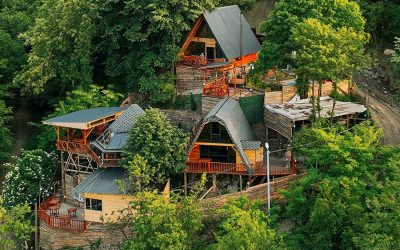
The Stewardship Freehold Village – an idea whose time has come – with Michael Taite
“When we build, we first remove the soil and replace it with rubble, concrete and tarmac. When we grow, we exclude all life from the land bar the one crop we want. Where we belatedly recognise our ultimate dependence on nature, we confine it to intensive ‘nature only’ areas such as rewilding zones, field margins and beetle banks.” Michael Taite 2026
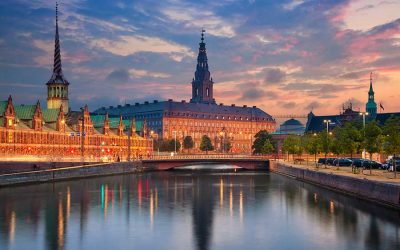
Making Glorious Trouble with Uffe Elbaek, activist, system builder and author of Doubt, Hope, Action
We talk a lot on this podcast about the need for a new system: politically, culturally, in business, media and art…in everything we do. And yet, we don’t often have the opportunity to talk with someone who has set up a new political party – still less one explicitly predicated on the core values of courage, generosity, transparency, humility, humour and empathy. You’d think it would be hard to argue against these, but, as Uffe Elbaek discovered when he entered the Danish Parliament…the system doesn’t always want to be courageous, or transparent, or generous, or to embody humility, humour and empathy.
STAY IN TOUCH
For a regular supply of ideas about humanity's next evolutionary step, insights into the thinking behind some of the podcasts, early updates on the guests we'll be having on the show - AND a free Water visualisation that will guide you through a deep immersion in water connection...sign up here.
(NB: This is a free newsletter - it's not joining up to the Membership! That's a nice, subtle pink button on the 'Join Us' page...)