
#357 Dignity, Confidence and Care: The Matriarch Effect transforming lives with Dr Robyn Short
We all know we need to wake up, grow up, show up, but how do we actually do the inner work of growing into interdependence and then the outer work of healing our relationships and holding whole, generative spaces for all parts of ourselves, ourselves and each other, ourselves and the web of life?
That’s this week’s question and our guest on this episode has written a book that absolutely answers this, and more.
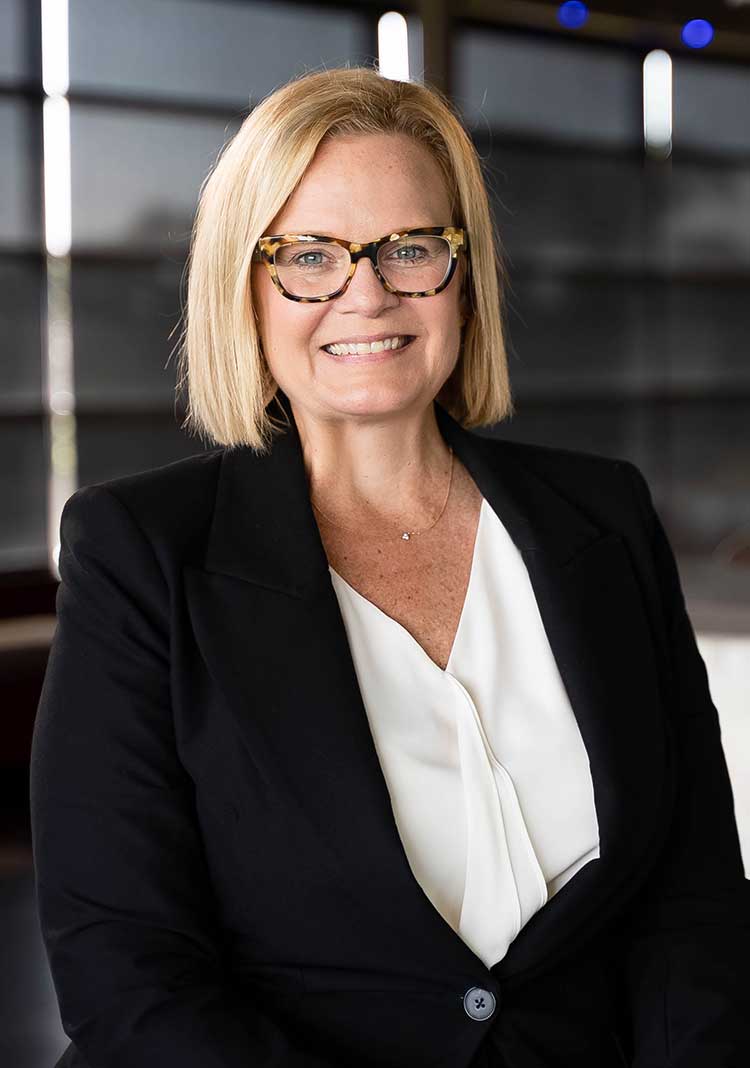
Dr. Robyn Short is an organization systems design consultant, peace-building trainer, and mediator who works with individuals, corporations, and nonprofit organizations in discovering the root causes of conflicts, so they may transform their relationships and create new and productive paths forward individually, as teams, and ultimate as an organization. She also works with community leaders and political and governmental leaders to develop initiatives for building sustainable peace in areas of historic conflict. In this capacity, she has been featured in news outlets internationally.
She is founder and CEO of The Workplace Peace Institute, responsible for its mission, vision and values – and those values are explicitly generative: equity, diversity, empathy, courage and curiosity.
She is the author of four books, the latest of which is The Matriarch Effect: Ancient Wisdom, Modern Organizations and the New Logic of Power and it’s this we’ll be talking about today – what it is, and how it can transform our worlds of work—and life.
More from Accidental Gods…
We offer three strands all rooted in the same soil, drawing from the same river: Accidental Gods, Dreaming Awake and the Thrutopia Writing Masterclass.
Our next Open Gathering offered as part of our Accidental Gods Programme is ‘DREAMING YOUR DEATH AWAKE’ which will run on Sunday 1st November 2026 from 16:00 – 20:00 GMT (NOTE THE TIME! – We’ll be out of summertime then) – details are here. You don’t have to be a member of Accidental Gods to come along, but if you are, all Gatherings are half price.
If you’d like to join us at Accidental Gods, this is the membership where we endeavour to help you to connect fully with the living web of life.
If you’d like to train more deeply in the contemporary shamanic work at Dreaming Awake, you’ll find us here.
If you’d like to explore the recordings from our last Thrutopia Masterclass, the details are here
Manda and Louise both offer one-to-one Mentoring Calls. Manda is writing a book just now, but if you’d like to contact Louise, details are here.
In Conversation
Manda: We all know that we need to wake up, grow up, show up, but how do we actually do the inner work of growing into interdependence? And then the outer work of healing our relationships and holding whole generative spaces for all parts of ourselves, ourselves and each other, ourselves and the web of life. This is the question this week, and our guest on this episode has written a book that absolutely answers this and more. Doctor Robyn Short is an organisation systems design consultant, peace building trainer and mediator who works with individuals, corporations, and non-profits in discovering the root cause of conflicts, so they can transform their relationships and create new and productive paths forward, individually, as teams and ultimately as an organisation. She also works with community leaders and political and governmental leaders to develop initiatives for building sustainable peace in areas of historic conflict, which, frankly, is pretty much everywhere right now.
Manda: She is founder and CEO of the Workplace Peace Institute, responsible for its mission, vision and values. And these values are explicitly generative; equity, diversity, empathy, courage and curiosity. She is the author of four books, the latest of which is The Matriarch Effect; Ancient Wisdom, Modern Organisations and the New Logic of Power. And it’s this that we will be talking about today. What it is and how it can transform our worlds of work and, I think, of life. If everybody were to take all the components of this book and apply them everywhere, in our inner landscapes, in our homes, in our closest connections, in our communities of place, of purpose and of passion, our world would be a different place overnight. So here we go: people of the podcast, please welcome Doctor Robyn Short, author of The Matriarch Effect and so much more.
Manda: Doctor Robyn Short, thank you for coming on to the Accidental Gods podcast. How are you and where are you on this solstice afternoon? It’s the day the world turns over. It feels a very edgy time. How are you?
Robyn: I am really wonderful today. As you may have read in the preface of my book Matriarch Effects, I spent the first half of this year really, really sick. And I am well and every day I’m so overwhelmed with gratitude for just my capacity. So I feel like I’m thriving, yes. And I am joining with you today from southwestern Colorado in the United States, on the ancestral land of the Ute people here in North America, and really specifically in the San Isabel forest of the Wet Mountains.
Manda: Oh, nice. That sounds glorious. We can’t see outside windows, but that sounds really nice.
Robyn: It is really glorious.
Manda: So are you near Boulder? That’s the only place I know in Colorado. It sounds a very switched on place.
Robyn: Yes, Boulder is a very switched on place, and I’m about three hours south.
Manda: Oh, okay. Not that near then.
Robyn: In the true wilderness.
Manda: Wow. Gosh. But you teach at a whole bunch of different universities. Do you teach remotely or do you go down to various places?
Robyn: I teach remotely. And when we decided to make the move from Dallas, Texas to here, what I realised is at this point in my life, if I am having really in-person meetings, I’m getting on a plane and I would rather do that from here than there.
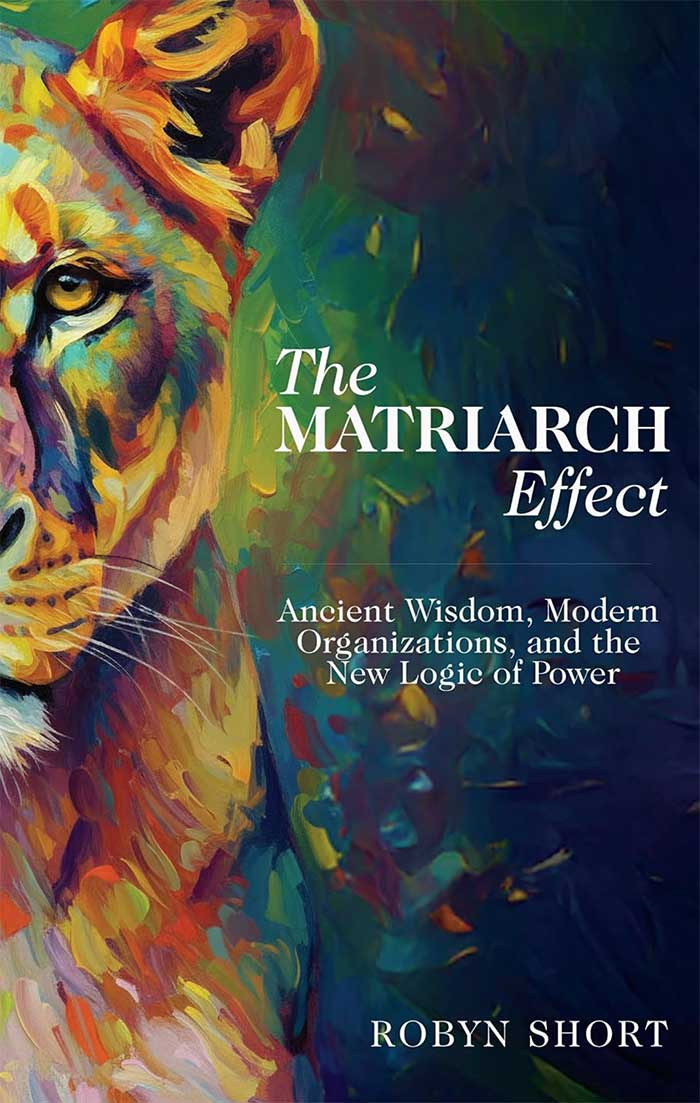
Manda: Okay. Fair enough. Yes. That makes a lot of sense. Alrighty. So the Matriarch Effect is, I genuinely think everybody should read this. It’s got so much breadth and depth and it’s bang up to date. As you said, it’s published the year it’s written, which is so unusual with books, and it has one of the best covers of a book that I’ve seen in a long time. People, there will be a cover on the show notes. It’s really gorgeous. And it brings in this idea that matriarchies exist in other species. It’s got the most amazing, fierce, wild picture of a lioness on the front. So tell us a little bit about how you came to write this book. We’ll absolutely go into depth with what the book is, but why you need it to be the person that needed to write this book at this time. Because you have other books, so writing is partly what you do. Why this? Why now?
Robyn: So why this, why now? So in my business that I work in every day, Workplace Peace Institute, we do organisation development. For years I have been framing our work in the context of two different types of organisations; Newtonian Organisations and quantum organisations. And the reason that I use the word Newtonian is because the more pressure and force you put on something, the more production you get from it. And quantum being that power moves through a relationship. This made a lot of sense to me and my science brain, and when I would talk about it with people, I could see that they were cognitively tracking with me, but it didn’t move them in the way that it really moved me. And it required so much context for understanding. And in October of 2025, I got really sick and was struggling to breathe. And I reached this point where there were moments that I wasn’t sure I was going to survive, to the point that I was kind of simultaneously planning for not surviving while actively trying to get well, which was this extremely surreal experience. And we live in really high elevation and so I had had to move down the mountain to just literally be in more air space.
Manda: More oxygen.
Robyn: More oxygen. And a friend was spending the night with me. I had friends that would just come and stay with me for several days to keep me company, which was beautiful. And I said to one of my friends who has told me one time that what she really wants to be is a wise old woman. And so I keep telling her I have I have some practicum for you. And so we were having wise old woman practice. And I said, you know, I’m beginning to wonder if there’s something spiritual caught up in this, if maybe I’m just not going to get well until I have the lesson this is here to teach me. And she asked the question, which was, what else is suffocating you? And without any hesitation, I said the patriarchy. And then I just sat there for a moment and let that actually settle in. And I realised the depth of how true that was for me. And in that conversation with her, as we continued to talk throughout the day, I said, you know, what’s really interesting is I’m realising for the first time that quantum is matriarchy, and Newtonian is patriarchy. And framed that way, it opens up, like I don’t even have to explain it to you; your body knows exactly what I’m talking about. And I have realised since that there is a somatic understanding to that word that doesn’t translate when I talk about it through the lens of physics. Physics doesn’t resonate at the somatic level. And it felt like the most urgent thing I had to do, both from this interesting path of everything I’ve experienced in my life to date is in this book. And it felt both like, if I don’t survive, this has to be done. And it’s also the pathway to my healing.
Robyn: And the moment, literally the moment I started writing, it was like every day I could breathe a little more. And every day I also had finally reached the the people who could support me in healing. It wasn’t just this fully metaphysical experience, but I am convinced that they were connected and that my soul guides were waiting for that question to be put there, so that all of that information could come up for me. And I’ll just close that wonderful question with with this. People have asked me, how long did it take you to write the book? And I said, well, six weeks in 30 years.
Manda: Six weeks. Wow. Oh, I have book envy.
Robyn: And 30 years.
Manda: Yes. Yes. And this is the great thing about non-fiction. Although, I mean, even just gathering the references for non-fiction takes a long time. But just so you know, I started the current novel in late April, and I am going to be lucky to hit 60,000 words before I go away at the end of the week. So, you know it’s going to be at least a year.
Robyn: I cannot comprehend writing fiction. It would take me three lifetimes to write a novel.
Manda: Uh, yeah. Well yes. I don’t think it would. You know, you start making stuff up and again it gets its own momentum and it works. But yeah, it’s a different beast. Just on the spiritual healing, you said it very containedly that it wasn’t just the writing of the book, it was then synchronicities happen and the right people turn up. And are you fully well now? I mean, you look well.
Robyn: Yes, yes, I am fully well. And I would say in the last three weeks. I think two weeks ago or three weeks ago, my husband and I hike every day, well, I’ve returned to being able to hike every day.
Manda: Yes. Because you mentioned in the book that you really missed not being able to do that.
Robyn: Yes. All of the things that resource me, I didn’t have access to. And it was probably 2 or 3 weeks ago that we were hiking and I looked at him and I said, I feel exactly like myself. Yeah.
Manda: That’s so good. And as we unpick your book, it always seems to me that everything that’s physical with us, this is the quantum thing, has an energetic base to it. Again, we have Newtonian thinking about health when we could be having quantum thinking. And I’m so intrigued with your book that it has so many applications beyond the business field that you’ve aimed it at. And if we could get even within the health professional field, without straying off into bizarre, weird sub territories of conspiracy theories, but if we could actually start treating people in the way that you recommend we treat them in business, the world would be a different place. We’ll get to that later. Let’s head into you have a subtitle in the book: Ancient Wisdom, Modern Organisations and the New Logic of Power. So this is exactly that; it folds in zoology and Anthropology and concepts of indigenous peoples and animal species that we can observe, and it brings them together with a new understanding of who we are as people and how we can interact with each other. So tell us a little bit about what for you is core. You say: ‘Matriarchies are mothers from the beginning, centring the mother child relationship as the foundation of all social life’. And that absolutely mirrors we had Zineb Moukhi on back in May, I think, and she said patriarchies centre men, matriarchies centre children. And that’s exactly what you’re saying. That it’s a flip of the whole way that we engage with ourselves, each other and the world. So tell us, what for you are the core features of the matriarchal paradigm as opposed to the patriarchal paradigm?
Robyn: Well, I think about matriarchy and patriarchy as organising principles. Ideas that we organise, our behaviour, our consciousness, our thinking, our systems around. And the matriarchal organising principle is centring all of the principles associated with the mother child relationship, which is nurturance and care and compassion, and all of the behaviours and thoughts and ideas and consciousness that goes into supporting the development and growth of others. And that is not soft and it’s not coddling and it’s not about gender. You know, the image that I have oftentimes, I speak to nature all the time; I think humans forget that we are animals and we are a part of the natural world and we just wear pants. And I have this vision of a documentary that I saw from Planet Earth years ago of a mother bird kicking the baby out of the nest.
Manda: Right, time to fly sunshine.
Robyn: And the baby just plummets to the ground. And she picks her back up and takes her back to the nest and kicks her out again. And they do this until the baby can fly. And I would imagine, I don’t have children, but I would imagine that the mother doesn’t love kicking the baby out of the nest. It’s an essential part of that bird’s capacity to be the fullness of who it’s going to be. You cannot be the fullness of who you’re going to be if I keep bringing the worms to the nest for you. And so it’s not soft and it’s not coddling and it takes courage and it takes strength. But at its core, it takes commitment to the full becoming of the other. And that is the matriarchy. That’s the matriarchy in all of its examples of how you would then play that out to every relationship.
Manda: Although I would think, and you say this several times in the book, for me first of all, we’re talking healthy mother child relationships, because not all mother child relationships are healthy. We bring a lot of our stuff sometimes. I also am not a mother, but I have dogs. It’s very similar. I have this theory that people have kids because they haven’t managed to develop proper relationships with their dogs. Arguable. Definitely arguable.
Robyn: I can buy into that.
Manda: We’re trying to create balance and nurturance and care without a power hierarchy. And I think really this is parent-child. In tribal societies, it seems to me, I’ve listened often to people, particularly in African tribal societies, particularly a white woman who ended up by accident married into a tribe in Africa that she wasn’t expecting. And she said it took her months to work out which woman had actually given birth to each child because the kids just wandered around and they suckle till they’re four or 5 or 6. But with any woman who’s around. And they go to sleep when they’re tired, it doesn’t matter, they don’t have to go back to their place with two parents and 2.5 kids and a golden retriever; it’s just not like that. And I was talking to Dylan McGarry last week, who was raised largely in a in a Zulu tribe and he says there’s a particular relationship with a woman’s brother. And his relationship with his brother’s children is quite strict and has very clear guidelines and boundaries. And he has a job and they have a job. But his relationship with his sister’s children is that he finds his feminine side and is as nurturing to them as a woman would be. And it seemed to me such an extraordinarily healthy thing to have that built in to a tribal structure, such that men can be the full spectrum. With the boys he’s teaching them to be warriors. With the girls he’s really not. He’s showing them what what a nurturing adult male can be. And it feels to me that that fierce strength goes all the way through your book as well. That if we can bring that to relationships without heading into the… I suspect my mothering was not necessarily fully as balanced as you’re thinking, because there was always a power dynamic. And I’m really interested in how later on we get to how can we mitigate the power dynamics within the relationships that we’re going to.
Robyn: I do want to say real quickly about the mother child relationship. It’s the archetypal mother child relationship. Many of us had a parenting relationship with our mothers that was steeped in her own patriarchal wounds. And so it’s not our mother child relationship that we’re seeking to cultivate, but the archetypal concept of the mother child relationship. Which I think is beautifully demonstrated in nature because it hasn’t gotten all messed up with the human stuff.
Manda: Right. Yes. Because you talk about orcas and and lionesses and elephants as all being examples of obvious situations where there’s a wise grandmother, often. And again, Dylan says he’s followed elephant tribes and they’ve done a play about elephants, and the matriarch leads from behind, always. There might be a bull at the front, but they’re definitely not the person who’s actually guiding. They’re the kind of shield. But the person who’s guiding the whole herd is right at the back, watching and sifting through the emotional state of what’s going on at the time. And having that as a model just seems to me such an extraordinarily beautiful thing. And it requires everybody to bring the new paradigm into play. And you say early on, and this is something that I really want to delve into, organisations that create environments of chronic threat are quite literally paying for human intelligence they will never be able to access. And that’s highlighted, underlined, everything. Because it’s not just organisations, it’s our political organisations and our family organisations. And so please unpick that a little bit for us because that again, feels to me quite core to where you’re going and what you’re saying.
Robyn: So the patriarchal or as an organising principle, the patriarchal system is a system that orients around domination and power over. And our nervous systems aren’t wired for that. Our nervous systems are wired for safety. And we do not feel safe in dominance, and we don’t feel safe when people have power over us, when there’s dominance and when there’s a power over structure. It compromises our capacity for agency and relationship and connection, and we’re wired for that. So in the neuroscience community, there’s a saying. Well there’s two sayings, that the brain is wired for connection, but the brain is also wired to protect us from threat. In order for us to have connection, we have to be past a threat mode. And so there’s emerging research that demonstrates that the amygdala is the oldest area of the brain and the amygdala is responsible for keeping the human safe. And if you’ve ever watched Game of Thrones, I think of the amygdala like Hodor. It’s just got one job and there’s no nuance. And so the amygdala gets it wrong often, because our trauma memories are stored there as well. So we’re pulling from all of the information that we have had in the past, about what is safe and what isn’t safe. So when we are in these patriarchal systems that are orienting around domination, that are orienting around power over structures, and that are using our humanness as a tool for some form of something else; and in the workplace, it’s exclusively production; we don’t feel safe. And when we don’t feel safe, we go into protection mode.
Robyn: And so you can think about patriarchy creates a relationship with others where we’re leaning out in self-protection and matriarchy creates connection, which means we’re leaning in. When we’re leaning out in self-protection, our energy is oriented around keeping ourselves safe from the system. And when we’re attempting to stay safe, we’re not applying critical thinking and creativity and collaboration and all of the human qualities that are necessary for creation. We’re focussed on I need to give you the minimal that I can give you in service of my safety, instead of give you the fullness of what I have to offer in service of our community.
Manda: Yes, yes. So everybody is running around with their foot on the brake, basically. And I would like to get to later is what is the purpose of the organisations? Because there are some that we’d quite like them to keep their foot on the brake. Let me name a couple of AI companies to begin with. It would be really good if they put their foot on the brake, but it would be useful if they knew they were doing that instead of that being the default. There’s so many bits in this Robyn that I’ve highlighted, but the patriarchy effect tells us that compliance is not commitment. Busyness is not productivity. Hierarchical authority is not leadership. And later meaning, belonging, psychological safety and alignment with purpose are not perks, they are requirements. And they’re part of what every human being needs to be fulfilled and to feel that they’re an integral part of the world that they’re in. And it just seems so incredibly sad that we’ve got to the first quarter of the 21st century and this is still in question. There are still people who don’t get this and don’t believe it. So I could actually spend the entire podcast on your first chapter, but let’s move to the five intelligences, because you’ve created a number of ways of looking at things and they all come back to, we all need to feel safe, it seems to me. The bottom line is we need to feel safe. We need to feel engaged, we need to have meaning and purpose, being and belonging. But you’ve managed to create it in a way that people can assimilate in bite sized pieces, and also look at the different ways people might not feel safe. So tell us a little bit about the five intelligences. And then I would like to zoom in on the middle one in your list.
Robyn: Okay. So the five intelligences are the core leadership intelligences that I believe are necessary for us to create a paradigm shift. We are living in, and as I’ve been listening to your podcast it’s really clear to me that you and I, and likely the people who listen to your podcast, have a shared belief that we are in a moment of all systems collapse.
Manda: Yes.
Robyn: And I don’t think that’s even a topic of negotiation. The systems are collapsing. And so there is a choice point of what comes after this, and that to me has to be exceptionally intentional. There’s a quote from Victor Frankl in his book Man’s Search for Meaning. Viktor Frankl is a survivor of the Holocaust, and he says, and I might not get this exactly right, but between a stimulus and response, there is a space. And in that space is choice and in that choice lies our freedom. That space only actually exists when we know it’s there. If we don’t know the space is there, then we just act in reflex, we act from default, we act from what we know. And so I think in this moment of all systems collapse, there is a space, but the space is only available to us if we know it’s there. And so in this all systems collapse, there’s a choice of a paradigm shift. And if we aren’t aware of the choice, and then if we aren’t intentional about what we do with the choice, we’re going to just recreate what has just collapsed. And civilisations have done this over and over and over again. So what I think is really important, and all of us who are thinking this way, have all of these gifts to bring to this emergence of a potential new way of being. And I have this tendency to speak in declaratives, but I don’t really think of it as the only, but I do think one of the core competencies that’s going to have to be available to us is new ways of thinking and new ways of being.
Robyn: And these core leadership intelligences are, in my mind, essential to how we’re going to be in relationship with each other differently. And so leadership Intelligences are the capacities and the competencies that we’re bringing from all of our lived experiences, from our knowledge, in service of actual collaboration. So to do that, we need emotional intelligence. We need to have an understanding of ourselves, and we need to have an understanding of ourselves at the nervous system level, which I think Daniel Goleman, in his gift of bringing this concept to us, was doing so at a time when we weren’t thinking about our nervous systems. But emotional intelligence is grounded in nervous system awareness; how to be aware of, regulate ourselves, support the regulation of others in service of our capacity for collaboration. We need social intelligence, our ability to work with others in such a way that supports their full becoming. We need cultural intelligence, our capacity to work across differences in a way that is supportive and builds resiliency in others. And we need conflict intelligence.
Manda: Yes, I do want to talk about that too.
Robyn: Our ability to disagree with one another well. Some of the best ideas and best relationships have emerged from people being able to do difficult things together, well. People have this idea when I say my company is called Workplace Peace Institute, that my goal is harmony. And my goal isn’t harmony at all. Harmony might exist in music, but I’m not sure it really exists in human relationships. It’s to be able to do hard things well together. And then for me, the piece that holds it all together and ensures that none of these intelligences are being used manipulatively is dignity intelligence; the skills and competencies and practices that are necessary for us to truly honour the true worth and value of every human being. And to see those people who I think we are being given so much opportunity to practice.
Manda: Yes. And to look at it not happening.
Robyn: The true worth and value of every human being.Yes.
Manda: Some of the others I had heard about. But dignity intelligence struck me as a framing that is so necessary just now and is actively being undermined by aspects of our political system, but also just the defaults of predatory capitalism, is to ensure there is no dignity intelligence. You write, what you already said, but I think the paragraph is worth repeating: ‘Dignity intelligence is the capacity to proficiently connect to the inherent worth and value of all human beings. To actively mitigate violations of dignity in all instances, and to sustain a connection to something larger than oneself’. And honestly, if that was written on the inside of every parliament as well as every business and every NGO and even every household. If every relationship was built on that, the actively mitigating violations and sustaining connections to the larger web of life, all that is, whatever we call it. Wouldn’t humanity be in a different place? It seems to me, we’ll get little bits of some of your examples and unpicking it in a minute, but the level of self-awareness this requires, the level of having done the work with all of the injured parts of ourselves that are going to react at limbic level speed when our ego stances feel threatened, and they feel so often threatened when we are surrounded by difference, I think. And it’s not hard to look out in the world and watch what happens when ego stances are being threatened at the moment. I mean, that’s one of the astonishing gifts of our time, is that these things are happening on the nightly news or a truth social post at three in the morning or whatever. And it’s obviously wrong. I think it’s obviously not useful. And so in the gloves coming off the old paradigm and the masks being stripped away, we can see we can see the wounded children underneath and make a commitment to do our best to be a little bit more adult. So tell us a little bit more about how you came across the concept of dignity intelligence, because you did a master’s more or less in this. So we could easily do the whole podcast on this. But just go deeper for us.
Robyn: So I was teaching a course in negotiation for a college called Bay path here in Massachusetts, in the United States. And a student of mine actually mentioned this book to me, Donna Hicks’s book Dignity. She has two books, Dignity; it’s essential role in conflict resolution. And then she has a second book Dignity; Leading with Dignity. And my student said, I think you would really like this book. I read the book and I was like, everything in the whole world made sense to me. So I don’t even know that my business Workplace Peace Institute would exist if I hadn’t read this book. I think it is essential reading for everyone. So I began really trying to operationalise Donna Hicks’s dignity model, which is these ten essential elements of dignity that I present in the book. And then in her second book, Leading with Dignity, she presents the dignity consciousness. So as I began working with these concepts over the next decade, I just kept finding it makes sense to people, but they don’t know how to operationalise it. Like it was making sense here, but it wasn’t making sense systematically. I didn’t know how to make it true. And I now understand, and it took writing this book for me to come into the full realisation of it; it’s because these essential elements of dignity don’t know how to live in the patriarchy. And we are conditioned in the patriarchy and so we don’t know how to actually take these things and act on them. And so I was thinking about all of these different types of intelligences that live in the world; emotional intelligence, social intelligence, cultural intelligence. They have the concept, and they have the competencies, which I would say the ten essential elements are the competencies. But they also have practices that support you in actually building skill in the competencies. So the Dignity intelligence model builds on this extraordinary gift that Donna Hicks gave us with the competencies. This is who you actually need to be in order to consistently honour worth and value through the living up of these ten essential elements. And for me, it’s simple and complex. It’s three core things: we need to be in constant practice of humility. And I really appreciate the definition that Brene Brown brings to humility in her book, Atlas of the Heart, which is a commitment to getting it right, not being right.
Manda: Not being right, yeah.
Robyn: And honouring the inherent worth and value of others is a constant practice of commitment to getting it right. Holding the truth that you’re going to consistently get it wrong and that you’re going to have the humility to continue working towards that practice of getting it right. We need to be in a constant state of practising curiosity, recognising that if we look at these ten essential elements of dignity, why it’s so hard to get it right is because honouring your identity is different for you than what honouring identity for me is. Fairness is different for you than it is for me. Each of these ten essential elements of dignity are only one thing in a patriarchal model. They’re so many things in a matriarchal model. And I really believe, because we think about matriarchy as mothering, as mothers from the beginning, we’re actually wired for matriarchy. We’re not wired for patriarchy. So in order for me to truly honour your worth and value as a human being, I have to be just infinitely curious because it’s going to be different for you than me, and curiosity and humility then have to live together. But knowing that you’re going to be doing something with full commitment to it, and that you’re going to constantly get it wrong, means you also have to have a nervous system that can hold the getting it wrong in a really sustained way. And that’s the homeostasis mind. That practice of steadiness in your body so that you can be with all of your best effort, attempting to honour a person’s dignity and being told in whatever way that it’s not working. And be able to have the nervous system that can hold that information.
Manda: Yes. And we’ve got a kind of recursive loop, it seems to me, where for someone to be able to do this, they have to feel safe. So someone in a leadership role has to feel safe enough to have the humility, to keep striving to get it right, in the face of people who might have experienced organisations where they were not safe, and where people did not offer them dignity and did not have the consciousnesses that you speak of. The connection to one’s own dignity and the dignity of others and the dignity of a greater thing than oneself. And so the person who is modelling this has to have done a huge amount of inner work, it seems to me. And where we get to, let’s leap to that now, because you’ve got a number of case studies through the book, and some of them seemed quite top down, but some of them seemed really bottom up. And that that seemed to me hugely courageous, that people were able to model dignity, all of the intelligences, in a system that was not yet matriarchal at all, where they were at risk of being quite badly crushed. Or often something that comes out, I guess people in business probably know this and I just have never been in business, so I don’t really see it. But it’s often not explicitly we are now going to give you a red card and put you in a corner, it’s just you won’t quite get the opportunities, you won’t be asked to speak up at meetings. The kind of very subtle social shunning that happens that just means your whole day just becomes less colourful, more monochrome, more grey, and you just end up feeling more and more and more shut down. And it’s really hard to put a finger on why or to go to someone and go this is happening to me and it’s bad. Because it’s kind of consistently passive aggressive. I’m sure there’s also active aggression. But I have to say it sounds like living hell. I don’t know why anybody works in an organisation. I follow someone on blue Sky and just before we came on, they said they were going for the second of six counselling sessions and that six was not enough. And anyway, it was only dealing with workplace stress and everybody in the workplace felt stress. And what was six counselling sessions going to do? And you think, well yes, you need a new job mate. And you need not to be in that job, because if everybody there feels stressed, it doesn’t matter how much counselling you’ve got, it’s not going to change the culture. But you have had companies, in your experience with the Workplace Peace Institute, who have changed the culture. So let’s move to a little bit of how this works in practice and how you get people who are big hearted enough and strong hearted and clear hearted and sorted and have done enough of their own inner work, to be able to live in this quantum reality.
Robyn: So I’ve got two thoughts happening in my mind. One is, as you were talking about these subtle ways, that something has happened, you don’t know what has happened, but all of a sudden you’re shut out and you’re being treated differently. It made me think about the one time in rare experience where I did know what had happened, but no one else did. It was one of my last jobs before switching careers from marketing into what I do now, and I ran into the CEO and his mistress outside of the workplace, and I knew his wife.
Manda: Oops!
Robyn: And I remember thinking, I’m not sure what the impact of this is going to be. I already knew that he had a mistress, right? He wasn’t as good at keeping this up as he thought, but he didn’t know that I knew. So once he knew that I knew, I got completely shut out.
Manda: He didn’t know that you knew. Right. And now he did.
Robyn: I was a leader in the organisation. I got shut out of meetings, I got shut out of everything. But no one else knew that. And so they just knew that this person who had been really respected, who was our kind of go to person for all things, was off limits now. And it created this just widespread lack of psychological safety across the whole organisation because everyone could sense something wasn’t right. And I knew what it was, but I certainly couldn’t say it, you know.
Manda: Could you not? I mean, if you know you’re going to leave, can you not first of all go to the boss and then just go to everybody else and go, look, this happened guys. It’s a thing. Would that not have lanced the boil?
Robyn: What’s interesting about that, I love that question, is the patriarchy always has a threat. And there’s always the threat of if you tell the actual truth, the reputational attack that’s going to come after you.
Manda: Okay.
Robyn: And do I care enough about your affair to ruin my reputation?
Manda: Right. Right. That’s so interesting.
Robyn: There are battles I care enough about to ruin my reputation. But your marriage isn’t one of them, right?
Manda: Yes. But even so, the impact on the organisation. And we were watching this in real time. I was reading posts over the weekend, so Jason Coxon and quit Anthropic last Wednesday and said he’d gone from OpenAI to Anthropic. And he said everybody in the industry knows or believes that AI is going to kill us within the decade, but they won’t say so in public. And various people, particularly from open AI and Anthropic, came out in support of him. And it took until, I think, Saturday before anyone from Google DeepMind would say anything, because Google DeepMind has a policy that nobody speaks the truth about their AI. And these people were saying, I realise my job is on the line, I don’t know if I’ll still have a job on Monday, but I do have to say that Jason is right. Or, I recently worked for Google DeepMind, and obviously the NDAs are not big enough or scary enough, and I am going to say now what I think, that I was never able to say before. Not only was I not able to say it, but PR had coached us all in the ‘oh yes, that’s just fringe conspiracy theories. But AI is actually going to solve cancer and climate change and save the world. And it’s all fine, guys’. And we knew this was not true. And that. The what is the threshold of the threats that they can lever against my own integrity? And in your case, you could escape to a different career, but when you’re facing existential threat and speaking out or not speaking out; one of the people said, I wouldn’t have spoken out before, but I have an eight month old son and I have to look him in the eye every morning and now I can’t stay silent.
Robyn: Yeah. Right.
Manda: And it’s really interesting when the thresholds shift, I think.
Robyn: Mhm I agree. So the people in the book, the leaders in the book, who do represent the case studies, are nobody came to me prior to the writing of this book, but I think that might shift after writing the book, saying we would like to build a matriarchal organisation. What they said was we want to build an organisation, on some level they have said, where people are able to thrive. Where people experience equity. Where we understand how to be inclusive in diverse spaces, where people feel good when they come here. And when you think about when this book was written in the United States, they were making that request in a moment where the external systems were trying to make it as scary as possible to do that. And so what really sustained, I think, the difference, the why these people are in the book, is it was the who they are. The core of who they are, the values that matter to them and their belief systems about what people should be experiencing when they come together in community to do something.
Robyn: But it was kind of funny as I was writing this book, there’s two companies whose case studies are kind of threaded throughout, and then there’s two other companies that are case studies for specific chapters. But these two leaders whose case studies are threaded throughout the book, I can’t believe it took me this long to realise it; they came from the same organisation. They both grew up in the same organisation and then went into different places. And I had been a consultant at that organisation that both of their early careers had been in, and then met them later again as they were CEOs of other organisations. While the organisation that they professionally grew up in was an organisation that had an almost always all woman leadership team, led by a woman CEO in one of the most patriarchal systems you can imagine.
Robyn: And so it is this example of the matriarchy and the patriarchy have nothing to do with gender, and everything to do with organising principle. But I know that so much of why these two CEOs are so committed to matriarchal principles is because of the wounds that they have from the patriarchy. I came from a family where there was a lot of physical and emotional abuse really directed primarily toward one of my siblings. And I’ve always, for my entire life been curious about why some people come from hurt places and evolve into people who hurt people, and some people come from hurt places and evolve into people who are deeply caring and compassionate. And these two CEOs left committed to being caring and compassionate leaders, but they didn’t have a model for how to do that. And so when we think about what motivates a company to do this and what will sustain it, is the lived experience of knowing this harmful system doesn’t build into us the capacity to do hard things together well. And so no one said Workplace Peace Institute, help us be matriarchal. But they did pretty much describe to me, Workplace Peace Institute, help us be all those things listed in the matriarchal paradigm.
Manda: Which happens to be there. Yes. Right. And you said you now do have an idea of why some people hurt people, hurt people, or hurt people grow into the people who are never going to hurt people, because that’s just antithetical to who they are. Tell us your theory. It doesn’t have to be polished.
Robyn: Yeah. So what the research shows is that it just takes one single, caring adult to change the entire trajectory of a human’s life. And so those hurt people who grow into hurting others, very likely never had a single adult show up for them. And the ones that shift had one human who said, I believe in you and I will support you. And that support doesn’t even have to be that big, it just has to be I see potential in you, and I’m not going to let you fall through the cracks.
Manda: Right. You are a worthwhile individual, and I support you for who you are and what you are.
Robyn: Yeah. I see your inherent worth and value.
Manda: Right. And it feels to me, this is getting a bit more existential, but the world that we’re in just now is the end product of 10, 12, 14,000 years of trauma. Of disconnect from the web of life, of trauma cascading down generations, and of people not offering that, that you’ve just described, because they didn’t know how, because it was never modelled for them. But once in a while, there’s someone who shines and who is modelling decency. And there must, I would like to believe, if the human race survives long enough, to be a tipping point where people heal enough to heal others, to heal others. And that the cascade towards chaos and destruction, the kind of first attractor of horror in the multiple attractor model, is replaced by decency and integrity and compassion and connection. All the things that you’re suggesting. Safety and fairness and acknowledgement and the benefit of the doubt. You have so many beautiful ideas of what it is to give people that. That’s one of the things I love about your book is other people say we need to be better human beings, and you actually give us ideas of exactly what that takes. Which is jolly useful in the current world, when we’re watching the opposite being deliberately weaponized.
Manda: Tell us a little bit about conflict, because that felt to me quite crucial as well. We’re watching a world of conflict. We need to be in a world of peace. You started the Work Peace Institute, and yet the concept that conflict is both necessary and useful; I mean, Stephen Miller said something about that a while ago: we live in a world where might is right and power is everything. And no mate, we don’t. That’s the way to us all being extinct, I’m sorry. But it’s so embedded. How do you find people take to the idea that conflict is generative if it is held within a generative space? And then tell us a little bit more about how that happens.
Robyn: So I think that the human body is… It’s funny, I have so many ways I’m thinking about this in the exact moment. We are not actually wired to do conflict. I’ll just pause there and say I have always had a little side eye when people say, oh, humans are like the most intelligent species.
Manda: Yes. For a given definition of intelligence. Yes.
Robyn: Yes. Right. By the actual design of our species, we aren’t wired to do conflict well. I talk about the bonobos in the book, they are literally wired to do conflict well. They are wired as a species to de-escalate and to repair. We are not. The way that we are hardwired is to respond to a threat with a threat response. And that threat response might be to fight back. It might be to flee the scene. It might be to literally just pass out. And it might be to overcompensate by overly appeasing the other. None of those descriptions of a threat response is the energy or the behaviour necessary to repair.
Robyn: So repair is what is critical for our ability to do conflict together. And so we come out of the womb unprepared. Like if no one does anything, we are not going to have skill to do conflict. We have to be able to actually build that skill. And so to build the skill means that we have to have a nervous system steady enough to have the resiliency to absorb the threat behaviour in a way that lets us see it clearly. And what I mean by absorb the threat behaviour is not to stand there and receive actual abuse, but to be in the presence of someone who has messy human behaviour and be able to go, oh, that was triggering. And I can see the space between stimulus and response.
Manda: Right. And I don’t have to be triggered.
Robyn: Yes. And I don’t have to be triggered. I can intervene on my hardwired response and do something that invites connection. And I believe it was the Dalai Lama that said, if you want to change the world, change yourself. Which is like wildly profound and also massively obnoxious, because people are like, I don’t even know what that means.
Manda: Because that’s the hard work. Much easier to change everybody else.
Robyn: Exactly. But the truth is, if I have done the work to be able to have a nervous system that can have resiliency to messy behaviour, that I have the capacity to do the reaching out. And it’s really hard and I think that’s why the dignity consciousness is so important. In the book, I talk about Donna Hicks model of Dignity consciousness, which is being connected to your own inherent worth and value, and acting from that place. Being connected to the worth and value of other people and acting from that place. But also being connected to something greater than yourself. And that piece, the being connected to something greater to yourself is the thing that holds you accountable to being connected to the other person’s dignity. Because in the moment of your messy behaviour showing up in front of me, if I can’t remind myself of why this matters, I’m just going to be super messy in return. Because that discharge feels good. In the moment it feels good.
Manda: Dopamine hits. Yes, right.
Robyn: And we get that aggression out.
Manda: As opposed to the oxytocin.
Robyn: Yes, so the conflict intelligence, I think it has to live with the dignity intelligence together, right? We have to build that dignity consciousness in order to do the conflict work well. Otherwise, we’re just looking at, I think, the mediation practice of negotiation.
Manda: Right. And this was something that struck me, particularly when we get to we’re in a world where diversity, equity and inclusion is again actively under threat. And you describe a lot of taking the time to understand that everybody’s coming from different places and everybody’s responses to things are different, and find out what they are and bring them in. And this is part of archetypal mother child relationship of honouring the other. And I also thought that extends to other species. If everybody who had a horse or a dog, particularly, was able to understand that they’re not just little people and that they respond differently, the whole world of domestic animal sub abuse that happens would be different. And then we could extend it to the wider web of life. But when you’re working with people, it seems to me there’s many levels. There’s the kind of performative I am offering this space and I’ve done all the work, and it’s not happening at a deep level, which I think is probably what you were saying when you were talking about Newtonian versus quantum. And we want people, we want it to be part of who they are. And it feels like we’re asking people to be really quite evolved in a space of the death cult of predatory capitalism that requires them constantly to be making a profit. So I have a dual question. So let’s start with the first bit of the question and we’ll come to the second bit. So the first bit is now that this book is out, now that people are beginning to explore it, how much are you seeing people who genuinely have the capacity to do this and are not just going through the motions? Does that make sense as a question?
Robyn: It makes a lot of sense. I guess I’ll just answer the question from what’s in my mind, which feels very outrageous and audacious, but probably will resonate to your listeners. Before my friend Nicole asked me the question, “what else is suffocating you?”, the night before, I woke up in the middle of the night and it was the single worst moment of the entire journey and I literally couldn’t breathe. And I thought to myself, I don’t know if I’m going to wake up. And I just went back to sleep. Like I didn’t have panic, I didn’t have anything, I just had this might be it. And the next day, she asked me that question. And I really do truly believe at an actual soul level, I was being offered a choice point.
Robyn: And I was going to choose the next day. And it was really going to be the path of it is totally okay to be finished here, and you do have work to do, and you can choose that too. So when you said this is really an invitation, like these skills are really asking us to be more evolved humans. And are they out there? Are they available to us? I think at a really big level, we are collectively at that exact choice.
Manda: Right. Yes!
Robyn: And the answer is yes, 100%. There are enough of us on this planet to choose that liberation. I do believe there are enough of us, and it’s a choice. It’s not a collectively, we’re already there. It’s actually the choice to go, yes, I see the path and I’m willing to do the work. But it is a choice, right? And so when we think about this space that we’re in right now, the stimulus: systems collapsing, the response: we are actually sitting in that space that Victor Frankl talked about right this minute. And so we do all get to choose. And when we have people talking about AI is going to kill humanity or however it’s being framed; it isn’t going to successfully wipe everyone off the planet. I don’t think that’s actually going to happen where there is no human standing.
Manda: Okay…
Robyn: I think it’s possible that what might happen is those that are still very caught up in that paradigm may no longer be here.
Manda: That would be nice, eh?
Robyn: But there are enough people who are seeing what’s happening and that are getting very… You know that old saying, act local, think global. Or think global. Act local? There are enough of us that really heard that 15 years ago and started moving in that direction, that are the people who have the real choice. I believe that’s where the consciousness of that evolution is possible. And I feel like I spent the first half of my career steeped in the patriarchy and it was my research lab. And it was really painful. I think all of those “teachers”, those deeply patriarchal CEOs that I worked for, they’re not sitting in this choice point.
Manda: No. That’s true.
Robyn: They’re not evolving. But you know, what we know about evolution is change or die. And some of us are going to change and some of us are not. And that should be scary for some people and it’s a little bit exciting to me. Because I’m working with those people who are committed to changing.
Manda: Who are changing. And it does feel to me that first of all, there must be a tipping point. And second, there must be an exponential growth to this. There’s three people to begin with and then there’s 30 and then there’s 900. Because the capacity to be a decent human being, to go through you have a lovely loop of dependence to independence to interdependence, which I love. That understanding of interdependence. I have one last question, because we’re heading towards the end of the time. And you’re experiencing, that there are people who are absolutely committed to this. The old paradigm is extractive. The old paradigm goes for profit above everything else and don’t worry about the externalities. Our new paradigm, the matriarchal paradigm, has to, I would imagine, and this is a question, has to embed itself within the living web of life. And so how are companies that have been set up to make profit and to exist within a capitalist system that is inherently extractive, that is what Nate Hagens calls a superorganism that basically has its own metabolism now. Are you seeing people who are able to move their entire business model to something that is creating, I guess, goods or services that we actually need in ways that are not extractive? In a way that I imagine that we have to be dismantling capitalism from the inside. Are you seeing that happen with people who are taking on your matriarchal model? And if so, how?
Robyn: 100%.
Manda: Yes! Tell us about that.
Robyn: So what is happening and what I am seeing and nothing about this should be surprising, is you can think about the patriarchy as like an autoimmune disease. It is literally eating itself. And when you are really, really sick, you just don’t have capacity to do things well. When you are really, really well, you have capacity to do things at such a higher level. So what I’m observing with the organisations that I’ve been working with, and that are the case studies in this book, it shouldn’t be surprising that all of them are nonprofits. They’re committed to a mission that is greater than themselves. The work they do is bigger than just selling goods. And what I have observed is that they have really shifted from being actually traumatised human beings, to human beings that are in relationship with each other, who love each other, who laugh and connect with one another and the mission that they’re there to serve. They are exponentially serving more people as a result.
Speaker 4: Right. Wow. And then spreading the capacity to have dignity, intelligence, and connection and conflict intelligence and all of those things to all of the people that they serve. And that has to ripple out, I feel.
Robyn: Right. And one of the things that they’re also doing that I think is worth being said, is they’re not bothering to get permission from the board. They’re just navigating their board in whatever way is necessary. So there’s a budget line for the work that they’re doing with Workplace Peace Institute, and they’ll call it something that’s true, but it’s true enough for the board to not really question, but they’re just like, basically we’re being a little subversive.
Manda: Okay. All right. Being creative with our accounting. That’s cool.
Robyn: And it’s not really being creative with the accounting, it’s being creative with the language. You know, just maybe putting it in a consulting bucket. But they’re not bothering to get buy in from the people who are steeped in patriarchy and don’t have the consciousness to evolve. They’re just finding a way to forge forward anyway. And if we step back and see that at the human level, it’s just doing the work anyway. It’s not bothering to care. You know, I don’t think anybody is unfamiliar with concepts around, you know, smash the patriarchy; but that is actually the energy of the patriarchy.
Manda: That’s a patriarchal idea.
Robyn: Exactly. The matriarchy is ‘just move on. It will fall on its own if we stop giving it energy’. And that’s what those leaders are doing. They’re just like, I don’t care. I’m not giving it space and energy. I’m just moving forward with what I know is right.
Manda: Right. Beautiful. Beautiful. Thank you. So I’m looking towards the end of the book and you have a lovely quote from Doctor Martin Luther King: ‘I can never be what I ought to be until you are what you ought to be’. And it feels that for both humanity and the more than human world you’re offering a blueprint of how people can grow. It really feels to me that you could move this into therapy. Goodness, I would love to move this into politics, move it into health, move it into every system that we’ve got, including the closest relationships that we’ve got. If every relationship was was predicated on dignity consciousness, the world would be a different place overnight. So I’m encouraging everyone to read your book because I think it’s beautifully laid out and it really flows in a way that makes sense. Is there anything else that you would like to tell potential readers or listeners before we hang up?
Robyn: Yes. Do not wait for permission. Do not wait for the system to change. Don’t say gosh, I wish this would work here. Just simply be the change. Just usher it into the space. Everything quantum physics tells us is everything changes by the presence of the other. So simply be the little cell that goes into the cancerous system and introduces wellness by your presence.
Manda: Or as a particle that’s counter spinning, that changes the spin of the whole system.
Robyn: Mhm hmm.
Manda: Ah, that’s so good. Thank you. Where are you taking this next, Robyn? Final question.
Robyn: Oh. So one of the things that I’m starting to do is introducing the Matriarchal Way leadership retreats, so that people can come together in person in the mountains and experience the matriarchy, while learning about the matriarchy. With the hope of doing exactly that, going back into their patriarchal systems, not trying to bring the system down, not trying to change anything, but simply being different and letting that being different actually be the change.
Manda: Glorious. Gosh, it’s a while since I wished that I lived in America. I wouldn’t get in the border. We can’t do it. But that sounds really, really wonderful. So you’re doing that in Colorado? And on your website, people will be able to find that?
Robyn: I have not put it on the website yet, but if people are interested, they can certainly come to the website, to the contact page, and let me know that they’re interested in the retreat. This first one is going to be in April of 2027, and I have space for 14 people. I want it to stay pretty small so everyone can really experience connection. So I don’t have the 14 people yet.
Manda: All right people, you know what you need to do. We’ll have links in the show notes. So is that The Matriarch Effect website or the Workplace Peace Institute website? Either of those would get to you?
Robyn: Either of them, but send people to thematriarcheffect.com because there they can reach out to me, but they can also download a portion of the book to read, to see if they’re interested in it.
Manda: Yes. And get to see the cover. One gets to look at a lot of book covers as an author and I think it’s lovely.
Robyn: So when you come to the conclusion of the book, you’ll meet the lioness and you’ll understand why she’s there.
Manda: That’s true. And we will find, I think, pictures of Lionesses to be the header for the podcast. Robyn this has been so good. Genuinely, I’m so impressed with all that you’re doing. And it builds real hope in a world where, you’re right, we’re at a turning point, but you’re offering visions of how we could be different that are anchored in concrete. And you have examples of people doing it. And that’s exactly what we need. So thank you so much for coming on to the Accidental Gods podcast. This has been a delight.
Robyn: Thank you so much.
Manda: There we go. That’s it for another week. Enormous thanks to Robyn for everything. For this book, for the understanding that got to writing it, for making the choice point to stay here when leaving might have been easier, and for opening the doors to everybody else to have a choice point of our own. We can choose to carry on with the old Newtonian patriarchal paradigm, or we can move into a paradigm where we centre the children, where the future generations really matter. Where every single thing we do, where the energy we bring to things is how we shape the new world. Honestly, this is a brilliant book. And if you’re anywhere near Colorado next year, going on the course in person to experience this and to practice it would be utterly amazing. If there’s any way we can get Robyn over to the UK to do it over here, I will do that. If you’re interested, let me know. Also, while we’re on the topic of being interested, we currently have five people who want to do a book club with Uffe Elbaek on Doubt, Hope, Action. If you’re interested in that, keep sending me emails, I swear I will read them. And if we get ten, we have a book club. I might talk to Robyn about a book club for the Matriarch Effect. So if we get ten people interested in that too; I don’t promise, but we’ll see. In the meantime, please follow the links in the show notes. This book is genuinely life changing. I think everyone could benefit from reading it. And Robyn and I are already planning possibly another podcast at some point, probably around this time next year, because I am currently already booked into March of 2027, which is genuinely scary.
Manda: And that apart, we will be back next week with another conversation. Huge thanks to Caro C for the music at the Head and Foot. To Alan Lowles of Airtight Studios for the audio production. To Lou Mayor for the video production, for sorting the YouTube channel, for generally keeping chaos as far at a distance from us as we can. I am enormously grateful. Thanks to Anne Thomas for the transcript, to Faith Tilleray for wading through the chaos at my side. I am enormously grateful for that. To people out there, you have no idea how much better Faith is than me at managing people with very large bits of earth moving machinery. It’s a skill I don’t have. So thank you for that and everything else. And as ever, an enormous thanks to you for being there, for giving us your time, for listening, for caring, for wanting to make the world a better place in the face of all the people who really don’t. I am currently reading Naomi Klein and Astra Taylor’s book on end times fascism. We’ll have a book round up at some point. Genuinely, it’s very scary. That book is probably worth reading, though. Right. That’s it. We’re back next week. In the meantime, thank you and goodbye.
You may also like these recent podcasts

Hostage Nation Part 2 – Anything we can do, we can afford – with Jamie Driscoll of Majority
” The first and most fundamental duty of a civilised state is the safety of its people.
Not just safety from overseas adversaries, or crime in the street. Economic security. A bill you can pay without going overdrawn. A house you can afford before your children have children of their own. A job that lasts long enough to plan around.
Britain guarantees none of these…” (from the Hostage Nation paper)

How not to be a hostage to the vigilante Bond Markets: with Jamie Driscoll of Majority
What are the actual, practical shifts in our political economy that we could do tomorrow, that would not require extra legislation and could transform our society? While there are many economists looking forward to an idealised system some way down the line, very few people – politicians or economists – are exploring what we could do now, today, within the guiderails of the existing system, with the politicians we have and the economy we have and the constraints of a world undergoing rapid geopolitical as well as geophysical change.

Autumn Equinox 2026
Here is an Autumn Equinox Meditation to help set you up for the shift from the long days to the long nights.

The Stewardship Freehold Village – an idea whose time has come – with Michael Taite
“When we build, we first remove the soil and replace it with rubble, concrete and tarmac. When we grow, we exclude all life from the land bar the one crop we want. Where we belatedly recognise our ultimate dependence on nature, we confine it to intensive ‘nature only’ areas such as rewilding zones, field margins and beetle banks.” Michael Taite 2026

STAY IN TOUCH
For a regular supply of ideas about humanity's next evolutionary step, insights into the thinking behind some of the podcasts, early updates on the guests we'll be having on the show - AND a free Water visualisation that will guide you through a deep immersion in water connection...sign up here.
(NB: This is a free newsletter - it's not joining up to the Membership! That's a nice, subtle pink button on the 'Join Us' page...)