
#342 Mothering the Future we’d be proud to leave behind – with author and activist Zineb Mouhyi
“I have come to believe something that sounds simple and is anything but: if Mothering were the axis around which we revolved, we would liberate the world. By Mothering I do not mean the biological act of giving birth, or the domestic role that has been used to confine us. I mean the practice – available to all people, in all bodies – of tending to life with full presence: protecting it, nourishing it, teaching it to know itself, trusting it.”
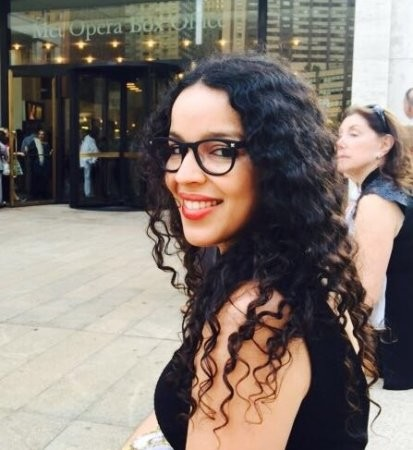
These are the words of our guest this week, mother, writer, scholar and activist: Zineb Mouhyi in her forthcoming book series, on ‘Mothering Liberation’. She defines mothering as the everyday politics – available to all people in all bodies – of tending to life and making every child ours. The book series will be made of three books. The first on mothering ourselves, the second on mothering our children, and the third on mothering the world.
Zineb has been an advocate for social change through education, notably through the charitable organizations she co-founded — YouthxYouth & the Weaving Lab — and through her PhD research on the role of education in the Palestinian liberation struggle. I’ve been privileged to read the early chapters of her books as she is writing them (a courageous act in its own right) and can safely say that this is one of those life-changing works that could move us all to the collective tipping point we need. At a time when the world feels increasingly unstable, making a commitment to the flourishing of all life is central to the way forward.
More from Accidental Gods…
We offer three strands all rooted in the same soil, drawing from the same river: Accidental Gods, Dreaming Awake and the Thrutopia Writing Masterclass.
Our next Open Gathering offered as part of our Accidental Gods Programme is Walking the Path of the Inner Warrior which will run on Sunday 28th June 2026 from 16:00 – 20:00 GMT – details are here. You don’t have to be a member of Accidental Gods – but if you are, all Gatherings are half price.
If you’d like to join us at Accidental Gods, this is the membership where we endeavour to help you to connect fully with the living web of life.
If you’d like to train more deeply in the contemporary shamanic work at Dreaming Awake, you’ll find us here.
If you’d like to explore the recordings from our last Thrutopia Writing Masterclass, the details are here
Manda and Louise both offer one-to-one Mentoring Calls. Manda is fully booked just now, but if you’d like to contact Louise, details are here.
In Conversation
Manda: Hey people, welcome to Accidental Gods. The podcast where we do still believe that another world is possible, and that if we all work together, there is still time to lay the foundations for a future that we would all be proud to leave to the generations that are not yet born. I’m Manda Scott, your host and fellow traveller in this journey into possibility and this week we have a friend returning to the podcast. Zineb Mouhi is a mother, writer, scholar and activist, and now she’s writing an entire book series on mothering liberation. And we need to make it clear that by mothering, she means the everyday practice available to all people in all bodies of tending to life in a way that makes every child ours; every child of every race and every species. When we first spoke to her, way back in episode number 141, it was in her role as co-founder of Youth by Youth, which was one of the most radical approaches to really regenerative education that I had come across. At the same time, she was a PhD student at the California Institute for Integral Studies, and her research was on the role of education in the Palestinian liberation struggle. Since then, she has moved from California to Vancouver and has become a mother. She is still doing her postgraduate work, but she’s put it aside for now to write this book series. And genuinely, what she’s writing is transformative. She’s offering the motivation, agency, direction and empowerment that will lift us through to a world where we actually care about all life.
Manda: We open the podcast with a paragraph from her book, but just before we start, I want to read you another. I have an entire word document of paragraphs that I have pulled out because they are so good, so I want to share with you as much as I can. Here we go: ‘Mothering, the force that tends to life, that centres collective survival over individual accumulation, that insists every child belongs to all of us, is incompatible with empire. But every monster, even the largest and scariest ones, has an Achilles heel. They all have a place in their towering bodies that, when attacked strategically, can bring them down, tumbling to their knees. What is this Empire’s Achilles heel, I wonder? What if it was the power of the love mothers have for our children? All our children. What if that creative, loving, fierce force, had the power to make the worlds we longed for? What if the most revolutionary act we could possibly engage in was how we mothered our children? What if, indeed.’
Manda: People of the podcast, please do welcome mother, writer, activist and scholar, Zineb Mouhi. Welcome to the Accidental Gods podcast. Thank you for coming back to talk to us with details of the new book that you are writing incredibly fast. Tell us first, how are you and where are you on this amazing June morning?
Zineb: Thank you. Well, first, a huge, huge thank you for having me. It’s always a pleasure chatting with you, Manda.
Manda: Likewise.
Zineb: And on this beautiful day, I’m based in Vancouver, in Canada, where I’ve been living for about a year now, with my partner, my two year old toddler who’s about to turn two year old in a couple of days soon, and my dog.
Manda: Happy birthday in a couple of days! Yay. Let’s go back to the book to begin with. Because you have done a very, very brave thing. I genuinely think this is hugely courageous. You gathered a group of readers and you’re sending it out; actually, you’re sending them out now, because it’s now three books, which again, I think is beautiful and brilliant, and we’re reading it as it evolves. And as a fiction writer, I’m 20,000 words into this book, and it’s already evolved to the point where the early bits have just gone; they’re not relevant anymore. They helped me to get to where I am now. So the idea that other people might read it is genuinely terrifying. But you are sending it out and it is deeply inspiring. So fairly early on you say: ‘I have come to believe something that sounds simple and is anything but. If mothering were the axis around which we revolved, we would liberate the world’. Which I think is the essence of these books and the realisation that you had, and what you’re trying to bring into being. So that anyone who wants to, will have access to an astonishingly deep; and the research you’re doing blows my mind. This is why I don’t write non-fiction. I could not face that amount of research, but it’s referenced in great detail. So tell us how this book came to be, because it feels like it’s an energetic process. And you described that also early on.
Zineb: Absolutely. So the story of this book. The first time that I kind of imagined it in my mind’s eye with deep clarity was very recently, it was earlier this year, and it was the week of the last learning festival that I was going to hold to say goodbye to my community. So I had been a co-founder of a youth community, which I care about deeply. And I had been working with youth from all around the world, mostly from the global South, around this idea of transforming education as a way of transforming the world. And after six years of working on it, I decided to step back, because I had a child a few years earlier and I was feeling the sense of as much as I believe in the power of youth, and the importance of working on that, there’s something that is not getting the momentum needed for that deeper transformation to take place. And so it had become clear to me that I needed to step out of this. And initially I wanted to focus on my PhD research, which I’m currently still engaged in.
Manda: Yes. Because for most people that’s a full time job. Doing a PhD is generally for most people, that’s what you do, but you’re also a mother and you were doing youth by youth.
Zineb: And my doctorate degree had been focussed also six years up until then, on the question of what’s the role of education in collective liberation struggles. Particularly looking at the role of education in the Palestinian liberation struggle, because my partner is Palestinian and I have been very engaged with this collective liberation struggle in particular, it animates me. And at the same time, two years in, I had to admit to myself that I was starting to feel a sense of despair, that was getting deeper and deeper. Because doing a lot to try to change the situation without having the sense that the energy you’re putting in is actually leading to actual change can feel very despairing, to say the least. Yes.
Manda: Yeah. Demotivating. Because you lack agency then. Your sense of agency is evaporated.
Zineb: You realise the extent to which these systems accept the unacceptable and the extent to which people are okay at some point or another, when they’ve been numbed enough, to just move away from something that they should never be able to move away from. And so this is kind of like the context within which the idea of this book came, which I was, I think reflecting on all the research that I had done and all the work that I had done with young people. And then I’ll be honest with you, Manda, I had this kind of like, almost like lightning strike moment where I felt like, I don’t know if you felt that before, but the strength of an internal message that also feels outside of yourself. like it’s a deep intuition, but at the same time it doesn’t come from you.
Manda: Yes.
Zineb: And so this is really how I received this book. And I felt like the message was clear and it was, you need to write about mothering and you need to write to mothers. Because after becoming a mother, I realised the power of the love you have for a child. And I saw that as the most potentially transformative force that could be used to actually change the state where things are going. I always say to people this Chinese proverb: if you don’t change where you’re heading, you’ll go there. Like if you don’t change direction, you’ll go where you’re heading. And this is really the sense of if you love your children and I know you love your children more than anything, I need you to realise that you have power to change things. And that if you do not change things right now, what they will inherit is a world that they will not be thriving in. It’s impossible to thrive in a world whose foundation has been hollowed out by modernity. And so really I felt this sense of, I want every mother in the world to understand that they have incredible power. Because they are the ones that are educating the next generation of people. And if we only unplug our children from the system, the system dies.
Zineb: So it’s really the sense that your mothering is like, if we focus on our children, their protection, loving them, we could change the world. And it’s also this idea of imagine if every child was safe and actually lived in a dignified way, then there will be no traumatised adults to traumatise children again. At some point the cycle needs to break. And this sense of motherly love can break the cycle, I feel with my whole body, I feel with my whole heart. I know that this is a truth of the world that can be communicated. So then there’s the whole research and how do you actually make people feel that and go through that change and all that. And those are the books, but the essence is transmitting this message.
Manda: Alrighty. So let’s unpick the how we help that. Let’s take a look at where we’re at. Because as if I’ve understood you correctly, there are aspects of the book where you talk about animism. We’re not just talking about human children, we’re talking about the more than human world as well. And left to themselves everything in the more than human world, the whole maternal structure, is unbroken and beautiful and perfect. And with domesticated animals and the whole of the web of life, we are very good at disrupting that to the point where it’s impossible. So pulling all that back in together so that we’ve got the broader definition of mothers and children. And also, you’re very clear to say you don’t have to have physically given birth to a child to be part of mothering. All of the people alive in the world at the moment are part of creating a landscape of wholeness and healing. That if every child were born and grew knowing themselves to be wholly loved, that’s basically where you’re at, the world would be a different place.
Zineb: To be divine and to come from a divine essence that needs to be respected.
Manda: Okay. Say more about coming from a divine essence.
Zineb: They couldn’t do what they were doing to others is what I feel.
Manda: Yes. So knowing ourselves to be an integral part of the web of life. I meet so many people who actively hate their relations. When indigenous people say these are all our relatives, that doesn’t create the empathy that one might assume. It creates more dissonance because for a lot of people their family of origin was not a safe place to be. And this is leaping ahead a bit to further down in the book. But it seems to me, and I think what I’ve read from you is that those of us who are adult in the world at the moment have possibly the capacity, certainly I think now we have the therapeutic modalities that make it possible. Which even 20 years ago they were barely there; therapy was much more about suppressing the parts we didn’t like, and learning how to survive in a world that wasn’t fit for survival. But now we have the capacity to heal the internal parts that are wounded. And that wounding goes back possibly 10,000 generations. We don’t know. We can’t be sure, but it definitely goes back a long way. Some of it and some of it is brand new in our lifetimes. But we could do the work of healing, and then we can pass on to the generations yet unborn and those newly born a world that is not in and of itself traumatising. First of all, have I paraphrased you accurately. And second, how do you see us doing that?
Zineb: Yes. First, yes, absolutely. I think there’s one thing that I want to kind of emphasise first before going into the how, which is to me, exactly the process of mothering ourselves. The sense that there is an inner child within us, that has been traumatised by the world we’ve witnessed. And by the world we’ve grown in and been hurt by. Even if you have nothing ‘traumatising’ that has happened to you, we live in a world that just witnessing the reality of this world is traumatising. Because the concept of trauma is really the sense of powerlessness to change something that you feel reverberates within your body. And I would say our larger body is the body of the earth, so once we start being able to feel the hurt that is all around us at all times, it can feel quite overwhelming, right? So on the one hand, we want to increase that sense of empathy and sense of bigger self, and on the other, we want to make sure that we do that in a way that is not putting us in a situation of constant trauma. And that’s where, to me, there’s this huge importance of growing up to our responsibility. That’s why I’m saying mother yourself. You need to grow up to take responsibility for the entirety of ‘your situation’, which is the whole of it, you know. So once we start being able to slowly move in terms of our own responsibility, what we take responsibility for, we also have to learn to do the processing that it takes.
Manda: Yes.
Zineb: Which is emotional processing, first of all, because I think our culture has taught us systematically to deny emotions that don’t feel good. So as long as we’re stuck in the sense of individuality and sense of false belief that we can be happy when the world is burning, you know? I want to wake up everyone at some point to say, no, there is no personal career, there is no amount of money, there’s no happiness that is individual. And that’s why I think centring our children matters so much as well. Because it’s saying the consequences of our actions are now becoming increasingly visible. And in coming to this, like the edge of the precipice, I really feel the sense of urgency that if we don’t walk back from the precipice right now, we condemn future generations. And we’ve condemned people today. Like I always want to say, we talk about the end of the world as if it could happen in the future, but for some people the end of the world has come and is there. And for some people, hell is here, you know? So how do we start by centring the people who are feeling the end of the world? And how do we make sure that we do not fall off the precipice and actually take responsibility for the future? Not just think that the future is a given. I feel like there’s so much media that it tries to convince us that this is happening, you can’t do anything about it. I’m like, no, I don’t have to accept your vision of the future, your vision of how AI is going to be used, your vision of climate change, your vision of all these things. The future is what we do and how we get there. And so taking responsibility for that is starting to take responsibility for the very small, and that’s up to the very big, and grow in our capacity little by little. We can grow up. I really believe in that.
Manda: Yes. And I’m not a great fan of integral theory, but the wake up, show up, clean up, grow up feels like not a bad sequence to be going through. And it leans heavily into Bill Plotkin’s idea that our culture, the Western culture is locked in early adolescence. And what we need is to find the path through to late adolescence, adulthood and then elderhood. And only when we’ve got the full spectrum of ourselves, then the elders can help to elder the early adolescence through to adulthood, which is how it should be. And that was broken so long ago, like tens of thousands of years ago. And finding the ways through. How do we find a way through to elderhood?
Zineb: That’s why I’m saying it’s never too late to actually reclaim the process.
Manda: No, no, of course not. Well, one hopes not, because we’re screwed if it’s too late. So let’s assume.
Zineb: Even if our culture doesn’t know how to do that.
Manda: Yeah, exactly. But how would you do it? Because it seems to me, motherhood, if you’re growing into being someone who cares for all our relations, all life, that’s Adulthood at the very least. And then from that emerges elderhood. Because it feels to me when I talk to people, there’s a threshold that we can walk people to. And if we’re not very careful and very gentle, sneaking across that threshold, people become overwhelmed very quickly. It’s very easy to tilt people into denial, deflection, despair, the I can’t do this it’s too big so I’m not even going to try. And that’s not their cognitive self, it’s their limbic self. It’s the parts that have spent a long time practising the reasons why there’s nothing I can do, because we’re being fed that and because it’s safer, and because sometimes I think people don’t want to dare to hope. Because if that hope is crushed again, they feel they can’t handle it. And it sounds like you were at the edge of that level of cynicism and despair and writing this book has refreshed your sense of agency. And a vision of a different future and all of the things that people need to be able to move forward. If we have that sense that, yes, I can make a difference and I can see the difference, the next best step, then people will try it. So how do you offer that sense of agency and empowerment?
Zineb: Mm. I’m going to answer your question, but first I wanted to say something and then I’ll go back to it.
Manda: Go for it. Wherever you want to take it. You don’t even have to answer the question; wherever you take this will be fine.
Zineb: Well, I think this is actually a very important question so I will 100% return back to it. But what I want to say first is kind of like the truth of it is, yes, your efforts will be useless unless… Not useless entirely, because small is all, small is everything and it ripples out no matter what. But it will not get to collective liberation unless we all do it together. So we do have this kind of like prisoner’s dilemma at hand, which is that we are capable of changing the world, but we’re not capable of changing the world on our own. Although what we do, I think even if we were completely alone and doing it on our own, matters tremendously because it’s the essence we are rippling out no matter what. People need to wake up to the fact that unless there is a critical mass, world transformation is not going to happen.
Manda: Oh, I love that you’re saying that.
Zineb: It’s what I’m starting to realise as well. Because definitely I think the moments where I have hope or despair really depends on what I’m doing and what I’m seeing others doing. So hope first of all, comes from your actions, comes from your will, your sense of I’m doing something about the thing that I think is a problem. So you mentioned like I regained hope through the process of this book fully, but it’s not necessarily from knowing something different that I didn’t know before, but it’s because I feel the sense of we need to wake up people to their responsibility and their power today, and the importance of their action. And instead of saying, we need to do that, I want to be able to be part of the people who are doing it. So the fact that I’m doing it gives me…
Manda: Exactly.
Zineb: And I feel like whatever it is that is giving you that sense of despair is perhaps indicating to you the first action that you need to be taking. Because that that will give you that hope back.
Manda: Can you unpack that a little? So have you got any concrete examples of that? What things give people despair that can be flipped into giving them hope? So that becomes something we can hold on to rather than a concept. Does that make sense?
Zineb: It does. It’s funny because there’s many, many, many that come to mind. So it’s more like a flood of them than the lack of them. But perhaps you want to give me something that gives you a little sense of despair, and we can talk about that.
Manda: Well, so for me, changing the food system. Partly because I’ve just come back off the Routes to Regeneration and understanding that mix of that if we regenerate the soil, we get more below soil complexity, then we get more above soil complexity. And then we get all of the nutrient flows that we should get, and then we end up with healthy spinach. Current spinach in industrial systems has 3% of the iron of the spinach that was there when Popeye was eating spinach, because it was good for you. 3%! But if we do proper farming so that the soil web is alive again, instead of creating soil that’s basically an inert growing medium. Then everything begins to be alive again. And then vegans don’t need to take B12 because it’s in their food. You shouldn’t need to take supplements if we’re growing proper food. And then the whole of the biome becomes alive again. We get clean water, clean soil, clean air, which are part of my baselines. Those should not be radical asks, but understanding the routes to getting there gives me a sense of agency. That it’s possible, there are people doing it, there are quite a lot of people doing it. And once you start to talk about it, it becomes blindingly obvious that this is a way forward. Then you just need to work out how do we do it within the capitalist system that wants to make ultra processed foods very, very, very, very cheap and everything else very expensive. How do we create then an economic system that allows people to eat food that’s actually good for them. So that for me would be a really obvious route from I could despair if I just looked at the existing food system and the extent to which it is contaminating the air, the water, the soil. Or we could look at what are the answers and how do we spread them.
Zineb: Exactly. So this is, I think, a perfect example because I know that what you’re doing Manda as a result, is caring about what you’re eating, exploring and researching, learning from what others have done, and seeing that indeed there is a way out of this. So when we take a problem that we feel there’s nothing that we can do about. Okay, we’re getting poisoned, that’s for sure. But once you start getting into the process of how do I stop the poisoning of me and my family and how do I get into community with others who have the similar desire? Then not only are you actually moving in the direction of what you feel is needed, you become the hope that you are seeking. And so that’s really where I want to call people into. Like, there’s always something within us that feels like we can take the next step and the next step and the next step. So actually, this also gives me a chance to go back to the initial question of how do we do this? How do I, through this book, get people to really think about how do we start thinking about mothering liberation at large? Because obviously I’m talking about world change, like world transformation. I’m not talking about reforming current systems. I have lost full faith in the possibility of reform by now. I say that as someone who believed in it very strongly before and worked in the sector of international development and all these things and really did believe in it at some point and got massively disillusioned. So I’m at the point where I do believe.
Manda: Total systemic change, yes.
Zineb: The sense of we need world change. We need to let go of capitalism, let go of patriarchy, let go of the nation state, of imperialism, of institutionalised religions, all what I’m naming as empire. All the systems and structures that make up the empire. But the way I think we can do that, in a way that’s actually very powerful, because we tend to think, oh, I can do a little thing, but it’s not going to change anything and blah, blah, blah; and that maybe goes back to the first sentence you started a conversation with; is by first saying to people, what are you centring your life around at the moment? If you’re honest with yourself, what is the axis of your life? What are you spiralling around? And what you’re spiralling around defines all the ways that you’re going to be moving, eventually. It defines all the ways that you’re going to be making decisions. And I think for a lot of people, what they end up spiralling around is their own identity, their own sense of small story. And I would also say the screens have become the centre of our culture, which immediately needs to change because this is not good for us, not good for our children. And a very intentional way of making sure we’re hypnotised to the situations that we’re living in, because I think we’re fully in this boiling frog metaphor, of the water is going up, up, up, but because we’re getting used to it little by little, we’re never jumping out.
Zineb: So that’s why the first book is really saying, hey, what is your axis? What are you giving your life energy to? And if you gave your life energy to mothering as the centre, mothering I mean here the everyday politics of tending to life, of actually caring for one another. If you put caring for one another at the centre, then yes, you still have to live under empire; I’m not saying all of a sudden you’re out of empire, but the way you treat it is very, very different. Because all of a sudden the job that you have is how you make money to survive within empire. It’s not you’re selling your entire soul, because you want career advancement, you know? And your whole life circumstances stay the same, but your entire perspective changes. And that means that all the decisions you’re going to take from that point on are going to be informed by a different centre.
Manda: Yes, yes.
Zineb: Second point, which is the second book, on the how to, is how you raise your children so that they are not propagandised and educated by the Empire. Because I think the big work that we as adults who have grown up in these systems have to do, is unlearning what we’ve been intentionally taught about ‘the way the world is’. We’ve been made to believe that this is the way things are because this is inevitable, this is how humans are. But this is not how humans are. As an anthropologist and someone who’s done a lot of research on human history and tried to look at human cultures through time, I can tell you one thing that I’m 100% sure of: humans have all the ranges of possibilities. How we decide to show up in cultures is man made, is human made. In our culture and modernity in particular, it is man made.
Manda: It’s a choice.
Zineb: What I really want everyone to understand is we do not have to teach our children that. Stop giving your children to the empire, because the institution of education is made for people to accept and reproduce the empire. So that plug needs to be pulled out. And that doesn’t mean necessarily, that I think for a lot of parents sending their children to school is how they get to work. And so how they get the money to…
Manda: Which is very cunning really, isn’t it? We offer you basically free childcare, which fell apart during the pandemic and people’s lives were not happy. And then you can go off and engage in the whole capital system of extraction, production, destruction, consumption, and teach your kids that they do what they’re told. And when the bell rings, they stand up and they move around and they have very short periods where they’re allowed to actually play a little bit, but not too much. It’s nightmarish. I mean, we talked about this when we talked about youth by youth. And yet how do you see the people around you stepping out of this? Because we can reframe it, absolutely. How do you help busy parents? They’re both at work. They have not got too many other options than sending their kids to school and their kids are being indoctrinated in the empire, the Moloch, the death cult, whatever we call it, at school. How do you help their kids to not end up with some kind of very weird internal split between what school tells me and what home tells me, and I, as a child, don’t know how to match those two inside of myself.
Zineb: A very good question. And indeed, the ultimate goal is for us to have the kind of education where there isn’t a dissonance between, making a servant to the empire and making a liberated child. So ultimately, that is what we’re advocating for. And I also really want to be able to speak to educators and people who are in school systems. And the people within education don’t necessarily hold the values of empire, right?
Manda: I know. We speak to Tim Logan a lot in this podcast, we know this is the case.
Zineb: Exactly. So it’s all the ways that we can actually start to, in my view, claim any space of freedom that we can reclaim. Whether it is in our homes, whether it is a in a specific lesson plan that you have space to talk about different struggles or anything that feels liberatory in nature. And truly, I think the role of parents at the end of the day is to transmit values to their children. So once you have a value of, say, for instance, truth, and you’re in a certain classroom that teaches you something that you know not to be true, then you know that your child is actually going to stand up for that or against that. Or you are gonna know that what they’re being told is not true. If you raise your child to hold the value of care, you’re not going to have a bully at school or a child who accepts other children getting bullied.
Manda: Okay.
Zineb: Yeah. So it’s really this sense of, at the end of the day, unfortunately, even for yourself, even if today you realise all the ways that you need to unlearn the empire within you, because we are still at the early beginning of realising we need to step out of the system. That’s also what gives me hope in some ways, is that I’ve come to realise that we are at the very beginning of this road. And that a lot of other things have been tried in the past, but now we have so much information and so much wisdom at our disposal, if we knew how to use it. And yeah, I think the last and perhaps most important thing I want to say about educating our children, is starting to have the big conversations with them very early. As in, who am I? Why am I here? You’ve arrived on this earth, has anyone ever told you, hey, this is what what the universe is and this is how we can move within it. And this is what your life, your precious, divine, unique life is for. You know? And so I feel like once you start transmitting, once you anchor into the big questions, it’s really hard for external systems to underground you. I think that’s how we anchor our children to a sense of reality that is deeper than their external circumstances.
Manda: How young can you do this? Faith’s got grandchildren aged from 3 to 11. And you’ve got a just about to be three year old. So are you already having those conversations with him?
Zineb: Uh, he’s about to turn two. So no, I’m not having those conversations.
Manda: Oh OK, Sorry
Zineb: The way that I’m having this conversation with him is more through the way I show him how I interact with the world.
Manda: So so you’re modelling it.
Zineb: I think before you speak about it, you model it. When they’re old enough for you to have that conversation, great. I think even in the stories that we choose, we can be very intentional about that very early.
Manda: Yes, quite.
Zineb: And part of book number two is going to be lesson plans for children as young as I think around 6 or 7 and all the way up to the end, like to youth years, about how to have conversations about the big questions. So that’s something I’m actually really, really looking forward to developing, because I’ve been thinking about that for, I would say many years at this point.
Manda: Yes, yes, because education was your thing. Youth by youth was how I got to know you. We’ll have another podcast on that. In the meantime, let’s come back to the first bit of the book. So in the first part of the book, or at least what I understand to be the first part at the moment; I think this is going to end up being about ten books, I don’t think it’s just three. But anyway, you say: ‘this process of transformation and transmutation, this era of great change, requires us to learn to embrace change as a continual process within us and outside of us. It requires us to learn to move through the discomfort of change, the dissonance that comes from holding contradictory truths. The disillusionment of a world that is even more messed up (That’s not quite what you wrote, but we’ll say that) than we could ever have imagined. And the dissolution that comes from letting go fully of a paradigm. Of a way of understanding and being in the world so that something new can be born.’ I loved that bit when I read it. Partly it hooks into Donella Meadows and her 12 levers of change, and the top one is abandon all paradigms. But we’ve got the alliteration of the four D’s and each of them are things that resonate at a bodily level.
Manda: I can feel each of these and you clearly have felt each of these. And so how do you see us moving through these? Ordinary people, we’re hoping that anyone who is a parent will read this. And again, we have to say that mothering is not just women. You said to me once, and I have said it a lot, that patriarchy centres men and matriarchy centres children and anyone can centre their children. So this is about caring. This is about bringing into being, allowing love to flow from one generation to the next and out into the web of life. How do we help people who are probably stressed to the nines, kind of worrying about the fact now that fuel prices are going up several hundred percent so that the fuel companies can make a lot of profit. Food prices are going up. Everything depends on fossil fuels, all the prices are going up. They’re struggling to know how to subsist, and yet they want to do the healing work. So you’ve got a chart of the things that help us and the things that that can push back and the ways that we can move through it. So can we talk through that, starting with discomfort of change?
Zineb: Absolutely. I would love to. And just to preface this by saying here, what I really want people to understand is that we need to get comfortable with change. If we’re saying the world needs to transform, then we have to start transforming ourselves for sure, but just be increasingly okay with change. Because this resistance to change that we have, I think is at the core of why it’s so slow to move from we see things are messed up, to we’re going to do something about it and know that the change is necessary, you know? So yeah, it really starts with getting more and more able to change, personally and as cultures, as societies. That we’re okay transforming over and over until we find the new worlds that we want to live in.
Manda: So I have a question there. Because it seems to me, yes, we have to become comfortable with discomfort. And definitely we have to become comfortable with change. In talking to people I find it helps them if they have a vision of where the change might lead to, because otherwise all of our parts just think everything’s falling apart. You know, the house is falling on my head and catastrophe is happening and I just end up in a foetal position in a corner, sucking my thumb and rocking because I don’t know what to do, because I don’t know where I’m going. And so to what extent have you found… Writing the book has given you a sense of agency, it’s given you a sense of direction. It’s giving you a vision of a future where maternal love flows and that helps to heal the traumas of our time. With the feedback that you’re getting, is that vision giving people the capacity to hold change and stay grounded?
Zineb: Mhm. This is definitely a hope of this book series. That I really want to accompany people through a process of feeling increasingly okay with not knowing. Because this desire of like, tell me what the end state is and then I’ll work for it. And I’m like, yes, but the road appears by walking. And it’s only going to become clear once we do the work. So I can tell you all the ideas I have about how things might look different. I think you know, alternative economics have written so much about the alternative to capitalism. Anarchists have written so much about the alternatives to government, etc., etc., etc. so it’s not like there’s a lack of necessarily ideas of what might be replaced. But if we’re not walking the path, we’re not seeing it.
Manda: We’re not going to get there. But if we’re going to get a critical mass of people, which we both agreed that we need that, we have to give that critical mass who are never going to read Kate Raworth doughnut economics, you know, they’re not going to immerse themselves. We have to give them painting by numbers versions of what the future could look like, so that they can go, okay, that bit, that bit looks good. I can go for that, I think.
Zineb: Exactly. That’s why I went for the idea of a book series. So that it’s like 150 pages of one core idea that is written with the most clarity that I can muster, as someone who’s been working with young people that don’t have English as a first language and who are from the most marginalised communities. So what I’ve been working on for the past decade or so is how do we transmit things that are incredibly complex, that is like PhD level kind of research, in a way that everyone has access to, so that they can implement it in their lives. That’s a big ambition, but I’m seeing this as something that is very possible because the research is there. That’s what frustrates me as a researcher, as a scholar.
Manda: Yeah, the ideas are all out there.
Zineb: I see so much brilliance and I never feel the sense that this is accessible to people, like they know what to do with it.
Manda: Exactly.
Zineb: So the idea here is I really want people, and this is why the four D’s come in, to learn how to deal with change on their own. So I’m happy to go into any of the four D’s or all of the four D’s.
Manda: Let’s start with discomfort. Because becoming comfortable with being uncomfortable, because change leads to discomfort. Lots of other things lead to discomfort. And learning that discomfort is okay, I think, is absolutely crucial and really hard, because so many of our parts think that discomfort is something they have to protect us from.
Zineb: Our parts and our culture. What I would argue is our culture, the culture of modernity, is obsessed with comfort at all costs.
Manda: That’s a good point.
Zineb: And it makes you think that if you have everything that makes your life comfortable and easy, that you’re living a good life.
Manda: Yeah, yeah.
Zineb: But I would argue a life that is devoid of meaning and that doesn’t actually care for what comes after your own life ends, is very short sighted and I think it took a lot of work for the Empire to make this belief. I don’t think it’s an obvious thing that humans want comfort or have lived with comfort as their primary desire.
Manda: Yeah. Right. Okay. So how are you giving people a sense of meaning beyond the comfort?
Zineb: A sense of meaning beyond the comfort? I think it’s really by going into those questions, you know? So the question of how are you centring your life? What are you feeling? In what ways are you avoiding the discomfort of the truths you know to be true? Because in many ways, this book is not making the argument of let me tell you why the world is f***** up. Like I have no interest in telling people that because they’ve been flooded with that information for a long time now. So none of that argument do I want to cover. What I want people to sit with is you know these truths, right? Like, have you seen what reality looks like? Okay, let’s actually breathe together and sit with the discomfort of living in a world where you’re disgusted by some of the things that you find out. And what do you do? Do you numb out and distract yourself? Because now the main coping mechanism that is used to deal with learning about the state of the world is give me my fix, whatever my fix is.
Manda: Yeah, give me my screen and I’ll scroll and whatever. Yeah.
Zineb: My screen, for most people I would argue. But my drug, my little glass of whatever. Like all the ways that you numb yourself to what is going on. And what I’m saying in this moving through discomfort, is how can we actually start to slowly feel safer with truths that are hard to accept? And in a way that we can start to slowly feel safe in our own boundaries, so that we can continuously expand them. I think it’s also a falsity of a lot of people to think I’m going to find my boundaries and I’m going to respect my boundaries all the time. It’s all about my boundaries, boundaries, boundaries. Like boundaries, yes, but expand yourself at all times so that you can take in more. And to me, perhaps this lesson was one that was most important to me this past two years of witnessing a genocide while being a mother.
Manda: Yeah.
Zineb: Because it taught me that in a day I can be sad, angry, happy, joyful, laugh. I can have all the emotions in a day. I am big enough to hold the world, you know, to hold the world that is my child. And to hold the witnessing of the world. I didn’t come to this capacity all at once. At the beginning of the genocide, I didn’t know how to deal with this. I think for many years the movement of just accepting my own emotions was not something that I was taught, that was desirable or safe. And I think the more I came into contact with reality and in many ways the truth of what I was witnessing and letting it be, while at the same time knowing that at the end of the day, I have a child who needs a joyful mother; that’s why I need to be able to transmute all those emotions all the time, in order to become and to be the kind of mom that my child deserves. And I feel like the practice of that showed me how much we’re capable of holding.
Manda: Oh, I just want to sink into that for a moment, because that, that is what you’re talking about. The compassion of mothering and of knowing that you can’t show up for a very small child in a devastated space because that transmits. And so you’re having to do the healing in real time and also having the emotional literacy to not compartmentalise. What you didn’t do was put the trauma of the genocide in a box to be opened when your child had gone to bed. You were able to transmute it in real time, and, I’m guessing, step into a space where we’re not denying that genocide is happening. We’re not denying that. It’s appalling. We’re not denying that we are devastated. And yet we are still finding love for the world and for our child and for everything around us, because these things are not mutually incompatible. That seems to me getting to a place where fear and love are quite hard to hold at the same time. Judgement and celebration are quite hard to hold at the same time. But moving into compassion and celebration helps to reduce the fear and the judgement. These are just things that I’m discovering quietly. And so I’m wondering, in real terms, because your child was conceived in October 2023. And when your partner is Palestinian American, that’s a big thing to have happened.
Zineb: He’s Palestinian, by the way, he’s not American.
Manda: Oh, I thought you once told me he has a passport.
Zineb: We’re still. It limits quite a bit of things around.
Manda: Yes. Oh my goodness. And so you’ve had the whole of your child’s gestation, birth and growing has been in the shadow of a genocide of his people.
Zineb: Yeah.
Manda: Or his father’s people. It ieels like it’s heart alchemy and the crucible is your living body, and the fire is your grief. And you are transmuting that into the flow of I genuinely love you, this small human being that I have brought into the world and into a world that is at times amazing and wonderful and beautiful and at times utterly devastating. What was your practice to be able to do that?
Zineb: Yeah. So that’s actually a very interesting question, the practice, because I feel like I’ve anchored myself in a lot of different intentional practices that I’ve kind of experimented with, in order to feel the sense of groundedness amid what I feel is an emotional, physical tornado. And the one that at the moment I’ve kind of settled on and I’m almost honestly surprised to tell you that Manda, because I definitely didn’t think it was going to happen this way, it is actually fate. I’ve recently joined a Sufi Tarika Tijania. A tarika means a way, you know, like a pathway. And the role of fate has been huge for me. I think perhaps mothers will relate to that, that when you have a child that you feel is so precious, but there’s so many things that you can’t do to protect them, you start wanting to pray. God protect this little being.
Manda: Okay. All right. You want there to be something bigger than you that will take over the roles that you can’t do.
Zineb: And initially, I think it really started with this sense of, I just want to pray over my child. The sense of fear that I have for him, something that might happen to him. And then it started morphing, little by little into the sense of, I might not understand why things are the way they are, but I have faith and trust that there are things that I’m not going to get to see within my own life, but that this pathway is not random. There is nothing that is random in the universe. And the nature of the universe for me is at the heart loving. So I can’t start changing what I think about the nature of the world and the nature of the cosmos that I live in, because of the circumstances that I’m witnessing. So when I anchor back into the sense of miracle, like I always tell to people you need to balance the misery with the miracle. Whenever you’ve consumed or witnessed too much misery, go back into the miracle. Because you never stop being on a spinning planet in an expanding galaxy with sunrises and sunsets, and birds and trees. And those are all always there, wherever you are, no matter what’s happening. And they remind you of the grandeur of creation.
Zineb: It makes you smaller in that in a way that you can be held by something that’s much bigger than you and by a history that’s much longer than you. So I feel the sense of I want to have both unshakeable faith in the loving nature of the creator and the creation, unshakeable faith in me and the divine essence that I am, and unshakeable faith in all the mothers and all the people whose divine essence I see. And I feel that practice has helped me put things in perspective. The last thing that I want to add on this is, I really want to speak to the people of faith, who have this sense of, I believe in a loving God, or whatever it is that you want to call the maker and the creator.
Manda: The Web of Life.
Zineb: I feel like different words work for different people. Without ever taking out your responsibility as a part of God, you know.
Manda: Exactly.
Zineb: So this is where the intersection becomes interesting for me, because it’s not saying, oh, I trust ‘whatever’, I have faith because again, it’s the same notion of hope that we have been talking about earlier. It’s your own will and your own action that can enliven you.
Manda: Mm. This feels like it’s just opening up a whole new set of avenues. And technically we are at the hour. Wow. Okay. Because Dissolution in part of the book that I’ve read is, uh, sorry, faith comes as the best friend of dissolution and Dissolution is the fourth of the four D’s. Very briefly, let’s go down this route because this is also something… Clearly I’m a shamanic practitioner and faith is an integral part of what we do. I tell all the students that we are an evidence based spirituality, but then most spiritualities consider themselves to be that. Unless you are explicitly tied to a book that requires you to think ten impossible things before breakfast, then you are out in the world experiencing the miracles of the world and testing your capacity to become an active agent of whatever is greater than all of us. And that, definitely for me, gives me a completely different sense of perspective in terms of time and space. And at the points where we can step outside time and have a sense of our place in the totality of everything, stepping back into time becomes a very different thing. I’m wondering where I’m going with this as a question. I keep remembering Douglas Adams’s total perspective vortex, which is totally inappropriate, but it just keeps coming back in. Did you ever read The Hitchhiker’s Guide to the Galaxy? Okay, I’ll send you a copy at some point. It’s long and complicated, and I’ll tell you when we’re finished, because it’s probably a British thing. Anyone over a certain age has read Douglas Adams and knows about the total perspective vortex.
Manda: But leaving that aside, I’m wondering where can we usefully go with this? So let’s assume that we both have had an experience of there being whatever we call a greater energetic agency that exists outside space and time, and of which we are an integral part. Does that feel like that’s okay? And so my constant question, if I do my morning ceremony, I offer myself in service to life and invite whatever to share the day. Then the question is, how can I most cleanly and clearly hear and feel what the web needs of me in this moment, now. Because it might be different to what was before, and it is almost certainly different to what comes after. And this is part of, I think, your letting go of paradigms. If I can be comfortable with the uncertainty of not knowing what’s going to be needed of me and it being anything, and yet the faith comes in; whatever is asked of me, I will have the wherewithal to manage that. Because nothing would be asked of me that is impossible. It might feel impossible. There are parts of me that might tell me it’s impossible, but it won’t be actually impossible. And so I’m wondering, first of all, how that lands with you. And second, is it for you, prayer? I think prayer has a lot of different meanings for people. And so I’d like to unpick without becoming uncomfortably personal, but unpick what is it about prayer that helps you to connect into the web of life in a way that has meaning and gives you a sense of agency and direction? Does that make sense as a question?
Zineb: It makes sense as a question. I really love the question, actually, there’s a real beauty to it. And I think you’re right that prayer’s about a lot of different things. I can give you one example of one kind of prayer that I do.
Manda: Please do.
Zineb: Yeah, I’ll mention maybe two practices that have been practices of prayer that I found very helpful. The first one is very simple, and it’s going to a place in nature, usually a river, but a place that I just find beautiful. And sitting there and saying Salam o’alaikum warahmatullah, which is what you usually say at the end of prayer when you pray the five prayers of the day in Islam. You end by saying Assalamualaikum warahmatullah, Assalamualaikum warahmatullah, on both sides. And it means peace be upon you and the grace of God. And the way that I interpret it is when you finish your prayer, you acknowledge that there are many beings around you.
Manda: Ah you’re speaking to the web.
Zineb: You’re speaking to the web. So instead of keeping it in the place where you do the usual prayer, which I do as well, I’ve started doing it little by little now. Which is still quite recent. But the way that I like to apply it is like, how do I make this practice something that I live in the world. And so just by saying ‘peace be upon you, and may the grace of God touch you’ to my environment, it feels like there’s this sense that I’m also starting to understand is huge for education and for children and for communities. How do we greet each other? Do you see the difference between ‘hey’ and ‘salam’, which means peace? Like ‘peace be upon you’ and ‘hey’ are quite different in terms of intention, you know.
Manda: Yes.
Zineb: So that one to me has been very powerful. And the second is called Dikr, which is remembrance. And that one is kind of a chant because there’s a lot of chanting in Sufism generally, and the power of song and understanding the Quran and the entire text as a song, as a music, which we could talk about a lot more, but I know we’re already short on time.
Manda: We’re going to have another podcast, Zineb, that’s the thing.
Zineb: But Dikr is something that you do with something like this, like prayer beads, and then you have mantras.
Manda: Okay. So for people who are not watching the video, that’s quite a long chain of prayer beads.
Zineb: This one is 100. Because Islam finds the number 100 extremely important. And usually in Islam, most prayer beads are either 12 or 100. And so this one is 100 and you choose a mantra. It can be a name of God. It can be a prayer. The one that I like to do is La ilaha illa Allah, which means there is no God but God. And what it really means is the only reality is divine reality. And it reminds me that beyond the busyness of what I feel to be important in any specific day, the underlying reality that I want to pay attention to and increasingly become aware of is the divine reality. So it’s kind of that call that I do every morning and every evening.
Manda: You do it a hundred times. Counting it off.
Zineb: Just chanting it. I love doing it outside, obviously when the weather allows it, but just saying la ilaha illa Allah. Singing it until there’s something inside of me that remembers it, because the practice literally means remembrance and that’s why you need to repeat it, repeat it, repeat it until the words start holding their meaning within you without you necessarily making meaning of it mentally.
Manda: Right. Right. The world over, all of the cultures have mantras that exactly that; you keep going and you keep going until your DNA oscillates to the vibration of that meaning. And then the world opens up.
Zineb: Exactly. And if I can say, I would argue that one thing that I’m slowly learning and finding out is the extent to which the different religions or different, what I would say, big divine revelations that have been offered on earth, and pathways in order to connect to the divine, have been corrupted by institutionalised religion and made irrelevant by false secularism, I would say, in order to move us away from the power of our divine essence. So for me, I see it as a reclaiming to go back to my own religion as someone who hasn’t been that interested in it, up until a year ago. I grew up with a family that didn’t really care if I learned about these things or not. Although my grandparents are professors of religion and all that, but I’ve been thoroughly colonised somewhere in the middle, you know. I’ve lost my ability to learn or speak Arabic properly. I know very little of the Quran. Although I’m steeped in my own culture when I’m there, I wasn’t taught those rituals, culture, songs. All the ways that your culture is important to you have had been taken away from me in many ways, or have devalued them, as someone who went to a French school system in Morocco and explicitly had her culture devalued within it and believed it. So it feels like it’s part of my own reclaiming right now to reclaim my language, to reclaim my belonging to a pathway of people. I think sometimes when I say a verse of the Quran, how all my ancestors have said the same verse across time, for over a millennia. And I’m like, oh, that’s our common tongue. That’s what we’ve been speaking for a long time and how we’ve been honouring the divine.
Manda: Yes.
Zineb: It’s not random that I was born into it, you know. So I feel I’m truly reclaiming. That is my process of decolonisation. And I, in the books will argue quite a bit; what decolonisation actually takes is reconnecting with our ancestors.
Manda: Yes. And how we take away the patriarchy of the monotheist religions and return them to being integrated in the web of life in a way that isn’t schismatic.
Zineb: Yeah. And most spiritual revelations came as saying that they do not need an intermediary. Islam in particular says we don’t need intermediary. And I don’t think Jesus talked about the importance of a church to transmit his message, you know? So for me, we’re not talking about an institution that is in service of the Empire. We’re talking about a spiritual pathway that helps you anchor yourself in a time of chaos and throughout your life, in order to remember what truly matters.
Manda: Right.
Zineb: Quite a bit of a difference, I think.
Manda: Right. Right. And that’s the nature of actual faith. And presumably it also gives you a community of faith. And I am assuming, my experience is, if you get a whole group of people who are in what we might call energetic harmony, they’re praying together or singing together or chanting together, or even just being grounded together, then the whole is much, much greater than the sum of its parts. It seems to me that’s how we get to the critical mass. Because the sense of peace that reverberates out from that touches people who have no understanding and probably never will and don’t have to. But they can still sense the energetic shift.
Zineb: Exactly. And understanding that we’re not creatures just of the mind. We need the prayers. We need the songs. We need dancing together. We need the hugging. We need to not just be on earth; we need one another. And all those rituals are at the centre of human culture from the very beginning of culture. And there’s a reason why that is. So I really feel the sense of if we want to start talking about the new world, maybe we can start having those other ways that we actually really want to be with one another and centre the joy of creating that new world, by doing the songs, the dancing, all the ways that this comes to life. I think it’s so important to not remain abstract when we talk about liberation. There’s the sense of yes, we’re fighting and there are people who are being marginalised and are being attacked now. And we have a responsibility to talk on their behalf and to talk with them and stand in solidarity with them. All of that is true. And the work of liberation is the work of coming back to life, coming back to your ancestors, coming back to the fullness of your being, coming back to your community, coming back to being outside and feeling just a sense of wonder. Because a bird that you know to be a messenger bird has appeared. Like it’s all the ways that we start reading the world in a way that brings wonder and joy and love into it, and makes us want to continue doing the work over and over. Because at that point, it’s not like, oh, we’re fighting to change. No, we’re loving the new world into being. We’re mothering the new world into being.
Manda: Yes, yes. That feels like a really good place to stop. But I do want to highlight that. You said several times in the book that fighting for change: we can’t fight. Fighting is the old paradigm. We have to love the new world into being. And that feels like such a powerful message. And you’re doing it. I think that’s the amazing and wonderful and beautiful thing is you are the living embodiment of loving the new world into being. It’s glorious. Thank you.
Zineb: Thank you so much. It’s a joy doing it. And I just want to be doing it with more people. So that’s why I’m writing the books. Join me. Let’s do this together. Let’s be the critical mass. Let’s be the mothers who love the world that our children will be in.
Manda: Yeah, yeah. Whatever our gender and whatever our parenthood status, we can still love the world into being.
Zineb: Absolutely. And whatever is your creation, whatever it is, your way of tending to life and caring for others is your way of mothering.
Manda: Brilliant. Perfect. Thank you. We will definitely come back for part three soon, and we might be celebrating the first book coming out. We never know. Fantastic.
Zineb: I hope so. I hope so. As we say, inshallah; may it come to me.
Manda: And there we go. That’s it for another week. Enormous thanks to Zineb for all that she is and does. For bringing her words to the world with such courage, and for laying out with such clarity and drive the path through to a world where we care about the life of the world. If you’re listening to this podcast, then I assume that by now we all know at an intellectual level that we have to care about all life, not just our own, or even not just those closest to us, but finding the ways through. Finding the practices that bring that into being so that it becomes part of our DNA again, so that it’s part of the resonance of who we are. That needs real trailblazers to go out and map out the routes and then write them down. This is thrutopian thinking at its best, and definitely Zineb’s book series is right up there at the top of the thrutopian pantheon. We will bring you notice when the first one comes out. In the meantime, and before we head to the credits, I need to tell you about the next Accidental Gods gathering. It’s online on Zoom on the 28th of June, from 4 p.m. to 8 p.m. UK time. And it’s called Walking the Path of the Inner Warrior. It does lead on in a logical way, from honouring fear as your mentor and then falling in love with life.
Manda: However, if you haven’t been to any of the gatherings before, you’re still more than welcome and we will make sure that everything makes sense. You don’t have to be a member of the Accidental Gods membership to come along, although if you are, then it’s half price. So Sunday 28th of June four till eight UK time, which I hope takes in as much of the world as is reasonably possible. And if you don’t want to go to the show notes, go to accidentalgods.life and go to the gatherings tab. Grand.
Manda: All right, so we will be back next week with another conversation. In the meantime, huge thanks to Caro C for the music at the Head and Foot and for this week’s production. Thanks to Lou Mayor for the video, Anne Thomas for the transcripts, faith Tilleray for all of the conversations behind the scenes that keep us moving forward. And as ever, an enormous thanks to you for listening. If you know of anybody else who wants to feel the ways forward to a place where we could genuinely feel good about being human, then please do send them this link. And that’s it for now. See you next week. Thank you and goodbye.
You may also like these recent podcasts

We Need a Victory Story: Mobilising the Silent Majority with Liam Kavanagh of the Climate Majority Project
But what if you knew you were not alone in caring about the crises our planet faces? What if you knew that almost everyone in our culture cares about this, they just don’t know what to do about it? They don’t have what this week’s guest, Dr Liam Kavanagh, calls the ‘Victory Stories’ to show how we made it through.
We Need to Talk about Tech: Exploring AI, fresh Hope…and the power of Song with Nathalie Nahai
How do we shift the dial on the future when so many of those whose fortunes are sunk into Tech, and AI in particular, seem to be steeped in the Dark Triad of psychopathy, sadism and narcissism? Is there any sign of hope amidst all the chaos and the frozen despair that narratives of inevitability foster in us?

Grown Up Politics 2: How can Andy Burnham deliver a future that works? With Rupert Read and Clive Lewis MP
How can we bring power to those with wisdom and wisdom to those with power? Specifically, how can our new Prime Minister deliver a future that repairs the ruptures within our national and international culture in a time frame that works while in the face of biophysical collapse and the onward march of the political wing of predatory capital?

Healthy People, Healthy Planet, Healthy Future with Dr Amanda d’Almeida of Medicine Explained
How do we create healthy people, intimately enmeshed in a healthy biosphere so that, together, we can co-create routes to a healthy future?
Health is such an astonishingly polarised and polarising field, but there are some truly astonishing people out there who are fully on board with the concept that late stage capitalism is at the heart of our ills and that regeneration of our connections is the key to building health in all its senses.

STAY IN TOUCH
For a regular supply of ideas about humanity's next evolutionary step, insights into the thinking behind some of the podcasts, early updates on the guests we'll be having on the show - AND a free Water visualisation that will guide you through a deep immersion in water connection...sign up here.
(NB: This is a free newsletter - it's not joining up to the Membership! That's a nice, subtle pink button on the 'Join Us' page...)