
#332 Sculpting Invisible Materials: Expanding Empathy in the Hot Mess of Now with Dylan McGarry of Empatheatre
“I think empathy is a creative act. It’s imaginal, it’s an art-making practice, where even just listening is creating a picture and a lifeworld of the other inside yourself in order to get closer to each other.”
Dylan McGarry
Empathy is a magical thing. It lets us do more than just step into another’s shoes, it opens the doors for us to step into their heart and soul with the vast generosity of spirit we’d like others to bring to us, wide as the sky, deep as the oceans, so that we can see through their eyes as the best of who they are. Obviously, we can do this with other people, but we can do it too, with whales, with elephants, with horses, and red kites and moles and spiders – and mountains and trees and landscapes… empathy is the spark that connects us to the More than Human world. There are not many people who truly understand this and fewer still who make it their life’s work to open the doors in our souls with such subtlety that we only know afterwards that we’ve stepped beyond the boundaries of who we think we are.
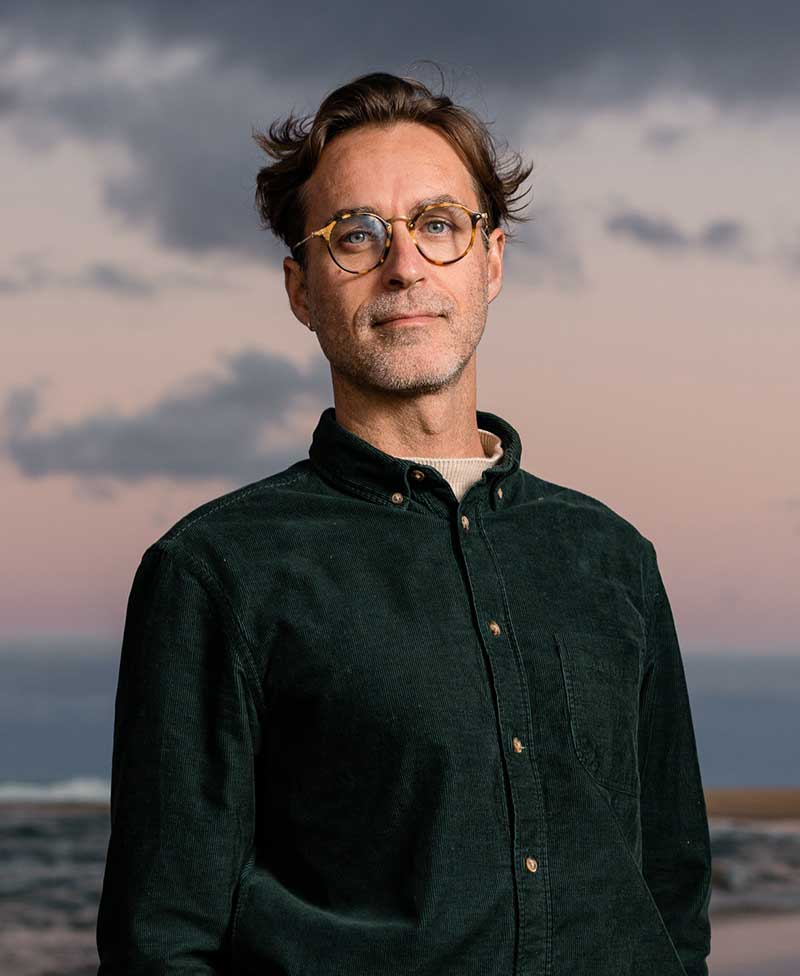
Our guest this week, Dr Dylan McGarry, is one of these people. Dyl works across the fields of Education, Sociology, Ecology, and the Arts. An Educational Sociologist, Cultural Ecologist, multimedia artist, artivist, curator, theatre and filmmaker, Dyl’s work spans disciplines with many tentacles touching the world. Dyl holds a PhD in Environmental Education and Art, as well as degrees in Marine Science, Environmental Science, and Sustainable Rural Development.
As co-founder of Empatheatre, their praxis draws from the power of public storytelling, theatre, film, and animation, as a tool for regenerative community building, proactive justice, active empathy and meaning making. Their artwork and creative practice are particularly focused on empathy, working with imagination, listening and empathy as actual sculptural materials. They are developing pedagogies for empathy, in the context of ecological citizenship, and exploring the sculptural potential of empathy, attentiveness, intuition and learning.
Dyl is an astonishingly prolific, and inspiring pracademic, with a host of published papers in topics that I could easily dive into for years – like hydro-feminism… but it’s the work of Empatheatre that we’re really looking at today. This is a theatre-based approach to transgressive social learning, and an extra-legal alternative to democratising policy change. This in itself is mind-blowing – the plays are developed over months or years in collaboration with the communities affected by the concepts – and then when the play tours, the cast and crew facilitate conversations after each event that turn into tribunals or citizen’s assemblies and the mere fact of having experienced the deep emotions of the play, had a sense of how things land with other people, can open doors that were previously closed. I’ve been searching for longer than this podcast has been live for people who are crafting paradigm shift in ways that are sticky, that will land and last – and this is it.
Dylan says that empathy has three components: Imagination, attentiveness, and intuition. And just hearing this opens whole new ways of being for me, and I hope for you. This was such a heart-filling, generative conversation and I hope you enjoy it as much as I did. People of the podcast, please welcome Dylan McGarry from Empatheatre, and so much more.
Episode #332
More from Accidental Gods…
We offer three strands all rooted in the same soil, drawing from the same river: Accidental Gods, Dreaming Awake and the Thrutopia Writing Masterclass.
Our next Open Gathering offered as part of our Accidental Gods Programme is Falling in Love with Life which will run on Sunday 17th May 2026 from 16:00 – 20:00 GMT – details are here. You don’t have to be a member of Accidental Gods – but if you are, all Gatherings are half price.
If you’d like to join us at Accidental Gods, this is the membership where we endeavour to help you to connect fully with the living web of life.
If you’d like to train more deeply in the contemporary shamanic work at Dreaming Awake, you’ll find us here.
If you’d like to explore the recordings from our last Thrutopia Writing Masterclass, the details are here
Manda and Louise both offer one-to-one Mentoring Calls. Manda is fully booked just now, but if you’d like to contact Louise, details are here.
In Conversation
Dr Dylan McGarry: I wanted to look at how we empathised with the world, and slowly I started realising that empathy was an integral part of it. And how could we sculpt empathy as if it was like a material? And I get that from Joseph Beuys, the social sculptor, where he saw invisible materials between people as a sculptural force. And so I looked at that in my PhD and did all kinds of interventions from puppetry to kind of visual art to storytelling, public storytelling, and looked at how can we take empathy and how can we sculpt and build empathy? Ultimately, I realised it was more than just empathy. It was about building social tissue and how do we make that more robust to respond to the world.
Manda Scott: Hey people. Welcome to Accidental Gods to the podcast where we do still believe that another world is possible and that if we all work together, there is still time to lay the foundations for that future that we would be proud to leave to the generations that come after us. I’m Manda Scott, your host and fellow traveller in this journey into possibility, and this week we’re exploring empathy because empathy is a magical thing. It lets us do so much more than just step into another’s shoes. It opens the doors for us to step into their heart and soul with the vast generosity of spirit we would like others to bring to us – wide as the sky deep as the oceans – so that we can see through their eyes as the best of who they are. And clearly we can do this with other people, but we can do it too with whales, with elephants, with horses and red kites and moles and spiders and mountains and trees and landscapes and oceans. Empathy is the spark that connects us to the More than Human world. There are not that many people who understand this, and fewer still who make it their life’s work to open the doors in our souls with such subtlety that we only know afterwards that we’ve stepped beyond the boundaries of who we think we are. Our guest this week, Dr Dylan McGarry, is one of these people.
Manda Scott: Dyl is an astonishing human being. He works across the fields of education, sociology, ecology and the arts. And I mean many arts. He’s an astonishing fine artist, as well as all of the other things that you will hear about. He’s an educational sociologist, a cultural ecologist, a multimedia artist, activist, curator, theatre and filmmaker. Dyl’s work spans disciplines with very many tentacles touching the whole wide world. They hold a PhD in environmental education and art, as well as degrees in marine science, environmental science, and sustainable rural development.
Manda Scott: I met Dyla last September at the same gathering as I met Jon Young, and we were in a group, Dylan and Jon and I, and honestly, the breadth and scope and depth of his being is astonishing, genuinely and beautiful. A genuinely living example of how we could be if we actually brought the best of ourselves to the table.
Manda Scott: As co-founder of amphitheatre, Dyl’s, Praxis draws from the power of public storytelling, theatre, film and animation, and puppetry as a tool for regenerative community building, proactive justice, active empathy, and meaning making. As you will have gathered, this artwork and creative practice is particularly focussed on empathy, working with imagination, listening, and empathy as actual sculptural materials. Dyl’s developing pedagogies for empathy in the context of ecological citizenship and exploring the sculptural potential of empathy, attentiveness, intuition, and learning. So clearly, they are a polymath, an astonishingly prolific and inspiring practice, and they have a host of published papers and topics that I could easily dive into for years – like hydro feminism – yes, that’s a thing, but it is the work of amphitheatre that we are looking at today.
Manda Scott: This is a theatre-based approach to transgressive social learning and an extralegal alternative to democratising policy change. And this in itself is mind blowing. The plays are developed over months or years, in collaboration with the communities that are affected by the concepts that they focus on. And then when the play tours, the cast and the crew facilitate conversations after each event that turn into tribunals or citizens assemblies or whatever is needed. And the mere fact of having experienced the deep emotions of the play had a sense of how things Land with other people opens doors that were previously closed. I have been searching for longer than this podcast has been live for people who are crafting paradigm shift in ways that are sticky, that will Land and will last. And this is it.
Manda Scott: Dyl says that empathy has three components imagination, attentiveness, and intuition. And even just hearing this opens whole new ways of being for me, and I hope for you. This was such a heart filling, generative conversation, and I really hope you enjoy it as much as I did. So here we go. People of the podcast. Please welcome Doctor Dylan McGarry of amphitheatre and so much more.
Manda Scott: Dylan McGarry, welcome to the Accidental Gods podcast. How are you and where are you on this last day of March? Where did the months go?
Dr Dylan McGarry: Hi, Manda. You’re. I am in Kalk Bay in Cape Town, South Africa, on the tip of Africa. Um, in my home. And I am tired, but very content after a very long and beautiful run of our latest play. And I’ve just got home and it’s so nice to be back with my dog Pearl and my cat Galaxy.
Manda Scott: And you’re on holiday. I have, I have all kinds of envy. I have holiday envy. I have location envy. Every time we talk, you’ve just been surfing?
Dr Dylan McGarry: Yes.
Manda Scott: You live in a really cool place. And actually, it sounds as if South Africa is a super cool place at the moment. We’re going to get into this because maybe what you’re doing is making cool things happen and that that would be wherever you are in the world. So you could probably make Florida into a really cool place. I’m not suggesting Florida is uncool for anybody who lives there. But it does have certain aspects to it that might be slightly less cool. However, just before we started recording, you and I were talking discussing the fact that I draw. Tarot cards. Anybody listening – please don’t feel you have to, but I find it a really useful way of exploring non-logical dimensions and keying into other things. And so for people not on YouTube, I am holding up the card from the Motherpeace deck, spelled P e a c. It’s a round, it’s a circular, lesbian feminist deck from the 80s. It’s the first deck I ever got in 1985, I think. So it’s the deck that I learned with. And this card is the High Priestess, which is number two of the Major Arcana. And this is now the ninth time in two weeks. And I had four days off in the middle where I went to Roots 2 Regeneration. So the ninth time in 11 days that I have drawn this card, which was a little interesting. And there are for those of you who don’t know the characters, tarot, there’s 78 cards in the deck, so the chances of drawing the same one time after time are relatively small.
Manda Scott: And then I have another deck called The Wild Unknown by Kim Krantz, which I really like. I wouldn’t ever use it for a client because it can be a bit unforgiving, but it feels to me like it’s the kind of deck that it’s a trickster deck and it also doesn’t pull its punches. So I was just getting ready to talk to Dylan I shuffled deck this for quite a long time while I’m thinking about things. And then at some point a guide tells me to stop and draw the card. And I did that and I’m holding up the card. And those of you on YouTube will be able to see that it is the High Priestess. So that’s number ten. And I have no idea what the odds are of anybody’s good at calculating odds. You can tell me. And so Dylan and I were talking about the High Priestess, and we were talking about the fact that perhaps it has to do with elderhood and matriarchy and a circle of grandmothers. And what is it that makes a grandmother? Because gendering things doesn’t feel great to me. And Dylan said, we’re talking about matriarchs and elephants in your most recent play. So, Dylan, tell us about this play because it’s getting astounding reviews and it’ll lead us into what you do with plays and puppets and everything else that you want to talk about. Over to you.
Dr Dylan McGarry: Thank you. It was quite interesting because we started talking about matriarchs, and I run a theatre company and NGO with Neil Coppen and Mpume Mthombeni that we started 12 years ago. And we always say that our grandmothers led us into this work together, both from the other side, but also in how they taught us how to tell stories and listen to stories. But we were talking about the play, Isitha Sabantu whis means The Enemy of the People in Zulu. It follows the story of a character that’s inspired by the activism of Fikile Ntshangase, who was a woman in Zululand who was an incredible leader who stood up against a coal mine that was coming for their community. And in South Africa, there’s a long legacy of people being forcibly removed for apartheid, for mining, for capitalism. And that forcible removal is also just stripping people of their heritage, their customary knowledge and their relationship to the land. And one of the biggest, most tragic aspects is people’s have to dig up their graves and move their ancestors and to do that deeply sacrilegious, as you can imagine. And so I stood up against this mine and kind of held a bottle of water also from a community that had gone black from the coal mine near neighbouring coal mine, where they wanted to expand. But this coal mine is also on the border of a national park, the second largest wildlife park in South Africa, Imfolozi reserve, and where there’s elephants and the blasting from the mine. Mining obviously affects elephants deeply and the ultrasonic relationship with the earth. And they listen through their feet, do they?
Manda Scott: Whoa, whoa, hang on a minute. Tell me more about elephants listening through their feet. We’ll come back to this. But they listen through their feet?
Dr Dylan McGarry: Yes. So elephants can hear subsonic sound. And so they can communicate through the earth with each other. Um, across huge distances. I’m not exactly sure the actual distance, but so you can imagine blasting from mining can have a huge impact.
Manda Scott: It would be like deafening them. It would be like those huge ears in their feet. And like what we do with whales when, when people set off underwater explosion. Sorry. Okay. Carry on.
Dr Dylan McGarry: And so in her activism against challenging the coal mine, Fikele was assassinated in 2020. South Africa’s one of has one of the highest rates of assassinations of environmental defenders in the world. So in this play we created a composite character of a woman called Nomsa Dlamini, who is based on testimonies we had gathered from people living in hiding, either through witness protection or just because they’ve had assassination attempts. We listened to their stories and their testimonies and created a play that’s inspired by their stories, but also is a play about kind of patriarchal systems of governance and decision making. And often it’s the women – often grandmothers or elderly women who stand up against these systems at the same time in the same community. There’s a lot of issues around elephants escaping the park, sometimes possibly escaping the noise from the blasting. But elephants also used to roam huge corridors and like they were going almost generational, cyclical journeys across Africa and would garden whole ecosystems. And the Africa we know today, the ecosystems, the biomes were really gardened by elephants, but with the rise of colonialism and putting them in parks and shrinking their territories, they can’t do this ancient work anymore of keeping the landscape alive.
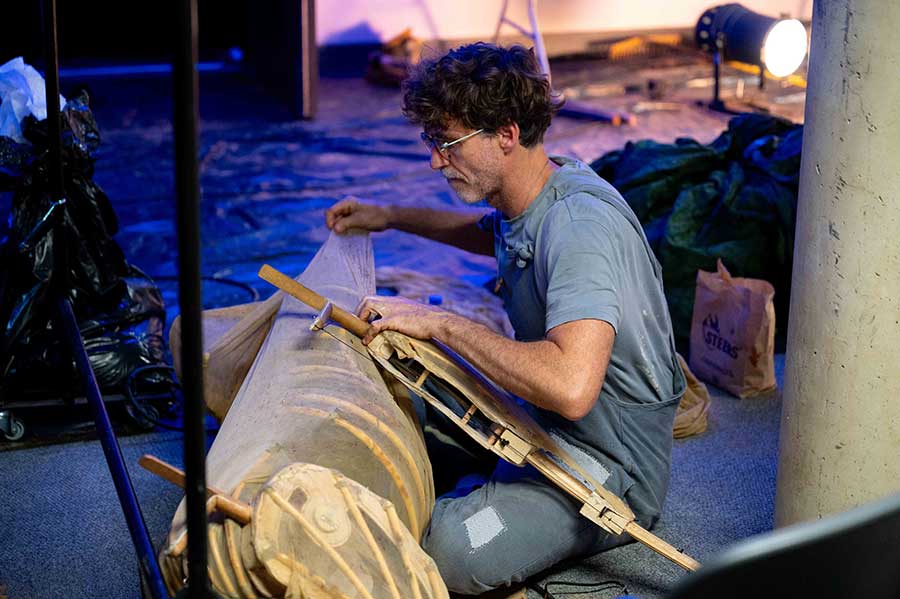
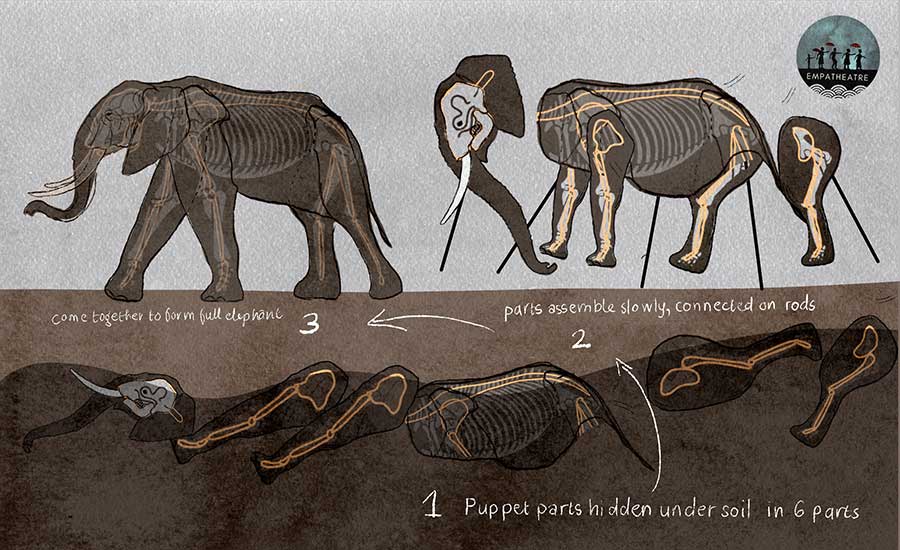
Dr Dylan McGarry: And so they often break down fences to try keep travelling their ancient migratory routes, which leads to elephants being in communities where they shouldn’t be and destroying crops. And sometimes people get hurt. And in kind of what so-called human-elephant conflict. And in that same community, an elephant was killed. And so we saw a lot of commonality between these two stories of two matriarchs trying to protect their land and their families, both being killed by the system. And so we wrote a play and we we loosely created an adaptation of Henrik Ibsen’s ‘Enemy of the People’ as a kind of holding place. And we asked the question like, what would the main character, Doktor Stockmann, do if he had the knowledge of kind of black African feminism. And if he ihad the kind of ancient traditions of Ubuntu and conviviality and convivial leadership that we have in South Africa and in southern Africa? It’s been a five year journey of creating this play, which also has large elephant puppets and a dog puppet and, goat puppets
Manda Scott: And you will send us pictures of those to put on the website because those puppets were outstanding. They’re so alive people, honestly. And you worked with the puppeteer who’d worked on the theatre show of Warhorse. So you worked with someone who had experience doing big puppets?
Dr Dylan McGarry: Yes, we worked with Craig Leo, who worked with that on that project, and also the puppets, and they are South African Puppet Company who are trained by the people who created Handspring. And they also recently did this amazing project called The Herds. If you go look The Herds on on online, where they created a huge herd of puppets, animals across the world and have been touring around the world, taking over places and walking on glaciers and causing traffic jams in New York and London and Kinshasa through this modern human kind of activism through puppetry. They were amazing to work with. I’ve always wanted to work with them.
Manda Scott: So, tell us two things. First of all, just before I started recording, you were saying that elephant matriarchs lead from behind, and I would really like to dive deep into that. So let’s do that. And then I would like to explore what it is you do with this play and plays in general. So just tell me a little bit more about elephants because I can’t hear enough about elephants.
Dr Dylan McGarry: Well, me neither. So what we learned is that in elephant society they’re all matriarchal. And so it’s often led by a lead female, an elderly female, and they they lead from behind. So they ensure that the whole herd is safe before they will move on, but they’re constantly calling and responding with the lead elephant. So they have this combination of staying connected to those who are faster and moving and wanting to make change and wanting to go in certain directions. And they keep that principle of they’re only as fast as their slowest member or the youngest or elderly member. So they lead from behind. And we noticed that it’s very similar to how the kind of humility and the care and the kind of call and response tradition in southern Africa of how grandmothers quietly lead. They have systems like Stokvel in South Africa, which is a form of social banking, which is usually a form of secret economy amongst women in rural South Africa. And they have ways of governance that don’t fit the tradition of patriarchal ‘lead from the front’ kind of governance. And so – not to make a direct comparison between elephants and humans – they’re very different beings and have different cultures and practices – but there were a a lot of synergies between what we learnt from grandmothers and our community and from the women that have the elders who have guided us and what we learned from elephant and try to share that in the play.
Manda Scott: So a number of things are arising for me. I spoke to Zineb Mouhyi recently, who’s a young Moroccan woman who started YouthxYouth, and she said patriarchy centres men while matriarchy centres children and that this is why we need to move back towards a more matrifocal way of being. And I know precious little and it’s embarrassing how little I know about South African culture, but in the not-too-distant past your indigenous peoples had connection with the land and with each other and with the Dreamtime. And I’m sure you’re right. The elephants and people are different. However, I’m equally sure that there would be dreaming between them in an intact Initiation Culture where you have genuine elders and genuine people who are capable of connecting with the web of life, and that there would be learning, passing both ways. And I wonder, it seems to me that a lot of what you do is you spend huge amounts of time touring and talking to people and building stories and getting feedback and creating a process of story creation that is genuinely communal, and even putting on the plays becomes a communal thing. I’d really like to explore that in a minute. I know that you have had some really deep dreams. I’m particularly interested in the the dream of the crystal whale that you had because whales are really big in your life. So you are aware of the Dreamtime. It was one of the things that when we when we met last year that clearly you walk in that liminal space between consensus reality and the dream space. And I’m sure that that’s the case of any genuinely connected tribal people. Have you in your exploring and your communal creation of story come across dream connections between people and elephants or people and anything else in and of the land?
Dr Dylan McGarry: Yes. The first that comes to mind is the elephant itself started speaking to us all in dreams, but first to Neil. So Neil’s my co-founder Empatheatre. He’s the lead dramaturge and incredible genius that Neil and Mpume are just incredible geniuses. I can’t believe I get to work with them, but genius in the sense that they’re also connected and speak to the kind of the muses and the Land. And they both live in Dreamtime themselves. And so when Neil’s grandmother died, he had this very profound dream in which she was in a wheelchair and he had grown up around elephants as a kid – his father had built the park that we were trying to protect, or part of it: he had to help bring down the fences and expand the territory. And he’s quite afraid of elephants: rightly so – they can be quite dangerous. And he dreamt after his grandmother died, that an elephant charged her and she was in a wheelchair, and she stood up out of the wheelchair and walked up to the elephant and calmed it by putting her hand on the elephant’s forehead. And the elephant suddenly softened towards her. And he had this dream over a decade ago, and I actually painted it for him. And he’d always wanted to tell this story. He felt like there was a message from this dream that he wanted to tell. And then later, when we were following the life of Fikile and going into this, we realised we were doing it. And Mpume had a dream of an elephant, an elephant leadership. And we connected to an amazing project called the Wise Meeting the Wise of Grandmothers in Africa and elephants. And it suddenly became clear that we needed to do this work. And when I was mourning my godmother, I was in such a grief state. And she was she was a high priestess. I couldn’t seem to lose the grief. It was just stuck in my body. And I dreamt of an elephant who was grieving her mother. And, you know, elephants grieve by going back to the bones of their ancestors. And that’s part of the ancestral roots as they find the bones of past elephants. And they’ll spend time mourning and their their trunks kind of move across the the body, the skull. And in the dream, this elephant was tenderly touching the eye sockets and the tusk of her grandmother and in the dream I asked the elephant, Can you teach me how to grieve like that? I need to learn how to grieve like that. And sheshowed me. And suddenly before me was my godmother’s skull, who’s possibly one of the most significant people in my life. And I went to try caress the skull like the elephant was like I was mimicking her. And as I put my hand on the skull, the elephant slapped my hand and said, not with your hand. With your forehead.
Manda Scott: Oh, right. Yes, of course.
Dr Dylan McGarry: And so I came down to the skull and I started rubbing her skull with my forehead, and she said she showed me how their trunk goes from the tip of the trunk directly into the third eye. And she said, the third eye is not a not a seeing organ. It’s a feeling organ. It’s not an eye. It’s a it’s a feeling organ.
Manda Scott: It’s a sensing.
Dr Dylan McGarry: Yes, it’s a tactile organ of caressing and holding the world. And what’s so amazing is that nerve runs straight up. Later I looked at it and this is in the play. That nerve runs straight into the brain. It doesn’t go through the spinal column. And even old ancient elephant skulls, dwarf elephants that used to live in the Mediterranean area, actually gave rise to the mythology of Cyclops because the big hole that attaches the nerve and the trunk is right in the middle of the head and it looks like a third eye or a Cyclops. And so in the dream, I learned that I needed to develop ways of tactile grief and somatic grief and be in my body, not in my just in my head. And how important is grief as an iterative project of going back constantly to the bones of our dead. And that became a big theme for us in Empatheatre in that we realised the work of public storytelling and story listening was an iterative project. Our players are never quite finished. We’re always going back to the source of the stories and co-developing and growing plays that are alive and living, and change and grow older and respond to the world as, as beings. And so the Dreamtime has been a really important for the three of us as and in how we, how we also lead and make decisions with the theatre organisation and, and how we also tell stories. And so connecting to dream time is a big part of it. And, and also the kind of shape that we create, how we create a show is that we want the audience to kind of live both in the conscious and subconscious realm. And so we’ll move between those. The kind of magical realist practice of moving between the dream world and the living or the wakeful.
Manda Scott: And you do that consciously. That’s what I find so enthralling. One of the many things I find so enthralling about what you do. Because as a writer, I think I do that instinctively, but I haven’t before articulated it in the way that you do. And you did your entire PhD in this kind of living in the liminal space and sculpting with invisible materials and exploring empathy as an embodied thing and also as a pedagogical thing. Tell us a little bit about how you got to that, because I find that intriguing. You were raised quite a lot by your grandmothers, your godmother was obviously really important and you’ve done it a degree, a master’s, a PhD that seemed to have drawn you to where you are now with empathy. So can you give us the kind of edited highlight of how your thinking evolved?
Dr Dylan McGarry: I was always drawn to artistic practice, but was started as a scientist. So I went to university with a fine arts Scholarship. So I was doing fine arts to meet the scholarship’s requirements. And I loved fine art, but I wanted to work with animals and with nature. And so I became a zoologist and a marine scientist. And then I had a great lecturer who I was really struggling with some of the principles and ethics of science while I was studying it in undergrad and in my honours, I felt like science was a way of going into a room and looking at all the individual parts of a room with a torch, and that arts based practices allowed to sometimes also light a candle in that room. So it wouldn’t have the same definition of preciseness, but you could hold more,of the world in a kind of fuzzy, warm glow. So there was a longing in me to practice with both ways of knowing the world. And so I then went more into sociology and anthropology, and then I was working that.
Dr Dylan McGarry: What really got me to this point is I was working with children in the rural Eastern Cape, and I realised that there was knowledge that was sitting in how they were navigating the world and the ecosystems and the height of HIV Aids and TB crisis in South Africa and child headed households, and that many of them were orphans – was that stories and art was one of the few things that was actually keeping keeping them going and very practical ways as well, and allowing the knowledge to transfer. And so I then did this PhD in environmental education and half environmental education, half in art. And I wanted to look at how we empathised with the world. And my thinking has developed a lot more since then, but that empathy was an integral part of it. And how could we sculpt empathy as if it was like a material? And I get that from Joseph Boyce, the social sculptor, where he saw invisible materials between people as a sculptural force. And so I looked at that in my PhD and did all kinds of interventions from puppetry to kind of visual art to storytelling, public storytelling, and looked at how can we take empathy and how can we sculpt and build empathy?
Dr Dylan McGarry: Ultimately, actually, I realised it was more than just empathy; it was about building social tissue and how do we make that more robust to respond to the world? And just after my PhD, I met Neil and Mpume, and they are both kind of amazing juggernauts as director, dramaturge, writer and performer and also traditional healer, Zulu traditional healer This was deep in dream time. And so Neil, in his own way, has his own approach to healing both using stories as medicine. And then we saw that there were these parts that each three of us could kind of offer a niche in a kind of ecosystem of practice around supporting building social tissue. And our very first play was actually responding to the same community 12 years ago, who was fighting this coal mine. And so what this play we’re doing now is like 12 years later that the struggle continues. We’ve had to iteratively develop a new play to keep up with the demands of predatory capitalism. I love how you describe it as that. And yeah, and so that’s in a nutshell, how we got there.
Manda Scott: I have many questions already arising from that. So: clearly we’re in the breakdown of the old paradigm. It is falling apart around us, and I am guessing that both you and I agree that. And I think there is still a way through. And if humanity were to step into the fullness of our being, we could be amazing co-creators with the web of life taking our place as self-conscious nodes in the web of life. Long term listeners to the podcast can recite that in their sleep, but to do that, we need to build that social tissue. We need to stop seeing ourselves as isolated individuals and learn how to be in community with all parts of ourselves, ourselves, and each other ourselves in the web of life. And that’s hard. I don’t know about you, but certainly in this country, you mentioned the word community, and people start backing away. And yet you live in a land where there are still people who grow and live in community. And it’s perhaps not as toxified, but you still have people trying to dig coal mines that require other people to dig up their ancestors and without care for the elephant. So you’re right there at the cutting edge of the death cult burning itself alive and people trying to rebuild. How do we build social tissue? How do we sculpt social tissue? What are the ways to do that that you are doing? And what ways can you see that we could do in the future?
Dr Dylan McGarry: This is such a generative question and take a long time to answer, but I think.
Manda Scott: We could have another podcast.
Dr Dylan McGarry: Let me try. I think for us building social tissue, we only offer one aspect that we think is really important. And, and that is in a way trying to create Homi Baba’s third space or Rumi’s field, you know, beyond right doing and wrongdoing. There’s a field.
Manda Scott: I will meet you there.
Dr Dylan McGarry: Yeah. And so I think what we’ve learned is that often when people gather and have to make decisions as a community, they’ll arrive with an agenda and they’ll arrive with a set of things that they want to get across. They want people to hear these things. Usually we’ve analysed so many we’ve sat through, I can’t even begin to tell you how many, but we’ve sat through so many kind of community consultations from like mining companies or government, or town halls, you know? And the thing that we realised is that there weren’t any practices that were supporting the reality of the room around listening. How do we listen? We realised ur main work was story listening. So while we create a play that’s an hour and a half long, this play is actually three hours long with the interval, but it’s our little opera in a matchbox. But if you are creating this one product, which is like a play, it actually took five years of listening to get to that point, right? And so what we try to offer an audience is that by the time we’re performing a play, we feel quite confident that we can show everyone’s point of view, whether we agree with it or not in the unfolding of the story. And when we say everyone’s point of view, we also mean the more than human and the ancestors, right? And we also are committed to ensure that we are we are stripping down history and rethinking who got to write it and who got to say this is how it was before.
Dr Dylan McGarry: So these are all kind of principles we follow. But every story or place requires a different use of those principles. So it’s not like a methodology we can just apply the same one each time. But our goal for building social tissue in that room is that our feedback after the play is that I’d never thought of that before, or I’d never actually heard that perspective, or I felt something that I can’t describe, or that one image is going to haunt me forever. And what happens is we we remove the need for everyone to give an agenda, to get their agenda across, right? Because hopefully in that hour, everyone has felt seen or heard in some way. They take on the situation has been expressed. So we suddenly arrive at the end of the show in a new place where most people feel like, okay, I’ve been heard. These people get me. They understand my culture, they understand my context, they understand why I made that decision. I’m not an evil person. I made it because of X, Y, Z. So there’s like a deep disarming of the group collective. And then after each of our shows, we have a post-show dialogue which can become a citizen assembly or a tribunal.
Dr Dylan McGarry: They’ve had different roles and they’ve become different things depending on the. On the people in the room. And then we kind of as responsible participants, not facilitators, we participate in the dialogues have. You know, support this discussion. And we find an amazing generosity that emerges in a collective. And I think the biggest myth we sit with now around trying to build social tissue is that we’re going to move into the the future, all in agreement. And never in human history have we made decisions where everyone agrees. There’s always going to be disagreement. There’s always the the magic is that we’re so diverse in our thinking and our views. But what we do find is that the group becomes a bit more comfortable with holding difference in this third space after the show, and that they can also include emotions. I mean, we performed to the UN, performed at different UN spaces and policy spaces, and we had a UN negotiator from the UK government at the the COP in Egypt. And after our show, which is around the ocean and she said, you know, this is the first time I felt like my soul could show up in this space. And I think it is amazing because it echoed what one of my great teachers and who has taught me is that we need to develop practices and where souls can show up in decision making and the soul can show up in.
Manda Scott: Right.
Dr Dylan McGarry: Yeah. So for us, the storytelling, the building social tissue and the role that storytelling is actually giving resources to a collective around how to listen differently, how to listen to not just the content of what’s being said, but the feeling, the impulse to develop cultural sensitivities, spiritual sensitivities to to let go of their judgement of what is reality according to how you’ve been enculturated and actually start seeing reality is very different for a Sangoma in in Zululand, or for an elephant, or for a child or for Trump. And then to actually just start thinking about all these realities in one place, and we found has been very powerful and the story takes over. It has its own power.
Manda Scott: So we’re teaching people how to listen. We’re teaching people how to become more human. We’re teaching people that we don’t all have to agree. It feels a lot like kind of embodying sociocracy, where it’s not that we all have to agree, it’s that nobody has to disagree to the point where they stop the process, or if they do, they have to bring in a better idea. And so we get to good enough for now, safe enough to try. I was listening to a podcast with you on in which you described a different play, I believe, where a number of people from the community had come, including a chief of police, and he stood up afterwards and went, no, no, no, that’s all wrong. We don’t do that. And someone else, yes, countered him. So can you tell us a little bit about that? And then I want to explore what changes it makes in a community, because if only one person, if the UN woman from the UK comes and her soul has been touched, how does she go back to a group of people whose souls have not been touched and help them to feel ensouled? But tell us about the Chief of police, because that felt really interesting to me.
Dr Dylan McGarry: Yeah. I mean, essentially what the play allowed for that is that there was a scene in the show that the chief of police disagreed with and said, oh, this was a play around street level drug addiction and, and homelessness. And, and the, the chief, the it was actually a woman. She said, our police officers don’t do this. And there was a very brave young person in the audience who stood up in the post-show dialogue and in the Citizen Assembly. He said, actually, I’m sorry, ma’am, this does happen. It happened to me yesterday. And the officer who did it is actually in the audience. But rather than pointing to the officer, pointed to the actors, and it kind of showed the power of the third space, which led to a whole series of conversations after that show side conversations around changing some policies and practices. Right? But I think one of the principles that we found in Empatheatre that really helps is actually comes from Laura Ellingson, a sociologist who who says no innocent position exists. And so we are quite careful in our play not to romanticise innocence or that there’s an innocent position. Everyone is implicated in the co-creation, for better or worse. And how can we have that generosity for all the characters? I mean, even in this recent play, we had to work really hard with the actors sometimes in their performance, because they were kind of tend to this archetype of like an evil leader.
Manda Scott: Coal mine.
Dr Dylan McGarry: Coal mine leader, or in this case, it’s really around how, how a community starts fracturing as the coal mine enters and gives bribes and stuff. And we knew that this person is trying to do what they think is best for the community. We need to remember that they’re not an evil person. This is her brother. You know, he loves her. And I think it keeps that humanity in the room. Or that at least that empathy and that generosity of saying not that everyone should get away with anything. We hold people accountable. I think that’s what we’ve learned in that process is that to be very careful around Romanticising innocence and who’s vulnerable and who has power. And we were very influenced by, um, Paulo Freire’s work of pedagogy of the oppressed, but we realised we also needed to develop pedagogies of for the oppressor. And, and we need to also be. In that case, we realised that play was actually more for the police than it was for the drug users. And we realised that we actually had to work with the oppressor quite carefully and sensitively and tenderly over time to change some of the systems.
Manda Scott: On the basis that you won’t change people if you’re just judging them and telling them they’re bad because they’re defensive parts, will immediately come to the front and then they can’t change. Yeah. You’ve spoken to this already, but I’m still not fully understanding – how do you hold people accountable with generosity of spirit? How does the energy of that work? Let’s go back to coal mines and elephants because no one’s innocent. But the elephants are pretty darned innocent, as far as I can tell. They’re not the ones putting up fences and changing the Land and exploding underground so that it deafens their feet.
Dr Dylan McGarry: I mean, one of the biggest things that we’ve that that has really helped is really interrogating how did we get here and how did this power dynamic happen? Because often what happens is you have a person in power who’s making decisions and they’re following the rule of law, but they’ve never been taught how. Or actually interrogated. How did that law come about or how did that.
Manda Scott: Well quite.
Dr Dylan McGarry: System. Yeah.
Manda Scott: Yes. Whose interest is it serving? Because it’s generally not the people on the Land. That’s the point of patriarchy and the death cult and capitalism as it serves the people at the top who often live in another country and do not give an expletive deleted for the people on the land. And they’re not even there.
Dr Dylan McGarry: So I think a big part of our work is interrogating history and who got to write it? And what is the narrative that brought us that keeps this system in power? Then we try to see if we can deconstruct that narrative, right? So what that does is it allows us to show like, yes, we understand that how you’re practising this system or how you’re making decisions or are driving this story is how why you think it’s right. But just understand that from many people’s perspectives, this is part of the story that hasn’t been told. And in many of our plays, a lot of the work ends up being that of actually deconstructing history and saying that history is written by the,
Manda Scott: The winners.
Dr Dylan McGarry: The winners. Or the presses. And so that becomes a big part of it. The other is satire and pathos and humour. These things, they, they magic, like a satire is a very powerful weapon in this process. Okay. If you get people to also laugh at themselves and to actually see some of the kind of absurdity of the, the reality. So in this recent play, we, we took all those almost ten years worth of research of, of ethnographies, of a community consultation process. And there’s a very satirical, almost absurdist scene of how a community is consulted around their land or mine or an area.
Manda Scott: And this is Consultation where the outcome is already decided, and we’re just going to pretend to talk to you and we don’t actually care what you say.
Dr Dylan McGarry: Yeah. And so we broke that down and we made it really funny. It’s kind of quite a relief scene, but it’s there’s a dark twist to that whole scene. And it ends with on a deep level of a deep emotional pathos where the lead character is able to kind of turn it all upside down with just a few phrases that makes the whole room think, yeah, everything we’ve just done for the last 15 minutes in that scene is like worthless until we answer this question. And so we find that’s very powerful that we can see what happens is the place sits with people, it haunts them. And, you know, we, we hear years later from people like, I couldn’t stop thinking about this one scene. There was a mining executive who actually came to this show and who was my aunt’s neighbour. And he didn’t know what he was coming to watch. And she’s been like carefully building, we call it political acupuncture, building an audience to come and watch the show. Okay. He said that he had never realised the true impact of what he’d been doing. He had been kept in such a bubble and how the system operated, right? I didn’t feel like that was completely true. Like, surely you would know that this is what mining does to communities.
Dr Dylan McGarry: But I think the breadth and the depth of it really sat with them. And he said to us what can I do to help? I need to. You know, he was genuinely moved. And we’ve seen that in many different ways. And I think what happens is when you suspend the kind of history of activism is and this is a wonderful critique of activism and why he calls us for a post activism is that activism often does create a kind of natural binary against a system, so it can often fall prey to building other kinds of stereotypes of the other. And I think what we’re trying to do often is to try really to be with the other and, and kind of deconstructing the other a little bit and play with that demonstrative in many ways. It also tries to call people into a space where we know we’re not going to agree, but can we at least try to understand each other a little bit better? And we found it doesn’t happen overnight. I mean, our plays have run for six, seven, eight years. And over those eight years they’ve created change. But they’ve been slow and steady and iterative.
Manda Scott: Okay. Because that person, the coal mining executive who really now genuinely has that embodied sense of empathy and, and has had the social sculpting sculpted on them. They have to go back to work with other people who haven’t had that experience and somehow changed the ethos and the practice and the culture of an entire system where everybody has been blinded, wilfully or not. So one question is, has coal mining stopped in South Africa? I guess not yet. But you did have one of your plays became evidence in a court of law. Do you want to tell us a little bit? Because it did actually change the nature of the law.
Dr Dylan McGarry: Yeah. And this could be also a good segue to the whale work.
Manda Scott: But that was my next thing on my pad is whales exclamation mark. Yes.
Dr Dylan McGarry: Yes. So we over a course of about six years, we created a play called Listening to People Along the Coastline. And one of the biggest things we found was that our colleague Kyra Owen, a sociologist, had seen that like legal systems would would do it like Shell, like in this case, it was the oil company Shell versus the People, right? And it would make a weird binary of saying as if the people as one homogenous group. But we realised that the reasons why people didn’t want the deep sea to be mined were very different and culturally sensitive and complex. And so over these years, we we listened to ethnographies of all kinds of people, from healers and surfers and government officials and scientists and so on, and created this play that then toured up and down the coastline. And from that we surfaced on our first tour. We surfaced like 800 lengthy testimonies that we could submit into legal process.
Manda Scott: How long was your tour? Dylan? What sort of period did you go over?
Dr Dylan McGarry: About a year. We did three areas, like three regions. I can’t remember how many shows we did, but obviously after each shows there’s a citizen assembly and then from there testimonies come out and we were able to surface those work with lawyers from Natural Justice and Centre for Environmental Rights and the Legal Resource Centre, these NGOs of lawyers protecting and supporting small scale fishers. And then in that process, we also discovered intangible heritage. So the spiritual reason why people didn’t want the sea to be mined. And for many Bantu speaking communities and Nguni descendant peoples, the deep sea is where the ancestors go after death, and this would be the equivalent of mining heaven. But how would we then argue in court that their ancestors in the sea, the court, because it’s built on this Western idea of what counts as evidence and has very particular evidence hierarchies? How could we we subvert that? And there is some heritage lore you could use, but we realised that if we shared the play script with the annotated research and we made a short film called The Soul’s Journey, which we worked in call and response with different customary rights holders and knowledge holders and scientists who will be able to create a kind of cultural artefact, in this case a film and a play that could count as evidence and could be submitted alongside the very rich testimonies of small scale fishers and cost customary rights holders and the play. And then this went to court, and there was a judgement in favour of the communities and Shell lost a huge amount of money. It made global news. And it’s not to say that our play and our evidence is what saved that that court case.
Manda Scott: But it will have made a difference.
Dr Dylan McGarry: It did make a difference. And what I’ve researched and I’ve interviewed judges around judicial reasoning is what impact would you think? Because I couldn’t interview the actual judge,judge Bloom, who for the first time in his judgement, recognises the ancestors that Ahmad Lozi in the sea and says it’s not the place of this court whether to decide if there’s ancestors in the sea or not. But it is the place of this court to protect the sea. If for the majority of South Africans it is a sacred site, it can’t be mined. And so you see a kind of ways in which narrative and story and and building, working in collaboration with artists to build new artefacts can actually become new legal objects in this imagined project that is law. I mean, law is an imaginary thing that was handed down by white ancestors, colonial white ancestors. But it can also be reimagined. And so we realised that through our amphitheatre work and building artist collectives, we could build new kinds of evidences that could be in support of intangible heritage. So this was the first time art was used as evidence, as proxy to intangible evidence in South African court.
Manda Scott: So exciting.
Dr Dylan McGarry: Yeah. And now this play that we’ve just done tomorrow we’re submitting with some human rights lawyers. The testimonies from these citizen assemblies, from this play to the African People’s Court to develop new. So the play script is also being submitted as evidence for new protections for environmental defenders.
Manda Scott: Right.
Dr Dylan McGarry: So yeah, that’s been one of the ways in which we’ve also engaged. So one is building social tissue and the other is challenging and reimagining kind of legal process and kind of taking a legal anthropology approach to changing decision making and policy.
Manda Scott: Thank you. All right. So again, there’s so many ways we could go. I’m really interested in narrative and narrative change. But before we get there, there was a recent article that went around on Facebook that I have not actually managed to find anything beneath it saying that some Swedish company had broken through communicating with whales. And I think indigenous people have been communicating with whales for millennia. Why are we trying to do it with AI? That’s probably a whole other conversation. But you’re deeply involved with whales. You’ve got that beautiful image of a whale as your Instagram header and and Dylan underscore whale is your Instagram tag. I’m sure people will find you. I don’t do Instagram, but it looks gorgeous. Tell me about your connection with whales and then how that’s expanding into the wider world.
Dr Dylan McGarry: My personal connection with whales – I never really recovered from the story of Jonah. I wanted to be Jonah. I found it so deeply fascinating to live inside a whale, and I think I was swallowed by a whale very young. And I came out completely transformed a real quick hero’s journey moment with that one story as a child. And I’ve been kind of connected with whales. They’re the biggest protagonist in all my dreams.
Manda Scott: Oh, interesting. And you live right next to the sea, which has a lot of whales in it.
Dr Dylan McGarry: Yes. And this bone behind me is a whale bone that I found of a.
Manda Scott: Oh, it’s a vertebra.
Dr Dylan McGarry: Yeah. And it’s whale. That’s it’s rib. But there’s a whole story behind that of this is actually one of my teachers and this individual whale has come to me in many ways, and it is connected to that dream with the the whale with the diamond heart. I was with an elder who we found this whale bone and he confirmed that this was the actual whale that had been coming to me in my dream since a child. And we found this intact skeleton on on the East Coast. And, you know, this is like part of my altar. And I asked questions to her and I think with her all the time. And for the longest period, I’ve been working on a book called Whale Fall, which is thinking about how whale the modern world we’ve inherited, for better or worse, was built off the bodies of whales and of enslaved peoples. And so everything from the legal system we have today was in very much created because of whales and how we used whale bodies and boats, economies with whales and the modern or the slavery of the Mid-Atlantic Passage was also built from the fuel of whales, and in many senses of the whaling industry and slavery were deeply interconnected. The modern economics of our time has been built around the whaling industry and cosmetics chemistry, and if you think about it, the enlightenment, the lamps that were literally lighting the desks of Darwin and Hegel and all those old white dudes who kind of created the systems that we believe now, from science to economics to politics, were literally lit by the fat of whales and street lamps.
Dr Dylan McGarry: Modern windows. Before we could mass produce glass, we made an acetate from boiling down the cartilage of whales. So architecture was built from the bodies of whales. Fashion. So in ecosystems, when a whale dies, its body sinks to the sea floor and it becomes an ecosystem. For up to 100 years, if not longer, for centuries. And they have this deep humility of offering themselves to the world. And somehow, as it’s worked out, humanity as we know it today, the modern project is Whale Fall. We are living in whale fall. The building I live in, the computer I use, the cell phone. The clothes I wear are can be traced to systems that were developed by the genocide of whales and of people. Many others have thought about this, like Alexis Pauline Gumbs and other great black feminist thinkers. But I wanted to explore this alongside where we’re sitting now with the whale language project because like you say, there’s a lot of blind spots in how we are narrating this moment where in a couple of years, we’ll be speaking in inverted commas in a dialect of of whalish, of a sperm whale in the Dominican Republic. And incredible people like César Rodriguez from the Moth Project and the project SETI have realised that these need protections, that the future conversation with whales need legal protections, ethical protections. And while they’ve done this extraordinary work of building safeguarding principles with moral philosophers and lawyers of how do we safeguard the future conversation with whales that might use AI? What are the blind spots we’re not thinking about in this future conversation? And so this play and this amphitheatre project and the book is aiming to kind of democratise that question.
Dr Dylan McGarry: So we want to we’re creating a play that is imagining this future scenario. It’s set partly in the future and deep in the deep past, geological and historical. And it explores the role that whales have played in our society. And the goal at the end of the show is to have citizen assemblies in which a collective can really grapple with what should be the protections in this future conversation with whales so that a child, a spiritual leader, a grandmother, a teacher, a lawyer, an economist…they all have an option to contribute to these protections, right? And especially in indigenous elder who currently and has comes from a lineage of speaking to whales, like people we’ve met that they have a say in shaping that. So I’ve been interviewing lots of people around this, and this play will come out next year and hopefully we’ll tour globally. And also have other ways of engaging with it online where people can participate and we’ve made it even a survey in the building of this play to democratise the writing of it so that people can also like if you were to ask a question to the whale, what would it be? And if you need, if you could imagine how to protect them. Protect these conversations, like from the militarisation of whale culture.
Manda Scott: Oh, quite. Yes. The takeover.
Dr Dylan McGarry: Has happened. Yeah. And AI is deeply involved in military. Now we can see. And so what’s protecting whales from becoming future spies for. Yeah. Uh, kind of geopolitics or.
Manda Scott: I used to train with a guy who trained wild, caught dolphins to place mines on enemy ships. People will do very, very bizarre things. And we’re not even… I don’t want to be anthropocentric, but I’m noticing around the world that we don’t protect other humans. What are the chances we’re going to protect other species? I was listening to Asa Raskin, who is part of the SETI project, and I’m sure he’s got huge integrity. And yet he was describing the fact that somebody found an uncontacted tribe in the Amazon. They still exist, apparently, and gave them all Skylink phones. And within a month they were starving because the hunters were also developing orthopaedic spinal curvature because they’re hunched over their phones. And this was proof that it wasn’t our culture that was bad. It was the phones that were bad. And I think things that I can’t say on this because it’s a family podcast, you’re doing actual what to whom and if you’ll do that to people.
Dr Dylan McGarry: Yeah.
Manda Scott: You really don’t care an expletive deleted multiple times for human beings such that you will destroy their culture to see what happens. How are we going to protect the whales and the whales seem to me they’re going to have an intelligence that far outreaches ours. They don’t create capitalism. They didn’t create work. They don’t get up in the morning and go and do something that they hate in order to come back and, and then veg out in front of a small screen. They live in a world that is beautiful unless humanity makes it not beautiful. How are we going to protect it? What’s even with where you’ve got now? What is coming out of this that gives you hope that we could grow up enough? Because this seems to me we started with elder matriarchs and elephants and. Leaving aside the gendering issue, we just need to grow up. Indigenous communities have genuine elders, and we just have old people who behave like toddlers and it’s the toddler behaviour that will wreck things. How are we going to get humanity to grow up at scale and in time? And everything that you do feels to me like it’s part of an engagement into growing process, taking part in a citizens assembly, feeling your soul for the first time, feeling the embededness of being part of seeing all of the perspectives helps people to step out of that need to protect the the wounded parts into a more healed and whole part. And my great hope is that that whatever you’re doing has a ripple effect that spreads and amplifies and reaches the whole world. Are you seeing this happening? Are you feeling it happening?
Dr Dylan McGarry: Definitely.
Manda Scott: Thank you. You made my morning.
Dr Dylan McGarry: I’m feeling I’m very optimistic. I mean, I’m generally optimistic person, but I really am optimistic in the sense that the thing about humans and, and to go to your point around, we don’t treat humans with their basic rights. We see so many rights violations from what’s happening in Palestine and Congo and now in Iran and all over. Is that how can a rights based approach, you know, the big critique on the more than human rights work or nature based right’s is. How can giving nature right’s work. Because we’re not even protecting people. But I think I learned a lot from Cormac Cullinan. He’s a lawyer, environmental lawyer and philosopher, wrote Wild Law, and he’s one of my mentors. And he, he makes a very clear distinction that doing this rights-based work and rethinking law with the more than human world is actually less about law, and it’s more about massive paradigm shifting practice, right? And what we really need is what you talk about a lot about the power of your term Thrutopia is we need new paradigms, we need new stories in order to move us a step forward. And what I’ve noticed, and when a river gets rights in New Zealand or that cloud forest that I was working with, where Cosmo Sheldrake had it recognised as a legal artist in a collaboration, right, is these are paradigm shifting practices. And if we can start really thinking in different ways. I have a huge amount of optimism, and I think what I’m excited about the Whale project, although it’s about whales and it’s about the whale Land project, that’s the context. The real practice of this is paradigm shifting work around one of our most ambitious projects yet, which is trying to think about massive rethinking about our place in the world of things and in the family of things, and kind of rethinking our genealogy that our cultural system that we think is so human was actually made with dogs and whales and.
Manda Scott: Horses and cats and.
Dr Dylan McGarry: Horses. And yeah, I mean, we’ve got another play about baboons, which just shows how the, you know, we wouldn’t have heart transplant and modern medicine without the baboons here on these mountains where I live that Christian Barnard tested.
Manda Scott: Because surgeons think it’s okay to work with monkeys when you can’t work with people, which is in itself obscene, but still.
Dr Dylan McGarry: So it’s really the optimism is the work of, of public storytelling, collective public storytelling practice and how it can shift paradigms and kind of things. We’ve, we’ve thought were laws of like laws of physics, like, as if economics and politics were they were built at the same time. Um, the, the law of gravity was discovered. So then they just, they were competing at the time to try. Oh, my research is more important. This is the law of economics.
Manda Scott: Yes. It’s a science, just like physics is. And it’s not. It’s a bunch of ideas clouded with numbers. Yeah.
Dr Dylan McGarry: It’s a narrative. It’s a story and can retell those stories. Yeah.
Manda Scott: Dylan, we are way over time. I could talk to you for years, genuinely. I would love to come back and talk again. But for now, first of all, how can people find you? And second, is there anything else that you wanted to say to people before we bring this to a close?
Dr Dylan McGarry: Yes, they can find us on Empatheatre. So it’s empathy. So empathy theatre.
Manda Scott: It’ll be in the show notes.
Dr Dylan McGarry: Okay. And then my website is Dylan whale.com or Dylanworld.org. Dylan.com, I think.
Manda Scott: I’ll find it. It’ll be in the show notes, yes. Okay. Can we see your plays? Are they online? Can we find them?
Dr Dylan McGarry: Yes they are. There’s we have a YouTube channel, Empatheatre, and there’s some documentaries about the play and actually Earth Agency, an amazing filmmaker NGO is making a documentary about this play just made. And that will come out hopefully in not too long time. And we are releasing different snippets of it.
Manda Scott: Which you will send to me whenever they come out, and I will put them in the show notes retrospectively so people can find them.
Dr Dylan McGarry: But yes, our YouTube channel has a lot of resources to to go through.
Manda Scott: Fantastic.
Dr Dylan McGarry: And then I suppose what I would love to share with people would be to spend as much time telling stories as well as listening to stories, if not more time listening. And I think that’s been one of the biggest principles we’ve learned is the power of listening and listening to not just the content of what’s being said, but the feeling.
Manda Scott: And taking part in citizens assemblies, because it seems to me the agency that that gives that capacity to hear and be heard will shift our sense of agency in the whole world. And once we have that sense, we can be a genetic beings. Most people want to be compassionate, empathic, genetic beings if they feel they’ve got the scope to be so.
Dr Dylan McGarry: Yeah.
Manda Scott: Fantastic. Dylan, everything you’re doing is awesome. You make me want to move to South Africa tomorrow. I’m so grateful. Thank you so much for coming onto the podcast and definitely we’ll talk again.
Dr Dylan McGarry: So much love. Thank you.
Manda Scott: And there we go. That’s it for another week. Wasn’t that amazing? We are definitely going to have to come back for a second conversation apart from anything else Dyl and I carried on the conversation after I’d hit the end of recording, and we had probably at least two other podcast routes we could have gone down that we explored in that space and time, because this is the way forward. It feels to me I have put a whole bunch of links into the show notes to the Empatheatre YouTube channel. I highly encourage you to go there and explore. We need to let go of our narrow boundaries. We need to widen our boundaries as wide as they can possibly be. And it genuinely feels to me that that all of the work that Dyl is doing on the science of empathy, on the nature of empathy, on the art and practice of how do we help people who perhaps hold to deeply fixed positions to soften? How do we all soften? How do we do the inner work that takes us to being elders, to being who we need to be, to being what the world needs of us? And this is such a gentle, generous, generative way in. It’s entertaining at times. It’s deeply funny. At other times it’s deeply, deeply sad.
Manda Scott: But it’s moving. And it leads us into the ways that the current system is not fit for purpose, while at the same time opening the doors to how we can become something different. So go explore. If you do nothing else this week, go and have a look at Dylan’s website and then sit back and watch half a dozen of the amphitheatre YouTubes. They’re amazing, and I sincerely hope that we will be able to top up with other things as they arrive. So there we go. That’s it for this week. We will be back next week with another conversation. In the meantime, thanks to Caro C for the music at the head and foot and for this week’s production. Thanks to Lou Mayor for doing the video the day before she moved house. Lou, you are standing and astonishing and thank you. I did the transcript this week because Anne’s got new family, which is also wonderful. And Faith wrestled with everything else and made it all move and kept the chaos under control. It has been a seriously chaotic week here on the farm. By the time you listen to this, we might not have ditches all over the place so that we fall into them as we walk out of the front door. That would be good. It’s been grand. If you’re listening to this and you’re involved in making the ditches, I completely see why they need to be there.
Manda Scott: I’ll just be very, very glad when they’re all filled in. So there we go. It’s been a changeable week, but at the beginning of it, I had an idea for a new book. So I’m an extremely happy bunny, right? Where are we? I have not yet thanked all of you for being there, for listening, for giving us your time and your attention, and perhaps your empathy and your intuition. Definitely your attentiveness. We’re still number one in the nature section in Barbados. I have no idea what you’re all doing there, but I am very grateful and enormously grateful still to those who are posting reviews on Apple. Thank you. And since this is becoming quite a long outro, also, thank you to those who came to the gathering a couple of weeks ago. That was really inspiring to see so many of you. The next one is Falling in Love with Life, which I sincerely hope needs no further explanation. But if you would like further explanation, there is a link in the show notes. It’s on the 17th of May, 4:00 till 8:00 UK time on Zoom. And that’s it. Thank you for being there. See you next week. Take care and goodbye.
You may also like these recent podcasts

Towards the Symbiocene: Building an Eco-Civilisation with thought-leader, Jeremy Lent
Jeremy Lent is a long time friend of the podcast. His new book, ‘Ecocivilization: Making a World That Works for All’ is coming out at the end of April 2026 and so we got together to discuss what an Ecocivilisation is, why we so badly need to become one, and how we might get there.
The Joy of Becoming Lost: Maps, Myths and Navigating the meta-crisis with Sam Crosby of Recalling Fire
We are a storied species – we live and breathe and love and learn by the rich tapestry of stories that shape our lives. Everything we do from picking a career to moving house, from finding our life’s co-creator(s) to choosing what to have for lunch is underpinned by stories of who we are and how the world works. Often, we take these stories so much for granted that we don’t even recognise they are stories – we genuinely believe the world works like this…

Pull from the heart, don’t push from the head: Spreading Stories that Work with Matt Golding of Antidote
How do we create stories powerful enough, moving enough, inspiring enough – and grounded enough – to shift the trajectory of our culture onto a totally new pathway?
Open Mind, Open Heart: Evolving the nature of Eldering with Alain Gauthier of the Regenerative Elder Process
In a culture where age is, at best, ignored, how do we rebuild a cohort of genuine Elders fit for the rapid transitions of the 21st Century: those who can combine the wisdom of wide boundary perspectives with the humility that allows flexibility of thinking, feeling and being?
STAY IN TOUCH
For a regular supply of ideas about humanity's next evolutionary step, insights into the thinking behind some of the podcasts, early updates on the guests we'll be having on the show - AND a free Water visualisation that will guide you through a deep immersion in water connection...sign up here.
(NB: This is a free newsletter - it's not joining up to the Membership! That's a nice, subtle pink button on the 'Join Us' page...)