
#319 Seeing Round Corners: Upgrading Democracy with Suzette Masters and Dr John Izzo
If we ever had a genuine democracy (and I would argue we never have) then it is clearly disintegrating now, along with the entire system with which it was entwined. Everyone agrees we need something new, what we don’t necessarily agree on across the board is the design of this new thing. This week’s guests are two people who spend their lives imagining how things might be different, particularly in the US, where even the pretence of democracy has been abandoned.
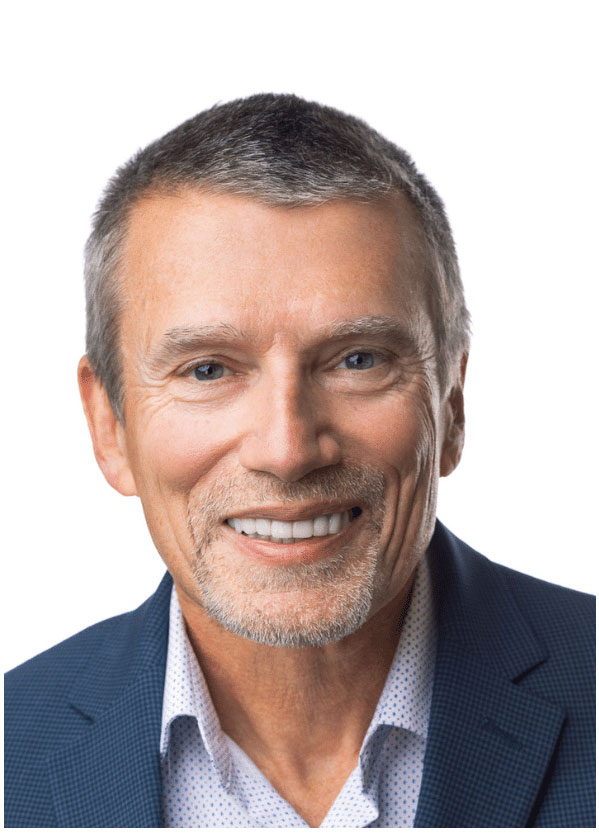
Dr John Izzo is a friend of the podcast. Once an ordained Minister in a Presbyterian Church, he’s now a bestselling author, speaker, and thought leader focused on social responsibility and intergenerational integration. He’s a a Distinguished Fellow at The Stimson Center in Washington DC, and a Board Member of the Elders Action Network and the Elders Climate Action group. Most notably in terms of what we’re talking about here, he’s co-host of The Way Forward Regenerative Conversations Podcast on which I heard him speaking to our other guest, Suzette Brooks Masters.
Suzette describes herself as a sometime Cassandra who sees around the corner; a serial social entrepreneur, and a thought leader and strategist in the fields of democracy, governance and futures.
She has degrees in Economics from Amherst College and Cambridge University, and a Law degree from Harvard. She has spent much of her working life as a strategist working on immigration, inclusion and democracy. She is currently Senior Fellow and Director of Democracy Innovation at the Democracy Funders Network and Co-Founder of the Federal Foresight Advocacy Alliance.
So listen in for a 3-way conversation on the nature of power, community and change as we move into the new year.

LINKS
John on LinkedIn
Dr. John Izzo’s Showreel
John’s website
John’s YouTube Channel
The Way Forward Regenerative Podcast
The Way Forward Episode with Suzette
The Way Forward on YouTube
Suzette on LinkedIn
Democracy Funders Network
Federal Foresight Advocacy Alliance
Suzette’s recent report – Becoming Futures Ready: How Philanthropy can leverage strategic foresight for democracy
What we offer
If you’d like to join the next Open Gathering offered by our Accidental Gods Programme it’s Honouring Fear as Your Mentor on Sunday 8th February 2026 from 16:00 – 20:00 GMT. You don’t have to be a member but if you are, all Gatherings are half-price.
If you’d like to join us at Accidental Gods, we offer a membership (with a 2 week trial period for only £1) where we endeavour to help you to connect fully with the living web of life (and you can come to the Open Gatherings for half the normal price!)
If you’d like to train more deeply in the contemporary shamanic work at Dreaming Awake, you’ll find us here.
If you’d like to explore the recordings from our last Thrutopia Writing Masterclass, the details are here.
In Conversation
Manda: Hey people, happy New Year or Happy Hogmanay if you’re north of the border between Scotland and England. And welcome to Accidental Gods once again. We are heading into our seventh year of weekly episodes, which feels remarkably good. And yes, we are still the podcast that believes another world is possible, although at the time of recording, the wind out there is suggesting that the whole world might blow away by tomorrow. However, if you hear this, it didn’t. And so we do still believe that if we all work together, there is still time to lay the foundations for a future that we would be proud to leave to the generations that come after us. I’m Manda Scott, your host and fellow traveller, in this journey into possibility, and this year we are really going to be looking at route maps that will take us from where we are towards that future that we would be proud to leave behind. And pretty much the only thing that we all agree on, wherever we are on any of the spectrums of tribal division, is that the current system is not what we need. It’s not working for us. It may be working for the very, very, very tiny number of people right at the top who I sincerely doubt ever have or ever will listen to this podcast, but is not working for anybody else. I think the system is doing exactly what it was always designed to do, which is to enrich a very few at the top. However, it is absolutely not fit for purpose. And so then one of the questions that we will be wrestling with a lot in the coming year is how do we replace this? And that takes two things.
Manda: It takes a vision of what we could do and a mechanism of replacement that is, without question, peaceful. Using force to solve our problems is the very definition of the old paradigm. And if we are going to emerge into a new system, if we are going to consciously evolve, then we need not to be doing that. So this week, we are talking to two people who spend their entire lives imagining how things might be different, particularly in the US, where even the pretence of democracy has quite clearly been abandoned. Doctor John Izzo is a friend of the podcast. He was once an ordained minister in a Presbyterian church; now he’s a best selling author, speaker and thought leader focussed on social responsibility and intergenerational integration. He’s a board member of the Elders Action Network and the Elders Climate Action Group, and most notably, in terms of what we’re talking about here, he’s cohost of The Way Forward Regenerative Conversations podcast, which is particularly focussed at people over 50 who are interested in finding ways to a regenerative future. And last April, so nearly a year ago, I heard him speaking to our second guest, Suzette Brooks Masters. Suzette describes herself as a sometime Cassandra who sees around the corner. She’s a serial social entrepreneur with a long track record of creating positive change in our society on a wide range of issues. She has a BA and a master’s in economics from Amherst College and Cambridge respectively. And that’s Cambridge in the UK, not one of the many in the US.
Manda: And she has a law degree from Harvard. Even given all of that, she has spent a great deal of her working life as a strategist, working in the fields of expanding democracy, and she is currently co-chair and co-founder of the federal Foresight Advocacy Alliance and an advisor to Assemble the Field. And both of these are explicitly involved in finding new ways forward, new ways to shape a genuinely democratic system to replace the kleptocracy that we have at the moment. It is a foundational axiom of this podcast that we have the best democracy that money can buy, and that this is not a good thing. And apart from the fact that it means we need to change the entire economic system, it also means we need to change our governance model. We need a whole new way of doing politics, of imagining how to bring power to those with wisdom and, if remotely possible, wisdom to those with power. Although I kind of doubt the second one is ever going to happen. So how do we find agency and give agency and share agency, and bring the collective wisdom of humanity to bear on the problems of the moment? So that’s where we’re going as we step into the new year.
Manda: People of the podcast, please welcome Suzette Brooks Masters and Doctor John Izzo exploring the nature of governance and democracy. Suzette Masters and John Izzo, welcome to the Accidental Gods podcast. John, in your case, welcome back to the Accidental Gods podcast. How are you and where are you now that we’re heading into the new year?
John: Yeah, first of all, it’s always great to drop in with you. And we’ve had you on our podcast since a couple of times as well, so it’s great to be here again in your community. And I am coming to you today from Victoria, British Columbia, and recovering from hamstring repair surgery, which I don’t recommend to anyone. But at least I have a good story. I did it in a baseball tournament. I met a woman at the hospital who just tripped over wires cleaning the house, talking to her daughter, and I said, well, I think I have a better story than you! But anyway, it’s great to be here and looking forward to this conversation.
Manda: You’re not a great advert for playing baseball, though, John. You just put off several cohorts of people. But I’m glad you’re well, and BC must be lovely this time of year. Suzette, how are you and where are you? And assuming you’re not just recovering from surgery.
Suzette: No. Hello, lovely to be here. I am currently in Cambridge, Massachusetts where I am spending more time because I am a new grandmother.
Manda: Oh, congratulations.
Suzette: And so I’m splitting my time between New York City, where I’m from and where I live, and Cambridge, Massachusetts.
Manda: Yay! I speak as a not grandma, but my wife is a grandma and it’s wonderful watching her have all the wonderful bits of being an adult with a child without having as many of the quite difficult bits. It’s grand. And of course, this is what community is all about, is the many generations helping to care for the young so that it’s not all loaded on to a few people. Well done. Alrighty. So I came across Suzette listening to John’s podcast way back in, I think it was April. Yes, 21st of April: Redesigning Democracy, Future Generations at the Table on the Way Forward Regenerative podcast. And that was recorded, I’m assuming, a while before it came out, and we were in the early days of what are we going to call it? Let’s just call it the Trump presidency, because that saves us being bleeped out for anything. And now we’re nearly a year into the march of authoritarianism, which in some ways has gone a lot faster than I think any of us feared, but in other ways has found itself bogged down more deeply than any of us hoped, I think. And certainly looking from the outside, we are seeing uprisings of resistance that are so full of courage and creativity and so heartening to watch. So I would like to ask both of you, starting with Suzette, if you were able to construct a route forward to a democracy that actually works, what is the best that you could imagine and how would we get there? Suzette. We’ll ask John the same in a bit.
Suzette: Wow. You’re starting with a really easy questions at a very early hour. It is true what you say, that things have gone faster and been more extreme than many people feared. And I think a lot of people who voted in Trump didn’t even really understand what they were enabling. And I don’t pretend to have a silver bullet, but I think that the roots of fighting authoritarianism successfully will combine ways of getting people to connect with other people in common purpose, that feels authentic and that feels like it can actually change the way they live their lives where they live. So I think there’s a lot that’s written theoretically about new systems, ways of being, but I think at the end of the day, it’s going to be real people in real places coming together to solve real problems. And then to use that as a way to build up their confidence in their fellow humans, their neighbours. Testing out new ways of bringing people together that use technology that enables more people to provide input. And for the government, which I believe is a crucial actor here at all levels, but now more than ever, with a weaponized federal government, I would say state and local, with, I would say the emphasis on the local first, where there’s more of a sense of shared reality. But I think the success is going to be in developing ways of practising democracy, not just theorising about democracy or systems, but actually doing it with people. And then figuring out whether that can rebuild trust in government to do the right thing once they receive that input. I know that’s very convoluted.
Suzette: But I really believe we need to take it all down a notch or 2 or 3 to real things that real people can do. Because I think in this moment, the theory just isn’t going to get us there. Even though I think a lot of the new ideas are rooted in theory, I think we have to practice them and then learn from the practice and then replicate the practice, and hopefully that will scale. And I think it’s everything from deliberative democracy experiments that are happening locally, participatory budgeting, you know, all the things that can really happen at the local level with all these new forms of tech enablement. And I think it’s also local organising, as you began at the beginning, getting people together to do things together that are a joyful form of resistance, that celebrates what they have in common while fighting at the same time. Because it’s scary right now. And then I’ll stop. But I think what’s scariest now, and what I feel most strongly, is that feeling of invincibility that I had knowing that whatever I was going to protest about or get upset about, that that wasn’t going to come and bite me and land me in jail or in detention or in shackles. And that is gone. That is gone. And whatever you want to call that, whether that’s authoritarianism or just plain old repression, or the end of freedom of speech in America, I don’t know.
Manda: It doesn’t matter what we call it. The reality is the fear.
Suzette: But the reality is that we have to think about the risks that we’re willing to take to do the most basic things that we used to take for granted. And that’s across different regimes, different political parties. We are now in a weaponized, a different state of affairs, where people are hunting people down, who are perceived as enemies of the system, and due process doesn’t matter. It’s really terrifying. So I think these forms of community building solidarity that are twisting and skirting the usual way that people could track you down as enemies of the system, are going to be really important. And we’re figuring out what that looks like in real time.
Manda: Yeah, in real time. Yeah.
Suzette: Okay, I’ll stop there.
Manda: That’s a whole podcast just there. There’s so many things I want to follow up on there. But let’s move to John and and building on what Suzette just said, can I ask from you what is a fully functioning democracy? If we were to move forward, let’s lay on the table; I don’t think any Western power has ever actually had a democracy. They’ve had a kleptocracy that has masqueraded as a democracy and actually, its function was to make sure that the minimal amount of democracy took place. And most people’s opinions were never taken into account. We had the best democracy money could buy, and a lot of people with the money got what they wanted. And now the people with money are getting exactly what they want. And it seems to me that power is shifting very fast from the political and industrial business class to the tech business class, who also own the information management. And the bringing together of all of the data, of all of the things, of all of the people, means it’s a lot easier to know who’s doing what, including this podcast, probably. So if you feel that we’re likely to be weaponized for anything we say, we will cut it out before it goes live, although it’s probably too late because we’re on zoom. So, John, if we were to imagine in theory, based on what Suzette’s just said about building from the ground up, local and layers up participatory democracy, participatory budgeting, distributed levels of decision making. What does a really functioning democracy really look like if we were able to get there?
John: Well, yeah. Thank you and thanks, Suzette. And I’ll come back. I do want to say a word about my perception of what’s happening in the Trump kingdom now. Maybe I’ll start there because I think it’s a good context for that question. I just read a wonderful book I recommend highly called How Democracies Die, which really looks at not just in the United States, but really the path that democracies often take in dying. And one of the interesting points that they make in the book, I thought one of those profound points, is that we think that most democracies die from military takeovers, but in fact most democracies that have died, or at least really diminished themselves, happened first with people who were popularly elected. Which was true in Venezuela, which was true in Russia. Which was true in many places across the globe, Hungary, etc.. And so I think one of the things, it was written during the first Trump administration, and it almost seems now like a warm fairy tale because they didn’t know what was coming in the second term. And I think what we saw is in the first term, Donald Trump was mostly inept and a bit kooky. He really didn’t have a strong driving force in terms of what he was trying to accomplish. This term is radically different. First of all, he came with the revenge tour. One has to understand that almost everything that Donald Trump does is motivated by personal grievance. So I even believe his anti-green energy is mostly because people who hate him love green energy.
John: So one has to understand that grievance is his primary driving force. But behind him are people who have much more sinister intentions, which is to undermine democracy as we know it and to put power in the hands of really a minority of Americans, to tell the majority of Americans what to do. Now, I want to say one hopeful thing. I recently heard Al Gore talking about the Trump era. And he said, I believe we are just past peak Trump. And I do believe in America we are just past peak Trump. Not in this sense, because what Suzette said is true; the things they’re doing, especially around dissent and hunting people down and immigration and trying to really close off America against the world and all dissent, is very dangerous and very frightening. However, I believe Gore is right. To the American people we’re kind of past peak Trump. That if you look at the polling and you look at how people actually feel about Donald Trump and what’s happening, is that the erosion of their majority is going on. Now back to functioning democracy.
John: To have a functioning democracy, you have to first of all have the rule of law. You have to have an even playing field where the people can express their deepest desires. And, you know, Peter Senge, one of my mentors who wrote The Fifth Discipline, said that you have a system problem when the outcomes the system produces are not what the individuals in the system would want. So what we have now is the system, whether it’s the Supreme Court’s affirmation of gerrymandering, which both sides do but the Republicans are doing now squared, if you look at what they’re doing in terms of due process, etc. So what you have right now is the system is rigged against even the majority of Americans, who no longer believe in most of what Trump is doing. And so I think you have to have the rule of law. And that’s one of the things that’s breaking down in the United States. And that is always the first thing that goes when a democracy dies, is the rule of law. Now the good news is, and then I’ll stop, is that if you look at the last elections in Virginia and New Jersey, as John Kasich, who was the last Republican standing against Trump the first time, God bless him for just his deep humanity. As John Kasich said, America is basically a centrist country. And he said what those elections showed is that if there’s a fair election, Americans will go back towards the centre. And I do believe that. So I think the real battle is going to be making sure the elections stay fair and that the courts uphold that. We unfortunately have a Supreme Court now on both sides that is no longer a jurisprudence, because almost every decision is six three. That tells you the system is broken because people are not voting based on the law. They’re voting based on their political persuasion. Finally, I say one more thing. The founders of the US Constitution were deeply afraid of tyranny. Most people don’t know they were also deeply afraid of democracy.
Manda: Yeah.
John: That’s why if you look at the original US Constitution, there are all kinds of guards against the people. Because they were afraid that a demagogue could mislead people and lead them in the wrong direction. And of course, they’re very fear happened here. That’s why freedom of the press was so important to them and freedom of speech. And the first things to go in a democracy that dies is freedom of speech and freedom of the press. And that’s where the battle must be fought. Because if you have the rule of law and you have the freedom of the press and you have the freedom of speech, I think democracies tend to self-correct. Those are in danger in the United States. But as Suzette said, there’s a lot of people both taking to the streets and I think we’ll take to the polls to try to stop that. And I do think Gore is right in terms of how Americans see Trump; we are post-peak Trump. I still believe he’ll be the most unpopular president in American history by the time he leaves office. That’s my prediction.
Manda: If he leaves office.
John: I’m very afraid of what’s going to happen in the meantime.
Manda: Yeah, I would be prepared to put an amount of money that he dies in office. The only question is when and how many iterations of office happen first, and how long they can keep him looking like he’s alive when it’s happened, it’s going to be a little bit like some of the old Soviet leaders who have been dead quite a while before the rest of the world knows about it.
Suzette: Manda can I just add a little exclamation point? You know, when I answered your question initially, I was really thinking about how you build back, and I was being hyper local in how I’m thinking about it. But if you zoom out.
Manda: Thank you. Please do.
Suzette: And you look at the stress that really all Western democracies are dealing with right now, it’s not just a US problem, right.
Manda: Absolutely.
Suzette: So I have a few thoughts about how we got here. And I think a lot of it has to do with the unbridled excess and distortions caused by capitalism, which have created a tremendous amount of inequality that is frankly unbearable, because it is so glaring. And I also think, and this is thinking about a little bit of the futurism stuff and the sort of the age of uncertainty that we’re living in right now. I think in times of tremendous and accelerating change, which I believe we are in right now, we’re in the middle of a technological revolution, like the ones that have preceded, that have led to a tremendous amount of societal change. I think our government systems have not demonstrated that they are capable of managing through the change. And so I think at the same time that all this other stuff’s been going on, I think there’s this massive amount of anxiety that people feel about the future. And because the governments across these Western democracies have not demonstrated how they will respond and have not spoken to people’s anxiety; they’ve either pushed it under the rug or ignored it, or minimised it, or been so short term in their policy prescriptions that it doesn’t feel real. I think there’s this massive loss of confidence. And I think that’s when populist leaders that are harkening back to a nostalgic previous time, that may or may not have ever existed.
Manda: No, obviously never did!
Suzette: Ethnically pure, demographically flourishing. Everything was hunky dory, right? Like they can appeal to that. And scapegoat people like immigrants, people of colour, people of gender fluidity, like whatever it is, right? Anything that feels like it’s part of this massive change that we’ve been dealing with, this is a logical counter-reaction. And so the way we build back probably has to do with all the stuff I mentioned earlier, but I think the causes are change. And how we paint a picture of the future that the public is going to feel confident, is going to take them to a better place. And I don’t think we’ve been doing a good job with that.
Manda: Right. Okay. Let’s go down that road. So we have some basic axioms in this podcast. And one is there’s a very lovely definition of fascism. It was a trumpet player in the US and I can’t remember his name and I’m really sorry. And he said, the definition of fascism is there’s an in-group that is defended but not constrained, and an outgroup that is constrained but not protected. And everybody who votes for it thinks they’re in the in-group until they discover that the in-group is shrinking and they’re actually in the outgroup. And we’re watching that happen in real time. The Latinos for Trump are suddenly realising that they’re being arrested in broad daylight. And ‘but I voted for you!’ does not count as a reason not to happen. So that’s one thing. Second is, I don’t see how we get through the biophysical collapse that’s coming, never mind all the rest, absent total systemic change. This is a manifestly post-capitalist podcast. And to get to Post-capitalism, we need a very dramatic shift in our governance and politics, because the political system is not broken, as far as I can see, it’s doing exactly what it was designed to do, which is to shovel value from the bottom to the top while spreading fairy dust over the people who continue to vote, while voting is a thing.
Manda: And per Project 2025, if they follow the Curtis Yarvin playbook, it is really explicit that there will never again be free and fair elections. According to Yarvin, democracy is a waste of space and time and need not happen. You’ll end up with Russian style elections where Trump wins 83.7%, because they think of a number, draw it out of a hat and that’s what they get. And while you still have electronic counting machines, it’s really easy to put your thumb on the scales of those and get whatever result you want. So first of all, is there anything of that you disagree with? If not, I’m still quite curious as to across the Western world, if we were to aim for a post-capitalist actual democracy, predicated on giving people a flourishing future, that actually worked, where they were not being lied to, where nobody was playing games with Limbic Hijack and trying to persuade them to vote for one or other side of a system that’s basically still the system; what would an evolving, flourishing democracy that was actually working look and feel like? Suzette, is this somewhere that feels interesting to go?
Suzette: Yeah, another really easy question.
Manda: It’s the evening over here. I’ve had all day to think about it.
Suzette: In terms of whether I disagree with anything you’ve said, I would say that the system is broken because what politicians are delivering is not what people actually want.
Manda: Has it ever been what people actually want?
Suzette: I can’t answer that. I’m not a student of enough history to really pronounce that. But I will say that right now, for sure, people do not feel like their elected representatives are actually representing them for the most part. And that creates a lot of space. Whether you believe it’s a kleptocracy, whether you believe it was always rigged, doomed to fail. The fact is, today we are in a position where more and more people are feeling like the system is fundamentally broken. So I think that creates an entree that has not really existed for a long time, to imagine something different. And I think all of this focus on deliberative democracy goes far in the sense of creating new ways of people making collective decisions together that feel right, but it doesn’t actually tell you what policies you need to move forward. And so what I’ve been increasingly thinking about is how you can blend the the advantages of tech enabled deliberative democracy, with thinking about future generations and future impact, and thinking about what a more regenerative type of policy environment might look like. How you can secure that with new government roles.
Suzette: So I do think we’re at a place where some of these bigger ideas focussed on wellness, on different definitions of what success looks like for a society. Now that I’m a grandmother, thinking about what does a world look like where my granddaughter is not going to be receiving the dregs of what our generations has pilfered. But you know, that we’re actually making decisions today that are going to enable her to thrive in a world 50 years from now. That is absolutely not how we make policy today. But there are glimmers of hope which maybe we can get into later that, frankly, are coming mostly out of Europe, in terms of thinking about what does it actually look like to institutionalise ways of thinking about the future that don’t hurt future generations. Because there’s such a bias in favour of us hoarding whatever there is to hoard, right now, for the benefit of the people alive today.
Manda: Some of the people alive today.
Suzette: With no regard for what that means for the future. So I do think there are the beginnings of these structures; the Wellbeing Economy Alliance, you know, different clusters of people occasionally getting hits in actual places where people are trying to implement exactly what these better worlds could look like. And so I think we’re in this era of great ferment, where ideas that were considered really fringe are now getting more purchase. Because people are acknowledging that the system is so broken, there’s no pretending that it’s working. And I think that’s where I find the hope is that nobody believes these systems are working well now. It doesn’t matter what side of the political spectrum you’re on. And so the question is, whose vision is going to win? Is it the fascist version or some other version? Yeah.
Manda: Or how can we find a vision that everybody shares? Okay, so let’s move to John. Because, John, I remember hearing in your podcast, you quoted Tony Blair, who is not my favourite person, I have to say. But he said something along the lines, you’ll get this better: that no government makes long term decisions, because the cost of making long term decisions happens now, and the penalty for not making long term decisions happens long after you’ve left office. So the system that allows that to happen is not a sustainable system. I don’t think we’ve got as long as I think Suzette thinks we’ve got before we hit actual biophysical collapse. We’ve got a relatively short period of time to turn the bus from the edge of the cliff, and the bus that swerves away from the cliff will not be driven by the people currently driving. It needs to have a system that is not predicated on locking in short term decisions. And yet, we have the Wellbeing Alliance that Suzette mentioned. I was reading something earlier this morning in Bogota, where they have care blocks for mothers or people who are caring either for the young people or the old people, can go to these care blocks and they can have a massage, or they can do a yoga class, or they can just relax or they can learn something. They can finish their education and somebody else looks after their kids or their parents for a while. That seems so obvious. And the fact that it hasn’t happened seems like such a blind spot. And yet now it’s happening in Bogota and maybe it can begin to spread. So, John, what kinds of ideas. If we were to sit down and brainstorm of the ideas that are the things that Suzette was saying, they seemed to be fringe but we want them to be mainstream, and we want people to lift them up and spread them forward, so that we can generate a future that is worth leaving to everybody’s grandchildren. What ideas have you seen that are flickering into life at the edges that you would like to amplify?
John: Yes, I’ll pick up on a couple of themes that both of you have raised. One is, I agree with Suzette that where we have very large agreement now is that the system is broken. In the most recent surveys, when you ask Americans, Is America any longer a model for democracy around the world? And trust me, at least in my lifetime, I’m 68 years old, until recently I think most Americans would have answered yes to that question. Now, the vast majority of Americans on both sides, all sides, right, left and middle, say, that’s no longer a good. And the youngest people, the Gen Z’s, have almost no faith in the system. That’s a good sign. Because I think we can learn a lot from the personal growth movement, let’s say the addiction movement. Why does someone finally stop being an alcoholic? Well, one of two things happens. First of all, they often hit bottom. They realise this is ruining my life. So I think we’re getting there where people are realising that democracy as we practice it is dysfunctional. And I think one of the appeals of authoritarianism is it’s actually more effective. You know, I used to joke the most effective form of government would obviously be a benevolent, wise despot. Unfortunately, those people never rise to power, and there aren’t too many of them anyway. So why is China leading the solar revolution, not the West? Well, because they have a dictatorship and they can decide, right? So a lot of people and Joe Biden even mused about is democracy up for the challenges of a complex society? So first you have to experience that it’s broken. The second thing is, if you look at the 12 step program,it is really an inner journey.
Manda: Yes.
John: And I have no experience of it personally, but lots of people I know have been through it. And one of the interesting things is I think we have to start talking about the democracy. It all begins with conversation. You know, David Cooperrider, famous for appreciative inquiry, says change begins with the first question. And I think we need to have thousands of conversations in democracies about what’s broken about it, and how would we want it to be different. Because the other thing is, you can’t change something just because you have a push away from something.
Manda: You have to know what you’re going towards.
John: You have to have a pull towards something. So we have no vision, really common vision of what it might look like. And here’s my temptation, some people say this seems like silly work now, right? Because with all these problems going on, isn’t it silly to have people dialoguing about what’s broken and what we want? I don’t think so. Because that’s the groundwork for change. Now you’re right, Manda, the clock is against us right now. But again, just like in our personal lives, it’s not enough to say, I’m going to give up alcohol and go cold turkey. You’ve got to go into a reflective process that creates a well deep enough that it can happen. So I think while we fight these mini wars around elections and around freedom of the press in many countries and disinformation, which we must; I think the key is we’ve got to create these dialogues. I’ll say one more thing. David Suzuki, the well-known Canadian environmentalist who’s really known around the world. And a number of years ago, David and I had talked about having these potlatches across Canada. I live in both countries, Canada and the US.
John: It’s a native term where the tribes would gather just to have conversations about the future. We decided in the end it was too hard a task, but in retrospect, I wish we had done it. Because I think that’s what we need right now, is potlatches. And if we bring diverse people together, even who disagree on so many things, I think they will agree on many things. And I think it has to begin with conversation. And that’s hard work. We’d rather just take to the streets and fight the next bill, but that won’t win the war. That might win a battle or two, but that can’t win the war. I don’t think so anyway. Not without imagination and true conversation. And that is going to happen locally. But I think suzette’s really right; we have the capacity now because of tech to enable conversations that happen even around the globe, let alone around a country. I think we need to invest in that kind of work, even though it seems silly given the immediacy of these other things.
Suzette: Can I piggyback on one thing John said?
Manda: Yes, I want to ask you about tech, so let’s go there. But yes, piggyback first.
Suzette: Well I was going to talk about tech, actually. So what does give me hope is that there are many governments, and I would say mostly state and local, that I’m aware of in the US that are viewing tech and engagement with the public as a way for them to do their jobs better. So instead of we want to keep the public out, we want to keep it to a minimum, it’s just something we have to do, you know, check the box, do the minimum thing that technically meets the spec of having to involve the public, but really with no desire or belief that truly answering to what the public wants is a core asset of doing your job better, and essential to gain and keep the trust of the people. So I think there’s something that’s starting to shift, where people are using technology to say, okay, we need to deliver services better. We need to understand from people what works, what doesn’t work. We need to reimagine our way of eliciting opinions from the public about what matters, what doesn’t matter, because that’s essential to us securing their trust and securing our ability to keep doing our jobs. Because that has failed.
Manda: Yeah.
Suzette: And so this really does give me hope. Whether it’s Engaged California, which is a big new platform that Governor Newsom put together using an engagement platform to get scale in terms of public opinion on things, but then using AI to make sense of what people are doing. Similar to what happened in Taiwan with Audrey Tang. And the fact that these radical, so-called radical experiments, are starting to gain purchase in the US, I think is very exciting. And there are some academic institutions, I’m thinking of Beth Noveck, I believe she’s at Northeastern. You know, she has a social innovation lab, and she works with Danielle Allen at Harvard. And they’re really trying to focus on how tech and civic engagement can empower local and state government to do their jobs better, to be responsive to the public. And I think they’re gaining some traction. And then on the visioning side of things in a reddish place in the United States, which means more conservative in our colour scheme, in Bowling Green, Kentucky, there are a bunch of visionaries thinking about the future of their area, which is anticipated to grow very rapidly. And they wanted to have a visioning process to determine how do we want to grow?
Suzette: Like, we know growth is going to happen. How do we control it? How do we make it the kind of growth that we want? And so they engaged in a civic imagination process. And then they used tech and worked with all the different government partners, to try to surface what do people want? And they have a website called Bowling Green 2050, where they are sharing back the insights. It’s an experiment. And I think the more governments get in on imagining the future with the public and then using the power of the state to make those visions come to life, I think that is the beginning of what could be a much better process. The combination of all of these things. And it’s still very early days, but I think it’s promising.
Manda: Okay, John, I want to stay with Suzette for a short while on this, because it seems to be we’re living in a tech world. Unless Eliezer Yudkowsky is right; I don’t know if you’ve read If Anybody Builds It, Everybody Dies?
John: Yeah. I just did.
Manda: Yeah. Okay, so let’s assume at the moment, because tech is a pretty broad phrase, we can use AI to winnow through an awful lot of opinions and produce ideas of what the consensus probably was. We can also use tech to help facilitate things like citizens assemblies, to help the human facilitators to not be biased in ways they don’t recognise. We can make tech neutral, theoretically. I think that’s an aspiration rather than a thing, and I suspect we’re going to find that the tech inevitably carries the biases of the people programming it, who tend to be straight white libertarian men, whether we like it or not. However, there are also ways to use tech in voting. Because it seems to me that we have inherited, this is back to E.O. Wilson, who said we have Palaeolithic emotions, medieval institutions and the technology of Gods, and this is not a winning combination. And the medieval institutions were originally one man over 21 one vote. Or if you go back to Greece, one man with two testicles, one vote. And not a slave. And gradually we’ve expanded that franchise. But it’s still a very, very blunt instrument when it comes to assessing what people actually want. And I know that the people around Audrey Tang have been looking at things like quadratic voting. And I’m wondering, Suzette, whether any of the democracy spaces that you’re working in, or the strategy spaces, are looking at different ways of collating what it is that people want? Or different ways of giving people an actual sense of agency when it comes to making decisions within the governing space, however big that governing space is. Does that make sense as a question?
Suzette: Yeah, I would say it’s still pretty early days. I think even focusing on the the tech piece of how to enhance civic engagement using tech, and think of civic engagement. Honestly, there’s been a real bias in the US, I don’t know if this is true in other countries; but of equating civic engagement with getting people to vote. And it was all focussed on voting, as if voting were the only way that you could express your power in a democracy. And I think what’s happened since we’ve elected authoritarians is this realisation that voting alone is insufficient to guarantee a democracy. And I think that’s been very healthy. It’s depressing, but healthy; that civic engagement is so much more than that. And if you get back to what I was saying earlier about how you express your opinion locally, in the spaces that you understand with your neighbours or whatever, there are ways to use tech to enhance those processes.
Manda: Can you outline some of those?
Suzette: Well, you mentioned it earlier. There are town halls that are now being curated by lottery. so that processes that are hijacked, that are public and good in name only, can actually be reimagined. There’s a woman named Jillian Youngblood at Civic Genius. She’s now at the National Civic League doing this work, rethinking elected official town halls. And I think it’s only been done twice so far, but if you want to go to your representatives, your congresspersons town hall, you have to apply to be invited. And then there’s a lottery system to determine who goes. So the brilliance of that is you need to step up to say, I’m interested, I’m engaged. It doesn’t go to the loudest voices, the people that always go. And you have a different set of people at these events who are going with a different purpose in mind. So it’s about talking about the issues. It’s about seeing where there’s some common ground, of giving input to this elected official about what you want for your town or your city or your district. As opposed to the kind of Nimby, I don’t know if Nimby is a familiar term.
Manda: Yeah, yeah, yeah, it’s a thing in the UK. Yes.
Suzette: The sort of pre-litigation posture that everyone has, when you go. You’re on one side or another side, you’re advocating for your position. There’s no effort to find common ground or find common solutions; everyone’s just yelling from their soapbox about whatever. So I think that’s really promising, if a tool like that could start shaping these ubiquitous but unproductive events, right? Similarly, you mentioned citizens assemblies. I think they have a lot of potential. I’m involved with the fund for Citizens Assemblies, which is a new entity that’s been created through the Democracy Funders Network. It’s quite small, but we’re thinking about how to help experiments in citizens assemblies actually get off the ground. Because it’s starting to really get a head of steam here. There are a number of organisations that were started in Europe but have now extended their activity to the US. Like Democracy Next and FIDE. And they’re creating a whole pipeline from the local to the state, and increasingly tackling issues that the government’s been unable to tackle satisfactorily. Or even at the margin, issues that the public is surfacing as the issues they want to have dealt with. So that was a more meta way of can you use a citizens assembly to surface the issues that you want citizens assemblies to tackle? You know? So I do think there are ways of doing this. I don’t know if I’m still like answering your initial question.
Manda: That’s good enough.
Suzette: But of using tech to surface areas that we want the government to focus on? Honestly, we haven’t reached the point where the public, without the aid of government, can just make change on its own. So all these theoretical models that that don’t actually factor in government, I think they’re flawed. Because right now, unless you can use these efforts to shape how government functions, you’re putting all the burden on the public to raise the resources to do the work. And I think that’s just going to be really, really challenging to do. So that’s why I really believe we need to reshape governance models so that government answers to the will of the people and then makes those things happen, and is judged on whether they’re able to do that or not.
Manda: Okay. Right. When we come back to you, I want to talk about reshaping governance models and what we shape them to. However, I want to give John a step in. So, John, you were talking about David Suzuki and the potlatch idea. And Suzette’s been really clear; absent the governance models that we’re about to talk about, we need to get people talking across the divides. It seems to me if we’re going to survive the train that is coming down the tracks, we cannot continue to live in our little cultural toxic tribes. That have been created, I have to say, largely I think by bot farms in Siberia, designed to hit people’s limbic systems, hijack their whole kind of righteous anger. And it’s easier to shout out to your neighbour than it is to address the magnitude of everything that’s wrong. And you can feel good that you’ve achieved something because you’ve made them feel bad. And this is not a model that sees us through the next century, never mind the next millennium. So it seems to me quite urgent that we somehow do create the capacities to speak across divides. And Rebecca Solnit’s A Paradise Made in Hell is a really good example of this. If there’s an immediate big enough scale crisis, people will help each other, regardless of what their perceived politics or gender or sexuality or colour, or any of the rest of it. People become people. But if we wait until the climate, particularly biophysical breakdown is that, then we are toast. Because it’s not something you just clear up the debris and rebuild from. It will accelerate beyond. So if you had infinite funds, let’s leave aside the fact that this would cost a lot of money to make it happen. If somebody dumped a crypto or something on you, how would you go about creating intergenerational, interracial, intergender, inter-party, intertribal connections in a way that would help us to discover our common values? And crucially, the question is aiming to what do you think those common values could be, that we would get to?
John: So much in there. I’ll begin with your core question, which is I don’t really know, so I think we have to experiment. As Suzanne said, there are lots of experiments going on, but we need more experiments. Experiments of bringing people together to talk about the present and the future in respectful and reasonable ways. And as you said, social media is really the elephant in the room because the tribes have been created as much as they have emerged. So every piece of research that has ever been done has shown that we’re not as divided as we think we are. So this is a manufactured landscape. And that’s a problem, right, because there’s a lot of interest in manufacturing that and a lot of money in keeping us in tribes. So first we have to do a lot of experimenting. Then we have to scale and tell the story of those experiments and then I think we might have the capacity to do some larger experiment. So in that way, I do agree with Suzette, that a lot of this can happen best locally. I remember I was in Louisville, Kentucky. Louisville is a purple city in a red state; So in other words, a lot of Democrats, a lot of Republicans.
Manda: So it’s a swing city in a red state.
John: Yeah. So I’m speaking there to a group of business people the morning after Trump’s first election. And you could cut the tension with a knife that morning, because half the room is elated and doesn’t want to admit it, and half the room is incredibly depressed and doesn’t want to talk about it. And the guy who was running it, who I found out was kind of a Democrat, but anyway, he got up and said, so what do we do on a day like this? He said, on a day like this we do what we’ve always done here in Louisville, he said, we come together and we try to solve problems that we all care about. And so I think it’s much harder to do that at a national level, so I think it’s going to have to be done locally. But there has to be an organisation to these experiments and we have to test whether they work. We have to see, well, this one’s working, let’s grow it, etc..
Manda: And how do we assess that? Upon what criteria do we decide it’s working?
John: Again this itself is like a massive project. But I want to go back to something Suzette said that I think is really important. When Bernie Sanders ran for president, one of the times, he said we need a real American Revolution. And of course, the people who hate him thought what he meant is we need to become Russian socialists. But what he meant was, if you listen to Bernie Sanders, what he meant by a real American revolution is Americans have to be as engaged in between elections as they are during elections. And to what Suzette said: why do politicians focus so much on elections? Because it’s become a profession. So the main goal of politicians is to get re-elected, so they focus on elections. But what Bernie was saying, if you want a real revolution the citizens have to be engaged all the time. And I think one of the things that has to happen is the people in the reasonable middle who haven’t signed up for a tribe, and I consider myself one of those people, we have to be much more engaged. We have to demand a different way to happen. And we recently had on our podcast The Way Forward, we had Bill McKibben, who just wrote a book called Here Comes the Sun, about the the surge of solar revolution across the globe, which is a very hopeful sign.
John: But one of the points that he made was in Texas they tried to outlaw some of these wind farms. And it was rural Texans, Republican Texans, who went to the legislature and said, don’t do this because you’re going to hurt our communities. So when the citizens got engaged, the people who were on this quest for these really unreasonable reasons, backed down. So we have to take some responsibility as a citizens, that’s what I’m saying. Bernie was right. You know, years ago, Gordon Campbell, when he ran for the premier of British Columbia, during his election I saw him speak and he asked this rhetorical question. Then I’ll be quiet because it speaks for itself. He said, why do politicians break their promises? Then he answered his own question. He said, it’s because you let us. We make promises during elections, then you re-elect us. You you tap out for four years or two years. You can’t do that, he said. So I don’t trust politicians for the most part, with some exceptions; I trust the people. But we have to be more engaged. We have to break out of our own tribalism. That’s our job. Social media companies are not going to change, because it works, unless we change. And that again, it’s a big ask, but we have to look at ourselves. This isn’t just about the politicians. They respond as they did in Texas. When we’re engaged, we can change things. If we only vote, we can’t.
Manda: Sure.
Suzette: Manda, can I just agree and disagree with John?
Manda: Sure. As long as we get back to how do we reshape governance models, then yes.
Suzette: Yes. It’ll be quick. I mean, I totally agree with John about reengagement and being vigilant and being active and reactivating people’s sense of agency, that they can affect things, instead of kind of throwing up their hands and giving up. But what I don’t necessarily agree with is that the answer is in the middle, is in some kind of moderation. Because I think if you eliminate ideological buzzwords and you just talk about the issues themselves, the outcomes that you want, the visions of the future that you want, I think there’s a potential for a view of policy to enable flourishing and Thriving that is way more radical than any labels that we would give them now. So I don’t think it’s actually about the centre and moving away from the extremes. I think it’s about moving away from the the coded way that people view each other’s ideas. And if you strip out the jargon and you talk in plain language and activate your imagination, about what future do you want to bring about, that you would feel proud to have helped bring about. And that’s why I’m so obsessed with future design and temporal travel to imagine better futures. I actually think it has nothing to do with ideology. And if we could get people out of the ideological polarisation, I think there’d be a much greater appetite for doing radically different things. But we have to get there because as you’ve both talked about so eloquently, the environment that we’re in primes us to be ideological, to be in a camp, to be vitriolically opposed and existentially threatened by the people on the other side. And that doesn’t get us where we need to go. But I just wanted to make a point about the moderation piece.
John: I must just say a word about that, because I vehemently agree with you. When I talk about the people in the middle being important, it’s because they are people who are able to hold space for dissonance. I think we tend to think of people in the middle as being wishy washy, not having strong convictions. But those people have not wanted to sign up to be in a tribe. And as my friend Jill Feeney said recently, when he was trying to talk to someone who disagreed with him about climate change, he came to an epiphany. He said, There’s no way I’m going to be able to change his mind if I’m not open to the idea that he might change my mind. And that’s what people in the middle, not political middle, but the people who believe that reasonable differences and dissonance and divergence is the key to finding a future we can all agree on, that’s what we need. So I vehemently agree with you. It’s not the political middle, it’s the people willing to hold the dissonance and to say, I don’t have to be in the tribe. I don’t have to be right. I’ve got to understand how other people see things. So I vehemently agree with you.
Manda: I would say to both of you, though, it feels to me that we’re still playing in a relatively small pool and that actually that pool, the whole pool is not fit for purpose. The entirety of the predatory capital death model has not been fit for purpose ever, and is now absolutely a self-destructive algorithm. And how do we get the conversations moving out of the guiderails of what we think is possible, because that’s what we’ve been domesticated into? And the whole value system that we have been taught is right, into the realm of possibility that will take us forward in a new way. And I would really like to get to that. But before we get to that, probably we’ll get there; how do we reshape governance models, Suzette? What governance model will have the flexibility to not be reliant on rising GDP and endless extraction and the destruction of the biophysical reality around us, while sustaining social equity and justice?
Suzette: Yeah, not easy. I want to go back to what you said earlier about how the political class has, in many ways, abdicated its responsibility to try to bring about better futures for the people that elected them, and instead are focussed on getting themselves re-elected.
Manda: Which we have to say is not their fault. That is the system. That’s their job, in a way.
Suzette: It is the system. But you could agree that your time, however short in government, is going to be focussed on trying to bring about a better world.
Manda: And it looks to me like Zohran Mamdani might be going to do that. I would like to think so. He’s certainly speaking as if that’s what he’s planning to do.
Suzette: Maybe. But I think the secret lies in starting to surface a different way to govern and to do politics. Which would be speaking to different issues. You know, speaking to your obligation to do right. Speaking about your need to disagree with your party, if your party is obstructionist.
Manda: Or not even having parties, why do we need to have parties?
Suzette: Right. That that would be a radical change, to not have parties. That would require a complete reinvention of our electoral politics.
Manda: Well, yes. Is that not what we’re looking for? Let’s do this! Let’s go for that.
Suzette: I guess I’m not quite there yet, but what I’ve been thinking about is how we change the way candidates frame the way they appeal to the public. And how those of us that give them the platform to do that, can force them to focus on different questions. So what I mean is, I’m so obsessed with articulating a vision for the future that the public would want to buy into. And right now, the way candidates run campaigns, they never actually have to answer that question. What does the world look like that you are bringing about, and how are the policies that you’re advocating bringing those things about? And it’s such a simple thing when you think about it. But what if campaigns were focussed, and we now have the tech to do this, that you basically had your candidates engage in speculative fiction exercises based on the policies that they believe in and that they espouse. And then you imagine those immersive worlds 20 years out, and then the public gets to decide, is that what you want? Like, if we could just orient people towards a vision of the future and then backcasting and saying, what has to happen for those things to actually get realised? And the beauty of that is that most politicians inherently are probably at some level, well, they’re all narcissists, but at some level they do believe that they’re trying to make something better when they get into office. Then they’re corrupted beyond recognition. But initially, as campaigners, I think they espouse that spirit. And I think if they were forced to engage in futures thinking, to actually think about the future that they have in mind, and then think about how you enable that through Backcasting. It might change them. It might change the culture. Because everything that I know from hanging out with futurists and hearing about what happens when you engage in futures exercises, is this a transformative experience, right? And when you actually do it, and you’ve seen the power of imagining something better, and then thinking about, okay, working backwards, what has to happen, what has to change in order for those futures to be realised? You never think about things the same way again. But too few people have those experiences.
Suzette: So I’m thinking a lot about what if Media companies, what if the people that host debates, they forced those questions onto the candidates, so they became de rigueur. And every candidate knew, okay, I have to have a vision of the future. I have to talk about how I’m going to get there. And tech is going to create a world for people to see and assess based on what I say my policy platform is, and it might be an ugly future, or it might be a beautiful future, but I have to think about that. So that’s a small idea, but I think it wouldn’t be that difficult to get people to start forcing that on politicians, you know, all over the place. So that’s my media idea. And then I think in terms of governance innovations that are not as radical as the ones you’re talking about, but if you started adding a futures and foresight element into government policy making. So that politicians and bureaucrats alike were forced to acknowledge fundamental uncertainty, look at different scenarios for what could happen, and then think about what policies and what adjustments and what flexibility are needed to navigate that extreme uncertainty. That’s a completely different way of activating a bureaucracy; one that’s focussed on experimentation, on uncertainty, on flexibility, on resilience. And having a long term set of goals that are animating you to basically drive policy making. We don’t do it that way right now. And so I think that could be pretty interesting. It would be a big shift. But I think it’s an organisational culture shift. And I think it’s conceivable that you could do that.
Manda: You would have to wholly remove the capacity to buy people in order to do that, wouldn’t you? Because otherwise big company X, who has billions, is going to craft a future. Because it seems to me that the future that you can forecast has a lot of underlying assumptions, and the person who can blindside you with the slicker underlying assumptions is going to be able to produce the unicorns dancing through the days. It kind of happened here with Brexit. Nobody really asked the detail and when they painted buses with ‘there will be 350 million a week for the NHS if we leave the EU’, and nobody asked them how? Where is that coming from? Well they did some fantasy maths, but it was clearly untrue. And yet people believed it, because nobody really unpicked the underlying assumptions. I think it’s lovely. I think this is a really good idea, but I think you’d have to absolutely stop external input of funding into any political party. Can you do that do you think? I mean, it seems to me that at the moment those with the money have bought the political process, and that would have to be reversed. How would you do that? How would you make that happen?
Suzette: I’m going to let John answer that one.
Manda: Oh, okay, John, go for it.
John: Well, first of all, like Suzette, I share a belief when you get people thinking about the future in a systemic and thoughtful way, amazing things happen. As Suzette knows, I’m on the foresight team at the Stimson Centre in Washington, D.C. and we’re big believers in that and future design and future foresight work. So I agree with you, Suzette, and I agree with you, Manda, that in the current system it would be almost impossible to get there. So two thoughts. One is again, I think it has to begin locally. Because I think you can make it happen locally, and it will create an appetite and a pressure for the system to do that, right. So it’s not going to happen in the Congress first. You know, imagine the US Congress doing this kind of exercise. They wouldn’t even talk to each other, they’d just be yelling at each other. And so it has to happen locally. But, you know, one of the things I’ve learned in the organisational change world where I spent 30 years of my life, is that change happens in only two ways in organisations. It happens bottom up and top down. And it rarely happens without both happening. So I think the truth is we’ve got to do lots of bottoms up experimenting. So Suzette, let’s try that in a city election. Let’s try that in a county election and show that it works. And then tell that story and maybe five or 6 or 10 other counties or cities do that. But the second thing is, I don’t think this change will truly happen until we also have it from the top.
John: And what I mean is, at some point someone’s going to run on a platform like that. Someone’s going to say, I want to create a different kind of democracy, a different kind of dialogue that involves you, where we come together to think about the future. And one of the things I’ve learned in my organisational change work is it never happens just from the bottom up. You know, the civil rights movement didn’t really accelerate until Lyndon Johnson, who was a Southern Democrat, realised that the Democrats would literally lose the South for decades. But he was going to push for civil rights legislation. And they lost the South to this day. The Democrats lost the South, almost the entire South, in part because of what Lyndon Johnson did. But it was the right thing to do. So now Johnson made a lot of other mistakes in terms of the war in Vietnam, but on civil rights he’s a hero. Because he risked his whole party’s future for something he believed in. And we’re going to need that. So we should hope that a great person emerges. But here’s the thing that’s interesting. Let’s go back to the beginning of our conversation; why did Donald Trump emerge? Suzette said it: because so many people felt disenfranchised, so many people felt like they were left out. So they voted for a guy who had the wrong answers to the right problem. So now if people realise this isn’t working, it’s only working for a very few, and we can’t even solve big problems together and we hate each other. This isn’t working. We need something new. That’s the very milieu that requires a new level of thinking. Now let me be political here.
Manda: Oh heck yes.
John: That’s why I think Gavin Newsom is exactly the wrong guy to run for president next time. Because we don’t need the same energy. We don’t need another person who’s going to say, let’s fight the other side. We need someone who is fresh and new, who says, I want a different kind of democracy, and I want you to come with me on that journey. And I think that kind of person might emerge, but they’re going to have to be an outsider to the party like Trump was, but hopefully an outsider with a good perspective, rather than an outsider with an evil perspective. So it has to be both. It’s not going to happen at the Congress first. It’s going to happen in grassroots. People get an appetite for it. And maybe that creates a milieu where a new kind of leader could appeal to what people have started to experience themselves. That’s why I think it has to happen at both ends.
Manda: I think it’s utterly charming that you think there’s going to be a valid election next time around. Maybe.
John: Well, there’s going to be an election. Will there be attempts to undermine it? One thing you have to recognise too, Manda, about America. Democrats always hated states rights.
Manda: Oh did they? Whoops.
John: Democrats always hated states rights because they said, oh, these states are getting in the way of all these good things the federal government will do. Now, suddenly, Democrats realise one of the beauties of the American Constitution was the states have tremendous rights. So there’s all kinds of things that states are doing now to buck the trend. So I believe states are mostly in charge of elections, thank goodness. So we’ll at least in many states have a fair election, you know. So we’ll have another election Manda, count on that. Will it be a fair election? I can’t answer.
Manda: Has anybody, this is a question to which I do not know the answer and then we’re coming back to Suzette for a final bit before we stop. But if everybody decides to gerrymander in the way that seems to be happening, I assume there are more red states who can create more new fictional seats in Congress than there are blue states that can create blue seats in Congress, and that therefore, that’s Congress gone forever. Is that the case?
John: It could be the case. But one of the things that happens in waves, right, and you’ve seen this in American history a number of times. If the wave is strong enough, you can’t gerrymander your way out of it. And that’s what a lot of the pollsters are saying right now; even if the Republicans gerrymander galore, if the wave is so strong against what they’re doing…
Manda: If they are counting the votes that are cast.
John: They’ll probably lose anyway, right. So that that doesn’t mean gerrymander doesn’t have an impact. It does. And it is true both sides have done it for years, though the Democrats did have a proposal in Congress to eliminate it across the country. And of course, the Republicans didn’t didn’t want to vote for it.
Suzette: I think the most interesting thing Manda about the whole gerrymandering race to the bottom is that it’s predicated on an assumption that the wave election that brought in Trump will save them during the midterms, which are theoretically the time when the governing party loses. And because of Trump’s immense loss of popularity, I don’t know if this is being covered as much in the press, but a number of red states have declined to do the gerrymandering. Because (a) they think it will bite them in the butt, and (b) that they do not believe that they will win. And that it puts a whole bunch of them at risk of losing their seats. So their desire to remain in office and and hold on to the incumbency advantage is coming into direct contact with the federal government’s desire to engineer the whole system and bias it. And so I think that at the end of the day, because of our perversions of our system and the fact that all anyone cares about is remaining in power, I think they’ll be an interesting clash of forms of self-interest that are going to make it really, really difficult for this to pan out the way the Trump administration has designed it.
Manda: All right.
Suzette: So we’ll see.
John: And you know, Suzette, just a great exclamation point on that. Back to Al Gore’s comment that he thinks we’re just past peak Trump. I think what you’re talking about is the first signs that Republicans are starting to realise that this guy is not going to be as popular as he once was. He may even be so unpopular that we might lose. So I think you’re right, Suzette. And here’s where self-interest has a positive side. Because if people start to realise this guy’s not so popular anymore, maybe it would be okay to not do his bidding. That’s the first sign of hope, I think. At least in the Republican Party, that maybe some people realise that his train is not a good train to be hooked to for much longer.
Manda: For sure. But whatever train we’re hooked to, they’re all taking us over the edge of the cliff at the moment. It’s just we need a new train, or we need it not to be a train in the first place.
John: Yeah, we definitely need a new train.
Manda: So final question, because I realise we’re running out of time. I’m still curious from both of you, if we were to future cast the best possible democracy, mine would not have parties, yours clearly would. But I don’t understand how you have parties and still not have corruption. Maybe this is the wrong question. Maybe the better question is what are the values that everyone could coalesce around that would take us forward to a liveable future, so that your granddaughter gets to be our age?
Suzette: Well, I don’t know if it’s the party issue or something else, but I would say transparency. I would say a focus on family and descendants. So I think one of the things that I’ve learned from the folks that do intergenerational fairness work and really are thinking about sustainable futures, is you got to get out of the present. You really need to feel the weight of the power that you have to make things better or worse for the people that follow. And so this concept of the good ancestor, I think, is a really powerful one. I know it’s been used a lot, but I think if our politics ended up being about stewardship and feeling the duty of being a good ancestor. Because I think if we take it out of politics and ideology, it doesn’t matter who you are, you are connected to other people. Those people are of different ages, whether you call it climate change or you call it weather disasters, people know that things are changing. I think the more we can do to move away, I said this earlier; move away from coded language and get back to the things that people know are real.
Suzette: Which is they care about their families. They want grandchildren to have a world that isn’t a dystopian hellscape. I think we need to start getting away from technocratic jargon and move towards how do we want to live? How do we want to live together? How do we safeguard our collective futures? And I think one of the biggest challenges, though, that I think is going to be particularly difficult to tackle in the US, is we need policies that are in our collective self-interest, but we are in an immensely individualistic country. And I feel like this mythology around individual rights and how linked they are to the American ethos, are a huge, huge barrier to progress. And I think figuring out how you can defang individualism so that somehow we allow room for true solidarity and collective thinking, that’s the nut to crack in the US. Because we don’t have a strong tradition of collectivism. We are the cheapest, least generous country when it comes to providing a floor for people. And we take advantage of that by having lower taxes.
Manda: But then you have to pay health care.
Suzette: Right! Exactly. We’re just draining people of any kind of supports. And it’s become this very Darwinian kind of a society, where you know, if you can’t do it well, tough. You know, you’re just going to have to deal with it, right? It’s just so soulless and ungenerous. I mean, maybe at some point it will become so apparent that we are doing so little for people that that’s what engenders the rebellion. I don’t know. But we just keep taking things away from people to give them that security that there is some sort of a floor beyond which society will not allow people to drop further. I don’t know if that makes any sense, but that’s sort of what I’m thinking about. Good ancestor. Some sort of a survivable, dignified life, regardless of your abilities. Pluralism.
Manda: Presumably somewhere in there, there is an ecosystem that’s still alive, because you can’t live in a concrete jungle.
Suzette: Correct. Correct.
Manda: Yeah. Okay. John, what would your response be to the values that would keep us going?
John: Yes. So as I was listening to Suzette, first we obviously need a new story. And the good news is we have an old story to go back to. Well, first of all, if you look at the rest of nature, of which we are a part of nature. One of the greatest tragedies of humanity is we’ve forgotten we’re part of nature, not apart from nature. So if you look at all the rest of nature and ask what is its purpose? And of course we can’t ask it, we can only observe it. So if you observe the rest of the living system, you realise it has one purpose, which is to extend and improve life itself. So how nature acts, it acts as if its purpose is to make sure life continues, and that it improves and becomes more complex. And for thousands of years, that was humanity’s sort of own story. Because we lived in small tribes connected to nature, and we knew we had to keep life going and improve life from a community, not an individual perspective. So, as Suzette said, one of the tragedies of humanity now is we define happiness primarily from the happiness of the individual rather than the community. And that’s extended to me, my family, my city, my nation, my tribe. Or in another way, we think of it that it really is about a focus on the self instead of the larger landscape. So once we realise we’re a part of nature, not apart from it, that all of nature’s purpose is to extend and improve life, that’s the new vision we need for humanity. Because then you think about the future. You think about your neighbour, you think about other nations. Not, I need to win in order for you to lose. And you’ve mentioned capitalism. We need to first of all get rid of the idea of socialism and communism. Those words are loaded. They had great ideas in them, but they were ruined by the Stalinist experiment in the Soviet Union.
Manda: And they were all extractive.
John: And Mao Tse-Tung’s people’s revolution in China. Those words are not useful. Capitalism is a religion now in the world. At the heart of that religion is an extractive paradigm, which is that we are apart from nature, apart from one another. There must be winners and there must be losers. And the more the individual is empowered, the better we will be. This religion is no longer working. The good news is we have an old story we can go back to now. Practically, we need to get money out of politics. We need to make sure that, as Suzette said, that we have real debates and dialogues, not these forms that candidates agree to so they can just make short bullet points to land punches. But again, it begins with this story. What is the story of humanity? If we had a different story, we might act differently. And we don’t spend any time talking about the story that we’ve been co-opted into that’s ruining our lives. You talk about that all the time; that’s why I love being on your podcast and having you on ours.
Manda: Okay. That’s brilliant. Thank you. Right. We’ll run with that. We might come back for a second go at some point, but that’s grand, because I think we’ve run out of time. Did either of you have any brief thing that you wanted to say to the listeners as a New Year kind of step into 2026? Suzette, then John.
Suzette: I think we need to think about the dramatic destruction and change that’s happening now as the seeds of the potential for change.
Manda: Brilliant. John, can you cap that?
John: Yeah. Well, I’ll do a form of advertising first, but it is a part of the change. As you know Manda, you’ve been on our podcast, The Way Forward Regenerative Conversations podcast; go to our podcast: lots of these kind of conversations. Suzette’s been on there. You want to see Suzette, you know, on her own? Go there.
Manda: I will link it in the show notes.
John: I guess I would agree with what Suzette said. Things have to be broken sometimes before something new emerges. And I think the old system is as Brian McLaren, who we had on recently who wrote Life After Doom, said the old system is in fact going to die. It is dying right now. And that’s the good news, he said. Because when an old system dies, something else will have to be born. Now it’s clinging on by its fingers to keep going, but it is dying. And that’s the good news. The only question is, will we be intentional about what is reborn from it, versus just let it happen by accident? And that’s why these kind of conversations and experiments are so important, because we don’t want the next rebirth from this death to just be another Accident. No pun intended to your podcast Accidental Gods. We want it to be an intentional one that we create together.
Manda: Fantastic. Yay! In that case, we’ll leave it at that. Thank you. Suzette Masters and John Izzo for coming on to the Accidental Gods podcast. It has been a pleasure. And there we go. That’s it for another week. Enormous thanks to John and Suzette for everything that you are and do, for being willing to explore the edges of the things that we think we know, so that we can find the new things that stand just beyond those finite edges. Because I genuinely believe that we need to be far, far more radical as we step into this year than we ever imagined, even this time last year. The world is changing faster than we know. The world is probably changing faster than we can know, so it’s up to us to do the inner work and the outer work, the work of connecting all parts of ourselves, ourselves and each other, ourselves in the web of life, so that we can come to some kind of coherent, unified values led way forward that we would call thrutopian. So there we go, links in the show notes to John and Suzette, and we will be back next week with another conversation.
Manda: In the meantime, thanks to Caro C for the music at the Head and Foot. To Alan Lowles of Air-tight Studios for the production. Thanks to Lou Mayor for the video, Anne Thomas for the transcripts, Faith Tilleray for the website and the tech and all of the conversations that keep us moving forward. And particularly for sharing the dark night time of looks within reflection on where we’ve been and where we might go. It’s always a joy and an honour to share the fire with you. And then it’s always a joy and an honour to share these podcasts with you, our listeners. We wouldn’t be here without you. We appreciate every single download, and I am extraordinarily grateful to those of you who’ve taken the time to give us five stars and a review and or to subscribe. It’s definitely making a difference to the algorithms. So thank you so much. And if you know of anybody else who wants to understand the edges of where we could get with our sense of governance and politics and democracy and how we could bring real agency to real people, then please do send them this link. And that’s it for now. See you next week. Thank you and goodbye.
You may also like these recent podcasts
Towards the Symbiocene: Building an Eco-Civilisation with thought-leader, Jeremy Lent
Jeremy Lent is a long time friend of the podcast. His new book, ‘Ecocivilization: Making a World That Works for All’ is coming out at the end of April 2026 and so we got together to discuss what an Ecocivilisation is, why we so badly need to become one, and how we might get there.
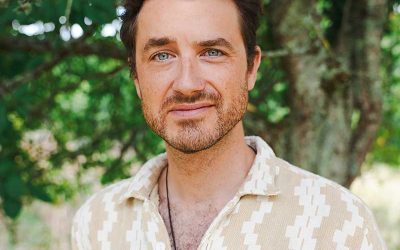
The Joy of Becoming Lost: Maps, Myths and Navigating the meta-crisis with Sam Crosby of Recalling Fire
We are a storied species – we live and breathe and love and learn by the rich tapestry of stories that shape our lives. Everything we do from picking a career to moving house, from finding our life’s co-creator(s) to choosing what to have for lunch is underpinned by stories of who we are and how the world works. Often, we take these stories so much for granted that we don’t even recognise they are stories – we genuinely believe the world works like this…
Pull from the heart, don’t push from the head: Spreading Stories that Work with Matt Golding of Antidote
How do we create stories powerful enough, moving enough, inspiring enough – and grounded enough – to shift the trajectory of our culture onto a totally new pathway?
Open Mind, Open Heart: Evolving the nature of Eldering with Alain Gauthier of the Regenerative Elder Process
In a culture where age is, at best, ignored, how do we rebuild a cohort of genuine Elders fit for the rapid transitions of the 21st Century: those who can combine the wisdom of wide boundary perspectives with the humility that allows flexibility of thinking, feeling and being?

STAY IN TOUCH
For a regular supply of ideas about humanity's next evolutionary step, insights into the thinking behind some of the podcasts, early updates on the guests we'll be having on the show - AND a free Water visualisation that will guide you through a deep immersion in water connection...sign up here.
(NB: This is a free newsletter - it's not joining up to the Membership! That's a nice, subtle pink button on the 'Join Us' page...)