
#361 Power Station: Generating agency with Daniel Edelstyn and Leonie Rousham
How do we empower communities to help them step away from the extractive death cult of capitalism and the fossil fuels that underpin it, while keeping warm, saving money, and expanding their own agency?
Our guests this week have poured years of time, energy, passion, professional expertise – and a deep understanding of the flaws in the current system and how local people can be empowered to take change into their own hands – into making it happen.
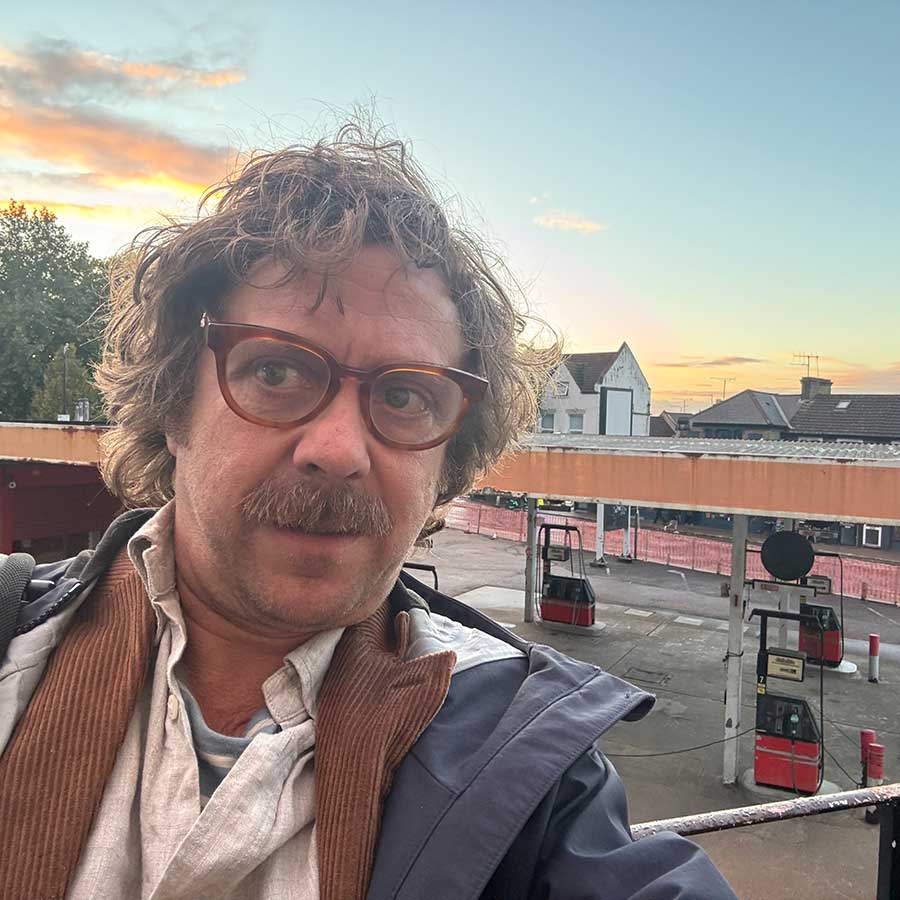
Daniel Edelstyn is a documentary maker who worked with Channel 4 until he realised it wasn’t helping him be part of the solution. When he left, the first film he made was BANK JOB, then POWER STATION of which he is co founder and director and which we’re talking about in this episode. Now, as you’ll hear, he’s working on one called ‘THIS MOVIE IS A HEDGE FUND’. Beyond this, he’s a social entrepreneur focused on the technology of storytelling to provoke people powered change who believes in challenging economic narratives to build creative practices of abundance. Musician and mischief maker.
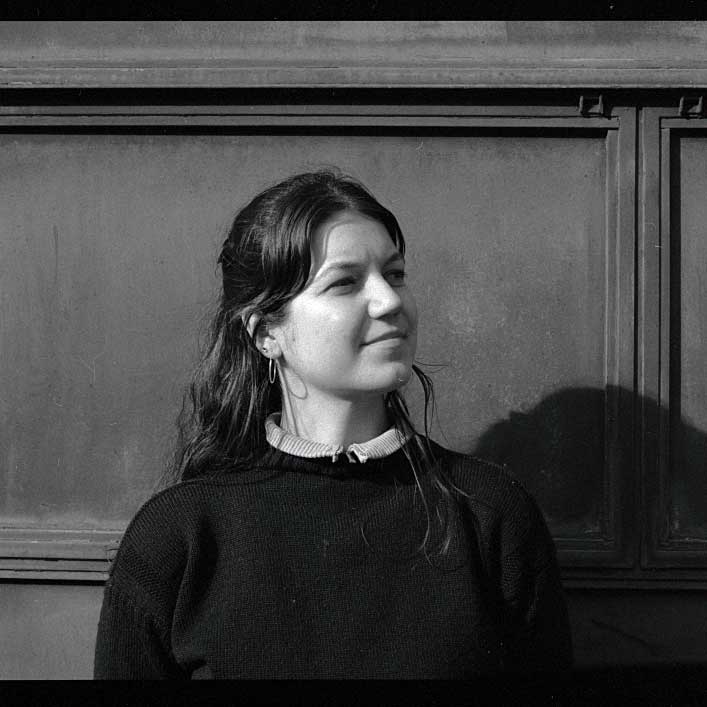
With Dan, we’re speaking to Leonie Rousham who was the Assistant Director and Impact Producer of POWER STATION. She’s an artist-filmmaker interested in storytelling for systems change and, in this respect is co-founder of collaborative artist practice Kneed. She is currently a funded PhD candidate on the Living Well With Water award, which promotes coastal heritage and creative practice the UK.
Power Station is one of those rare things – a film that documents change while helping us all understand both why it’s necessary and how to make it happen in our own communities. It’s a genuinely moving, inspiring film and I thoroughly encourage you to watch it. So, to inspire you to do just that, here we go:
More from Accidental Gods…
We offer three strands all rooted in the same soil, drawing from the same river: Accidental Gods, Dreaming Awake and the Thrutopia Writing Masterclass.
Our next Open Gathering offered as part of our Accidental Gods Programme is ‘DREAMING YOUR DEATH AWAKE’ which will run on Sunday 1st November 2026 from 16:00 – 20:00 GMT (NOTE THE TIME! – We’ll be out of summertime then) – details are here. You don’t have to be a member of Accidental Gods to come along, but if you are, all Gatherings are half price.
If you’d like to join us at Accidental Gods, this is the membership where we endeavour to help you to connect fully with the living web of life.
If you’d like to train more deeply in the contemporary shamanic work at Dreaming Awake, you’ll find us here.
If you’d like to explore the recordings from our last Thrutopia Masterclass, the details are here
Manda and Louise both offer one-to-one Mentoring Calls. Manda is writing a book just now, but if you’d like to contact Louise, details are here.
In Conversation
Manda: Hey people, welcome to Accidental Gods. To the podcast where we do still believe that another world is possible and that if we all work together, there is still time to lay the foundations for a future that we would all be proud to leave to the generations that come after us. I’m Manda Scott, your host and fellow traveller in this journey into possibility, and this week we are exploring the question of how we empower communities to help them step away from the extractive death cult of capitalism and the fossil fuels that underpin it, while keeping warm, saving money and expanding their own agency. Our guests this week have poured years of time and energy and passion and professional expertise and a really deep, wide understanding of the flaws in the current system and how local people can be empowered to take change into their own hands, into making exactly this happen. Dan Edelstein is a documentary maker who worked with Channel Four, until he realised it was not helping him to be part of the solution. When he left, the first documentary he made was Bankjob, and I have put a link to that in the show notes. Then he made Power Station, of which he is co-founder and director.
Manda: And that’s the one that we’re talking about for most of this episode. Now, as you’ll hear, he’s working on one called This Movie Is a Hedge Fund. I have doubts about this on the basis that neither Dan nor Leonie, nor any of their team are actual psychopaths, but we discuss that in the episode, so you will get to that towards the end. With Dan we’re speaking to Leonie Rousham, who was the assistant director and impact producer of Power Station. Though again, as you’ll hear, basically everybody did everything and then they assigned themselves titles after it was all done. Leonie is an artist filmmaker interested in storytelling for systems change, and in this respect is co-founder of the collaborative artist Practice Kneed. She is currently a funded PhD candidate on the Living Well with Water Award, which promotes coastal heritage and creative practice in the UK. And we’re discussing Power Station because it is one of those rare things; a film that documents change while helping all of us understand both why it’s necessary and how to make it happen in our communities. It’s a cracking film. It’s a lot of fun. It’s obviously very hard in places; some of the things they put themselves through are breathtaking.
Manda: I would not sleep on a rooftop for 29 days to raise money and awareness for putting solar panels on my street. I’m sorry, I probably should, but I wouldn’t and they did. And it’s all up there. And it was hard, but it did what was necessary. Because the weirdness of our current media system takes that kind of thing seriously, when they don’t take seriously the fact that it was 40 degrees for a considerable amount of the summer, and farmers are currently struggling to plant in soil that’s too dry. Rant over. Anyway, this is a genuinely moving, inspiring film and I really loved it. And then I really enjoyed talking to Dan and Leonie. It’s so wonderful talking to people who really get it and are being part of the change, doing what they can to make the world a better place. So to inspire you to watch it in your turn and to share it in your local communities, people of the podcast, please welcome Daniel Edelstein and Leonie Rousham of power station.
Manda: Leonie and Daniel, welcome to the Accidental Gods podcast. Thank you both for coming on this really rather lovely autumnal afternoon. Leonie, how are you and where are you today?
Leonie: Hi. Yeah, I’m good. I’ve actually really enjoyed just being outside today and it being a bit sunny and the falls leaving. Like all the trees being on the floor. Yes, it’s so nice. And I am speaking from my flat in south London.
Manda: Do you actually live in Walthamstow? This will become relevant to listeners later.
Leonie: No, I actually don’t. I live in South London, but I would travel up to Walthamstow.
Manda: Okay, so now I discover that Walthamstow is not in south London. My understanding of London geography is clearly zero. All righty. Thank you.
Leonie: Yeah. I’m like opposite end of the Victoria line.
Manda: Okay. Cool. Daniel, how are you and where are you? You are in Walthamstow. Unless you’ve moved since Power Station was made, you definitely are, right?
Daniel: Yes. Hi. Well, first of all, I’ll say I’m very well, thank you very much, because I think you asked me how I am. And where I am is in Walthamstow, just towards an area called Argyle Avenue, which is an industrial zone where we have our studio now. But most of Power Station, which we’ll be talking about, was set in our house on our street, about a ten minute walk from where I currently am.
Manda: Okay. You’ve a studio. I have studio envy. Alrighty. So I just watched Power Station for the second time. It hit me with as much emotional impact as it did first time, and I just want to congratulate the entire team and actually, everybody who was part of the making of a local power station. Because it is an incredibly moving thing. So if I were to frame things in terms of Joanna Macy’s three pillars of the Great Turning, there are holding actions, which generally this podcast doesn’t touch, because that’s chaining yourself to the middle of a road to stop things happening. And I think it’s a great thing to do, but it’s not where my focus is. And then there is shifting consciousness, which we deal with a lot. But then there is the whole systems change. And for me, systems change has two branches. There’s top down; we need different governance, we need a different financial system, we need a different media. But it’s also bottom up. And what power station does so beautifully is to show the power of local people actually taking power, in all senses of the word, into their own hands. So tell us a little bit, Daniel, about your journey in understanding why that was useful and how you could do it. Because not everybody decides to turn their street into a power station. Over to you.
Daniel: Yeah, that’s a great question. I think the seeds of Power Station probably came out of a sort of, let’s say, not quite a midlife crisis, but let’s say a mid 30s crisis that I had. And it was all around why do I work? You know, what’s the purpose of storytelling? What’s the purpose of filmmaking? And whilst I was personally going through this crisis I couldn’t really take doing any of the sort of channel four jobs that I used to do, and all of those things, because it always felt like they were sort of very entertainment tabloidy type of films. Or I’d take a concept that I wanted to do and they’d say, yes, you can do it, but it has to be in this way, you know, and they’d just ruin the whole thing.
Daniel: So I ended up going into this crisis with the question hanging over me as to what is the purpose of this work? You know, why bother doing anything? And I found all these different amazing writers from George Orwell, his book Why I Write, to a book by Tolstoy which I can never remember anymore, but I’m sure I read it, and it was all about the purpose of art and his own crisis and purpose of meaning. Viktor Frankl, his psychology. And then there was a book by this theorist called Neala Schleuning, who’s whose book, I think it was called Anarchist Aesthetics in an Age of Fragmentation… an anarchic art politics.
Leonie: It’s called Art Politik.
Daniel: Art politik! Yeah, yeah, exactly. That’s it. Have you read that, by the way, Leonie?
Leonie: Bits of it, yeah, and listened.
Daniel: Anyway, so one of the things that she said in that book, and that book is really connected to John Berger as well. I think she’s a kindred spirit to John Berger Ways of Seeing. And one of the things she says is that if you can embed your art deeply inside of a community, the power of it will just explode exponentially. And I remember reading that and it really made me think, yes, you know, there is this sense of the romantic artist wandering around doing stuff that’s somehow in parallel to the rest of humanity. And if we could actually work deeply embedded within our community, the feeling that I had was that that was what I needed, spiritually almost, was to connect with the people who were around me. And Hillary had always been doing this, because she’d been working site specifically, but she’d also worked quite collaboratively with various different communities. At that point, filmmaking and art making were kind of a separate thing. They had different industries and we were involved in these industries in different ways. But I sort of began to think, well, what if we were to fuse these two things together and work really locally? And some of that was sort of organic, but it came out with Bank Job, which was the film that we made before Power Station.
Daniel: We ended up getting a bank on the high street, we printed our own money, and then we bought up £1 million of debt. And the concept there was, we’ll blow this debt up and we’ll talk about how the debt based economic system is encoding inequality from the get go. And I suppose that then led to taking that same approach to film and art making, which is an embedded approach; a kind of collaborative, bringing people into the art production so that we co-author it with a community. So Power Station really was a logical next step from that. And it was really with the idea that a lot of what we’re told when we’re growing up, about how we should live and how we relate to other people around us, ends up leading you quite far away from alignment with purpose and alignment with community and alignment with ideas of equality and love, really. So all this kind of crisis that I was in was just due to I’d gone as far as I could go with that old way of being, and that there needed to be something new. So I was open to looking for something new.
Manda: Brilliant. Thank you. There are so many ways I could take this and most of them are not heading down the power station route, because I’m very intrigued by your background in social. And also, we need to explain that Hillary is your partner, actual wife, co-star of the film.
Daniel: Oh yes. Hillary is very much my partner and wife. But sadly, she can’t be here today because she’s got an issue with her ears and she sort of can’t hear very much. And I think she likes it like that, weirdly. She’s decided that she can’t hear very much and doesn’t really want to hear. So she’s just like cutting things out and just immersing herself in a kind of silent world for today.
Manda: A little cocoon. Having watched the film, I could imagine that that would be quite a pleasant place to be, possibly for a while. But then we’re going to talk about timescales because it’s a while since you’ve finished. But let’s move to Leonie now. Tell us a little bit about your role in the overall Power Station project. And what drew you to it and how you found it. Because it it looks at times a lot of fun and at other times actually very, very hard.
Leonie: Yeah. So these are good questions. And it definitely was a roller coaster of emotion and energy and sort of possibility and a lot of set backs as the film kind of shows. I actually came onto the project… I had watched Bank job and I’d loved Bank Job. And while I was studying, I really loved a lot of the work of David Graeber and also a lot of his writing around the phenomenology of puppets and all of the possibilities of direct action and play and how that can lead to kind of different types of social formations, and really loved so much of his work. And obviously Bank Job, David Graeber was a massive like a mentor. And a lot of it was based on the 500 years of debt. And I was an artist and had also started being an archive researcher and working in documentary, and felt incredibly disillusioned with it and just really struggling to work out how I wanted to make work. I really understood the role of creativity in action and organising and had done a lot of stuff around strikes and IWDB, which is a cleaners trade union and a lot of stuff around that type of organising and the role that film played in it.
Leonie: And I met Dan at an event where Bank Job was actually up for an award and Dan was just leaving. And I remember not having spoken to anyone and being really like, what am I doing here? Quite young. And then saw Dan and I was like, oh, you’re from Bank job. I love bank job! And Dan was like, nobody’s seen Bank Job! Like, who are you? So then I actually ended up initially working to do some archive research, because we were looking at the theatre production company that existed in 1930s America called Power, and looking into the history of the Greenbacks and that kind of thing. And I just loved working with Dan and Hillary and the way that they work, and ended up going behind the camera. So most of Power Station, I’m behind the camera and totally off screen, just following them both. And I also made really good relationships with everyone on the street. Then my role in Power Station was as assistant director. I mean, these terms are all quite funny because it was a very small team juggling all the different jobs. And then once it was made, it was like, what are the formal titles that we all have to explain what that was?
Manda: Right. Okay. Thank you. And you had David Graeber as a mentor. He was such an extraordinary person. He was on my list for I really want this person on the podcast. And then he died, and I never got to it. I’m so sad. His Debt: The First 5000 Years was seminal in my understanding of how capitalism works. And then, of course co-wrote the Dawn of Everything, which was seminal in my understanding of who we are as a species. And everything he did seemed to be really oriented towards a future we would be proud to leave behind. So I’m really glad that he has people like you carrying on the flame. It feels really important. Alrighty. So let’s come back to Dan. So we very nearly started recording the very chaotic start of this podcast, where we were trying to get everything sorted, and similarly the start of Power Station has that very chaotic feel. It feels like you’re walking around with your mobile phone just videoing things as you’re going, which I’m certain is not what was happening. But it’s got that very organic local feel to it. And I want to understand how that came about, but also in the planning, let’s assume you got tired of working for Channel Four and doing game shows or celebrity whatever and wanted to do something meaningful. Of all of the options of things that you could have done, having done Bank Job, which I don’t understand why it isn’t recycling once a week on every television, because it should be there to help people understand how money functions and doesn’t function. Anyway, we live in the world we live in. Of all the things you could have done, what brought you to local power? The generation of power in a local area for local people, by local people, as the focus of what you were going to do?
Daniel: I think when we were finishing Bank Job off, we understood that the way that the economic system operates, where money gets created to largely fund things like mortgages or people buying houses and inflating the cost of houses, etc. But it’s not profitable enough to build the green infrastructure that we really need. So there’s a weirdly disincentivized, you know, capitalism doesn’t find that there’s enough financial incentive for the world to continue, which is like this really perverse reality. So we really wanted to make a film that could expose the structural issues around money and the green future, the connections between those two. So it was a film that really came out of the film before it, in many ways. And Ann Pettifor had written a book called The Case for the Green New Deal, I think in 2008 or 2009 she’d written that, with a group of other thinkers. A disparate group of economists, sociologists, philosophers, I think. And they sort of wrestled this thing into existence. They actually wrote the Green New Deal idea together in Britain before the American one came out, and her book was sort of charting that process. And inside of that book there was a chapter saying every building a power station, I think. And she argued in that chapter that every viable building should be producing its own energy. And we just thought, yeah, that’s really good, you know, I love that vision. Could we do that across Walthamstow? And I was saying to Hillary at the time, we could get a huge wind turbine and take Walthamstow off the grid. It was this massive sort of vision. And because we’re filmmakers as well, we were thinking, well, that doesn’t sound credible enough for a couple of artists with no real standing. You know, we’re not Turner winning artists or anything, we don’t have billions of pounds.
Daniel: So characters need to be credible. I mean, obviously Manda you’re a fiction writer, so you understand that I can’t say, oh, I’ve got a really good idea for ending the war between Ukraine and Russia; I’m going to depart today and kill Vladimir Putin. Because that’s just incredible. Like I’m never going to get past the defences and all the rest of it. And also it doesn’t bear any relationship to my normal life, you know, it just seems absurd. So we just felt instinctively that that wasn’t a credible enough idea to take Walthamstow off the grid. It seemed too absurd. Like it was slightly funny, but it didn’t have the substance to be true. So then Covid came along and we said, well, why don’t we just start with one street? What if we were to take one street and turn it into a power station? That’s still feels quite a lot. And when you look at the film, you can see that there are plenty of obstacles there, but it still felt just about doable. And I think that’s where you want to be, I think. Between every single film I feel that there should be an exponential growth curve. For us as people in the film, that we should be learning a lot, we should be growing a lot somehow. But I also feel that there needs to be an external goal that feels doable. Hard, but doable, in order to build that sense in the audience that I can spend an hour watching this or an hour and a half or whatever it might be, and they may well just pull it off, but it’s going to cost them a lot.
Manda: Which definitely happened. So Leonie, back to you. Quite relatively early in the film, Daniel and Hillary decide that they’re going to go and sleep on the roof. Which I didn’t see coming, I have to say, in terms of narrative arc, I think this is genius. Exactly as Daniel was saying, it feels plausible, it feels hard. One assumes, because the film is called Power Station, that you ultimately succeed, but it’s not absolutely a given. And you could have shrunk your goals a lot and still called it a win. And we don’t know. So it’s got that sense of, I think any good narrative asks questions as it goes through. And it continues to ask questions with quite a lot of things that I didn’t see coming at all. We’ll get to those later. But in terms of your role behind the camera, Leonie, how much were you following what Daniel and Hilary were doing and how much were you putting in narrative structure so that you could feel that it had an arc that was going to work at the end? Was that a balance thing, or is it one of those things that just evolved as you went along? Tell us how it how it happened.
Leonie: It’s funny because when you were saying, oh, that happens relatively early in the film, I was then thinking about the timeline of the development of Power Station, as the project on the ground. And it was quite a few years, but obviously you don’t see, and that’s the way that the film works is it collapses time and it makes it into something that’s coherent. And there’s a linear trajectory somewhat of events, and actually a lot of the work in the edit was going back and trying to historically anchor these moments. So getting the radio in to give a sense of time and place and a wider context for where the events on the streets are at in terms of global politics and everything in the UK. The total filming for Power Station was I think five years for Dan and Hillary and nearly four years for me. So at that point, we were probably two and a half or three years in. In terms of the overall story and my role of filming it, I guess everything that happens in the film wasn’t planned out, so to speak. I remember Dan would keep saying, every time something really difficult happened, it would feel really terrible, but it would be a really good kind of arc within the film. And a moment where you’ve got to overcome some trouble, sort of like a David and Goliath story or something like that.
Manda: Yeah, totally.
Leonie: And sleeping on the roof came at a time of desperate need for to get some money, some funding. And it wasn’t really clear how it was going to sit in relation to the rest of the story. But I think there was a lot of conversation. And also Hillary very much is someone who has these really amazing visions of how something would look and very memorable images that kind of punctuate a moment or seep out of the neighbourhood or community on the street and kind of go out. And I think sleeping on the roof was one of those spectacular moments, where suddenly Dan and Hillary were being a solar panel. They were sleeping out there feeling the weather and all of the extremities of that. And obviously the role that that then played in the film was it was to show that public interest has suddenly started to come and the BBC is now doing coverage and suddenly people care. Where before it was so hard to get any sense of attention to take the story further. So it was really helpful for the plot in that sense, but I think also it helped as a strategy to start to think about how these big images were really helpful actually, to sharing the story in different ways in the news.
Manda: So until then, the street was involved presumably, this is two and a half years in. The people in the street were were wholly bought into this? Or did you get a degree of pushback within the street that we didn’t really see on the film. Because it looked on the film as if pretty much everyone was enthusiastic about this. And then there’s the old lady moved house and it was very sad. But other than that kind of a problem, were you bleeding out into even the rest of Walthamstow, or was it just the street and nobody else really cared?
Daniel: I think on the street there was some resistance. There were some people on the street that were not so into it. Some people like their anonymity. So we had a few doors slammed in our faces. And then in terms of the wider Walthamstow community, I think people were interested not only across Walthamstow, but nationally, because we were always building our mailing list. Because the way that we’ve managed to overcome some of those issues around, I think you referred to it earlier on; the media system being so conservative and reactionary and basically discouraging this type of independent thought or action. And then the other thing as well, which I think overall to the media system that they’re disdainful of, I don’t think this idea of a community film, as it were. Because the film has some action in it, that a community wants activism, somehow that’s categorised as a lesser work. Then also within the art world, if you’re seen as a ‘community artist’, that’s just a pejorative way of saying artist, you know, like a local writer is etc.. And yet our point and how we came to think of it is every story is set somewhere, and in fact, the more specific you can be in terms of where you set a story, the more authentic and the less cliched it becomes. So we wanted to really lean into the characters on the street, the character of the street, the strange things that happen on our street, which probably happen on everyone’s street. You know, the class system springing into life on the street with King Charles coming down it, you know?
Manda: Yes, that was hilarious.
Daniel: The street was the microcosm. Sometimes I think of it as, you know in a science lab you’re looking through the microscope and then you’ve got your little petri dish or something. And all life is looked at through there, and that’s our street, you know. But it’s not a microscope, it’s a video camera, and Leonie’s behind it, and we’re recording what we see there because all life is there, you know. But it’s not about that street being sealed off from everything else, it’s the opposite. It’s about that street is everywhere, you know? And the whole idea was if we can crack it on this street, we should be able to crack it on every street. So whatever problems we encounter on this street, we’ll encounter on the next street and the next street and so on and so on.
Manda: But I also wanted to ask you about sleeping on the roof, because when we first follow Hillary walking up the ladder onto the scaffolding and I don’t do well with heights. I’m like, what are you going up there for? That’s very silly. And then you realise you’re going to sleep up there. Are you actually batshit or what? And she says at one point that if you were activists and you chained yourselves to a railing, a gantry over the M4, then people would feel about you very differently. And I was thinking, remembering back to XR days and some of the incredible young women who did chain themselves to structures around Trafalgar Square wearing all the things, and they were up there for 48 hours and it looked like living hell. And eventually, because the fire brigade refused to have anything to do with getting them down, which upset the police quite a lot, but eventually somebody came and cut them down. And I was thinking, watching it, you’re on your own house, no one’s going to come and cut you down. And you were up there for three weeks, I think, and you had abysmal weather. And I just was waiting for the point where you were both hospitalised and have to come down off the roof because we’ve got double pneumonia. We’re really sorry, but you’re going to be in hospital for the next three months while they pump antibiotics into your veins. But no, you survived. And then the bit I wasn’t expecting to be so moving, but really was, was when you realise you just made your £100,000, and have to come down now. And you looked really sad. And I’m sure you weren’t acting that. There was something about having been camping on your own rooftop that that felt authentic and constructive, and people were waving at you from the 7.29 train going past and things. And it definitely did wake up a media ecosystem that doesn’t usually pay attention to people. Just tell us a little bit about the actual experience of sleeping on the roof, because I’m just really curious, at what point did you decide you were going to stay, and did you ever get to the point that this is just silly? I’m just going to go down and have a proper night’s sleep in my actual bed.
Daniel: I think it was Hillary really who was sad at the end because she just loved being up there. She found it liberating and she could write up there and somehow escape from all of the swirling never ending jobs and drudgery of normal life. Somehow it was suspended on the roof. So when we reached £100,000, I was like, yes! I’m going back down. I’m so tired and cold. You know, I got tired. But she slept up there for one more night, a kind of victory lap. I mean, it kind of surprised me, but I also think, yeah, that’s definitely Hillary, you know. But it was beautiful up there. There was a beauty to just being able to see the stars in London, that’s hard because you’ve got this kind of orange glow of tungsten lights and stuff. But occasionally you could see the stars and you could see aeroplanes and the rooftops and really the chimneys are amazing as well. But I think, like Leonie was saying earlier on, there’s something iconic about, about the bed on the roof. Because I said to Hillary early on, can’t we just put a tent up? You know, like at least we then don’t have the rain on us.
Daniel: And she was like, no, no, no, it has to be this bed. I was like, God, you know? And then her system for dealing with the rain was just literally a piece of twine with some plastic going across it. There was something really beautiful and aesthetic about it. But I think overall being up there was also quite beautiful because our community really rallied behind us. You know, we’d been growing our mailing list for so long, and we were hoping that membership income would be enough to get over the funding line and all that. It just never was, you know? And paying just to keep going forwards and everything, it was just relentless. So we needed to get that distinct amount of income, and the crowdfunder just did really, really well when we were on the roof. So I think it created its own momentum. I don’t think we meant to be up there for 23 nights. It just was how long it took, you know. So that was how it was.
Manda: Okay. Thank you. Go on Leonie.
Leonie: And maybe just to add to that, and your question Manda about were the street kind of behind it the whole time. And I think because things just take so long to get off the ground and actually continuing momentum is really, really difficult. The living room of the house became the town hall, and that was the meeting point. And there was a model of the street and everyone could test out the different possibilities of where the solar panels were going to go. These moments also were making the familiar strange, in that very Brechtian way of taking the bedroom and putting it on the roof and kind of reversing inside, outside. The sense of this is my private property, this is my house and you can’t see in, and suddenly being so visible and so present. It really worked as a way, as a tool of play. To be like, this is happening and this is still happening and look at the risk that’s being taken to try and keep this happening. In terms of movement building and how you stay with the action and how a neighbourhood or a street feels part of something, those magical spectacles are not incidental. They’re also essential tools to feeling part of something and getting some kind of excitement. Because then suddenly, as soon as they came down, it was then filmed recording the Christmas number one, like momentum really came back after a lot of mishaps and setbacks. And I think there’s a lot to say in terms of what play can do in igniting possibility. And that’s what I see that roof moment also as being.
Manda: Right. And I want to talk about that in a wider sense of igniting possibility nationally and internationally. But just before we get that, I do want to let me stay with you for a little bit. Because they came down off the roof. Dan says at one point that he hadn’t had time to shave, and you’re straight into the school with a bunch of kids recording this lovely song. I want to know who wrote the song. The kids were magical, and there’s one little kid and you film him and he goes something along the lines of, this is my first time on television or this is my first time with you. And Dan says something like, are you usually on channel four? And he goes, no, no, YouTube. And he looks about six! And he’s totally deadpan and he’s obviously going to be a superstar. And again, it was a really moving moment. So just tell us a little bit about the school and the school’s involvement, because it became clear that the school had been involved for a long time, because you had a whole movement for powering primary schools, or at least powering schools by putting the solar panels up there. Tell us a little bit about that. And then we’re going to move on to this as a fulcrum or a focus for a wider movement.
Leonie: Yeah. So the school that the song takes place in, in the Christmas number one, is Barn Croft, where Dan and Hillary’s kids also go. And it’s right at the end of the street. And I guess that at different points in Power Station, there were lots of different dreams that we had in terms of trying to get a communal battery in the park where we were going to dig it up and put it in the park and see how all the energy could be shared across the the different houses and the school. And we were speaking to a lot of people, but that wasn’t possible within the duration of the film, but still something that’s in the works. And one of the things that we did do was, along with actually five other schools in the borough, but only Barn Croft features in the film, was get solar panels on the roof. And we worked with Solar for Schools who are an organisation who support fundraising to get solar panels on the roof. And the school, like so many schools in the UK, obviously was really struggling with cuts and not able to buy resources, not able to hire teaching assistants, etc.. And so the fundraiser to get to number one with the song You’re the Voice was then also a way to make something that was really captivating and encompassed all of the spirit and the feeling of the potential that the school had and the ambition and desires of what the kids felt.
Leonie: But then also, trying to reach number one was a way to try and raise money. And we actually found throughout this form of crowdfunding and raising money, that when there was always this goal at the end to reach number one or also try and subvert a bit the systems that were already existing. That there is already this desire to reach number one with Christmas songs and it’s very hyper capitalist. And we were like how can we intervene in that? How can we get attention to the fact that this school has no money and all these kids are singing this song? So there’s lots of instances as well, like you were saying before, with the roof kind of trying to intervene with this media ecosystem that’s never going to pay attention, I think the song was another move in to say, wait, we’re here and things can be different.
Manda: Right, Dan, tell us a little bit about the song, where it came from and who picked it and how it was chosen and did it get to number one?
Daniel: The song was called You’re the Voice, and it was recorded, if not written or co-written by John Farnham. And it was chosen by Hillary because she’d seen it on another film which she really liked. And the name of that film I can’t quite remember, but it was a song that she felt, and I think she was right, really captured a sort of spirit of almost the world seen through the eyes of children. It was them sort of saying we’ve got to stand up and do something. So it was sort of an empowering song when sung by the children. But also the idea to record the song, I was at a parent teachers meeting, and Tracy who was the head teacher at the time, said that they had a massive shortfall again. And Tracy had been in bank jobs. She ended up becoming a bank note, you know, so we raised money for the school during bank job. So we had an existing relationship and our children were still there. They’re no longer there now, it was a primary school, our children are in secondary or sixth form now. But there’s something really beautiful about the community around primary schools. There’s a real school gate community and rallying around when the school has an issue. So I remember she said there was a funding thing and I immediately thought we can raise money. Because I’d got into crowdfunding at this point. And I thought, who can really resist throwing money at a bunch of children singing a school number one, run on the number one slot? It doesn’t even really matter if they’re singing in tune or not.
Manda: It’s probably better that they’re not.
Daniel: You just have to open your heart and unfortunately your wallet as well and dig deep into it and fund those little fellas. That was the kind of rationale for it. Leonie says that we were showing up the cruel system of number ones at Christmas or whatever. But I don’t think it was as well thought through as that. I just felt that we could probably make the money, with these kids. And it was a slightly different community of people who were giving to that than gave to the crowdfunder on the roof. You know, there were all sorts of people; grandparents of the school children, the parent teachers group, and actually the parent group just was sharing it so widely that we even had I can’t remember if it was Noel or Liam Gallagher retweeting it and stuff like that. And we got on to channel four news through that. It was a good way actually of bringing the problem of cuts to school budgets to life inside the news system. We were able to take a story and find a way to give it a hook, to get into the news cycle, which again helped with the crowdfunding, but also was good for the storytelling in the film as well.
Daniel: So yeah, a lot of this stuff is designed as a way of smuggling in things which are important, in ways in which people will digest them as a story, you know, and not just ranting, which of course we love to do as well. So it was those type of ideas. And in terms of the production of the song, it was quite interesting. I mean, I make music generally, but Hillary also loves to make music, but we don’t really make music together. She has her own ideas around music. And she was saying, look, we’ll just get loads of different people to sing lines of the song and I’m going to sing it out, then they’ll follow me. And I was like, well, I think we need to first of all, record the backing track so that we could get people into sync, and then they’ll be in rhythm and everything. And she was like, no, we don’t need that. So we did a whole attempt at the song where she just stubbornly refused to yield to the idea of any form of production design. That didn’t work, so then we went back and we rerecorded it, with people that we work with on music production and it worked really well. But equally, it was quite a challenge. You know, you can probably remember in the film the first time when we got the children to sing, they were massively out of tune and everything.
Manda: It was very cute.
Daniel: Yeah, but it worked, kind of thing. But by the end of it, I think we got different year groups to each record. And by the end of it, when you layer it all up, it works. And I think it’s probably held together by the drums and the bass and it’s kind of pushing forward. And I think it’s the cause, you know, people really want to, well, not everyone, but many people want to participate in anything that they can do to try and make the world a little bit better. And you have to give them very specific ways in which that can happen, it can’t just be a generalised thing. But I think people wanted to help those kids get their education really and it goes from the micro to the macro, I guess. Barn Croft is just a symbol of children everywhere across the country and beyond and about how they should be able to access proper education. And there’s no real reason why there should be cuts to education. And also there’s no reason why energy companies should be making a massive profit out of schools that have very fixed budgets.
Leonie: We got to number seven.
Manda: You got to number seven! That’s pretty darn good, eh?
Daniel: Yeah. Was that in the Christmas charts?
Leonie: Yeah. We got to number seven then we slid down.
Daniel: Yeah. We plummeted right down, never to be heard of again.
Manda: Okay. But that’s the nature of charts, isn’t it. But you could probably relaunch it, the way they used to relaunch ‘Do They Know it’s Christmas?’. Anyway, back to Leonie. So, we could keep unpicking the film, it’s gorgeous, everybody wants to watch it. Tell people how they can watch it and then I want to explore a little bit about the the generality of power generation by people, for people. And then we’re going to look at what you’re doing next. But tell us how people can get to the film, how best to consume it.
Leonie: So there’s quite a few different ways that you can watch it. We originally did a cinema release and now we’re kind of directly sharing it through our website.
Manda: Which will be in the show notes.
Leonie: There are two links. So you can either book a community screening or you could book to watch it at home. So actually, maybe this is a segue into talking about a bit of the impact and distribution, which was so much a part of the film as the production of it. Because we really see the film as a catalyst and the space that you watch the film in, as a site of organising, to be able to have conversations, to set up your own power station. And a really great example is like Power Hull that now exists that are working in a really similar way and were inspired by the film, and they’ve been able to take it and really turn it into something that is completely theirs. And they’re doing amazing work up in Hull.
Manda: Excellent.
Leonie: Out of cooperation Hull. And now I think the film has screened in around 450 different community screenings across the UK and beyond. Also internationally actually. We have a map on our website showing the different screenings. And we did a lot of work in prepping for the film to finish, we made a DIY screening guide, which has all of the kind of questions you might need or discussion notes on how to then host a space after the screening to think about setting up your own power station. And this has happened in a lot of different instances. And then there’s also a lot of online events that Power is still doing; membership events that people can join to find out more. And Dan will probably be able to talk more about that. So yeah, there’s various ways to view the film and we’re really still trying to push it. And it’s really amazing just hearing about all the different organisations that are coming out from it. And we call Power Station a show and do project. It isn’t just a film. It’s the organising, the physical infrastructure that’s happening on the ground and the grassroot collective action. And that continues in the sharing. The two we don’t see as separate. And that’s why building the membership and doing all those things is so important. But Dan, maybe you could talk about the free film screening and events.
Daniel: Yeah, sure. At the moment we’re still doing a Thursday night free screening, which is digital screening with a Q & A at the end of it, for Power Station. And I’ve put the link in our chat, which is membership.power.film/free-screening.
Manda: I’ll put it in the show notes, people can click.
Daniel: And then with Bank job, I’ve put you a link there. Basically people can stream these from the power station website for about £10 as well. But there’s also the free screening, which is a communal experience once a week. So those are the two ways I think, and hopefully I think there are still screenings going on up and down the country as well of Power Station that’s been continuing. We didn’t know it would carry on with this sort of pace, but it’s seems to be that, and I think probably we’re going to move on to this in a minute, but as an organising tool, this film can convene and get people together to think about what they can do in their own communities. We’ve been working really hard on actually making the next steps actually quite concrete, making turning your own streets into power stations, if you’re listening to this, actually relatively easy. I should say relatively, I say that tentatively because I’ve learned that nothing’s terribly easy, but a lot easier than it was for us, let’s put it that way.
Manda: Okay. So I really want to drill into that. And either of you can answer this. When I did the master’s in regenerative Economics, I wrote my second term paper on localised power distribution, which was back in 2016. But it seemed to me that even then that we had the capacity for doing distributed power generation rather than central power generation, that that would be useful because we lose a lot of power just with power going down the lines. And as the world turns over, as everything changes, what we need is every village or every street or every small location to be producing as much of its own power as it can. And it seemed to me then we have a number of things that all come together, and one is how do you produce the power? And solar panels are obviously one idea. Wind turbines, if you can get them to work in built up areas are another. Down in Devon where we were, there was a very small hydroelectric system that worked just on the little local river. There’s going to be other ways that people devise; road bumps for cars to go over, whatever. There’s going to be ways of generating power. You need to collect and store the power. You need to distribute it to the people who need it. And that’s where the AI comes in. If let’s say your roof is getting the sun at the moment and mine isn’t, and my washing machine needs the power, then how do we get the power from your roof to my washing machine? How do you get the funds from me to you? And that’s where we could be using some form of cryptocurrency.
Manda: And so this interlocks a whole bunch of things that are not functional in our current society. Power generation is broadly still fossil fuels. And just because we’re producing renewables doesn’t mean we’re reducing our power use on fossil fuels. We’re using more fossil fuels, but we’re using all of the renewables as well. And that is not a sustainable thing. So how do we use our power? From where do we get our power? How do we store it? How do we distribute it? How do we create ways of sharing value such that if your roof produced some power and I used it, you can get something from me that is of value to you, that ideally is not the fiat currency, because we don’t want to be using the fiat currency. This is something of a change of tone from making a film. But it seems to me you’re likely to have come up against all of these. Well, the first thing you came up against, obviously in the film, was that you’d got a quote for putting the solar panels on the roof, and by the time you got the money it was twice as much or 50% higher. Which you can’t do that; you can’t quote us this and then decide to slap on another 50%. That’s not how the world works. But leaving aside the actual finance of getting solar panels onto the roof, how do you store it? How do you distribute it? How do you allocate value? Does that make sense as a question? And either of you can respond?
Daniel: Sure. Well I can have a go first and then Leonie, you can correct me if I get any of this wrong or you have any other thoughts on it. But microgrids is what you’re really talking about at this moment. And those are currently illegal in Britain, but they work very well in other countries. So there’s nothing to stop those microgrids happening, apart from the fact that we have just an old law, which kind of precedes the proliferation of solar and community energy, etc.. So hopefully there’s a big desire for that law about microgrids to change. And hopefully community energy groups will be able to share their energy and their electrons with people very close to them. At this moment there are ways around this with software, an energy local set up by Mary Gilly, does solve that problem up to a point, but they still have to use a billing system through a company like octopus or one of those companies, to attribute the electrons, which are being created by sometimes the community energy company, so that other people locally can use those by setting up an energy club. It’s a lot of hassle and it’s basically just a way around the regulations which need to be updated. So right now we’re not doing that.
Manda: Can I interrupt and just ask, is there any likelihood within the current governance system that they will change the rules? Because it seems the current government quite likes Stalinist era centralisation and preferably owned by somebody other than the local community. That’s why they’re doing what they’re doing with water. Are they showing any sign of creating a legal possibility for microgrids?
Daniel: Yeah, I mean, I was at an event with a Community Energy London event a few weeks ago, and there’s definitely an appetite for GB energy, I think, to be trying to change the rules around how local energy grids operate, in order to allow them to unshackle themselves from the legislation. I think the Local Energy Act was in the 80s. So that could be updated in order to let basically community energy groups share their energy locally. And then in terms of your question around cryptocurrency and stuff, I’m not 100% sure because I’m not a major fan of cryptocurrency, because I think the volatile exchange rates often lead to people getting ripped off by whale investors and everything. I take your point that there could be a kind of blockchain solution in order for the billing to work so it can see who’s using what and where it came from, therefore to attribute some kind of value to the producer etc.. But I don’t know the best way of sort of charging for that.
Daniel: I take your point that the system of fiat currency is completely imperfect as well. But I’m sure that is very doable, the blockchain ledger, if you like, which can look at the credits and the debts within a system like that definitely can work. And ideally, if it can happen, as I think you’re saying, behind the metres so that people don’t get taxed on it, etc., and they can effectively take control of the energy system on a community level without having to necessarily have a state getting involved in that. That sounds really good.
Manda: Exactly.
Daniel: But yeah, I don’t know. That’s not really the focus where we’ve been spending our time. We’ve been more like thinking, you know, how do we rip out our boilers? How do we rip out our connection to the fossil fuel companies and work together as communities to build these street by street power stations. And that’s really where we’ve been thinking, but not specifically and I think you’d need to have that depth, and I have come across a few people who have been researching these microgrids a lot more deeply. I’m sure you yourself have probably done a lot of research on it, but it feels to me like it just needs a lot of depth on that. And, you know, we’ve only just scratched the surface of that ourselves.
Manda: Put me in touch with them because I think it’s an increasingly important area. Alrighty. So leaving aside the money, I think it’s a really interesting field. And if there’s anyone that you would know who’s looking at it, I would really like to look at it with them. Because I think it’s not that hard actually. And just for interest, I think the key point is provided you’re not linking your solar currency to the fiat currency in any way, it’s not taxable. The question is, if you’re paying for power, and power has a value on the fiat currency, does that make them linked? And I don’t know the answer to that. And if anybody listening does, I think it’s a really interesting question because if it’s not, then your solar currency has the value that the people who have the solar currency choose it to have. And there’s quite a lot of work being done on that with River coin up in Sheffield or the Hull coin that doesn’t exist anymore, but even then they did a lot of work on it. Let’s leave that one. I’m still very curious to know if a community, like maybe our village, decided that they wanted to do this. Every everywhere has a solar panel, we produce power in whatever way works for us. What are the logistics of getting everybody off fossil fuels? So batteries, you were talking about digging up the park and putting a battery in. You’ve got to have some kind of storage for when the sun shines in the summer, but it doesn’t in the winter, which is when you want your heat and your power. Is everybody moving on to air source heat pumps or ground source heat pumps? What’s happening at a logistical level to make this function in the current world?
Daniel: Well, I looked through your website, Manda, and I saw that you’ve spoken quite a lot to Howard Johns, or at least had one chat with him. And so we collaborate with Howard a lot. So if Howard was here now, this is one that I would just give to him. But he’s very keen on saying this and I think it’s important and I’ve done some research into it as well quite recently. But I think most households across Britain are paying between £1500 to £2000 a year to fossil fuel companies. And what that means is, that we’re importing single use energy into Britain just to burn it, and then we have to import it again the next year and so on. And then I did a bit more research, and I found that since Trump took over in America, I think it’s about 50% and we’re going to have to double check that, but of our oil and gas is coming from the explosion of drill, baby drill thing. So we’re importing all of that from basically Donald Trump. So we’re literally sending our money out to support a fascist.
Manda: Dictator.
Daniel: President. Who is then basically using that money to fund the military to go and create war. And just more and more and more and more and more and more chaos coming from our boilers and our energy system, in a way. At least underpinned by those. So that’s why I think it’s so important that we tackle this, because every single house that gets solar or every house that gets air source or ground source heat or any way of getting renewable, sustainable energy in, is not just good for the environment and makes you feel great when you’re having your latte or whatever, it’s actually a way of defunding fascism. And when you think about it like that, it’s just like, okay, I can’t really afford this. I can’t afford to spend four years making a film about this. But I can’t afford not to either, because the future generations are going to need us to defund these fascists, you know? So that’s why it’s really important to start thinking of whatever it takes to just not send your money to Trump or to Putin.
Manda: Or even for BP to have record profits, which they just have. They’re claiming that the Straits of Hormuz are shut and they’re going to go bankrupt, and they’ve just made record profits and that should not be happening.
Daniel: Yeah, it’s billions and billions, isn’t it that they’ve made. Like record profits since the Iran war. And we’re starting another project as well. So, I know that you’re going to go to Leonie and chat about one of the projects, but one thing we’re working on is just a very simple system to help people move their workplace pensions out of the big fossil fuel… You know, because about 95% of people’s workplace pensions are invested in fossil fuels. So literally trillions of pounds in the UK are invested in these workplace pensions. And a very simple lever, most of these, although they’re hidden, most of these big pension providers, will have a genuinely green option. And all you have to do is work out how to log in and choose the correct one. And we can literally move millions and millions out of this. So basically I’m interested in anything that can get money out of these fossil fuel businesses, you know?
Manda: Okay, Leonie, let’s come to you. Tell us about the new project, because that sounds really exciting, actually.
Leonie: So there are quite a few new projects and Dan will be able to explain one that’s kind of borough wide, but a small instance of that, and maybe this actually helps to take us back to the end of the film. Which is where we line the street with 10,000 sunflowers and take over the streets.
Manda: It’s so beautiful.
Leonie: And that is this kind of transformative image and moment and experience that we wanted to end on. And Hillary dreamt it up in a fever dream and drew it out and then it became a reality. And a lot of conversation as we were ending Power Station was on what next? And we were kind of thinking about, if you tear down the fossil fuel infrastructure, if you tear down these institutions, what are we building after it? What images are we creating?
Leonie: Much of Power Station is obviously about the infrastructure of imagination and how we can imagine and create these wonderful magic spectacles, where we have images in our mind of what we want to hope for and what we’re working towards. And one of those things is we wanted to take over this derelict petrol station, which is also in Walthamstow, and Hillary has gone back and forth with conversations with the landowner and also talking to the fire brigade. And there are loads of defunct and old petrol stations across the UK that kind of blithe the high street. And these could be amazing centres of learning, creativity, bringing people together. Social spaces to think about what are we building next? What are we building in these ruins? So Hillary started to do a lot of research around phytoremediation and how some flowers can be used to also decontaminate soil. And we wanted to fill this petrol station with sunflowers, which would start to decontaminate the soil, which if you’re going to move into a petrol station, that’s totally toxic land. But then this also being a symbol and image of renewal and regeneration. And there’s a social centre that is next to the petrol station and they’ve started to talk to the developers as well. So there’s actually potential that that site could maybe become one of this dream, which then would help to start a lot of other conversations around what next that are already happening, but to have another social space to have them in. And this kind of aligns with more really exciting borough wide activity that’s actually happening through Power Station. And Dan, do you want to?
Manda: Just before we go to Dan, if the petrol station does become something is it going to be a new film?
Leonie: So I think conversation at the moment is around web episodes. We did a micro project where an old recovery vehicle was basically taken over and lined with sunflowers and we had boiler suits and we were kind of these Ghostbuster-esque site decontaminators, and we went around to various different petrol stations. As a provocation to kind of break it all down and rethink it all. And that was a very short film. And that van was going to run on biofuel and be totally hacked. There’s definitely filming that’s now continuing, but with lots of micro, different power stations across the borough, which Dan, I feel like you can explain well.
Daniel: Yeah. On the borough wide idea, the problem is that the petrol station is contingent on things that we can’t control. So it poses a real problem for us as filmmakers. We’d really love to take over that site and turn it into the kind of headquarters of the borough wide power station, but whether or not that happens, you know… If it does happen, it’ll definitely be in the film. If it doesn’t happen, we’re still going to be building a borough wide power station in any case. So we’re looking to do a thousand council houses at the moment. And we’ve also got funding from the Energy Redress Fund, for £250,000 to develop co-operatively financed solar. So in other words, once that’s ready, we’ll be able to basically do entire streets by giving them or lending them the money to do solar and battery on their houses and just paying for the entire street in one go. We also have a £500,000 loan if we want to draw down on that, in order to start that off this winter. So the Power Station concept is definitely scaling. We’re also working on a borough wide civic building power station. So on things like leisure centres and schools, we’re trying to get more and more council buildings and also other business buildings into that. So it’s more of a traditional energy co-op that one.
Daniel: But these three different projects will all be part of the borough wide power station scaling. And then we have a project that we’ve called This Movie Is A Hedge Fund, which is basically a film which builds funding for the renewable energy transition and a sustainable future. Basically looking at how real hedge funds are working and asking the question, why is it so much more profitable to destroy the actual world, than it is to build a world that we can all live in. So in that film, effectively the engine of the film is all around building this hedge fund, but inside of the film we’ll be deploying different funding that we get, into building the sort of the future, as it were, in a sustainable way. So that could include the petrol station, the scaling of the power station concept and other ideas that we want to do. But I think that this film will be local, but it will also potentially will be filming in the city and also potentially even on Wall Street. And again, it’s another way of looking at capitalism and capital flows and examining it obviously with quite a critical lens whilst also building an alternative way of doing things.
Manda: I want you to come back then. Because it seems to me that the key block to your building a hedge fund is that you’re not a psychopath. And I’m not joking. I think the dark triad is the core of capitalism; capitalism is the commodification of suffering and you do not want to commodify suffering. I can tell that just by however long it is; an hour and 20 minutes we’ve spoken. Hedge funds can’t work if you’re not prepared to kill people.
Daniel: Yeah. That’s crazy. I mean, I was following this hedge fund, have you come across it? Called situational Awareness. It’s in Silicon Valley and it’s an AI hedge fund and set up by a young man I think still in his mid 20s called Leopold something. I think he left Germany at the age of 16 to go to Stanford and worked in open AI for a bit. Was fired from open AI for some reason, I’m not 100% sure why. And then he wrote this sort of sprawling internet manifesto, which was called situational awareness, which is paranoid and crazy and full of passion. And it reads like a prose poem to chaos, really.
Manda: It reads like a prose poem by somebody who’s done an awful lot of something that’s changed the wiring in their brain.
Daniel: Yeah, yeah, yeah. But anyway, in Silicon Valley it became like everyone had to read it, and it became a sort of a rallying cry for them all about how they’re going to open all the different, from the solar fields of Arizona to the shale and oil gas fields in the Gulf of Mexico. We will burn whatever energy we can get hold of, for the open AI.
Manda: I can find a copy of it, but I’m not actually going to put it in the show notes because I don’t want people reading it. But anyway.
Daniel: Yeah, yeah, yeah. But I mean, it’s an amazing weirdly, because it reminded me of like an inverted Allen Ginsberg reading it because it’s like years later in San Francisco, this guy is now he’s the poet on the block. But, you know, I think he lost about $30 billion worth by doing some bad bets in July this year, just before he was married. And then a week later or two weeks later, the hard core Silicon Valley believers backed him with another 400 million dollars, to get started again, to start betting again on AI. So I find these stories really interesting to set against how we think of money and the very small amounts that come towards renewable energy co-ops, etc. You know, they feel big. £250,000 goes into developing this thing and it feels kind of big, but that’s because we’re all so used to eating scraps, you know? And not really having proper investment in sustainable ventures. So I want to compare/contrast/voyage into the heart of hedge fund worlds, you know.
Manda: You realise you could go mad in there, don’t you, Daniel?
Daniel: Well, I mean, I think they’re already mad. I mean those worlds are mad, but I think to ground yourself back into your own community keeps you sane, doesn’t it?
Manda: I hope so. I mean, without taking this off on too far of a limb I will try and find this very, very interesting Substack that I will try and find for you. The Silicon Valley masters of the universe. There’s a very, very, very narrow bandwidth set of thinking in there. And I don’t think it’s conducive to the continuation of complex life on earth, personally. And the fact that they’re betting each other up to the tune of more money than the world has ever seen before, is probably evidence of why the system is going to go down quite soon. Because I don’t think I don’t think you can keep betting up imaginary things forever, although, you know, they’ve succeeded so far. And I’ve been telling our brother-in-law, who’s a financial advisor, that the system was going down for the last 22 years and it hasn’t gone down yet. And every time we meet, he goes, still here, eh? And I say, yeah it’s going down soon though! I mean yes, and every couple of months somebody else turns up in that system who is the latest genius, who is going to make everything different and okay. And then they vanish and someone else turns up and I genuinely think it’s psychopathic. There’s a guy called Greg Elliott who was on Nate Hagens podcast not so long ago, a very interesting bloke. And he’s done a thesis, very well-argued, on why the entire system is Dark Triad, which is psychopathic, narcissistic and Machiavellian. And once you are within it, if you play by its rules, you can’t not be playing by dark triad rules. And I just think you’re not a psychopath. You know, but still.
Daniel: Yeah. No, no, but I think as a filmmaker, I think it’s important to be able to sort of explore. Just one more thought just on what you just said, and I know it’s probably Leonie’s go and we’ll pass it over. But I used to think up until very recently that surely these people are going to wake up, you know, at some point to the damage that they’ve caused the earth. And I recently read the Nerd Reich, and then also the Naomi Klein book that recently came out with Astra Taylor.
Manda: Writing to cut your throat to, eh?
Daniel: Yeah, yeah, I read that and I was thinking, I’ve missed the point really, because the point isn’t that they’re going to wake up and realise ‘oh my God, we can’t sustain this’, it’s actually that they’re focussed on destroying the world around us because they see it as an opportunity to remake the operating system of the world effectively to change the governance structures and for the way that we experience reality, if you like, where we live and the relationships between us, to be sort of.
Manda: Fundamentally reset.
Daniel: Set inside of like a bureaucratic corporate structure, like a start up. And they have these fantasies of these start up countries. And that the idea of America or the idea of Britain, these are very old ideas, and they don’t correspond to the reality that we’re living in anymore. And that we need to rethink the entire concept of what a state is or just get rid of it.
Manda: Which up to a point is not wrong. I think we have to rethink the ideas of what state is, if a state is the political entity that claims a legal monopoly on violence within certain geographic borders. I think Bioregions would be much better. But there’s a difference. We diverge quite fast on what we want that state to be, and the not necessarily straight, but almost universally white, techy young men of Silicon Valley have a very particular, technologically male oriented view of what that wants to be, and everybody else in service to that. And it’s not going to be a fun place for anybody else.
Daniel: Absolutely. And their vision is very much based around the kind of fascist ideas of Mussolini and the Futurist Manifesto and those types of ideas. And in a way, situational awareness plays into that. And Peter Thiel with his mass surveillance concepts. It’s incredibly dystopian, but the weird thing is that usually if you think about dystopian dramas, they’re usually set in the future.
Manda: But we’re living in it.
Daniel: This one is set now. You know? Yeah. And it’s happening now. So the challenge that we all have is what do we do about this? If we’re writers or filmmakers or activists.
Manda: We create the thrutopian futures that provide a story that is different.
Daniel: Yeah, yeah.
Manda: Urgently.
Daniel: Exactly.
Manda: Sorry. Yes. That’s what you were about to say, wasn’t it?
Daniel: Oh, no no no no no, I was listening to you. I thought that was great, fully, because I think Leonie when she suggested the opportunity to come on this podcast was saying that’s what you’re looking for, isn’t it? You’re looking for those thrutopian ideas. But no genuine thrutopian idea can exist in a void, right? Because we’re going to need to look at what the challenge is, and we need to know who we’re fighting to build that. So I don’t really like, often when it comes to these, you know, like looking at, say, solarpunk as a genre of literature or whatever. Like it’s all good, but, sometimes it just feels like, hold on a minute, where’s the darkness in this storytelling, because if we’re not grappling against these very powerful forces, and we’re only looking towards buildings which have nice foliage hanging from them and sunny looking vistas.
Manda: That’s Utopian.
Daniel: That’s not going to really do justice to where we’re at. We have to take on, we have to look at the truth of what we’re dealing with, you know, and that’s the point that I think that The Movie is a Hedge Fund will be seeking to do, you know.
Manda: Yeah. I want to see it. And when Donald Trump was elected, I followed a particularly obscure set of blue sky accounts. And someone in anonymous actually posted that the problem at the moment is that all of the right have read Curtis Yarvin and none of the left have read Heather Cox Richardson, at which point I started reading Heather Cox Richardson daily because that became urgent. But none of the left have read Balaji Srinivasan either, who was the guy who came up with the network state idea. And it’s Ayn Rand taken to even beyond insane lengths. And Ayn Rand was pretty (expletive deleted) insane in the first place. And I think part of the issue with our world is that people like Farage, and actually, just as an aside, I don’t know if you’ve seen, but someone’s hacked his bots today; his timeline is hilarious. It’ll be gone by the time this podcast goes out, but it’s very, very funny. I’ll send you a screenshot. But they’re doing the hand wavy thing of, hey guys, look at all the problems over here, which is, you know, people of a different colour than you are doing things that are making the world bad. When in fact, the thing that’s making the world bad is Curtis Yarvin and Srinivasan and tech bros who are moving fast and breaking things at a rate that you, the average 60 plus year old Mail reading voter in the UK cannot actually comprehend. It’s not just that you choose not to. I think there’s a lot that a certain demographic chooses not to look at, but there’s also, even if you wanted to look at this, you do not have the bandwidth to get your head around it.
Manda: There is not the slightest chance that if we put this blog in front of you, that you would understand it. And this thing you don’t understand is actually happening. And by the time it’s happened to the point where it’s impacting your life, it’s so much too late for you to do anything about it. And I think the problem is our government exists in the block of it’s going to be too late and you don’t understand it. I don’t think there’s a single human being in our existing governance system who has the bandwidth to get their head around this, and Palantir are doing the ‘we will look into your eyes and tell you stories and you will believe us’, and they’re going, oh, yes, that sounds really nice. Yes, have the NHS and all of the MOD. Why not? Have all our data, yes, that’s a really good idea. It will make us so much more efficient. They named it Palantir, guys! Did you not even read Lord of the rings? It wasn’t a joke. But they don’t get it, and they don’t have the bandwidth to get it. And nor do most of the rest of the governance structures. We don’t elect people on the basis of their intellect, we let them in on the basis of them being electable in a system that is functionally obscure and obtuse and and is not designed to create good governance. So please make a film that makes it really, really clear what’s going on at the level that people could get, because I think that’s really important. Anyway, sorry, I’m not meant to be ranting on my podcast.
Daniel: It would be nice if by the time we made the film, cinemas still exist and we’re not all underwater and dead, you know?
Manda: Yeah, that would be good. Or even people’s computers are still functioning, and there’s a power system and you can send it to everybody’s computer. That, too, would be a good thing. Leonie, we’re so far over time, this is probably utterly irrelevant, but where are we at? Where are you at? Round us up, because it’s been so much fun talking to you guys.
Leonie: Yeah, well, to bring it back to Power Station and to making Hedge Fund is like, that’s why demonstrators are also so important. Because in a demonstration, like in the small bit that’s happening on the street, you are living in that alternative world. And these are the ideas and these are the things that are going to be picked up. And we have to have the social infrastructure to be able to transition, as much as we need all of these other elements. And that happens through these demonstrator projects where like for five years, you really are trying to build a power station and untying the really difficult things that happen on the street in order to do that. And I think in the same way that a film becoming a hedge fund, it’s not just about that system, it’s also how do we build an alternative. And that’s happening directly. And I guess we’ve got so much influence from Civic Square and other forms of demonstrators that are happening across the country, where they are building those alternatives so that we’re ready to live.
Manda: Yes. We’re hoping to talk to Civic Square probably in the spring. So, yes. Yes, because I am thinking that the people who live in your street are radically changed from where they were beforehand. I mean, some of them will have been radicalised beforehand, but it would be impossible to go through the process that you’ve gone through and not, I imagine, or I hope or I believe, come away from it as a more engaged citizen. More aware of your own power, more aware of the agency that people can have if they work together. And then the whole of Walthamstow becomes that and then it spreads, one imagines, through London, with the possible exception of the square mile of the city. And this is how we build the movements that we need. Yes?
Leonie: Yeah, totally. And you also learn about the resources that live, that exist right on your doorstep. Like we collectively as a neighbourhood, we have the resources to be able to deal with the oncoming kind of crisis. Like we can deal with it as a community. And that neighbourliness, which you’ve seen with resistance to ice and so many other demonstrations, the neighbourliness. There is so much power in it and historic kind of precedence to it as well. And I think it’s really important to remember that power.
Manda: Yes. We’re seeing it in France at the moment. I saw something, and I hope it’s true, that the army refused to act against the demonstrators and that turning point, when the forces of oppression decide to change sides. That’s the point where the government goes down completely.
Leonie: That’s the revolutionary moment, yeah.
Manda: Yes. And if you’re in the police and you’re listening, that’s the revolutionary moment, guys. We need revolutionary moments. Please listen! All right, I think we’re heading towards the end. I could talk to you forever, but I’m sure you’ve actually got better things to be doing, not least to go and find out how Hillary is and look after her ears. Leonie or Daniel or both of you, thank you for coming onto the podcast. Is there anything you wanted to say at the end to people listening to encourage them to go and watch Power Station, the link will be in the show notes, or anything else.
Daniel: I think just if you’ve got this far in the podcast, just to really give you a high five, because you’ve really been listening. And you know, we’ve had a really good time. So thank you so much for having us Manda. And we’d love to come back at some other point. Maybe when we’ve been filming our Hedge Fund for a bit longer. And just to wish everyone all the very best. Because I think, talking about the way things are at the moment, there is a sort of bleakness and there is also, I think, an urgency to act. And I think often when you’re looking at, like you said earlier on Manda, you’re reading those books like the one that I mentioned, the end times fascism or Nerd Reich or whatever. You know, we’re pitted against some really powerful forces who are using all of their power and their money to try and destroy the world around us so that something new can be born. So we need to have no doubt that there is a real fight on at this moment.
Daniel: But we also need to be careful not to end up Doomscrolling it, effectively, and disempowering ourselves by thinking that these forces are so strong that they can’t be stopped. So I suppose just to wish people an optimistic, and hope that we don’t leave people feeling down with it, I suppose is the point that I want to make. And I can’t just do that by saying “don’t be down, be up!”. But I think you to be careful about the tone, ultimately, haven’t we. You know, and for us as filmmakers, it’s something we’re obsessed about as well. You know, just trying to get that tone right. Not so that it’s all fluffy and avoids reality, but to look reality in the face, and also be bold enough to fight for what we want to happen, you know.
Manda: What a good ending. Leonie, is there anything you want to say as head off into the sunset?
Leonie: Just that it’s a joy to be on the podcast. And yeah, I’ve listened to so many of the different episodes and amazing speakers you’ve spoken to and so it’s such an honour to be able to be part of the conversations. And also just coming back to the importance of play and images and creativity in building an alternative. That’s what I really felt in this conversation as well.
Manda: It has to be fun. If you want a new reality you have to throw a better party. Yes. Fantastic. In that case, thank you both so much for coming on to the Accidental Gods podcast. And I definitely look forward to another conversation when the Hedge Fund movie is a little further down the line. Thank you.
Leonie: Thank you.
Daniel: Thanks for having us.
Manda: There we go. That’s it for another week. Enormous thanks to Dan and Leonie and Hillary. Sorry about your ears, Hillary. And all of the team, all of the people in the street in Walthamstow that actually made this happen. I genuinely think this is the kind of film that we need to be making, and we need to be watching. It’s thrutopian, and if you care about thrutopian Futures, absolutely, you should be watching it. I’ve put a link to the free online screenings in the show notes, so you can see it yourself and share in the Q&A afterwards. And then if you have a community that listens to what you think is good, see if you can get your community to watch it. I think it goes very well after the People’s Emergency briefing, which I will also put in the show notes, we showed the PEB in our local village hall recently, and now I am working to get Power Station there. Because the People’s Emergency briefing does what it says on the tin, and it gets everybody to know that we are actually in an emergency. And then Power Station comes along and goes, okay, guys, there’s an emergency; here is what we can do. We did this. We the people in the film. And yes, it was hard. But actually they’d broken a lot of the ground and they will help you. There’s a whole movement now of local areas creating power stations in their villages, on their streets, in the areas that work for them. Solar for Schools is out there getting solar panels onto school roofs, because we do not want to be covering acres of farmland when we could be covering acres of rooftops.
Manda: This is absolutely fundamental. Wherever you are in the world, solar panel prices are coming down and we need to get off fossil fuels. And yes, the AI centres are not doing us any favours in that regard. But that doesn’t stop us doing whatever we can. We can switch off the data centres later. I sincerely hope. So. Follow the links in the show notes, have fun and we will see you next week with another conversation.
Manda: In the meantime, thanks to Caro C for the music at the Head and Foot and for this week’s audio production. Thanks to Lou Mayor for the video and for managing the YouTube. To Anne Thomas for the transcripts. To Faith Tilleray for the website, for managing all of the tech, including the gathering this weekend. And as ever, an enormous thanks to you for listening. If you know of anybody else who’s interested in community activism at any level, or in any way who understands that we need to come off fossil fuels, and wants to find out how we can make that happen in our own communities, then please do send them this link. And finally, a thanks to those of you who have given us five stars in a review once in a while. Engagement sends me little round ups and it’s really inspiring and keeps me happy. So thank you. Right. That’s it. See you next week. Thank you and goodbye.
You may also like these recent podcasts
Jaguar Dreaming – Walking the Bridge of Perception with John Perkins of the Pachamama Alliance
How can the dream of a jaguar – or any dream – help us to overcome our own fears? This week’s guest, John Perkins has written a book about this. ‘Touching the Jaguar’ is a memoir of an extraordinary life, and it’s an invitation to walk across what he calls the Bridge of Perception to see the world differently – in his words to remember that we are a part of nature, not apart from nature.
Crossing the Uncanny Chasm from where we are to where we need to be – Thoughts from the Edge #6 with Manda Scott
I went away for a weekend with the core planning team of our Thrutopian Convergence. We played a Solar Punk Futures game and I learned something important about getting past what I’m calling the Uncanny Chasm…

Climate Popularism – Launch of the new report by Rupert Read and Caroline Lucas, interviewed by Jon Alexander
This week sees the launch of the Climate Popularism Report written for the Climate Majority Project by friend of the podcast Professor Rupert Read, co-director of the Climate Majority Project, and Caroline Lucas, former Leader of the Green Party of England and Wales and for a long time, the sole Green party member of the UK’s Parliament.
A New Earth Dawning: Biological Elegance, the health of humanity and OriginEarth with Zach Bush, MD
What happens when someone who has trained for years in the Cartesian model of science, of medicine in particular – who has been trained to look at bodies the way a mechanic looks at a car, to take them apart and fix one thing and put it back together and get it back on the road… what happens when that person begins to question everything?

STAY IN TOUCH
For a regular supply of ideas about humanity's next evolutionary step, insights into the thinking behind some of the podcasts, early updates on the guests we'll be having on the show - AND a free Water visualisation that will guide you through a deep immersion in water connection...sign up here.
(NB: This is a free newsletter - it's not joining up to the Membership! That's a nice, subtle pink button on the 'Join Us' page...)