
#359. Climate Popularism – Launch of the new report by Rupert Read and Caroline Lucas, interviewed by Jon Alexander
This week sees the launch of the Climate Popularism Report written for the Climate Majority Project by friend of the podcast Professor Rupert Read, co-director of the Climate Majority Project, and Caroline Lucas, former Leader of the Green Party of England and Wales and for a long time, the sole Green party member of the UK’s Parliament.
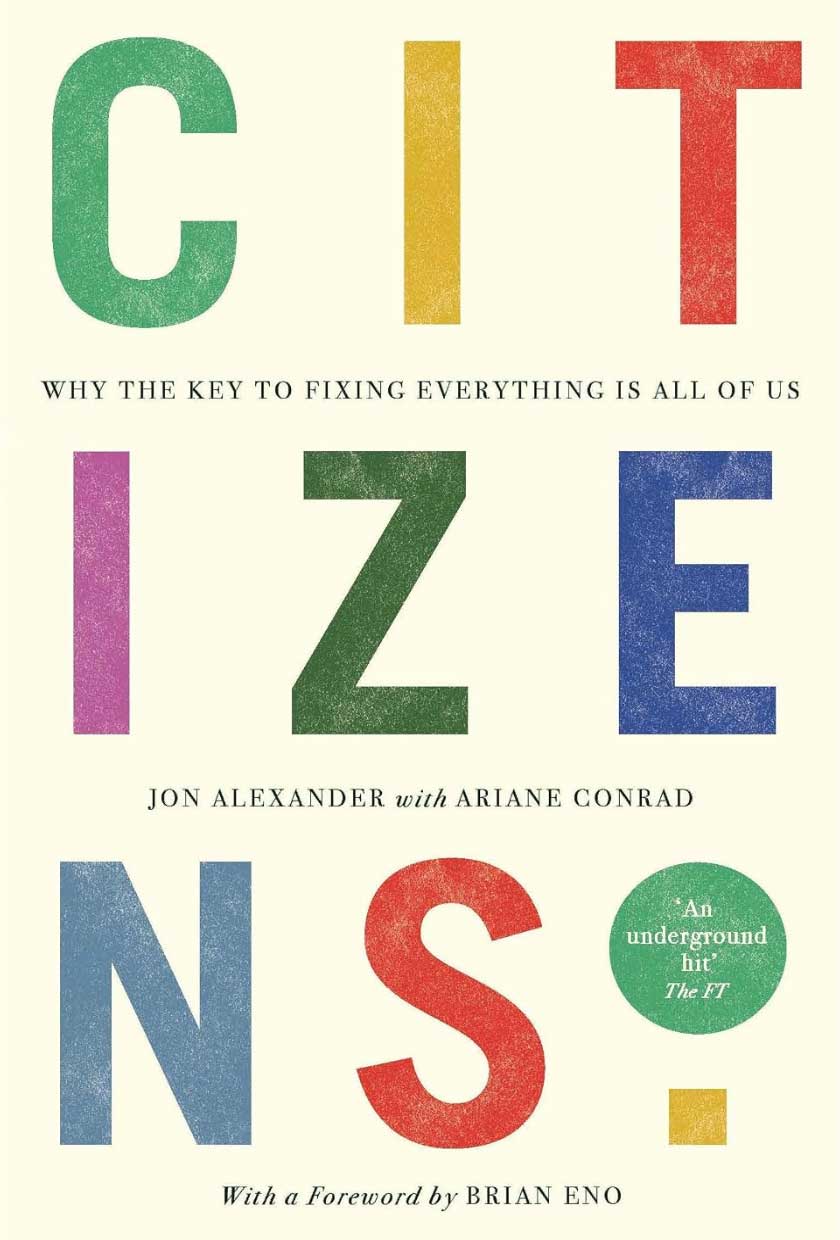
We were supposed to record a podcast together earlier this week, but I had to cancel and so we are instead bringing you a rather wonderful conversation in which TED speaker, pro-democracy activist and author of the book Citizens: Why the Key to Fixing Everything is All of Us, Jon Alexander, talked to Rupert and Caroline about their report – what it is, why now is the crucial moment and how they hope it will reshape politics in the UK and beyond.
So this is a star-studded cast and I hope you enjoy their conversation and head off and read the report. Then do whatever you can to become engaged in the new wave of citizen popularism.

More from Accidental Gods…
We offer three strands all rooted in the same soil, drawing from the same river: Accidental Gods, Dreaming Awake and the Thrutopia Writing Masterclass.
Our next Open Gathering offered as part of our Accidental Gods Programme is ‘DREAMING YOUR DEATH AWAKE’ which will run on Sunday 1st November 2026 from 16:00 – 20:00 GMT (NOTE THE TIME! – We’ll be out of summertime then) – details are here. You don’t have to be a member of Accidental Gods to come along, but if you are, all Gatherings are half price.
If you’d like to join us at Accidental Gods, this is the membership where we endeavour to help you to connect fully with the living web of life.
If you’d like to train more deeply in the contemporary shamanic work at Dreaming Awake, you’ll find us here.
If you’d like to explore the recordings from our last Thrutopia Masterclass, the details are here
Manda and Louise both offer one-to-one Mentoring Calls. Manda is writing a book just now, but if you’d like to contact Louise, details are here.
In Conversation
Manda: Hey people, welcome to Accidental Gods. To the podcast where we do still believe that another world is possible, and that if we all work together there is still time to lay the foundations for a future that we would all be proud to leave to the generations that come after us. I’m Manda Scott. Generally speaking, I am your host on this podcast, but this week an amount of chaos at home meant that we couldn’t do the recording that we had planned for Monday. So instead, we are bringing you a recording with Rupert Reid, friend of the podcast, emeritus professor and co-director of the Climate Majority Project. He and Caroline Lucas, former leader of the Green Party of England and Wales, and for a long time the only Green Party member of the UK’s Parliament, have written a climate Popularism report written for the Climate Majority Project and really working towards what climate adaptation actually means and how and why we can bring this to the forefront of British political action. And today, thursday 15th of October, they were interviewed by Jon Alexander, author of the book Citizens; Why The Key To Fixing Everything Is All of Us. Jon is also a TEDx speaker and an absolutely stellar pro-democracy activist. So who better to talk to two people who are really trying to change the politics of the UK and thereby, hopefully, by the ripple effect, the politics of the entire world? So here we go, with me nowhere in the picture, people of the podcast, please welcome Jon Alexander talking to Rupert Reid and Caroline Lucas.
Liam: Great. Welcome everybody to another Climate Majority project launch. We’re really very very pleased about this one; it marks the first time that Caroline Lucas is here as an author rather than a discussant, as she has been many times in the past. And we’re very pleased that she and Rupert, who has, of course written a lot of things with the CMP, are off to a bang with two Guardian articles covering our latest report, Climate Populism. I encourage you to read it in full, as both of those articles are being discussed as a template for green policy in the future. I’m sure it will come up in the discussion. And I think of course it should be, so I won’t recapitulate it to you, but we’ll mention that it is the fifth report in a series so far. The first was SAFER; Rupert, Rosabel and myself, where we introduced the concept of strategic adaptation. And second was the Climate Education Report, which talks about the need for changes in education that make students feel part of something large enough to make a difference and have emotional support in classrooms.
Liam: Then there was Plan B, which argues that we’re never going to prove that societal breakdown or environmental breakdown is going to happen before it in fact happens conclusively. So people talking about the need for degrowth, etc., are we ever going to win those arguments before the facts shows them that they’re true? So we need a plan B to prepare for the eventuality that facts on the ground make it apparent that some type of severe collapse situation or breakdown situation is going to happen. Obviously leading into some of the other reports, including the one today, and then finally Mobilising Silent Majorities, which looks at the six silent majorities across the globe. That is, majorities we don’t really recognise because they’re quiet, who give a lot of hope for climate. Including not just Climate Majority, but people who think that society doesn’t reflect their values, that we’re too polarised and that again, who actually worry that breakdown is coming. So over half of the people. It means we have the severity and the values to make a transition, the belief in severity. The severity of the situation and the values to make a transition to something different. Okay, let’s bring on Jon Alexander, who’s going to be our guest host for the day. We’ll all know of Jon from his work on citizens. Many of us, we’ve been long time admirers here at the CMP. He’s very much a comrade in arms, with pioneering, unifying approaches to climate action and societal action generally. And we’re pleased to have him with us.
Jon: Hello my friends. It’s very good to be here. As you’ve heard, I’m here to host the launch of this report, Climate Popularism. The way we’re going to do this is as a conversation, and it’s a real honour to be doing this, not least because it’s an opportunity to be in conversation with two of my heroes. Rupert Reid, someone who’s thinking and writing has influenced me greatly over the years and who I count as a friend. And Caroline, who I’m hoping to count as a friend fairly soon, but is very much one of my political heroes, I think arguably the British politician of the greatest integrity of the last 20 years or so. And that is not an easy thing to have been. I also want to let you know that from this point on, we will also be recording a guest episode of the Accidental Gods podcast. Manda Scott’s wonderful podcast, which I would highly recommend, not just because there’s also an episode with me. So you can check that out. And it’s an honour as well to be trusted by Manda to host something that’s going on her platform.
Jon: But we’re going to get into this conversation, because I do think this report, the reason why I agreed very happily to join this conversation, is because I think this report is a genuinely huge contribution. And I think the number of people on this call reflects that. This is the first thing I’ve seen that actually starts to set out a political agenda that’s really, really genuinely answering the question, how do we actually face what we’re actually facing? So much of our politics today, almost all of it arguably, is in some way a kind of contest for the immediate, rather than really looking into the future, really looking at the reality of what we’re facing and saying, how do we actually do this? And I think that the joy of this is that when you actually do take that challenge on, you find that there is something; if the word hopeful is wrong, then certainly something positive, something which gives people agency and something that people all over the country are already doing. So we’re going to get into that, we’re going to explore it in various ways and start to understand what’s really being set out here. I’m going to run this as a bit of a conversation for the next 40 minutes or so with Rupert and Caroline, and then you will have an opportunity to ask some questions. I’ll try and field that. It’s going to be slightly harder for me to do so from my phone than it would have been from my laptop, but we’ll figure that out as we go. And then we’ll bring Rupert back at the end to give him another chance to do his Geldof give us all your money impression, which I think is rightly meant.
Jon: So let’s get started. The first thing I want to do is talk definitions. Because this term climate popularism is a new term. It’s never been used before. And I’m going to ask Caroline first, can you set this out for us? And maybe do so in the context of two contrasts, I guess. One with climate politics to date, because it seems like you guys are trying to set out a different kind of climate politics. And I guess you’re also using this term popularism. And so there’s some contrast you’re trying to make with populism. So can you, Caroline, first, just give us a sense of what what we’re really talking about here. What’s the core of this proposition?
Caroline: Well, thank you so much, Jon, and thank you for agreeing to host this conversation. We’re really honoured that you have. So thank you and thank you for your kind words. So I guess the starting point for thinking about the report was that sense that climate action in its current form, self-evidently hasn’t really summoned the level of democratic support that we so urgently need to prevent the worst of climate breakdown. And the report seeks to ask why that is and what we can do about it. And I think part of the answer as to the why is that all too often, too much of the current approach appears remote and technocratic. It hasn’t obviously answered people’s immediate needs, and it has also lent itself probably too easily to a narrative pushed by the hard right that it’s managerial, it’s elitist, it’s top down, it’s stuff that gets done to you and makes you worse off. And in a sense, I think, we haven’t done ourselves any favours by continuing some of the language around net zero or biodiversity net gain. I mean, these are terms that mean nothing to anybody really. And so climate popularism is part of our answer to what we can do about it. And it’s essentially an approach based on seeking to depolarise climate action and climate policy and to rally more people to the cause by starting with the practical material, tangible benefits to themselves and their communities, which are both positive in themselves and, we would argue, much less open to hijack by the far right.
Caroline: So it’s a way of defusing the weaponization of climate policy and climate action, by focusing far more on how to make communities more resilient to extreme weather, to to the floods. That means, for example, that the local football pitch keeps getting flooded and local kids can’t use it and they drive their parents up the wall or whatever. It’s about local food growing to make food more affordable. It’s about really giving people a sense of agency. And I think that point about agency is so important, because where right wing populism, we would argue I think offers an illusion of agency, we would argue that local participatory action to build resilience can offer the real thing. That it can allow people to experience themselves as a collective force big enough to make a difference. And if we’re to fight back against the hard right, I think we need to do more than simply shift the focus of public resentment towards an alternative enemy, as I think a lot of populism tends to do. I think we have to find ways to genuinely meet the same deep human needs that populism merely exploits. And that means taking very seriously, I think, the material insecurity, the powerlessness, the social disintegration that populism feeds on.
Caroline: And if I can just add two more things, because I appreciate this is meant to be a conversation, but the first thing just to put to bed, because I know a lot of people think that adaptation and mitigation are somehow in tension with each other, that there’s a problem there. And in the report, we strongly contest that. In our argument strategic adaptation done well can both deliver mitigation and also draw more people who are yet unconvinced into this debate. And by starting with strategic adaptation, by by community resilience building, I think we can demonstrate to people that this is a whole policy area, a whole debate, a whole issue that really affects their lives. But also by coming along side them and with them in their communities, I think we can also lead them to their own conclusion that actually, adaptation alone is never going to be enough. There are some things we can’t adapt to and we need to mitigate. But it starts in real people’s real communities, not with a colourless, odourless gas that needs to be eradicated at some time in the future. It’s actually about offering people the power to build more secure, more connected lives here and now in an increasingly unstable world. And the last thing to say is, I think that we would be the first to say that some of this work is, of course, already happening, particularly at a local level. And we showcase some amazing examples in the report. And I think our challenge and the challenge that we set out in the report is how do we elevate that approach to a national level as well?
Jon: I love that, thank you. And I think just underlining a couple of things, I think that distinction between the the illusion of agency offered by the, the hard right, the agency of exclusion almost. And what you’re talking about in this report, the authentic agency to come together in community and do something that actually is genuinely meaningful in the face of this challenge, is a really well made contrast, I think. And I think there’s something very powerful in the sort of acceptance that there has been a kind of an abstraction, a technocratic element to some of the politics of climate today. And the mitigation work is important. And starting with the work that people are actually already doing can actually do in their own places, is a way to get beyond that and give us more meaningful access to it. Rupert, is there anything you’d like to come in as we sort of set the term, establish this concept of climate populism. Anything you want to add before we go any further?
Rupert: Yeah. I’ll simply add to the the excellent account that Caroline gave there, something quite tightly on the definition, if you will, the actual term. Which is that we wanted to indicate that it’s crucial to learn from populism, from its extraordinary growth and success. And we are learning things such as, for example, crucially, the need not to be so technocratic, the need to be more straightforward in communication, the need to have a wider emotional range. But we want to also completely go beyond populism and to go in some ways against what populism has actually meant. And of course, one of the intriguing things that we’re starting to see in British politics right now is that populism seems to be becoming a bit less popular. Nigel Farage’s poll ratings have gone through the floor. Whether we like it or not, Zach Polanski’s poll ratings have also gone down a lot lately. The poll numbers that Reform and the Green Party were seeing earlier this year, whether we like it or not, they’ve both gone down quite a bit over the last few months. Is there something that needs to be done differently? And of course, we think that there is. And in particular, and perhaps we’ll come on to this more, it’s about depolarising, which has been an essential part of the DNA of the Climate Majority Project from the start.
Rupert: It’s about not simply stoking anger, not stoking culture wars. It’s about making sure that climate is an issue that really does appeal to most people, which is what Zoe Williams is talking about in her article about our report in the Guardian today. And that’s why we’re saying climate popularism. We’re saying, look, actually, this cause can be popular and it can be more popular than the populisms which have arisen in recent years. So it’s a kind of balance, taking something from populism, but also offering a kind of corrective to it. And, you know, not everyone’s going to like the way we’ve done it. Obviously, part of what we’re trying to do here is to get a discussion started. We do think that there is a real phenomenon happening here, that the majority of people are getting more and more fed up with the way that politics is being conducted, and that it might actually be the time, with the impacts we’re receiving with the El Nino, etc., where an emphasis, as Caroline says, on starting with impacts, on starting where people are and building community resilience, etc., going way beyond the small moves that the government has started to make in the direction of preparedness, could actually be hugely popular and catch a wave and make a wave.
Jon: It’s really interesting. I mean, we might come back to this in a little bit. There’s a statement you make in the report that I think Burnham and the Burnham administration now would certainly agree with, which is that the rise of populism, I’m going to paraphrase you slightly but you say something like the rise of populism isn’t an endorsement of right wing values. It’s a sheer fed up with neoliberalism. And I think that that’s a statement that Burnham has made himself. So that there is a space. What he hasn’t done is leant into climate as an agenda. There’s another phrase used in the report that I’ve taken as a kind of quote, that I can see myself popping in a lot of places is where you two say that political actors who fail to take resilience and adaptation seriously, risk becoming irrelevant very soon. And I think it’s important to take a little minute. We don’t want to make this all a conversation about where are we on climate and what’s the latest science and so forth, that’s not what we’re here to do.
Jon: But you are saying something about the context here. You are bringing the kind of core climate majority project approach of honesty into this space. And this phrase that if you fail to take resilience and adaptation seriously, you risk becoming irrelevant very soon; that feels like an acceptance that we’re no longer in a place of prevention of some kind of collapse. I hosted Sarah Wilson, the author of a book called I Eat the Stars; How to Live Beautifully and Meaningfully in a Collapsing World in London the other day. And I think what she talks to is that this collapse is a process that’s already underway. And you seem to be saying there is a viable political agenda in acknowledging that. Am I reading that right? Can you help us really understand the reality of that and the political significance of it a little bit more? Unpack that kind of irrelevance that you see coming for those who don’t engage with this.
Rupert: Yeah. So, Jon, you said a lot of stuff there. I agree with all of it, I think, but I’ll just go back to the early part of it. Caroline and I passionately believe that Burnham is right on this point and that what this shows is that the way we’ve done politics is dying. But that also, as I said in my previous answer, the new way of doing politics, which we’ve seen in Reform UK and in a certain sense somewhat similarly recently in the Green Party, is also not getting it right. So there is therefore a huge opportunity and that opportunity has to be taken. And the reason it has to be taken is for what you then came on to say; we are in the age of consequences. We are not getting out of this. We’re not getting back to some status quo ante. It’s a fantasy to think we’re going to go back down below 1.5 degrees of average global overheat, for example, unless we do some absolutely crazy, potentially deadly reckless geoengineering intervention, which might conceivably make that happen. And yes, my view and Caroline may put this somewhat differently, but my view is that we do now have to lean into the facts which Liam established very nicely, I think, in his very important Mobilising Silent Majority’s report for us recently. The fact that behind the scenes, behind closed doors, more and more people think that some kind of societal or civilizational collapse and some kind of climate collapse in particular is coming or is starting to be here. And really what strategic adaptation is and what the kind of forms of adaptation and ways of simultaneously bringing down cost of living are, that we set out in the report, is a way of trying to take that realisation seriously, which doesn’t overly frighten the horses, which doesn’t sound like it’s something extreme or fringe.
Rupert: I think we are taking seriously that we may be in the early stages of a probably quite a long, drawn out collapse. People, when they hear the C word, they think, oh, so this is like talking about everything coming down like a house of cards next week or something. No, that’s not necessarily what it means. Collapses in the past have sometimes taken tens or even hundreds of years. And as Luke Kemp has shown in his very interesting book Goliath’s Curse, collapses can actually surprisingly be good for the majority of the population. Because, of course, the main thing that collapses is extreme inequality, hierarchies and structures that were harming people in the first place. So when we hear this word collapse, it can seem very scary. And of course it is. But it actually can offer enormous opportunities and we think we’re at the early stages of the process of trying to harness those opportunities and of seeing, frankly, the upsides of down, the upsides of the in many ways awful situation that we’re in. This is why I sometimes talk of a thrutopia, which is also a term, of course, that Manda Scott uses. Of a thrutopian attitude to our plight. Not sheer dystopianism, not sheer catastrophism, but not either a kind of wish fulfilment, fantasy utopia idea, which used to be what politicians on the left or ecological politicians put forward. But something we can actually validly manage to do, getting through what is coming in the best way possible. But Caroline, I don’t know, do you see things in quite the same way? Obviously, we don’t necessarily agree on 100%, even if we agree on 100% of the words in the report.
Caroline: In the same order that they appear in the report.
Rupert: Yes.
Caroline: No, I just wanted to pick up the point about about collapse really, because it’s a big word. Which is why I think that Joint Intelligence Committee report, the suppressed report, that was put together by MI5, MI6, and it was meant to be launched last year and then it was suppressed. And then there’s a freedom of information, or several freedom of information demands from Green Alliance and a shout out to Ruth Chambers for doing that, and eventually 14 pages of what apparently was a many hundreds of page report, 14 pages were, finally produced, albeit heavily redacted. But what that does is to use that word collapse. It basically says that the six most critical ecosystems that we depend on are on a pathway to collapse. And they are not talking about hundreds of years from now, they are talking about 2030 and shortly thereafter. So I think that’s the context for this, that even the security services or maybe especially the security services are beginning to talk about this. And I think we would be very critical of the kind of response we’ve seen so far from government ministers. I mean, Angela Eagle, the DEFRA minister, you know, has famously said, yes, things are going to get a little bit rocky in the near future, so maybe go out and get a few tins of baked beans and some loo roll and hunker down. I mean, that is a very individualistic and probably not terribly effective suggestion of a way of responding to this. And so I think what we want to centre in the report is much more that community resilience and frankly, making the case that your relations with your neighbours are a far better area of security for you than having your baked beans and your loo roll, although they’re probably important. But essentially it is about communities coming together in a collective way.
Caroline: And Rob Hopkins, I think, spoke really beautifully about this, when he was suggesting that instead of the loo roll and the baked beans, or maybe as well as, you know, why don’t we really put pressure on councils to release land so that people can come together and grow their own food together in local areas? That would be a far more effective way of really protecting ourselves from what’s to come. And something that Rupert often says, so I hope he won’t mind that I’ve just snaffled it so he can’t say it; but basically it’s really significant, I think, that even in the NATO treaties, article three of NATO talks about national collective resilience. And basically says that around 1.5% of the amount of GDP that’s meant to be being spent on security in the years to come, can very legitimately and importantly be focussed on community resilience. Because you can have as many weapons as you like, but if your society is in total collapse, that’s not going to help you very much. So I just think it’s quite interesting that there’s more and more of this kind of collapse thinking that’s beginning to enter the discourse. And yet in some ways, as with Angela Eagle, it’s simply not commensurate with the kind of scale of what we face.
Jon: In many ways, I think this is why I think this report is so powerful. Because our political discourse is starting to, in the background, sort of have this reality inevitably starting to enter. And Caroline, I just want to congratulate you on the work you did with The Rest Is Politics team, to really go into that as a series of interrogations of this national security report and context that she did. There’s a sense I have at least that this reality is here, and just as it is for all of us in a summer of heat waves, and as Rupert’s mentioned, the reports of the El Nino that’s brewing, and so on. And yet there isn’t yet the language to to find a way to speak to people as citizens who can be a meaningful and constructive part of that response, rather than needing to sort of be managed and protected from it entirely. And this brings us, I think, into the next stage of the conversation I want to have, which is let’s turn to what you’re actually proposing.
Jon: And I think, Caroline, you’ve started to hint at it. And also, maybe more importantly in my view, what you’re endorsing. Because the report is full of mentions of project and initiatives all around the country, where communities are leaning in and starting to build their own resilience already. It’s almost like in some ways, the population of the country is, in a sense, ahead of the politics, I’d argue. And Caroline, you’re nodding furiously, so I’m going to let you go. So there’s something going on already. Can you maybe land us in 1 or 2 of the things that you’re most excited about? And then maybe we can take that into some of the key recommendations. You started to mention councils offering up land; we’ve seen something in Lewisham recently. Some of this is starting to happen. But what’s most exciting you and what more could be done?
Caroline: Well, thank you for that. And I want to take us all to the Ladywood district of Birmingham and the amazing work of Civic Square. In fact, I was just listening this morning on Planet Critical, Rachel is replaying some of the podcasts that she has previously done, because she’s now on maternity leave. And there’s a wonderful one with Immy Kaur, that’s on the Planet Critical site, just this morning. Immy Kaur is the person who kind of co imagined, co co-founded Civic Square, which is basically about reimagining and co-creating the infrastructure that we need for an overheating world at a neighbourhood level. And we’re very honoured that she wrote the foreword to the report. And Rupert and I visited Civic Square, inner city Birmingham. I guess what they’re doing is just literally bringing the community together in that particular place and space. Finding, as in their case, a very derelict area and just using community power to come together, decision making processes, practical learning, community led planning, work on home retrofit, work on flooding. It’s basically equipping in a really practical way. What I love about Civic Square is that it’s got a lot of intellectual backing and frameworks that have got it to where it is now, but what it’s actually doing is looking at those people right now who don’t have jobs, who haven’t been trained, who don’t necessarily feel that they’re part of their local community or society and bringing those people in.
Caroline: And taking a very ordinary Victorian terraced home and demonstrating really practically where you can find the skills, where you can find the tools, literally the physical tools, to begin to retrofit this stuff. And it’s doing it in such a way that is all about strengthening community bonds, but in such a practical way, in such a way that I think is a template for what we need right across the country. Because I very much agree with you, Jon, when you say that people are in many ways, many communities are well ahead of where the politicians are with this. And I just think that what she’s been able to demonstrate is that an approach that is based on community resilience is not something that is exclusive to wealthier communities who’ve got lots of social capital. You know, you can create that social capital. And that’s what we saw Immy literally doing in that place and bringing it together, harnessing it, unleashing it. It was genuinely a really beautiful thing.
Jon: I’m just going to jump in and plug a couple of things as well, for people who want to go a bit deeper into this, after they’ve read this report, which is the first thing you must do. But there’s another couple of podcasts. I’m going to cheekily promote one of my own because I hosted Immy and Indy Johar together, to talk about the work that Civic Square and Dark Matter Labs did on three degree neighbourhoods, which is really worth checking out. But also send people towards the Screw This, Let’s Try Something Else podcast, which is six episodes going into all sorts of stories of community power from all across the country. From the deprived neighbourhood in Bristol that built England’s largest wind turbine, to the community in Belfast that are revolutionising Northern Ireland’s food system from out of a cooperatively owned greengrocer. And these are stories also that get a mention in the report, but if you prefer your storytelling podcasty, then definitely check out the Screw This podcast. But Rupert, let me come to you. Take us from Civic Square to the sort of broader recommendations of the report. What are you guys putting forward in the more conventional sense of a political report? What’s the recommendation agenda here?
Rupert: So I would say that the purpose of the way in which we highlight Civic Square and other amazing initiatives around the UK is twofold. It’s firstly to say, look, these things are happening and these are outstanding examples which can be emulated and can start to be joined up. And we can’t wait for government on this. The second purpose is to say, these are the kinds of things that local and national government ought to be supporting and ought to be doing. So, you know, it’s not like we can just say, oh, forget all about local and national government. While they exist they need to be used as much as possible, and they need to be doing the right thing much more than they are. And that’s where, of course, the agenda starts to become, if you will, more explicitly political. And what we are calling for is a whole set of things. But it boils down to saying that one way or another national government, local government, anyone involved with politics needs to be taking this agenda seriously and needs to be involving the people in how it gets implemented. So it’s not like, for example, let’s imagine that you actually had a government that said, all right, we’re actually going to start doing loads of these things. That wouldn’t then be a reason to say, all right, well, then local people don’t need to bother doing so much. Nor a reason for saying, all right then we needn’t consult local people that much, because, you know, national government have got this now. It’s never going to be like that and it shouldn’t be like that.
Rupert: So an absolutely crucial part of the report is where we lean into the ways in which democracy needs to be amended, needs to be made real, to take account of the time that we’re in and the kind of meaning of these kinds of initiatives like Civic Square and all the others. Then we come to what is actually our central recommendation in the report, which is what we’re calling a people’s plan for climate resilience. And this idea comes out of course, of conversations, Jon, with you, which is why it’s so appropriate that you’re the chair of this call. And with other splendid thinkers and organisers, people like Adam Lent and Helen Meech, the chair of the Climate Coalition, and the various wonderful experts on deliberative democracy that we consulted in the process of producing this report. Sahib Singh, Audrey Tang. And the essential idea of the people’s plan for climate resilience is that what we don’t do in the report is kind of set out a whole load of specific policy recommendations and say, you know, this needs to change on retrofit and that needs to change on ensuring cost of living stays down in relation to food and so forth.
Rupert: What we do is we give illustrations and we give examples of where things are being done well locally, and then we say what needs to happen is this kind of mindset needs to be absorbed and networked and acted upon at every level, including to the extent that it’s possible, clearly at the national and indeed international level. And what we suggest is let’s have a people’s plan for climate resilience. Let’s permanently let the people be involved in actually deciding how we rise to this challenge. You could see it as analogous to what XR called for back in the day, when XR said, look, we’re not going to tell you what all the policies are that would be needed to bring in the changes that are required for climate stabilisation and ecosystem stabilisation. We’re going to turn that over to the people in some significant way, to some significant degree.
Rupert: And exactly how that gets done even, you know, we haven’t even tried to set that out in full detail. Partly because Caroline and I don’t see 1,000% eye to eye on it; we’ve got a slight difference in terms of just how much power we should allow to be taken from elected representatives and given to ordinary citizens. But the central point is one way or another, either through a state initiative and local initiatives from local councils, or if that doesn’t happen, through the initiative of, well, people like us, people like you on the call. Through citizens initiatives, in other words, through some kind of funded program, some kind of parallel polish type program of creating our own people’s plan for climate resilience, our own deliberative assemblies on this. One way or another, we need to hear from the people powerfully. And this again, of course, is a way in which we’re, if you will, inheriting from populism. We need to hear from the people powerfully about how this should be done. It’s only ever really going to get done properly, if people are involved at every stage and it doesn’t become another technocratic, distant thing as too much climate politics, etc. has been in the past. Is that enough, Jon, to be going on with there?
Jon: Yeah, I think that’s great. I mean, maybe let’s sit in this a little bit more and Caroline come to you? Caroline actually, I’ll come to you first. The People’s Plan for Climate resilience. Tell us a bit more your view of this as an approach.
Caroline: Well, I think there it completely chimes with what Rupert has said about agency and how that feels such an important part of equipping people to go forward in a sense that they can make decisions and we trust people to make their decisions. I mean, as Rupert alluded to, there are areas that we’re not entirely agreed on. But I’m open to persuasion and maybe this is a very good call for people to persuade me. But just to get to the heart of that, I think where we differ in a sense is, if you set up a sort of standing citizens assembly of some sort, then to what extent is Parliament bound by the outcome of that citizens assembly? And it is complicated. Because it feels to me that accountability is really key. I mean, I love, you know, when Tony Benn has his lovely analysis of what power is and where it sits. And, you know, one of his big tenets about power is that if you don’t like what someone’s doing, you can get rid of them. And that’s true with parliamentarians. I mean, not quickly enough, one might argue. And you know, with an electoral system that we have that is far from perfect, it doesn’t always work. But in principle, you’ve got a way of doing that. And I suppose what worries me about basically giving all the power to the citizens assemblies is well, how do you hold them accountable if they come up with something that is wildly unhelpful?
Caroline: And there’s no reason, I guess, to suppose that they will. And all of the citizens assemblies that I’ve ever been involved in have always come up with plans and proposals that are far bolder, more ambitious, more fit for purpose than any of the governments in power at the time. But it’s just that sense about, you know, when Tony Benn said at the end of the day you can get rid of your Parliament. How do you get rid of these people that might have come up with something wild? And I can see Jon kind of looking pained, probably, given all the work that you’ve done on citizens, and you’ll set me right in just a second. But the principle where we do agree is absolutely that we need far more agency, far more power to people, to work out what this looks like in their communities, because it will differ from place to place. And I think we just need to trust that a lot more. Maybe this is just a point as well, but I just wanted to pay tribute to Rosie Bell, who worked with us on this report. And in these places where Rupert and I perhaps didn’t necessarily agree completely, she had a wonderful way of finessing the language to mean that we could both be happy with what was on the page. So a big shout out to Rosie.
Rupert: Yeah, absolutely. And I think, again, this shows how part of what we’re trying to do here is to stimulate debate and further discussion. This report doesn’t have all the answers. It’s precisely a call for people to be involved democratically in finding out together what exactly the answers are. Including the question of what exactly the process is going to be, which could make this happen on local levels and on the national level. And I guess we think that’s really exciting. And I’ll just mention to people that one thing that we’re trying to do on the back of this, is to do a funding bid to start to create a sort of pilot people’s plan for climate resilience. And if anyone wants to be involved with that in terms of either helping to fund it or helping to run it, do get in touch with me after the call. And that’s a key example of the kind of real world action that we are hoping to help to make happen on the back of the report.
Jon: I sort of want to take us a step back, actually, before we go any further into that part of the conversation. Because by the time we get to the nuts and bolts of a people’s plan for climate resilience, which I am very excited about as a concept, don’t get me wrong, but I think we’re already going a long way into the power of this report. So you’re starting by saying there is a way of doing politics, there is a political agenda available here that is distinct from how we’ve done climate politics to date. That is rooted in building on what communities all over the country are already doing, in a way that can be popular. That actually already is popular. But what you’re saying, I think, and the sort of underlying thing that’s so exciting is to say if that can be connected up, if the role of politics can be to say ‘yes and’, and let’s make this a whole thing, then the work that people are already doing in communities like Ladywood and Carrickfergus and Lawrence Weston in Bristol, can be so much more than the sum of its parts. And I think before we even figure out the mechanics of that, I think that message is so powerful, particularly when you put it in contrast with, as Caroline referred to, the current default mindset in our politics, which is there’s something huge coming; how do we sort of whisper it down and maybe quietly encourage people to buy some tins of beans. That I think is a huge contribution before we even get into the mechanics. So I just want to underline that to folks, first of all.
Rupert: Can I say, Jon, I think you put that incredibly well. And we think that the democratic aspect of this that we’ve just been talking about is a way in which we really would be going well beyond what climate politics thus far has really amounted to.
Jon: I think that’s great. And it’s a huge part of why I’m here. And I do want to, though, spend a bit more time on this concept of a people’s plan for climate resilience because I do think it’s very exciting. As I hear you talking about it and as we’ve chatted about it before this call, the learning from how really positive political transformation has happened across the world today, might be another climate majority report to come. In Ireland, for example, people know that the Irish government had a standing citizens Assembly that addressed some of its biggest questions, and led to legalisation of abortion, marriage equality, and actually some pretty leading climate approaches as well. But what many people don’t know is that the first citizens Assembly in Ireland that led to that was run by a group of citizens and academics from outside of government, with citizen donations and philanthropy kind of coming in to back it and create that demonstration. Sort of creating the space for the politics to move into. And Caroline, you sort of invited me to respond slightly to what you were saying. I actually am probably somewhere between the two of you.
Jon: I tend to think that if we can do those things, if we can create those kinds of demonstrations, then it’s perfectly possible for electoral politics to come into that space and have a role. But it’s fundamentally about the mindset. It’s about a mindset that says that people are sources of ideas and energy and resources. That we, the citizenry, are the country’s best resource in response to these challenges, rather than we are a problem; that we’re going to tear each other apart and therefore need to be sort of gently managed and whispered to. And I think that regardless of how exactly it intersects with electoral politics, I mean, in Paris there’s a standing citizens assembly as part of the city’s governance structure that exists entirely alongside the elected council. And that seems to be working really well. There’s €100 million a year of participatory budgeting. And Paris recently, contrary to where French politics is going more broadly, has kept that idea of a sort of citizen driven centre left ness to its governance. So I think we have a real opportunity here. And I just wanted to endorse that idea of a people’s plan for climate resilience. I think it’s going to be the the next step in the work of the Climate Majority project, I suspect, and hopefully one that will bring me a bit closer as well.
Jon: But today, I think we should stand very much in this core idea that there is a climate popularism. So in a moment, I’ll invite Rupert just to say a bit more about the structure of the report and the contents, kind of blow by blow. So you guys know that this conversation is not the whole of it. But maybe just before we go there, and then we’ll start to bring in some audience questions, Caroline, I’d love you to reflect first and then and then maybe Rupert to follow up. Beyond the idea of the people’s plan for climate resilience, is this also a report for the Green Party? Is it a report for Burnham and the Labour government? We talked a bit earlier about this idea that there is, I guess the exciting thing I would say about the this new administration, is that there is a recognition of the frustration with the acceptance of neoliberal approaches. Do you want this to be read by folks in the political parties as well? Caroline, what’s your thinking?
Caroline: Well, we very definitely do. And Rupert has put himself to the job of writing to lots of the MPs and leaders of the other political parties, kind of drawing out what there is in this report that might chime with some of their existing concerns and priorities. So if you talk about the Lib Dems, then obviously community politics has been very central to their ideology for years. Or right now, as you as you kind of allude to, with Burnham and his let’s get rid of 40 years of neoliberalism. I’m not sure if he knows what that’s going to actually look like, but I very much hope that this kind of agenda might give him a good steer as some of the first things that he could do. And obviously for the Green Party as well. And we are appreciative of what Zach has done in terms of making climate policy in some senses more accessible to people and to make the links between cost of living and material issues and climate politics. But we think there’s also a real danger if it’s only framed in a very kind of adversarial approach. Which is why, in a sense, we’re trying to say we want this to be more broadly popular, and it’s got to be if it’s going to be something that’s going to have real traction over the political system. So having too narrow a vision of it, I think is counterproductive. So to come to your point, I think we want it to be read by all political parties. I’m not necessarily seeing Nigel Farage and Richard Tice sitting down with it any time very soon, but I do think that their supporters could.
Caroline: And maybe one of the things that Climate Majority Project need to think about is how we might make a more accessible version of this report. Because being realistic, I mean, it is written more for policymakers and politicians than it is for your average person, who’s busy just trying to get on with their lives, let alone kind of sit down and read quite long reports. But it feels to me as if there really is a distinction here between Reform voters and Reform leaders. And many people, I think, are attracted to Reform simply because they are so fed up with the system and so desperate and just want something different. In a sense, it doesn’t much matter what it is, as long as it shakes things up. And to the extent that Reform have been very clever, frankly, in terms of positioning themselves as people who understand where you’re at, and are sort of leaning in to your immediate material concerns. I think we can learn from that, but also recognise that many reform voters actually do care about the natural world. And there’s plenty of polling that suggests that. And if there was a different and better solution out there, rather than voting for Tyson/Farage, I think that at least a number of them would be interested in taking that. So yeah, to answer your question in a long winded way, I think this report is for everyone on the political spectrum, but we probably do need to think a little bit about how to make it slightly more accessible, if we want people who aren’t necessarily policy people to be sitting down and curling up with it on a cold Thursday evening.
Jon: Well, maybe we can get Matt Golding to interview you two for the Screw This podcast and we’ll turn it into that kind of thing. But it strikes me, just listening to you, two things. Firstly, it makes me think of I’ve done some work with folks in Turkey over the last decade or so, and there’s this lovely project called the Radical Love Project in Turkey, which has been part of sort of undermining some of Erdogan’s popularity. And they have this phrase ‘hate Erdogan, love those who love him’, which is a really nice one. And then just thinking about the political parties that you mentioned, it strikes me that there’s almost a way of saying there is a yes to each of the Green Party, the Labour Party, the Lib Dems, probably also the conservatives actually, with their self-reliance narrative and so on. And there’s also a bit of a no, right? I was for a while a member of the liberal Democrats, I am no longer, and part of that is because I don’t think they really have lived out the community politics promise. But it’s in the DNA.
Jon: Paddy Ashdown wrote a book called Citizens Britain in 1989 where he contrasted two possible futures; a citizen’s Britain, where people’s homes in all their messy diversity are the true centres of power, and a citadel Britain where where power centralises in Whitehall and Britain retreats behind the English Channel and so on. And it was pretty foresightful. And it’s so fascinating to see all, I think, our political parties really struggling to deal with this current context. In the Liberal Democrats right now there’s a real problem because in Somerset, the May Day Saxon Vale, this pioneering community proposition for how to use a a big site in Frome in Somerset, for a climate resilient, affordable housing genuine community, that’s been developed by the community, has been rejected effectively by a Lib Dem led Somerset Council. They’ve sold the land out from under them to a developer. And so there are these tensions in all our political parties that are struggling to deal with this. And I do believe that this this report, Climate Popularism as an agenda, can find a way through. I’m going to turn to you now, Rupert, and I’m sure if you want to say any more on that note, you will feel free to.
Rupert: Can I briefly say something straight away? Which is can I say, firstly, notice, folks, that when you look at the report, you’ll see that there’s a splendid endorsement for it by Clive Lewis, who was of course a Labour MP, which we think is an encouraging sign. Secondly, on the question of getting the report to a wider audience, some of you will be aware that somebody who wrote an academic report a few months ago, did this amazing thing of creating a Ladybird book about it. I would love it if somebody would create a Ladybird book of our Climate Popularism report. I think that’d be fantastic. And finally, just to add to what Caroline said in relation to cost of living; one of the crucial drivers of this report is that increasingly, the main driver of increases in the cost of living is climate and ecological breakdown, combined with dodgy geopolitics. And that is a reality which is not going to go away. And that is a central driving thrust of our report in terms of if folks don’t pay attention to this, then what people have said is the number one issue in British politics today is just going to go on getting worse and worse. And that is a discouraging thought, but also an encouraging thought for the kind of vision that we’re putting forward in the report.
Jon: Rupert, can you just do the job of telling us a little bit more about the contents of the report, what’s really in there? Because there’s so much more than we’ve been able to talk about in the last 40 minutes or so. It’s really quite a piece of work.
Rupert: Basically, the report starts out by setting out the trouble that we’re in. We’ve already said a fair bit about that, so I won’t really elaborate on that. Except to say that one thing which the report does there, as you can see in part one of the report, is to look at the different versions of populism that have been around so far and to set out how ours is different. In part two of the report, which is the main part of the report, we work through these various different dimensions along which climate popularism works. So we start out with the stuff I’ve just been talking about there, the way in which cost of living is now being driven by climate and ecological impacts. We then talk at some length about something which we haven’t really said much about on this call here today, which is how depolarisation can actually work. How essential it is to create a climate majority and realise it, because there just is no way we get to deal with the crisis we’re in without having most people on side. You can’t do it with a minority, because climate and nature now saturate and are saturated by everything that we do, basically. And some of the ways in which we think that a focus on adaptation and cost of living can bring people together. And the key point I want to make there is that although people will try and are already trying to create a culture war out of adaptation, for example, are you for or against air conditioning? Whereas the obvious answer is something like, well, we’re for air conditioning where it’s necessary in, say, public transport and in hospitals. But if we go hell for leather for air conditioning, that is a classic example of shallow reactive adaptation, which is actually just going to make things worse. It’s going to risk failing, it’s going to be high carbon, etc..
Rupert: People are trying to create a culture war out of this, but it’s not as easy to create a culture war out of it as it is with decarbonisation and mitigation alone. And the reason for that is you can see in real time whether adaptation type stuff is working, and you can do it together in a locality, and it will vary by locality. It’s kind of more place based. So we think that there’s good reason for believing that it’s going to be harder to polarise this agenda if the agenda is done right, than if it isn’t. We’ve spoken a lot about democracy, and we’ve spoken a bit about the emotional dimension. I’ll just underscore that one of the things we argue at some length there, is that it is vital to have a wide emotional range. That when we move beyond technocracy we mustn’t just move into a sphere of anger. We need to mobilise also, crucially, grief and sadness about what we’ve lost and what we’re losing. We need to mobilise love and awe and curiosity and joy. And we think that wide emotional range is increasingly available and is going to be what the smart politicians of the future use. That’s probably enough from me if you want more, read the report.
Jon: Beautifully done, Rupert. Thank you for that.
Manda: There we go. That’s it for another week. I haven’t had a chance to listen to that yet, so I have no idea what they just said, but I am hoping that it really lands well with all of us when I do finally get round to listening to it, and that it has already landed well with you. I did read an early draft of the report, and I believe we need total systemic change. But before we get there, we need the routes through from where we are. And that means we need to take the system that already exists and begin to make it actually fit for purpose. So this report goes a long way towards highlighting why the popular right is so huge, and how we could create a popularism of people who actually get it. And if you’re listening to this podcast, this is you. So thank you to Rupert and Caroline for writing the report and for Jon for talking to them and for all three of you for letting us have the recording for the Accidental Gods podcast. With any luck at all, normal service will be resumed next week and we will be back with another conversation.
In the meantime, thanks to Caro C for the music at the Head and Foot and for this week’s audio production. Thanks to Lou Mayor for the video, to Anne Thomas for the transcript, to Faith Tilleray for all of the tech in keeping things moving. And as ever, an enormous thanks to you for listening. If you know of anybody else who’s interested in how we could actually make democracy work in this country, then please do send them this link. And that’s it for now. See you next week. Thank you and goodbye.
You may also like these recent podcasts

A New Earth Dawning: Biological Elegance, the health of humanity and OriginEarth with Zach Bush, MD
What happens when someone who has trained for years in the Cartesian model of science, of medicine in particular – who has been trained to look at bodies the way a mechanic looks at a car, to take them apart and fix one thing and put it back together and get it back on the road… what happens when that person begins to question everything?

Dignity, Confidence and Care: The Matriarch Effect transforming lives with Dr Robyn Short
How do we actually do the inner work of growing into interdependence and then the outer work of healing our relationships and holding whole, generative spaces for all parts of ourselves, ourselves and each other, ourselves and the web of life?
Hostage Nation Part 2 – Anything we can do, we can afford – with Jamie Driscoll of Majority
” The first and most fundamental duty of a civilised state is the safety of its people.
Not just safety from overseas adversaries, or crime in the street. Economic security. A bill you can pay without going overdrawn. A house you can afford before your children have children of their own. A job that lasts long enough to plan around.
Britain guarantees none of these…” (from the Hostage Nation paper)
How not to be a hostage to the vigilante Bond Markets: with Jamie Driscoll of Majority
What are the actual, practical shifts in our political economy that we could do tomorrow, that would not require extra legislation and could transform our society? While there are many economists looking forward to an idealised system some way down the line, very few people – politicians or economists – are exploring what we could do now, today, within the guiderails of the existing system, with the politicians we have and the economy we have and the constraints of a world undergoing rapid geopolitical as well as geophysical change.

STAY IN TOUCH
For a regular supply of ideas about humanity's next evolutionary step, insights into the thinking behind some of the podcasts, early updates on the guests we'll be having on the show - AND a free Water visualisation that will guide you through a deep immersion in water connection...sign up here.
(NB: This is a free newsletter - it's not joining up to the Membership! That's a nice, subtle pink button on the 'Join Us' page...)