
#316 Barefoot Economics in a world of Hobnailed Boots with storyteller Inez Aponte
If we are to build systems that meet our real needs we have to first understand what those needs are and start growing the stuff that will allow us to thrive: good food from healthy soils, safe and supportive homes and communities, space to develop and express our creativity, opportunities to increase our capacity for co-operation and kindness. As much as these, though, we need to understand what an economy is for – why it does what it does. And while we’re all clear that the death cult of Predatory Capitalism exists to enrich the few at the expense of the rest of the living web, it’s not always clear what a flourishing economy might look like.
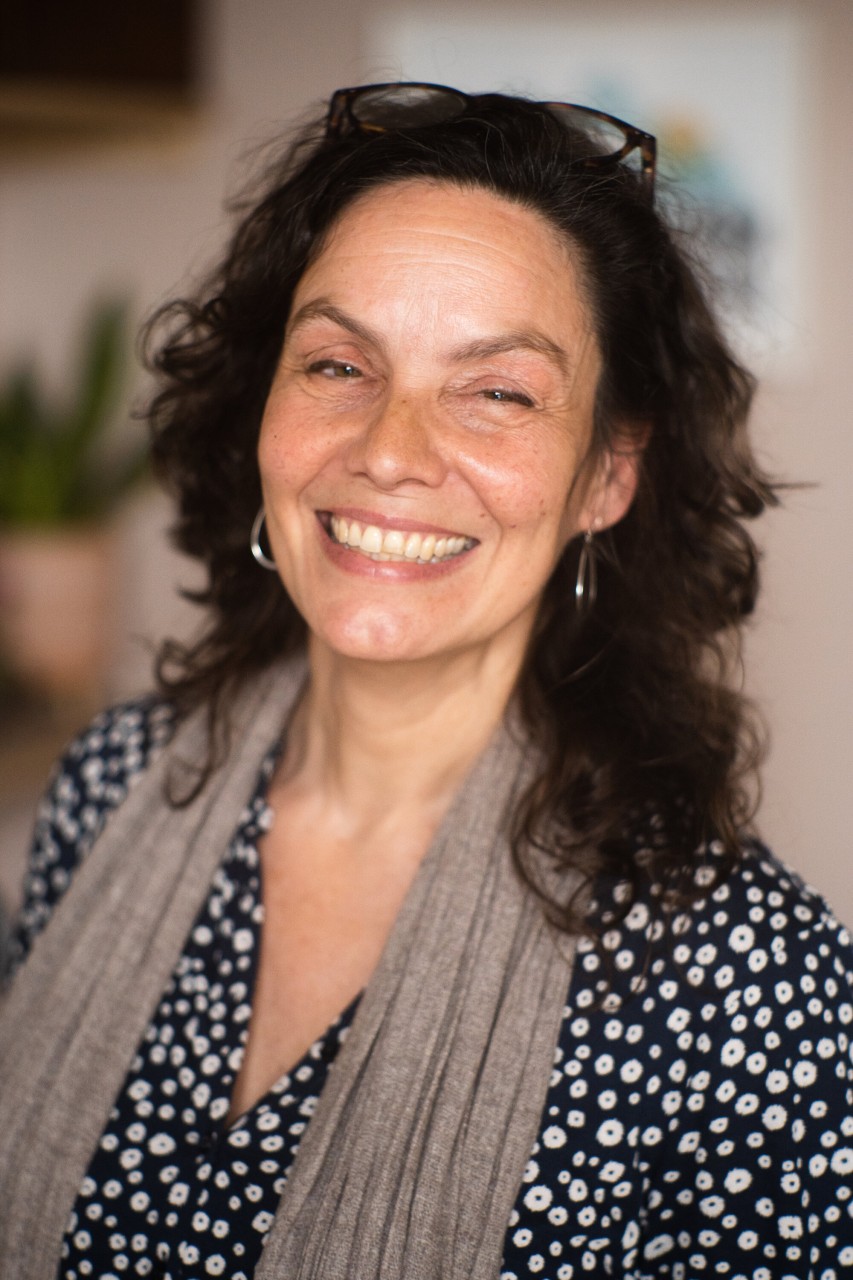
So we’re going to explore exactly this with our guest today. Inez Aponte is a self-described ‘Dissident of Capitalism’, she’s an educator, storyteller, and consultant who’s spent 15 years bridging mainstream economics with human-scale alternatives. Using the Human Scale Development Approach (Barefoot Economics), she helps professionals see the economic system itself, and imagine what comes next.
Barefoot Economics (also known as Human Scale Development) was developed by Manfred Max-Neef and colleagues in Chile as a response to the predations of the colonial capital system. It reframes economic thinking away from endless wants and towards nine fundamental needs: Subsistence, Freedom, Participation, Understanding, Affection, Creation, Idleness, Protection and Identity.
We are wealthy when our needs are satisfied, regardless of our income. This means we can also be poor in multiple ways, even when we have a ‘healthy’ bank balance.
Inez has built this forward into a framework for the 21st century. Her ‘Beautiful Economies Learning Lab’ breaks people out of mainstream economic thinking to explore how we can build systems that meet real needs while healing ourselves, communities, and the Earth.
So this is our deep dive. Let’s go.
Episode #316
LINKS
What we offer
If you’d like to join the next Open Gathering offered by our Accidental Gods Programme it’s Dreaming Your Year Awake (you don’t have to be a member) on Sunday 4th January 2026 from 16:00 – 20:00 GMT – details are here
If you’d like to join us at Accidental Gods, we offer a membership (with a 2 week trial period for only £1) where we endeavour to help you to connect fully with the living web of life (and you can come to the Open Gatherings for half the normal price!)
If you’d like to train more deeply in the contemporary shamanic work at Dreaming Awake, you’ll find us here.
If you’d like to explore the recordings from our last Thrutopia Writing Masterclass, the details are here.
In Conversation
Manda: Hey people, welcome to Accidental Gods; to the podcast where we do still believe that another world is possible and that if we all work together, there is still time to lay the foundations for a future that we would be proud to leave to the generations that come after us. I am Manda Scott, your host and fellow traveller, in this journey into possibility. And before I tell you about this week’s guest, we’re in December already (scary) and January is coming up soon, so I wanted to tell you about the gathering at the beginning of the year: Sunday, 4th of January, 4pm till 8pm GMT. We are gathering to dream our year awake to find out what it is that really is going to help us feel that sense of being and belonging, that sense that we know what’s ours to do in the world and have a sense of agency and direction and empowerment to make it happen. We’ll be working with the concept of future memory, building a future that feels real to us at a core limbic level, so that we can bring the best of ourselves to what is absolutely, unquestionably going to be a totally transformative year. It’s online on zoom. We work on our own, together as a group and in small groups in breakout rooms, probably two, maybe three. So if you’re coming along, please be prepared to do all of that. And you don’t have to be a member of the Accidental Gods membership program. You can be if you want to be, but it’s completely not expected or necessary, and you don’t have to have done dreaming your death awake back at Samhain; though if you have, for me, the year starts back then. We learn to fall in love with living by falling in love with the process and reality of our own death. And then if we’re truly in love with life, every moment becomes a moment of total possibility and total magic. But we’ll be reprising a lot of the ideas of that, because I genuinely believe that every single one of us needs to fall in love with the process of living in order to be able to be what the world needs of us at this moment. So come along if you can, and if you can’t make this one there are other gatherings through the year, and you’re welcome to come to all or any of them.
Manda: And then this week we’re talking to Inez Aponte, a self-described dissident of capitalism. Yay! Inez is an educator, a storyteller, a consultant, who spent 15 years bridging mainstream economics with human scale alternatives. She uses the human scale development approach, which is otherwise known as Barefoot Economics. It was developed by Manfred Max-neef and colleagues in Chile as a direct response to the predations of the colonial capital system, and it reframes economic thinking away from the endless wants and consumerism of our culture towards nine fundamental needs. We will talk about them in the podcast, but I want to iterate them here, so that you’ve got them in your head. They are: subsistence, freedom, participation, understanding, affection, creation, idleness, protection (I would say safety), and identity. And the belief is that we are wealthy when our needs are satisfied, regardless of our income. And the obvious corollary to that is that we can be poor in multiple ways, even when we have what our system would consider to be a healthy bank balance. Inez has taken all of these and built them forward into a framework for the 21st century. Her Beautiful Economies Learning Lab breaks people out of the mainstream economic thinking, to explore how we can build systems that meet real needs while healing ourselves, communities, and the earth. So this is our deep dive. People of the podcast, please welcome storyteller and barefoot economist Inez Aponte. Oh, and I also need to say I have a slightly manic puppy at the moment who goes a little bit bonkers towards the end of the podcast. And we did not have a time frame where we could just stop for me to take her out and wear off some of the energy. So we just carried on. So there are some slightly weird noises at the end. Caro has done her best with the production and I apologise. This is the nature of life. Okay, here we go. Here’s Inez and Barefoot economics.
Manda: Inés Aponte, welcome to the Accidental Gods podcast. How are you and where are you on this bright, shiny, we’re in December (how did that happen?) December morning?
Inez: Well, I am in Devon and the sun is streaming into my room at the moment. It’s absolutely wonderful. I’m very well. I’m excited to be talking to you, Manda.
Manda: Thank you. And and we’ve talked quite a lot, you and I. And I still have Devon envy. I still I still think Devon is an amazing and wonderful place to be. So for people outside the UK, it’s way down south. It’s near enough the coast, but it’s also got Dartmoor and it’s just that beautiful mix of moorland and sea and some very switched on people. So yay for Devon. So you are a storyteller and a barefoot economist, which I just think is a gorgeous idea. So I know you share this a lot, but tell us how that came to be. How economics as a concept came to be something that you realised was important. Because it took some of the rest of us a very much longer time to get to that.
Inez: Yes. So 20 years ago, at that point I was already a storyteller for ten years. I had my son and some friends invited me over to their house to watch a film called An Inconvenient Truth, which is probably the biggest, at the time, the biggest mainstream climate change film. So I went along with my little baby, and we were watching all of this stuff about climate change. And there was a moment, I don’t know if you remember this moment, where he has to get on a lift to show the temperature’s rising, the hockey stick graph. And I’m watching this and I’m thinking, oh my God, I’m looking at the temperature in like 2020, 2030, 2040. I’m thinking that’s my son’s future. And it was as if the future was disintegrating before my eyes. And even as I speak about it now, I can still feel the emotion. And I fell into, I guess the sort of deep, dark night of despair. And I sometimes tell people that I spent a week crying, and I don’t think I exaggerate it. I would lie there looking at my baby sleeping and just think, what are we going to do? What are we going to do? And eventually I picked myself up and I got involved.
Inez: The most positive thing I could find was joining the transition movement, at the time I was living in Bristol. But there was a kind of question that kept lingering with me after that moment, and that was about the other people in the room who were with me. And they were my friends so I knew they were good people, but I was kind of fascinated by why they weren’t acting as panicked as I was, why aren’t they like changing their lives around? And I realised then that actually we all respond differently to information. And also that even when we’re confronted with the truth, if there is a story that can somehow make us feel better about what’s going on, we will listen to that story. The story is kind of comforting and it helps us make sense of things. And I thought, what could be this story that is keeping everyone so passive about this? And I realised it was a story of economics. The story of economics keeps telling us that whatever is going on, somehow economics will fix it. We just have to keep growing the economy. And then when we grow the economy, we’ll find all this technology and we’ll be able to fix it.
Manda: Yeah.
Inez: And I just was like, oh my God, that’s what’s going on. These are not bad people, but they are in the grip of a story. So I ended up then, just by chance, meeting someone who was studying at Schumacher College, which is now just down the road from me. And he had met a Chilean economist, Manfred Max-neef, who is one of the founders of Barefoot Economics or human scale development. And that is how I ended up finding the kind of thing that really made sense of what was going on for me, this Barefoot Economics framework.
Manda: Okay. And let’s dive into that. But I just want to pause for a moment and reflect on the fact that that was nearly 20 years ago. Your son is 20 now and is off at college.
Inez: Yeah.
Manda: And in those 20 years, we still haven’t learned the lessons that should have been learned when that film first came out, which is exactly what you’re saying. It hit some people really hard and some people it wasn’t able to Land. It feels to me what we’re doing is throwing bits of Velcro at a lino floor. They don’t stick because there’s nothing to grip onto. Because unless there is the capacity for reception, people can’t. And I think this is one of the things, we’re at that point where we are letting a narrative perpetuate, which makes people at a very core level, feel ashamed of being human. Where we’re being told that we’re both personally and collectively completely responsible for all of the chaos that we can see happening. And at the same time, we are completely powerless to do anything about it. And if you’re caught in that kind of double bind, like a rabbit in the headlights, the only rational and possible response is to freeze. And freeze happens in different ways for people. There’s denial; it’s not happening anyway. Or there’s deflection of it’s all happening in China, it’s not actually our fault. Or there’s despair; the crash into a week of weeping. Which I didn’t hit then, but I hit it when I read Jim Bendall’s deep adaptation. Again, I cried for at least a week. And then there’s also, I think, there’s the defaulting to or displacing, I think more, to actions that let us feel a little bit as if something is being done that actually make no impact whatsoever. Because we haven’t got the scope to imagine the scale of change that we actually would need to have, because we’re being told there is no alternative. Margaret Thatcher said that in 1979, and everybody still believes it. Except you don’t. And Manfred Max-neef didn’t. And the people that you teach with your Barefoot Economics course don’t. So let’s have a look at how max-neef frames what an economy is for. Because our economy is for making a profit, regardless of the impact on people and planet. What would a generative economy be for?
Inez: Yes. So the basic Foundational principle behind human scale development is that the economy is to meet our fundamental needs, and that those needs are finite. They’re not endless. We don’t have endless needs. We have endless wants, but we have in this framework nine fundamental needs. And I think the most important thing that they did, because it was not just Manfred Max-neef, it was a group of academics, was to distinguish between a need and a satisfier. So you have these nine needs. You can have endless satisfiers. And those satisfiers are very much culturally determined. They’re shaped by the story of your culture and by what’s made available to you. So what that means is that there are endless possibilities for satisfiers, but some of them are, in this particular economy, aren’t made available to us. Or they’re made very difficult to access, whereas some are made very easy to access. And mostly the ones that are easy to access are the ones that we can pay for, that someone can make a profit out of. So it might be good just to kind of go over what those needs are, to get an idea of what they were thinking about. So I guess the most obvious one is subsistence; you need to keep your body alive. But another fundamental need, which is considered to be part of the economy, in the sense of the economy is about meeting needs and this is fundamental, so is affection. We all need to feel loved and appreciated. And often when I bring that into the workshop, people are like affection? How is that an economic need? But if you think of it, like how do we flourish? We flourish also through love. It’s very, very important. So things like that, those social needs are part of this framework. So affection is a need. We have a need for freedom, autonomy, some agency in our lives.
Manda: We really do.
Inez: We have a need for identity. We need to know who we are and where we belong. We have a need to also be idle. So there’s a need for idleness; to rest and relax.
Manda: Yeah, I think that’s a terribly unfortunate word. I think if we called it rest and relaxation, people would get less triggered by it. Because idleness in our language equates to being lazy. And lazy is bad because Protestant work ethic. Anyway, sorry. Carry on.
Inez: But also that’s where the conditioning comes into. So those needs are conditioned by the culture. So when I work internationally, when I work with Brazilians or people from Latin America, they’re like idleness. Yes.
Manda: Oh, really? Oh that’s interesting.
Inez: And if I work with Germans, they’re like idleness? No. You know, it’s very culturally sort of like dependent. So it’s very much a kind of northern European thing about idleness, but it’s not the same everywhere. So we have identity, idleness, freedom, affection, participation. We need to join in with others and have a say about our lives. We have a need for protection; we want to feel safe and secure. We have a need for creation; we have an innate ability to express ourselves and need to express who we are and experiment. We have a need for understanding; to be able to make sense of the world. And I think that’s it.
Manda: Yeah. That’s the nine. Yes. Okay. So I would really like to unpick these, but before we do, you were talking about needs versus satisfiers.
Inez: Yes.
Manda: So I’m looking at this in a cognitive neuroscience sense, and everything that you’ve listed in those nine, that Max Neef and the others listed, are things that evoke serotonin in our brains. And if we get them, we create a serotonin mesh of engagement and belonging, that sense of being and belonging. I’m part of a community where I am safe, where I am fed, where I give and receive love and affection. Pride isn’t in there in the list, but I think in terms of serotonin triggers, it’s a huge one. Of I know what’s mine to do, and I’m doing it as well as I can, and I’m surrounded by people who recognise that in me, just as I recognise that in them. And the capacity to relax, because we can only be creative when we’re in that expansive space. And I discovered the other day, interestingly enough, or interesting to me, that things like ayahuasca and psilocybin trigger serotonin release. And I suspect, though I have not yet found the evidence, but I’m sure it’s there, that if you are in a culture where your serotonin mesh is healthy and fed and alive and springy, and then you bring in something like ayahuasca, the experience is very, very different than if you’re in a Western culture. Where we are giving ourselves little dopamine drips in a desperate effort to fill the hole inside, and the void inside is not filled by dopamine. It needs the serotonin. And so if you have that serotonin void and then you take ayahuasca, psilocybin, I think it’s going to be a very different experience. That’s a whole separate concept and a whole separate conversation. But I wonder, are the satisfiers, are they external, extrinsic, motivational, money, a Rolex, a private jet, things? Or are they also a cruise to the Caribbean, which for some cultures is a good thing and for some cultures is a why would you want to do that thing?
Inez: So this is where we get to the really juicy bit of human scale development. So if we just start from the position that all over the world, these needs are the same. Then we can start to see that in different parts of the world, people are attempting to meet those needs in a different way. And across time they’ve been attempting to meet. So, for example, let’s take the need for identity. If I was perhaps living in a small tribe in Papua New Guinea, my need for identity would be tied up with probably certain traditions, maybe certain material things, certain activities. But I don’t live in Papua New Guinea, and my sense of identity is probably much more connected to consumerism. And that is because there is a 1.7 trillion industry that keeps telling me that I will belong and feel better about myself if I have these things. So it’s not so much that the need itself, that motivation, that desire to meet the need, is wrong. It’s what is happening on the other side, the side of the satisfier? And it’s very clear that certain satisfiers not only either don’t satisfy us, but they harm the world. And the basic principle of human scale development is to find satisfiers that meet your need without harming others and without harming the planet. So that is the puzzle that you’re trying to solve. And the reason why you distinguish between needs and satisfiers is you can then evaluate the satisfier rather than the need. So you never say to someone, oh, there’s something wrong with having a need for identity. You say, oh, how are you meeting that need for identity? And is it actually meeting your need? Because a lot of the times it’s not meeting the need. So the thing about the Barefoot Economics framework is that it gives you language to describe what’s going on. So there’s a really important word in barefoot economics, which is pseudo satisfier. It’s trying to meet your need, it’s pretending to meet your need, but it never does it.
Manda: So can you give us an example? Is alcohol a pseudo satisfier then?
Inez: It depends. I guess it depends on how you’re using it. So again, when I work with people, I never say alcohol is a pseudo satisfier. I just ask them, what do you think is a pseudo satisfier in your life? And then some people might say, well, actually alcohol is because I’m drinking because I feel lonely. And what I really want is to be with other people. But for some people alcohol isn’t, because it’s part of how I celebrate with other people. So you start to see that within even these satisfiers, there can be different ways in which we use them. And it creates a lot of space for those subtleties and those personal inquiries. And what I really love about it is that I sometimes work with quite young people, you know, 12 year olds, 17 year olds. And often they get the idea of a pseudo satisfier very, very quickly. They’re like, yep, they can reel them off. And I remember one young man of about 17 or 18 saying, you know, my Xbox is a pseudo satisfier. And I said, well, just tell me a little bit more. He says, well, it’s a pseudo satisfier for affection and participation, because I really just want to hang out with my friends in person. But the only option I have is to be on the Xbox with them. And you just think, wow, they came to that themselves. I wasn’t hammering on about Xboxes being wrong. I just said, think about your needs, think about how you’d like them satisfied. And is what you’re doing now actually satisfying them? And then what you see is that for a lot of people, we’re not getting satisfied by this particular economic system that we’ve developed. We have a lot of poverties. And it allows you to see those. They just become much more focussed.
Manda: And the epidemic of those Poverties is leading us to an epidemic of mental health chaos, I would think. But also to the cultural state of the moment, I’m really interested in all of them, I think they’re all interesting, but identity is being weaponized much more now than it was when we first saw Al Gore’s film, for instance. It wasn’t that we didn’t have a sense of nation states in a Hobbesian sense, in a sense of belonging to those nation states. It just hadn’t been given the edge. Nobody was putting up England flags all around the place 20 years ago. And the people who didn’t put them up didn’t feel threatened seeing a flag of Saint George. And now it’s become something very deeply limbic. And I wonder, I work quite a lot in a space where we’re exploring Primavera de Filippis idea of coordi-nations, which is in itself a response to the concept of a network state. But what happens if we let go of the Hobbesian concept of a nation as being that political entity which, within geographic boundaries, claims a monopoly on the legal use of violence. And a state is an inherently hierarchical, violent, imposed thing. And yet I see myself as Scottish. It’s who I am. It’s an integral part of my identity. And I wonder whether within the Barefoot Economic space, people are exploring ways that we could move from ‘I am Scottish’ or I am (identity of nation state). Or I am skin colour, or I am gender, or I am whatever, that gives me that sense of identity. All of which are relatively recent constructs and none of which is particularly relevant to the flourishing of human life, or indeed all life on the planet. How do we shift? How would we? Is there any work being done on how we might shift senses of identity?
Inez: Yeah, I think the identity one often really triggers people, because sometimes people then misunderstand it for like, oh, well, having a sense of identity is something that we should be moving away from. But what Barefoot Economics acknowledges is that everyone has it. Maybe apart from some very enlightened monks, everyone has a sense of themselves, of who they are and what they prefer, and that’s okay. And sometimes part of our identity is to dress a certain way. And if there’s a slightly anti-consumerist approach to that it could be like, oh, you shouldn’t care about what you look like. But humans have always cared about what they look like. It’s okay. It’s what you do on the satisfier end. Are you constantly buying new clothes? I saw this beautiful thing once where, I think it was something from a Native American tribe, where the bridal gown was created over, like, 20 years. So this item that was going to be very important was just woven over 20 years.
Manda: From when the little girl was born, then.
Inez: Yes. And I thought, okay, that’s also identity. It’s just going to have a very different impact on the planet.
Manda: And its affection and its protection. It’s so many of those and it’s understanding of this is who you are as a human being. Let’s look at understanding, because also sense making is one of the things that seems to be breaking down very fast in our culture. But I think if we look at it at, say, my parents generation, our parents generation, their sense making was very rigidly defined. They had maybe one channel on the television by the time they had televisions. And they had 2 or 3 newspapers and pretty much they were all saying the same thing. And their capacity to make sense was very rigidly defined, unless they really made an effort to break out of really quite narrow channels. And our capacity to make sense now is probably not quite infinite, but it’s very close. And yet we have AI that can generate newspaper articles and videos and references that don’t have any bearing on any actual reality. And understanding seems to me to be a dual sided thing. It’s both how do I understand the world? And also do I have a sense of being seen, feeling felt, and getting gotten (in Sarah Schlote’s concepts)? Am I being understood? And so again, I’m curious to know what’s happening in the barefoot world in terms of helping people to be seen as in an authentic way. Because it feels to me that authenticity is one of the most precious things in our world at the moment. And how do I recognise what’s authentic in the world out there? Is that something that’s being explored?
Inez: Um, I don’t know if it’s being explored in the economics world, per se. I guess the take on that might be… If we think of the internet as a satisfier for the need for understanding, you have to ask, well, how well is it meeting that need? And in some instances it might be, but in other instances it might be doing the opposite. We might be getting a poverty of understanding. And when I think, for example, of my grandmother, my grandmother was a Creole woman from Suriname. And so she lived off the land and raised ten children off the land. And I think her understanding of living on the planet far exceeds mine, far exceeds it.
Manda: Raising ten kids from the Land. Wow. That’s hardcore.
Inez: I would love to have had that kind of understanding. So again, we can really go into the nitty gritty of it, you know, what is that understanding? And when you’re trying to evaluate the satisfier, you can also look at other aspects of what is available to us. So you could say the internet exists. We have access to information, but we don’t necessarily have much agency over how the internet is run. So our sense of freedom and participation would be very low in that case. Whereas the understanding that my grandmother would have had, she would have had more agency around the understanding that she was accessing, because it was very direct. It was accessing information from the community and from the land itself. So again, there’s multiple layers that you can use in human scale development to make an assessment of how good something is for us. Which is how it also distinguishes itself from very narrow measures of success. So, for example, the parts per million conversation, you know. We can go into the, oh, we need to reduce parts per million. And the consequence of that is that we get a lot of false solutions. And my big bugbear is the electric car. Because the electric car, and I’ll give you an example from Barefoot Economics, if you look at it through that lens. So in Barefoot Economics you’d have to ask yourself what is the car for?
Manda: What is the need that you are satisfying?
Inez: So even if you were able to make that car out of waste plastic or waste iron or whatever, and even if you used sludge to run it and it produced fresh air, just imagine; totally perfect.
Manda: Pure oxygen coming out of your car.
Inez: Look at what cars actually do to our society. Apart from that, they have to have infrastructure that runs through neighbourhoods. People cannot play outside and meet their neighbours in the street anymore. They create an unsafe environment. And regardless of that car, you’ll be commuting back and forth in a traffic jam. So your capacity for meeting, having time to meet your other needs will have diminished. The safety of your neighbourhood has gone down. So you’re not looking at it holistically. You’re looking at it through one measure. And that one measure, I feel, in the last 20 years has done enormous damage to our progress, because you can’t look at it just through one measure. Because also you’re having to look at where are the elements of creating an electrified grid coming from? And they’re coming from the global South. And we know what’s happening there. And so again, you have to look at this whole thing from a holistic nine needs perspective, without damaging the earth. And the good news is that for most of our existence on the planet, we’ve managed it. It’s not like we haven’t managed to meet these needs. We’ve just met them in very different ways from the ways that we meet them now. So it’s not impossible.
Manda: But it’s very unlikely that we’ll go backwards, I think. I agree with you. But two things that I would like to branch and meet both. One is, for me, the sense of connection to the more than human world is also a human need that we have lost in our culture, that that isn’t in that list. And I wonder if they knew that and decided to cut it off? So that’s question one. So let’s talk about that one, because then I want to go back to cars as an example of poly crisis and how barefoot economics might move us towards something that looks at the whole picture. But connection to the more than human world. In everything that I’ve understood in terms of initiation culture versus trauma culture and what it is to be an indigenous human on the earth, where indigenous is connected, fully connected. Everyone’s indigenous to somewhere, but where we mean someone who is co-creating with the web of life. Then it’s that co-creation with the web of life is an essential need, that if people are cut off from that, they die. And is it there in one of the nine fundamental needs, and I’m simply not reading it into one of the words? Or was it a decision to not appear spiritual in a Western world that doesn’t like spirituality?
Inez: Uh, no. I think that it’s implicit in the sense that you are trying not to do any harm to the world. But I have, in my workshops made it explicit. So I often ask at the end of the nine needs, what is our most fundamental need? And it’s interesting that very few people then say, oh, the earth. They don’t because we’re very human centric. And then they go, oh yeah, of course they say, yes, of course.
Manda: Right.
Inez: But we do need to make that explicit. However, one of the strengths of the barefoot economics framework is that it is working with how humans in the West are today. I think it’s very useful to start with what human needs are, because people have criticised it and said, oh yeah, but it’s not talking about the Earth. But the fact is, most of us aren’t talking about the Earth. But we can get there by starting with talking about what human needs are and whether people’s needs are met. So it’s been my journey to talk to people who have no interest in the earth and no interest in economics, and somehow get them to be interested in economics and interested in the Earth. Because once you start talking about the needs, all your satisfiers come from the earth. Your mobile phone wouldn’t be here without the earth. None of the things you love can exist without the earth, but you are in a world that doesn’t allow you to see that, because it doesn’t want you to see that, it wants you just to keep shopping. So therefore, there is a moment when you suddenly realise, oh yeah, if we destroy the planet, I won’t get my needs met.
Manda: There are no mobile phones on a dead planet.
Inez: Exactly. You cannot have your needs met without the planet. Whereas the narrative we have now is, oh, you can get your needs met without the planet. Oh, can we afford to save the planet? Literally this is what economics is doing right now. Can we afford to save the planet? I mean, you couldn’t make it up. It’s so insane. But when you work with Barefoot Economics, you work from the needs back into understanding the earth is our foundation, but you don’t expect people who are totally cut off from the natural world to suddenly get this connection. Because for most people, every day is just like, how am I going to put food on the table? So start with where they are.
Manda: And given what you’ve just said, that most people’s concerns are surviving within the death cult of predatory capitalism, which is doing its best to grind people into the ground. And Rob Hopkins says capitalism is a dis imagination machine. It’s not an accident that we’re all kept afraid of lack, because that holds us in a very sympathetic nervous system frame, which means it’s much harder to be creative. And as you said, creation is one of our fundamental needs. And if we don’t get it met, then we’ll displace into other things. So part of what this podcast is about is looking at thrutopian narratives. How could we go from where we are, which is clearly not grand, to a place of human flourishing within the web of life, in a way that is co-creative. And as you said, we have to start where people are. Have you explored in any of your workshops or any of the work that you’ve done, routes to taking our existing capital economy, that is dependent on markets and consumerism and values profit above everything else, through to a human scale development economy that functions presumably in a completely different way and with a completely different value set underpinning it. How do we make the shift from one to the other?
Inez: I can’t say that I have a direct sort of story of this is how we do it. Wouldn’t it be great! All our problems solved. Because we live in a very complex world and there are different things happening all the time, what I try to offer people is a way in which they can understand themselves as part of this system differently, and by doing that, see the value that they have. Because this system tends to value us according to how much we produce, and all the other wonderful things that we might do, they don’t count, we’re not even interested in. And we start that from a very young age when we say to children, what are you going to be when you grow up? We mean, what are you going to produce in the economy? You know, you can’t say, oh, I want to be a clown. Ha ha ha! They all laugh, you know? But we need clowns. We need clowns, dancers, musicians; we need all of those things. But it narrows down our options. So what I’m trying to do is open up those options for people in a number of ways, and that’s that. There are many different ways to satisfy your needs, and you can look through different cultures that are still, at the moment, satisfying those needs in ways that do not harm the earth. And you as a person have value when you look at those needs, whether or not you have a job. If you’re someone’s friend, you are, in a barefoot economy, extremely vital. Because you’re meeting someone’s need for identity and affection and participation. And because we’ve become so disempowered, we need to start feeling the power that we have. We need to start feeling the value that we have and direct our attention to where is value happening in my world already?
Manda: Right.
Inez: We were thinking about the future, but right now, some of these beautiful things that are happening, we’re just not paying attention because the economy right now is drawing our attention to all the shiny stuff that’s making lots of money.
Manda: Or the lack of shiny stuff.
Inez: Or the lack of shiny stuff, yes.
Manda: Many people can’t feed their kids now. Okay, so we draw our attention and people get that. So my question always with these things is people get it, they understand at a cognitive level. And perhaps they then value their mother more or care for their mother and value that caring more. Or any other example of caring in a way that is a reciprocal process. I’m wondering how we get to a critical mass of people who understand that, such that the economy no longer hinges on profit. I remember vividly and quite distressingly, David Cameron suggesting that GDP was not actually a very good model or measure of productive efficiency, and we should start looking at other things. And he was right, and I was pretty horrified at having to agree with David Cameron on anything, but nobody listened to him. He was leader of the Conservative Party at that point, they were in power, and still nobody listened. And that was 2015, a decade ago. And everybody still thinks GDP is useful when it completely isn’t. And Robert Kennedy, the sane Robert Kennedy, gave an astounding speech on how GDP was an extremely bad measure of value. And we’re still doing it. Have you any sense of a barefoot economic movement arising? Such that people’s sense of what really matters, is shifting the Overton Window somewhere towards a more life affirming way of being?
Inez: Yeah. I mean, I do feel very fortunate that I see a lot of great things happening. It’s very easy to listen to the news and think, oh my goodness, what’s happening out there? But of course, that’s a wonderful way to keep us all very sort of stuck.
Manda: And the people who make the news are the billionaires.
Inez: And when you start to look around, you start to see, well, there are amazing things happening. But I think there is also something there about understanding where the obstacles are to all of our dreams. And one of the things that I introduced in my workshop is for people to understand that we have one money system, when we could have a multitude of exchanges. And already when you have a multitude of exchanges, it’s much more robust because if one system fails, you have these other forms of exchange. And it’s been knocked out of people’s imagination that you can exchange with each other in many different ways. So for people to understand, the work that I think is really important is the work of Bernard Leotard. You must be familiar with his work. Because he showed all the different ways in which people might exchange. And what that creates is sort of like an ecosystem of exchange. And that’s not the same as money. All these different things have different qualities. They might be tied to different activities. So like he’s very keen on learning tokens. And one beautiful project which he describes, which unfortunately the Brazilian government didn’t take up, was where he proposed that children would start a kind of mentoring quite young. They would mentor children younger than them in school.
Inez: And by doing that alleviate some of the pressure on the teachers, but also they would gain in their own self-esteem. By the time they got to 18, they would also receive, I think, some something like half of their further education would be paid for. And that’s kind of saying, oh, yeah, again, a child has its own value they can give into the world. It doesn’t have to be paid for because paying for that creates another quality, but it can be valued. So that ultimately, with what they offer to their community and to their peers, they can end up getting an education. So you’re taking it away from the conventional money system, but you’re still offering value and credit. I mean, credit is what you’re looking for. You give something and you get something back at some point, even if it’s not immediately and you’re giving into your community. So understanding these different forms of exchange. Another one I really, really love is Grassroots Economics; Will Ruddock.
Manda: No. I should obviously.
Inez: You must have him on your podcast. Absolutely wonderful project happening in Kenya. Over there he’s basically working with the community to revive a very ancient form of exchange. And it’s a form of commitment pooling. That means that communities come together and they say what they’re going to put into the pool. And when you put something in the pool, it means at some point you can take out of that pool. And you also decide as a community what is of value. So it’s not just only practical things, it could be a grandmother and some of her wisdom could also go into the pool. And then you create these exchanges with each other that bind you together as a community. It’s not foolproof, sometimes people don’t make good on their promises. But, you know, right now, in lots of ways people are not making good on their promise. So that’s part and parcel of working with people. Then the exchange becomes something that binds you together as a community. It’s so wonderful. Absolutely you must get in touch with him. But there are many, many ways that people can exchange. And that awareness of people to realise that, again, opens up possibilities. I don’t have to only meet my needs in one way.
Manda: And it doesn’t have to be within the existing hierarchical economy.
Inez: Exactly.
Manda: Yes, I will put a link to Bernard’s work, and I will find grassroots economics and put a link to that, too. Okay, so let’s come back to Barefoot Economics as a model for a different way of being. And it sees the economy as an economy can be a good thing. Because we live in a predatory economy, it’s not the case that all economics has to be predatory. It can be a flow of value. And that what we value at a heart level can be a good thing. I worry sometimes when we’re looking at some of Bernard’s work, that everything can become zero sum or everything can become price and value lead, again. Now a child has value and that value can be extracted. We exist in an economy where the economy is fundamentally predicated on the commodification of suffering. Human suffering, planetary suffering, ecosystem suffering, everything. That we extract value by imposing suffering. And I’m really interested in how we can frame economics as a way of exchanging, accounting for, and storing value in a way that is flourishing for the human heart and the connection to the more than human world. And it seems to me that barefoot economics frames an economy that is not predicated on the commodification of suffering. This is a good thing. Sorry, guys, there’s a cat waving its tail at my microphone. And I wonder, this may not be possible, but whether you or anyone in the barefoot economic world has explored how the world would look and feel if our entire system were predicated on human scale development instead of the commodification and extraction of suffering. How would we wake up in the world? What would the world feel like? How would we exchange, store, and account for value? Does that make sense as a question?
Inez: Yes. The thing about human scale development is that it’s not prescriptive. So in different communities, probably there would be different ways in which those needs would be satisfied. But at its foundation, I guess there are some foundational things, is that you would be looking at re localising. Simply because when you relocalize, I guess there’s two things happening. We have to think about energy, so like you’re using less energy to meet your needs, which is incredibly important. But not only that, when you relocalize you’re also increasing your agency. It’s much easier to have agency over something nearer to you than having agency over a much, much larger scale.
Manda: So you get participation and freedom.
Inez: Basically things should start from the village and then go on to the global order and not the other way around. Right now we have the global order determining what happens in the village. No, it starts in the village and then it goes out into the global order. So you’re not ignoring the fact that you live on a planet and that there’s connection, but you’re saying, how does this work for these people right here in this particular place? So you’re very much focussed on the particulars of the place that you’re in. Whereas right now we have a situation in which we barely connect to the places we’re in, because so much of our satisfiers are just coming in from all over the place. And so the focus is the meeting of needs within a place. And whether we like it or not, we are going to be forced into that situation probably sooner than we like. Because, I mean, I’m sure you’re familiar with Nate Hagens work around energy blindness. And, you know, it’s just the inevitable.
Manda: The Great simplification.
Inez: The great simplification. We have to simplify. But that does not mean necessarily that that’s a bad thing.
Manda: It doesn’t. But if we do it because we have to rather than because we want to, there’s going to be a lot of resistance. So the electric cars is a thing. If we told everybody you can’t have a car, there would probably be an armed revolution. Much faster than if you told everybody, I’m sorry, we’re going to pollute all of your water with 16,000 forever chemicals that are guaranteed to be both carcinogenic and endocrine disruptors. And everyone goes, yeah, fine, that’s as long as we’ve got the Teflon pans, we don’t care. But you’d say, no, you can’t have a car and there you are, there’s pitchforks in the streets. And actually, I live in the middle of nowhere, and there’s no other way of moving around. I do need some way, unless all I do is walk and cycle. So how do we shift to a space where whatever is coming down the line, we meet it with generosity of spirit and integrity and compassion and whatever you think are the foundational values that would get us through. In a way it goes, yes, actually, I want to live this simpler life.
Inez: Yes.
Manda: And I want there to be air that I can breathe in, water I can drink and, and soil that actually generates food that’s worth eating and that I can eat. Even though raising ten kids on the land is beyond my current skill set. So how do we help create the narratives that mean that it’s not like just slamming straight into a brick wall? Because at the moment, if we hit the great simplification tomorrow, a lot of people are going to be very, very, very unhappy. And it won’t be tomorrow there is no power. It’s unlikely to be that, there’s going to be a ramping down. And the people who weaponize identity are going to use that ramping down as a weaponization. And I would really like us to be in a space where everybody goes, you know what? This is much nicer. I don’t have to go to work anymore, because work is a product of predatory capitalism. They need us to be locked in a system where we are producing. And guess what? No human being evolved with work. It was not a thing. So we don’t need more jobs. We need to find a world where there are no jobs. There’s: what is your vocation? What is it that you choose to give in a far simpler world? But that as a narrative is much harder. And I’m wondering if within human skill development, there are ways of helping people move to that place of grace and yearning for that world.
Inez: So I think that we can in some ways learn from predatory capitalism. Because the advertising industry are always looking at what’s their pain point? And if you look at what’s happening through the lens of barefoot economics, you can see that there are a lot of poverties that we’re suffering from right now in the wealthy part of the world. Poverty of affection, poverty of identity, of participation. And what you see capitalism doing is they prey on that. I mean, this is a while ago, but we had the Coca-Cola family. For goodness sake, you know, what is that all about? They were like, oh, yeah, people need connection. We make them part of the the Coca-Cola family. And I think those of us who want a better world, we need to start thinking about what people’s needs are and tell stories about those needs. What would it be to be part of a family that’s, you know… Regenerative is a tricky word, but, you know, a more connected family.
Manda: Tell us, tell us more. Why regenerative is tricky?
Inez: I think it’s just one of those words. If I talk to my family about regeneration, they’re like, what do you mean? It’s not a common word. We have to think about using language that people can just really relate to.
Manda: Oh, I live in such a bubble. Regenerative is a word in my bubble.
Inez: It’s not hard to understand, but it’s not a common word in the rest of the world. But if we were to think about, for example, the kind of pandemic of isolation and loneliness. Drop the agenda and bring people together. They want that. They want to be together. They don’t know how to be together. They’ve unlearned how to be together. There’s too much time on screens, but people are yearning for connection. So already that could just be part of your plan. I always say, you know, we need to become the better friend. We need to become the better friend because there’s some really nasty friends trying to get hold of everyone’s desires right now. And we could be that better friend. We could be that place where people feel that they’re accepted, that they can be creative. So creating spaces where people’s needs are met. Because if people’s needs are not met, they will accept any way of meeting their needs, even if it destroys them and the planet. If they cannot get their needs met, none of us are immune to that. If the only food I can find is ultra processed food that’s been transported around the world, I will eat it because I’m hungry.
Manda: Well, it’s also addictive. So even if there’s eggs and apples next to it, I’ll still go for the doughnuts. So. Yeah.
Inez: And so think if you think of being able to provide the satisfiers that are really going to meet people’s needs, and also moving away from the addictive satisfiers, people want real satisfaction. It’s not that hard. Once you get people in a space, I find it’s not that hard to see how desperate they are for connection and meaningful, purposeful activity. It does mean getting them away from their screens, but I think it also means starting with meeting needs before you go on to telling people about your agenda. And in fact, that is the playbook of, I can’t remember the name of it, a right wing group during Covid that was going around helping the old people, all of that stuff. And I thought, you are clever. You are clever because you know what? People will like you and then they will want to listen to you.
Manda: We heard about that.
Inez: And then they’re going to join your group. I remember seeing, it wasn’t even a terribly good film. But it was about the Klu Klux Klan. And there was a moment in the film where this undercover agent is at a barbecue, and she’s asking this person who’s there, oh, you know, how do you feel about being here? Why are you part of this group? And he says, this is my community. And I think he needed community more than he needed to hate black people.
Manda: Possibly…
Inez: There are clearly people who have negative intention, and then most people are floating around trying to find something meaningful in their lives. And we need to provide that meaningful space for them. And I think that’s the sort of place where we can start. And it’s a space beyond politics, I think. Not that politics isn’t important.
Manda: Yeah. There are no politics on a dead planet. I am having that conversation with quite a lot of people after the Europe Party debacle at the weekend. Let’s not go down that road. And for people outside the UK, that will mean nothing. However, it seems to me, I don’t know what timescales you’re working on, but we haven’t got very long in which to do this. And building community requires a nexus of people who understand that it’s useful and know how to do it, and then people who are willing to step away from their screens and join. Oscar Wilde said a very long time ago, the problem with socialism it takes up too many evenings. And he didn’t have screens to distract him. He just didn’t want to be going out into the cold and the wet in the dark every other evening to get together with the local people and try and form a better system. So how do you work towards this in your communities?
Inez: So I think it’s a really good point about the speed of things. And on that basis, the speed that we need to go at is unfathomable,right?
Manda: Yeah. And progress happens at the speed of trust and all those things. I love that, but still, I think there’s an urgency.
Inez: There is urgency. So I would say there’s a few things. Of course we need people who can create community. We need people who understand that. We also need space. If we don’t have spaces in which to gather, if we don’t have Land, well, it’s great, but, you know…
Manda: How can you gather if there’s no room to do it.
Inez: Every single movement I’ve talked to they’re all like, oh, we got together, we had a place. And they’d say like, oh, it really took off when we found this disused shop. Because we are material beings. We need to be in a space, we need to be on the land, we need to have that connection to something very real. So as part of this listening and getting together and empathy and creating community, we have to also fight for our spaces. And so I’m very glad that there are a lot of places that are doing that. But I think it’s very important if you’re thinking, oh, what should I do? Join some kind of land based movement, taking back disused spaces, making sure people have housing. Because we need to have space to be in. It’s absolutely important. And then what happens in a space? I think it really accelerates the change. It really accelerates our capacity to do stuff. So I would say that that is an incredibly important part of that. And then yeah, what you do in those spaces, you know.
Manda: Tell us what you did in Plymouth because that sounded really interesting.
Inez: Yes. So in Plymouth, I’ve been part of a project called Tales to Live By. And there we created Living Rooms, with the goal of bringing people out of isolation. It was framed as a mental health project, but we were trying to make it more like a mental wellbeing project, rather than ghettoising mental health. Why don’t we create spaces where the people who are struggling are with the people who are flourishing in a living room? And in that living room, you are invited to share something of yourself. And it doesn’t matter what it is, you might be very good at doing a particular thing. It might also be something you’re trying out, but you’re invited to be seen by this loving community. And the feedback we’ve had from that has been absolutely wonderful. The healing that happens when you are in a safe place, where you can just share a little bit about who you are, is enormous. And it’s very much lacking. You don’t get that from a like on your Facebook post. It is absolutely thrilling to see people transformed by the love of a community.
Inez: It’s just the love of a community, and there’s no agenda apart from you just coming and being yourself. And those kind of spaces, I think, transform people so that they become more welcoming. You know, there’s less othering. I’ve seen a whole multitude of different types of people and they’re all beautiful. And that’s the muscle we need to start practising. Because the forces that are telling the ‘other’ story are telling us the story of othering all the time, and that we will be safe with those other people aren’t there. But it’s not the truth. But rather than saying, oh, yeah, you know, those immigrants are good people, spend some time with other people and experience their story and hear their story. There is no way you can hear another person’s story and not be moved. That is what happens when someone authentically shares who they are. We have a capacity for connecting with that. It’s almost impossible not to connect with that. You’d have to make a real effort not to connect with another human being.
Manda: But I’m really interested in how you create a safe enough space for that to happen, because I’ve been in spaces where sharing authentically was not a safe thing to do. And yet, the people holding it thought that’s what they’d created, and they definitely had not succeeded. And I’m really curious to know, what is the kind of space where there might well be triggers of gender or sexuality or identity or race; how do you create that level of emotional literacy that allows it to be safe?
Inez: Yes. I mean, I’d have to unpick that a little bit. I’ve been doing it for a very long time. I think there’s something about really meaning it. And that’s a practice also within yourself.
Manda: Right.
Inez: You have to really mean it. When you say, I’m accepting people as they are, you have to mean it. Even if you only mean it for the evening. You have to mean it for that evening. And you also have to set up really good boundaries. Safety is contingent on the boundaries that you set. So not everything is where violence isn’t welcome.
Manda: Okay. And emotional violence. So if somebody is innately racist, sexist and homophobic, you have boundaries that don’t let them then project their stuff out onto other people? Or do you let them and accept them for who they are?
Inez: Um, no. Because you’re weighing up the safety of the whole group. You’re seeing yourself much more as a whole. And I think in my entire career of 30 years of facilitating, it’s only happened once or twice that people don’t read the room. Because the energy in the room is not just what I do, it’s a sort of contagious thing. It’s like we agree through our actions, how we speak, the tone of our voice, how we welcome people into the space. We’re making agreements. How the space is laid out, what the light is like. There are all things that are there to help us regulate our nervous system. So it’s not just me, it is everything, the whole team. Everyone is there with a regulated nervous system, it’s a place to relax. We make sure that it’s somewhere where you just feel safe. And then we also are explicit about that safety. Of course, you need to name these things.
Manda: It’s really interesting. It’s probably a whole other podcast. Because that sense of co-regulation and reregulation and what it is to turn up authentically, which takes a lot of courage. But if one person, you, can do it, then it seems to me the energetic ripple of that around the circle, there’s something about that capacity, and it only takes a couple of people within a circle. And we are so attuned at a really deep level, I think, to listen to that. And part of what we’ve lost in the fragmentation of culture, where you’re on a screen; you can do that on a screen, I’ve watched it happen in zoom rooms. But it doesn’t happen, for instance, in a television studio where there seems to be the opposite of that and they want people to assault each other. And that too is something that we feel. And I think acknowledging the magic that happens when we are subliminally aware of the energy of a space and respond to it. I think that can be transformative. And I know that self-reliance is one of the three pillars. We didn’t really talk about the three pillars because actualisation of human needs is one, increasing self-reliance is another, and balancing Interdependence between people and I would say between all parts of ourselves, ourselves and each other, ourselves and the web of life, are how we get forward. And finding ways to let people experience that feels to me you’re moving way beyond the cognitive level. But maybe this is another podcast of how do we at scale help people to understand their role in a community. That they have a role in a community, that the community is a thing and that they are an integral and essential part of that. So that they can have that sense of reciprocal pride. And I’m really curious about the Plymouth project and did the Plymouth project, did you see it rippling out, I suppose?
Inez: Did I see it rippling out? I mean, I saw the impact it had on people. Yes, people have said real transformation in their lives, around their creativity, because it’s a creative project as well. People can come and try things out. And just in a sense of self-esteem and their sense of valuing themselves. And in some ways, I have to say, it’s not that simple because like you said, there are things that we do that make that happen, but it’s also not rocket science. And, you know, if we created these living rooms all over the country, we would be transforming the culture, because the culture is very much focussed on the individual right now and it’s not meeting people’s needs.
Manda: We’re going to have to stop because I’m not meeting my puppy’s needs. I’m really sorry. I thought I’d worn her out this morning, but clearly not.
Speaker3: It’s very important.
Manda: And we’re at the top of the hour. Okay. I think that’s a really good place to stop: creating the spaces where we help people to meet each other’s needs and giving them the skills to do that, feels to me really crucial to getting towards the human scale development that we need. Thank you. Is there anything else that you would like to share in a tiny amount of time at the end?
Inez: No, I guess we’ll just put the details of the website and links and it’s been a pleasure talking to you.
Manda: It really has. I look forward to a barefoot economic world as soon as we can make it happen. Thank you so much, Inez Aponte, for coming on to the Accidental Gods podcast. And there we go. That’s it for another week. Huge thanks to Inez for all that she is and does. For the beautiful clarities that she brings to the ideas of how we can help people find the best of themselves. How we can do the active listening that really helps us to anchor with people. And then how we can identify the ways forward that meet people where they are, and help us all to bring the whole of our culture into a way of being that is predicated on different values. On actually meeting the needs of who we are as human beings, and as integral nodes in the web of life. And thank you also to Inez and everybody for being patient in the face of puppy manicness. I’ve put links in the podcast to growing good lives and beautiful economies, both pages that Inez manages. And I found a link on The Future of Money by Bernard Leiter, well worth reading.
Manda: He is/was an extremely smart person who developed a lot of local economies. And without question Inez is right, we need fiat currencies not to be fiat currencies. If we carry on as we are, the billionaires will become trillionaires, and they do that by sucking all the value out of the rest of the economy. If we have a lot of different means of exchange, it’s a lot harder for them to do that. Not impossible, but harder.
Manda: So that’s it for this week. We will be back next week with another conversation. In the meantime, enormous thanks to Caro C for the music at the head and Foot and for this week’s production. Thanks to Lou Mayor for the video, Anne Thomas for the transcripts, faith Tilleray for the website, for sorting out the gatherings and all of the tech involved therein. And as ever, a huge thanks to you for listening. If you know of anybody else who wants to understand how we can meet our needs in ways that are not extracting suffering out of the rest of the people and the planet, then please do send them this link. And if you have time for five stars and a review on the podcast app of your choice, it genuinely does help the algorithms, which helps us to reach more ears. And that’s it for now. See you next week. Thank you and goodbye.
You may also like these recent podcasts
Call to Adventure! Crafting an Integral Altruism with Jonas Søvik
What is Integral Altruism and how could it crowd-source the answers to our meta crisis?
It’s a while since I learned about ‘reverse mentoring’: a young person mentoring someone of an older generation. The idea really took hold, so when a mutual friend connected Jonas Søvik and me, I knew I’d found someone from whom I could learn a huge amount about life, ideas, thoughts and how the world feels in circles I would otherwise never reach.

Honouring Fear as Your Mentor: Thoughts from the Edge with Manda Scott
Manda dives deep into the nature of fear, what it is and how we might find our own resources, resilience and capacity to work with the parts that catch our attention. Given this, it is recommended that you listen at a time and place where you can give it full attention.
Co-ordiNations vs the Network State: Greenland and the Schism in Global Vision with Dr Andrea Leiter
What is a Network State and how does the concept matter in relation to the Trump administration’s attempts to take Greenland – and their ‘peace’ proposals in Gaza and Ukraine?

Tracking the Wild Things, Inside and Out – with Jon Young of Living Connection 1st
How can we step into our birthright as fully conscious nodes in the Web of Life, offering the astonishing creativity of humanity in service to life? Our guest this week helps people do just this…
STAY IN TOUCH
For a regular supply of ideas about humanity's next evolutionary step, insights into the thinking behind some of the podcasts, early updates on the guests we'll be having on the show - AND a free Water visualisation that will guide you through a deep immersion in water connection...sign up here.
(NB: This is a free newsletter - it's not joining up to the Membership! That's a nice, subtle pink button on the 'Join Us' page...)