
#318 Change is Coming! Solstice Reflections with Della Duncan, Nathalie Nahai and Manda Scott
At the end of a turbulent year that has seen the masks come off the death cult in ways that were probably predictable, but still shocking, we reconvene our December Solstice Traditional conversation. Manda is joined by Della Duncan of the Upstream Podcast and Nathalie Nahai of ‘Nathalie Nahai in Conversation’ to explore the things that have stood out for each of us in our explorations this year—and to look forward to the year about to begin for what will be our baselines.
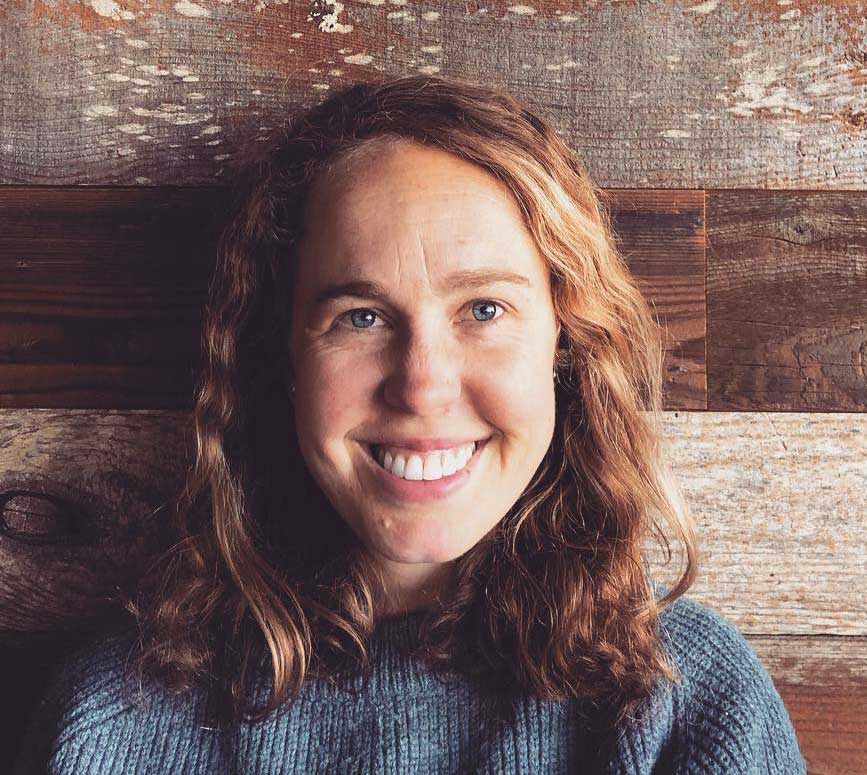
Della Z Duncan is a Renegade Economist based in the San Francisco Bay Area. She is a co-host of the Upstream Podcast, a Right Livelihood Coach, a faculty member at the California Institute of Integral Studies, a Senior Fellow at the London School of Economics, a founding member of the California Doughnut Economics Coalition, and the designer and co-facilitator of the Cultivating Regenerative Livelihood Course at Gaia Education.
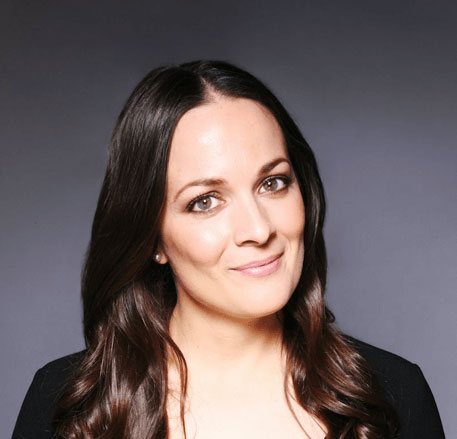
Nathalie Nahai is an author, keynote speaker and host of the Nathalie Nahai in Conversation podcast enquires into our relationship with one another, with technology and with the living world. She’s author of the international best-sellers Webs Of Influence: The Psychology of Online Persuasion and, more recently, Business Unusual: Values, Uncertainty and the Psychology of Brand Resilience which has been described as “One of the defining business books of our times”. She’s a consultant, artist and the founder of Flourishing Futures Salon, a project that offers curated gastronomical gatherings that explore how we can thrive in times of turbulence and change.
Before we head into the conversation, I want to invite you to our transformative online course, Dreaming Your Year Awake, which takes place on Sunday the 4th of January from 16:00 – 20:00 UK time (GMT). You can find the details here.
This is a time to go inwards, to be kind to ourselves, to explore all that we can be and want to be. It’s your chance really to delve deeply into the year just gone, and look ahead at how you want to shape your attention and intention for the year that’s coming, for each of us, individually and together to ask ourselves how we are going to navigate all the coming turbulence with grace and courage?
This, too, is part of our Accidental Gods tradition and we have people who’ve come year after year to give themselves the gift of time and space and the company of people who share the journey. So please do come along, we would love to share this time with you.
Episode #318
What we offer
If you’d like to join the next Open Gathering offered by our Accidental Gods Programme it’s Dreaming Your Year Awake (you don’t have to be a member but if you are, all Gatherings are half-price) on Sunday 4th January 2026 from 16:00 – 20:00 GMT – details are here
If you’d like to join us at Accidental Gods, we offer a membership (with a 2 week trial period for only £1) where we endeavour to help you to connect fully with the living web of life (and you can come to the Open Gatherings for half the normal price!)
If you’d like to train more deeply in the contemporary shamanic work at Dreaming Awake, you’ll find us here.
If you’d like to explore the recordings from our last Thrutopia Writing Masterclass, the details are here.
In Conversation
Manda: Hey people, welcome to Accidental Gods, to the podcast where we still believe that another world is possible and that if we all work together, there is still time to lay the foundations for a future that we would be proud to leave to the generations that come after us. I’m Manda Scott, your host and fellow traveller in this journey into possibility. And in today’s episode I am joined by my good friends Della Duncan of the Upstream Podcast and Nathalie Nahai of Nathalie Nahai In Conversation, so that the three of us can have a conversation, can reflect back on the year just gone, and discover what each of us is thinking now. Because we’re all working in this field, spending every day thinking how we can craft the future that we would be proud to leave behind. This has become our annual tradition, our fifth year in a row. So people of the podcast please welcome the three of us: Della Duncan, Nathalie Nahai and me, having an end of year conversation.
Manda: And because this was such a short introduction, I do want to remind you that we in Accidental Gods are holding the first of our online gatherings on the 4th of January. Dreaming your year awake is four hours online on zoom, from 4:00 till 8:00 UK time, and this will be a mixture of me talking, you working on your own, you working in breakout groups. You bringing everything that you are discovering to the whole group, and us working together to explore how we can all best ride this wave of total transformation. 2025 was the year when the masks came off, and I genuinely believe that 2026 will be the turning point where we all begin to shift towards a different way of being. A generative future where we strive to connect instead of to separate. So how do we bring the best of ourselves to meet the unpredictable fluidity of our world with grace and courage? Who are our communities of place and passion and purpose? How do we connect to them? How do we begin to declare an inner truce and to heal our individual, collective, and ancestral traumas? All of this we will be exploring. Or at least as much as we can within the four hours that we’ve got. You absolutely do not have to be a member of Accidental Gods to join us. But if you are, you get it half price. Or you can give it to a friend. So there we go. And now, without any further delay, let’s meet Della Duncan and Nathalie Nahai for our traditional three way conversation.
Nathalie: Well, welcome Manda, Della. Welcome, listeners. We are back here for the fifth year running for our cherished tradition of having this Winter solstice conversation. And it’s been a very full year for all three of us, and I’m sure for many of you listening. So I’ll give a brief sense of who I am and some highlights of this year. And then Manda and Della will come to you, and then we’ll dive into a conversation, looking at the questions that are most alive for us.
Nathalie: So those of you who already know me, I’m Nathalie Nahai. I’m someone who works at the intersection of persuasive technology, human behaviour, the future of society and business. I’m a fine artist, a painter. I’m a folk musician. And I’m increasingly interested in how we can ask more beautiful questions about what it means to flourish in an age of AI and automation. When we’re crashing through planetary boundaries, and we really need to do everything that we can to live and deploy the resources available to us in service to the flourishing of life. So that’s kind of a potted introduction. I’m also an author and I do other things, but that’s kind of a brief intro.
Manda: Quite an important author, actually. I think you should maybe lean into that one a little bit more.
Nathalie: Thanks Manda! Says the Boudica Dreaming author and all the extraordinary work that you do. So highlights for this year, I’ve actually taken a little step back from the podcast, because so much else has been happening. I’ve been very interested in keeping my finger on the pulse of hype and risk and rewards and developments around AI, and what it means on a societal level, when a certain privileged few run the narrative around it being a panacea and a cure all when it’s extracting precious, dwindling fresh water supplies, it costs a huge amount of human labour, cognition. It has lots and lots of risks attached to it. And to try and cultivate spaces in which we can ask more sober questions that are wiser, more discerning, more analytical, about using these technologies, while also holding space for deepening my shamanic practice, my animist kind of nature related practices, and the art and the music. Which all seemed to be converging vibrantly together at a point when if we’re asking ourselves about how technologies can reproduce and automate much of those activities that we hold dear as humans, then what does it mean to be human? And I find for myself at least, that one of the big themes and the highlights of this year, which has actually been a thread woven throughout many different things, has been this question of how do we pursue healing and beauty and connection and meaning and agency collectively, in our plurality when faced with such a prevailing narrative around AI? So there we go. Introduction for me. So, Manda, do you want to perhaps introduce yourself and talk about some of your highlights or threads of the year?
Manda: Thank you. Yes. So for those not familiar, I’m host of the Accidental Gods podcast, the aim of which has been, and remains to highlight people who are at the emergent edge of inter-becoming. I say at the beginning, and I absolutely believe, that there is still time to turn the bus that is humanity from the edge of the cliff of oblivion. That window is narrowing, and it’s going to take all of us working together. And part of the reason we’re not working together yet is that we don’t have the narratives, we don’t have the stories of how the future could be if it was different than it is. So this year has been really a year for me of intense thinking about thrutopia. This time last year, I was putting together a couple of grant applications. So I also am a shamanic practitioner. I teach Dreaming Awake. It’s been the core of my life for way over half my life now, 40, 50 years. And asking ‘what do you want of me?’ Of the web of life and trying to respond, and offering myself in service to life, is what I’m here to do. And in the process of that, I used to be a novelist, as you mentioned. I am still a novelist, but the last novel came and is out, and usually by the time one comes out, I’m at least halfway if not three quarters of the way through the next one, and I’m not.
Manda: And so I was asking, asking, what do you want? And there was a gap, one of those fertile voids that’s really scary. And then you need to be filling in these grant applications. You what? Pardon. So I did and we didn’t get the first one and we did get the second one. Which is absolutely freaking scary. It’s really easy crafting, you know, you’ve got 2000 words of A4 and you just need to make it sound really plausible. And now we have to make it happen! So the outline is to change the hegemonic narrative on page, stage and screen. That’s the headline of what we’re doing, me and Rob Hopkins working together. And it feels increasingly relevant and increasingly essential that we find the stories that are not dystopic, because where we put our attention is where we get to. There’s a lot of dystopian survivalist stuff around, and I don’t think there will be bands of plucky humans; if the ecosphere goes down, we’re going down with it. I don’t care how many cans of beans you’ve got stashed, no one survives 3% oxygen. And everyone’s focussed on the CO2, and nobody else other than me seems to be really concerned about the fact that the oceans produce most of our oxygen.
Manda: And if we just take the seas and turn them into one big dead zone, the definition of a dead zone is it’s anoxic; no oxygen. And at the same time, we’re simultaneously turning the forests into net CO2 emitters instead of net CO2 sinks. And when the CO2 sinks, they’re producing oxygen. So we are deoxygenating our atmosphere quite effectively and quite fast by accident. So how do we create the stories of a different world? And the different world has to be one where we have done the inner work. One of the things that really landed for me this year, I did a podcast with Bob Falconer, who’s an internal family systems practitioner who wrote the book The Others Within Us. And as part of the research for that, I was listening to him and he quoted Dick Schwartz, who is the founder of IFS therapy, saying almost all of us, almost all of the time, are walking around in a state of internal civil war. And whoever I’m talking to, that lands. Everybody recognises that in themselves, wherever they are on the spectrum. And that hooked into another conversation with Bill Plotkin, who is of the opinion that our culture, that any human being goes from childhood through adolescence to adulthood to elderhood. There are two sections within each.
Manda: And our culture, all of us pretty much, are locked in early adolescence, and we no longer have the capacity to move into late adolescence, which is finding what we’re for, and then into adulthood, which is being what we’re for, and then into Elderhood, which is seeing what we’ve been, and helping the new generations to come through. And this is part of the reason I think, that AI is such a catastrophe, is that it’s being driven by the early adolescent egos that are trying to prove how smart they are. I had a dream last night, and the cadence over and over in the dream was none of them really wants to be God/Emperor for all time, but they’re afraid that if they’re not, the others will be, and they do not want to be subject to the others. And that’s driving things that should not be happening. I am in the process of reading If Anyone Builds It, Everyone Dies and it’s terrifying. So there’s all of that. And welling up through the middle is the understanding that the world is changing so fast and that more people than ever are understanding that we do need to do the inner work.
Manda: We need at least to declare an internal truce. We need to make the connections with other people that actually work. And we need to make the connections with the web of life so that all of us can ask, what do you want of me? And that we could become, as a species, self-conscious nodes in the web of life. Being creative. Doing the amazing biomimicry. I did a podcast with Michael Pawlyn, whose book is Biomimicry in Architecture (third edition). And it’s huge, and it’s packed with colour pictures, and it’s completely inspiring of what we could do, what we can do, if we listen to the web of life and then go, oh yeah, you could do that there. We could make a 300 metre version of that. Where would you like us to put it? Not ‘I think this is where we should put it’, but ‘where does the web need it to be?’ So I feel oddly hopeful. And aware that we are still in the bus and the old, straight white men still have their fossilised fingers clamped on the wheel, and they’re still stomping on the gas. And it’s really going to be hard to turn it from the edge of the cliff, but not impossible. Oh, and I got a new puppy this year. That makes me feel very sleep deprived, but also extremely happy. Over to Della.
Della: Thank you. And Happy Solstice to you both and to everyone listening. I’m Della Duncan, and I am beaming in from San Francisco, California. And I would say the mythopoetic identity that I hold right now, to give a nod to Bill Plotkin, is a renegade economist. And of course, that is in appreciation for Kate Raworth, who is called a renegade economist. So I still hold that. And yet there are many plants in my livelihood garden. The biggest one from this year is becoming a mother. So that’s that’s my new plant and I’m really savouring and enjoying that. And other things are co-hosting the upstream podcast with Robert Raymond, and right livelihood coach, teaching financial permaculture, Post-capitalist consulting and working with doctor Fritjof Capra on teaching the systems view of life. And this year in Review for the podcast. Well, one big thing for me personally has been a lot of passing away of mentors and teachers. So last year we had Doctor Stephan Harding, who was my teacher, but also Manda’s teacher, and he passed away. And then this year, Joanna macy. So that’s definitely been a real theme of this year is like, what happens when our elders and our mentors and our teachers pass? And just contemplating and reflecting and appreciating their wisdom. And then stepping into, you know, what is next? How do we take their work? As we’re given a branch, make a bud. When we’re given a bud, make a flower. When we’re given a flower, make a fruit. So continuing on with their legacies.
Della: So for this year, for the podcast, I started with a conversation with Yanis Varoufakis on techno feudalism, so that was pretty heavy. And then I kind of more took a step back. So I’m just appreciating Robert for doing most of the episodes for this year. And we really had some major themes of looking at imperialism and connecting it with capitalism, and also doing series on different places. So there’s actually been a lot of unlearning, I think, for both of us. We did a whole series on China, on Venezuela. We’re doing one on Mexico. We have an ongoing series on Palestine. So we just have all these series where we’re getting to just go deeper and deeper into particular places and themes. One that I’ve gotten to do is post-capitalist parenting. So that’s been quite fun, is getting to speak with people either who are parents or who think about the the birth process. I spoke with someone who’s a midwife. Or just parenting in the systems that uphold parenting or make parenting challenging. And also visioning for a post-capitalist parenting way.
Della: And then I did get to interview Rob Hopkins. So you mentioned Rob Manda. So that was wonderful to talk about how we fall in love with the future. Timothy Pareek talking about De-growth, just returning to degrowth, that was fun. Andrew Fanning talking about doughnut economics 3.0. Just the updated doughnut, that’s been fun. As well as a conversation with Savannah from All Power Books on Marxism for the masses. So I would say one of the main themes has been we used to be a podcast that we said ‘unlearn everything you thought you knew about economics’, and ‘you don’t hate Mondays, you hate capitalism’. And we’ve kind of expanded, even in our intro, to more about political economy. So that’s been an interesting theme. And also really deepening our focus and emphasis on the global South and the planet as a whole, instead of being US focussed. Because that can be quite easy to do is to really focus on what’s happening in the United States. So those have been some themes for this year. And yeah, really grateful to be in conversation with you. So with that, I’ll pass back to you, Nathalie.
Nathalie: All right. So what we often touch upon is this question of what’s most alive for you right now. Is there a question, a theme? And so, I don’t know, maybe Della, would you like to weave back in what question is most alive for you at the moment?
Della: Yes, I would love that. So one thing I did recently was I revisited the book Women Who Run with Wolves by Clarissa Pinkola Estes, and I was reflecting that I think I gave that book to you both as a gift one year in our gift giving. And so it was interesting to just revisit it. It’s just such a such a gem. All of her work is so powerful. And I was reminded of a quote that struck me the first time I read it, and again the second time. And the quote is: ‘there is a time in our lives, usually in midlife, when a woman has to make a decision. Possibly the most important psychic decision of her future life. And that is whether to be bitter or not’. And this really struck me. And she goes on to say, you know, a woman (but I would say all humans) go through such trials and tribulations, such disappointments, such heartbreak, such challenges in life. And I certainly feel this, but I see it in others, that you do come to a point where you’re like: I could be resentful and bitter.
Della: And this is not just in our interpersonal relationships, although it very much is, but also in our systems and our activism, in our livelihoods. And so this is the question alive for me, is how do we honour our emotions, our frustration, our anger, our grief? How do we honour those emotions and yet not turn to coldness or embitterment or resentment? And instead continue to, as Joanna Macy would say, turn towards life. And so for me, I think the word for 2026 for me is going to be kindness. I’m just really meditating and focusing on this word kindness; being kind to myself, to my body, to my emotions, to my partner, to my family, to my community, to others, to my work, to my time. So just kindness is something that I’m really exploring. But I’m curious for you both if that has come about for you, this choice point between being rightfully indignant or embittered, or turning towards life. And if so, how do you continue to turn towards loving kindness, compassion and connection?
Nathalie: I have a series of curious synchronicities that came about this year that resulted in my attending a beautiful retreat called artist warrior Meditator at the Zen Buddhist monastery called Plum Village, which was established by Thich Nhat Hanh many years ago. And I don’t know why I felt the urge to go. I’ve never been to a monastery, Zen Buddhist or otherwise, in my life. And I ended up going in early summer and took all my devices away from myself, turned everything off, and had the most profound experience of reconnection and also voice. Which might sound like a curious thing, but thinking about kindness and thinking about bitterness versus embracing life, I’ve come to realise, and I don’t know how it is for you both, I’d be curious to get your sense on this; that there is something about finding one’s voice, whether through song or speech or writing, where any sorrows that you hold can be found in the ways that we express ourselves. And so for me, that’s always been song. And I found through the course of this week just this release of joy, but also deep grief and orientation towards song and music, as something which allows us to move out of this inner conflict. You were talking about that inner civil war Manda. And I think there’s something about this quality of being embodied, singing together, doesn’t mean you have to be in tune, like it doesn’t matter. Where you are all in this act, temporally, spatially, in an embodied way, in service to this song that you create together. That can just move you into a completely different space where that sense of inter becoming or interbeing, that sense of compassion, that sense of being at once part of this river that flows, that is never the same, but always moving.
Nathalie: It is a phenomenal experience. And we ended up singing, a group of us, kind of by accident, this mantra. And I’m not someone who’s particularly oriented towards mantras, for 40 minutes. And as we sang, the room just shifted. People sobbed. People were transported. And it’s so curious that there are so many ways in this world, from different traditions, to find these rivers of connection, belonging, transcendence, embodiment, rootedness. All of these things, all at once. To experience this panoply of horror, beauty, grief, joy, delight, eros, death, held within a sound that brings you into contact with life. That means that you don’t have to cut bits off. You don’t have to quieten conflicting voices. They can all be held in this space. And it was such a profound experience for me. And since then, I’ve ended up going on to go back into the recording studio and start recording this album. I have a lot of heartbreak around music, and so it was beautiful to revisit that. But I think there’s something around these practices, that outside of the theory and the reading and the kind of shouldering our conflicts and leaning towards integration, that there are simple practices in community that we can engage in, that can allow all of these things just to drop. And not for one person to hold, but for all of us to collectively hold each other. Yeah. So I think that’s what I have to share on that. I don’t know what either of you would like to reflect on.
Manda: I spent some time in Norfolk in September. I was invited to a retreat by an animist group, and we were basically animist systems thinkers, which is quite a niche group of people. I think there were 54 of us, and there were two brothers from Plum Village there. So it was the first time I had engaged deeply in ceremonial space. And it was so beautiful and so moving and so affirming of the fact that there are a lot of people thinking in these ways. It was one of those places where the conversation started, where most of my conversations sometimes get to and then end. And we could take all of the baselines for granted, and then we could go, okay, so where do we go and how do we get here? And what is the systems change? What does it feel like? What is its granularity and what are examples in your life? It was genuinely heartbreakingly amazing and heart openingly amazing. And so to Della’s question, I think this is such an interesting thing. Because I have felt catastrophic grief at what’s happening in the world and despair. And watching some of the politics around the world. And having a sense that I think we’ve spoken about, or I’ve spoken about before in this podcast, that there’s that which is holding and in service to life energetically. And there’s that which is the opposite. And that these are feeling increasingly alive, the two of them. And increasingly dropping the masks, dropping the shields, stopping the pretence. So nobody can pretend that the current system is either fit for purpose or is in any way rooted in anything that’s valuable for anybody except the tiny fraction of people at the top.
Manda: And not even for them. But they’re at least harvesting all of the value. And so bitterness hasn’t really arisen that I’m aware of. And I’m looking inside and thinking, maybe I just don’t see it. Maybe the bitter parts are just hiding under the the carpet somewhere. I made a commitment at the winter solstice last year, really to commit every day in service to life. So I incorporated it into my morning practice, my morning ceremony. And then it has to become more than just a thing that I say, I have to talk to the Shamanic, let’s call them guides, that I work with and ask for help to do that. Because it’s a nice sounding word and it was an appropriate thing to offer to the fire,but what does it mean? What does it look like? What does it feel like? And what it feels like is that astonishing sense of being utterly in love with the process of being alive, while also still grieving and despairing and occasionally raging at what’s happening. And there being heart space for all of that. But I’m not aware of bitterness, and I’m not even aware of having had a choice point where I had to think of it or let go of it. What’s coming up for me is that we are all slightly younger than Pinkola Estés, and we haven’t had quite the same patriarchal crushing of what it is to be a woman, that is guaranteed to evoke bitterness.
Manda: I look at my parents generation and the women of my parents generation and the older generations, and there was a lot of bitterness to go around. Because who they were was never allowed to be a thing. And I started a training in mediumship this year, which was one of those again, a shamanic push. I’m like, are you serious? Really? What? And it’s really interesting. I think it’s not my thing and I think a lot of projection happens, and I’m a really bad mediumistic client because I know nothing about any of my antecedents. It’s your great grandmother. It could be – no idea. So I’m not really very useful for the people on the other side, but it has made me think a lot about how women had to use subterfuge to have any kind of agency in the world. That we just don’t have. And clearly there are aspects of the political world that would like to reimpose that. But at the moment, not. We are relatively free just to be human beings and to broadly ignore the limitations of gender. And I’m sure that’s a huge privilege of being in the West, being in a country where it’s still legal not to be heterosexual, just. And having enough of a kind of universal basic income to not be constantly panicking about the jobs market. So I have enormous privilege within a system that is designed to grind people down, but it seems to be grinding people down largely regardless of gender at the moment.
Manda: So. Answered your question? No. I think it’s an interesting question. I think there are a lot of choice points, and I think there’s a lot of choice points coming that will be, I think more at the level of values. I think that we have to re-establish real baseline values that people can share wherever they are on any of the toxic cultural divides. And finding those and finding ways to share them that are accessible wherever you are and whatever spectrum. So that simply the fact that they’re coming from somewhere else in the spectrum doesn’t create instant rejection, is going to be quite crucial. And I think that’s an interesting question and I don’t have answers of how to do it. But I think we have to establish what those values are first. I’d be quite interested if either of you have been exploring what values our current system works under. Della, I’m thinking you’re doing that with your work with Fritjof Capra. And Nathalie, you’re doing it with your views of AI and what is promoting it, which is broadly ‘let’s make a lot of money’. And what could we replace it with? What would an AI look like or feel like that was grounded in a different value set? And what would that value set be? Or what would capitalism be like if it wasn’t capitalism and we had a political economy that was rooted in different values, and what would those values be? Anyone, pick it up.
Della: I often look for kind of questions or North stars or orientations of like, why are we here? What am I doing? And for a while, one that I was working with was I’m here to activate intrinsic values within myself and in culture. And this comes from Tom Crompton and the Common Cause Foundation, so I’ll just honour him and his work. But really this idea that we have two sets of values, extrinsic and intrinsic, and they operate like a seesaw, right. If one set is activated, the other set goes down and vice versa. But also there’s a bleed over effect. So if we have kindness activated then our connection with nature is also activated. And so one intrinsic value activates the others. But I think his work more focuses on framing and how we get people to say, donate or care about a cause. He says, don’t use extrinsic values or mainstream economic rhetoric to get people to care about the environment or inequality. So that was a huge thing. But I kind of took it in a different way, which was we on our own as individuals can activate intrinsic values and then we can also activate them culturally. And so I’ve just been playing with this idea. This can be music and art and it can even be social media. Sometimes I love to play with social media as a renegade influencer. How do you instead of sell something, get folks to think differently or get folks to feel an activation of an intrinsic value? So that’s one thing that I would say, and I have found it so hopeful that everyone has both sets of values and that it’s possible to activate them. This really takes away the othering and the divide between those on the left or those in the Great Turning and those not. It’s like, no, they too, those in power, those causing harm, extraction, exploitation; they too have intrinsic values so they too can activate them. And we can activate them for them as well. So Nathalie, what would you add?
Nathalie: It’s interesting about the values thing. So weaving that in and also Manda what you’re saying about love of life. I have a friend/mentor who’s been telling me for ten years, ten years, to weave some of the intrinsic motivations. Like a desire to create with some of the external things that provide me with a living, like my profession of speaking. And I’ve resisted and resisted. And this year, finally, after enough nudges, mostly from shamanic Practice, I created an opportunity to do it. I was giving a talk in Madrid, and it was one of these events where some people that I really respect were speaking. Icons of the world of psychology, which is a world that overlaps with the speaking that I do. So Brene Brown and Adam Grant were speaking on the second day, and I got invited to speak on the first. And I thought, fuck it. If not now, then when? Let’s just, you know, if I’m going to go down as a fireball, let’s make it count. So I gave this talk on AI, what’s visible, what’s not, in the sense of the very human dynamics that play into how we develop, deploy, respond to and analyse the risks of AI. And how we can be more responsible in the ways in which we we operate with it and perhaps ask better questions about its deployment. And at the end, I kind of wanted to to bring this point around. I guess the question really is, What is it that AI cannot give us about being alive?
Nathalie: Because there’s such a rush, especially when there is so much grief and division. Della, you’re talking about this kind of polarisation and it’s this race to the bottom of how can we make sure that we don’t get fired, or that we’re the ones that adapt more quickly? There’s this kind of us and them mentality, and you see it a lot in some of these narratives. And I think the key thing here is just like, we’re all in this together, and we get to live in a very finite pocket of time. We’re temporarily present, we’re embodied for a brief moment in a cultural experience that may never happen again. So what does it mean to dare to be present in the face of the automation of so much of what we hold dear? And so I ended up asking these people to sing a song with me. 1300 people. I was absolutely bricking it. And they sang! Almost everyone in the room sang. I got a lot of women coming up to me in person afterwards, and it was an animist ceremony song that I’d written about connection with nature and calling upon different qualities of life to help us live in greater harmony. And the flood of emails that I got from men afterwards on LinkedIn that were so unexpected. Things like I felt so alone and suddenly this business conference, we were asked to sing and I could hear all these other voices around me. Someone else saying, I haven’t sung since I was little and suddenly I was reminded of my father and I was crying tears for the values that he represented in my life.
Nathalie: I’ve never had feedback like this from anyone. And it really made me realise that in this arid territory of optimise like this, use psychology for that, which I’m part of, this is the world I’ve been part of for nearly 15 years; that people are desperate for a sense of fuck, we matter, We’re here, we want to show up, we want to sing together, be together. We want to belong. And I think that really hit me; this sense that there are so many people in the most unexpected places, desperate to connect, yearning for something deeper, for something more, who perhaps haven’t been given the opportunity to voice their deep seated doubts about the trajectories that are on. And that in these sorts of perhaps unexpected, arid territories, these are exactly the kinds of places where we can have the beginnings of these conversations. Della, you talked about the bud. And really it’s like, well, let’s step into a different garden for a while. What might we discover if we unfold some of these questions together, knowing that we don’t have to have any of the answers. And the whole idea about emergence of new systems or phase transitions; you just have to orient towards that which brings a vitality, and then maybe other things emerge. And I think cracking that possibility open, is something which I’m increasingly seeing as a ripe opportunity. And I think there are many places outside of our bubbles where people might be naturally oriented to have these conversations, that these conversations are desperately wanted and welcomed.
Manda: How would you make that happen and amplify it? Because I, I don’t know about you guys, but I think the time frame is quite short.
Nathalie: Yeah.
Manda: We need to work at this at scale and in time. How would you create the scale? Or begin to take the pebble that rolls down the cliff and makes the avalanche? What pebbles would you spring off the edge of the cliff?
Nathalie: I think some of it, thinking about the grant that you succeeded in getting, which is amazing, is moving into mainstream media opportunities and offering; I think any place where you don’t hear these stories enough. So for me, the obvious place would be conversations around AI. Can you bring animism and the love of the living world into a conversation about AI? Yeah, totally you can. I think mainstream platforms that have large audiences, networks of people coming together. I think the business world. There are lots of people who are just kind of plodding on as usual, who are under tremendous pressure, who are feeling the stress. And I think those areas where stress cracks people open are really rich territory for you to come in and offer, I suppose thinking about it in Dharma terms; rain. To rain on these flowers of hope and possibility and imagination. But I think the areas that you would not necessarily expect to look. And I’m thinking of people like Rutger Bregman, who gave the Reith Lectures this year, who talks about moral ambition. He does this really well. People like Grace Blakeley, who wrote a book called Vulture Capitalism. I spoke at an event with her at IBTM, which is a travel event in Barcelona.
Manda: She is my hero.
Nathalie: Weird invitations are cropping up. She’s amazing. So mainstream media. Cory Doctorow is another amazing person who’s got huge amounts of mainstream information media channels disseminating across all these different spaces. Because of his book around and Enshitification, which talks about the inherent obsolescence and breaking down of extractive systems, especially technological ones. So the territory is shifting and I think it’s up to us to find cracks with large audiences of thirsty people who also want their voices to be heard, and to say: we need to hear from you. So, Manda, do you have any thoughts about how we scale the kind of shift or conditions for the shift required in the speed that we need it to happen?
Manda: I have probably more thoughts than we have got time for, but I’ll try and edit them down. So I think there are many levels and for me the core level is always spiritual and energetic. And I think there is energetic change shifting. I think even I can feel it inside my own kind of energetic shape, and the connections in our dreaming groups and our wider Accidental Gods group. More people are taking more seriously that fundamental change is happening at a spiritual level. And I think more people are actually committing themselves in service to life and committing to the concepts of a world that runs on a wholly different, energetic set of rules, if you like. Rules is not the right word, but principles, energetic principles. And I think there will be a critical mass of that, that will lead to a tipping point. But we never know where tipping points are until we pass them. So let’s park that one. I think that is essential. And if I was only putting energy into one thing, I would be putting it into that. However, I think there are also political economic tipping points, and I think the elections of Zoran Mamdani in the US and Zack Polanski in the UK and other people around the world, to positions where they have a voice and they are using that voice very effectively, is opening doorways. So that those of us who have the pebbles ready, this is Kate Raworth always talks about Milton Friedman saying that when there’s a crisis, the ideas that are lying around are the ones that get picked up.
Manda: So they needed to make sure that their neoliberal ideas were lying around. We need to make sure that thrutopian ideas are lying around. And I have tried the mainstream media and it’s so interesting, the incapacity. Maybe I’m speaking to the wrong people, but they’re really nice, really well-meaning people. And their idea of how we fix the planet is recycling sets and more climate dramas. And the concept of total systemic change, it’s like trying to hurl bits of Velcro at lino. It cannot stick. There’s nothing on which it can stick. I would really dearly like that not to be the case, but I’m becoming increasingly of the belief that the change happens from the ground up. If we can show to the people who are the gatekeepers of the legacy media that there are stories to be had, and there is an audience for those stories, then they will leap on them. But everybody’s in a race to be second, and we need the people who have the courage to be first. And so we need to show that there are stories that people want to engage with that are bubbling up irresistibly from the ground up. And just before I came on this call, I was talking to a couple of lovely young people from Bristol who have what’s called MAFIA Weekend, which is make a film in a weekend. So you take the titles, it spells Mafia. And they are they are helping people to create really well produced movies in their communities of the stuff that they’re doing.
Manda: And I think the the loosening hold of the legacy media on the stories that we tell ourselves and each other about ourselves and each other, is one of the things that gives me hope. That then there is room on TikTok and YouTube and Instagram and all the other things, for the stories that we make ourselves of courage and resilience and hope. And a lot of the stuff coming out of the US, the people who are 3D printing whistles so that they can pass them out on street corners, so that when ICE turns up, there’s just a barrage of whistles. And that’s not total systemic change, but it’s the beginnings of a new narrative. So I think that kind of thing. But having the concept that there is another world is possible, that we will not get where we need to get by tweaking the existing system. That’s just not going to happen. And so much of business is around how do create conscious capitalism? Fuck that. There is no such thing. I’m sorry, capitalism has to go. Capitalism is a self-terminating algorithm, and the only question is whether it destroys us all before it destroys itself. And I would rather it’s the other way around; let’s get rid of the capitalism and create something new. And so I think having the stories of what that something new looks and feels like are really important, so that we can spread them in a way that makes sense to people. There we go. Della, how about you?
Della: Well, I since we’re bringing in Thich Naht Hahn and Plum Village, there’s that quote that the next Buddha will be a Sangha. You know, this next enlightened being will be a group of people. And so one of the ways of scaling that I’m appreciating right now are networks. We have, for the Capra course, we have this alumni network of people who’ve taken the course, who are really trying to bring systems thinking into their life. I know Jeremy Lent has a pretty big, you know, community that he has online. Manda, you’re in several communities as well as you, Nathalie.
Manda: And he’s just starting his whole new eco civilisation network, which is really exciting.
Della: Yes. And also the political networks right now, like the DSA, Democratic Socialists of America, or PSL, party for Socialism and Liberation. As well as global networks. And one of the biggest ones that I’m a part of is doughnut economics. Every day, every week, there is a new group popping up somewhere in the world that is adopting doughnut economics to their place and creating either a snapshot or a portrait of their place, to do an assessment of how their economy is doing, and meeting the needs of the the people while staying within the needs of the planet. So I would say that these tools of networked connection and sharing information are hugely helpful for this scale. And then the other thing that I’m noticing, too, is that we’re at that time where Covid and the ramifications of that and illness is still very alive for people. And a lot of people are turning towards being in person again, which I find really heartening. Because Covid has done so much to isolate and make us afraid of one another and afraid of gathering. And so seeing people gather in ways that are healthy and okay for folks, and then be able to have that connection again, I think that’s really heartening. So doing more in-person events and gatherings and conferences, that you spoke about Nathalie, I think that is a way to also share this information and grow these movements. Manda I’m wondering, you know, I shared my alive question and you shared a couple questions. Do you have any other alive questions right now that you want to share with us or you want to ask?
Manda: Yeah, I’m still quite interested. So I am trying to evolve values and principles by which an emerging new system could at least begin. I think the emergent edge of inter-becoming is a flexible thing and it will have to evolve. But I’m working with integrity, compassion and generosity of spirit as ones that I think most people could sign up to. We might have slightly different interpretations of what those mean, but we could work towards them and baseline principles, what should be non-negotiable within our political economy, of clean air, clean water, clean soil. And from Zineb Mouhyi, who I talked to last week, who is just an astonishing young woman. She’s got such amazing energy and is going to be huge in the world. And she pointed out that we also need to have the concept that all life is sacred and also, everything that is alive and conscious has an absolute right to a clean and honourable death. So life and death are both sacred. And those seem to me together, the values and the baseline principles, whether we consider ourselves to be spiritually animist or not, because I don’t think there’s time for everyone to catch up to animism; I think those of us who can, do, but it cannot and must not be a hard line. But those principles I think we could all sign up to. It’s really hard to stand in front of people and go, no, I demand that all water is toxic and that the rain continues to be full of forever chemicals that are destroying everybody. And we should definitely have more of those. I’ve just finished talking to the guy who wrote this book, which I totally recommend, and it’s full of things that I didn’t know, including the fact that we make a thousand new compounds per hour.
Della: For those listening, not watching, what’s the title of it?
Manda: Sorry, it’s Nature’s Genius; Evolution’s Lessons for a Changing Planet by David Farrier, and it’s a fantastic book. We can talk about it later, but one of the data points: humanity is creating a thousand new compounds per hour and unleashing them on the environment, in most cases without any assessment of what they do on their own, and certainly no assessment of what they do in combination with everything else that we pumped out. Because we don’t care about the web of life, we just treat the whole planet as if it was one great big open sewer. And clean air, clean water, clean soil. I feel if everybody took those on as fundamental baselines, capitalism would be over by the end of the day. Um, because it’s not compatible with those. So I would be really interested in what values and baselines would animate a world that you would really enjoy promoting. Let’s go to Nathalie.
Nathalie: Well, I was pondering about clean air, clean water, clean soils, and thinking about some of the stories that are in Karen Hao’s book. She’s a journalist who’s been covering technology and AI in particular for many years, and she has written a book called The Empire of AI, which came out this year. And it’s been really, really well received by many, many people, for her critiques of all of the costs and inner machinations of the companies that develop these tools. What they can do, what the risks are and the damages that they cause. And one of the things that she talks about are the ways in which communities are coming up against companies that would establish, for example, data centres that would deplete water supplies or off gas really toxic fumes, that then cause spiking rates of asthma and lung disease of various kinds. And how people are actually standing up and saying, well, actually, this is in some ways the epitome of us creating, like in The Matrix, machines that are feeding off the life support of the world to our detriment, taken to their extreme. And I think there’s something interesting that happens when people are increasingly alert to the hyperbole of the things that they have been promised they will be given. Bearing in mind that most people are being told AI is going to take your jobs, but don’t worry, you’ll have 80 hours free per work week. It’ll solve cancer, blah blah.
Nathalie: Like there’s all sorts of crazy shit going on that people are being told. And one of the biggest issues, I mean LLMs cause a lot of issues, but one of the biggest issues I think that people are seeing, that gives me a cause for hope, is their replaceability in a hyper capitalist system, where the only value of life is to create profit for whoever’s the one driving the bus. And so I think that’s become remarkably clear. Many people are coming together and saying, well, hang on! For instance, there’s an example in Chile where a community had just had infrastructure for clean water on tap having been laid in. And prior to that, they’d had water bussed in, which is very unreliable if buses break down. And so then one of these big companies comes in and says, well, actually we’re going to create a data centre here. We’re going to develop it, build it, and we’ll need all your water, so you can go back to trucks. And they told them to fuck off collectively! And it’s not that I’m wishing for this, but I think that there is a point at which people realise that all of our lives depend on exactly what you’re saying, Manda: clean air, clean water, clean soils. And those resources, thinking of them in utilitarian, materialist terms, are required for us to live.
Nathalie: And if we’re giving them over to companies that can poorly replicate a fraction of what humans do, within the context of LLMs, not talking about things like neurosymbolic AI, or other types of AI where it could be really helpful. Like in agriculture, renewables. There’s all sorts of areas where it’s absolutely brilliant, but of course, that’s not getting much of the funding because most of the funding is going to this other stuff that is, frankly, fairly useless. So I think people are starting to realise. And my sense from a lot of the conferences I’ve spoken at as well, is that leaders might be pushing the narrative of this is going to solve for everything, but so many people within positions of contact with the outputs of these machines are realising that they are significantly limited. So there’s a reckoning coming, where people will start to see what they’re actually useful for, which is specific things. And that the drain on resources and human hope and cognitive functioning and psychosocial well-being is too large. So a tide is coming. And never mind the financials of it and the fact that I think that there’s a big bubble that’s going to burst before things course correct. And I think that’s coming sooner than people think. And I think when that happens, when there are no backups and everything’s become more fragile as a result of not having analogue versions or cash.
Manda: Paper is the ultimate back up and we don’t have it.
Nathalie: Yeah. Anyway, I’m not going to go on about it. But I think the fragility of our existing systems, as sophisticated as we perceive them to be, is going to become more and more evident and people will start to revolt against it. And we’ll have to find more life affirming, regenerative, distributed, decentralised ways of sustaining ourselves. That was a really long diatribe. I’m sorry, I’ve been thinking about this a huge amount.
Manda: No, no, it was great. Della, what about you?
Della: Well, a few threads that are coming to mind. One: Li An Phoa, her phrase ‘the sign of a healthy economy should be a drinkable river’. This idea of what ought to be the metrics of our economy. And you offered clean air, clean soil, clean water. I love thinking about those. And what are we actually trying to work towards or contribute to or grow in our economies? And then I’m also thinking about this tide that you mentioned, Nathalie, and this reckoning that’s coming. And I’m thinking about the Luddites and also E.F. Schumacher and appropriate technology, and that there is a beauty in the simplicity. And there are ways that we can live sustainably and regenerative on the planet, and not just have a small ecological footprint, but actually have a large ecological handprint. I’m also thinking of half farmer/ half x, you know, growing your food and then doing something else that you love with the rest of your time. So yeah, I’m very curious about this reckoning that you’re noticing coming and feeling, and what we’ll turn towards. And just hoping that it will be disaster collectivism and not disaster capitalism, which we can see many examples of around the world. That there are people who turn towards one another and turn towards the land and towards what’s important. So, Manda, any thoughts on this tide or this reckoning, or the future of AI that you want to add?
Manda: Oh, future of AI. Well, I need to finish If Anyone Builds It, Everyone Dies before I can speak about that. It just seems to me that it is, in the same way that capitalism is the end result of allowing the narcissists to take over, and our culture has been doing that easily since Roman times and probably before. They just accelerated quite a lot with the fossil fuel bubble. So AI, I’m sure it can do useful things, but I’m not sure it’s worth the potential cost. And I’m aware that Vanessa Andreotti, the indigenous people she’s working with think that AI is a new consciousness, and they want to incorporate into their dreaming. And she takes her laptop along to their circles. And absolutely I’m not going to say that they’re wrong. But until I can feel it in the dream time, it feels more dangerous than good. I genuinely think that we have to work with the web of life. If each of us, each human being, was fully realised; that we’d worked out what we were here for, and we were offering ourselves in service to life, being the best that we can be, being what only we can be. Connected to the web of life, asking what do you want me to do in this moment? And doing it. Then humanity would be an absolutely amazing asset to the living web. And it may be that AI could be a part of that, but at the moment AI seems to be the playground of a particularly toxic, relatively small set of adolescent boys that I wouldn’t trust with a hamster.
Manda: And I’m certainly not trusting them with the web of life. Because I don’t see that they care about it, I really don’t think they know it even exists. I’ve listened to podcasts where they genuinely talk about ‘nature’ as an aesthetic option. And while that mindset exists, I just don’t think it’s safe. And the whole concept that, yes, it’s going to kill us all, but I’d rather be the person who built the thing that killed us all, just isn’t clever. And we definitely need that bubble. But then, halfway through the year, maybe it was spring last year, one of my guides at a moment I really wasn’t expecting, spoke in my ear. And it doesn’t happen often that they actually speak in actual English, and said the world is not what you think it is. And so I have to remind myself that the world is not what I think it is. And it feels as if there’s a genuine, energetic big shift coming and that riding the wave of that and being open to the world not being what I think it is; and being flexible enough to respond so that my responses are appropriate to whatever the world actually is and whatever the world needs, feels crucially important.
Nathalie: I think there’s something else that’s really curious, that’s cropped up, is that I was hearing someone talk, while doing an interview about longevity in AI the other day, and one of the guys was talking enthusiastically about the ways in which psychedelic therapies can help people. And he was saying, oh, you know, we just need to get some of these people on psychedelics. I was thinking, again this kind of falls short, because the papers that I’ve read talk about any kind of transformative healing work having to be embedded in a whole panoply of different forces; cultural, Historical, natural, temporal. It’s not just enough to take something. And again, it’s this sense of, I think it goes back to what you’ve both spoken to, which is this thing of looking beyond the capital, looking beyond the resource, looking beyond the material. And realising that actually, if you cannot fundamentally recognise the interbeing of all things. That’s one of the primary lessons of those thresholds between ‘Oh I just want to do what I want to do’ like the Id if you like; to that place of adolescence when you start realising that maybe your actions have impacts. And it’s not just you, and if you were in solitary confinement you would go mad pretty quickly. And yet so many people haven’t realised, I think. Not because of an inability, but perhaps because, Manda you’re saying about being raised in cities and not seeing the horizon. Like if you’re plucked out of it by virtue of the fact that you’re living in an industrialised society, then maybe that’s also part of it. It’s kind of how do we get people back into contact with growing your own tomato plant? And it sounds so insignificant, but there’s magic in that as well. Where should we take this next?
Manda: I don’t know. Yes. Well, I think Della looked like she had some response to that. So, Della.
Della: I’m wondering, Nathalie, if you have asked what alive questions you’re carrying? You have several and you have asked several, but are there any right now in your life and in your work that you’re really chewing on or exploring?
Nathalie: It’s more of a sensation, but it’s the sense of how to create a moment of an experience which feels so rich and so heart opening that you can touch something there, that allows yourself to remember what it is to belong, to feel love, to sense that feeling of yearning. It’s that. It’s how can we each do that in large and small ways? And I think some of it is about the quality of presence. But I don’t think that’s enough. I think it’s also creating conditions where you can be with others, either in conversations where shaming doesn’t come up, where you listen and you ask more questions. If it’s someone that doesn’t share your points of view, it’s like, okay, I’m curious what led you to think this, for instance. And someone gets to feel seen. Or in the music side of things, creating a space where people can just let go of their stories and be transported. So I think that’s the kind of theme of the question I’m asking myself is, what are the different moments and conditions we can create for people, to feel a sense of connection with something deeper and bigger than themselves, in which they are such a welcome part. It’s that. And it’s really a felt sense. And I think the other part as well, it kind of goes back to this inner a civil war thing, is how can we create enough spaciousness? Because I think getting rid of the Civil War sometimes doesn’t work. It’s like, how can you create enough space around these warring factions for them to just take a bit more distance and see that there’s stuff going on? They’re not caught in the midst of that tangle.
Nathalie: And I found that for me, that can be quite helpful. To just instead of thinking, oh my God, I wish I would just shut up, it’s like, okay, what spaciousness is there to be found for these voices to all take their space? And me not to have to quell anyone. And then bring that to our relationships and conversations with others. And I think some of the techniques that I’ve found include things like just being quiet and listening, but also the music, being out walking in nature. There’s some some simple hacks, I think. But I think some of the tools available to us to allow some of the bigger changes to happen are actually really, really simple. And I think it can be very tempting and seductive to think that we have to come up with these complex solutions, when actually some of the most powerful, rapid and loving are very simple. So it’s also that, not getting swept up in this, oh my God, the world is moving so fast. Yes it is. And also remember to come home to yourself. And here are some simple ways that we’ve known for thousands of years. The animals know. Like you don’t have to look far, but you have to be attentive to it. So I’m kind of finding ways to ask that question in day to day life.
Della: Yeah, yeah. I’m coming full circle to my initial question, this choice between embitterment and kindness, after hearing all that we shared. I’m reflecting on this idea of Donella Meadows and the leverage points, and she ranks those leverage points in order of importance. And she says that the highest leverage point is transcending paradigms. And really this idea that there is no truth with a capital T, and holding that with what we’re saying about how it is actually very important for life continuing and even thriving or flourishing, continuing, for us to recognise interbeing and the web of life. So it’s like, yes, there is no truth with a capital T, and we can hold and transcend many paradigms. But there are also worldviews or paradigms that are actually very important to kindness and generosity and love and compassion. And there are worldviews that are unhelpful, right? Like seeing nature as an aesthetic or seeing the world as a dumpster or something that we can own and exploit. So what I’m returning to is this choice between embitterment and kindness is really from this teaching from Ram Dass. He said that his teacher told him, I want you to love everyone and tell the truth. And he could do one. He could love everyone one day and like love, love, love, love, love. But he couldn’t tell the truth, because he’d be mad at someone or grumpy at something. And then the next day he could tell the truth, and he could just be brutal and direct and just tell the truth, but it wasn’t very loving.
Della: And so he had to work with this idea of loving everyone and telling the truth. So all this to say, I’m going to try this on, how can I be kind and yet call things out? Like speak truth to power, is one way to say it. But how do we say no, to be a billionaire is as offensive as to be racist. Like that’s offensive. Aeroplane first class and economy is class segregation. I think it’s class segregation. I think that for profit companies is wrong livelihood, you know, to be for profit and to put profit above the wellbeing of people and the planet. So how can I say those things without a sense of bitterness or resentment? So say that thing with a kindness, with a love, with a compassion.
Della: So that’s how I’m putting what we’re saying together. That there are these things that you all have known for many years, we’ve talked about each year, and we’ve been reminded of through our guests. This eco spiritual orientation, this sacredness of life, this what’s really important. And how do we hold that, and say these worldviews and these ways of being and ways of holding power are actually deeply unhelpful for all of that? So we need to call that out and push back in a way that is loving and kind. Manda what would you add?
Manda: I’m not sure I have much to add to that. I thought that was really beautiful, and it really resonated. The thing that arose for me was that if I were doing that, I would have to be very clear which parts of me were speaking the truth, because different parts have different truths. And then knitting that to what Nathalie was saying earlier, that crushing parts doesn’t work. It just isn’t a thing. And so how do we find that spaciousness inside to give all parts the room that they need; to honour them, to view them with compassion and curiosity and courage and all of the things that we need to do to let them lay down the burdens of belief that have knotted them up, so that they can become in service to our system. And so I think along with the values, along with the baseline principles of clean air, clean water, clean soil, life and death are both sacred, I think there’s also for me, the really essential part of creating the clean, clear, courageous, compassionate connections between all parts of myself, myself and other people, myself and the web of life. And living that. Coming back to that along with and what is the red kite doing? What is the tree doing? What happens if I spend an hour outside just being, just to reconnect, actually reconnect with the living web as it is here and now, and trying not to have too many projections, is what life is for. And again, I come back to I am so privileged to be able to do that. And the fact that I get myself into a complete state by the amount of work I have to do is irrelevant, because actually I can just put it all down and go and sit outside and to heck with it. If I don’t get everything done today, the world is actually not going to end. So those things. Thank you. I’m really, really grateful that we three have this chance of a conversation once a year. So thank you. Nathalie, anything that’s coming up for you.
Nathalie: The time because I’m realising we’re going to have to close.
Manda: Yes, I’m realising we’re right at the end.
Nathalie: I mean, I have a poem that I’d like to share by way of closing, but I wonder if there are any final reflections that you feel like you would?
Manda: I want you to sing your song.
Nathalie: All right. And then the poem? Or the poem and then the song. It’s a beautiful Rumi poem. But do you have any final reflections before that?
Manda: Those were my final reflections. Della, you got anything?
Della: I’ll just add, as a parent, that I have this lovely morning ritual that’s my ideal, that includes dance and journaling and meditation, and I can’t do any of that with an infant. And so instead of trying to sit with the infant and occupy her and journal and meditate. I was like, I’m just going to have coffee and be with her. And that’s my morning meditation. And it’s one of my favourite parts of the day. So I’ll just say Manda, to your point, that however we can come into presence; if it is going outside and sitting under the tree, and Nathalie if it is through song or through chanting in community. Or if it’s just being with those around you. Just making it accessible and possible for all of us. And yeah, I love that invitation of presence being something that we can bring in. And then again, for me personally, kindness. And so a kindness to that presence feels important. So that would be my closing invitation and words. And now, Nathalie, we would love to hear your song and poem.
Nathalie: I haven’t practised. But the poem is a poem by Rumi, which feels pertinent to me, especially when there’s so much information sloshing about. And it’s called Kiss the Ground. “Today, like every other day, we wake up empty and frightened. Don’t open the door to the study and begin reading. Take down a musical instrument. Let the beauty we love be what we do. There are hundreds of ways to kneel and kiss the ground”. So with that in mind, here is the people’s song:
Nathalie: Oh, by one by one, may all your voices come. By foot and flight to sing this night, until the dreaming’s done. Oh river, root and stone, come lead your brethren home. To gently stand upon this land and make your song our own. Oh sky and stars and sea, may all your children be, as golden threads of this great web, beloved, strong and free. Beloved, strong and free.
Manda: That was beautiful.
Della: That was beautiful. Thank you.
Nathalie: I will be recording it beautifully, not with a croaky voice, but you get a sense for it.
Manda: Thank you. You got 1300 people singing that?
Nathalie: I got them doing the bit underneath, and I sang harmonies on top. And then we just all… Yeah, it was lovely.
Manda: Wow. You probably changed the world just with that.
Nathalie: Well, I don’t know. It was a beautiful moment, touching into something lovely. So thank you both. That was a beautiful gift.
Della: Yeah. Thank you.
Manda: Thank you everybody. I love our tradition. Thank you. Until next year, may everybody’s year be deep and kind and beautiful.
Nathalie: Yeah. Happy winter solstice.
Manda: And there we go. That’s it for this week and for this year. Our traditional look back at where we’ve been, exploration of the highlights and feeling what really stands out for us. I love these conversations. Della and Nathalie are two of the people I know who live with integrity, compassion, generosity of spirit and spend all of their lives working out how we can connect better with each part of ourselves, with each other, and with the web of life. So it’s a joy always to explore where their thinking has changed in the last year, and I hope that it opened doors for you too.
Manda: As ever, we’ll be back next week with another conversation. And in the meantime, huge thanks to Caro C for the music at the head and foot and for this week’s production. Thanks to Lou Mayor for the video, Anne Thomas for the transcript, Faith Tilleray for the website and the tech and all of the conversations that transform our lives. And as ever, an enormous thanks to you for listening throughout the whole of this year. We would not be here without you and all of your feedback, your comments, your reviews, the things that you say when you come on the gatherings. Even just your presence in the gatherings is the reason that we’re here. So thank you. Have an amazing Solstice and a good new year. Dream well and goodbye.
You may also like these recent podcasts

Kindling Quiet Romance: Reimagining the Law for Nature with Brontie Ansell of Lawyers for Nature
In the midst of collapse, it can be hard to imagine extending the franchise of legal rights and sovereignties to the More than Human world. And yet, if we’re to transcend this moment, it must be because we have become something other than we are now. To do this, we need the roadmaps that show us how to move through, and beyond, the collapse of the old into something new…
Healing our Fractured World: Re-Awakening Indigenous Consciousness with Marc-John Brown of the Native Wisdom Hub
As the old paradigm splinters into rage-filled, grief-stricken fragments, how can we lay the foundation for the total systemic change we so badly need?
Even beyond the listeners to this podcast, it is obvious by now that there is no going back. As Oliver Kornetzke wrote in a particularly sharply written piece on Facebook back on 22nd January – before Alex Pretti was murdered by Trump’s Federal Agents – what white America is not experiencing is not new, and is not a flaw in the system, it is the system…

Laws of Nature, Laws with Nature: Nature on Board with Alexandra Pimor of the Earth Law Center
Across the world, our legal systems are crumbling, the rule of sane law dismantled in real time. Yet at the same time, rivers, mountains, bees are being granted legal rights in ways that would have been thought impossible even a few years ago. And in boardrooms around the planet, C-suites and businesses are increasingly looking to the natural world for guidance on how to be in ways that heal the web of life. So how do we make this work? How do we ensure that it’s not just another layer of corporate greenwash?
What ought we be? Hope, despair and the resilience of life with Professor David Farrier
We live in an ever-changing world, but it is not always obvious what kinds of evolutionary change we are seeing in the broader web of life: in physiology, behaviour, language – and human responses to these. How plastic is the natural world? How resilient? How capable – or not – of adapting to the chaos of the climate emergency, the cascade of toxins in our air, soil and water, to the plastics, heavy metals and other detritus we throw out into the world as if the entire planet were one vast sewer for waste we forget about as soon as we’ve had the dopamine drip that acquiring it evoked?

STAY IN TOUCH
For a regular supply of ideas about humanity's next evolutionary step, insights into the thinking behind some of the podcasts, early updates on the guests we'll be having on the show - AND a free Water visualisation that will guide you through a deep immersion in water connection...sign up here.
(NB: This is a free newsletter - it's not joining up to the Membership! That's a nice, subtle pink button on the 'Join Us' page...)