
#Thoughts from the Edge: Navigating the turbulent seas of the incoming year with grace and courage (Manda solo)
Well…2025 was the year the masks came off the old system: nobody is pretending it’s there to help us, or that those who have stolen the reins of power have any intention of ‘saving the planet’, still less resolving the horrors of inequity or anything at all but feeding the ravenously hungry ghost of capitalism.
So how do we bring power to those with wisdom and wisdom to those with power? If we have the destructive capacity of gods, how do we find in ourselves the compassion, prudence and wisdom of gods? What does it take to lay the foundations for emergence into a new system – one that we’d be proud to leave to the generations that come after us?
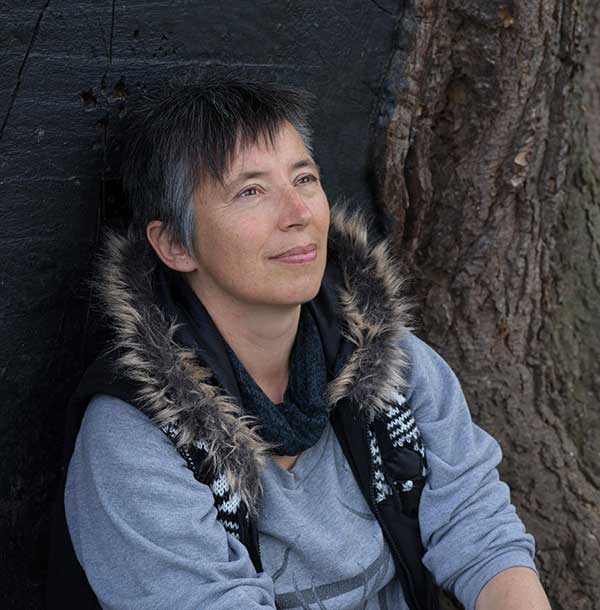
In this solo episode, Manda Scott, host of the Accidental Gods podcast, reflects on the year just gone and looks ahead to the one that’s coming and lays out ideas for how we can be the change we need to see in the world. Join us for New Year’s eve and let’s find ways we can step into 2026 with grace, courage, bringing the best of ourselves in service to life.
Many of you kind people have asked us how you can support our work in the coming year.
The best way you can do that is to come and join the Accidental Gods Membership: that way you can share in the ideas, the programme that will help you connect to the Web of Life in ways that will last—and you can come to the Gatherings half price. Or if that doesn’t appeal, come along to one of the Gatherings. Or buy a subscription/Gathering for a friend… do something that feels like a good exchange of energy and minimises our connection with old economic paradigm.
Remember that if any of this is financially difficult, contact us and we’ll find something that works for you. Details below…
What we offer
If you’d like to join the next Open Gathering offered by our Accidental Gods Programme it’s Dreaming Your Year Awake (you don’t have to be a member but if you are, all Gatherings are half-price) on Sunday 4th January 2026 from 16:00 – 20:00 GMT – details are here
If you’d like to join us at Accidental Gods, we offer a membership (with a 2 week trial period for only £1) where we endeavour to help you to connect fully with the living web of life (and you can come to the Open Gatherings for half the normal price!)
If you’d like to train more deeply in the contemporary shamanic work at Dreaming Awake, you’ll find us here.
If you’d like to explore the recordings from our last Thrutopia Writing Masterclass, the details are here.
In Conversation
Hey people on this the last day of 2025 welcome to the accidental gods podcast
Where even now we do still believe that another world is possible
And that if we all work together in the coming year, there is still time to lay the foundations for a future that we would be proud to leave to the generations that come after us
I’m Manda Scott, your host and fellow traveler in this journey into possibility, and this week, it’s just me. I did have somebody else lined up, but as is the way of things, they couldn’t make it, and this is the worst time of year to look at the incredibly long list of people that I think would be brilliant on the podcast and see if I can harass one of them into appearing. I’ve had in mind for a while that it would be good to speak directly, me to you, to look at where we’ve gone, where we might go, how we might get there, pull together some of the ideas and things that have arisen during the year, and perhaps open doorways to things that might arise next year.
So I’m taking this chance – and the first thing that I want to say here at the start is the thing that I say often at the end, which is to thank all of you for listening. We are incredibly grateful for every single download, for your time, for your attention, for your sharing of ideas, for your engaging with the ideas in the first place. As I hope is obvious, we are not doing this for the money.
Insofar as such things are possible, we’re keeping this clear of the death cult of predatory capitalism. And yes, we swim in that. Of course we can’t be completely clear. But we’ll stay free of adverts as long as we can. And nothing will ever be behind a paywall. I’m not going there. Whatever your income, if you can access this, I want you to be able to listen.
Because of all the things that we believe in on this podcast, the concept of narrative shift is right at the top. Every single thing we do, whether it’s making a podcast, getting a new puppy, going for a walk up the hill, which we have just done, or any of the myriad things that humans do, we do it because we have told ourselves stories about how the world will be when we have done whatever it is. Part of being human is that future casting, that creation of future memories that tell us this is a path that we’re going to take. And on the whole, this is either the path of least resistance or the path of least pain, or the path of most good.
We are wired to see our surroundings and ourselves based on the stories that we tell ourselves and each other about ourselves and each other and our place in the web of life.
And currently, the old paradigm is feeling as stories of scarcity, separation, and powerlessness. And what we need are stories of sufficiency and connection and agency. And that’s what we’re hoping to bring here. And the fact that you engage and you listen and you share is what keeps us on the air. So thank you. And then I want to breeze through some of the other fundamentals on which this podcast rests.
One of the first is no problem is solved from the mindset that created it.
Coming on from that, we get to the current system is not broken. It’s doing exactly what it was designed to do, which is to shovel value and the power that it can offer us from the base of a very wide based steep-sided pyramid as fast as possible towards the top.
The death cult of predatory capitalism does this really, really well. And 2025, it seems to me, has been the year where the masks have come off.
Nobody is pretending anymore that capitalism is a force for good, or that the people at the top have the best interest to the rest of us at heart, or in fact that they care about anything or anybody, except to gather more and more stuff to themselves and those closest to them.
The corruption is naked now, and much as it’s horrible, at least it’s completely obvious.
And this brings us neatly to the next principle, which is the current system is not fit for purpose, if that purpose is the continuation of complex life on earth,
which is setting the bar pretty low, people. Complex life is a pretty wide range. I discovered the other day that there are people who think that 20 % of the life on this earth is
bacteria deep in the rock layers. So when we have a definition of a mass extinction as being 70 % of species loss over a period of two million years, that’s pretty much everything we can see and not see. The things that might survive through into the next iteration of life on earth are not the things that we care about most on the whole, which brings me to the concept of narratives again, and the idea that Thrutopian narratives are third way between dystopia and utopia.
As a writer, I am now extremely tired of my colleagues who think it’s useful to write dystopian narratives. I have been saying this for a while, but I’m going to say it again. They are lazy, people: they are not useful.
Anyone who does even the base modicum of energy work knows that where we put our attention is where we get to. And it’s not hard to imagine what happens if we bring the worst of ourselves to the table. You just have to look at the news and extrapolate a tiny little bit and writing something, a novel or a screenplay or anything, believing that ‘If I write it and make it bad enough, everybody will change their behavior’, is not going to run. Please listen to me on this, unless you give people an idea of how to change behavior and give them reasons to want to do it, then they can’t. It’s really basic neurobiology.
The knowledge deficit model, which says – ‘if everybody knew what I knew they would think like I think’, doesn’t work. And a lot of the people doing that thinking have not done the work of imagining how we get through. So please, no more dystopias. They’re not useful. And particularly in 2026, please, can we get rid of the whole trope of dystopian survivalism?
If the entire ecosphere goes down, there are no small bands of plucky people roaming the post-apocalyptic landscape. It’s not a thing. It feels a little bit like listening to one of the people at the National Emergency Briefing in the UK, which was a fantastic and wonderful thing.
But one of the experts was looking at the possibility of AMOC collapse, which is the Atlantic Marginal Overturn Current. I think I said that right. I am not using notes, and probably should be…
Basically what we used to call the Gulf Stream. And Iceland, I think possibly Ireland, a few other countries have just flagged amok collapse as a national security threat. So this is not me being tinfoil hat. This is actually plausible if not possible if not likely.
And if you’re in the UK, I want you to look at a map and draw some lines either to the left or to the right. Because the lovely expert in the National Emergency Briefing was talking about it being hard to grow crops if the AMOC goes down.
People, we are on the same latitude as Kiev and Moscow. London, Kiev, Glasgow, Moscow. Further up north, further north than that. It’s minus 30 in the winters. If you live in the UK, you will know that it gets below zero and the whole of the UK just ceases to function. More importantly, personal thing here, I used to have a Finnish girlfriend long time ago. So I’ve been to Finland, yay. And in Finland, which gets to be pretty, sodding cold in the winter, they have a system where the central heating for the whole area is in a central unit and it goes out in pipes that are wrapped around the pipes containing the water going into the houses and the sewage flowing out to keep them from freezing. We don’t have that kind of infrastructure. I am old enough to remember the really cold winter of I think 1986, might have been ’85. I was still in general practice, which didn’t last for very long, so I think it was ’85. And it was down to about minus 15. This was ’85. So there were still small farmers who had small herring bone dairies, four or five or six cows up each side. And we were milking the cows on one side while thawing out the dairy on the other side. And by the time you got one side thawed out, you could move the cows across.
It wasn’t fun and that was minus 15, I think. Thereabouts, it certainly wasn’t anywhere close to minus 30. In theory, horses can survive to minus 35 if you have continuous fodder to feed them because their cecum basically turns into a kind of giant heat source as it metabolizes the fiber.
Last year, because of the drought, we made half the hay we were expecting. If the AMOC goes down, we are likely to have droughts in the summer and minus 30 in the winter.
Almost everything that lives above ground is going to die. And all of the cities that have no water flowing in and sewage flowing out, I give you about a week before the typhus outbreaks start. This is not going to be a problem of us not being able to grow enough food.
So either those of us writing stories can really look at that and try and frighten people into behavior change, but that doesn’t work. At a neurocognitive level that has not worked, it doesn’t work now, it is never going to work. Please listen to me on that. Dystopias are not useful.
Utopias are not significantly more useful, they give us a pattern to look forward to, but two things. They are usually predicated on the same mindset that we have just now because it takes a lot to imagine how we might be with a completely different mindset.
And per the first of our axioms, no problem is solved from the mindset that created it,
unless or until we can begin to think differently, to feel differently, to sense differently, to tell ourselves completely different stories predicated on completely different values and completely different baselines, then no future that we can posit is actually going to be seriously useful.
And even if it were, the definition of a utopia is that it is not accessible directly from here. There’s a jump cut of some kind. And we’re either post-apocalyptic or there’s been a virus or something has happened to switch off the old system so that you can start the new one. Sometimes they’re on a different planet, yay, totally different system.
And what we need now are Thrutopias, which take us through from a recognizable present, step by step by step, towards that future that we would be proud to leave to the generations that come after us.
And yes, I have said that a lot, but I do believe we can get to a point of pride. Whereas at the moment, we are locked in genuine shame at the concept of our own humanity.
The stories we are being fed by the existing paradigm are that we are both wholly culpable for all of the chaos we can see around us and at the same time, completely powerless, individually and collectively to do anything about it. And the only sane response to that from any kind of physiological, neurocognitive level is to freeze. We’re like rabbits in the headlights. It’s my fault and I can’t do anything about it. I am guilty and I have no agency.
And actually, I am shameful.
Guilt: I have done a bad thing. Shame: I am a bad thing. I am a human, and if we care at all about the biosphere, then the concept of being human has been fed to us recently by a lot of very well-meaning people as being inherently bad.
I am getting pretty tired of the largely old, largely white, largely male individuals who confidently tell me that the problem is one of too much population and that any way there’s nothing we can do.
They have kids. Frequently, they have grandkids. Clearly, they don’t see that as being part of the problem. The problem is other people out there.
And this is an inherent response, not an unreasonable response to that paradoxical dilemma. I am responsible. I have no agency. So we end up in despair, which is also not unreasonable.
In denial: it’s not happening. It’s a Chinese hoax. It’s whatever is the latest thinking.
Or deflection: it’s someone else’s fault, someone else’s problem, and therefore my lack of agency doesn’t matter.
And then if you really do care and we’re really trying to take agency, there is a tendency that I am seeing increasingly towards displacement, which is I’m going to do something quite colorful, quite interestingthat looks like I’m working really, really hard to solve the problem.
And that’s not a bad thing. But people, if it doesn’t create on the ground behavioral change, then there’s no point.
And this is what I really want us all to internalize for 2026.
2025 was the year the masks came off. We stopped pretending that the old system was ever going to be of any value to anybody.
2026 could be, I think, the year of total transformation.
But only if all of us bring all of our attention, all of our awareness, all of our amazing creativity to the idea that we need a whole new system.
And that means behavioral change. That means we have to do things differently.
And we’re not just having happy thoughts or writing really exciting scripts. Not that exciting scripts are bad. We need the exciting scripts. We need those narratives that are going to carry us forward that are going to give people the ideas of where we can go. I’m going to talk about that in a minute.
But our baseline has to be that we get actual behavioral change.
And I do think we’re getting that.
I think, I hope, I believe we may be at peak Trump, peak MAGA, peak fascism, peak denial, peak, ‘let’s look backwards and pretend that we can shift to some kind of sanitized version of the 50s and everything will be perfect’. Because clearly that’s not useful and also not going to happen.
But it is the narrative of the alt-right. One of the things I discovered this year, which I have said endlessly on the podcast, but I’m going to say it again just in case, is
cognitive neuroscience.
If I ask you to imagine what life would be like if you got up tomorrow morning, then it takes you five parts of your brain. And mostly that’s in your hippocampus where you’re sorting through what day of the week it is. Is it a special day if you’re listening to this on the 31st of December, then tomorrow is New Year’s Day and so New Year’s Day is different. So you just check out a few bits of your brain and think, well, what normally happens at Hogmanay, New Year? Okay, let’s assume that.
Then you flip forward to your ventromedial prefrontal cortex. Check out how does it fit with your aims and values. And then you flip back to your limbic system and work out how you feel about it. Do I like this? Do I not like this? And then your actions are predicated on that feeling.
Hold that thought. Because if I were to ask you what it might be like when you wake up in the morning of New Year of 2045, then you have to do a lot more neural work. Then you’re firing up at least 11 parts of your brain. And the thing about this is it’s hard. It’s exponentially harder than five parts. And on the whole, this kind of creative work is not something we’re readily trained to do unless we practice. Ask any writer. The most frightening thing in the world is a blank sheet of paper.
People who go to untold lengths to displace away from having to face that blank screen or that blank sheet of paper.
We clean kitchens. We bake cakes we’re never going to eat. In my case, I go out and do bits of gardening that probably don’t need to be done. Anything rather than having to create stuff anew. It’s hard. And even when you’ve had a lot of practice, it’s still hard.
And the thing is, I can only create ideas from what’s already in my hippocampus. From the ideas and the frames and the sketches and the concepts, the data points I already have.
And I might be incredibly creative. I might be a Picasso or an Einstein and I might be able to fit those data points together and produce something that looks completely radically new.
But if all I have in there are black and white lego bricks, I will only ever be creating monochrome structures.
They might look spectacular. They might look like Escher got together with Goedel got together with Bach and it’s absolutely beautiful, but it’s black and white.
And what we need to do in terms of the narrative shift that we need to make, depending on the metaphor, we rather bring in a lot of colored Lego bricks or we just get rid of the Lego bricks and plant a lot of seeds.
I quite like the seeds from a metaphoric concept, but actually most people seem to resonate better with we just need a lot of colored Lego bricks. We need a lot of new ideas.
Which, handily, brings us full circle because that’s what this podcast is for. So that we can bring together as many of the people as possible who are already doing this stuff at the leading edge of inter-becoming, who are creating the emergence in which a new system arises. So that we can see how to build a new democracy, how to create a new economic system, how to create new currencies, how to do food and farming such that it’s a regenerative system that actually heals us and the earth, how to bring biomimicry into design, how to craft a completely different education system so that we’re actually giving our young people the tools that they will need to move forward into the change that is coming.
Each of these is a new Lego brick of a new color and then it’s up to us, you and me, to begin to stitch them together, block them together, Lego them together, whatever we like to call it, into new designs that will take us forward into a system that is fit for purpose.
And so in the process of the year, I have evolved a new acronym which again I’ve said a couple of times in the podcast but here we go, made M-A-D-E: Motivation Agency Direction Empowerment
I think any new narrative has to have all four of these and the metaphor I’m using here is of a prison cell, a concrete box. Each of us is locked in a concrete box chained to the floor and chained onto a hamster wheel on which we have to run very fast just to keep still and our running is what powers the death-cult predatory capitalism, the super organism, the mohawk, whatever we like to call it,
it, the thing that each of us is an inherent part of which is what gives us that sense of shame of being human because we’re part of a system that we don’t know how to undo.
Let’s let that go. The day we all stop playing in the system is the day the system ceases to exist.
To do that, each of us needs to understand that we are chained in the concrete box and it doesn’t matter how pretty are the pictures that the AI is scanning around the walls, it doesn’t matter whether the temperature is perfect and we’re being fed stuff that we like and we feel really comfortable,
we are still in a concrete box and what we’re doing you and I with this podcast and everything else that we do is punching a hole in the wall so that the people around us can see that there’s a world out there and it’s beautiful and it’s alive and it’s thriving and it’s fun.
It’s a better place both for us and for the people we care about. So that gives the motivation.
We are cultivating yearning for a different way of doing things but while our existing system is telling us that everything that isn’t the system is unrealistic, the whole narrative are predatory, that social Darwinism is a thing, that everything is a zero sum game, all of these run true but they are embedded really deeply and a lot of the people who are gatekeepers for the existing narrative really believe them. So we need to create the new narratives and we need them to grow fast enough
and scale big enough that they supplant the old narrative.
So that’s part of our motivation, yours and mine. We can see that there is a world out there that is better. We have a sense of what it might look and feel like. It’s not hard. We can do the seven generations meditation, step seven generations down the line and ask the children of the children of the children of the children of the children of the children of today how they feel and how they got there and what it was that we did that laid the foundations for them to get there and this is crucial. If you’re part of narrative development, so much of the displacement that’s happening now is by very well meaning people, looking at the existing system and figuring out how they could tweak it a little bit to be slightly less bad and we are not going to get where we need to go by this. No problem is solved from the mindset that created it. I am saying this over and over again because I want it to land. Do not start with the existing system and work out how we tweak it to get to where we need to go.
We will not get there in time.
We need to look at where we need to get to, feel what it feels like and then forecast back to see how we got there and when I do that we get there by completely letting go of the existing system.
You might find a better way, in which case I want to know what it is because if nothing else my ideas are fluid, they’re growing all of the time.
Every single podcast conversation teaches me new things, expands. The quota of lego bricks of whatever colour in my brain lets me begin to fit things together in a slightly different format and I hope does the same for you. So we, I hope, have that yearning for a different way of being. We have the motivation.
Next to that we need agency. So in our metaphor of the concrete box we’ve punched a hole in the wall.
Next we need to show people that there is a door and that they have the keys or the runes or whatever it takes to open that door. We need to give people that sense that they are not powerless either individually or collectively. That together we can still lay the foundations for that future that we would be proud to leave behind.
So people need to know what is the next step and the next step after that as well as having a sense of the light at the end of the tunnel. And one of the things I would say as a writer is that the light at the end of the tunnel very rarely ends up being where we get to. I’ve written 17 novels now and not a single one has got to where I thought it was going. […] But I wrote my way forward and forward and forward with the old writing metaphor. You just need to write to the end of the headlights that you can see on this dark and foggy night as you’re driving along the road. But when you get there your headlights are a little bit further on and you just keep moving on and moving on. And at some point I have always realized that where I thought I was going to is not the best place. I can go somewhere better. But I wouldn’t have found the somewhere better without following the headlights along the original road.
So the point of emergence from any system is that you cannot see the new system from the old. You can’t predict it. If we could it wouldn’t be a new system. It would be the same system. Tweet slightly. And we’ve already established that’s not going to work.
So I don’t know what the new system looks like. But I think we can predict some of the values that will underpin it. Some of the baseline asks. We’ll talk about those in a minute.
But we need to give people a vision of where to go and a sense that there are things that they know what to do and they have the tools to do them with.
And the collective agency. I think helping to build communities of place, purpose and passion is really important.
Next we have direction which is I not only have the tools but I know how to implement them.
And that I think is a distinct step and we need to make sure people have that.
So in our metaphor of the box this is someone’s punched a hole in the wall so I can see outside.
I can also now see the door that was cleverly camouflaged in the wall. And I am holding in my hand the key or in my mind the rooms that will open it.
And I have the empowerment which is to say I am not physically chained to the floor in this box
or tied onto the hamster’s wheel.
We need to give people the ability to step out of the current system just enough to take that first step of agency because the more agency we can take the less hold the existing system has.
So helping people to find this the motivation agency direction and empowerment even to understand that these are a thing is becoming one of my key points of focus for the coming year.
And as part of it as part of laying the foundations for that future that we would be proud to leave behind I am realizing that we need core values and core asks.
And the core values we have already established on the podcast integrity compassion generosity of spirit there may be better ones. If you think you have better ones then please let me know at the moment these are the ones I am endeavoring to live by and yes it’s hard.
I don’t think it’s meant to be easy if it were easy we would have done it already.
So this is one of the occasions where I am with Byo Akomolafi the times are urgent we must slow down inner work cannot be forced but it can become a priority and that’s something I’m going to talk about in a minute too.
Ahead of that we have our three core values and then I think we need really basic asks and mine at the moment as I said at the beginning of the year remain at clean air clean water clean soil
and by clean soil we mean living soil: soil that will support the growing of food that actually heals us instead of not killing us quite as fast as everything else and that supports a thriving biome a soil biome and a surface biome that should be obvious but the fact that it isn’t obvious
is the reason that we need to begin to do the inner work.
So let’s have a look at this because I think this is a spiritual transformation that we need
and I am also aware that for a lot of people the concept of spirituality is still hooked to monotheistic cults that they don’t like or it just feels too flaky so if we predicate the possibility of transformation on everybody making spiritual shifts then we are not going to make it in time because the window is closing pretty darned fast I’m assuming that’s obvious we need to work at scale and in time and none of us knows what time we have or what scale we need the point about tipping points is that you only know you were there when you’ve passed one so pretty much by definition we are aiming for a goal that we cannot see but that doesn’t stop us aiming for it people we still have to go for this
so we need a spiritual transformation we have to get to the point where we absolutely know ourselves bone deep in our marrow to be the self-conscious nodes that are integral to the web of life at that point I think then we can become proud of being human again then individually and collectively as an integral part of the web of life we can ask what do you want of me listen to the answers and respond in real time so that we are bringing the whole amazing creativity of humanity to bear in service to life for me this is what shamanic practice is all about this is what the accidental gods membership program is endeavoring to do at scale in ways that are as safe as we can make them when we don’t have you in small circles in a room doing one-to-one teaching but whatever your spiritual path if you have one my assumption is that’s your end point and if that turns out to be a false assumption then let’s talk about it absolutely I am wide open to that kind of conversation
however let’s assume that a percentage of you listening are not that interested in the spiritual life
the thing that is utterly non-negotiable is that we have to start doing the inner work dick Schwartz founder of iofs says that almost all of us almost all of the time are walking around in a state of internal civil war if you don’t recognize that then you are incredibly lucky or deep in denial but most of us do recognize this most of us are aware that we have parts that are basically in constant battle do the thing don’t do the thing be the thing don’t be the thing you’re a good person you’re a bad person what you just did was wonderful what you just did was the worst heaps of shit ever possible these voices exist in all of us but it is possible to declare an internal civil war and beyond that it is possible I genuinely believe to free our parts up from the beliefs that they hold that are locking them into the responses that they have so that all parts of ourselves can bring all of their astonishing creativity in service to our systems and this is what we’re going to need if we’re going to build genuine communities that work both the internal communities and the communities between ourselves in each other and ourselves and the web of life it’s really hard to build heart to heart connections with other people and it’s impossible I would say to build heart connections with the web of life if we’ve got all the bits inside that are either telling us we’re doing it wrong we’re never going to do it or are trying too hard or any of the other myriad options and particularly in terms of communities of people I was talking to somebody recently hello you know who you are who said that the concept of eco villages is being supplanted somewhat by the concept of conscious villages because you can’t anymore decide to bring a group of people together with the intention of building community if you’re not all prepared to be doing the inner work and it’s hard if it were easy we would have done it already I can’t say that too often our triggered parts are really full of all the reasons they are right and that we must not ask them to step back or step down and we can’t rush the inner work I am repeating this because we need to let it land but we can make it our priority and these two things building our spiritual capacity and doing the inner work are I think absolutely indispensable to us getting through whatever pinch point is coming so that lays our foundations integrity compassion generosity of spirit leading to baseline asks of clean air clean water clean soil and thanks to Zina Mouhi who pointed out that we also need an absolute foundational statement that says all life is sacred and every single living thing deserves a clean and honorable death
life is sacred and death is sacred and each of these need to be foundational too building on these if we have a spiritual life then I think we give everything to offering ourselves and service to life to doing whatever it takes to open a heart connection with the web of life while at the same time and even if we don’t have a spiritual life doing whatever it takes to declare an inner truth and then get all parts of ourselves working in a fluid free non-frozen inner reality so that we can build clean
clear courageous compassionate connections between all parts of ourselves; ourselves and each other and ourselves and the web of life just doing this would change the world if every single one of us woke up tomorrow with integrity compassion generosity of spirit as our baseline values with clean air, clean water, clean soil and the sacredness of life and death as our baseline principles if we really committed to doing the inner work and the spiritual work of connection with the web of life
the death cult of predatory capitalism would be over by tomorrow night please take this on board we keep being told that we cannot change the system that it has its own innate momentum and there is nothing we can do to stop it and that is wholly untrue
there are eight billion people on the planet if eight billion of us changed our minds changed our frames changed our ways of being and behaving in the world
capitalism could stop
so this brings us back to the idea of narratives: narratives that tell us another world is possible and the narratives that give us the templates of how we get there because switching off predatory capitalism could happen fast but to do it in ways that doesn’t kill millions of people which clearly we have to do will take us having templates of how we do the dismantling. So this is something else that I’m going to be focusing on at least in my own thinking this year we have so many of the ideas and we have the tools we would need an overnight shift in our governance and our politics we would need to bring power to those with wisdom and wisdom to those with power – we would need a total change in our economic system which is fine because I am assuming it is obvious to everyone listening to this podcast by now that Zack Polanski and Zoran Mamdani and others like them are right that billionaires do not need to exist and there are plenty of ways that we could shift an economic system to have equity. It is not obvious that certain people move to the top of a pyramid that only happens when we have the dark triad being promoted by a system that works to promote the dark triad and for those not familiar the dark triad is: narcissism, psychopathy and some people say machiavalanism but I think that’s in the psychopathy so I would say sadism
around the world yes we are promoting this just now no we don’t have to continue to promote it
so this is pretty much where I got to: we need the baseline values we need the core asks
we need to build and spread the stories that give us the visions of how the world could be and the routes to get there all of this is possible humanity is an astonishingly creative species when a critical mass of us decide that something is important we can change the world we have done it before
and I invite you now to imagine a world where every single human being has a sense of being and belonging of meaning and purpose where each of us wakes up in the morning feeling safe
feeling confident whatever the world brings we have the resources to handle it we have the resilience we have the connections we are supported by the human and the more than human world
that all of our inner parts are working together in answer to the web of life, that we have the connections where we can ask what the wider web needs and then we are able to fulfill our part of it
we can bring the best of ourselves to the table knowing that each of us is being the best of ourselves being what only we can be and doing that in the best way possible, feeling the respect of the people that we respect in their turn who are also being the best that they can be in the best way possible
and each of us is responding to the living web of life in real time so that each of us individually and all eight billion of us collectively are bringing our creativity to bear in service to life, in service to a flourishing ecosphere—and yes some of what we’ll be doing will be remediation we’ll be healing the harms done but not because we’ve decided to pull lever a in order to create event b which will have a whole alphabet of unintended consequences because our heads are not good at complex thinking no problem is solved from the mindset that created it and it’s not our job to decide what to do it’s our job to ask the web what it needs us to do and then to shine in the doing of it. This is my dream and I don’t think it’s impossible and I am offering it to you as your dream—a whole planet where one species has the capacity radically to change the world and is offering that capacity in service to the greater life. We can do this but it is going to take all of us and I think 2026 is the make or break year. We either do it now or it’s probably too late. There are a lot of bright lights on the horizon the elections as Zoran Mamdani and Zack Polanski to the positions that they got were radical and different and they are both saying things that need to be heard they are not yet transforming the system into something new but they are for sure kicking great big cracks in the old system and the thing about walls and power structures and all of the stuff that is old and hard and ossified is that once it starts to crack it falls away really fast.
So this is my ask and my offer: whatever else you are doing in the world do the inner work
there’s a lot of help online there’s Thomas Hübl’s work there’s the whole IFS network which is spreading so fast, there’s the embodied work done by Dan McTiernan and others: there are books that are amazing and offer a lot of help. I don’t think any of us can do this alone but we can take several steps on the way on our own and then we can find the help that we need and if we need to offer more of that help within accidental gods then let me know: we are doing our best to offer what we think is useful but we will definitely listen to other ideas that are offered in good faith.
So do the inner work do the outer work of connecting with the people around you, do whatever you can to make genuine heart connection with the web of life and build the stories of difference build the stories of a new way of being tell the stories that the old system is not fit for purpose it is not the only way of doing things there are alternatives and they are better and then begin to build in your own mind the ideas of the templates of how we get from where we are to where we need to be
what is the political change what is the economic change what is the structural change in the areas that you know about whatever you can to educate yourself on systems thinking and apply your understanding of systems to the systems in which you live and thrive and then share the ideas with people around you one of the things that holds us back most is the belief that we are alone that nobody else is thinking about systems change with us that everybody else thinks the old system is just fine and actually you don’t have to scrape the surface very deeply at all to realize that almost nobody believes the old system is working it’s just they don’t yet have the templates for a new system that could be better so this is what we’re here for I imagine I believe I hope this is what you’re here for let’s build the stories of how the world could be different and could be better and let’s live it into being.
So as we step out of 2025 and into what could be the most transformative year of our lives take a moment to reflect on how lucky we are all of us to be alive at this time of total transformation to still have the resources that we do have to still be the people that we are and could be.
So I wish you a good Hogmanay a if you live anywhere except Scotland I wish you a happy new year.
If you’re interested in the work that we do in Accidental Gods, there is a gathering on the 4th of January dreaming your year awake and we’ll explore some of these ideas in more depth.
And that apart, we will be back next week with another conversation.
In the meantime, huge thanks to CaroC for the music at the Head and Foot, to Alan Lowles of Airtight Studios for production through the year and for producing this week’s episode. Huge thanks to Lou Mayor for being the best apprentice I could possibly imagine in dreaming awake,
for holding Accidental Gods gatherings together and for doing all of our videos on YouTube through the year. I gather the puppy is making a bit of a hit. I will possibly send you some stills for this because I have not videoed this. But anyway, Lou, thank you for doing the videos, thank you for doing everything else. I look forward to 2026 being a year of total transformation.
Anne Thomas, thank you for doing the transcripts, and Faith, thank you for holding the website together, for doing all of the extraordinarily complex tech stuff that keeps the gatherings together. You would be amazed, maybe you wouldn’t, I am amazed at the amount of stuff that can go wrong if you’re not keeping a very close eye on it and figuring out how to fix it on a daily basis.
So thank you and a deep thanks for all of the conversations that keep us moving forward.
Every year we peel more layers of the onion that is growing from the inside. I have no idea where we end up but my goodness the journey is worth it. So thank you. And as ever, at this point, if you’re still here, an enormous thanks to you for listening. Whoever you are and wherever you are, it is an honor and a privilege to share this time with you. The fact that you are continually there giving us your time, your attention, your ideas, your feedback is beyond welcome. So thank you. And that is it for now. For this year, for this week. See you next year.
Thank you and goodbye.
You may also like these recent podcasts
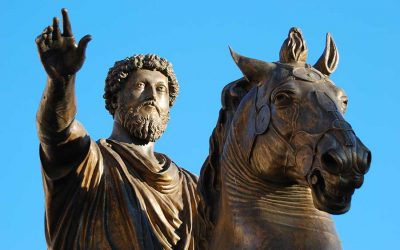
Wise. Just. Courageous. Temperate – Stoicism as a Living Path to Connection with Victoria Hurth
Imagine a world where every one of us finds meaning in living a good life – and where ‘good’ means conducive to the flourishing of all beings. Imagine that this frames our every thought, sensing and action, allowing us to explore and question our triggered responses to the world we are enmeshed with in a way that is resilient and self-regulating, so that we can bring the best of ourselves to the table, with outcomes as information, ready to engage with what is, for what matters, and not to force how we think things ought to be. Imagine us working to govern this way of being so our our actions are shaped, moment by moment, day by day, year by year, decade by decade as we turn the bus that is humanity – the entire ecosphere, really – from the edge of the cliff that is mass extinction to collective enduring flourishing.
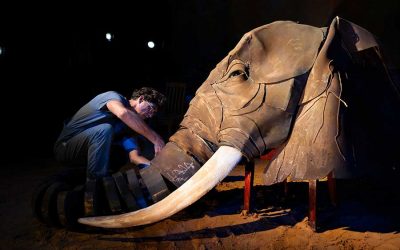
Sculpting Invisible Materials: Expanding Empathy in the Hot Mess of Now with Dylan McGarry of Empatheatre
Empathy lets us do more than just step into another’s shoes, it opens the doors for us to step into their heart and soul with the vast generosity of spirit we’d like others to bring to us, so that we can see through their eyes as the best of who they are. Obviously, we can do this with other people, but we can do it too, with whales, with elephants, with horses, and red kites and moles and spiders – and mountains and trees and landscapes… empathy is the spark that connects us to the More than Human world.

Towards the Symbiocene: Building an Eco-Civilisation with thought-leader, Jeremy Lent
Jeremy Lent is a long time friend of the podcast. His new book, ‘Ecocivilization: Making a World That Works for All’ is coming out at the end of April 2026 and so we got together to discuss what an Ecocivilisation is, why we so badly need to become one, and how we might get there.
The Joy of Becoming Lost: Maps, Myths and Navigating the meta-crisis with Sam Crosby of Recalling Fire
We are a storied species – we live and breathe and love and learn by the rich tapestry of stories that shape our lives. Everything we do from picking a career to moving house, from finding our life’s co-creator(s) to choosing what to have for lunch is underpinned by stories of who we are and how the world works. Often, we take these stories so much for granted that we don’t even recognise they are stories – we genuinely believe the world works like this…
STAY IN TOUCH
For a regular supply of ideas about humanity's next evolutionary step, insights into the thinking behind some of the podcasts, early updates on the guests we'll be having on the show - AND a free Water visualisation that will guide you through a deep immersion in water connection...sign up here.
(NB: This is a free newsletter - it's not joining up to the Membership! That's a nice, subtle pink button on the 'Join Us' page...)